-
Classic Instruments
Classics: Norman Harris
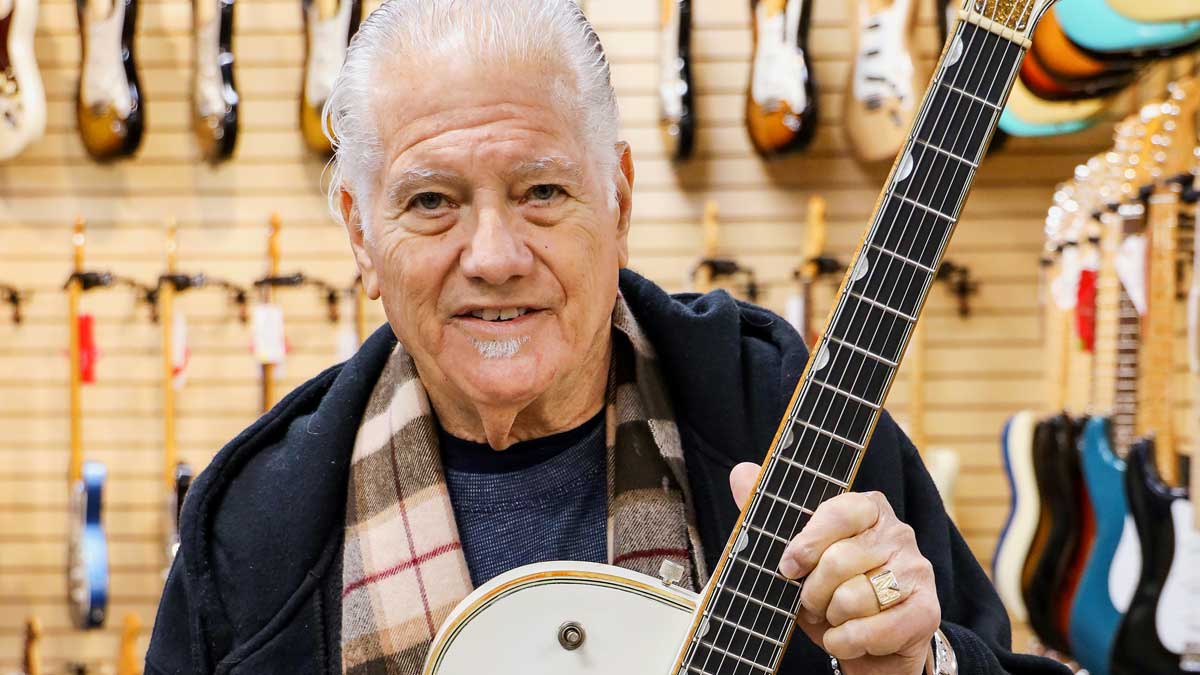
Rare Pioneer
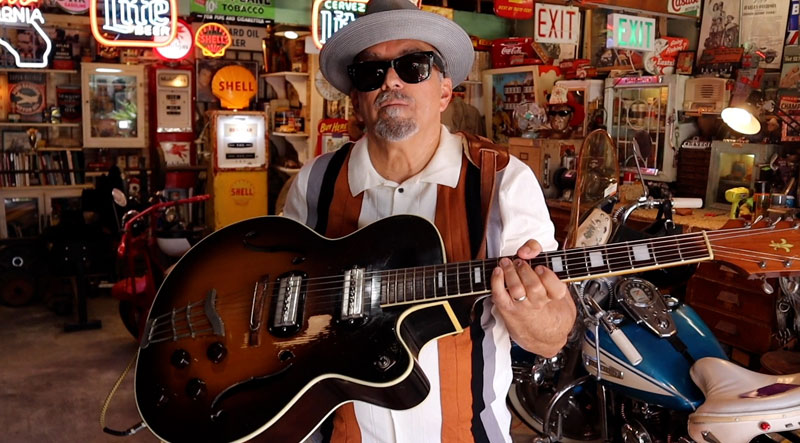
As a teenager who just wanted to play music, Norm Harris lived with the reality that he and his band weren’t going to be millionaires anytime soon. So he did what musicians do – side-hustled. But when most were manning the counter at a music shop or serving tables, Harris was up at the crack
-
Yamaha SA-15
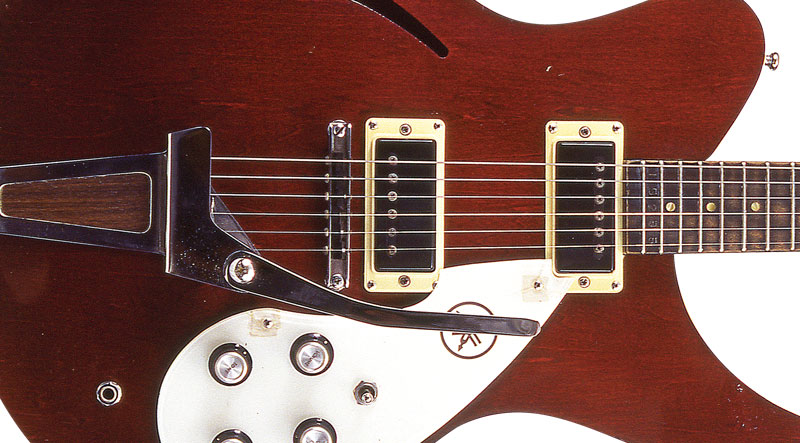
Our perception of Japanese guitars has evolved slowly. At one point, they were cheap toys, at other times imperfect copies, then startling innovations. Perspective encircles the truth. So, how should we perceive the Yamaha SA-15? Japan became interested in guitars in the early 1920s, as some musicians there began to perform what we’d today call…
-

Greg Koch: Gristly “Blues”
Greg Koch: Gristly “Blues” Greg Koch fearlessly wrings the sort of vibrato that only a Tele will tolerate from his ’53 to play this exclusive version of Freddie King’s “The Stumble” flavored with a bit of delay and running into his Tone King Royalist. Inspired by fan requests, it’s just one of the tracks culled…

Dad’s Day 2021
VG’s Annual Salute to Fathers Who Inspire
Marty Ashby’s very musical family has been playing together since he was a little kid. Here’s a shot of them…

Gibson J-35
Dreadnought guitars originated as early as 1916 with instruments made by Martin and distributed by Ditson, followed in 1931 with…

Hot Wires
A Brief History of the Modern Guitar String
If you’ve ever bent a guitar string and given it a shake, send a silent thank you to guitarist James…

GA-20’s Matt Stubbs and Pat Faherty
FlashBack Sounds, Forward Steps
Musical gateways opened by Jimi Hendrix and the Doors led Matt Stubbs to become a disciple of Johnny “Guitar” Watson,…

Gibson Style R Harp Guitar
Harp guitars with a standard six-string guitar neck and varying numbers of sub-bass harp-style strings have been made by a variety of American builders. Some of the best-known include Gibson,…

Dickerson Standard Lap Steel
Though today they are viewed as little more than curious relics of a lost era, during the Great Depression, “mother of toilet seat” Hawaiian lap steels were one of the…

1982 Gibson Victory Custom
When you consider their status as a last-gasp instrument made by Gibson in its waning days as a property of Norlin Industries, the ironically dubbed “Victory” series of guitars and…

Veillette-Citron Shark
It’s not often a guitar can be said to have been inspired by a TV show, but that is the case with this 1982 Veillette-Citron Shark, which came about as…

John Sebastian’s ’59 Gibson Les Paul Standard
Vintage Guitar magazine Presents Greg Martin's Head Shop
This is a regular series of exclusive Vintage Guitar online features where The Kentucky Headhunters’ Greg Martin looks back on influential albums and other musical moments. On November 30, 1966,…
-

Hilary Gardner returns with a fresh take on a holiday classic!
Hilary Gardner returns! Ready to set the tone for your holidays, Hilary Gardner and her band return for a fantastic take on the classic Elvis hit “Blue Christmas” (written by Billy Hayes and Jay W. Johnson) just for VG followers! Accompanied again by Justin Poindexter and Sasha Papernik, this time they’re joined by Jen Hodge on…
-
The (Way) Back Beat: Top O’ The Line, For Only $150!
The Immortal Danelectro Guitarlin
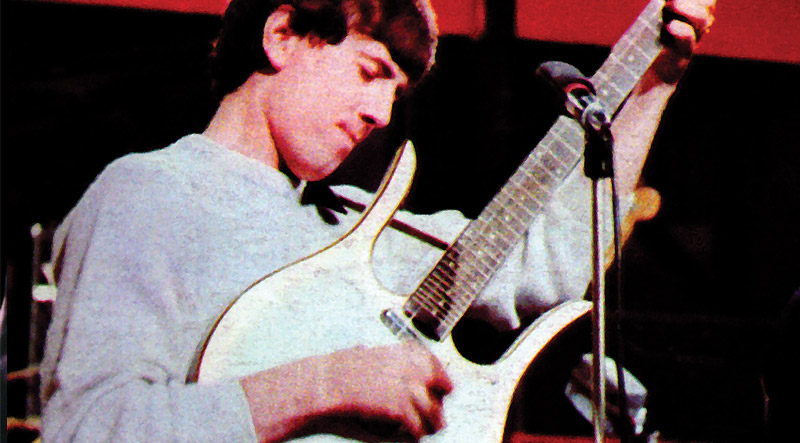
Having looked at the most expensive electric guitars offered in 1960s – over 50 years ago. Traditional makers – Gibson, Guild, and Gretsch – concentrated on flashy amplified archtops that retailed up into the $700 to $800 range – beautiful instruments, but not representative of where the electric guitar was going. More forward-looking makers offered…

VG Q&A: ’71 Mahogany Precision?
Plus, a ’60s Conrad 12-String and Converting a ’65 ES-345TD-SV to Mono
I have a Fender Precision Bass with a 1971 neck date and serial number 296XXX, and I’ve always suspected the…

Stromberg Master 400
The Stromberg Master 400, measuring a gigantic 19″, is considered by many to be the ultimate orchestral rhythm guitar. The…

The Charvel Model 4
Certain guitar brands develop a mystique among aficionados – sometimes it’s even deserved! Somewhere on this continuum lie Charvel USA…

Fender’s 1960 Bandmaster
Power of Three
The earliest renditions of our gear icons are often the most valuable, but on many occasions it’s the transition models…

Vox Symphonic Bass
Fender Bender
Despite the way collectors and dealers freely apply the term “lawsuit guitars,” documented examples are few. One time it did happen was triggered by the Vox Symphonic Bass. A report…

The Les Paul Becomes The SG
Double Time
It may be difficult to imagine now, but Gibson’s original Les Paul was only a modest success. Introduced in 1952, the Gibson Les Paul Model (a.k.a. goldtop) reached peak production…

Fender‘s 50th Anniversary Strat
Height of the Reissue
In celebration of the 50th “birthday” of its famous Stratocaster model, Fender has taken the reissue concept to new heights. And why not? Arguably the most popular guitar – electric,…

Rocky Athas’ Texas ’Tude!
Genuine Lone Star Jams Dallas guy Rocky Athas built a career playing blues in the vain of T-Bone and SRV, but his new album, “Livin’ My Best Life,” is more…

Sovtek MIG-50
Curtain Call
Given their development in the twilight years of the U.S.S.R. and arrival at the fall of the Iron Curtain, it was a gutsy move to name an amp after a…

Guyatone LG-160T
The Secret's Out!
Like plants, Japanese guitars have an almost secret life of which few people outside are aware. While many Americans in the ’60s were seeing fairly low-end commodity guitars at the…
-
Classics: Jeremy Graf’s 1961 Fender Stratocaster
A lifelong vintage-guitar nut who has had “a million guitars,” Jeremy Graf’s all-time favorite is this 1961 Stratocaster. A native of Knoxville, Tennessee, Graf was just seven when, for reasons he doesn’t remember, he asked for an Elvis Presley record. His mother obliged and brought home Elvis’ Golden Records, a compilation of ’50s hits. “That
-
Rising Rockers
Five Alternative Club Classic Amps of the ’50s
In an era when the sub-20-watt combo is arguably the most popular guitar-amp format, it’s worth remembering that several classics of the category emanate from the ’50s. And just as interesting as the well-worn favorites, several lesser-known alternatives were also born in the decade of rock and roll. In the December ’24 issue, we examined
-
Classics: Marc Schoenberger’s Rickenbacker Combo 600
Marc Schoenberger was part of the early-’70s vanguard on the Southern California guitar scene – not as a gigging musician, but among the crowd that raced the 101 freeway to check out old guitars every time a new issue of the Recycler hit the streets. He’d also been repairing guitars for friends and local shops
-
The Supro Thunderbolt S6420
Lightning Strikes
Despite their catalog-grade status, Supro amps have been used by several noteworthy guitarists. For many, the sturdy Thunderbolt is the preferred workhorse. It’s been a long time since Supro amps were any kind of secret find or hidden gem; players have long recognized the eccentric splendors of certain mid-sized examples, with their thumping tremolo and
-
Rickenbacker’s Electric 12-Strings
Double-bound for Glory
George Beauchamp and Adolph Rickenbacher founded Electro String in 1931 to manufacture what everyone would soon call “Rickenbacker” guitars. Success came early and their lap steels set standards of quality, performance, and tone. On the other hand, the company’s electric bass viols and violins excited segments of the industry but never sold well. Same for
-
Joey Molland
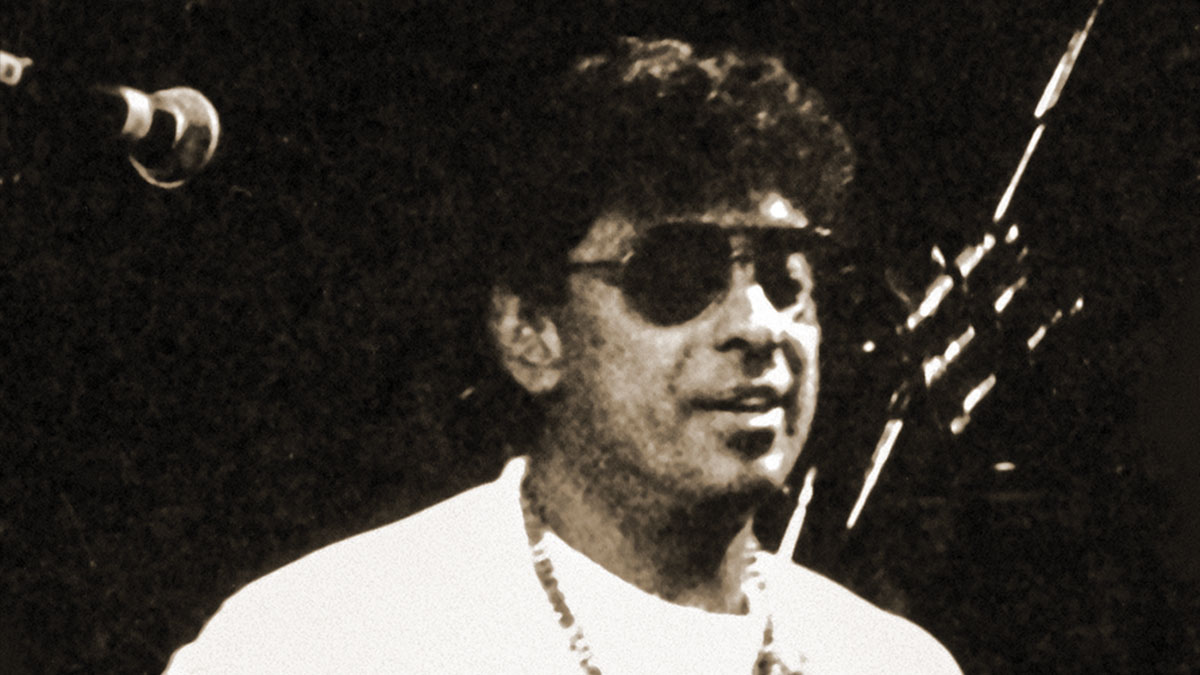
The word “underrated” is belabored in music journalism, but Joey Molland was just that. As co-guitarist in Badfinger, he was part of a quartet signed to the Beatles’ Apple Records, yielding glorious AM hits like “Come and Get It,” “Day After Day,” and “No Matter What.” The foursome fell into obscurity and tragedy a few
-

McKinley James’ Blues
Family Barn Jam! With his ’82 Gibson 335 running into a Headstrong Corduroy (20-watt/6V6) amp, McKinley James shares a taste of his new album, “Working Class Blues,” with this run at “Call Me Lonesome.” In the October issue, he tells us how the album was made in the family barn with the only backing…
-

Jim Campilongo & Steve Cardenas
Mutual Musical Idiosyncrasies
Steve Cardenas and Jim Campilongo have been playing guitar together for a long time, though the constellations only recently aligned so they could record. Captured on three nights in September of 2022, New Year showcases harmonic personalities merging through atmosphere, reverb, and ancient acoustic guitars. It’s also a meditation on the beauty and strength of…

Vox Guitars Invade America
From Dartford to Sepulveda
The Vox brand may be quintessentially English, but it made a huge impact in the U.S. Riding in with the…

St. Moritz Stereo
The notion of a stereo guitar became almost implicit when guitars started having two pickups. But it didn’t become a…

Gibson’s “blond” J-35
In the world of vintage guitars, people tend to use the words “blond” and “natural” interchangeably to describe a finish…

Carvin DN640K
Doubleneck instruments have always been a unique niche in the guitar market, for good reason. They’ve also carried an air…