-
Classic Instruments
Classics: Norman Harris
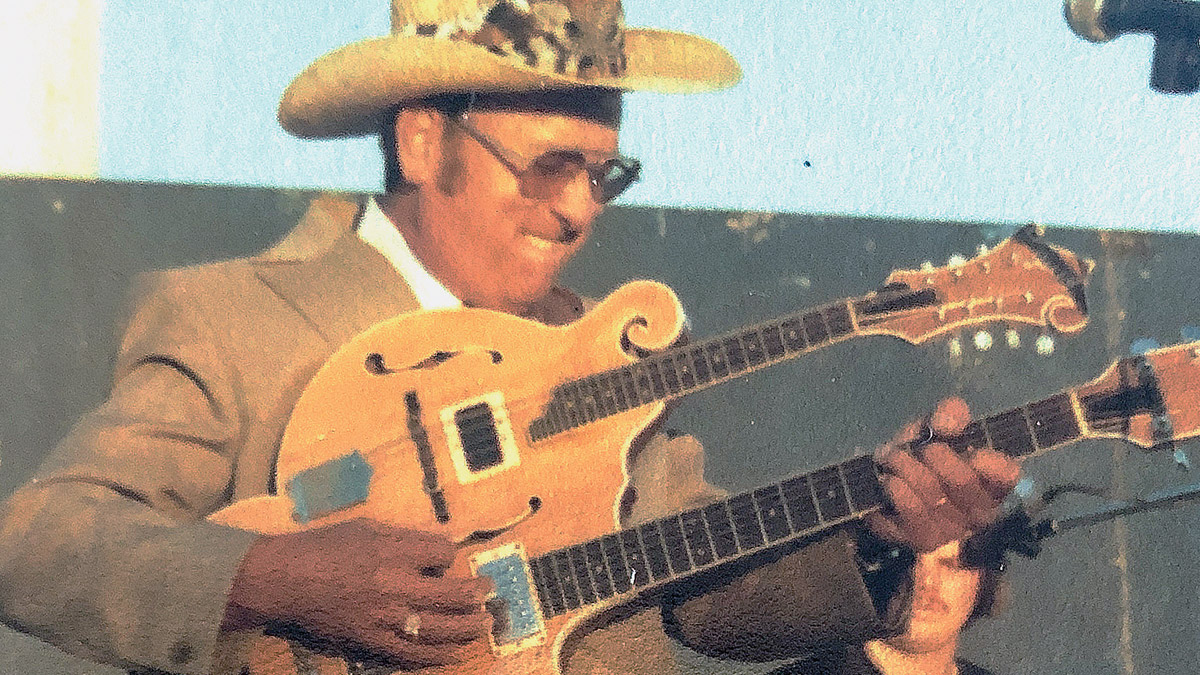
Rare Pioneer
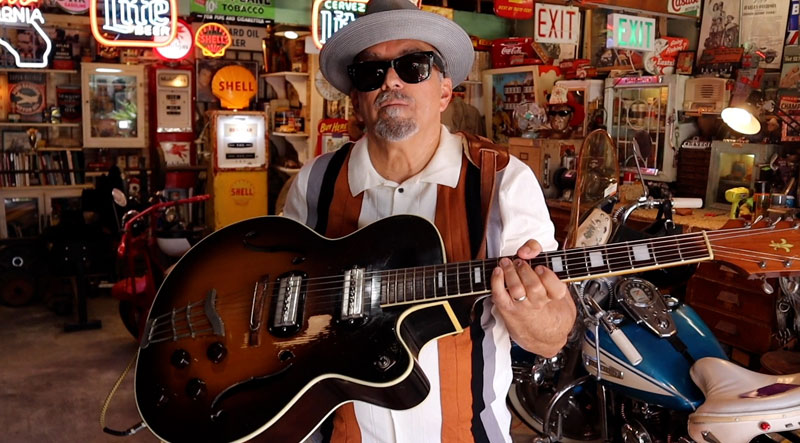
As a teenager who just wanted to play music, Norm Harris lived with the reality that he and his band weren’t going to be millionaires anytime soon. So he did what musicians do – side-hustled. But when most were manning the counter at a music shop or serving tables, Harris was up at the crack
-
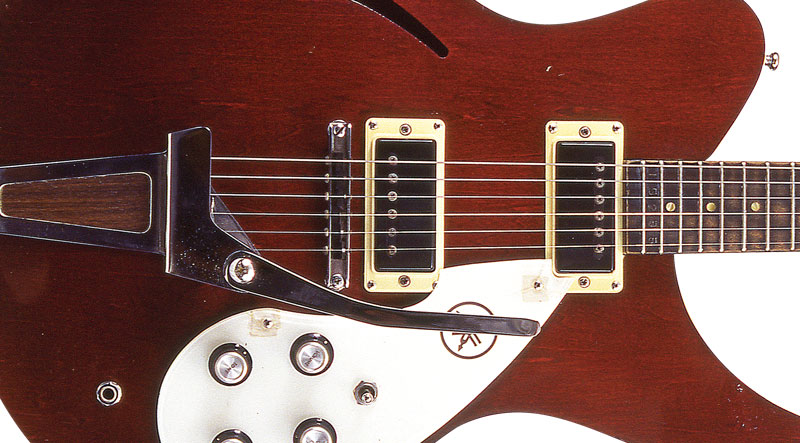
Yamaha SA-15
Our perception of Japanese guitars has evolved slowly. At one point, they were cheap toys, at other times imperfect copies, then startling innovations. Perspective encircles the truth. So, how should we perceive the Yamaha SA-15? Japan became interested in guitars in the early 1920s, as some musicians there began to perform what we’d today call…
-

Greg Koch: Gristly “Blues”
Greg Koch: Gristly “Blues” Greg Koch fearlessly wrings the sort of vibrato that only a Tele will tolerate from his ’53 to play this exclusive version of Freddie King’s “The Stumble” flavored with a bit of delay and running into his Tone King Royalist. Inspired by fan requests, it’s just one of the tracks culled…

Recording Electric Guitars
The Art of Home Recording
The process might seem simple – stick mic in front of amp, press "Record." Truth is, though, that even just…

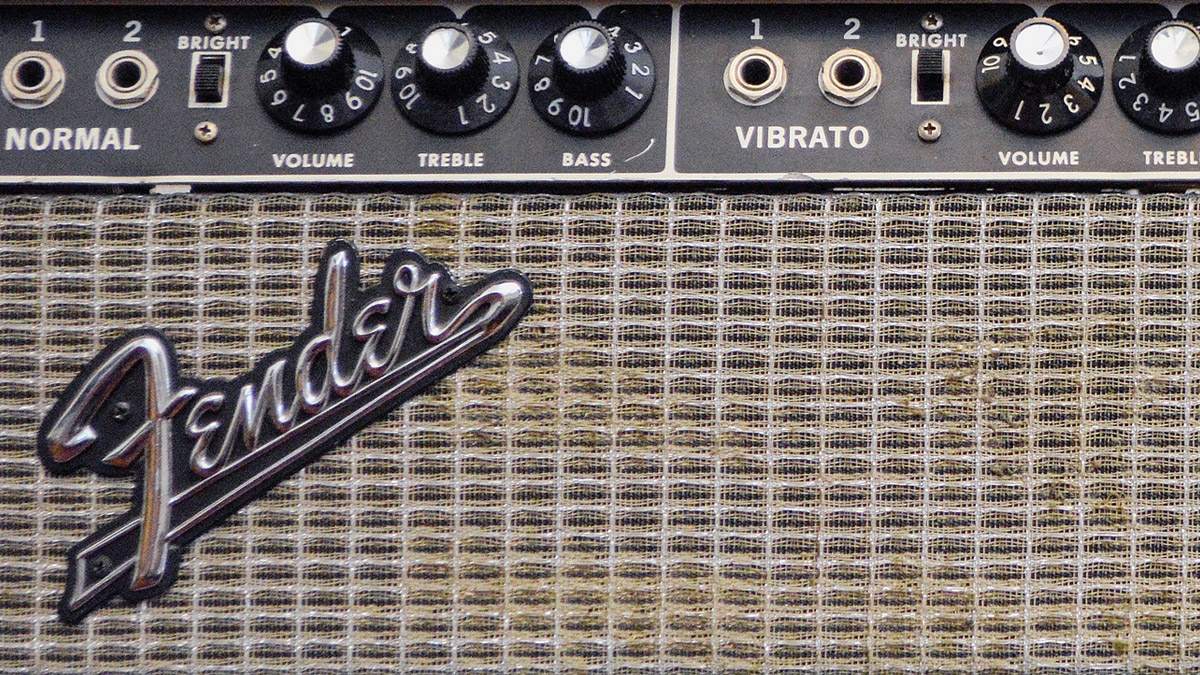
The Fender Tremolux
Most amp nuts are utterly fascinated by Fender’s rapid evolution from archaic to modern through the course of the 1950s.…

Boggs’ Quad
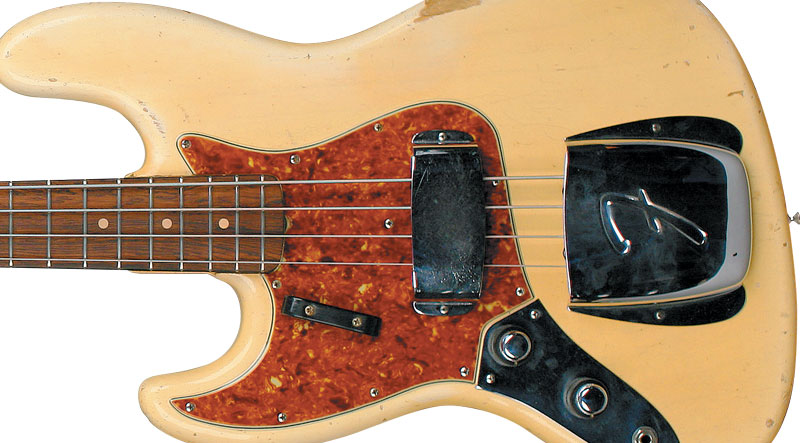
Four-neck Fender From a Friend
Noted in musical history as one of the players who pushed the steel guitar beyond Hawaiian music to more-complex chording…

The RFT 12AX7
The Righteous Flame-throwin’ Tube
“…there is a time and place for that out-front spank, but if your mood shifts to slightly more mellow, there…

1944 Martin 00-28
This Martin 00-28 is a highly unusual instrument. Made as part of a group of six created with shop-order number 366 (dated 12/14/1944) and bearing serial numbers 90002 through 90007,…

The Sammick Viper
Some guitars hit the market at the perfect time to becom e classics – think Les Paul and Stratocaster. Some experience brief popularity, then slip into obscurity – think Bond…

The Gibson Starfire TR 1000 RVT
Trans-Galactic Toneway
Relatively unsung among early entrants to the field of solid-state guitar amplifiers, Gibson was the first high-output, high-quality manufacturer to bring one to market. And while it quickly proved the…

Warwick Thumb Bass
Generational Innovation
Founded in the early 1980s by Hans-Peter Wilfer, Warwick has a familial connection to another well-known German brand from a time when that nation was divided following World War II.…

Mick Taylor’s ’58 Les Paul Standard
The Ya Ya’s Out!
Hard-edged face of the British Invasion, the Rolling Stones introduced the world to the implements, trappings, and accessories of rock-and-roll superstardom. With help from radio, television, and teen ’zines, the…
-

Hilary Gardner returns with a fresh take on a holiday classic!
Hilary Gardner returns! Ready to set the tone for your holidays, Hilary Gardner and her band return for a fantastic take on the classic Elvis hit “Blue Christmas” (written by Billy Hayes and Jay W. Johnson) just for VG followers! Accompanied again by Justin Poindexter and Sasha Papernik, this time they’re joined by Jen Hodge on…
-
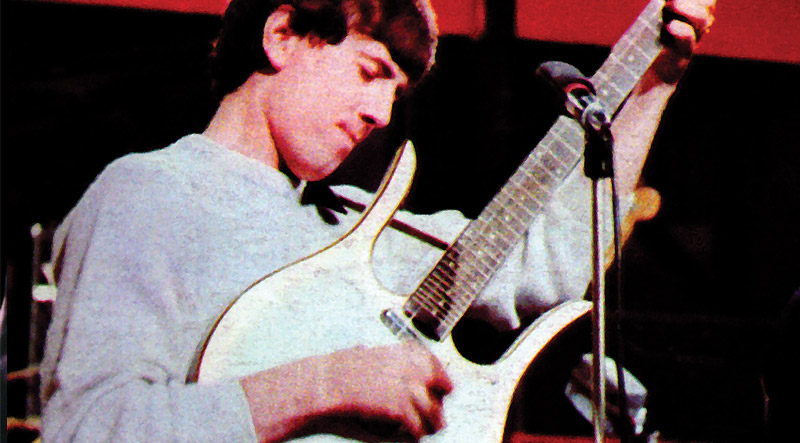
The (Way) Back Beat: Top O’ The Line, For Only $150!
The Immortal Danelectro Guitarlin
Having looked at the most expensive electric guitars offered in 1960s – over 50 years ago. Traditional makers – Gibson, Guild, and Gretsch – concentrated on flashy amplified archtops that retailed up into the $700 to $800 range – beautiful instruments, but not representative of where the electric guitar was going. More forward-looking makers offered…

Star Stomps
Famous Sounds Abound in New Book
Stompboxes inspire their own special mania. While the allure of guitars is obvious with their colorful, curvaceous looks, effects are…

Classics – May 2021
This 1940 ES-250 with serial number 96385 left the Gibson factory bound for retailer New York Band on October 25,…

Gibson 1958-’60 Les Paul Standard
A ’Burst by Any Other Name…
One Thousand, Seven Hundred and Twelve. That’s the number of Les Paul Standards Gibson produced between 1958 and 1960. Amongst guitar…

The Pedulla Buzz Bass
Fast and Fretless
Introduced in 1980, the M.V. Pedulla Buzz Bass is one of the most-enduring examples of an upscale model offered fretless.…

Rocky Athas’ Texas ’Tude!
Genuine Lone Star Jams Dallas guy Rocky Athas built a career playing blues in the vain of T-Bone and SRV, but his new album, “Livin’ My Best Life,” is more…

Fender Precision Bass
The Fender Precision Bass, introduced in 1951, was arguably more revolutionary and more influential on popular music than the Telecaster or Stratocaster. As the first commercially successful electric bass, it…

McKinley James’ Blues
Family Barn Jam! With his ’82 Gibson 335 running into a Headstrong Corduroy (20-watt/6V6) amp, McKinley James shares a taste of his new album, “Working Class Blues,” with this…

Six-String Basses from the 1950s and ’60s
The Big Twang!
Electric bass, bass guitar, baritone guitar; four, five, or six strings – many varieties of low-tuned instruments are available today. In the 1950s, however, choices were fewer. Bassists played upright…

Classics: February 2022
Chuck Panozzo’s Gibson ES-125
For nearly five decades, Chuck Panozzo has been the bassist in Styx, enjoying the ride as it went from playing garage parties in suburban Chicago through its heyday as AOR-radio…

’62 Les Paul Rarity
In its early years, the Gibson Les Paul Custom evolved through several body-style and spec changes and was the earliest Gibson solidbody to have a Tune-O-Matic bridge and stop tailpiece;…
-
Classics: Jeremy Graf’s 1961 Fender Stratocaster
A lifelong vintage-guitar nut who has had “a million guitars,” Jeremy Graf’s all-time favorite is this 1961 Stratocaster. A native of Knoxville, Tennessee, Graf was just seven when, for reasons he doesn’t remember, he asked for an Elvis Presley record. His mother obliged and brought home Elvis’ Golden Records, a compilation of ’50s hits. “That
-
Rising Rockers
Five Alternative Club Classic Amps of the ’50s
In an era when the sub-20-watt combo is arguably the most popular guitar-amp format, it’s worth remembering that several classics of the category emanate from the ’50s. And just as interesting as the well-worn favorites, several lesser-known alternatives were also born in the decade of rock and roll. In the December ’24 issue, we examined
-
Classics: Marc Schoenberger’s Rickenbacker Combo 600
Marc Schoenberger was part of the early-’70s vanguard on the Southern California guitar scene – not as a gigging musician, but among the crowd that raced the 101 freeway to check out old guitars every time a new issue of the Recycler hit the streets. He’d also been repairing guitars for friends and local shops
-
The Supro Thunderbolt S6420
Lightning Strikes
Despite their catalog-grade status, Supro amps have been used by several noteworthy guitarists. For many, the sturdy Thunderbolt is the preferred workhorse. It’s been a long time since Supro amps were any kind of secret find or hidden gem; players have long recognized the eccentric splendors of certain mid-sized examples, with their thumping tremolo and
-
Rickenbacker’s Electric 12-Strings
Double-bound for Glory
George Beauchamp and Adolph Rickenbacher founded Electro String in 1931 to manufacture what everyone would soon call “Rickenbacker” guitars. Success came early and their lap steels set standards of quality, performance, and tone. On the other hand, the company’s electric bass viols and violins excited segments of the industry but never sold well. Same for
-
Joey Molland
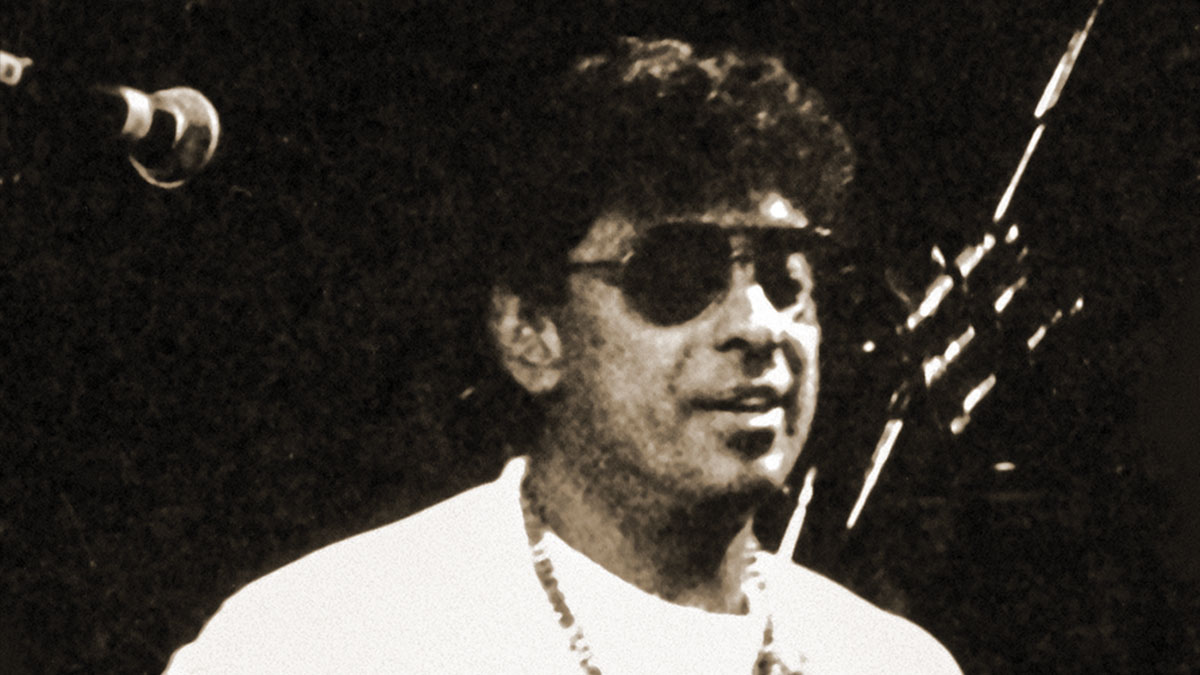
The word “underrated” is belabored in music journalism, but Joey Molland was just that. As co-guitarist in Badfinger, he was part of a quartet signed to the Beatles’ Apple Records, yielding glorious AM hits like “Come and Get It,” “Day After Day,” and “No Matter What.” The foursome fell into obscurity and tragedy a few
-

McKinley James’ Blues
Family Barn Jam! With his ’82 Gibson 335 running into a Headstrong Corduroy (20-watt/6V6) amp, McKinley James shares a taste of his new album, “Working Class Blues,” with this run at “Call Me Lonesome.” In the October issue, he tells us how the album was made in the family barn with the only backing…
-

Jim Campilongo & Steve Cardenas
Mutual Musical Idiosyncrasies
Steve Cardenas and Jim Campilongo have been playing guitar together for a long time, though the constellations only recently aligned so they could record. Captured on three nights in September of 2022, New Year showcases harmonic personalities merging through atmosphere, reverb, and ancient acoustic guitars. It’s also a meditation on the beauty and strength of…

Gibson GA-80T Vari-Tone
In the late ’50s and early ’60s, Gibson was apparently convinced the Vari-Tone switch was the way of the future,…

Rickenbacker 325
A Pop Icon and His Beloved Axe
Details In 1962, the Ac’cent Vibrato replaced the original Rick’s standard Kauffman unit, which was derived from a nearly 30-year-old…
Rocky Athas’ Texas ’Tude!
Genuine Lone Star Jams Dallas guy Rocky Athas built a career playing blues in the vain of T-Bone and SRV,…

Classics: September 2022
Danny Gatton’s ES-295
Glenn Holley was just five years old when he became infatuated with the sound of rockabilly music thanks to Elvis…