-
Classic Instruments
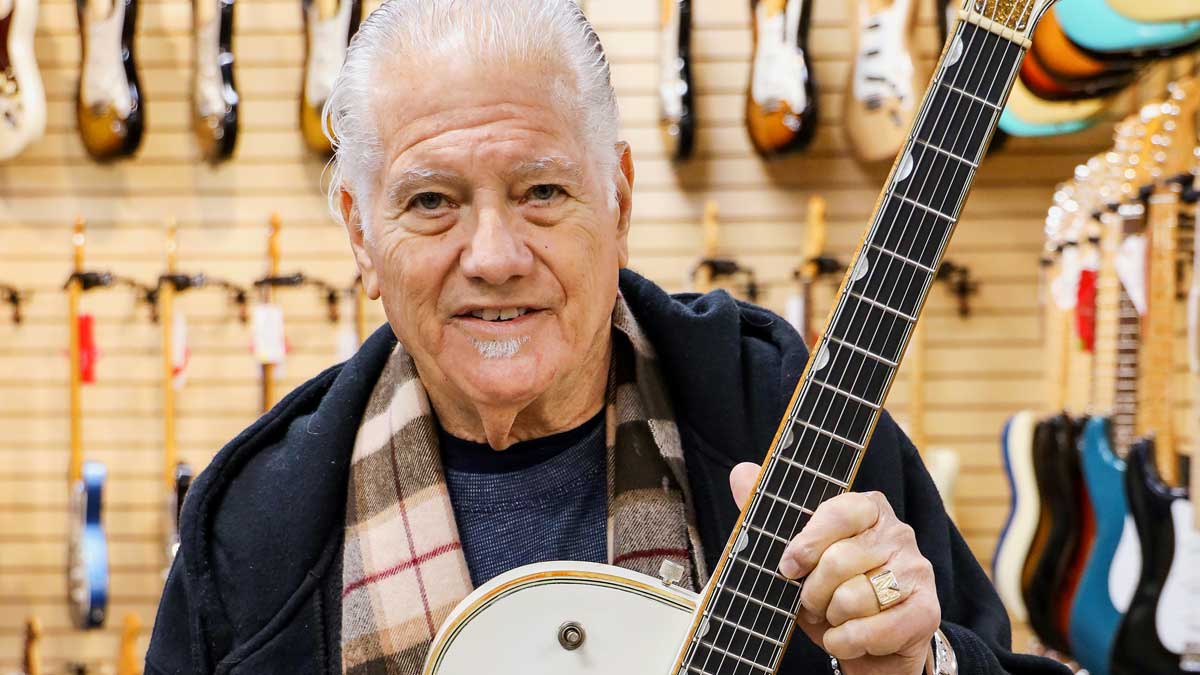
Classics: Norman Harris
Rare Pioneer
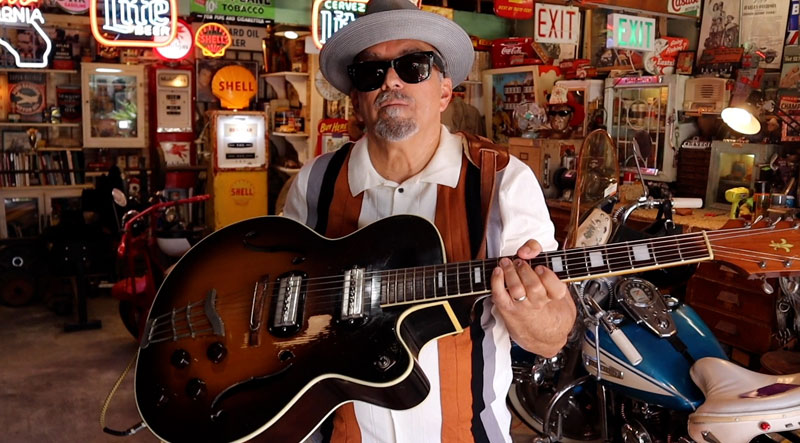
As a teenager who just wanted to play music, Norm Harris lived with the reality that he and his band weren’t going to be millionaires anytime soon. So he did what musicians do – side-hustled. But when most were manning the counter at a music shop or serving tables, Harris was up at the crack
-
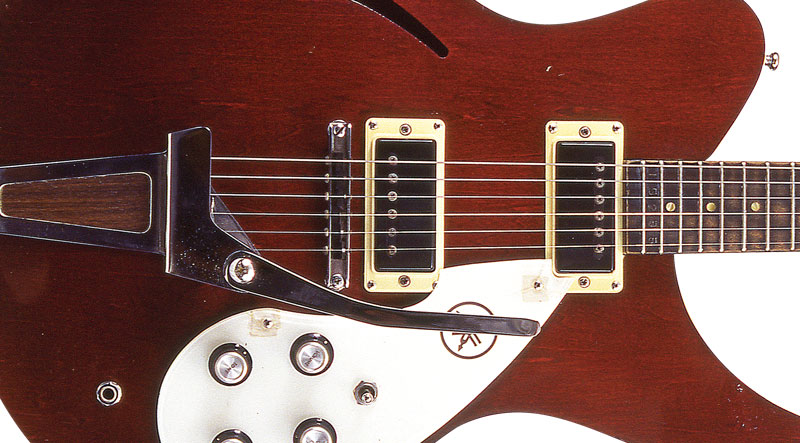
Yamaha SA-15
Our perception of Japanese guitars has evolved slowly. At one point, they were cheap toys, at other times imperfect copies, then startling innovations. Perspective encircles the truth. So, how should we perceive the Yamaha SA-15? Japan became interested in guitars in the early 1920s, as some musicians there began to perform what we’d today call…
-

Greg Koch: Gristly “Blues”
Greg Koch: Gristly “Blues” Greg Koch fearlessly wrings the sort of vibrato that only a Tele will tolerate from his ’53 to play this exclusive version of Freddie King’s “The Stumble” flavored with a bit of delay and running into his Tone King Royalist. Inspired by fan requests, it’s just one of the tracks culled…

Dan’s Guitar RX: Building a From-Scratch Class Project, Part Two
Rock-And-Roll High School(er)
In the August issue, we introduced you to Ceil Thompson, a high-school intern in my shop who’s building a guitar…

The Coulter Company
More Rarities from the Pacific Northwest
The eye-catching and technologically innovative stringed instruments created by Frank Evans Coulter in the early 20th century are so exceedingly…

Fender 6G13-A Vibrasonic
Amid the classics in Fender’s “golden-era” amp line, some remained in production only a short time because of timing, misjudgment…

Stromberg Master 400
Considered by many to be the ultimate orchestral rhythm guitar, these very rare instruments are among the most sought-after, and…

Ro-Pat-In’s First Electric Spanish
Granddaddy to the Stars!
The story of George Beauchamp’s invention of what would become the first commercially successful electric guitar is shrouded in the mist of murky memory. But one critical element of the…

Daion Headhunter HH-555
The trajectory of the Japanese guitar industry in many ways has mirrored that of the United States, though in a slightly compressed timeframe on the front-end because America had a…

George Gruhn
How a Zoologist Became a Guitar animal
If you bumped into a bearded, corduroy-jacketed George Gruhn in a Nashville coffee shop, you might think you’d stumbled upon an avuncular college professor – which is fitting, considering that…

A Guitar for Mr. Richards
The Saga of Ted Newman Jones
For anyone who visited the tiny workshop inhabited by guitar builder Ted Newman Jones in the 1970s and ’80s, two things were obvious – his appreciation for the fine tonewoods…

Six-String Kicks
Wood from Famed Bowling Alley Set to Sing
Few things scratch America’s cumulative itch for nostalgia like Route 66 – the famed wagon-trail-cum-highway that offered passage to those migrating west from Chicago in the mid 19th century, then…
-
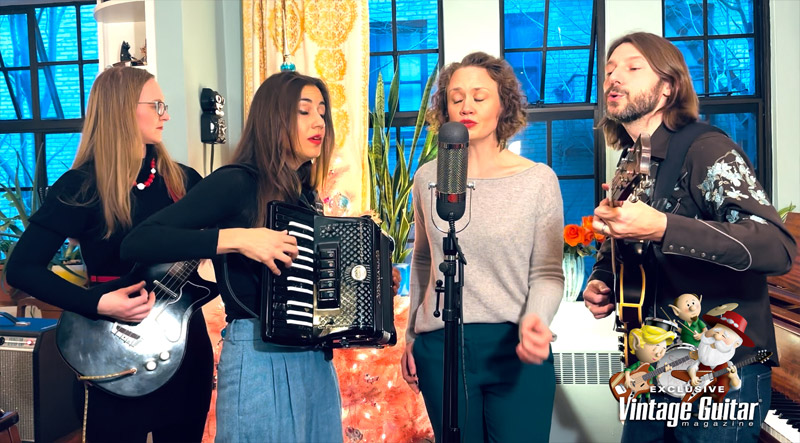
Hilary Gardner returns with a fresh take on a holiday classic!
Hilary Gardner returns! Ready to set the tone for your holidays, Hilary Gardner and her band return for a fantastic take on the classic Elvis hit “Blue Christmas” (written by Billy Hayes and Jay W. Johnson) just for VG followers! Accompanied again by Justin Poindexter and Sasha Papernik, this time they’re joined by Jen Hodge on…
-
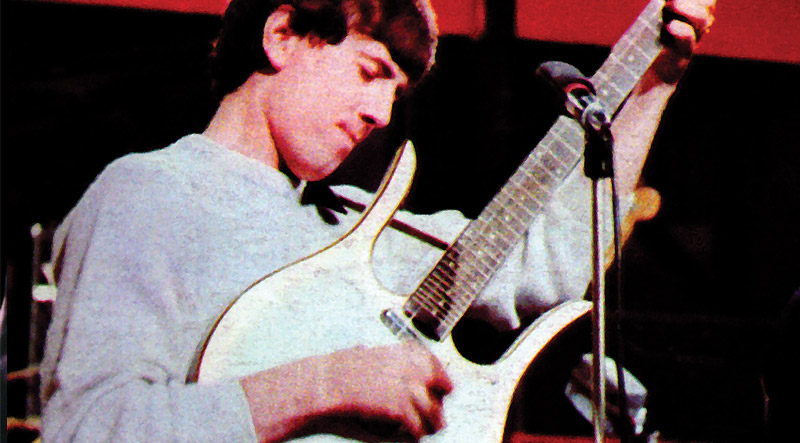
The (Way) Back Beat: Top O’ The Line, For Only $150!
The Immortal Danelectro Guitarlin
Having looked at the most expensive electric guitars offered in 1960s – over 50 years ago. Traditional makers – Gibson, Guild, and Gretsch – concentrated on flashy amplified archtops that retailed up into the $700 to $800 range – beautiful instruments, but not representative of where the electric guitar was going. More forward-looking makers offered…

Fender’s First Reissues
The CBS Era Concludes in Style
By the late 1970s, cumulative changes in the details of the various classic guitar models on the market – Fender’s…

The Fender “Wide-Panel” Twin
While Fender’s high-powered 5F8-A Twin of 1958-’60 (VG, March ’09) has been much raved about in recent years, there’s a…

Fender Mustang
Truly Transitional
Despite its short scale, the Mustang has a potent sound, and as a result it was used by many notable…

Movie Star, Rancher
Mid-’50s Muse of Wire and Wood
In the years immediately after World War II, Americans were settling into a new way of life, and plunging headlong…

Adam Levy’s Wistful Elegance
Vintage ES-335 on “And They All Sang” Famous for supplying charismatic guitar parts while backing Nora Jones and Tracy Chapman, Adam Levy’s latest solo album, “Spry,” is music laden with…

MIM Hosts Stephen Stills and Ushers in Dragons and Vines Exhibition
On November 5th, Phoenix, Arizona’s Musical Instrument Museum (MIM) celebrated the opening of their newest exhibition, “Dragons and Vines: Inlaid Guitar Masterpieces.” Curators teamed up with Maryland-based Pearl Works to…

100 Years of Boston’s MFA
Playable Exhibits
Musical instruments – guitars – present an interesting philosophical dichotomy. On one hand, they’re utilitarian objects whose very purpose – arguably their only purpose – is to create art, to…

First-Rate Second Fiddles
Jimi’s Gibsons at the Hard Rock Cafe
No two ways about it, as his career hit stride, Jimi Hendrix was a Strat guy. Not famously loyal to any particular guitar going back to his days hustling chitlin-circuit…

The Schaffer-Vega Diversity System
Making Rock Roll
“ The best thing I ever did in the beginning was not use effects,” AC/DC’s Angus Young told VG in his feature interview for the December ’20 issue. And in…

The Morley Rotating Wah
Chromed Tone
There was a time in the mythic ’70s when guitarists were real men and lugged around 15-pound Morley Rotating Wah pedals to gigs and studios. And if they weren’t real…
-
Classics: Jeremy Graf’s 1961 Fender Stratocaster
A lifelong vintage-guitar nut who has had “a million guitars,” Jeremy Graf’s all-time favorite is this 1961 Stratocaster. A native of Knoxville, Tennessee, Graf was just seven when, for reasons he doesn’t remember, he asked for an Elvis Presley record. His mother obliged and brought home Elvis’ Golden Records, a compilation of ’50s hits. “That
-
Rising Rockers
Five Alternative Club Classic Amps of the ’50s
In an era when the sub-20-watt combo is arguably the most popular guitar-amp format, it’s worth remembering that several classics of the category emanate from the ’50s. And just as interesting as the well-worn favorites, several lesser-known alternatives were also born in the decade of rock and roll. In the December ’24 issue, we examined
-
Classics: Marc Schoenberger’s Rickenbacker Combo 600
Marc Schoenberger was part of the early-’70s vanguard on the Southern California guitar scene – not as a gigging musician, but among the crowd that raced the 101 freeway to check out old guitars every time a new issue of the Recycler hit the streets. He’d also been repairing guitars for friends and local shops
-
The Supro Thunderbolt S6420
Lightning Strikes
Despite their catalog-grade status, Supro amps have been used by several noteworthy guitarists. For many, the sturdy Thunderbolt is the preferred workhorse. It’s been a long time since Supro amps were any kind of secret find or hidden gem; players have long recognized the eccentric splendors of certain mid-sized examples, with their thumping tremolo and
-
Rickenbacker’s Electric 12-Strings
Double-bound for Glory
George Beauchamp and Adolph Rickenbacher founded Electro String in 1931 to manufacture what everyone would soon call “Rickenbacker” guitars. Success came early and their lap steels set standards of quality, performance, and tone. On the other hand, the company’s electric bass viols and violins excited segments of the industry but never sold well. Same for
-
Joey Molland
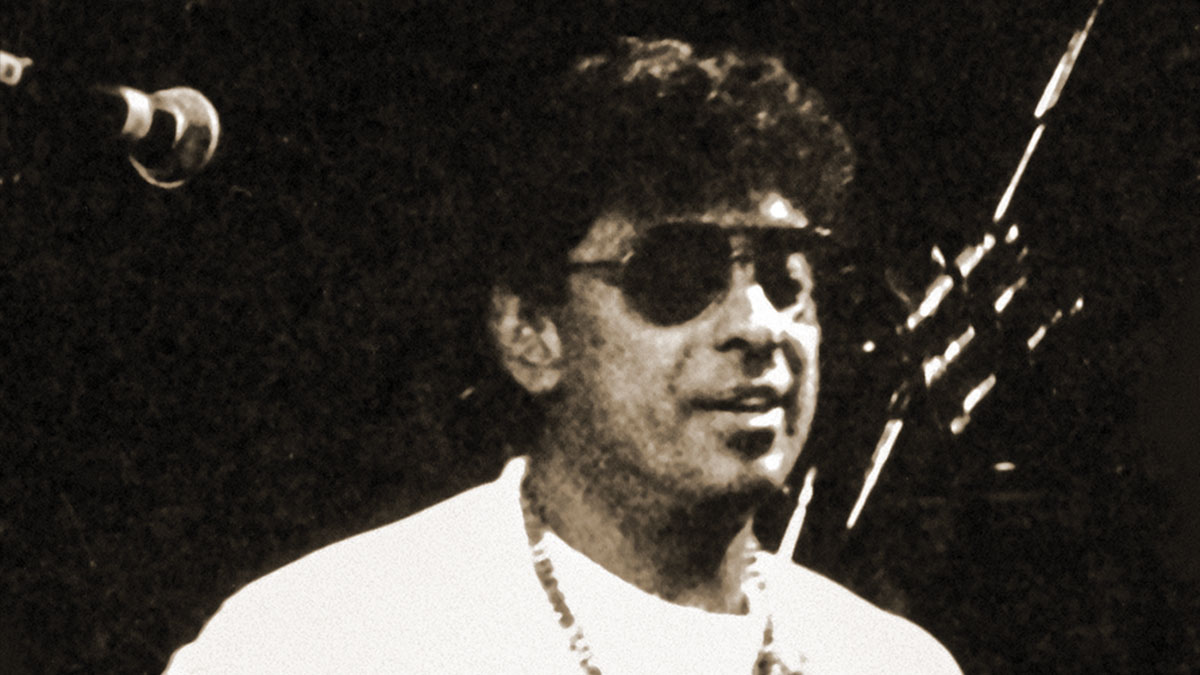
The word “underrated” is belabored in music journalism, but Joey Molland was just that. As co-guitarist in Badfinger, he was part of a quartet signed to the Beatles’ Apple Records, yielding glorious AM hits like “Come and Get It,” “Day After Day,” and “No Matter What.” The foursome fell into obscurity and tragedy a few
-

McKinley James’ Blues
Family Barn Jam! With his ’82 Gibson 335 running into a Headstrong Corduroy (20-watt/6V6) amp, McKinley James shares a taste of his new album, “Working Class Blues,” with this run at “Call Me Lonesome.” In the October issue, he tells us how the album was made in the family barn with the only backing…
-

Jim Campilongo & Steve Cardenas
Mutual Musical Idiosyncrasies
Steve Cardenas and Jim Campilongo have been playing guitar together for a long time, though the constellations only recently aligned so they could record. Captured on three nights in September of 2022, New Year showcases harmonic personalities merging through atmosphere, reverb, and ancient acoustic guitars. It’s also a meditation on the beauty and strength of…
Keith Richards’ 1977 Mesa/Boogie Mark I
Still Rollin’
As ubiquitous as the little 1×12″ Mesa/Boogie Mark Series combo has become over the past 48 years – and as…

The Leo Krebs Tape Echo Amplifier
Twenty-Three and Thee
If you have no recollection of the revolutionary amplifier with 19 knobs, 23 tubes, and built-in tape echo created by…

National-Dobro 6107A
Preamp tubes: 56, 57 Output tubes: two 2A3 Rectifier: 5Z3 Controls: Volume Output: 6 watts RMS +/- Speaker: one 10″…

The Story of Nudie’s Mosrite Mandolin
In the mid 1970s, Kosmo and Kathy Cominos collected knives, jukeboxes, wristwatches, etc… But their favorite finds were celebrity-associated musical…