-
Classic Instruments
Classics: Norman Harris
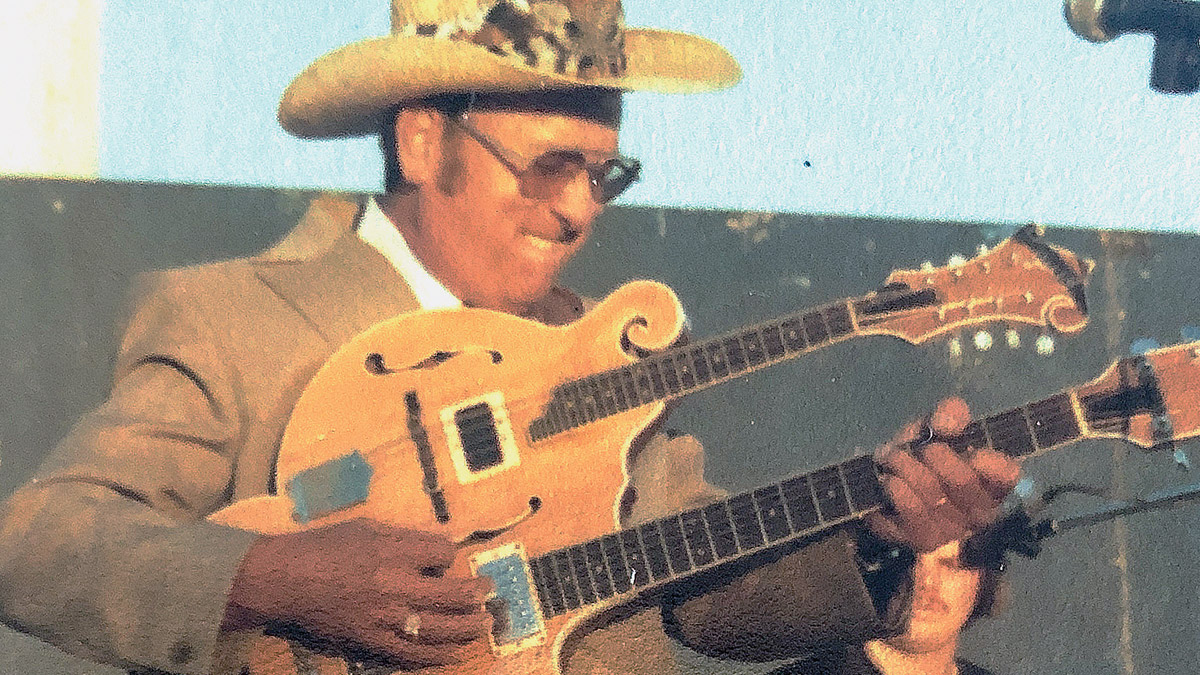
Rare Pioneer
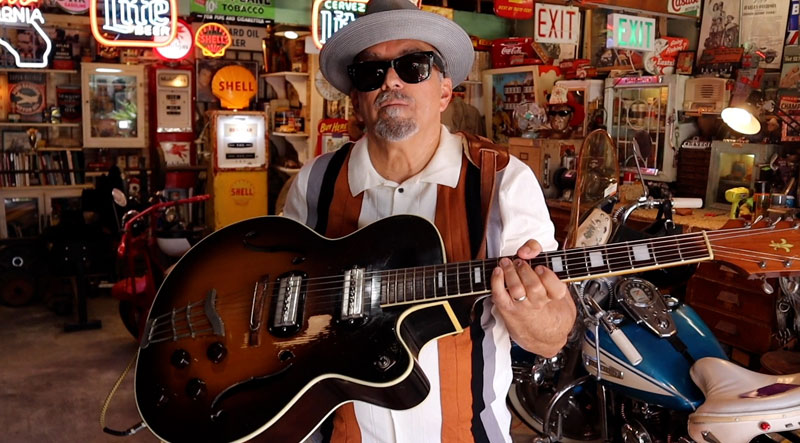
As a teenager who just wanted to play music, Norm Harris lived with the reality that he and his band weren’t going to be millionaires anytime soon. So he did what musicians do – side-hustled. But when most were manning the counter at a music shop or serving tables, Harris was up at the crack
-
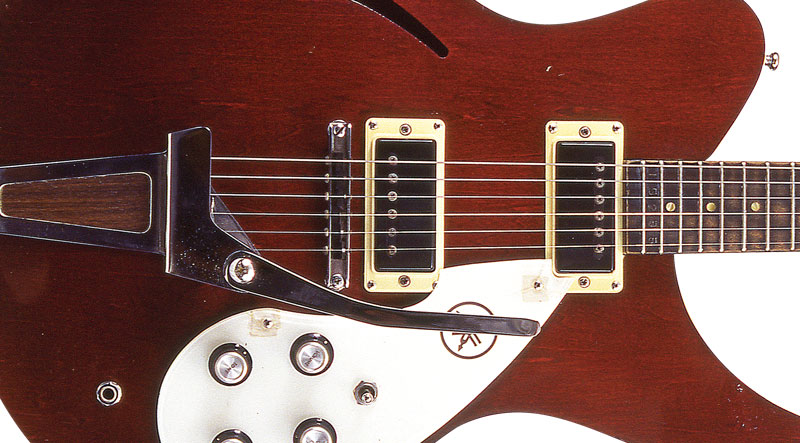
Yamaha SA-15
Our perception of Japanese guitars has evolved slowly. At one point, they were cheap toys, at other times imperfect copies, then startling innovations. Perspective encircles the truth. So, how should we perceive the Yamaha SA-15? Japan became interested in guitars in the early 1920s, as some musicians there began to perform what we’d today call…
-

Greg Koch: Gristly “Blues”
Greg Koch: Gristly “Blues” Greg Koch fearlessly wrings the sort of vibrato that only a Tele will tolerate from his ’53 to play this exclusive version of Freddie King’s “The Stumble” flavored with a bit of delay and running into his Tone King Royalist. Inspired by fan requests, it’s just one of the tracks culled…

Gibson Marauder M-1
Every once in awhile, someone in Gibson R&D gets a brainstorm like, “I know! Why don’t we make a bolt-neck…

Gibson’s Mastertone Banjos
This Gibson RB-3 five-string from 1925 is a rare piece, as is any five-string banjo from the era dominated by…

Standard in Custom
Schecter’s Custom Shop Marks 35 Years
Riding high after 35 years with an array of original instruments, an impressive artist roster that started early with Pete…

The Modulus Graphite Flight 6 Monocoque
High-/Low-Tech
In guitar history, irony is almost always the result of circumstances. The market changes overnight or someone makes a mistake…

Fender Palomino
Whether all collectors are as attached to nicknames as guitar enthusiasts is unclear. Do salt-and-pepper shaker collectors have fond shortcuts for, say, a Popeye and Olive Oyl set? “Spinach Special?”…

1968 Fender Vibrolux Reverb
Silver Serenade
Amplifier collectors swarm to models with descriptors like “first year” and “golden age,” but other types can be far more interesting; a transitional model or amp from a short-lived evolutionary…

Fender’s 1951-’54 Telecaster
In Detail
Fender’s first Spanish-style guitar was a lesson in functional simplicity with its solid body, single pickup, and bolt-on neck. And it didn’t receive a welcome fit for the legend it…

Standel 400S
In the early days of the American electric guitar/amplifier industry, Standel was known for building high-quality amplifiers used by the likes of Merle Travis and Joe Maphis. In fact, a…

Gibson’s First Reissue Les Pauls
On the Road to ’59
Strings and Things Les Paul Many articles have been written about how guitarists and dealers in the mid/late 1970s and early ’80s were asking Gibson to build a Les Paul…
-
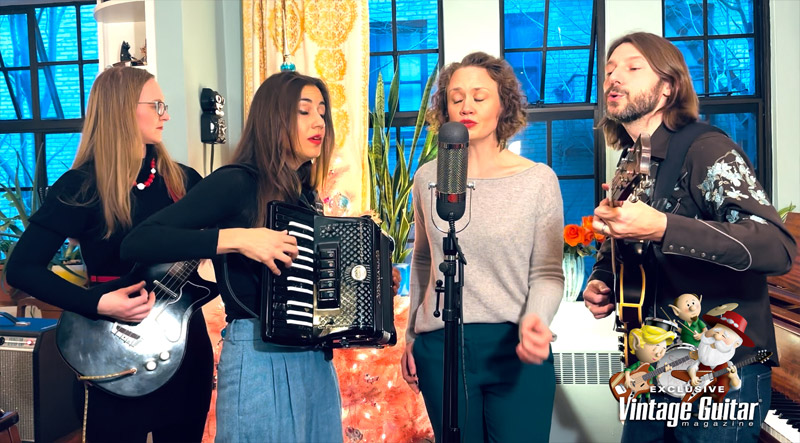
Hilary Gardner returns with a fresh take on a holiday classic!
Hilary Gardner returns! Ready to set the tone for your holidays, Hilary Gardner and her band return for a fantastic take on the classic Elvis hit “Blue Christmas” (written by Billy Hayes and Jay W. Johnson) just for VG followers! Accompanied again by Justin Poindexter and Sasha Papernik, this time they’re joined by Jen Hodge on…
-
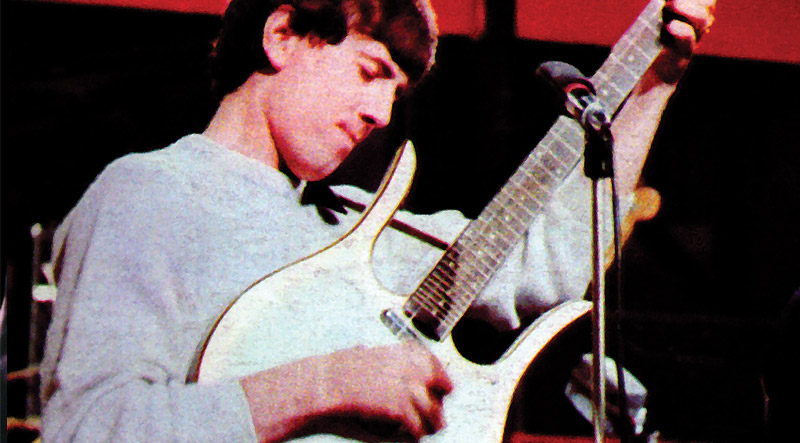
The (Way) Back Beat: Top O’ The Line, For Only $150!
The Immortal Danelectro Guitarlin
Having looked at the most expensive electric guitars offered in 1960s – over 50 years ago. Traditional makers – Gibson, Guild, and Gretsch – concentrated on flashy amplified archtops that retailed up into the $700 to $800 range – beautiful instruments, but not representative of where the electric guitar was going. More forward-looking makers offered…

Fender Deluxe Reverb
Vintage Guitar magazine Hall of Fame 2011 Instrument
In the June ’07 issue of VG, amp profiler extraordinaire Dave Hunter said of the Fender Deluxe Reverb, “If guitarists…

John Oates’ Prized Guild F-30
Roots Return
Most people know Hall & Oates as a pop-music hit machine that has sold millions of records. What you may…

Fender Jazz Bass
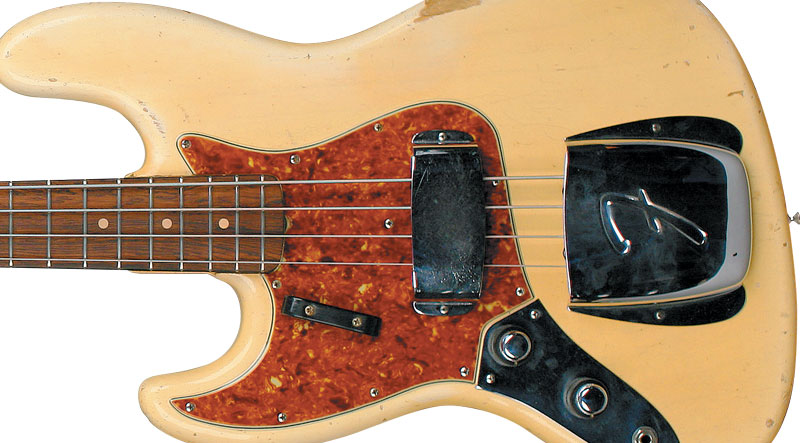
“Stack-knob” is a catch phrase that for decades has perked the ears of collectors; these relatively rare examples of the…

Dickerson Standard Lap Steel
Though today they are viewed as little more than curious relics of a lost era, during the Great Depression, “mother…

NGM Visits Texas
Nearing Permanent Home, Museum Honors Raitt
“It was born at the junction of form and function,” country guitar ace Bill Kirchen sings in “Hammer Of The Honky Tonk Gods.” And though he was referring to the…

1985 Guild Nightbird Prototype
In early 1984, Mark Dronge, son of the Guild founder Alfred Dronge, was president of Guild. That year, Mark and I struck a deal to design six acoustic Guild guitars…

Orange OR80 Combo
Sunshine State
Created when amps were huge and men were men – or at least had roadies to carry the gear – this 1972 Orange OR80 2×12″ combo veritably screams bell-bottomed rock…

Webster-Chicago RMA 375 Model 166-1
Grammy Winner
Modified or repurposed amps generally don’t fit into our monthly discussion here, but some are representative enough of a certain standard to make an exception. Witness this gem from 1952.…

Watkins Scout
Merit Badge
Watkins amps never landed big stars, or at least didn’t hold on to the endorsements of guitarists once they became big stars. Various Beatles shared a small late-’50s Westminster from…

Ampeg R-12-R Reverberocket
1962 Ampeg R-12-R Reverberocket Preamp tubes: two 6SL7, two 6SN7 Output tubes: two 6V6, cathode-biased Rectifier: 5Y3 Controls: Volume, Tone, Dimension (reverb), Speed, and Intensity (tremolo) Speakers: Jensen Special Design…
-
Classics: Jeremy Graf’s 1961 Fender Stratocaster
A lifelong vintage-guitar nut who has had “a million guitars,” Jeremy Graf’s all-time favorite is this 1961 Stratocaster. A native of Knoxville, Tennessee, Graf was just seven when, for reasons he doesn’t remember, he asked for an Elvis Presley record. His mother obliged and brought home Elvis’ Golden Records, a compilation of ’50s hits. “That
-
Rising Rockers
Five Alternative Club Classic Amps of the ’50s
In an era when the sub-20-watt combo is arguably the most popular guitar-amp format, it’s worth remembering that several classics of the category emanate from the ’50s. And just as interesting as the well-worn favorites, several lesser-known alternatives were also born in the decade of rock and roll. In the December ’24 issue, we examined
-
Classics: Marc Schoenberger’s Rickenbacker Combo 600
Marc Schoenberger was part of the early-’70s vanguard on the Southern California guitar scene – not as a gigging musician, but among the crowd that raced the 101 freeway to check out old guitars every time a new issue of the Recycler hit the streets. He’d also been repairing guitars for friends and local shops
-
The Supro Thunderbolt S6420
Lightning Strikes
Despite their catalog-grade status, Supro amps have been used by several noteworthy guitarists. For many, the sturdy Thunderbolt is the preferred workhorse. It’s been a long time since Supro amps were any kind of secret find or hidden gem; players have long recognized the eccentric splendors of certain mid-sized examples, with their thumping tremolo and
-
Rickenbacker’s Electric 12-Strings
Double-bound for Glory
George Beauchamp and Adolph Rickenbacher founded Electro String in 1931 to manufacture what everyone would soon call “Rickenbacker” guitars. Success came early and their lap steels set standards of quality, performance, and tone. On the other hand, the company’s electric bass viols and violins excited segments of the industry but never sold well. Same for
-
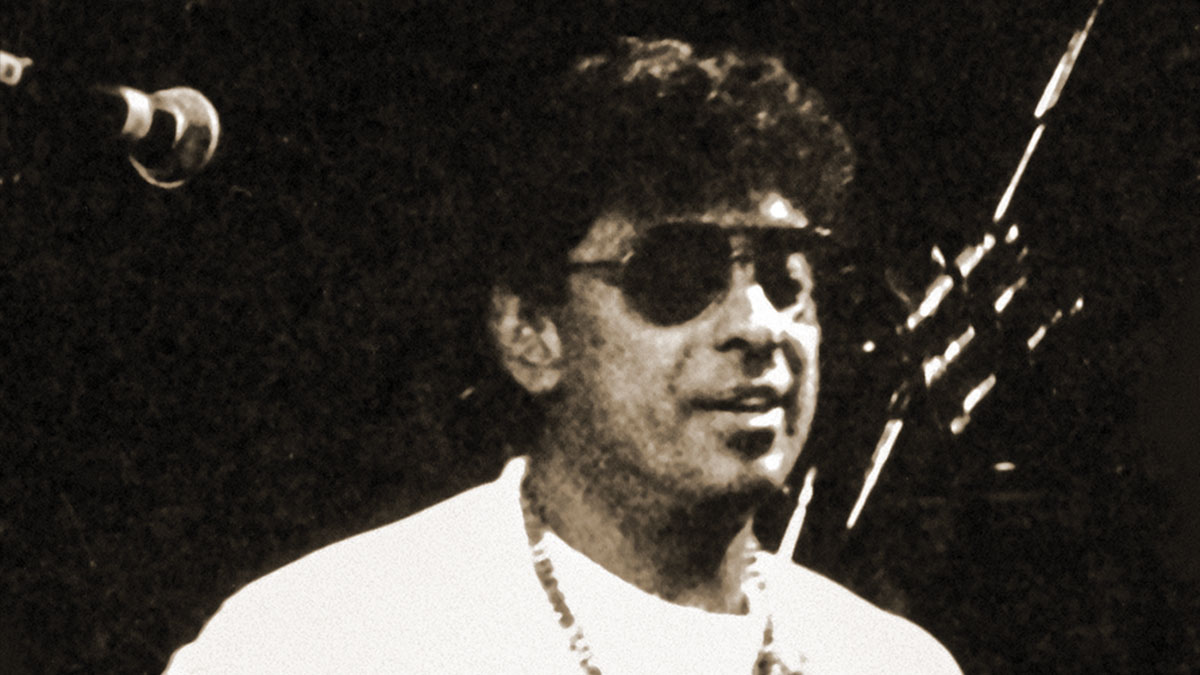
Joey Molland
The word “underrated” is belabored in music journalism, but Joey Molland was just that. As co-guitarist in Badfinger, he was part of a quartet signed to the Beatles’ Apple Records, yielding glorious AM hits like “Come and Get It,” “Day After Day,” and “No Matter What.” The foursome fell into obscurity and tragedy a few
-

McKinley James’ Blues
Family Barn Jam! With his ’82 Gibson 335 running into a Headstrong Corduroy (20-watt/6V6) amp, McKinley James shares a taste of his new album, “Working Class Blues,” with this run at “Call Me Lonesome.” In the October issue, he tells us how the album was made in the family barn with the only backing…
-

Jim Campilongo & Steve Cardenas
Mutual Musical Idiosyncrasies
Steve Cardenas and Jim Campilongo have been playing guitar together for a long time, though the constellations only recently aligned so they could record. Captured on three nights in September of 2022, New Year showcases harmonic personalities merging through atmosphere, reverb, and ancient acoustic guitars. It’s also a meditation on the beauty and strength of…

Diamond Rio’s Jimmy Olander
Sworn Gunslinger
Grand Ole Opry member, CMA, ACM, and Grammy winner Jimmy Olander is one of the most-admired players in country music.…
Watkins Scout
Merit Badge
Watkins amps never landed big stars, or at least didn’t hold on to the endorsements of guitarists once they became…

1934 Gibson F-7
Prior to Gibson’s innovations, mandolins were bowl-back instruments with a lute-like back usually constructed with rosewood or maple back ribs…

Microphones and Their Uses
The Art of Home Recording
The means to make high-quality home recordings are well within the grasp of every guitarists. But, they can only as…