-

Classic Instruments
Classics: Norman Harris
Rare Pioneer
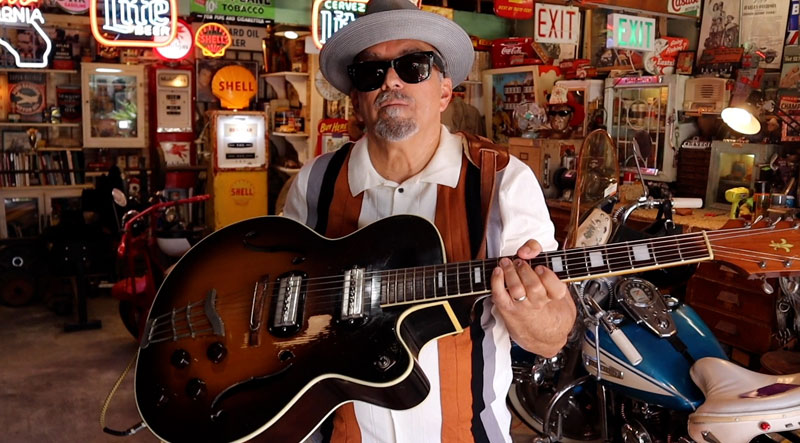
As a teenager who just wanted to play music, Norm Harris lived with the reality that he and his band weren’t going to be millionaires anytime soon. So he did what musicians do – side-hustled. But when most were manning the counter at a music shop or serving tables, Harris was up at the crack
-
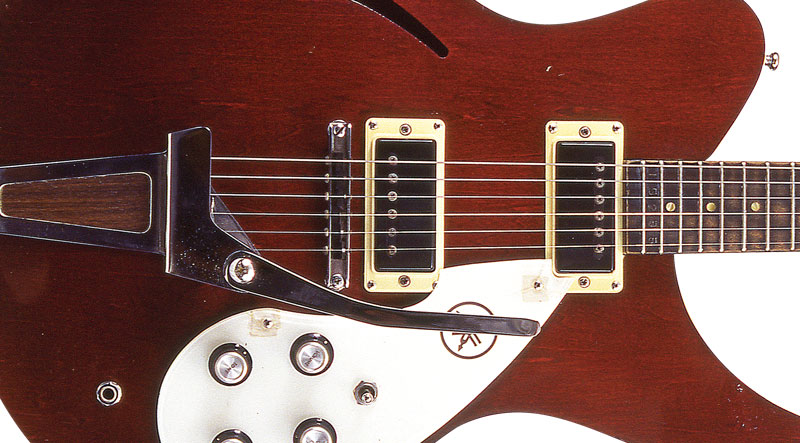
Yamaha SA-15
Our perception of Japanese guitars has evolved slowly. At one point, they were cheap toys, at other times imperfect copies, then startling innovations. Perspective encircles the truth. So, how should we perceive the Yamaha SA-15? Japan became interested in guitars in the early 1920s, as some musicians there began to perform what we’d today call…
-

Greg Koch: Gristly “Blues”
Greg Koch: Gristly “Blues” Greg Koch fearlessly wrings the sort of vibrato that only a Tele will tolerate from his ’53 to play this exclusive version of Freddie King’s “The Stumble” flavored with a bit of delay and running into his Tone King Royalist. Inspired by fan requests, it’s just one of the tracks culled…

National Westwood
Whether Valco – the company that made National guitars in the 1950s and ’60s – was actually inspired by U.S.…

Charlie Starr: Open-Tuning Magic on “Azalea”
Blackberry Smoke frontman on a vintage Gibson Enjoy a bit of the supremely tasty “Azalea,” played by Charlie Starr and…

Sovtek MIG-50
Curtain Call
Given their development in the twilight years of the U.S.S.R. and arrival at the fall of the Iron Curtain, it…

VG Q&A: Jimi Flip
Plus, Precision Bass rests and an odd Galliano
I’ve never read why Jimi Hendrix played and set up a right-hand Strat to play left-handed. Surely, he could’ve found…

The Koch Studiotone
No-Sweat Double-Duty
Koch Amplifier’s 20-watt Studiotone uses an all-tube circuit powered by a matched pair of Ruby EL84 tubes producing 20 watts and three 12AX7A preamp tubes. The Studiotone’s lightweight, compact (19…
National Westwood
Whether Valco – the company that made National guitars in the 1950s and ’60s – was actually inspired by U.S. geography when it created its legendary “map” guitars is unknown,…

Jake Andrews – “ Apricot Brandy”
Austin Stalwart Goes Full Steam for “Apricot Brandy” Jake Andrews was just eight years old when he sat in at Antone’s with an impressed Albert King, and not long after…

Vivi-Tone “Skeleton
A Master’s Magnificent Misfire
The eternal question “Who invented the electric guitar?” has no single answer. By the late 1920s, many players, tinkerers, and inventors were exploring ways to get more volume from fretted…

Doublenecks, Triplenecks…
And the California Weird Factor
If you mention doubleneck or multi-neck guitars to your average guitar player, the first thing they’ll likely think of is Jimmy Page playing his Gibson EDS-1275 with Led Zeppelin, or…
-
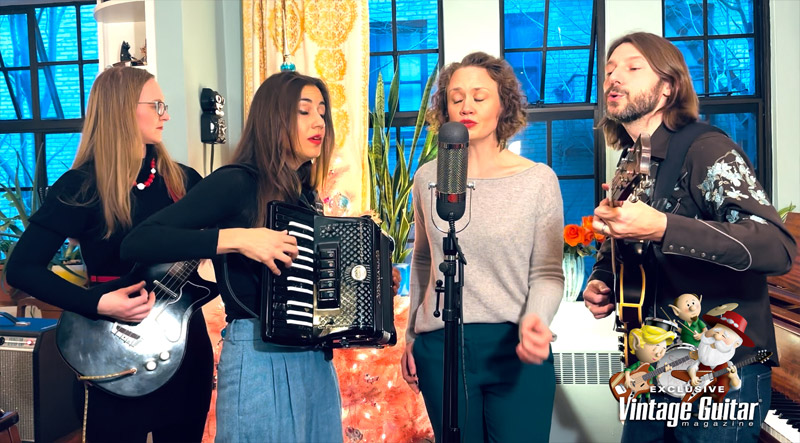
Hilary Gardner returns with a fresh take on a holiday classic!
Hilary Gardner returns! Ready to set the tone for your holidays, Hilary Gardner and her band return for a fantastic take on the classic Elvis hit “Blue Christmas” (written by Billy Hayes and Jay W. Johnson) just for VG followers! Accompanied again by Justin Poindexter and Sasha Papernik, this time they’re joined by Jen Hodge on…
-
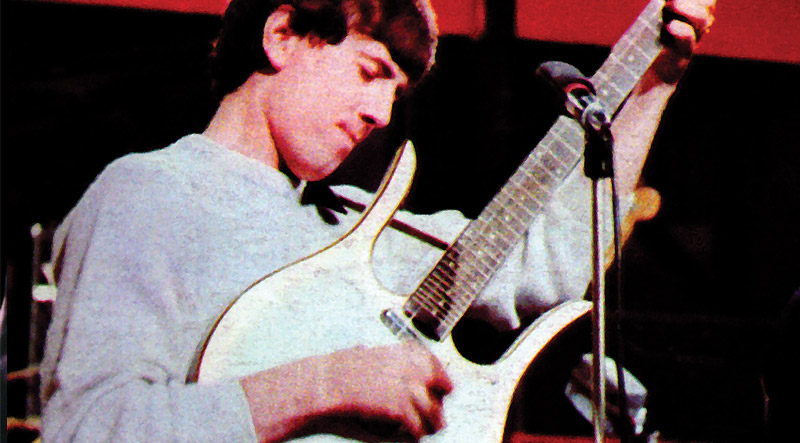
The (Way) Back Beat: Top O’ The Line, For Only $150!
The Immortal Danelectro Guitarlin
Having looked at the most expensive electric guitars offered in 1960s – over 50 years ago. Traditional makers – Gibson, Guild, and Gretsch – concentrated on flashy amplified archtops that retailed up into the $700 to $800 range – beautiful instruments, but not representative of where the electric guitar was going. More forward-looking makers offered…

The Gibson ES-5
Instrument Profile
Gibson, like all American guitarmakers, had to shut down electric guitar production for three years during World War II. But…

Jorge Garcia’s FM Anthems, in Jazz
Fresh takes on revered classics Joge Garcia’s “Still Crossing” is a collection of stellar instrumental performances of familiar tunes like…

Marshall 2100 Lead & Bass
Rock Breaker
Adescendant of the legendary “Bluesbreaker” combo that helped launch the cranked-Marshall sound into the annals of rock, the 2100 combo…

“Boogie Mod” Dual Showman
What do you do when the humble blackface Bandmaster you acquired sight-unseen turns out to harbor one of rock’s hottest…

Muireann Bradley, Old Soul
Vintage Blues, Vintage L-50 Direct from Ireland, 17-year-old Muireann Bradley indulges us (and tugs at our Led Zep heartstrings) with a rendition of Memphis Minnie’s “When the Levee Breaks.” She’s…

Hank’s Protos
How Hank Garland Helped Gibson Develop Two Models Not Called Byrdland
There are guitars, there are great guitars, there are great historic guitars and there are great historic guitars bearing deep provenance. And then there are guitars of such immense mystique,…

Lyon and Healy
So what is it? Its original black-finished spruce top is simply ladder-braced from within, but its back and sides feature Brazilian rosewood with dramatic bookmatched figure. Its unbound 18-fret fingerboard…

The Fender “High-Powered” Twin
1958-’59 Fender Twin Preamp tubes: one 12AY7, two 12AX7 Output tubes: four 5881 (6L6 equivalents), fixed bias Rectifier: GZ34 (5AR4) tube Controls: Volume, Volume, Treble, Bass, Middle, Presence Output: 80…

The Komet Constellation
Amid the general run of vintage amps we have explored in this space, the occasional “modern classic” has proved itself worthy through sheer quality of design, uniqueness of tone and/or…
Marshall 2100 Lead & Bass
Rock Breaker
Adescendant of the legendary “Bluesbreaker” combo that helped launch the cranked-Marshall sound into the annals of rock, the 2100 combo is also one of the rarest post-plexi models – and…
-
Classics: Jeremy Graf’s 1961 Fender Stratocaster
A lifelong vintage-guitar nut who has had “a million guitars,” Jeremy Graf’s all-time favorite is this 1961 Stratocaster. A native of Knoxville, Tennessee, Graf was just seven when, for reasons he doesn’t remember, he asked for an Elvis Presley record. His mother obliged and brought home Elvis’ Golden Records, a compilation of ’50s hits. “That
-
Rising Rockers
Five Alternative Club Classic Amps of the ’50s
In an era when the sub-20-watt combo is arguably the most popular guitar-amp format, it’s worth remembering that several classics of the category emanate from the ’50s. And just as interesting as the well-worn favorites, several lesser-known alternatives were also born in the decade of rock and roll. In the December ’24 issue, we examined
-
Classics: Marc Schoenberger’s Rickenbacker Combo 600
Marc Schoenberger was part of the early-’70s vanguard on the Southern California guitar scene – not as a gigging musician, but among the crowd that raced the 101 freeway to check out old guitars every time a new issue of the Recycler hit the streets. He’d also been repairing guitars for friends and local shops
-
The Supro Thunderbolt S6420
Lightning Strikes
Despite their catalog-grade status, Supro amps have been used by several noteworthy guitarists. For many, the sturdy Thunderbolt is the preferred workhorse. It’s been a long time since Supro amps were any kind of secret find or hidden gem; players have long recognized the eccentric splendors of certain mid-sized examples, with their thumping tremolo and
-
Rickenbacker’s Electric 12-Strings
Double-bound for Glory
George Beauchamp and Adolph Rickenbacher founded Electro String in 1931 to manufacture what everyone would soon call “Rickenbacker” guitars. Success came early and their lap steels set standards of quality, performance, and tone. On the other hand, the company’s electric bass viols and violins excited segments of the industry but never sold well. Same for
-
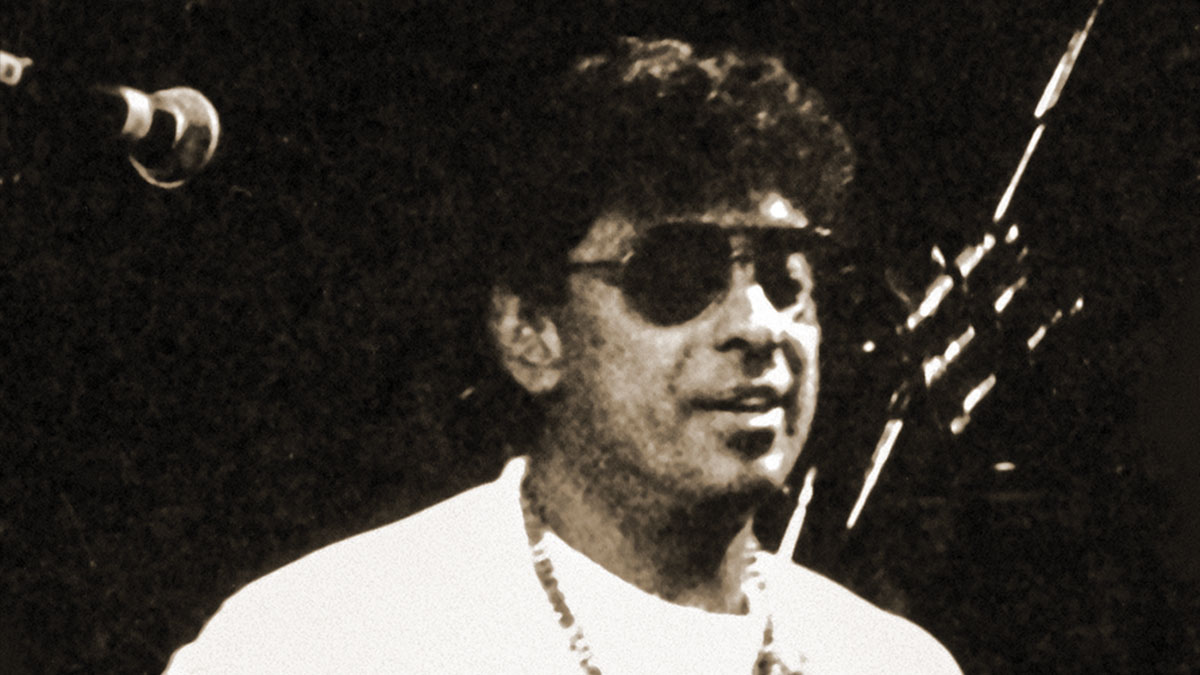
Joey Molland
The word “underrated” is belabored in music journalism, but Joey Molland was just that. As co-guitarist in Badfinger, he was part of a quartet signed to the Beatles’ Apple Records, yielding glorious AM hits like “Come and Get It,” “Day After Day,” and “No Matter What.” The foursome fell into obscurity and tragedy a few
-

McKinley James’ Blues
Family Barn Jam! With his ’82 Gibson 335 running into a Headstrong Corduroy (20-watt/6V6) amp, McKinley James shares a taste of his new album, “Working Class Blues,” with this run at “Call Me Lonesome.” In the October issue, he tells us how the album was made in the family barn with the only backing…
-

Jim Campilongo & Steve Cardenas
Mutual Musical Idiosyncrasies
Steve Cardenas and Jim Campilongo have been playing guitar together for a long time, though the constellations only recently aligned so they could record. Captured on three nights in September of 2022, New Year showcases harmonic personalities merging through atmosphere, reverb, and ancient acoustic guitars. It’s also a meditation on the beauty and strength of…

Vintage Instrument Research
An Ever-Changing Landscape
Fretted instruments can be examined in much the same way as zoological taxonomist or forensic pathologist would approach them. They…

The Real Story of Martin’s 14-Fret Orchestra Models
OM Irony
Martin Orchestra Model (OM) guitars made prior to World War II are some of the finest ever made for fingerpicking.…

The Guitars of Gary Rossington
A Legend’s Legacy
When the time came for Gary Rossington’s family to decide what to do with his guitars and amps after his…

Martin Elegant, a.k.a. “Lula”
It’s an extraordinarily rare event to find a high-grade, historically significant mid-1800s guitar in a pawn shop, but that is…