-
Classic Instruments
Classics: Norman Harris
Rare Pioneer
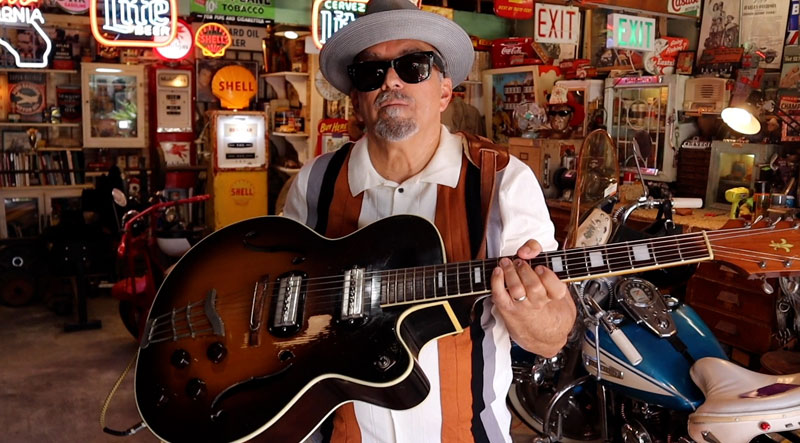
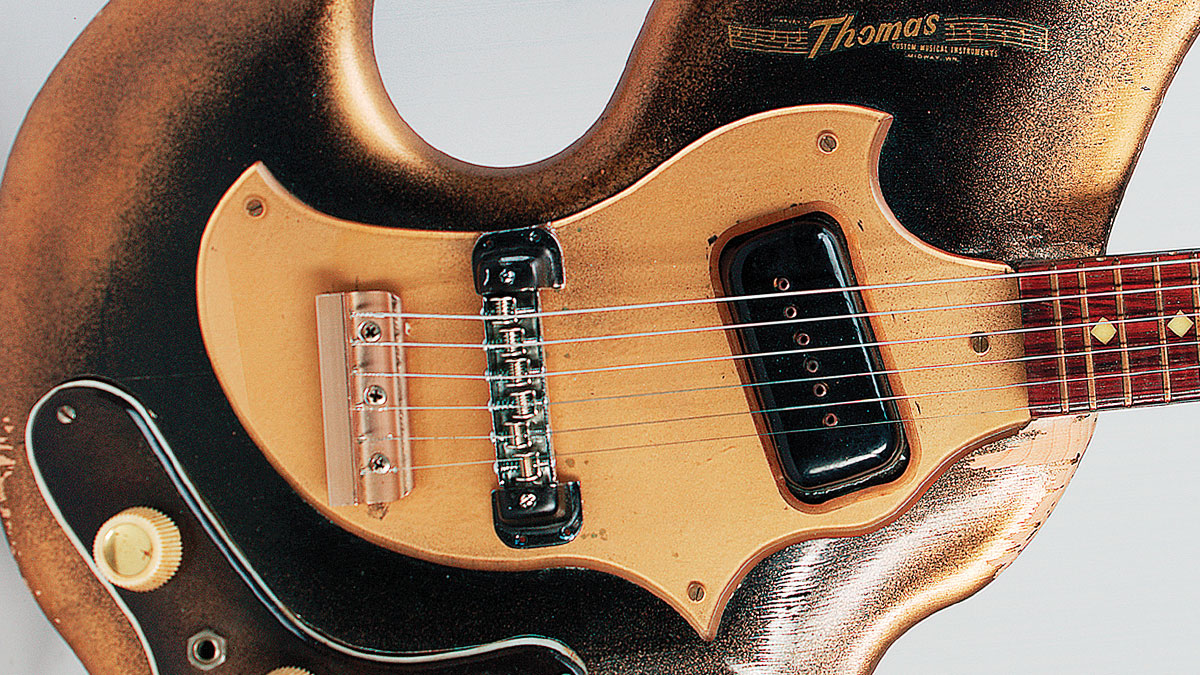
As a teenager who just wanted to play music, Norm Harris lived with the reality that he and his band weren’t going to be millionaires anytime soon. So he did what musicians do – side-hustled. But when most were manning the counter at a music shop or serving tables, Harris was up at the crack
-
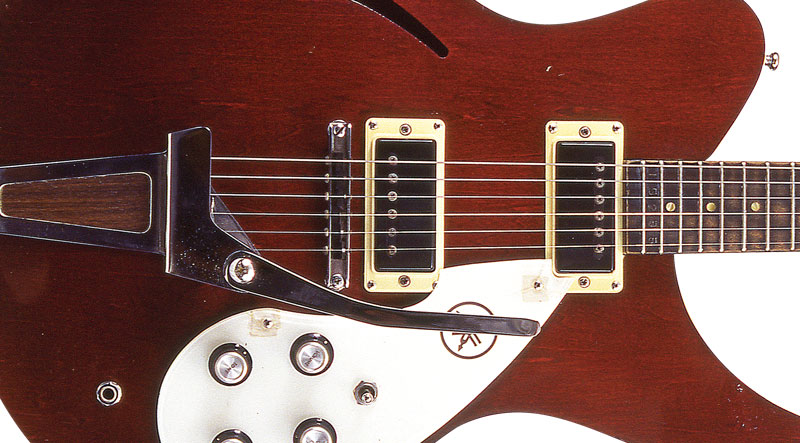
Yamaha SA-15
Our perception of Japanese guitars has evolved slowly. At one point, they were cheap toys, at other times imperfect copies, then startling innovations. Perspective encircles the truth. So, how should we perceive the Yamaha SA-15? Japan became interested in guitars in the early 1920s, as some musicians there began to perform what we’d today call…
-

Greg Koch: Gristly “Blues”
Greg Koch: Gristly “Blues” Greg Koch fearlessly wrings the sort of vibrato that only a Tele will tolerate from his ’53 to play this exclusive version of Freddie King’s “The Stumble” flavored with a bit of delay and running into his Tone King Royalist. Inspired by fan requests, it’s just one of the tracks culled…

Raul Malo’s Instrumental Side
Mavericks frontman with a vintage Jazzmaster Though he is renowned and beloved for his vocals in the Mavericks, Raul…

Martin D-28 and D-45
Definitive Flat-tops
Martin’s pre-WWII dreadnought guitars set the standard for the modern flat-top, and thus both have been inducted into the VG…

Beat Portraits: Burns Volume 4
Shadows and Light
In Beat-era England, before The Beatles, one band reigned supreme – The Shadows. Starting as Cliff Richard’s backing group, this…

Q&A With George Gruhn: Formica Pickguard on an Early Les Paul?
And Not-So-Strange Variations on an ’87 LP Standard
I’ve just completed restoring a very early Les Paul that was horribly damaged and poorly repaired, then painted black! I’m…

Dan’s Guitar RX: A 1955 Gibson Touch-up
Team Effort.
To keep work flowing in my shop, repairs often become a group effort. Recently, Gene Imbody, T.K. Kelly, Paul Schmittauer, and I worked to repair a beautiful ’55 Les Paul…

Duane Eddy
Of DeArmonds and Details
(Ed. Note: Duane Eddy was featured in the June ’95 issue of VG, following the release of his Twang Thang box-set anthology, which included 40 songs he helped re-master and…

Classics: February 2024
Sean Slade’s 1964 SG Junior
They might not seem to have a ton in common aside from first names. J Mascis, Dinosaur Jr.’s co-founder and guitarist developed a style equal parts guitar heroics and left-side-of-the-dial…

Steve Evans’ Guitars & Cars Passion Project
Pretty Pairs
Steve Evans was just 12 years old in 1968, when he began to appreciate the sleek bodies of electric guitars in the brochures he collected through the mail – gazing…

Gibson ES-300 Prototype
Les Paul and the First Gibson ES-300
When a guitar junkie hears the words “soapbar” and “P-90,” the mental image is usually that of a cream-colored rectangle seated deep in a sea of metallic gold, accentuating the…
-

Hilary Gardner returns with a fresh take on a holiday classic!
Hilary Gardner returns! Ready to set the tone for your holidays, Hilary Gardner and her band return for a fantastic take on the classic Elvis hit “Blue Christmas” (written by Billy Hayes and Jay W. Johnson) just for VG followers! Accompanied again by Justin Poindexter and Sasha Papernik, this time they’re joined by Jen Hodge on…
-
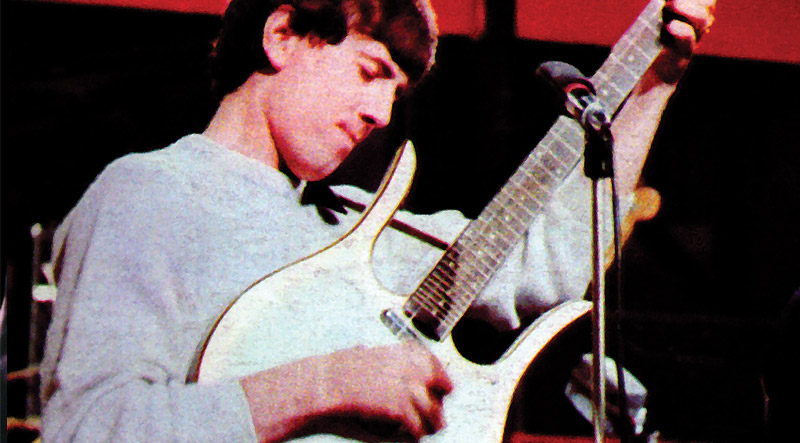
The (Way) Back Beat: Top O’ The Line, For Only $150!
The Immortal Danelectro Guitarlin
Having looked at the most expensive electric guitars offered in 1960s – over 50 years ago. Traditional makers – Gibson, Guild, and Gretsch – concentrated on flashy amplified archtops that retailed up into the $700 to $800 range – beautiful instruments, but not representative of where the electric guitar was going. More forward-looking makers offered…

Rick Vito’s Tale Of Two Grails
Find of a Lifetime
Whether it was by watching “Bandstand” on TV or learning the licks of Duane Eddy, Chuck Berry, or the Ventures,…

Matchless DC-30
Preamp Tubes: One EF86, three 12AX7s (one for PI) Output Tubes: Four EL84s in class A, cathode-bias. Rectifier: GZ34 Controls:…

The Vox Saturn IV
In the mid 1960s, England’s Vox company was in the right place at the right time. Buoyed by frontline British…

Fender‘s 50th Anniversary Strat
Height of the Reissue
In celebration of the 50th “birthday” of its famous Stratocaster model, Fender has taken the reissue concept to new heights.…

Arbiter Fuzz Face
When Jimi Hendrix released his first album, 1967’s Are You Experienced, he launched a new level of guitar heroics as well as a sartorial fad for ruffled shirts and band…

The Gibson Starfire TR 1000 RVT
Trans-Galactic Toneway
Relatively unsung among early entrants to the field of solid-state guitar amplifiers, Gibson was the first high-output, high-quality manufacturer to bring one to market. And while it quickly proved the…

Dumble Overdrive Special OD150 WR
Alexander Dumble’s creations were already established as legendary when we probed our first example in this space back in May of 2011. Since that time, however, Dumbles have become the…

Gibson Style R Harp Guitar
Harp guitars with a standard six-string guitar neck and varying numbers of sub-bass harp-style strings have been made by a variety of American builders. Some of the best-known include Gibson,…

Hilary Gardner returns with a fresh take on a holiday classic!
Hilary Gardner returns! Ready to set the tone for your holidays, Hilary Gardner and her band return for a fantastic take on the classic Elvis hit “Blue Christmas” (written by Billy…

Classics: September 2023
Bill Fudge’s Micro-Frets Huntington
Several years before he became a luthier who deserves much greater recognition, Ralph Jones sold new Fender guitars and amps out of his home studio in Rockville, Maryland. One early…
-
Classics: Jeremy Graf’s 1961 Fender Stratocaster
A lifelong vintage-guitar nut who has had “a million guitars,” Jeremy Graf’s all-time favorite is this 1961 Stratocaster. A native of Knoxville, Tennessee, Graf was just seven when, for reasons he doesn’t remember, he asked for an Elvis Presley record. His mother obliged and brought home Elvis’ Golden Records, a compilation of ’50s hits. “That
-
Rising Rockers
Five Alternative Club Classic Amps of the ’50s
In an era when the sub-20-watt combo is arguably the most popular guitar-amp format, it’s worth remembering that several classics of the category emanate from the ’50s. And just as interesting as the well-worn favorites, several lesser-known alternatives were also born in the decade of rock and roll. In the December ’24 issue, we examined
-
Classics: Marc Schoenberger’s Rickenbacker Combo 600
Marc Schoenberger was part of the early-’70s vanguard on the Southern California guitar scene – not as a gigging musician, but among the crowd that raced the 101 freeway to check out old guitars every time a new issue of the Recycler hit the streets. He’d also been repairing guitars for friends and local shops
-
The Supro Thunderbolt S6420
Lightning Strikes
Despite their catalog-grade status, Supro amps have been used by several noteworthy guitarists. For many, the sturdy Thunderbolt is the preferred workhorse. It’s been a long time since Supro amps were any kind of secret find or hidden gem; players have long recognized the eccentric splendors of certain mid-sized examples, with their thumping tremolo and
-
Rickenbacker’s Electric 12-Strings
Double-bound for Glory
George Beauchamp and Adolph Rickenbacher founded Electro String in 1931 to manufacture what everyone would soon call “Rickenbacker” guitars. Success came early and their lap steels set standards of quality, performance, and tone. On the other hand, the company’s electric bass viols and violins excited segments of the industry but never sold well. Same for
-
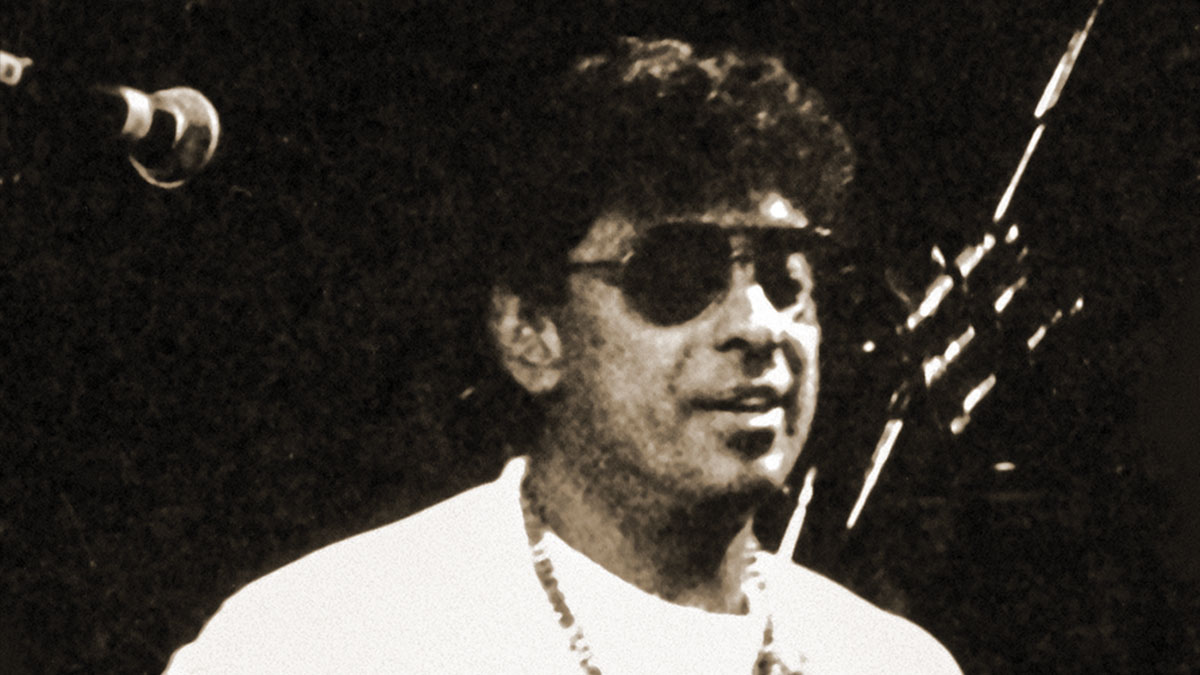
Joey Molland
The word “underrated” is belabored in music journalism, but Joey Molland was just that. As co-guitarist in Badfinger, he was part of a quartet signed to the Beatles’ Apple Records, yielding glorious AM hits like “Come and Get It,” “Day After Day,” and “No Matter What.” The foursome fell into obscurity and tragedy a few
-

McKinley James’ Blues
Family Barn Jam! With his ’82 Gibson 335 running into a Headstrong Corduroy (20-watt/6V6) amp, McKinley James shares a taste of his new album, “Working Class Blues,” with this run at “Call Me Lonesome.” In the October issue, he tells us how the album was made in the family barn with the only backing…
-

Jim Campilongo & Steve Cardenas
Mutual Musical Idiosyncrasies
Steve Cardenas and Jim Campilongo have been playing guitar together for a long time, though the constellations only recently aligned so they could record. Captured on three nights in September of 2022, New Year showcases harmonic personalities merging through atmosphere, reverb, and ancient acoustic guitars. It’s also a meditation on the beauty and strength of…

D’Aquisto New Yorker Classic
During his 30-plus years as an independent guitarmaker, James L. D’Aquisto was acclaimed as the premier maker of archtop guitars.…

B.C. Rich Eagle
When my son was young I used to do “guitar shows” for his classes, showing off 10 or so electric…

Orange OR80 Combo
Sunshine State
Created when amps were huge and men were men – or at least had roadies to carry the gear –…

All That Glitters
Gibson’s Copper Iridescent Les Pauls
Like large celestial bodies, some guitar collectors have a gravity that draws objects to them. In 2016, rare custom-color Les…