-
Classic Instruments
Classics: Norman Harris
Rare Pioneer
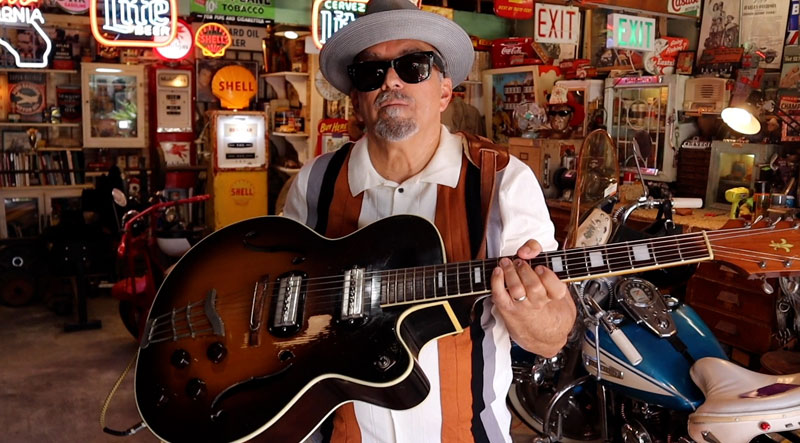
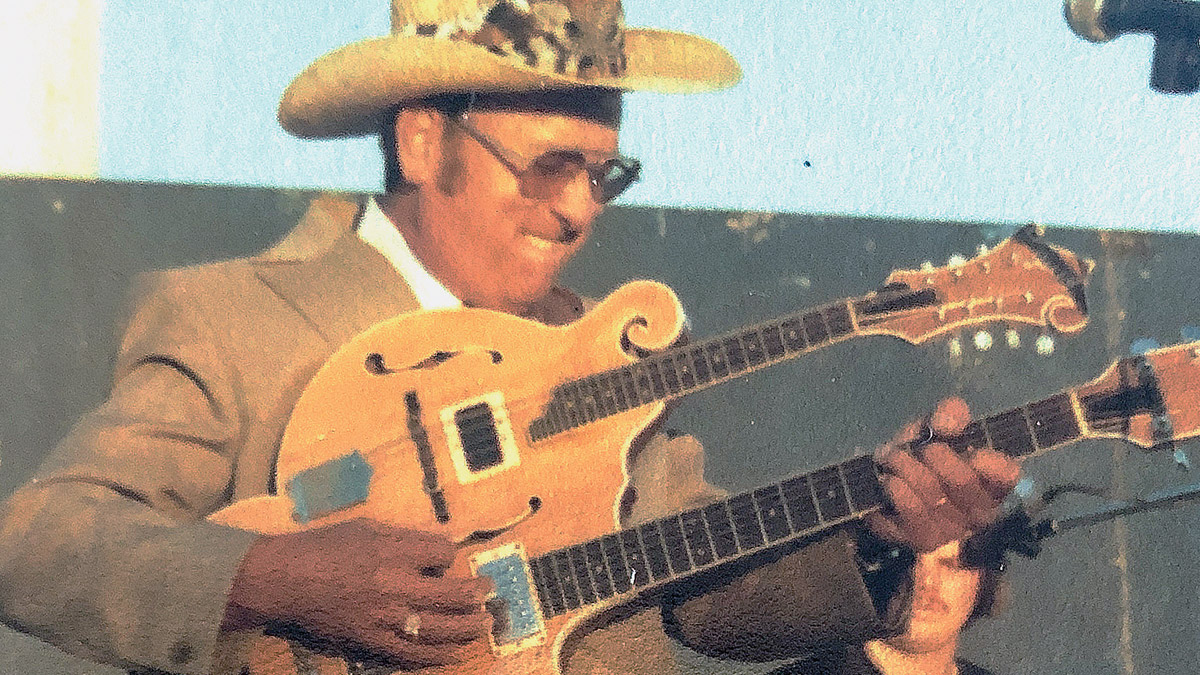
As a teenager who just wanted to play music, Norm Harris lived with the reality that he and his band weren’t going to be millionaires anytime soon. So he did what musicians do – side-hustled. But when most were manning the counter at a music shop or serving tables, Harris was up at the crack
-
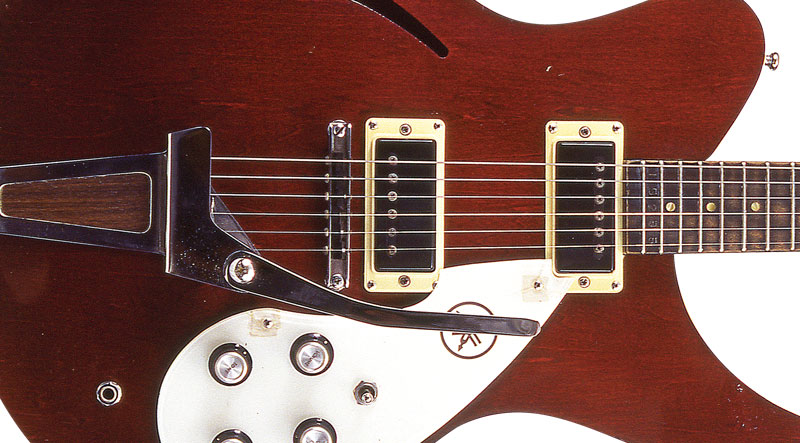
Yamaha SA-15
Our perception of Japanese guitars has evolved slowly. At one point, they were cheap toys, at other times imperfect copies, then startling innovations. Perspective encircles the truth. So, how should we perceive the Yamaha SA-15? Japan became interested in guitars in the early 1920s, as some musicians there began to perform what we’d today call…
-

Greg Koch: Gristly “Blues”
Greg Koch: Gristly “Blues” Greg Koch fearlessly wrings the sort of vibrato that only a Tele will tolerate from his ’53 to play this exclusive version of Freddie King’s “The Stumble” flavored with a bit of delay and running into his Tone King Royalist. Inspired by fan requests, it’s just one of the tracks culled…

Movie Star, Rancher
Mid-’50s Muse of Wire and Wood
In the years immediately after World War II, Americans were settling into a new way of life, and plunging headlong…

Excelsior Americana
If you play any breed of twang, country, roots-rock or, well, “Americana,” could there possibly be a better amp than…

National Style O
Although it has never been the favorite guitar of Hawaiian players, National’s Style O, with its shining metal body and…

Sue Foley
Femme Flamenco
In a time when pop-music performers rely heavily on post-recording fix-ups and pre-recorded tracks onstage, it’s refreshing – even admirable…

Daion Headhunter HH-555
The trajectory of the Japanese guitar industry in many ways has mirrored that of the United States, though in a slightly compressed timeframe on the front-end because America had a…

Gibson’s “blond” J-35
In the world of vintage guitars, people tend to use the words “blond” and “natural” interchangeably to describe a finish with no stain or pigment. However, in some cases, blond…

Ken Fischer
1945-2006
Although by most estimates he produced fewer than 100 Trainwreck amps, Ken Fischer – tech, designer, and amp-maker – will be remembered as one of the most authoritative and intuitive…

Tom Petersson’s Gretsch 12-string Basses
Tricked-Out Trio
Cheap Trick fans are aware of his contribution to the band’s songs, but few know he actually invented the 12-string electric bass and has been using one since 1977 to…

Zac Schulze gets straight to it!
If you’re a fan of Cream, Zeppelin, and Rory Gallagher (who isn’t?), you’ll dig Zac Schulze Gang, a British power trio that’s carrying the torch with both hands; they’ve played…
-
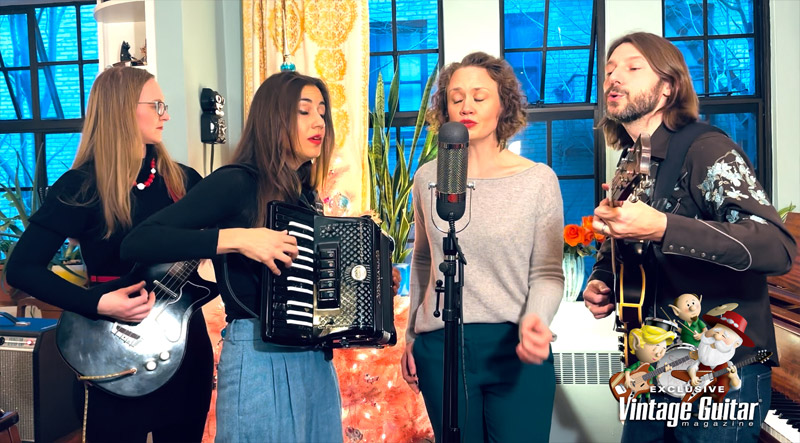
Hilary Gardner returns with a fresh take on a holiday classic!
Hilary Gardner returns! Ready to set the tone for your holidays, Hilary Gardner and her band return for a fantastic take on the classic Elvis hit “Blue Christmas” (written by Billy Hayes and Jay W. Johnson) just for VG followers! Accompanied again by Justin Poindexter and Sasha Papernik, this time they’re joined by Jen Hodge on…
-
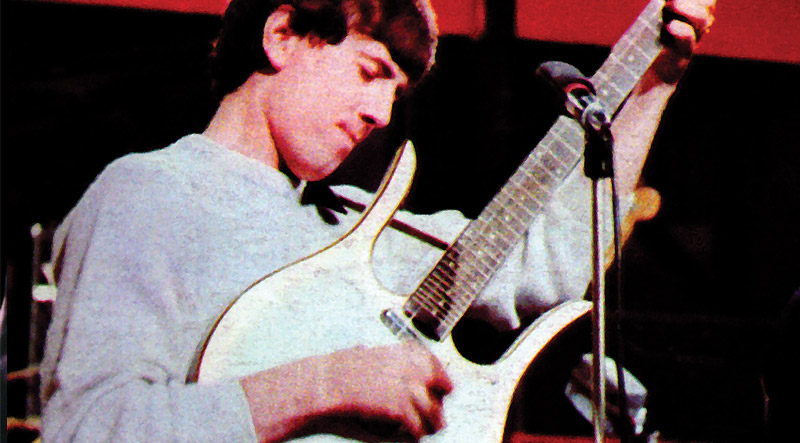
The (Way) Back Beat: Top O’ The Line, For Only $150!
The Immortal Danelectro Guitarlin
Having looked at the most expensive electric guitars offered in 1960s – over 50 years ago. Traditional makers – Gibson, Guild, and Gretsch – concentrated on flashy amplified archtops that retailed up into the $700 to $800 range – beautiful instruments, but not representative of where the electric guitar was going. More forward-looking makers offered…

History of the Fender Bassman
High Times for Low-End
If they could have just one amplifier, many guitarists – from bar-room grinders to arena megastars – would choose a…

Furry Lewis’ 1968 Gibson B-25N
Heart In Hand
Born in the heart of Mississippi’s fabled Delta region – from where Robert Johnson emerged and a blues-music form was…

1988 Guild Liberator Elite
Every once in awhile you find a guitar that’s almost too beautiful to play. It’s just enough to sit there…

The RFT 12AX7
The Righteous Flame-throwin’ Tube
“…there is a time and place for that out-front spank, but if your mood shifts to slightly more mellow, there…

The Oud
Ancient to Modern
If Beatles guitarist George Harrison had used an oud instead of a sitar to give “Norwegian Wood” its distinct sound, the name Munir Bashir may be more recognized today than…

The Gibson Starfire TR 1000 RVT
Trans-Galactic Toneway
Relatively unsung among early entrants to the field of solid-state guitar amplifiers, Gibson was the first high-output, high-quality manufacturer to bring one to market. And while it quickly proved the…

Orville Gibson A model
All carved-top guitars and mandolins trace their ancestry back to Orville Gibson of Kalamazoo, Michigan. However, as this A model mandolin illustrates, Orville’s designs went through considerable refinement through the…

Kustom’s The Bag
A New Dimension in Electro-Thoracity
When Steppenwolf’s John Kay took the stage, it was easy to believe he was performing a suitably ’60s ceremony celebrating the wine god Bacchus, thanks to what looked like a…

The Sebastian ‘Burst
Inspirational Icon
The mere mention of a Gibson Les Paul Standard made between 1958 and 1960 commands attention. But one like this, made famous in the hands of John Sebastian in the…

Fender’s Musicmaster and Duo‑Sonic
Little Brothers
Often forgotten, the diminutive student-grade duo went from concept to reality in short order to capitalize on teenagers taking up guitar to play along with “Rock Around the Clock.”
-
Classics: Jeremy Graf’s 1961 Fender Stratocaster
A lifelong vintage-guitar nut who has had “a million guitars,” Jeremy Graf’s all-time favorite is this 1961 Stratocaster. A native of Knoxville, Tennessee, Graf was just seven when, for reasons he doesn’t remember, he asked for an Elvis Presley record. His mother obliged and brought home Elvis’ Golden Records, a compilation of ’50s hits. “That
-
Rising Rockers
Five Alternative Club Classic Amps of the ’50s
In an era when the sub-20-watt combo is arguably the most popular guitar-amp format, it’s worth remembering that several classics of the category emanate from the ’50s. And just as interesting as the well-worn favorites, several lesser-known alternatives were also born in the decade of rock and roll. In the December ’24 issue, we examined
-
Classics: Marc Schoenberger’s Rickenbacker Combo 600
Marc Schoenberger was part of the early-’70s vanguard on the Southern California guitar scene – not as a gigging musician, but among the crowd that raced the 101 freeway to check out old guitars every time a new issue of the Recycler hit the streets. He’d also been repairing guitars for friends and local shops
-
The Supro Thunderbolt S6420
Lightning Strikes
Despite their catalog-grade status, Supro amps have been used by several noteworthy guitarists. For many, the sturdy Thunderbolt is the preferred workhorse. It’s been a long time since Supro amps were any kind of secret find or hidden gem; players have long recognized the eccentric splendors of certain mid-sized examples, with their thumping tremolo and
-
Rickenbacker’s Electric 12-Strings
Double-bound for Glory
George Beauchamp and Adolph Rickenbacher founded Electro String in 1931 to manufacture what everyone would soon call “Rickenbacker” guitars. Success came early and their lap steels set standards of quality, performance, and tone. On the other hand, the company’s electric bass viols and violins excited segments of the industry but never sold well. Same for
-
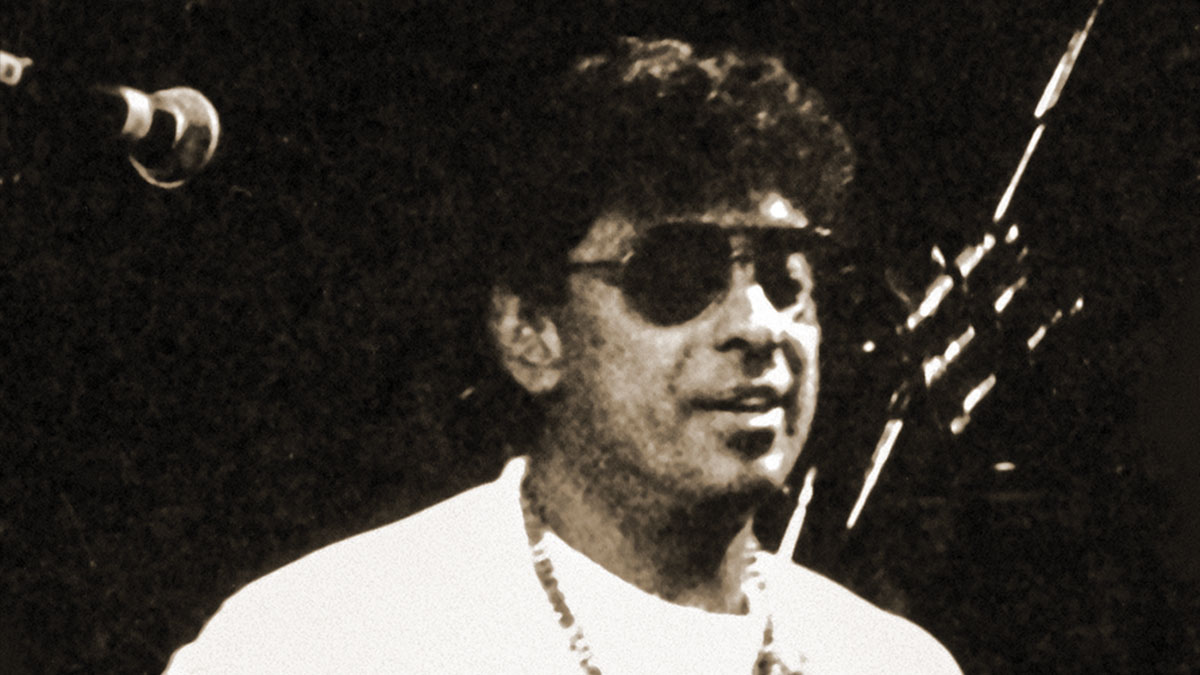
Joey Molland
The word “underrated” is belabored in music journalism, but Joey Molland was just that. As co-guitarist in Badfinger, he was part of a quartet signed to the Beatles’ Apple Records, yielding glorious AM hits like “Come and Get It,” “Day After Day,” and “No Matter What.” The foursome fell into obscurity and tragedy a few
-

McKinley James’ Blues
Family Barn Jam! With his ’82 Gibson 335 running into a Headstrong Corduroy (20-watt/6V6) amp, McKinley James shares a taste of his new album, “Working Class Blues,” with this run at “Call Me Lonesome.” In the October issue, he tells us how the album was made in the family barn with the only backing…
-

Jim Campilongo & Steve Cardenas
Mutual Musical Idiosyncrasies
Steve Cardenas and Jim Campilongo have been playing guitar together for a long time, though the constellations only recently aligned so they could record. Captured on three nights in September of 2022, New Year showcases harmonic personalities merging through atmosphere, reverb, and ancient acoustic guitars. It’s also a meditation on the beauty and strength of…

Dan’s Guitar RX: Building a From-Scratch Class Project, Part Two
Rock-And-Roll High School(er)
In the August issue, we introduced you to Ceil Thompson, a high-school intern in my shop who’s building a guitar…

Nioma Guitars
Rarities from a West Coast Music School
NIOMA musical instruments from the 1930s and ’40s – with their vaguely Hawaiian-looking name – have mystified vintage-guitar enthusiasts over…

Tom Petty and Mike Campbell
Guitars at Heart for 30 Years
Remember the first time you strummed a D chord or fumbled your way oh-so-slowly through “Walk Don’t Run”? Chances are…

JMI Vox AC15 “Two-Tone” 1×12″
TV Star
The permutations of early Vox models remain endlessly fascinating to vintage-amp enthusiasts, and few get us as worked up as…