-
Classic Instruments
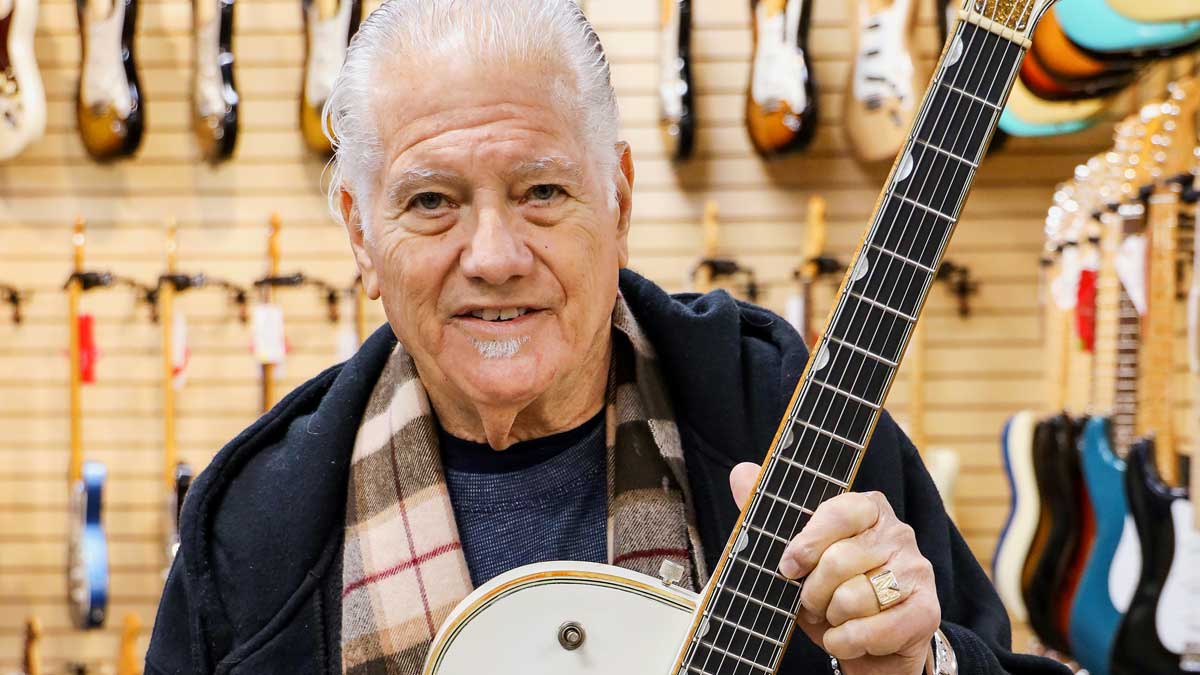
Classics: Norman Harris
Rare Pioneer
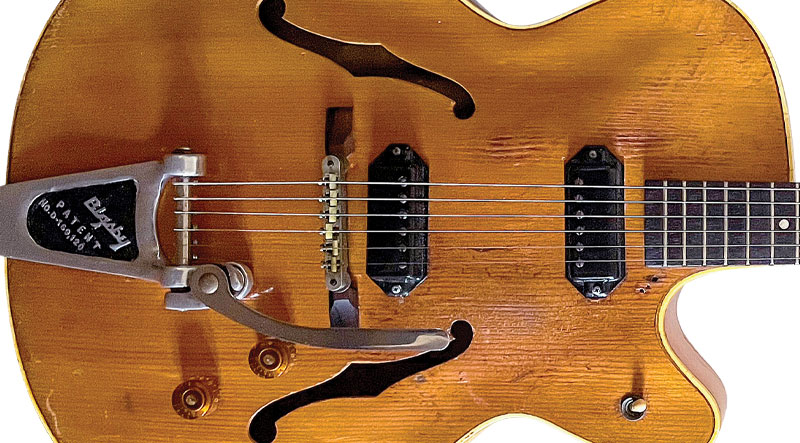
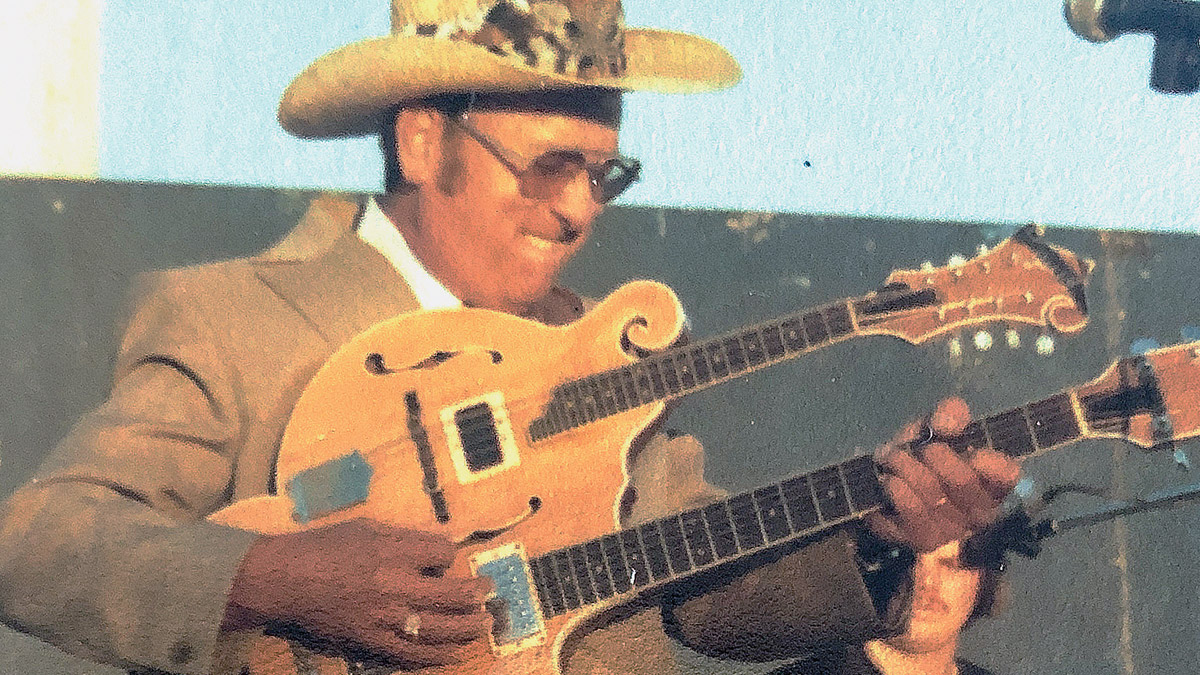
As a teenager who just wanted to play music, Norm Harris lived with the reality that he and his band weren’t going to be millionaires anytime soon. So he did what musicians do – side-hustled. But when most were manning the counter at a music shop or serving tables, Harris was up at the crack
-
Yamaha SA-15
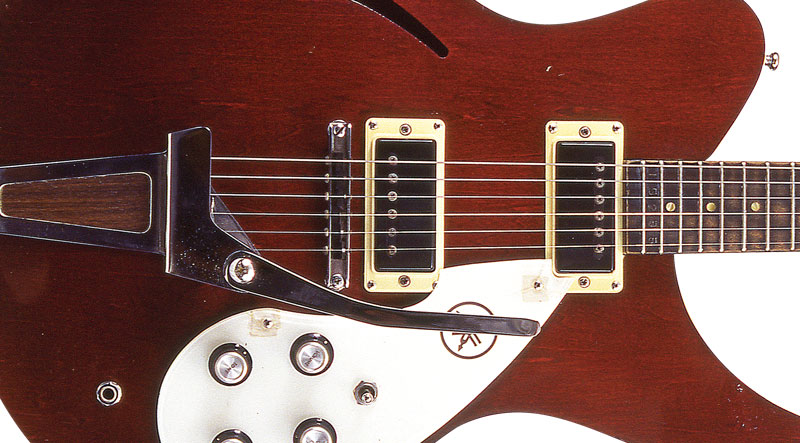
Our perception of Japanese guitars has evolved slowly. At one point, they were cheap toys, at other times imperfect copies, then startling innovations. Perspective encircles the truth. So, how should we perceive the Yamaha SA-15? Japan became interested in guitars in the early 1920s, as some musicians there began to perform what we’d today call…
-

Greg Koch: Gristly “Blues”
Greg Koch: Gristly “Blues” Greg Koch fearlessly wrings the sort of vibrato that only a Tele will tolerate from his ’53 to play this exclusive version of Freddie King’s “The Stumble” flavored with a bit of delay and running into his Tone King Royalist. Inspired by fan requests, it’s just one of the tracks culled…

Star Board: Joe Moss
Joe Moss is the archetypical blues “road dog,” regularly rolling out of his home base of Chicago to wail for…

Fender’s 5E7 Bandmaster
There’s something about the 3×10 Bandmaster that drives vintage-Fender nuts gaga. Introduced in 1953, it underwent substantial design changes in…

“Buy That Guitar” podcast with special guest Binky Philips
Season 03 Episode 01 In Episode 3.2 of “Buy That Guitar,” presented by Vintage Guitar magazine, host Ram Tuli engages…

B.C. Rich Eagle
When my son was young I used to do “guitar shows” for his classes, showing off 10 or so electric…

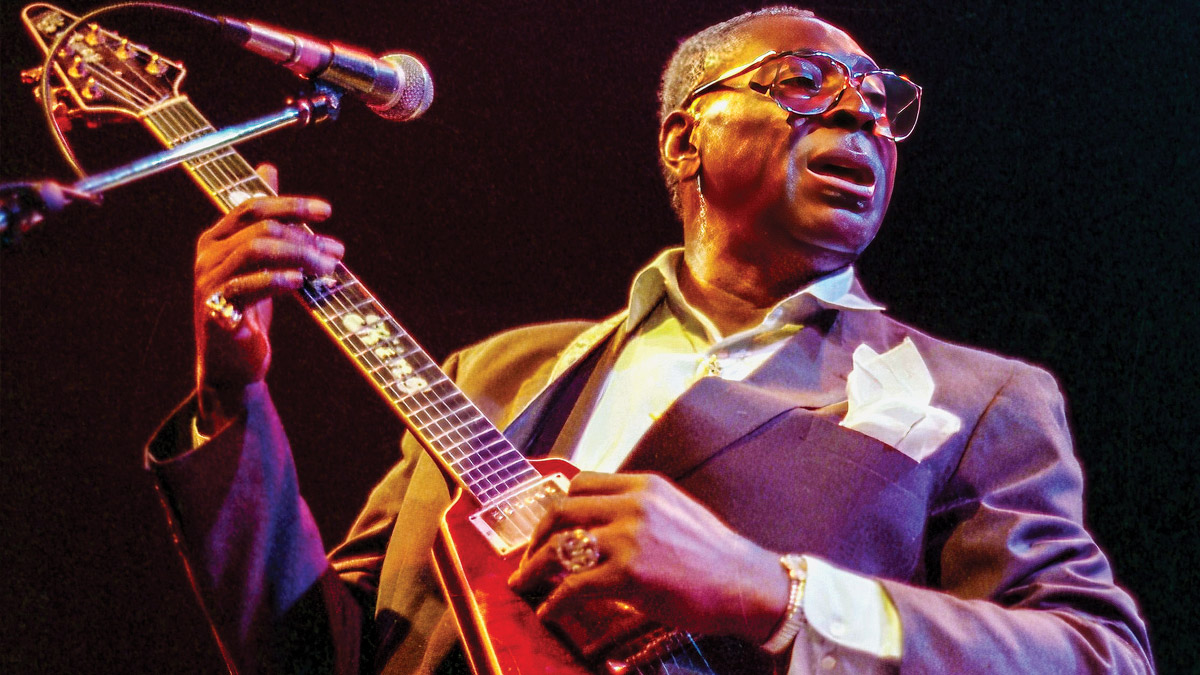
Albert King’s THC Flying V
Coterie Complete
Robert Johnson has been a fixture in the vintage-guitar community for more than a half-century. As a player and music producer, he has collected an assortment of instruments and music…

Sixty Years of Tele-Kinetic Guitar Heroes
Flying Saucers! Tail Fins! Robots!
Taking a cue from the burgeoning world of television, in 1951, Leo Fender married the name “Telecaster” to his new electric-solidbody guitar. Originally dubbed “Broadcaster” (which infringed on a Gretsch…

George Fullerton’s Fender Jazzmaster
A Master's Pallet
This Jazzmaster is an interesting example of what went on behind the scenes at the Fender factory with the research and development of body shapes and materials, and during the…

Rickenbacker’s Electric 12-Strings
Double-bound for Glory
George Beauchamp and Adolph Rickenbacher founded Electro String in 1931 to manufacture what everyone would soon call “Rickenbacker” guitars. Success came early and their lap steels set standards of quality,…

Classics: October 2023
Michael Bloomfield 1963 Fender Stratocaster
Antonio Mazzara’s passion for music started at age 10, when he started playing a nylon-string classical guitar before moving up to a sunburst ’72 Strat and a ’68 Princeton Reverb…
-
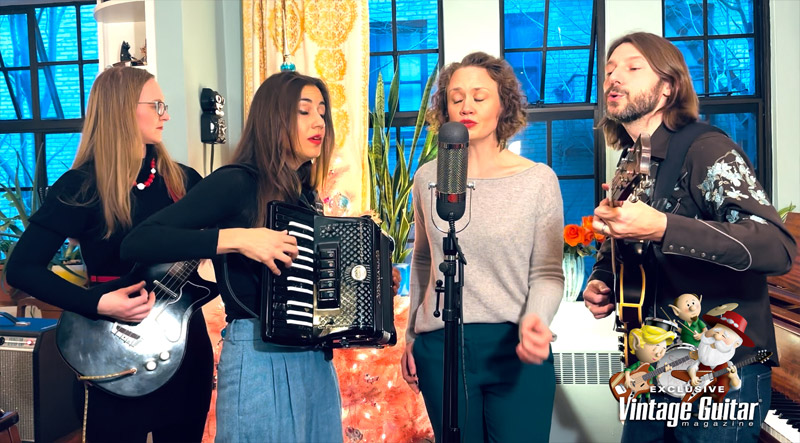
Hilary Gardner returns with a fresh take on a holiday classic!
Hilary Gardner returns! Ready to set the tone for your holidays, Hilary Gardner and her band return for a fantastic take on the classic Elvis hit “Blue Christmas” (written by Billy Hayes and Jay W. Johnson) just for VG followers! Accompanied again by Justin Poindexter and Sasha Papernik, this time they’re joined by Jen Hodge on…
-
The (Way) Back Beat: Top O’ The Line, For Only $150!
The Immortal Danelectro Guitarlin
Having looked at the most expensive electric guitars offered in 1960s – over 50 years ago. Traditional makers – Gibson, Guild, and Gretsch – concentrated on flashy amplified archtops that retailed up into the $700 to $800 range – beautiful instruments, but not representative of where the electric guitar was going. More forward-looking makers offered…

1944 Martin 00-28
This Martin 00-28 is a highly unusual instrument. Made as part of a group of six created with shop-order number…

Hornby Skewes Zonk Machines
Fuzz Bonk
In 1965, fuzz was the “it” sound. Guitarists had recorded with fuzz before, of course, but after Keith Richards plugged…

Dan’s Guitar RX: Building a From-Scratch Class Project, Part Two
Rock-And-Roll High School(er)
In the August issue, we introduced you to Ceil Thompson, a high-school intern in my shop who’s building a guitar…

Buddy Holly’s ’58 Magnatone 280
1958 Magnatone Custom 280
When guitarists talk tremolo or vibrato, you can bet the magnificent Magnatone amps will find their way into the conversation.…

Star Board: Bruce Kulick
Bruce Kulick played lead guitar in Kiss for more than a decade, and today stays busy as a solo performer and tours as a member of Grand Funk Railroad. Speaking…

Classics: December 2022
Reid Farrell’s Fender Tele
In 1964, high-school freshman Reid Farrell bought a Fiesta Red ’59 Telecaster with help from his guitar teacher, John Andrews. The price? $125, in its original hard case. A couple…

Jeff Plankenhorn’s “Alone At Sea”
Tasty slide on a square-neck Oahu Singer/songwriter Jeff Plankenhorn’s music is a rootsy mix that embraces blues and pop while dodging categorization. Here, he and his vintage square-neck Oahu offer…

Freddie King’s ’73 ES-355
Thinline Crown
Influenced by Robert Johnson, T-Bone Walker, Lightnin’ Hopkins, John Lee Hooker, Muddy Waters, Sonny Boy Williamson, and others including jump-blues saxophonist Louis Jordan, Freddie King was an integral piece of…

L-5 to Super 400
The Story of Gibson’s Big Archtops
The archtop guitar is a uniquely American instrument which can be traced directly to the creative genius of one person – Orville Gibson. In the mid 1890s, the man who…

Popa Chubby’s Dangerous Attitude
NYC blues beast rips on “I Don’t Want Nobody A fixture in New York City blues joints and familiar face in others worldwide, Popa Chubby melds blues-rock with punk-rock immediacy.…
-
Classics: Jeremy Graf’s 1961 Fender Stratocaster
A lifelong vintage-guitar nut who has had “a million guitars,” Jeremy Graf’s all-time favorite is this 1961 Stratocaster. A native of Knoxville, Tennessee, Graf was just seven when, for reasons he doesn’t remember, he asked for an Elvis Presley record. His mother obliged and brought home Elvis’ Golden Records, a compilation of ’50s hits. “That
-
Rising Rockers
Five Alternative Club Classic Amps of the ’50s
In an era when the sub-20-watt combo is arguably the most popular guitar-amp format, it’s worth remembering that several classics of the category emanate from the ’50s. And just as interesting as the well-worn favorites, several lesser-known alternatives were also born in the decade of rock and roll. In the December ’24 issue, we examined
-
Classics: Marc Schoenberger’s Rickenbacker Combo 600
Marc Schoenberger was part of the early-’70s vanguard on the Southern California guitar scene – not as a gigging musician, but among the crowd that raced the 101 freeway to check out old guitars every time a new issue of the Recycler hit the streets. He’d also been repairing guitars for friends and local shops
-
The Supro Thunderbolt S6420
Lightning Strikes
Despite their catalog-grade status, Supro amps have been used by several noteworthy guitarists. For many, the sturdy Thunderbolt is the preferred workhorse. It’s been a long time since Supro amps were any kind of secret find or hidden gem; players have long recognized the eccentric splendors of certain mid-sized examples, with their thumping tremolo and
-
Rickenbacker’s Electric 12-Strings
Double-bound for Glory
George Beauchamp and Adolph Rickenbacher founded Electro String in 1931 to manufacture what everyone would soon call “Rickenbacker” guitars. Success came early and their lap steels set standards of quality, performance, and tone. On the other hand, the company’s electric bass viols and violins excited segments of the industry but never sold well. Same for
-
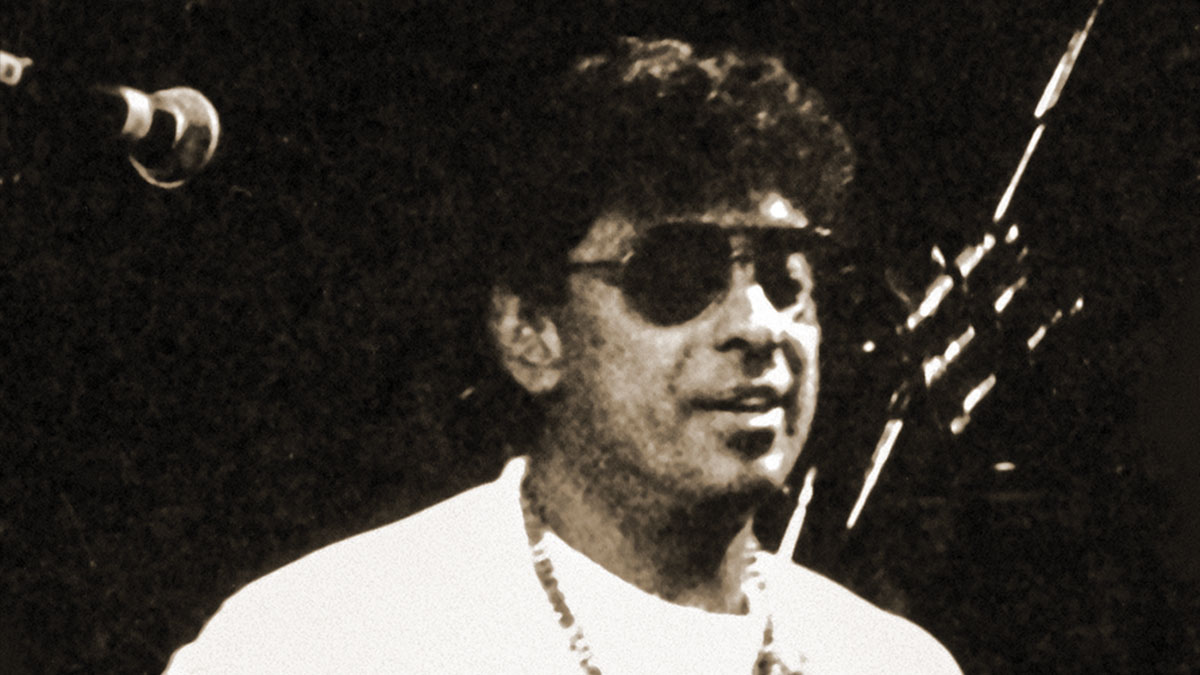
Joey Molland
The word “underrated” is belabored in music journalism, but Joey Molland was just that. As co-guitarist in Badfinger, he was part of a quartet signed to the Beatles’ Apple Records, yielding glorious AM hits like “Come and Get It,” “Day After Day,” and “No Matter What.” The foursome fell into obscurity and tragedy a few
-
McKinley James’ Blues
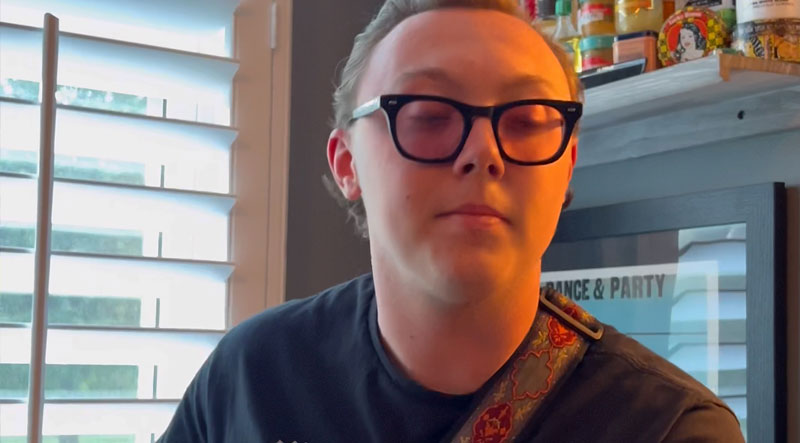
Family Barn Jam! With his ’82 Gibson 335 running into a Headstrong Corduroy (20-watt/6V6) amp, McKinley James shares a taste of his new album, “Working Class Blues,” with this run at “Call Me Lonesome.” In the October issue, he tells us how the album was made in the family barn with the only backing…
-
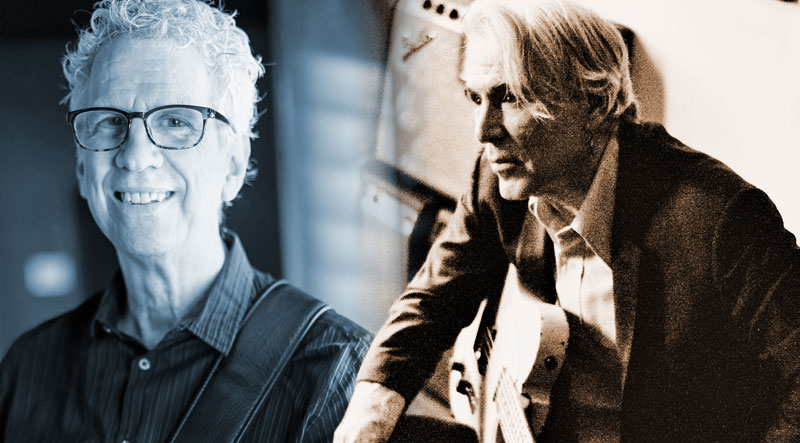
Jim Campilongo & Steve Cardenas
Mutual Musical Idiosyncrasies
Steve Cardenas and Jim Campilongo have been playing guitar together for a long time, though the constellations only recently aligned so they could record. Captured on three nights in September of 2022, New Year showcases harmonic personalities merging through atmosphere, reverb, and ancient acoustic guitars. It’s also a meditation on the beauty and strength of…

Gretsch’s “Golden” Tenors
In the 1950s and early ’60s, the electric guitar was establishing itself as a key part of the new voice…

Echoplex EP-2
Sam Phillips didn’t invent tape echo with his mid-’50s recordings of Elvis, but he just as well may have. So…

Fall Philly 2014
[caption id="attachment_19277" align="alignleft" width="300"] We are here at the Philly show checking out all the killer guitars! Here's a '54…

1985 Guild Nightbird Prototype
In early 1984, Mark Dronge, son of the Guild founder Alfred Dronge, was president of Guild. That year, Mark and…