Tag: features

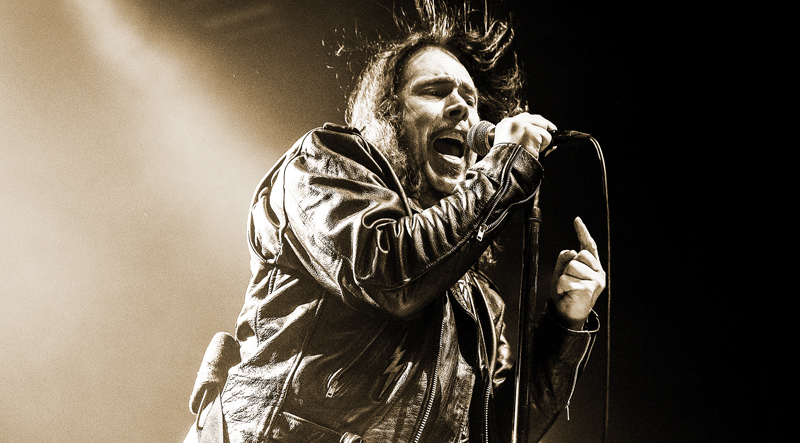
  • Dave Wyndorf

    Dave Wyndorf

    Dave Wyndorf: Svenja Block.

    In the early ’90s, a handful of bands were trailblazers in the realm of “stoner rock”; Kyuss, Sleep, Fu Manchu, Clutch, and especially Monster Magnet. Led by singer/guitarist Dave Wyndorf, its two 1991 albums, Tab and Spine of God, are now considered classics of the genre. Both were recently reissued by Napalm Records, so we asked Wyndorf to take a look back.

    While writing the songs on Tab and Spine of God, did you have any idea that they’d be special?

    Not to anybody else, but they were special to me. I was completely freaking out on loving the fact that I was recording something. I learned to play guitar about two years before, and started writing songs by myself on a four-track. But there I was, in a studio. It was local, but it was a big deal to me. I had no clue that anybody else would like it.

    Given the term “stoner rock” is so often applied, some may wonder what role drugs actually played in the creative process.

    Just in memory, really – especially Spine, which is really a story of my teenhood experience. I thought it was funny to celebrate a big part of my ’70s childhood and how I loved the drug culture more than the actual drugs. I loved the music. My first band was punk, so I didn’t get a chance to express any of that. When I started playing and writing, it started coming out – the teenhood stuff, all the drugs did. Acid and pot, in particular. There was a certain “dumb glory” to it, and that’s what I wrote about. So, drugs played a big part, but I wasn’t on drugs when I wrote it.

    In the reissue process of the albums, did you gain a new appreciation for the tracks?

    They all mean something to me. I like the little ones a lot, like “Zodiac Lung” and “Lord 13,” just ’cuz they’re, for lack of a better word, subtle. And I also like them because they were recorded basically on my four-track at home, then I just transferred them to the 16-track. So, it’s like the ultimate cost-saving device – a Tascam four-track that’s on an album!

    How was it working with guitarist John McBain on those albums?

    John was great. Him and Tim Cronin were big parts of early Magnet. They had a band called Dog of Mystery, and I had joined that band; it was kind of an experimental/noise band. Just all kinds of weird stuff, no particular song structure. Then we changed our name to Monster Magnet, so they were in on it in a big way. McBain was one of the most talented guitar players I know, mainly because of what he doesn’t play. He doesn’t over-play.

    Which guitars, amps, and effects did you use back then?

    It was all pretty low-tech. I remember John was playing a Squier Strat, and I think it was an old blackface Fender amp. I can’t remember exactly what it was. It wasn’t a Twin… I think it was a Super Reverb. And I was playing a Washburn guitar through an Ampeg solidstate amp with the midrange cut out of it completely because I thought it would sound like Sabbath. It sounded like hell, but it sounded good – had a cool thing to it. And we used old Echoplexes, original ’60s/’70s Big Muffs, Cry Baby wahs. It was definitely on the cheap.

    And what do you use today?

    Lately, I’ve been playing SGs. On the new record, I have a lot better choice of guitars – early/mid-’60s SGs, Gretches, and Danelectros for certain things. Not a lot of Fenders these days except for maybe single-coil lead stuff through fuzz boxes. The single-coil seems to work better through fuzz – keeps more of the original “fuzz sound.” And lately, trying to go for more natural amp distortion on the rhythms, and save the fuzz for the leads.

    What’s the story with the new Monster Magnet album?

    It will be out in the top of the year. It’s just a straight-ahead rock album, more along the lines of old Detroit style. It’s almost punk in a way – fast, Stooges-style uptempo thing. It’s a little less psych than the last couple and more in-your-face. I dig it. We had a really good time making it. It’s guitar heaven, I’ll tell you that. We used every kind of guitar. If you like guitars, you’ll like this album. The album is called Mind F***er.


    This article originally appeared in VG February 2018 issue. All copyrights are by the author and Vintage Guitar magazine. Unauthorized replication or use is strictly prohibited.
  • Cheetah Chrome

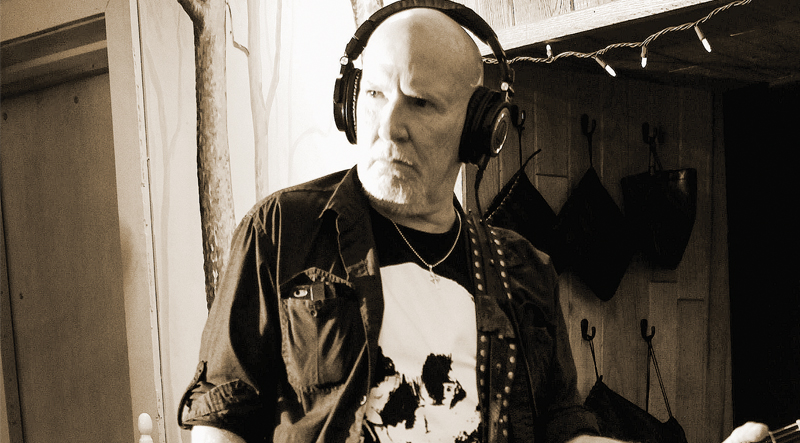
    Cheetah Chrome

    Cheetah Chrome: Jeff Fasano.

    As the punk rebellion exploded in 1977, the New York scene became dominated by the Ramones, Television, Patti Smith, Richard Hell & the Voidoids, and (newly transplanted from Cleveland) a group called the Dead Boys. More than 40 years later, two original members – guitarist Cheetah Chrome and drummer Johnny Blitz – have re-created the Dead Boys’ debut LP. This new set, Still Snotty: Young Loud And Snotty at 40, is a powerhouse recording and confirms that Cheetah still has the ferocious attitude that made him a punk icon four decades ago.

    Were you one of those kids who saw the Beatles play “The Ed Sullivan Show ” and wanted to play guitar?

    Oh, I was watching that very night, and knew from the first notes what I would be doing for the rest of my life. I began bugging my mom the next day, asking for a guitar. About three months later, I had a cheap plastic one with gut strings and learned a few basic chords. Mom, bless her heart, recognized I had a calling and supported me 100 percent.

    Who were some of your guitar influences?

    At that time, anything on my transistor radio! I constantly listened to WIXY in Cleveland and CKLW from Detroit. The Beatles were my gateway to Elvis, Johnny Cash, Roy Orbison, and Tamla Motown. The British Invasion began in earnest then and I sat with a radio by my ear and guitar in hand. Not surprisingly, my school work took a nosedive. By a fortunate mistake, Mom later bought me the first Stooges album as a birthday present, and my tastes got permanently twisted! That led me to scouring record stores and picking up stuff like the MC5 and New York Dolls.

    You use a lot of driving double-stops, like Chuck Berry.

    Chuck was high on the list, though I found myself drawn more to Keith Richards’ interpretations than the originals. I think it’s a crime Chuck got kind of swept aside around the time punk came around; he was a hell of a lot more punk than the Clash, if you ask me.

    Were you aware of Ohio bands like the James Gang or the Raspberries?

    Both bands played regularly at bars and teen clubs in Cleveland, doing covers and original stuff. Joe Walsh was just insanely good back then, as was Wally Bryson, who had this weird setup – a Fender Champ run through a Marshall. But it sounded great!

    What do you remember about the Young, Loud & Snotty sessions at Electric Lady Studios 40 years ago?

    Really, it’s a blur of beer, speed, Hell’s Angels members, and long walks to wind down enough to sleep. I ran into Peter Frampton – then the biggest rock star in the world – and growled in his face, which was a high point. Watching [late Dead Boys singer] Stiv Bators do his vocals was the biggest revelation. We’d never really been able to hear him and he sounded great!

    How did you recapture that energy for Still Snotty: Young, Loud and Snotty at 40?

    Mainly, we just went after strong guitar sounds and a big, clear drum sound, not that the original wasn’t plenty big. We weren’t trying to outdo the original, as we think this new one stands up fine. We just wanted to imagine how it may have sounded if we’d had the opportunity to go back in. I’m happy to say I think we got it.

    American punk and British punk evolved independently, but exploded at the same time in the mid/late ’70s. How did that happen?

    There was an awful lot of synchronicity going on, that’s for sure. If you see early pics of me, Johnny Rotten, or Mick Jones, we all had long hair and looked like typical ’70s hippie-thug types! I know early bands like Rocket From The Tomb and London SS were active at roughly the same time, while Joe Strummer had the 101’ers before the Clash. And you had Doctors of Madness, Skyhooks, and AC/DC in Australia. The punk revolution was coming from all over the planet!

    You’re now playing now a red Gibson SG.

    That’s my baby. I love that guitar and have had it since around 2000.

    What’s in your amp rig?

    My main recording rig is a ’61 Silvertone 1483 and a ’60s Supro Bantam, split through an A/B box and miked together. I use a Rat distortion for a boost when needed. Live, I just use one of the Marshall JCM800 half-stacks owned by [current Dead Boys co-guitarist] Ginchy. I hope to figure out a way to use the Silvertone and Supro rig on the road, but they didn’t build them for that sort of abuse. I do miss them out there!


    This article originally appeared in VG February 2018 issue. All copyrights are by the author and Vintage Guitar magazine. Unauthorized replication or use is strictly prohibited.
  • Eugene Edwards

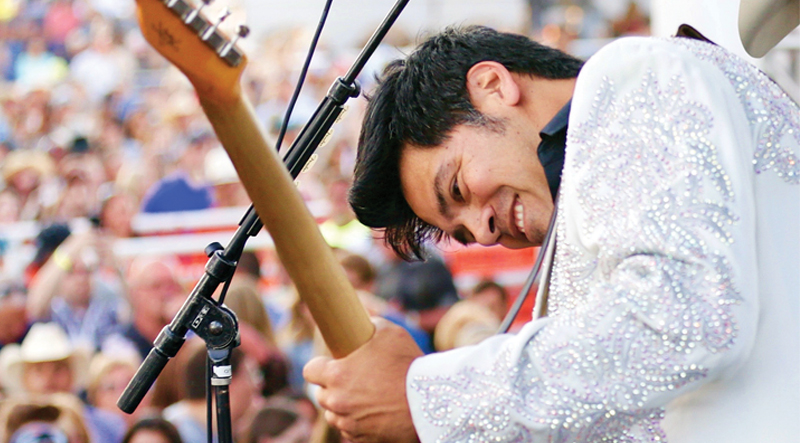
    Eugene Edwards

    Eugene Edwards: Emily Joyce.

    Country music icon Dwight Yoakam employs one of the hardest-working bands on the road today. A quintet including Yoakam, they’re keeping alive the outlaw edge of the genre’s past. With a take-no-prisoners approach, axe-man Eugene Edwards delivers a barrage of tasty licks spiced by the occasional Pete Townsend windmill while wearing a smile night after night.

    “There’s no trickery up there; what you see is what you get,” Edwards explains. “It’s a relatively lean machine when you count bodies, therefore, being adaptable is really important. You have to be willing to pitch in and sing harmony or grab a mandolin or a banjo and take the responsibility of helping Dwight do his catalog for his audience.”

    Edwards accepted that responsibility in 2012.

    “Dwight was mixing his 3 Pears record and his previous guitar player, Eddie Perez, was going back to the Mavericks. My friend, Brian Whelan, was Dwight’s utility player at the time and with live dates coming up, they were hoping to find somebody quickly and quietly; Dwight asked Brian if he knew somebody. So I went to the studio and talked to Dwight and there was a couple guitars lying around. We played some old Lefty Frizzell tunes, some Merle, some rockabilly stuff and one or two of Dwight’s songs, then he said, ‘The first gig’s in a couple weeks. We’ll get you anything you need to get ready.’”

    When taking the stage, they prefer to keep it “all Tele if possible,” Edwards said. “My number one guitar is a Fender Custom Shop 1960 reissue in Tobacco Sunburst. It has a rosewood fretboard, which is a preference of mine when playing Dwight’s material, and it’s very similar to what Pete [Anderson] played with Dwight early on. Then, there’s a black ’90s American Standard that we put a Bigsby on and updated with a Mastery bridge. We needed something for songs like ‘A Thousand Miles Miles From Nowhere’ or ‘This Time’ specifically, where Pete was using a Strat with a lot of the vibrato bar. There’s also a blond Telecaster of Dwight’s from the early ’70s, strung with .13s with a wound G that I use in the portion of the show devoted to Merle Haggard. That music’s so bold; you’re playing voicings that have the major third on top, which is so much of what makes that Bakersfield thing so badass, so we take measures to make sure that we do it with the respect it deserves, and the heavy strings help with that. I also use a red Epiphone Dwight Trash Casino and a white one with .13s and a wound G. We track a lot with Casinos and we like heavy-gauge strings and the wound G for tone and stability of intonation.”

    True to the music and his predecessors, Edwards also incorporates a B-bender.

    “The main riff in ‘Blame the Vain’ had a B-bender lick played by Keith Gattis. Dwight asked me, ‘You ever use a B-bender?’ I said ‘No,’ and he said, ‘I’ve got one. Take it home and get used to it.’

    “The story is that Gene Parsons himself made this one for Dwight and it’s the original Clarence White version, so it’s a double-wide Tele with that huge rod going through. If Dwight has an idea for a song or we’re thinking about what the lead guitar should be doing, the bender ends up being a real go-to.”

    To deliver his tone, Edwards primarily runs a pair of Fender Deluxe reissues and minimal effects.

    “Our amp guru, Bob Dixon, hot-rods them, taking the power tube out of stage one, sending all the juice to stage two and making them really aggressive. Then there’s a blackface Super Reverb reissue and a late-’90s, British-made Vox AC30 and the Voodoo Lab Amp Selector to switch in by foot.

    “My pedalboard sits back by the amps – that’s how little I’m operating it. On constantly is a Wampler Talent Booster for a bit of boost so the Deluxes will cut through. I never pop down on a guitar; it’s on 10 the whole time. So, being able to rely on touch for dynamics is huge, and that pedal is really helpful with that. I also use a Wampler Faux Analog Echo Delay and that’s on all the time except for ‘A Thousand Miles,’ where I switch to an MXR Carbon Copy Analog Delay. For tremolo, I use the Danelectro Tuna Melt, and then there’s an EP Booster I use when playing the Casino through the Super.

    “In the studio I don’t use pedals; it’s guitars straight into amps. If we want slap-back, we’ll use an actual tape machine or an echo chamber. Everything is the real deal. It’s tremendous.”


    This article originally appeared in VG February 2018 issue. All copyrights are by the author and Vintage Guitar magazine. Unauthorized replication or use is strictly prohibited.

  • Marty Friedman

    Marty Friedman

    Marty Friedman: Takaaki Henmi.

    Between playing on Cacophony’s landmark 1987 shred album, Speed Metal Symphony, and Megadeth’s 1990 classic, Rust in Peace, Marty Friedman introduced the world to his solo work with the 1988 disc Dragon’s Kiss. In the nearly three decades since, he has rarely taken a break, and never rested on his laurels. Since exiting Megadeth in 2000, he has issued nine solo albums including his latest, Wall of Sound, which balances his technical talents with interesting song structures that offer a host of twists and turns.

    How is Wall of Sound similar or different to your previous solo albums?

    It’s similar to my previous album, Inferno, in that it took a long time to do – a year and a half. And I took that time because I have to live with this stuff to know that it’s really great and the best I can do. When I write a song and think it’s awesome, two or three months later it may not be as good as I thought. For Wall of Sound, I lived with so many songs that weren’t as good four or five months down the line as they were at the beginning; I funneled 60 or 70 into those that still kick my ass 10, 12, 16 months later. That happened on Inferno and that’s what happened on Wall of Sound, too. I think it’s the strongest way for me to write a record.

    “Self Pollution” goes through quite a few mood shifts.

    It definitely does. That’s one of the songs we’re playing live in our set right now. We do a couple from the record, and that’s quite an ambitious song to play live. But that’s the fun of it. It starts off really intense, comes to a complete 360 into spaceland, then gradually builds up to something even beyond what the beginning was. It’s a new structure for me – a whole new “atmosphere” kind of a song… possibly one of the heavier pieces of music on the record. But, it has gone over great live, and been so much fun to play. It’s really a fun, challenging, intense, aggressive piece of music. I’m very happy with it.

    “Whiteworm” also really jumps out.

    That’s another of the songs we’re doing live! When it came time to choose the music video from the record, I was so attached to all the songs that I had to let the record company decide for me, and they chose “Whiteworm.”

    I think what a lot of people are enjoying about that song is that the intro is the kind of thing that makes you want to get up and play guitar. That’s kind of like a goal, I guess, in rock music and guitar music; if you get an intro like “Stairway to Heaven” or “Smoke on the Water,” you’re doing something that’s making a lot of people want to pick up an instrument. And that’s the subliminal goal with any song you write, really, whether you’re thinking about it or not. So, “Whiteworm” has definitely got one of those intros. It’s a little bit trickier than “Stairway to Heaven,” but I think with kids nowadays, the bar is a little higher than what it was in Led Zeppelin’s day.

    Which gear did you use on the album?

    I used the prototypes of my signature Inferno Amp by ENGL, the prototypes of my signature MF-1 guitar from Jackson, and the signature pickups from EMG. So it was like a “Marty party” in there (laughs)… a “Party Friedman.”

    It was a really good proving ground for the gear while we were developing the prototypes, and there’s no place where you’re stricter than where you’re recording. So, I was really dialing-in little details and having the companies come back with little tweaks done. And at the end of the process, everything was done to my satisfaction and ready for release. It was really ideal because usually, when you do a signature model, you might go to the factory once and they might send you a guitar once to try out, but it never gets the scrutiny you have to give it when you’re recording. When you’re recording an album, you’re looking for very specific things, and you’re strict beyond just if they sound good or not. So, all of my signature models were tested really hard, and it shows in the results.

    Are you still in touch with Jason Becker?

    Of course. We’re best friends, as usual. He’s working on an amazing new album with a lot of serious guests. I play two solos on the record, and I just can’t wait for it to be done. It’s going to be spectacular.


    This article originally appeared in VG February 2018 issue. All copyrights are by the author and Vintage Guitar magazine. Unauthorized replication or use is strictly prohibited.
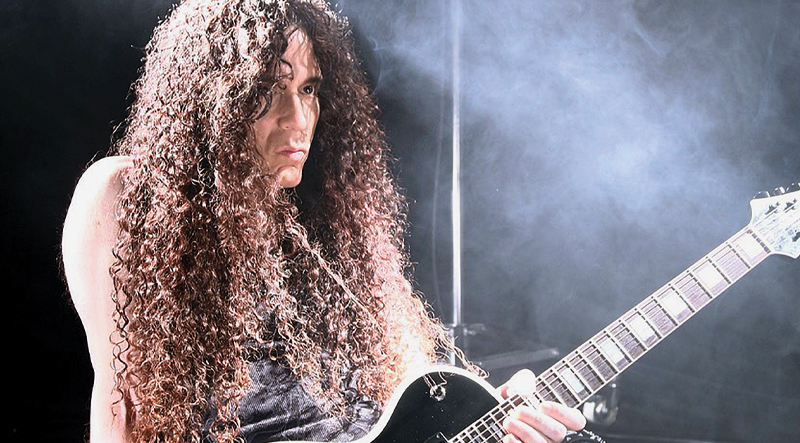
  • Brian Tarquin

    Brian Tarquin

    Brian Tarquin: Michael Howard.

    Brian Tarquin is thriving in “steady as ya’ go” mode. Since his VG  interview in February ’15, he has released two CDs and compiled a book on guitar amplifiers.

    The first of two new discs, Orlando In Heaven is a team effort with other guitarists and raises money for Catholic Charities to support families of the victims of the Pulse nightclub shooting in Orlando.

    “When that happened, I was starting to write songs for a jazz album, but I decided the best way to celebrate the lives lost was an album dedicated to them. I learned about Catholic Charities and thought it was a great charity.”

    One of the guest players was Larry Coryell in one of his last appearances.

    “We had a really good session and he played on two cuts,” Tarquin said. “He stayed a while and we talked; he was a wealth of information and it was such a pleasure.”

    Other players included Mike Stern, Hal Lindes, and Chris Poland.

    While Tarquin usually focuses on instrumentals, there were vocals on Orlando, and they increased with his other current project, Band of Brothers.

    “It was meant to be instrumental, but when I met Phil Naro, he wanted to contribute vocals to this one. So, it turned into a hard-rock/progressive kind of record with vocals. Plus, vocals can make things more-dynamic and it’s an avenue I haven’t gone down much, so it was exciting.”

    The impressive list of guests on the disc includes guitarists Steve Morse, Jeff Watson, and Gary Hoey, along with bassists Tony Franklin and Trey Gunn, and cellist Tina Guo. Part of the proceeds raised by its sale go to the Fisher House Foundation, which offers housing to families of hospitalized veterans.

    Tarquin’s new coffee-table book is Guitar Amplifier Encyclopedia.

    “I love amps and wanted it to be friendly to the reader. A lot of amp books are too technical. I wanted it to be easy to understand. It has boutique along with well-known amps; there are so many boutique amps, you would need an encyclopedia-sized book to get all of them in.”

    Not expecting to slow down in the near future, Tarquin, who has won multiple Emmys for music production for television and was a huge hitmaker during the heyday of smooth jazz, has a unique project in the works.

    “I’m working on a Christmas album. I always wanted to do one. It’s going to be vocals with Phil singing. We don’t want it to be cheesy. Half will be public domain songs people know, the other half originals.”

    While being the quintessential studio rat, Tarquin has gotten out to play lately.

    “We played the Jacksonville Jazz Festival; I put a band together and we had a great time. We liked it so much, in fact, that we’ve started to gig. I like the immediacy. It supplies something I’ve kind of missed from all the years in the studio.”


    This article originally appeared in VG February 2018 issue. All copyrights are by the author and Vintage Guitar magazine. Unauthorized replication or use is strictly prohibited.

  • Greg Howe

    Greg Howe

    Greg Howe: Fred Morledge.

    Greg Howe is a globe-trotting, guitar-clinic-teaching, concert-performing fusion monster. He’s known for taking risks and pushing his playing into fresh environments. His latest album, Wheelhouse, shows the guitarist coming full circle to delve into the stylistic tropes that brought him worldwide attention. Crammed with funky grooves and wah-imbued soloing, it also contains soul-drenched blues, swing, and a guest appearance by Richie Kotzen.

    How has your time management evolved?

    I’ve gotten better at becoming less of a perfectionist, less particular. I form deadlines; I did two albums this year and played on drummer Simon Phillips’ solo album. That was a big disruption to my album because I was working on it at the same time. When he came up with the offer, I was like, “I should do this because Simon is great and the music is great.” It’s another cool thing to do, but it added pressure for me on my album.

    Over the years, I’ve had to learn to be disciplined enough to say, “Greg, we’re done here. No more tweaking.” No matter how good something is, we’re always going to find a way to make it even better, so you have to find a way to say, “This is the end.”

    It was important for me to get Wheelhouse done before the tour started. It was coming down to the wire. My days were literally about getting up at 8:30 in the morning, having a cup of coffee, and going to the studio. I was up until five o’clock in the morning for a month straight. I was like, “I am going to get this done. I don’t care what anyone says.” I had it done two days before the tour kicked off.

    Does the pressure make you more creative?

    I think so, but you have to move forward. I had stuff that was designed for Maragold’s second album, so I dug into that bag a little bit. There was some cool things I was able to find. The pressure doesn’t inspire me so much to be creative as much as it inspires me to be disciplined. The pressure says, “You don’t have time to tweak. You don’t have time to re-evaluate. Just move forward.”

    You’ve been criticized for not breathing between phrases in your solos, but the songs on Wheelhouse, particularly the swing section on “2 In 1,” would prove critics wrong.

    That’s a valid criticism, particularly on my earlier stuff. Every crack was filled (laughs). As I get older, I have the urge to breathe more. I like the space between notes and sitting out for a couple of beats. I’ve always loved the swing era and it’s easy for me to hear those chord changes. It also presents a side of me that some people haven’t heard, but there has to be some uncharted territory for me to get inspired. That’s where I find inspiration. I dabble in the bop thing, but I’m a schizophrenic artist. On the one hand, I love exploring territory I haven’t explored. On the other hand, I don’t want to put something out where people say, “That sounds like Wes Montgomery.” He’s already done it. I don’t want to do something that sounds like a great version of what’s already been done. I’d rather it sound like me but with an obvious influence – don’t copy licks, absorb the influence. That’s better than copying Joe Pass licks.

    What’s the story on the Simon Phillips project.

    I’m going out for a while with his project, called Protocol. For it, you have to sit up straight. It’s complex, but really musical. I really love his stuff. Unlike so much prog rock, his stuff always has groove and a quarter-note pulse that goes through it. It never feels like you’re getting jerked around. Simon really cares about the emotions he’s making, and it’s real artistry. He’s painting pictures with his music. When he first asked me to join, I was a little bit reluctant because I’m not a big prog-rock guy. But, when I heard some of the material I was like, “Wow!” I thought, “This is a real thoughtful musical person.”

    He’s a super gentleman to work with and unbelievably enthusiastic, with all this energy. He just turned 60 and acts like a 13-year-old kid doing his first album. In the studio, I was inspired because he’s so into it and so excited. It’s a great energy to be around, so I really enjoyed recording with him and I’m going to really enjoy touring with him – though I’m going to have to really prepare myself because it’s not a funk jam. We have to think and count and pay attention (laughs).


    This article originally appeared in VG February 2018 issue. All copyrights are by the author and Vintage Guitar magazine. Unauthorized replication or use is strictly prohibited.
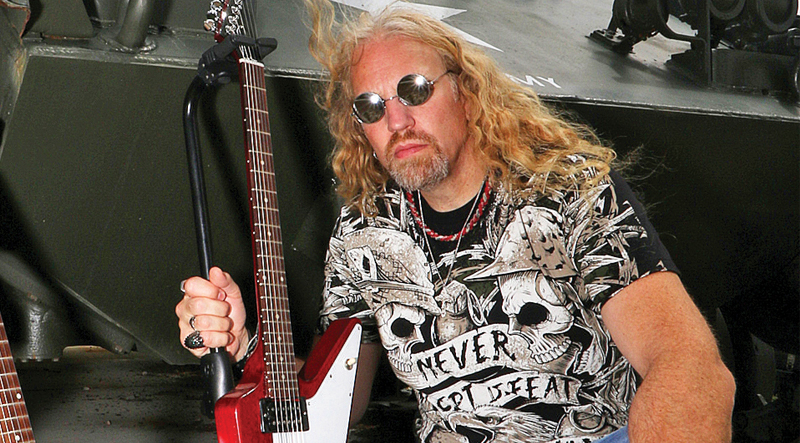
  • Have Guitar Will Travel – 010 Featuring You Me At Six

    Have Guitar Will Travel – 010 Featuring You Me At Six

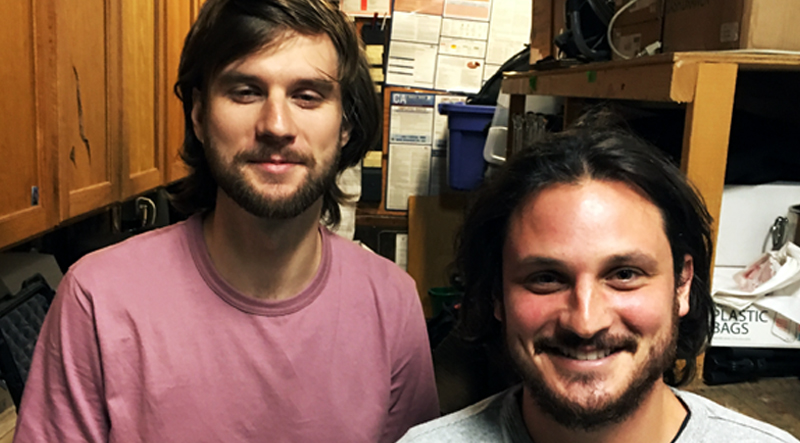
    You Me At Six released their new album VI in October that debuted at Number 6 on the UK album chart, marking the band’s 5th UK Top 10 Album, they’ve notched an unparalleled 15 consecutive A-List singles on BBC Radio One, they have a rabid fanbase with over 1.1 million Facebook likes and have gained a reputation as one of the best live bands in the UK. In this episode of “Have Guitar Will Travel” James interviews You Me At Six guitarists Max Helyer and Chris Miller. Max plays through a traditional amp/pedal system with Fender guitars while Chris plays through the Kemper system based on amps he owns at home in Surrey, England. Chris plays his Ibanez model guitar that bares his name! They both have quite an extensive guitar collection at home.

    Each episode is available on Apple Podcast, Stitcher, iheartradioTune In, Google Play Music, and Spotify!


    Have Guitar Will Travel, hosted by James Patrick Regan, otherwise known as Jimmy from the Deadlies, is presented by Vintage Guitar magazine, the destination for guitar enthusiasts. Podcast episodes feature guitar players, builders, dealers and more – all with great experiences to share! Find all podcasts at www.vintageguitar.com/category/podcasts.

  • Have Guitar Will Travel – 009 Featuring Mt. Joy

    Have Guitar Will Travel – 009 Featuring Mt. Joy

    In this episode of “Have Guitar Will Travel”, James Regan talks with Matt (Quinn) and Sam (Cooper) from the indie band Mt Joy. The band has originally hailed from Philadelphia and debuted in 2016 with their single “Astrovan”, that they recorded in Los Angeles by Quinn, Cooper, and Byrnes (their bass player). It was added to a lot of key Spotify playlists and gained them a lot of notoriety. They tell the story of what it’s like playing on the Conan O’Brian show. We also discussed the process they took to be a gem on Spotify playlists. They currently maintain about 200 dates a year and are about to embark on the summer festival circuit. You can find out more about the band at MtJoyband.com.

    Each episode is available on Apple Podcast, Stitcher, iheartradioTune In, Google Play Music, and Spotify!


    Have Guitar Will Travel, hosted by James Patrick Regan, otherwise known as Jimmy from the Deadlies, is presented by Vintage Guitar magazine, the destination for guitar enthusiasts. Podcast episodes feature guitar players, builders, dealers and more – all with great experiences to share! Find all podcasts at www.vintageguitar.com/category/podcasts.

  • Walrus Audio’s Monument Harmonic Tap Tremolo

    Walrus Audio’s Monument Harmonic Tap Tremolo

    Price: $249 (list)
    Info: www.walrusaudio.com

    At some point, nearly every guitarist realizes they simply can’t function without an effects pedal that creates warm, pulsating modulation.

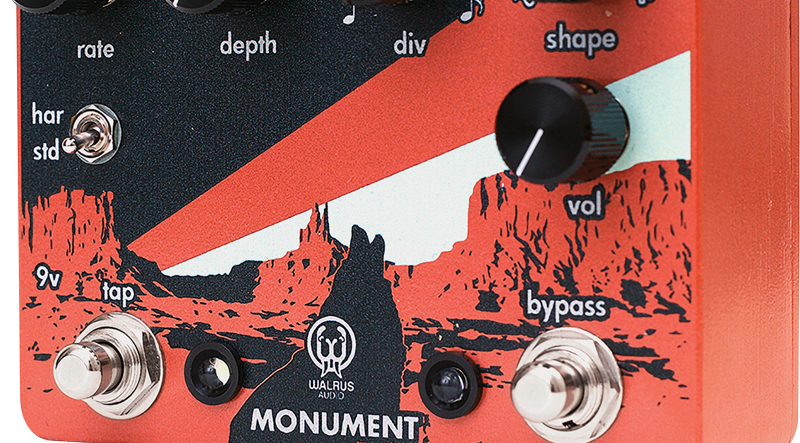
    Walrus Audio’s Monument Harmonic Tap Tremolo not only works as a standard tremolo, but its Harmonic Mode provides even more options. The Harmonic/Standard toggle allows the user to change from a “traditional” tremolo sound (Standard) to a “Fender brownface”-style vibrato with a Lo and Hi pass split signal. This Harmonic mode produces a throbbing, dreamy vibrato, similar to a Rotovibe.

    The pedal has controls for Rate, Depth, Division, Shape, and Volume to construct beat divisions, curves, speeds, thicknesses, and tempos. The Division knob can be set for quarters, triplets, eighths, or 16ths.

    With additional inputs for tap switches and expression pedals, the Monument can replicate pretty much anything. It uses a 9-volt adapter and its Tap switch adjusts tempo. The Bypass Momentary Function can be used to add texture when held in the off position.

    The pedal’s Standard Mode lets the player tweak a variety of waves to add subtle fullness or mind-altering twistedness with the Shape knob’s Sine, Square, Ramp, Lumps, and Monument modes. The pedal offers a range of sounds with smoothness, minimal coloring, and the kind of warmth that complements the amp’s signal.

    For the guitarist seeking a certain lush nuance and beauty, the Monument Harmonic Tap Tremolo makes a great addition to the ol’ box of crayons.


    This article originally appeared in VG January 2018 issue. All copyrights are by the author and Vintage Guitar magazine. Unauthorized replication or use is strictly prohibited.

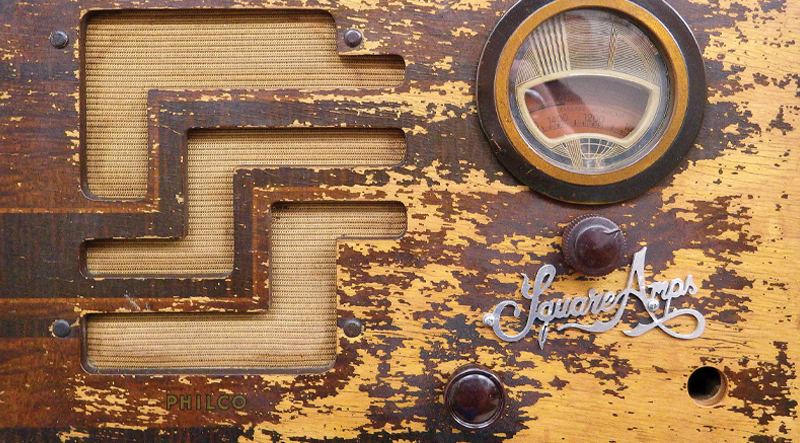
  • Square Amps’ Chippy

    Square Amps’ Chippy

    Price: $700
    Info: www.squareamps.com

    Matt Richards builds basic cathode-bias amps housed in the carcasses of vintage radios. They’re designed to be compatible with various tubes, giving the user a range of output and tone choices.

    His Chippy amp has a single Volume knob on the front and a negative-feedback loop pot on the back that acts as a combination Gain/Tone control that alters (subtley) the amp’s response and brightness. We experimented with everything from KT88 to EL34 tubes, and each imparted its own character; KT88s were warm and silky, 6L6s were tight and compressed, while EL34s made the Chippy roar and croon with toppy bite.

    No matter the tubes, the Chippy’s 8″ speaker sounded thick and warm, its simple circuit nicely responsive – low-end was a little loose (lending an excellent vintage-Fender sag) while mids were brash and raunchy with balanced dynamics that didn’t overemphasize high or low mids. With cleaner settings, highs sounded rolled-off – again keeping the Chippy’s vintage-tone footing. When the Volume knob was turned up, however, high-end bite jumped more the harder we dug in.

    Pushing the volume with a 2×12 extension cab allowed this “little radio that could” to keep up with loud drumming. Tubes (specifically power tubes) really make a difference in sound and response.

    The Chippy offers looks and feel that reinforce its stellar sounds. Far from gimmicky, it packs versatility and punch. A quick swap of tubes can send it in many sonic directions including classic favorites and – more importantly – to something unique to each player. Plugged into a 2×12 or 4×12, it’ll keep up with a band while offering dreamy dynamics and incredible tone.

    The Chippy is beautiful, but it’s far from being all style and no substance.


    This article originally appeared in VG January 2018 issue. All copyrights are by the author and Vintage Guitar magazine. Unauthorized replication or use is strictly prohibited.