
 Dashboards Pedalboards have custom side-mount options including flush-mounted power, dual side-locking TRS connectors for input and amp outputs, as well input/output for MIDI. They are made of aluminum, with powder-coated finish and chrome handles, and are available with an optional backlit logo. Learn more at dashboardsonline.com.
Month: November 2013
-
Dashboards Offers Aluminum Pedalboards
-
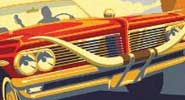
Vince Gill and Paul Franklin
 Vince Gill emerged in the mid ’80s as part of country’s New Traditionalist movement. The style was partly built on Bakersfield’s twang-heavy honkytonk, especially the music of Buck Owens and Merle Haggard. Coincidentally, 2013 marks anniversaries for both. Owens, who died in ’06, had his first #1 single with “Act Naturally” in 1963; later that year, Haggard’s “Sing A Sad Song” became his first single to reach the national country charts.
For their new album, Bakersfield, Gill and Nashville studio pedalsteel ace Paul Franklin (who works with him in the Western swing band the Time Jumpers) chose five tunes each by Owens and Haggard. By recreating them with gusto and avoiding imitation, they capture the energy and power both generated in the Capitol Tower decades ago. Backing them are some Time Jumpers cohorts and other Nashville studio players.
Gill handles vocals, yet he and Franklin also honor the sidemen peculiar to both singers. Gill demonstrates his mastery of the Telecaster picking of Buck, Don Rich, and the late Strangers guitarist Roy Nichols. Franklin pays effective tribute to three players: Ralph Mooney, who defined Bakersfield style steel; Tom Brumley; and the Strangers’ Norm Hamlet, who’s still with the band today.
The repertoire’s not always predictable. Buck is represented by his 1961 hit “Foolin’ Around,” 1962’s “Nobody’s Fool But Yours,” and his classic 1965 hit “Together Again.” Two others are obscurities:
the little-known 1966 ballad “He Don’t Deserve You Anymore” and “But I Do,” written by Bakersfield singer Tommy Collins.The Haggard covers are just as freewheeling: the 1966 honky-tonk hit “The Bottle Let Me Down,” his successful 1967 prisoner ballad “Branded Man,” and 1970’s “I Can’t Be Myself.” Aware that Reggie Young played a Strat on the obscure 1974 Haggard ballad “Holding Things Together,” Gill switched to a Strat to retain the feel of the original.
The sole puzzling choice: “The Fightin’ Side Of Me,” Haggard’s 1970 follow-up to his witty 1969 anti-hippie chestnut “Okie From Muskogee.” It’s commendable that Gill wanted to honor veterans, and his performance is superb. But “Fightin’ Side,” written to slam ’60s anti-Vietnam protesters, feels dated in today’s world compared to other eloquent Haggard tunes about soldiers.
That Gill and Franklin more than did the music justice gets no better endorsement than Haggard’s enthused liner notes. Anyone unfamiliar with his original material, and Buck’s, will seek it out after hearing Bakersfield.
This article originally appeared in VG‘s November. ’13 issue. All copyrights are by the author and Vintage Guitar magazine. Unauthorized replication or use is strictly prohibited.
-
Tim O’Brien and Darrell Scott
 Playing seemingly anything with strings (including piano strings), the cumulative session credits of O’Brien and Scott include Suzy Boggus, Steve Earle, Trisha Yearwood, Mark Knopfler, Joan Baez, the Chieftains, and countless others. The fifty-somethings’ songs have been recorded by the Dixie Chicks, Garth Brooks, Tim McGraw, and others, with Scott’s classic “You’ll Never Leave Harlan Alive” cut by Brad Paisley, Patty Loveless, and Kathy Mattea.
The best by-product of their behind-the-scenes successes are the solo albums they’ve allowed them to release, along with 2012’s duo album We’re Usually A Lot Better Than This.
After playing in high school rock bands, O’Brien formed the popular bluegrass quartet Hot Rize, while Scott grew up playing country behind his father, Wayne Scott (whose This Weary Way he produced and played on with a cast of Nashville’s best).
The duo cover Hank Williams, George Jones, and John Prine songs (the latter’s composer lending a vocal cameo). These, and their originals, all feature powerful vocals and are backed by banjo, Dobro, bouzouki, mandolin, fiddle, piano, and acoustic, resonator, and baritone guitars – as interchangeable as they are first-rate. Rather than creating an overdubbed “studio band,” each song is cut as a two-instrument duo. The effect is often chilling, always intimate.
It just doesn’t get any better than this.
This article originally appeared in VG‘s January ’14 issue. All copyrights are by the author and Vintage Guitar magazine. Unauthorized replication or use is strictly prohibited.
-
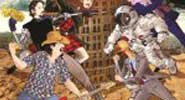
The Aristocrats
 The rock-fusion trio known as the Aristocrats are back with a second album fortified with artistic maturity from gigging around the world. With a stronger, more-cohesive musical vision, bassist Bryan Beller, drummer Marco Minnemann, and guitarist Guthrie Govan create a dizzying record full of brisk genre leaps, melodic skips, and intense groove manipulation.
 The band integrates their talents to great affect, using their ample supply of melodic humor, lethal chops, and careening rollercoaster-like compositions. Minnemann’s “Dance Of The Aristocrats” provides prodigious drumming, while Govan delivers a variety of textures, clever rhythmic devices, and untethered soloing. The title track sends you deeper into attention deficit disorder land; the initial “Wow!” factor makes you wish you’d practiced harder. By the time you get to Beller’s “Louisville Stomp,” you’re hearing a rapidly changing kaleidoscope of familiar musical tropes superbly woven together instead into a satisfying composition.
Govan’s “Gaping Head Wound” and Minnemann’s “Desert Tornado” provide stimulating showcases for the band’s ability to stop on a dime, change time signatures, and display break-neck shifts in dynamics.
This article originally appeared in VG‘s January ’14 issue. All copyrights are by the author and Vintage Guitar magazine. Unauthorized replication or use is strictly prohibited.
-

Volto!
 Guitarist extraordinaire John Ziegler has been laying down the law every Monday night at California’s San Fernando Valley Baked Potato jazz club for what seems like forever. Hosting a weekly jam playing everything from Mahavishnu to ZZ Top, Volto! emerged from the smoldering carcasses of lesser musicians to embrace their terrifying skillset. With bassist Lance Morrison (Don Henley), Jeff Babko (Jimmy Kimmel Live) on keys, and drummer Danny Carey (Tool), Incitare is a thermonuclear tour de force with equal parts prog, fusion, and rock.
“Grip It” sets the tone with it’s perfectly distorted guitar lines integrated within energetically limber drumming and rich keyboard textures. “Gillz” brings back memories of Jan Hammer Group keyboard soloing with super wicked shredding from Ziegler. “I’m Calm Now” is a beautifully serene ballad while “Quirk” straddles jazz and prog.
Incitare is an inspired recording with heavy-duty guitar. It’s not a jam album. These guys know how to make a statement and move on. Ziegler creates gutsy virtuosity throughout, while the talents of Morrison, Babko, and Carey, offer superlative melodic gifts. This is an enjoyable record blending hypnotic passages, dynamics, and superb musicianship that never forgets to rock.
This article originally appeared in VG‘s November. ’13 issue. All copyrights are by the author and Vintage Guitar magazine. Unauthorized replication or use is strictly prohibited.
-
Babiuk Set to Release Rolling Stones Gear
 Andy Babiuk, author of Beatles Gear, recently finished a book that similarly documents the gear used by the Rolling Stones.
Slated for release in January, Rolling Stones Gear covers the group’s personal background as well as every tour and studio session from their inception in 1962, with descriptions of instruments and equipment. It also documents every song recorded by the band, including demos and outtakes, with input from within the Stones’ ranks as well as people involved with the band.
Babiuk, a VG contributor, was given extensive access to the Stones’ equipment and compiled the history through the instruments. Nine years in the making, it is 672 pages includes hundreds of photographs and rare images, many never before published, including the Stones’ guitars and gear photographed for this book.
-
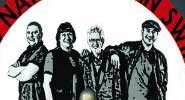
Ric Lee’s Natural Born Swingers
 This band doesn’t just hearken back to the late ’60s British blues movement; it includes two seminal figures from that period, in Ten Years After drummer Ric Lee and pianist Bob Hall, an original member of Savoy Brown and the Groundhogs. In fact, the CD shares its Stax-tinged title song with that of Tramp, a 1969 ad hoc band Hall led, which included Dave and Jo Ann Kelly and Fleetwood Mac’s Danny Kirwan and Mick Fleetwood.
 With guitarist Danny Handley of the re-formed Animals and bassist Scott Whitley, the mixture of younger and “more seasoned” players assures that this is more than merely an exercise in nostalgia. Added to 10 originals are three songs from TYA’s catalog – “Rock Your Mama,” “I Want To Know,” and “Don’t Want You Woman,” all featuring Manfred Mann’s Paul Jones on harmonica. “It’s Too Late” features another cameo, with composer/ vocalist Hadley trading guitar solos with Savoy Brown founder Kim Simmonds.
The material ranges from the humorous “I Don’t Play Boogie” to the honky-tonking “A Fool Like Me” and the politically charged “Hills Of Afghanistan” – with authoritative doses of rock and, of course, swing.
This article originally appeared in VG‘s November. ’13 issue. All copyrights are by the author and Vintage Guitar magazine. Unauthorized replication or use is strictly prohibited.
-
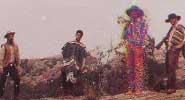
Black Joe Lewis
 Fuzzy guitars, Stax horn arrangements, and a raw garage sound permeate Black Joe Lewis’ third studio album, serving up a provocative juxtaposition of garage-punk, along with the ’60s R&B and blues that brought the band to prominence.
Singing like James Brown with a sore throat and Tourette’s syndrome, Lewis barks, hollers, and growls about harsh times, women, money, and white hipsters trying to act Black. Produced by Grammy winner Stuart Sikes (Modest Mouse, White Stripes, Cat Power), along with three tracks by John Congleton (St. Vincent, Explosions in the Sky, Okkervil River), Electric Slave is an edgy grunge-R&B record that breaks free of the vintage soul novelty heard on earlier recordings.
The fuzz guitar intro of “Skulldiggin” opens the record with it’s droning power chords, horn blasts, and tinges of psychedelia. Most of the record is vocally unintelligible, but it’s the energetic exuberance of the performances that hooks you. You don’t come to this party for poetic lyrics. With explicit lyrics throughout, the band is tight and talented. “Guilty,” “Come To My Party,” and “Golem” offer contagious grooves.
Electric Slave blends disparate ingredients to create a stimulating and raucous sound.
This article originally appeared in VG‘s December. ’13 issue. All copyrights are by the author and Vintage Guitar magazine. Unauthorized replication or use is strictly prohibited.
-
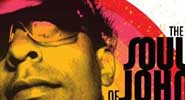
The Soul of John Black
 John Bigham, aka John Black, has worked with Fishbone, Joshua Redman, Everlast, and Miles Davis. For the past decade, he’s produced a handful of recordings mixing jazz, R&B, rock, and gutbucket blues.
Like his previous recordings, A Sunshine State of Mind is stripped down. His albums have that “well-produced home demo” feel, with a single chord progression sometimes serving an entire song. The lack of songwriting complexity is not missed. Bigham is an authentically soulful singer who uses emotion and groove to offset the simplicity of his compositions.
Tunes like “Beautiful Day,” “Higher Power,” and “Summertime Thang” bring to mind the kind of enviable vocal phrasing heard from Al Green, Bobby Womack, and Ronald Isley. He plays appropriately stinging blues guitar throughout, as on the contagious “Magic Woman” and “East LA Lady,” and gets in some inspired pentatonic pyro on “Johnny Bear (Give It To Me).”
This album grows on you and serves as a reminder that you don’t have to be Mozart to write cool tunes. Funky grooves, soul, and a clever turn of a phrase does the trick.
This article originally appeared in VG‘s November. ’13 issue. All copyrights are by the author and Vintage Guitar magazine. Unauthorized replication or use is strictly prohibited.
-
The Northstar Session
 Sometimes it’s jaw-dropping incredible how some ensembles can make music together so well. Witness the acoustic guitar-and-piano trio of guitarists Matt Szlachetka and Kane McGee and keyboard man Dave Basaraba, who offer this double-CD collection recorded in an intimate live setting. With full harmonies and all instruments meshing so well, it’s striking how they work with such precision yet project such a sense of freewheeling abandon.
Frequent comparisons to CSN&Y don’t describe fittingly the band’s delicate strength. You can hear Graham Nash’s touch in “Crawling Back To You” whereas “You Come Up Like A Rose” is countrysoulful like Richie Furay-era Poco. This leads appropriately into a moving cover of Van Morrison’s “Into The Mystic.”
Szlachetka puts the strength and dynamics of an electric power-trio guitarist into his acoustic playing, letting loose on an impassioned lead riding out the penultimate bars of “Crawling.”
The ability to balance instrument with instrument to the benefit of the overall sound itself is a signature character of the band. The Northstar Session has a knack for putting the pieces in the right places for maximum effect.
This article originally appeared in VG‘s December. ’13 issue. All copyrights are by the author and Vintage Guitar magazine. Unauthorized replication or use is strictly prohibited.


