Month: November 2013

  • Arlo Guthrie, Jerry Jeff Walker, and others

    Arlo Guthrie, Jerry Jeff Walker, and others

    Caffe LenaWhen one thinks of the Folk Boom of the late ’50s and early ’60s, the place that first comes to mind is New York City. Sure, Los Angeles had the Ash Grove, Chicago the Gate of Horn, but New York had Gerde’s Folk City, the Gaslight, Night Owl Café, the Bitter End, and of course Washington Square Park, where banjos and acoustic guitars could be heard every weekend afternoon, played by pros and hobbyists alike. But in 1960, three hours north of Greenwich Village, in Saratoga Springs, New York, the late Lena Spencer opened the 75seat coffeehouse that still bears her name, where a dizzying array of traditional folk interpreters and singer/songwriters perform to this day.

    The problem with too many anthologies (of any genre) is that their repertoires are dictated by contractual limitations. As impressive as 1984’s Bleecker and MacDougal four-LP box is (if you can find it), it’s the story of one label associated with the folk movement – Elektra Records (with the exception of two of its 30 artists, leased from rival Vanguard). If Tompkins Square Records had to jump through contractual hoops to compile the 47 tracks contained in this three-CD box, it doesn’t show. Neither does the fact that the music, spanning 1967 to 2013, had to be digitized from myriad sources.

    The stylistic gamut runs from bluegrass revivalists the Greenbriar Boys (with guitarist John Herald) to bluesmen Sleepy John Estes and Hammie Nixon showing their sanctified side, from Smoke Dawson’s Celtic/Appalachian fiddle to Jerry Jeff Walker’s 1968 rendition of “Mr. Bojangles,” accompanied beautifully by David Bromberg’s guitar.

    Other guitar highlights include Dave Van Ronk’s “Gaslight Rag,” the dual guitars and sibling harmonies of Happy and Artie Traum, Barbara Dane’s Leadbelly-tinged 12-string, the muscular bottleneck of Paul Geremia, Greg Brown’s updated Mississippi John Hurt on “Flat Stuff,” and Rory Block’s passionate take on Rev. Robert Wilkins’ “That’s No Way To Get Along” (later renamed “Prodigal Son”).

    And, although overlooked by the 30-page booklet’s essays, jazz greats John and Bucky Pizzarelli show that more than folk music made its way to the club on Phila Street, with “I Like Jersey Best.” Folk music can be a tad academic or precious, but this stuff is rich and exciting. Reportedly, some 700 shows from Caffe Lena have been unearthed. This is a good start, but hopefully not the last we’ll hear from Lena’s stage.

    This article originally appeared in VG‘s January ’14 issue. All copyrights are by the author and Vintage Guitar magazine. Unauthorized replication or use is strictly prohibited.

  • Wishbone Ash

    Wishbone Ash

    Muddy Manninen (left) and Andy Powell.
    Muddy Manninen (left) and Andy Powell. Photo: Alan Fretten.

    Fans of Wishbone Ash will consider the group’s newest release, Elegant Stealth, the type of innovative guitar music they’ve grown to expect.

    Since 2004, guitarist/vocalist Andy Powell and his V-shaped instruments have been accompanied by Finnish guitarist Jyrki “Muddy” Manninen.

    In the liner notes for Elegant Stealth , Powell cites himself as a singer first.

    “That must have been a subconscious thing,” Powell observed. “But yes, singing is very much my role in the band now. It’s a workout every night, and I’m developing as a singer, which has helped with the songwriting.”

    The album contains numerous examples of Wishbone Ash double-/harmony lead guitar passages in interesting segments. “Man With No Name” has note-for-note riffing by guitar and bass.

    “You can blame me for those lines,” Manninen chuckled. “But on some stuff, like the ascending passage in ‘Big Issues’, we worked together while writing. Doubling the lines in certain places creates a bit more orchestrated feel.”

    Other instruments include a fiddle on “Can’t Go It Alone” as well as a Hammond organ played by Don Airey on the instrumental “Mud-Slide”

    One of the longer tracks is “Heavy Weather,” which has a tick-tock/cowbell groove that lends itself to jamming.

    “The song came out of a jam initiated by the rhythm section, (bassist) Bob Skeat and (drummer) Joe Crabtree,” Powell explained. “Because the groove was so strong, Muddy and I didn’t have to do much other than embellish. Its psychedelic section was one of several occasions where we spontaneously lapsed into that mindset, and we were definitely not taking drugs. ‘Man With No Name’ was really out there in one version, but we decided it was a little too ‘Sergeant-Pepper-meets-the-Lemon-Pipers’ and eventually cooled a little on the psychedelia.”

    In the studio, Powell used a John Suhr Classic, a Music Man Silhouette, his ’52 Fender Telecaster, a Chilcott Angel Flying V, and a Duesenberg TV model.

    “I’m a Les Paul man,” Manninen noted. “My main guitar is a Custom Shop ’58 reissue with Kloppman pickups. They have the open sound of ’58s, but with a little more mid bite. For slide, I usually use a lap steel. I have an ancient Arioso lap that I used with the Gringos Locos in the ’80s. It’s got a DiMarzio Hot P-90 pickup on it and is held together with a lot of gaffer tape! I used a Firebird V on ‘Migrant Worker,’ and the slide bit at the end was done with a Tokai Les Paul copy that just happened to be in the studio; I raised the action a bit.”

    WISHBONE-02

    He used a Yamaha 12-string acoustic on “Man With No Name” and a Burns 12-string electric on “Searching for Satellites.” As for the increase in slide guitar heard on the album, Manninen noted, “Slide guitar has always been a part of the Wishbone Ash sound. Ted (Turner) used to play it, and later on, he played some nice lap-steel, as well. I haven’t introduced anything new to the sound. In general, we just go by what serves the song. Obviously, you have a different kind of vibrato when playing slide; mine is wide and low, and I’m not able to do fast runs. It creates a kind of lazy, laid back feel, which is great for songs like ‘Migrant Worker.’”

    “Simple, melodic lines often sound better or more concrete with slide guitar, because it’s a more square-wave-sounding instrument,” Powell added. “Also, rock guitarists often shy away from clean, undistorted guitar sounds, but we don’t. We’re happy to go there.”

    As for working out the harmony-guitar lines (which may or may not ultimately include slide), Powell noted, “Sometimes, I’ll have an idea, and can’t wait to work it out on my actual instrument, so I’ll sing it, then figure it out later. Sometimes, the guitar gets in the way and ideas can come out sounding clichéd, and you don’t always want that. In short, we’ll use different means and approaches. An idea can be riffed or jammed together in real time, or carefully worked out in a compositional way. No rules.”

    Powell is “very satisfied” with Elegant Stealth , saying it’s an “honest, total group effort that shows people where Wishbone Ash has evolved to at this moment in time.”

    Future projects may include an album of covers, but, Powell says, “Wishbone Ash is still a work in progress, and there is no creative need to look outside the band. That’s not to say we’re blind to what’s going on around us. We are very much stimulated by the scene right now, but we’re also comfortable in our own skin.”


    This article originally appeared in VG September 2012 issue. All copyrights are by the author and Vintage Guitar magazine. Unauthorized replication or use is strictly prohibited.


  • The Coal Men

    The Coal Men

    The Coal MenThe Coal Men – guitarist Dave Coleman and drummer Dave Ray – boast a cowboy romanticism that comes alive on their fourth album, Escalator.

    Coleman wrote or co-wrote all of the songs on Escalator with Ray, bassist Jay Hitchcock, or other collaborators, creating a definite band identity linking each cut. “Midnight You” and “Lonoke, Arkansas” show the Coal Men at their best.

    The band is rounded out with a number of guest artists. Cry of Love/Black Crowes guitarist Audley Freed adds to the Beatleesque feel of “Stuck” while Americana brethren, Jen Gunderman of the Jayhawks, adds stylish piano to “The Fall.” Will Kimbrough accents the goofily lovable “Sanity” with Dobro.

    Although the band flirts with power popin cuts like the White Album-influenced “One Thing At A Time,” the cowboy romanticism runs deep. That rugged beauty is strong in “Tennessee,” one of many cuts where Coleman seems to celebrate playing the guitar, showing a gleeful delight that even soars through reflective tunes like “Old Friend” or “Wanting Peace.”

    This album is full of the kind of infectious joy that reminds us why playing guitar is just so much doggone fun in the first place.

    This article originally appeared in VG‘s January ’14 issue. All copyrights are by the author and Vintage Guitar magazine. Unauthorized replication or use is strictly prohibited.
  • Eric Johnson

    Eric Johnson

    Eric Johnson
    Photo: Max Crace.

    Eric Johnson’s latest release, Up Close, is his most lively studio project to date. With a looser vibe and the luxurious tones we’ve come to expect from Johnson, it gets closer to that happy place between immaculate execution and spontaneity.

    Johnson invited Steve Miller to sing and Jimmie Vaughan to play guitar on a cover of the Electric Flag song “Texas,” and the results are fiery, to say the least. Vocalist Malford Milligan, Jonny Lang, and slide master Sonny Landreth also lent soulful contributions.

    Did you have a concept in mind before you started recording Up Close?
    I was going about business as usual. Then, as I got into it, things started changing. I started trying to cut stuff a little more live, and decided to bring people in to sing and play, just to open up a little.

    Do you think imposing more spontaneity added something?
    I wish there was more. There’s definitely more than the last record, and I think realizing it toward the last part… I would like to keep going on that track – open up a little and get a little more of that going on.

    Are you hard on yourself?
    I think I am. I always hear things I don’t like. I have a habit of doing things over and over, trying to get it where I hear it in my head. But sometimes, when you get it to where you hear it in your head, it loses some of the spark. It’s a balance between capturing that spark and getting it to where you want it to be. It’s really tough for me to get comfortable in the studio. It sort of feels like you’re in a petrie dish.

    It’s tough to capture that blend of lively playing with perfect execution, but the record sounds like you were able to.
    Yeah. Going for a performance-type situation, even if I was over dubbing, then opening it up and getting other people get involved. I basically sang all the songs. On three that I sang, I thought, “Yeah, pretty cool.” One was always meant for Steve Miller (“Texas”), but there was a couple where I didn’t feel my voice was appropriate. On one, I got Malford Milligan to sing (“Brilliant Room”), and another one, Jonny Lang (“Austin”). It just worked better.

    Your guitar playing is always stellar but I’m really enjoying your lyrics, particularly on “Brilliant Room.”
    Thank you. I think the lyrics show progress – they’re more personal, rather than from the third person. That’s kind of why I called it Up Close. It’s kind of a generic, but says it simply. It’s trying to show a little more of myself.

    What was your primary guitar?
    I used my ’62 Strat – which I don’t have anymore – a lot. I used my ’57 Strat a bit, and my signature Strats. I also used some Gibsons, like I always do, but probably more than usual. I used some Les Pauls I don’t own any more (laughs).

    So you got rid of a bunch of guitars before the record came out. Why?
    I wanted to have the pieces I use and make music on, that really hit a mark that works for me, musically. If they don’t really hit that high-water mark, I want to simplify. I own one vintage Strat now, (laughs) – a ’57 – and I want to find a second vintage Strat. I just want one I used to have, because that worked for me and made the kind of music I want to make.

    Rather than owning five or six old Strats, I figure, if you gotta couple that are killer, that’s all I’d ever need. I can only play one at a time! After many years of trying it all, I know what works and what doesn’t. Coming to that conclusion… I’d rather just simplify.

    A guitar’s age isn’t everything…
    And even when they’re vintage, I like to put in a different bridge pickup and big frets. I’m not a dedicated collector – I’ve gone through periods where I’ve probably have more old amps than I need, but my thing is I want to sail on the music. I want to go into the skies. I love the old Strats, but as much as I love them, I can’t use the bridge pickup for most of my music – it’s too weak.

    I finally came to terms with the fact that I’d rather have one or two. I’ll put big frets on them, put a bridge pickup I like in them, and I can play the music I want to play. I can’t very well quarantine myself to something because it’s original. Then you’re kind of putting a governor on your musicality.

    Are you still using the multi-amp Marshall/Fender configuration?
    Yeah. I’ve been experimenting in the studio, and I’m putting together an alternate rig using different amplifiers that I’m really digging on. For the most part, it’s the same old thing – either the 50-watt Marshalls or the 100-watt Marshalls, then Twin Reverbs. I thought about bringing out a super-simple setup for the Experience Hendrix tour, but the songs I’m doing kind of require that I jump around to different sounds, so I ended up bringing my whole rig.

    What’s in your Experience Hendrix tour setlist?
    “House Burning Down,” “Drifting,” “Burning Of The Midnight Lamp,” and “Are You Experienced?” A couple were tunes I always wanted to do – “Drifting” and “Burning Of The Midnight Lamp” – so I learned them for this tour.


    This article originally appeared in VG February 2011 issue. All copyrights are by the author and Vintage Guitar magazine. Unauthorized replication or use is strictly prohibited.


  • Sheryl Crow

    Sheryl Crow

    Sheryl CrowSheryl Crow’s gone country. That’s the line on Feels Like Home, the popular singersongwriter’s eighth studio album. It shouldn’t come as a surprise. Crow moved to Nashville a decade ago and now counts some of the genre’s biggest stars among her friends and neighbors. And country is as hot as ever at the cash register.

    So if there’s a perfect moment for a full excursion into twang territory, it’s now. But can she pull it off?

    Totally. This album feels like an entirely natural progression for Crow. And it’s not really that big of a stretch, anyway. She’s always had a love for country, and its influence could often be spotted in her work. Here, it simply rises to the surface. And there’s plenty of twangy country guitar throughout.

    “Shotgun,” a paean to carefree spirits and back roads, kicks things off in fine rollicking style. “We Oughta Be Drinkin’” takes a classic country theme for a weeknight bar-hopping stroll. “Callin’ Me When I’m Lonely” bears the hallmarks of the standard big-time country radio hit, yet Crow’s vocal delivery and vibe is so spot-on it sells the number in mere seconds. Add the rousing chorus and we’re talking a true earworm.

    Ultimately, this really does feel like home for Sheryl. Welcome, friend.

    This article originally appeared in VG‘s January ’14 issue. All copyrights are by the author and Vintage Guitar magazine. Unauthorized replication or use is strictly prohibited.

  • The Clash

    The Clash

    The ClashIn the far distant past – 1979, to be exact – the Clash were crowned “The Only Band That Matters.” The mantra originally appeared on a promo sticker stuck to their double LP London Calling. Initially coined by their label’s A&R director, it soon was accepted by fans and followers as a truth self-evident.

    Since then, Fugazi wore that “Only Band That Matters” crown of thorns, thanks to Rolling Stone magazine. U2 front man Bono has done his best to appropriate it, but never quite grasped the golden ring. And these days, Pussy Riot may be the just and righteous successor. In all, it’s one heavy mantle to bear for a little old rock and roll band.

    The echoes of that mantra still resound around the Clash and thus, it’s time (again) for (another) band retrospective. The Clash has released several previous box sets of different sorts – greatest-hits collections, a singles collection, and more. But the passion for the band continues.

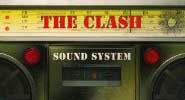
    Sound System is a full-bore box set, the biggest and best of the lot, hands down. And the last one ever, the band promises. The package was crafted by bassist Paul Simonon in a boombox (remember those?) replete with reprints of period stickers, poster, liner book, fanzines, and even Clash dogtags. Oh yeah, and there’s the music – lots of music: the band’s five studio albums remastered on eight CDs (with Cut the Crap thankfully cut), plus three discs of demos, non-album singles, B-sides, and other oddities and rarities. And finally, there’s a DVD chock full of unseen footage of the band from the beginning through the end, as well as 10 promo music videos. Phew!

    The remastered albums sound great – clear and bright. As Mick Jones explained, “That was the musical point of it all, because there’s so much there that you wouldn’t have heard before. It was like discovering stuff, because the advances in mastering are so immense since the last time [the albums were] remastered was in the ’90s.” You can hear guitar lines on several songs – including some London Calling tracks – that you swear weren’t there yesterday. As Jones joked about the newly discovered guitar tracks on “Safe European Home,” “It’s probably some session musician, while I was asleep.”

    The biggest surprise here is on the DVD, however. The “White Riot” promo film, an early gig at Sussex University in 1977, and Super 8 footage shot by producer Don Letts are all phenomenal. They show the band as tough, young, punkrock guitarslingers. And that’s only a third of the videos.

    So, now the question is, three-plus decades later, do the Clash still matter? At all?

    If you count the number of junior high-schoolers these days wearing Clash t-shirts, the answer must be a resounding yes. Of course Craig Finn of the Hold Steady recently conferred sainthood on Joe Strummer. And listening to these albums for maybe the ten-thousandth time – courtesy now of Sound System – they sound as fresh and raw and powerful as ever.

    If you don’t want the full-caffeine box set, 5 Album Studio Set is being released simultaneously with just the remastered albums. And a new greatest hits package, The Clash Hits Back, collects the remastered best.

    This article originally appeared in
    VG‘s January ’14 issue. All copyrights are by the author and Vintage Guitar magazine. Unauthorized replication or use is strictly prohibited.

  • Reverend Preps Four New Models for NAMM

    Reverend Balch signature model
    Reverend Bob Balch signature model

    Reverend Guitars is set to introduce four new guitars, including three signature models, at the Winter NAMM Show in January. The Bob Balch model, Meshell Ndegeocello Fellowship bass, and Pete Anderson PA-1 C will join the Warhawk RT. The Balch guitar is based on the Senseis model, with added body bevels, a tone chamber under the pickguard,

    Reverend Warhawk
    Reverend Warhawk

    and Railhammer pickups including a signature-version Railhammer with a brass cover and ceramic magnet at the bridge. The guitar is finished in Satin Transparent Brown and has a rosewood neck.

    The Ndegeocello Fellowship is based on Reverends’ Thundergun, with a set neck and a raised center ridge. It has the new P-Blade pickup and its controls are stacked into one knob for Volume and Tone. It’s finished in Satin Black with a rosewood fretboard.

    Reverend Meshell
    Reverend Meshell Ndegeocello Fellowship Bass

    The Pete Anderson PA-1 HB Custom continues the hollowbody look and feedback-controlling Uni-Brace system, but gets new Special HAL humbuckers. The Warhawk RT has two Revtron pickups, raised center ridge, a

    Reverend PA-1 C
    Reverend PA-1 C

    Rosewood neck and a Bigsby vibrato tailpiece. Visit www.reverendguitars.com.

  • Knaggs Guitars Introduces Creation Series

    KnaggsKnaggs Guitars’ Creation Series are custom-built one-offs based on the company’s Chesapeake and Influence models, each of which is offered with a variety of specifications in regard to woods, hardware, and other materials. For more, go to www.knaggsguitars.com.

  • Eddie Clarke 1950-2018

    Eddie Clarke 1950-2018

    We’re saddened to hear of the passing of “Fast Eddie” Clarke, guitarist in the classic lineup of Motörhead with Lemmy Kilmister and “Philthy” Phil Taylor, both of whom died in 2015. In 1982, Clarke formed Fastway with UFO bassists Pete Way, which recorded seven albums. You can read our 2012 interview with Clarke below.


    FAST-EDDIE-02

    Eddie Clarke

    Ex-Motorhead guitarist Fast Eddie Clarke is back with his first Fastway album in more than two decades. It’s called Eat Dog, Eat and it’s a hard-hitting heavy-duty rock record with the kind of blazing guitar tones that brought Clarke to prominence.

    The current lineup of Fastway has been playing Europe and Japan, and has lost none of its power. With the help of vocalist Toby Jepson and drummer Matt Eldridge, the band took their time crafting some of Fastway’s most melodic yet powerful music to date. Clarke took time to discuss the band, his gear, and his plans for the future.

    The new record is classic Fast Eddie, with fresh tunes.
    I kept it pretty much as is. I used the same amp as on the original Fastway recordings – the same old Les Paul I used on a lot of it, a Strat on a couple of songs, and a Telecaster on a rhythm track. I was fiddling a little bit, but I get that thing where I prefer the sound of the original. I’m one of those people who don’t like experimenting.

    Pre-order before 9 a.m. February 4, shirts mail week of February 14!!
    Available for a limited time, VG’s Fab Fours shirt recalls the pop-art movement while honoring four classic basses.

    You find what works and you stick to it.
    Right. For some people, that’s a bit boring but it makes me feel more secure.

    How did this new record come together?
    Somebody invited us to do some shows in 2007. We did some in Japan and it was all going down rather well. So in 2008, we said, “Let’s write some songs.” So Toby and I sat down and wrote an album’s worth of tunes. They weren’t finished but we had the outlines of 11 tracks. Then things started to go wrong. Toby had an offer to do some work somewhere else. He has a family and that.

    I didn’t see him for the whole of 2009, and in 2010 we got together and I said, “Why don’t we record these songs.” I was listening to them and I thought they were actually good little songs. He knew a drummer because he’d been doing production work. We had an engineer and we used a studio that I’d used before. We had a day of jamming to get the sounds right. It was done old school. We had big amps in different rooms for everything, and it was sounding really good, even though it was recorded with ProTools – but we had a lot of analog stuff going on.
    It kept going down very well, like it was meant to be. It was perfect. We came home after about three weeks, had a week off, and then went back up and mixed it. We spent just over a week mixing it, and we come away thinking, “This is bloody marvelous!”

    It’s tougher sounding than the other Fastway records, but there’s more dynamics.
    I just kinda do what I do best, really. I didn’t try anything new or fancy, so it’s got that same kind of feel. It’s a straight-ahead, take-it-as-you-find-it kind of record.

    FAST-EDDIE-01

    Did you have to shift gears as a guitarist, playing in both Motorhead and Fastway?
    I did for Motorhead. I had to sort of get to grips with it. We all had to, a bit. Lemmy didn’t. Lemmy was just Lemmy. Phil Taylor and I sort of had to mold ourselves around what we had to play with, which was Lemmy’s bass playing. We had to adjust to that sort of sound because it’s a very difficult sound to play with, as a guitarist. He plays a Rickenbacker bass through a Marshall lead amp with all the treble on and all the bass off. So you can imagine there’s not a lot of bass going on. As a lead player going into a solo, it was like there was nothing going on underneath me. There was no real bottom-end. When I went to Fastway, I had Pete Way, who had a big fat Thunderbird bass. I was in heaven.

    Would you re-join Motorhead if the situation was right?
    I think I would. I’m pretty sure it’s not going to happen, so I can say, “Yeah I would!” By the same token, I often think about Lemmy because we were like brothers – me, Phil, and Lemmy. We created some great music and those were probably the best years of my life.

    What’s your number-one guitar right now?
    My main guitar is the Les Paul Deluxe I used with Fastway in the ’80s. I paid 230 quid for it brand new in 1972. It had the small DeArmond pickups in it. Of course I took those out and put DiMarzios in. With Motorhead, I used a Stratocaster because it gave me a little bit of edge.

    I’m using both now; I used a Les Paul mainly on the record. Live, these days, I’ve been enjoying the Stratocaster. It’s got a little more versatility. The Les Paul can be a bit of a one-trick pony. My Stratocaster had a DiMarzio X2N in the bridge, a DiMarzio SDS-1 in the front, and a Fender pickup in the middle. I just added a DiMarzio Super Distortion in the bridge. It gives me a tad more edge.

    How about effects?
    I have a late-’70s Boss OD-1 overdrive, Boss Flanger, Boss Delay, Crybaby wah, and a nice delay pedal by The Mad Professor. He’s a Finnish guy who makes these little pedals. It’s a delay, but it sounds like the old Echoplex [Deep Blue Delay]. For amps, I use the master-volume 100-watt Marshall JCM 800 – the one I used with Fastway – and a Jubilee.

    What’s next for you?
    I’d really like to get to America just one more time. We had some fabulous f***ing times. I don’t know what it is about you guys, but you’re crazy!


    This article originally appeared in VG September 2012 issue. All copyrights are by the author and Vintage Guitar magazine. Unauthorized replication or use is strictly prohibited.


  • Jim Colegrove & the New Rough Riders of the Dirty Age

    Jim Colegrove & the New Rough Riders of the Dirty Age

    Jim ColegroveJim Colegrove’s talent is as big as his résumé is long. His session work includes albums by Todd Rundgren, John Hall, Bobby Charles, the Legendary Stardust Cowboy, and even Allen Ginsberg. Most of that was on bass (also his instrument as member of Ian & Sylvia’s legendary Great Speckled Bird), but his first instrument was guitar, with his Ohio-based teen instrumental combo, Teddy and the Rough Riders.

    After moving to Fort Worth, Texas, in the mid ’70s, he returned to guitar playing (and singing), forming the jump blues Juke Jumpers. More recently, he’s concentrated on his country quartet, Lost Country, and his Cool Groove label.

    Here, he returns to the music of his youth – “when the rock and roll guitar instrumental was in its golden period.”

    There’s more than a jigger of blues in Colegrove’s rock, with Freddie King’s influence mingling with echoes of Link Wray, Duane Eddy, and the Ventures. “Assisted Twister” gets its name from its chord progressions – “The Twist” in the verses and “Let’s Twist Again” in the choruses.

    The fact that the spooky ballad “Lost River” (which Colegrove wrote in ’61 while with the Rough Riders; think “Werewolf” by the Frantics) is right at home with his recent compositions illustrates the timelessness of the genre and this outing.

    This article originally appeared in VG‘s November. ’13 issue. All copyrights are by the author and Vintage Guitar magazine. Unauthorized replication or use is strictly prohibited.