Month: July 2009

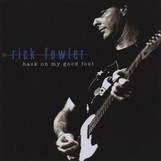
  • Rick Fowler – Back On My Good Foot

    The closing, extended version of Savoy Brown’s “Hellbound Train” is this set’s only cover, but it may be the set’s most revealing track. With so many blues guitarists aping the Vaughans, it’s refreshing to hear somebody wear his British blues influences on his sleeve.

    Atlanta-based Fowler is backed by organist Randall Bramblett’s group on much of the record (with bassist Michael C. Steele and drummer Gerry Hansen), but R.E.M. drummer Bill Berry guests on “Hellbound,” with Fowler achieving a fat sound that would do Kim Simmonds proud.

    Also, “Infused With The Blues” reveals the influence of Savoy Brown vocalists Chris Youlden and Dave Walker, while “Skeletons In Your Closet” features a pumping “Crossroads”-type riff, and the spare slow blues “Feel So Much Better” mines Peter Green territory, in terms of tone and economy.

    There are times when the repertoire descends into standard bar-band fare, as on the so-so title track, and the acoustic “Hitchhiking” sounds like an unfinished sketch. But the Hooker/ZZ-ish “Road To Nowhere” and the Strat-y “Walk Softly” are good, old-fashioned, unadorned blues.


    This article originally appeared in VG‘s Jun. ’08 issue. All copyrights are by the author and Vintage Guitar magazine. Unauthorized replication or use is strictly prohibited.

  • Andrew Winton – The Decompression Chamber

    Based in Perth, Australia, this Dobro and lap steel specialist has obviously listened to some David Lindley, plenty of blues, and his neighbor (and former steel guitarist with Asleep At The Wheel), Lucky Oceans.

    On his third CD, in addition to handling vocals, acoustic and electric guitars, Dobro and lap steel, drums and percussion, bass, and xylophone, he adds the 7-string “Wintonbeast.” The acoustic, Weissenborn-like instrument has a bass string on the bottom, with a fingerboard extension that continues past the end of the headstock. It was built by David Worthy, and looks as amazing as it sounds.

    Cello augments two songs, and banjo adds pluck to the bluegrass instrumental “The Nullarbor Mountain Boys,” but every other instrument is Andrew.

    After the bluesy “Number’s Down,” Winton shows off his complex rhythmic sense on “Ain’t Gonna Get It,” with a fine vocal assist from his wife, Karen. Though it would be tempting to release an album of nothing but hot licks, Winton actually reveals himself to be an excellent songwriter (“Too Hard Again” is sort of equal parts Dave Matthews and Michael Hedges, while “Moving On” has a Steely Dan feel), meaning this has all bases covered.

    The only covers are a Them-tempoed version of Big Joe Williams’ “Baby Please Don’t Go,” the traditional “Black Is The Colour Of My True Love’s Hair,” and a stellar rendition of Skip James’ “Hard Time Killing Floor.”

    This probably won’t be at your local Best Buy, so do a little internet searching. You’ll be glad you did. – DF


    This article originally appeared in VG‘s July ’07 issue. All copyrights are by the author and Vintage Guitar magazine. Unauthorized replication or use is strictly prohibited.


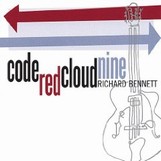
  • Richard Bennett – Code Red Cloud Nine

    As a guitarist, Richard Bennett is the best of all possible things; a modest, immensely skilled and empathetic player who is at home with the West Coast semi-bebop to A-list pop music, sophisticated rock, and country music session work. He even recorded with T-Bone Walker.

    On the 12 original instrumentals here, his jazz side is on display, and it better illustrates his clean, unaffected style and tone. The expected guitar influences show up, of course – Kessel, Montgomery, Christian… but someone with Bennett’s all-encompassing taste and talent and experience couldn’t be expected to draw from only one well. As a composer, he sources Burton Lane (“April By Twilight”), Harold Arlen (“When Connie Used To Care”), Duke Ellington (“Spring Stepped In”), Henry Mancini (“En Trois”), and Dimitri Tiompkin (“Right On The Price, Right On The Corner”). But he does it with gleeful originality and without a touch of snobbery, gracing “Connie” with a bluesy air and putting a trace of Santo and Johnny in “Samba Soleil.” Best of all, Bennett and his hand-picked ensemble (especially Jim Hoke on an array of reeds) swing – gloriously – from one end of this fine collection to the other.


    This article originally appeared in VG‘s Oct. ’08 issue. All copyrights are by the author and Vintage Guitar magazine. Unauthorized replication or use is strictly prohibited.

  • Big Dez – You Can Smile

    For decades, France has welcomed expatriate American blues and jazz artists. It was inevitable that seeds would be sown; the results in jazz music going back at least as far as the 1930s, when Django Reinhardt was shaking it up with Le Qunitette du Hot Club. But not many Frenchmen have made names in the seminal art of blues. That may be changing. If the BigDez Blues Band is a typical example, there are some folks brought up in the shadow of the Eiffel Tower who can definitely parlez les blues.

    Led by singer/guitarist Phil “Big Dez” Fernandez, who flavors the English-language vocals with a Gallic accent, BigDez’ blues is the hard partying type, mixing and melding different styles under a wide-spread blues umbrella. The Chicago-style blues of Paul Butterfield and Charlie Musselwhite is heard on many of the 13-song disc’s 11 originals; the far-reaching hand of Michael Bloomfield evident in Fernandez’s able, authentic playing. Horns, along with Marc Schaeller’s harmonica, give “Ace Up Your Sleeve” the hard-charging feel of early J. Geils band, and Janis Joplin’s Kozmic Blues Band on “Low Pressure,” while a bit of Al Kooper sneaks through “Good Arrow.”

    The band wisely keeps mostly to original material. It’s not that Big Dez can’t handle source music; the cover of Fenton Robinson’s “You Don’t Know What Love Is” is appreciably strong even if their take on Elmore James’ “Shake Your Moneymaker” betrays the blurry line that doesn’t quite divide much of European rock and blues from jazz. But they’re relaxed and natural, thus more fun with their own stuff. You have to put in some of yourself to make good blues. When BigDez does, they earn a big Oui.


    This article originally appeared in VG‘s Sept. ’08 issue. All copyrights are by the author and Vintage Guitar magazine. Unauthorized replication or use is strictly prohibited.

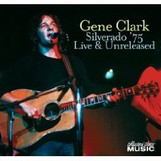
  • Gene Clark – Silverado ’75

    In a band that at various times included Roger McGuinn, Clarence White, Gram Parsons, Chris Hillman and David Crosby, Gene Clark wasn’t overshadowed. He wrote some of the group’s most recognized songs, including “Feel A Whole Lot Better” and “8 Miles High.” Still, he seems to have spent much of his abbreviated career at the short end of the stick.

    Internal squabbles in the Byrds and Clark’s own demons helped put him there, but he is belatedly gaining recognition not just for his time with the Byrds, and Dillard and Clark, but for an excellent album with Carla Olson (So Rebellious A Lover), 1971’s self-titled album with Jesse Ed Davis and No Other in ’74 with Davis, Hillman and Danny Korchmar. Silverado ’75 provides a singular opportunity to hear Clark, relaxed and in good form. With Roger White (guitar) and Duke Bardwell (bass), Clark plays bare-bones versions of some of his best (“Train Leaves Here This Morning,” “No Other,” “She Darked The Sun”) and personal favorites (“Long Black Veil,” “In The Pines”) that were a long-rooted influence on a brilliant, versatile, much missed writer and singer.


    This article originally appeared in VG‘s Nov. ’08 issue. All copyrights are by the author and Vintage Guitar magazine. Unauthorized replication or use is strictly prohibited.

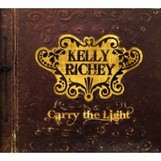
  • Kelly Richey – Carry the Light

    Kelly Richey’s live shows are full-tilt affairs where Richey wrenches blistering lines from her Stratocaster, occasionally using a beer bottle as a slide. At the end, everyone is sweaty and satisfied.

    That’s the Kelly Richey of her first 10 albums. On her 11th, she shows her artsy side, with contemplative Robin Trower-like power ballads railing against injustice and pleading for more peace and kindness in the world. The stylistic shift may rankle some who liked having a talented woman, especially a hotshot guitarist, in the ranks of modern blues performers. The field used to boast many female greats, but Sippie Wallace and Memphis Minnie are gone; 2008 saw mighty Koko Taylor enter her ninth decade and Etta James her eighth. Well-known female blues guitarists are even fewer; after Richey, Susan Tedeschi, Deborah Coleman, Sue Foley, and Bonnie Raitt – who for some time seemed to want to play anything but the blues – it trails off sharply. The change might have been smoother if Richey had mixed things up more, added some straightforward blues in place of some of the mid-tempo numbers that sound too much like each other.

    A player as versatile as Richey shouldn’t confine herself to one type of music. And no amount of sonic effects and semi-psychedelic material can hide her skill. But she excels at the blues, which makes the change seem almost like a loss.

    Likely she will always play the blues, certainly live. If working new styles for a while pays off economically for her like it did for Raitt, old fans can think of it as overdue back wages justly collected.


    This article originally appeared in VG‘s Sept. ’08 issue. All copyrights are by the author and Vintage Guitar magazine. Unauthorized replication or use is strictly prohibited.

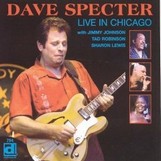
  • Dave Specter – Live In Chicago

    For some time, Dave Specter has made great music that covers a broad spectrum of genres. Known as a blues guitarist, he has never shied from jazz or soul, and this live record finds him mining all types.

    The 10 cuts (13 on the DVD) are drawn from two appearances in 2007 and find Specter and his band in fine form. Specter’s chops get the early spotlight on the aptly-titled instrumental “Boss Funk/Riverside Ride,” which lets all the elements of his playing shine through. He’s also a generous bandleader who shares the spotlight with his band. Specter is joined by old friend Tad Robinson on vocals and harmonica for several cuts. “Is What It Is” has great changes and funky feel bolstered by Sharon Lewis, whose soulful vocals are a perfect fit for Specter and the band.

    The songs take us through inspired southern soul that shows off Specter’s feel and tone, a shuffle that lets Specter get a bit nasty, and a blues rhumba that lets him step outside the clichés to show off his nice right-hand sweep techniques. Later, Jimmy Johnson joins for an old-fashioned blowing session. Johnson’s guitar and vocal style are in direct contrast to Specter’s, but that’s what makes the mix work. While Johnson jabs in and out, and darts around chords, Specter digs in and holds on. Johnson’s gruff vocal adds a level of Chicago blues history.

    It’s not hard to envision why this music will never disappear. And Specter is the perfect guy to carry the torch.


    This article originally appeared in VG‘s Sept. ’08 issue. All copyrights are by the author and Vintage Guitar magazine. Unauthorized replication or use is strictly prohibited.

  • July 2009

    FEATURES

    Steve Earle
    Guitar Talk
    His life has seen peaks and valleys usually reserved for a soap-opera script. Now ensconsed in a comparatively laid-back life, his music is nonetheless punchy and opinionated, while his attitude toward guitars is evermore informed. Plus, we take a close look at his Martin M-21 signature model. By Dan Erlewine

    The Masco MAP-15
    Before anyone knew what the Platonic form of the electric guitar amplifier would ultimately be, many companies covered all bases, including Masco, which built guitar combos like this alongside its PA in the 1940s and ’50s. By Dave Hunter

    1942 Martin D-45 Well-known as the Holy Grail of acoustic guitars, ironically, the D-45 was not the result of some historic moment of inspiration at Martin. In fact, the three key steps in its creation originated outside the company. By George Gruhn and Walter Carter

    A Guitar for Greeny
    Investigating the background of a certain 1960 Gibson Les Paul Standard has unearthed a fascinating story – and offers a glimpse into the emerging vintage-guitar market of the 1970s. By Werner Althaus

    The Daion Headhunter HH-555
    By the mid ’70s there was – on both sides of the Pacific – a plethora of small designers working on innovative guitars. Many, of course, never made it to the U.S. But the Daion Headhunter HH-555 did make the journey. By Michael Wright

    The Bunker Pro-Bass Marketed before Steinbergers or Kramer Dukes, the Bunker Pro-Bass was radical for its time – even if it wasn’t all that radical for musician/inventor Dave Bunker, who was known for earlier developing the Touch Guitar. By Willie G. Moseley

    DEPARTMENTS

    DEPARTMENTS
    Vintage Guitar Price Guide

    Builder Profile
    Dynamic Music Technologies

    Upcoming Events

    Vintage Guitar Classified Ads

    Dealer Directory

    Readers Gallery

    FIRST FRET

    Reader Mail

    News and Notes
    Travis Bean documentary, Museum of Making Music early-electrics exhibit, Roy Rogers guitar brings $460,000, In Memoriam, more!

    John Scofield
    One Road Leads to Another
    By John Heidt

    John Bigham
    Representin’ Soul and R&B
    By John Heidt

    Trevor Rabin
    See You at the Movies
    By John Heidt

    Ask Zac
    By Zac Childs

    Jan Akkerman
    The Dutch Master on Focus, Framus, and Frets
    By Pete Prown

    Tales of the Quadracaster
    Passion Conquers Physical Adversity
    By Pete Prown

    Jim Suhler
    Atypical Texas Guitarist
    By Willie G. Moseley

    Scott Gorham
    Still Dangerous!
    By Lisa Sharken

    COLUMNS

    COLUMNS
    The (Way) Back Beat
    Burns, 1964: Nu-Sonics and Transistor Trials
    By Peter S. Kohman

    64 guitars with guts
    1924 Francisco Simplicio
    By R.E. Bruné

    Q&A With George Gruhn

    Acousticville
    Security Versus Accessibility
    By Steven Stone

    Fretprints
    Alex Lifeson
    By Wolf Marshall

    “401K” Guitars
    The 1962 Epiphone Wilshire
    By Gil Hembree

    TECH

    TECH
    Talkin’ Amps With…
    Sergio Hamernik: Transformers and Amp Tone
    By David Jung

    Dan’s Guitar Rx
    Upstairs, Downstairs at Matt Umanov Guitars
    By Dan Erlewine

    Shop of Hard Knocks
    “Gretschification” of an Ibanez
    By Will Kelly

    REVIEWS

    REVIEWS
    The VG Hit List
    CD, DVD, and Book Reviews: J.J. Cale, Jake Shimabukuro, Sharon Isbin, Rufus Huff, Dave Alvin, Webb Wilder, The Guitar Pickup Handbook, more

    Check This Action
    Bob Guida: 1954-2009
    By Dan Forte

    Vintage Guitar Gear Reviews
    PRS Amplifiers, Category 5 Andrew/Typhoon Joe, Blackout Effectors Fix’d Fuzz, Line 6 Spider III 30, St. Blues White Lightning, Hohner HTA490 Artist Washburn A20/Eagle reissues.

    Gearin’ Up!
    The latest cool new stuff!