Tag: features

  • The Zelinsky Dellatera Custom

    The Zelinsky Dellatera Custom

    Price: $869 (list)
    Info: deanzelinsky.com

    Dean Zelinsky’s history as a guitar builder includes unique designs that are toneful and eyecatching. To many, he might be best known for his early designs inspired by Gibson’s futuristic models of the late ’50s; others remember him for his ads in the 1980s co-starring what came to be known as “Dean Girls.”

    Zelinsky’s a new line of import guitars are budget-friendly, professional, and striking with their high level of playability, fit, and finish. Because Zelinsky offers instruments factory-direct, buyers can customize many features including pickup configuration, hardware, and colors. He also added unique options including engraved hardware, engraved bodies, and his Z-glide neck with carved impressions to reduce hand-on-neck friction.

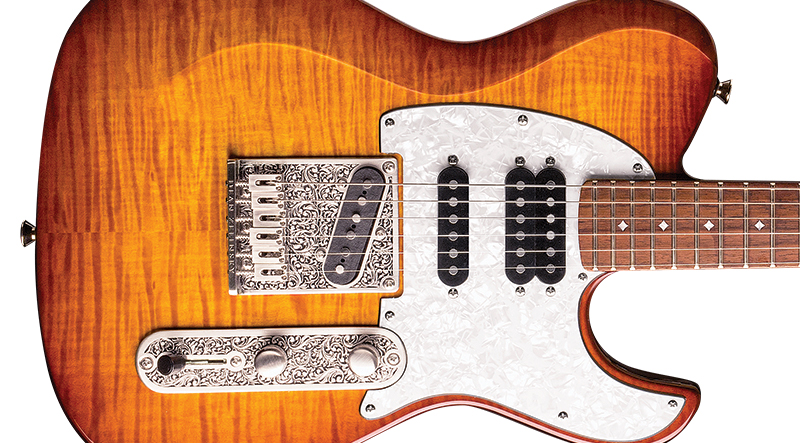
    We recently received one of Zelinsky’s Dellatera Custom single-cutaways for review with the optional Z-Glide feature, SideKick pickup, and Tejas engraved hardware. A beautiful instrument, it sported a flame-maple top, pearloid pickguard, and engraved bridge and control plate. Controls included a five-way switch along with a Volume and push/pull Tone knob to control the neck pickup.

    Besides the SideKick in the neck position, this Dellatera came with single-coils in the middle and bridge positions. Its modern 1 1116"-wide neck was medium depth, with a bend-friendly compound-radius fingerboard with 22 medium-jumbo frets.

    Spinning the instrument around, it’s hard not to be taken aback by the Z-glide neck, whose unique etchings are quite out of the norm and proved extremely comfortable to play while never exhibiting the “sticky neck” syndrome common on all levels of new instruments. The headstock was adorned with a set of easy-to-string locking tuners.

    Using a reissue ’65 Deluxe Reverb and a smattering of basic pedals, this flame-topped beauty was plugged in to see what it could do. The SideKick neck pickup was robust yet clear in humbucking mode, and in single-coil mode made for even clearer tones with only slightly reduced mids and bass response. In fact, it was amazing how close the output was in both single-coil and humbucking modes.

    Keeping the coil tap on and switching to position two elicited the classic “notched number-two” position. Going back to humbucker mode in this position made for a bigger sound with more bass and reduced trebles. The middle single-coil on its own was also quite clear, but had a little more attack and punch, being closer to the bridge. Moving to position four made for a great implementation of one of the most used electric guitar tones of the last 40 years. The bridge pickup had just enough twang and grind to cover a wide variety of clean to overdriven tones.

    Perhaps most impressive was how the Dellatera’s flame top, engraved hardware, playability, and tonal versatility were all delivered at a down-to-earth price. The Z-Glide neck is highly recommended and well worth the upcharge, creating a much more comfortable playing area.


    This article originally appeared in VG February 2017 issue. All copyrights are by the author and Vintage Guitar magazine. Unauthorized replication or use is strictly prohibited.
  • Blackstar Artist 15

    Blackstar Artist 15

    Price: $799.99 (street)
    Info: blackstaramps.com

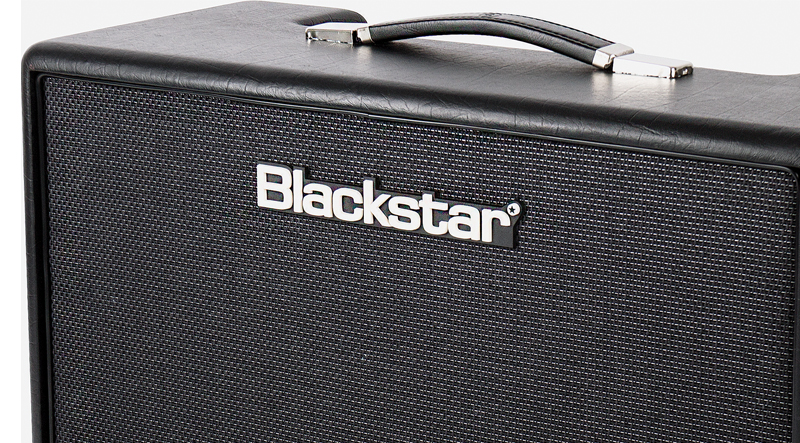
    Blackstar’s Artist 15 is a British amp with an American accent. Though designed and built around good ol’ American-flavored 6L6 tubes, its sonic qualities feature that glorious jangly, chimey sound of classic British Class A amps.

    Best of all, the amp’s unique ISF control lets the user dial between the two voices – or set it in the middle for the best of both worlds.

    The Artist series (which also includes a 30-watt big brother) runs the 6L6s in an open-loop circuit designed to provide that lovely treble while also accentuating the bass response. In addition, the configuration results in more gain, pushing the power amp’s distortion into a creamy grind when needed.

    The amp has two channels. Channel 1 offers stripped-down drive with no frills – just Volume and Tone controls for an honest, straight-to-the-heart sound.

    Channel 2 is all about options. Along with a Gain knob and Equalisation (using the British spelling), there’s Blackstar’s aforementioned patented ISF control. Spun to the U.S. tones, this channel yields a tightened lower end and emphasis on the treble with plenty of in-your-face presence. Dial it clockwise and head for English waters with lows and mids beefed up for warmth. Or go clean or crunchy (think vintage Vox or Marshall).

    The Blackstar’s capabilities were probed with a ’65 Rickenbacker 360, a guitar well-known for providing both classic American and British sounds. The 15-watter immediately boosted the guitar’s voice and magnified its clarity.

    On the Brit ISF setting, the tone was solid Beatles; a warm shimmer overdriving slightly as the Loud knob was turned up. Wonderful. On the Yank setting, the amp did a fine CCR impression with plenty of bluesy growl when the 360 was attacked hard.

    The Artist 15 has nice gain for front-ending pedals as well, especially vintage stompboxes that need a helping hand. A dual-level loop on the back allows players to run effects in a return-and-send. The amp also has a built-in digital reverb with Dark and Light switches for more flexibility than most spring units.

    The only suggestions? A standby switch would be lovely (the Artist 30 does have one). And the amp’s not lightweight, though this weight is quality heft – the cabinet and componentry feel rock-solid. And that stealthy black-leather styling is way cool, like a Hiwatt dressed in an Armani suit.

    As an all ’rounder, the Artist will have your back.


    This article originally appeared in VG February 2017 issue. All copyrights are by the author and Vintage Guitar magazine. Unauthorized replication or use is strictly prohibited.

  • Red Witch Zeus Bass Fuzz Suboctave and SoloDallas Schaffer Replica

    Red Witch Zeus Bass Fuzz Suboctave and SoloDallas Schaffer Replica

    Price: $299.99 (list, Red Witch Zeus Bass Fuzz); $359 (street, SoloDallas Schaffer Replica)
    Info: redwitchpedals.com, solodallas.com

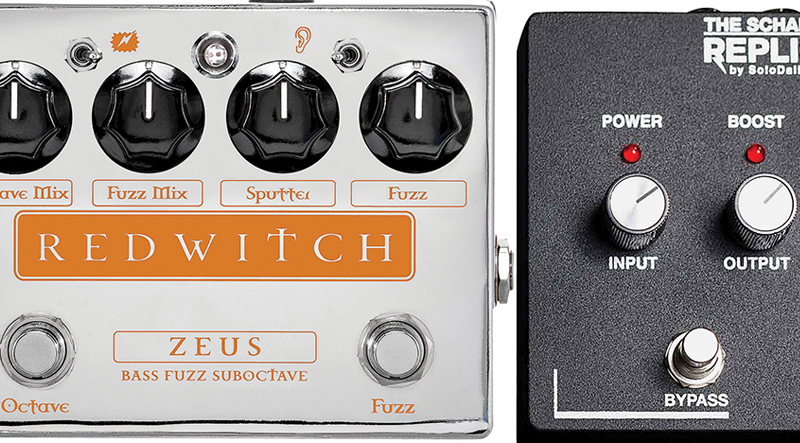
    Fuzz and octavers are among the hottest pedals around, with some builders even melding them to great effect. The Red Witch Zeus Bass Fuzz Suboctave is one such box. It’s designed for bass players, but guitar players will crave it, too.

    An all-analog design featuring silicon-based fuzz (fueled by two BC109 transistors, same as the Red Witch Fuzzgod), the Zeus Bass has four controls arranged like a mixer. An Octave Mix control brings in the dry-to-wet octave sound; “Off” is full off/bypass, or turn it full up for an entirely processed tone. The Fuzz knob sets the fuzz-tone level while Fuzz Mix brings in just the right amount.

    Sputter is another feature showing up more these days, imitating the staccato, farting sounds of 8-bit audio or a battery crapping out. On the surface, it seems like a negative, but on the job it’s one of the coolest effects in town. The Sputter knob makes a fair amount of crackling, but that’s the circuit adjusting the DC bias, which is normal.

    Used with a Relic Guitars Hague model, a Musicvox MI-6 bass, and a 1×10 Class A tube amp, the Zeus Bass Fuzz delivered massively fat tones. The fuzz is musical and warm, unlike some brash, nasty square waves. Dial in the gigantic suboctave effect for lo-fi, psychedelic city, perfect for everything from Jefferson Airplane to Sonic Youth. Ladle on some Sputter that harkens back to early-’70s Frank Zappa, Jeff Beck, and Stevie Wonder. Playing the greasy riff from “Superstition” on the Zeus resulted in pure sonic ecstasy.

    The Schaffer Replica by SoloDallas is an out-of-left-field unit based on the monster tone of AC/DC’s Angus Young. One of Angus’ secret weapons was the Schaffer-Vega Diversity System wireless unit, the first of its kind to gain a toehold among players of the late ’70s. The curious thing is that the old SVDS had such a great preamp and unique gain character that Angus also used it in the studio just a few feet away from his Marshalls.

    The Schaffer Replica is an authentic recreation of that unique circuit, giving a powerful boost in front of a tube amp. The pedal just has three controls: an on/off footswitch, input, and output. Basically, turn the effect on and decide how much you want.

    The Schaffer Replica uses the two-step “companding” process to smack the front of a tube amp, much like an overdrive pedal. “Companding” is a telecommunications term indicating a signal is compressed on one end and then expanded on the other end – sort of the audio equivalent of a compressed .ZIP folder. The unique SVDS circuit takes the input signal and proceeds to warm, fatten, and generally pump it up. Whether used with a Strat into a clean Fender amp or an SG into a plexi Marshall, tone becomes more exciting and lively.

    The Schaffer Replica is such a simple pedal that it needs to be heard for one to understand its cool factor. Plug it in, step on the footswitch, and marvel at its killer tone. Angus knew it was a great circuit 40 years ago. Now you can hear it for yourself.


    This article originally appeared in VG February 2017 issue. All copyrights are by the author and Vintage Guitar magazine. Unauthorized replication or use is strictly prohibited.
  • Joe Gore Pedals Cult Germanium Overdrive and Filth Fuzz

    Joe Gore Pedals Cult Germanium Overdrive and Filth Fuzz

    Prices: $199 (Cult, list); $269, (Filth, list)
    Info: joegore.com

    Composer, producer, and multi-instrumentalist Joe Gore’s career path has been multilayered and includes “guitar effects builder.” Two of his pedals are Cult and Filth – effects capable of great and varied tones that belie their simple layouts and designs.

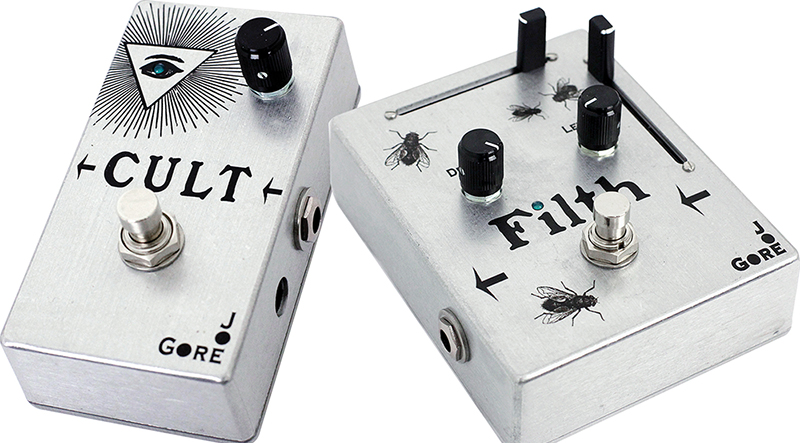
    One of the simplest pedal layouts ever created, The Cult has just one control knob, which increases gain. Don’t let that simplicity fool you, though – it’s one of the most flexible fuzz units imaginable. Running a ’65 Strat through the Cult and into a ’65 AC30 then playing with a variety of fuzz levels revealed that the more the Gain knob was turned up, the more responsive and dynamic the guitar’s Volume knob became, almost serving as an extension of the pedal itself.

    With the Cult’s control at 3 o’clock and the guitar’s Volume on 7, the setup yielded a great rhythm sound with enough clarity to allow open chords to bloom. Turning the guitar’s Volume all the way up produced a rich-yet-natural harmonic distortion that jumped from the amp, unlike some fuzz units that sort of compress the entire signal – very important in a live setting with a band.

    Like its little brother, the Filth pedal is also easy to use, though it has four controls; Level and Drive knobs increase the volume and the amount of fuzz, respectively, but what sets the Filth apart are two big sliders on the top and right of the unit. According to Gore, these alter the voltages through the pedal’s transistors, changing not only the tone but the response, attack, and compression notes.

    Running the Filth through a small-box Marshall 50-watt rig, the pedal produced an amazing assortment of sounds with simple adjustments of the sliders, which interacted nicely with each other. From a ’60s “Psychotic Reaction” type of fuzz to a Santana-smooth overdrive and on to end-of-the-world Black Sabbath heaviness, the Cult pedal displayed an incredible amount of flexibility most guitarists would have no problem employing as the sole fuzz in their signal chain.

    Gore’s Cult and Filth pedals are notably different from other designs in that they don’t squash the signal, but rather boost note dynamics. They are solidly built, easy to operate, and could be welcome additions to any electric guitarist’s pedalboard. 


    This article originally appeared in VG February 2017 issue. All copyrights are by the author and Vintage Guitar magazine. Unauthorized replication or use is strictly prohibited.

  • Zemaitis’ CS Guitars

    Zemaitis’ CS Guitars

    Price: $5,999.99 (list)
    Info: zemaitis-guitars.com

    Artist. Iconoclast. Guitar builder to the stars. Tony Zemaitis was all that and more. Ronnie Wood and Keith Richards swear by his electrics. Jimi Hendrix and Eric Clapton both played his acoustics. And today, original Zemaitis guitars are painfully rare – and even more painfully expensive.

    Enter Zemaitis International of Japan. Following Tony’s retirement in 2000 and death in ’02, his family licensed the company to build instruments of a similar quality level.

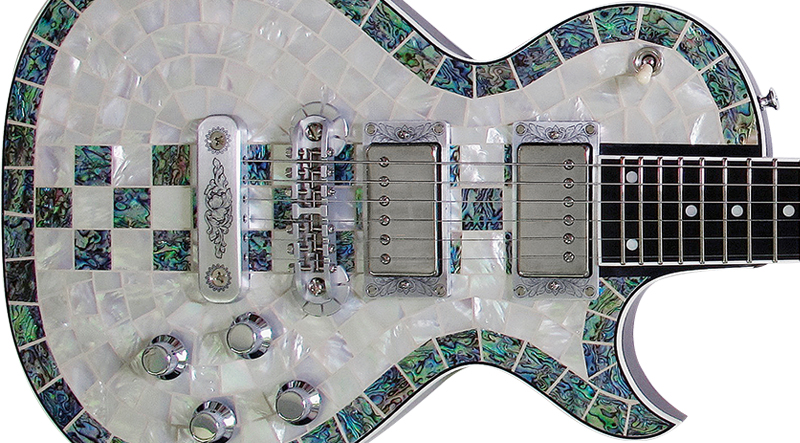
    The CS line hails from the Zemaitis Custom Shop, and they’re stunners. The CS24MF is the classic metal-front engraved model, the flagship of the line. The pearl-fronted CS24PF Ring Chess takes the concept one step further. Both are built with a select African mahogany body and neck, and like the originals, they’re suitably robust and, yes, shoulder-tiringly heavy. But you wouldn’t want anything less.

    The engraving on the CS24MF designed by Tony’s master engraver Danny O’Brien is stunning and all executed by hand by Japanese engravers, right down to minute details like those surrounding the tailpiece screws. The workmanship is hands-down superb but with just the right touch to let you know it’s engraved by an artist, not a machine.

    The pearly CS24PF is similarly eye-catching. The beautifully inlaid tile pieces radiate light as if with an inner glow. Playing either guitar under stage lights is almost guaranteed to grab attention.

    But enough oogling and leering at these guitars’ super-model looks. How do they play and sound?

    As good as they look.

    The 1.693″-wide neck is slim, silky smooth, and incredibly long! The scale is 25″ with 24 medium frets, but with the smaller Zemaitis body, the ebony fretboard seems to go on forever. The advantage is the free access to all those notes. Tuners are Schaller M6s.

    Plugging the CS24PF into a ’64 Vox AC30, a first strum indicates the guitar is ready to rock. The dual DiMarzio Custom PAF humbuckers are clean, crisp, and loud.

    Both guitars feature simple controls. The three-way toggle switch selects the pickups, which are each dialed in by their own Volume and Tone knobs. Classic. Happily, Zemaitis International didn’t try to supercharge the resurrected line with locking tuners, floating tremolos, active electronics, and the like.

    And those pickups are eminently flexible. You can get a warm Some Girls R&B tone, then switch to a funked-up treble with plenty of slappy twang. Or spin the controls all the way for lowdown and dirty with a gritty grind. Playing the Zemaitis provides an “Ah-ha!” moment – you instantly understand where a key element of the Stones’ sound has come from all these years.

    Way back when, Tony Zemaitis used the metal fronts on his guitars to resolve some fundamental problems of performing under stage lighting – buzz, feedback, and radiophonic electronics. The metal acted as shielding to solve much of that. With help from O’Brien, that shielding became art.

    And that brings us back to aesthetics. These guitars are obviously much more than eye candy. Beyond the razzle-dazzle of the engraved-metal and pearl fronts, the sound is downright killer.

    And if these Custom Shop guitars are too much for your billfold, Zemaitis International offers less-detailed metal fronts, disc-front versions (again, think Mr. Wood), a range of Black Pearl models, and more.


    This article originally appeared in VG February 2017 issue. All copyrights are by the author and Vintage Guitar magazine. Unauthorized replication or use is strictly prohibited.
  • Aaron Eisenberg

    Aaron Eisenberg

    Aaron Eisenberg: Mat Dunlap.

    L.A.-based rockers The Soft White Sixties prove you don’t have to be old to be classic. Originally from San Francisco, the quintet deftly blends early R&B influences with ’70s glam rock while also managing to sound quite current.

    With its recent release, The Ocean Way EP, and a full-length record in the can, lead guitarist/songwriter Aaron Eisenberg delivers first-rate tone and sets the bar high.

    “The classic inspiration is really a caliber reference for us,” Eisenberg said. “There was definitely a standard for musicians back then. It’s something we’ve always noticed about that music. Now, with technology, you can take your time, do multiple takes, comp them together and all that, but that’s never really been a mentality for us. It’s much more about having it together and really focusing on the performance.”

    In the studio, Eisenberg maintains a simple approach.

    “My studio setup is pretty much just my Vox AC30. There’s a couple parts on The Ocean Way EP, like on ‘Miss Beverly,’ where I didn’t use an amp; the guitar is straight into the Trident desk. It’s very Beatles ‘Revolution’ style, just blown-out preamp. I also use a Zvex Mastotron Fuzz, which is my main fuzz, and an MXR Blue Box. Live, I usually use a JHS Colour Box, which is a pretty accurate preamp simulator. I’ll leave it on as a preamp and it makes the tone so much better and full bodied. The new record has the Colour Box pretty much on every song.”

    For the new album, the guitarist decided to broaden his dynamics. “I ran a stereo rig with my AC30 and an old Silvertone guitar that had this natural resonance, kind of a ringing that I don’t think was intentional. You can’t really find happy accidents and imperfections like that with new gear. When you find it, it’s a special thing. I also used a late-’60s Fender Vibratone with a ’65 Bassman head.”

    On the road, Eisenberg relies on his Vox.

    “The AC30 has been a solid foundation for trying different pedals. I have a decent-sized pedal board, and different amps tend to react differently to certain pedals. The AC30’s been a really consistent foundation to sculpt different sounds.”

    In a live setting, re-creating sounds from their records requires a few tools.

    “I have a vintage Small Stone Phaser, a POG, and a wah that I’ll leave half-open, then a couple of standard tremolos and delays. For most of the set, I’ll also use a Keeley-modded Line 6 DL4 for slap-back to fill everything out, especially when we’re playing as a three piece with a singer; the bass player and I have to get more creative. Now that we have another guy playing guitar, I can be more selective with pedals and save things for special moments.”

    His affinity for Guild started with the acquisition of a vintage Starfire.

    “A friend bought a ‘68 Starfire a few years ago and until then, I’d never really seen electric Guilds. A year later, I bought it from him and now it’s more or less my main guitar. It’s got the stock bridge pickup and at some point someone put an early-’70s Gibson mini-humbucker in the neck, which is really great. It seems to grab hold of the fuzz pedal really nicely. About a year later, I bought an early-’70s Polara. I really like the sound of the stock pickups Guild was using for that era. They have a really nice, woody quality to them.”

    Soon after, Eisenberg developed a relationship with Guild.

    “At NAMM one year, I met the guys and they were already familiar with the band and we started working together. They have a new line of Starfires that are really great, which I bring on the road instead of the vintage stuff. It’s nice to have something new that holds up.”

    Choosing the right guitar presents little challenge.

    “My selection process is simple; if it looks cool and it feels good, then I’m in. You can change the pickups, run it through pedals or different amps, and dial in the tone. There’s really something to the Guilds. I end up talking to people after shows and they ask, ‘What is that? Where’d you get that? How old is it?’”

    In the age where the lines are often blurred between creativity and manipulation, Eisenberg feels hopeful.

    “There’s some realm of current music that’s swinging back into the area of that imperfection. It’s nice not to have everything sound like a computer. For us, there’s been a lot more encouragement of the human side, like don’t be tied to a click and don’t fix all the little stuff. Just let the music push and pull and be this human thing.”


    This article originally appeared in VG February 2017 issue. All copyrights are by the author and Vintage Guitar magazine. Unauthorized replication or use is strictly prohibited.

  • J.R. Cobb

    J.R. Cobb

    J.R. Cobb with the Strat he used with the ARS; it has DiMarzio pickups, brass nut and bridge saddles, and an Alembic Stratoblaster booster. J.R. Cobb: Willie G. Moseley.

    When he joined Atlanta Rhythm Section in early 1972, J.R. Cobb and Barry Bailey had more in common than simply being the band’s co-guitarists.

    Like Bailey (VG, December ’16), Cobb had been playing in bands since the early ’60s. Furthermore, he had performed in a hit-making aggregation. Born in Birmingham, Alabama, he grew up in Jacksonville, Florida.

    “No one in my family was particularly musical, but the radio was on all the time when I was a child, and I was exposed to lots of different kinds of music,” he said. “My uncle gave me an old beater acoustic and taught me a few chords, but I really didn’t get interested in playing until high school.”

    Cobb’s first electric was a Silvertone guitar and amp, and he later upgraded to a Fender Jazzmaster and a borrowed Fender amp.

    “I was influenced by the Ventures, Duane Eddy, Chet Atkins, Buddy Holly, and just about anybody I heard on the radio,” the guitarist recalled. “I was in a band that played sock hops, supermarket openings, cocktail lounges, and night clubs, which in Jacksonville at the time were just fancy names for bars with a little stage and a dance floor.”

    He recalled interpolating British music after the Beatles appeared on “The Ed Sullivan Show.”

    “We dropped most of the instrumentals and started to discover R&B and traditional blues,” he said.

    “Nobody played much country music, and standards weren’t cool anymore.”

    Cobb was a member of the original lineup of the Classics IV, which formed in Jacksonville in 1965. The band’s producer/manager was Buddy Buie (1941-2015), who ultimately co-wrote numerous hits with Cobb, including “Traces,” “Spooky,” and “Stormy.” They also co-wrote Sandy Posey’s “I Take It Back” and Cobb collaborated with Ray Robert Whitley on “Be Young, Be Foolish,”Be Happy” (“A beach-music anthem!” he recalled proudly).

    “The idea of writing songs just really appealed to me,” Cobb said of his rapid evolution. “I’m sure the Beatles and artists like Roy Orbison, the Beach Boys, and other singer/songwriters coming along then sort of fueled that. While most of the Classics IV hits were mellow or ballad-ish tunes, that isn’t necessarily my preferred style.”

    As for gear with the Classics IV, Cobb recalled, “I played a Jazzmaster for a short time then switched to a Telecaster, which I played as long as I was in the group. I had a Fender Super Reverb, and I have kicked myself ever since for getting rid of it.”

    By the early ’70s, Buie and Cobb were ensconced in the operation of Studio One, a recording facility in Doraville, Georgia.

    “ARS was made up of studio musicians and a couple of other players that hung out and recorded at Studio One,” he said. “I used a couple of Strats and a couple of black Les Paul Customs; some were tuned for slide. For acoustic, I used an Ovation. I used an Ampeg amp for a while and later switched to Peaveys when we got an endorsement deal. In the studio, I always preferred Fender, but unfortunately, they just weren’t loud enough for the stage.”

    The list of ARS hits is long – “So Into You,” “Champagne Jam,” “Alien,” “Angel,” and more. The band defined a laid-back stylistic facet of southern rock, and created numerous hit albums. Memorable performances included a gig at the White House during Jimmy Carter’s presidency, two Champagne Jam mega-concerts in Atlanta, and the Knebworth festival in England.

    Cobb could hold his own among the high-caliber musicians in the ARS – one example is the live version of “Another Man’s Woman,” which clocks in at over 14 minutes on the band’s live 1979 album Are You Ready? In addition to a jaw-dropping bass solo by Paul Goddard, the song includes stinging trade-off licks from Cobb and Bailey.

    Cobb ultimately tired of road life and departed the band for an easier lifestyle.

    “I was pretty burned out,” he reflected. “I had a teenage son who my wife was raising virtually by herself, and I wanted to do some other things, as well. I worked with (producer) Chips Moman and played behind (country supergroup) the Highwaymen for five years.”

    These days, he’s still going at his own pace in rural Georgia, and enjoys playing at his leisure.

    “For the most part, the time I spent in ARS are some of my best memories, and I don’t regret one day,” he said.


    This article originally appeared in VG February 2017 issue. All copyrights are by the author and Vintage Guitar magazine. Unauthorized replication or use is strictly prohibited.
  • Shane Speal

    Shane Speal

    Shane Speal: Jennifer Diehl.

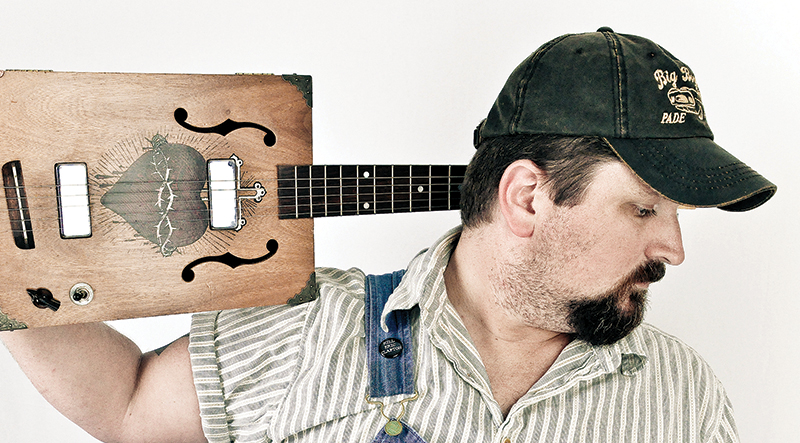
    In an era of high-tech musical toys, there’s some irony in the fact that the cigar-box guitar – most primitive of homemade stringed instruments – is alive and well. 

    The first examples appeared in rural America, created and built by musicians too poor to have a “store-bought.” Today, Shane Speal is the self-appointed “King of the Cigar-Box Guitar.” 

    “I first used that goofy title in 2003, when I posted plans for making cigar-box guitars on the internet, and it’s always been tongue-in-cheek. Who in their right mind would want to be king of such a s*****y instrument?” 

    Regardless, Speal has done much to popularize the cigar-box guitar. Solo and with his Snake Oil Band, he gigs using only CBGs (“I take six or seven to every show,” he said), organizes festivals and hosts broadcasts focused on them, promotes other artists who play them, and makes and sells them via cigarboxnation.com. 

    How did you get to this CBG-centered place in life?
    I’ve been into music since I was a kid. I got my first guitar at eight years old and discovered Kiss. In high school, I played bass in heavy metal bands. When I hit college, I dove into acoustic guitar and the blues; I followed the history backward from Hendrix to Muddy to Hound Dog Taylor, then the Delta guys. I borrowed Smithsonian Folkways records from the library and my favorite music became the earliest stuff, which sounded creaky and broken – primal – played with pocket-knife slides. To me, that was the deepest-sounding music. At the time, I was flogging an old Stella with a spark-plug-socket slide. 

    The cigar-box guitar was one step deeper, even. It was imperfect from the beginning. I built my first in ’93 from a Swisher Sweets box, a hunk of wood, and three strings. As soon as I tuned it up, I was in love. It was the sound, the feel, the mojo I was searching for. Cigar-box guitars buzz, they can be out of tune, and yet I’d rather play one in concert over any manufactured instrument.

    Is there a feeling among CBG players that the instruments and those who use them should remain off the popular musical radar?  
    No. We all went apes*** when Paul McCartney played one in the Sound City documentary, then won a Grammy for it. 

    What’s in your collection?
    I have over 100, most on display at our family’s tavern in New Alexandria, Pennsylvania. The oldest is more than 100 years old – a two-stringer. 

    What’s it like to play one live?
    It’ll kick your ass simply by its primitive nature. It forces you to downshift your playing and take it deeper. There’s a beauty to embracing the art of the American poor. It comes from humble hearts, giving souls and a will to live. Hard times make great music. If you want to play cigar box guitar, don’t buy someone else’s. Make it yourself!


    This article originally appeared in VG February 2017 issue. All copyrights are by the author and Vintage Guitar magazine. Unauthorized replication or use is strictly prohibited.

  • Gospel Guitars

    Gospel Guitars

    This guitar has a Gospel neck and features like a Mosrite Model 202. Its headstock logo varies from the catalog. ’68 Gospel: Willie G. Moseley.

    Semie Moseley always wanted to be a gospel singer/guitarist. When he wasn’t crafting Mosrite guitars, he could often be found on the road with an evangelist, providing music for crusades. So, it wasn’t surprising that the now-legendary luthier’s aspirations and beliefs were manifested in a tangential line of instruments carrying the Gospel brand.

    Gospel guitars were mostly variations of Mosrite models and debuted in a catalog that touted the ’68 line with a six-string that looked much like the Mosrite Celebrity CE Mark I Model 202 (2 34“-deep maple body, two pickups, silo-shaped saddles, vibrato, bolt-on neck, bound-rosewood fretboard with zero fret, truss rod with adjustment at the headstock, 24 12” scale) but had step-up features including multi-ply binding on a bookmatched top, bound soundholes, and “…an unusually outstanding natural finish with a golden brown tinted headpiece.”

    Elsewhere in the catalog, the full-depth Mosrite Celebrity had master Volume and Tone knobs, pickup-selector toggle, and an input jack on a palette-shaped plate, while the Gospel version had separate Volume and Tone controls for each pickup. A Gospel-branded 12-string guitar and short-scale bass were listed, but not shown.

    This late-’60s Gospel (left) was played by the late Kurt Cobain, in Nirvana. A late-’60s Gospel (right) with all-original parts. Cobain Gospel courtesy of Mike Gutierrez.
    The late-’60s Gospel’s Japanese-made tuners and plate-less neck joint: Michael G. Stewart.

    Mosrite also made a few Gospel solidbodies based on the Mark V Model 101, perhaps to use leftover parts. Known as the Ventures II when the Ventures endorsed Mosrites, the Mark V was a budget model with smaller basswood body and shorter cutaway horns. It initially had a flat body, but, after approximately 30 were made, it was given German a carve that was less-pronounced than on other Mosrites. Other features included a 22-fret rosewood fingerboard on a maple neck, and a 24 12” scale. The Gospel version had Japanese tuners and lacked the peanut-shaped neck plate. Its four neck bolts passed through threaded ferrules.

    Following the closure of his factory in Bakersfield in ’69, Moseley returned to custom building. In the early ’70s, he made at least one Gospel guitar based on the full-depth Celebrity hollowbody. Its electronics included a pickup toggle on the upper treble bout, and Volume and Tone knobs mounted from inside (with no plate). It was given three-ply binding on the top, single-ply on the back, and no binding on the f holes. Its Mosrite humbuckers had two rows of polepieces, and it was finished in a color similar to Fender’s Antigua.

    One unique Gospel was a ’77 Bicentennial Celebrity built for a preacher named Beatty. Moseley made its neck (which runs to the bridge) using a 14” x 34” brass rail, and embedded the frets in it. Its hollow maple body is 16″ wide at the lower bout and 234” deep. The fretboard is rosewood and maple, while its zero fret and nut are brass. He further dressed it with a rosewood headstock overlay and eight-ply binding on the top and back. Controls include Volume and Tone for each pickup, pushbutton switch for phase, and coil taps for each pickup.

    This early-’70s Gospel (left) was based on the Celebrity hollowbody with a finish similar to Fender’s Antigua, courtesy of Mike Gutierrez. This ’77 Bicentennial Celebrity (right) was built for a preacher named Beatty: Jeff Antkowiak.
    The Gospel page from Mosrite’s 1967 catalog, courtesy of Steve Brown.

    By the ’80s, Mosrite and Gospel guitars were being built in Jonas Ridge, North Carolina, and Semie was using gospel-music magazines to advertise the new Victory series – the I (plain pickups, no pickguard), II (pickups with visible polepieces, pickguard), and III (flat body, no vibrato).

    In the early ’90s, Moseley relocated to a converted Walmart in Booneville, Arkansas. Sadly, though, production there had just begun when Moseley was diagnosed with multiple myeloma. He passed away on August 7, 1992. The factory closed the following year.

    This Gospel (left) was made in North Carolina and painted by Wayne Jarrett, famous for his artwork on guitars and motorcycles; note the pickup covers are part of the theme. The figured-maple fretboard is rare for a Moseley instrument. A Hallmark-made Gospel Mark V (middle). Red and gold Gospel and Hallmark Gospel Mark V: Michael G. Stewart. This ’80s Gospel (right) is called Fourth Man and has a slightly different body. Its portrait of Jesus was painted in oil. Gospel Fourth Man courtesy of Bob Shade.

    More recently, the Gospel brand was revitalized by Hallmark Guitars, which has designed and built Gospels based on the classic Mosrite silhouette and with pickups wound in-house.

    While Moseley loved making Mosrite guitars, his Gospel instruments often received even greater attention to detail. Most are one of a kind, and stand as exquisite examples of Moseley’s prowess.

    The ’80s Gospel Victory catalog. Victory catalog courtesy of Bob Shade.

    This article originally appeared in VG November 2018 issue. All copyrights are by the author and Vintage Guitar magazine. Unauthorized replication or use is strictly prohibited.

  • Tyler Morris – Eleanor Rigby

    Tyler Morris – Eleanor Rigby


    In this series, Tyler Morris will perform music that inspires him, in a laid-back context using just a guitar and amp – much like the way the songs were written and with a focus on the blues roots that inspired their creation.

    Here’s his take on the Beatles’ “Eleanor Rigby,” using his Gibson ES-235 through a Revv Generator 7-40 (set to Vintage Crunch). Tyler uses a strap by Levy’s Leathers, Stageclix V4 wireless, and custom Dunlop Tortex 1.14 mm picks. Keep up with Tyler HERE!!