Tag: features

  • Jim Campilongo

    Jim Campilongo

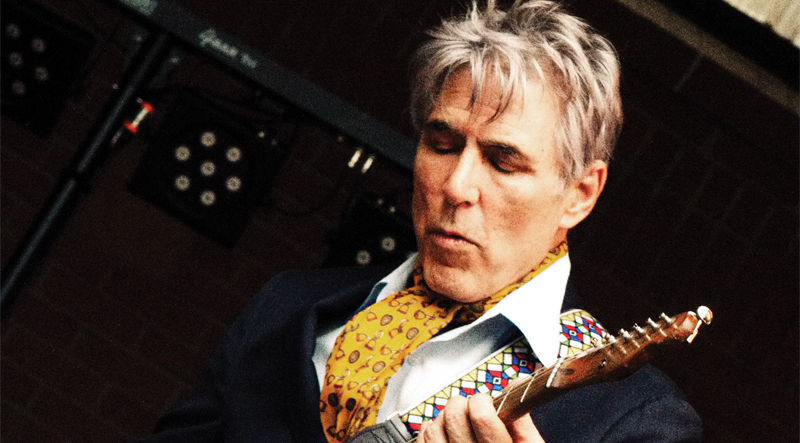
    Jim Campilongo: George Ellsworth.

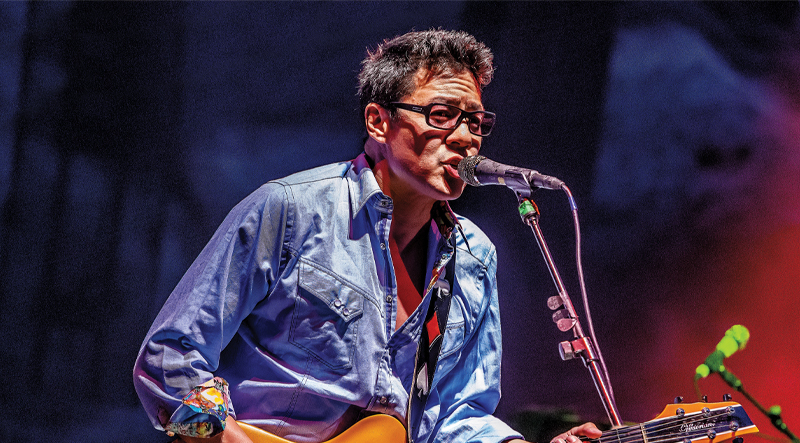
    Fans of forward-thinking Telecaster spank and cluck will get a kick out of Jim Campilongo’s new album, Live At Rockwood. What he does with two hands and a guitar plugged straight into a Fender Princeton will give pedal freaks a complex. The Jim Campilongo Trio, with Chris Morrissey on bass and Josh Dion on drums, go off on beautifully telepathic musical tangents with inspired tunes and effortless musicality. Live At Rockwood has all that, an enthusiastic audience, and Wilco’s Nels Cline.

    Why a live record?

    A lot of my favorite records are live. I saw Stanley Clarke in concert in 1976; Ray Gomez was on guitar. I bought a little cassette recorder. There was some guy yelling next to me really loud, and I think I listened to that thing for like 50 hours. If the energy is there, I like it, but when it’s me, sometimes I want every little hair to be in place (laughs). I thought it had a great vibe. It was a lot of work to find what was good, and find what was good enough to put on a record sonically.

    Having Nels Cline on the record is a bonus.

    I’m really proud of “Cock ’N Bull Story.” There’s no way we would have ever done that in the studio. I think we changed keys at least twice and then went into this other part. It ended up being pretty epic.

    We recorded every show, so that was real nice as opposed to going into a studio at 10 a.m., getting drum sounds, feel the clock ticking, feeling the money being sprayed out of a fire hose, then trying to play music.

    I got a record that really chronicles what we’ve been doing and what the band has turned into. There are improv sections and the band is really free. It was doubly free because it was live at a place we’re very familiar with.

    Does Live At Rockwood fully represent what you do on guitar?

    It represents me as a collaborative artist engrossed with the trio. I’m way more willing to walk a tightrope with Josh and Chris. There’s a tune called “Jimi Jam” and it’s real high-octane. There’s a collective groove and it’s really working. On another night, there’s a collective groove that maybe isn’t working, or Chris might not be feeling it, or I’m not. If everybody isn’t on the same page, just treat it with kindness and support it. If I redefine the “One,” or if someone else does, it’s like we’re on their side and I’ll redefine my “One.” It’s kind of like taking chances is encouraged with kindness. There was no crabby jazz guy glare (laughs). From that springboard, I grew, and this album chronicles that.

    On “I’m Helen Keller And You’re A Waffle Iron,” we’ve never done that during the solo section. That’s one of the reasons I liked it. It was truly in the moment and, as a listener, I really enjoyed it. On some of my earlier records, I would work out a solo just to expedite things because we didn’t have a lot of time. Pound for pound, I really enjoy listening to more-organic, improvised stuff more than something that’s crafted. I’m not saying crafted solos aren’t great, I enjoy listening to them, but what we’re doing is a totally different thing. There’s a place for both, but I really enjoy the improvised moments. It doesn’t sound like Ornette Coleman or something, but it was a long journey.

    Your guitar tones are fierce…

    It’s a ’59 Telecaster through a silverface Princeton combo with a Celestion G10. No pedals. It had a blown speaker for a couple of nights and I was kind of enjoying it (laughs); you can hear the blown speakers on “Jim’s Blues.” It’s a good blown-speaker sound. That lasted a couple of weeks, but by about the third week I was like, “I gotta get a new speaker.”  (laughs) But I caught the sweet spot.

    All my heroes just plugged into an amp. Then there are guys like Hendrix who had a Fuzz Face and a wah, but it still sounds organic. Angus Young just plugged into an amp, Roy Buchanan, James Burton, Ted Greene, and Wes Montgomery just plugged into an amp. I get every sound you can get out of a Telecaster. Maybe I’ve added one or two. There are a lot of sounds you can get out of a Tele, and I think it helps if you have a relationship with the music, your band, and the audience.


    This article originally appeared in VG May 2018 issue. All copyrights are by the author and Vintage Guitar magazine. Unauthorized replication or use is strictly prohibited.
  • Al Joseph

    Al Joseph

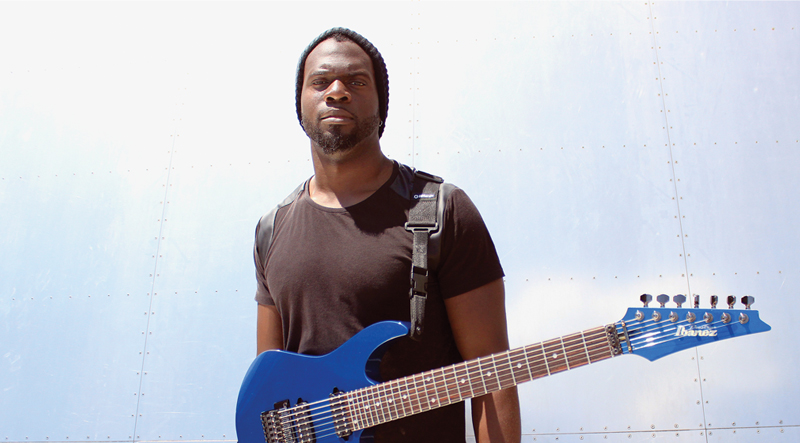
    Photo courtesy of Al Joseph.

    Al Joseph is breaking new ground in prog-metal. Known for his riveting guitar playing and instruction with Jam Track Central, he’s also an ensemble musician and vocalist. On his latest album, All Of Creation, Joseph brings together the drama and precision of contemporary prog with the soulfulness of African-American music. It’s a tuneful mix of sounds with killer guitar from top to bottom.

    What was your introduction to metal?

    I was five years old, watching Black Entertainment Television with my parents and Living Colour was playing. I was like, “Man, that’s cool!” I was young as hell but recognized there was something different about these guys. My dad isn’t a musician, but he knows so much good music. He already had their album. So I’ve always gravitated to metal. It affected me when I was really young and never went away.

    When I started playing guitar, I’d always put on metal. I played in church and learned chords and basic stuff, but I liked metal. On the way to church, I’d listen to Korn and all these crazy bands. There were no teachers in town, but I had DVDs, a couple of books, and I taught myself a bunch of songs. I learned Creed’s whole catalog. They’re still one of the heaviest bands I know.

    Then I started getting bored… until my dad popped in Surfing With The Alien. He already had five Satriani albums and never told me about it. That’s when I lost it. From then on, I couldn’t study. I couldn’t eat.

    Joe Satriani and Steve Vai made me want to learn how to be a lead singer on guitar. Dream Theater got me into the instrumental stuff. I got into Dream Theater by watching John Petrucci on G3 Live In Tokyo. I didn’t know who Dream Theater was; I knew who Petrucci was because he played two songs at the beginning of that DVD. I was trying to watch Satriani and I was like, “Who is this other guy?” (laughs) I’d already learned a few Satriani songs, but it was the way Petrucci zeroed in on ideas. Satriani was more open. Petrucci was more like, “I’m gonna kick your ass on this section!” It was also the way he was able to fuse technique with Satriani’s power and melodic nature. That sealed the deal. I bought Dream Theater’s Live At Budokan DVD and I literally fell off the couch. I couldn’t believe people were playing music like this.

    How was the writing process for All Of Creation?

    It was an growth thing. I really wanted to impress people. Then I saw Angel Vivaldi play live and I was like, “F**k this. I want to write music that jams. I want to make people move. How can I blend those two together? How can I write for guitar players, for myself, and everyone else?” I also love pop music, and wanted to have those straight-ahead elements. There are other elements, like on “Elysium,” where I’m bringing an old-school R&B shuffle vibe into metal. I let the music breathe instead of trying to saturate it with things that try to impress people.

    “Nightlights” is very catchy.

    I was at work when I heard this slap groove in my head. On my lunch break, I grabbed a guitar and started writing. What really inspired the album was the latest Dirty Loops album. It’s heavily R&B influenced. I also liked that they changed stylistic fields between songs. That’s why “Nightlights” was so acceptable to me. It has heavy elements, but for the most part it’s very R&B.

    What’s your main guitar?

    My new Ibanez Custom. It’s a straight up RGA seven-string based off the RG752. I wanted something a little more interesting on the body shape, so I went with the RGA. It’s a basswood body with a maple neck. I’m very simple to please when it comes to guitars; I don’t care about quilted-maple tops, and I like thin necks. The seven-string gives me the lower range to play the kind of music that I want to play.

    What are your plans for the near future?

    It’s all about this band where I’m singing. I was in a band before I joined Jam Track Central because I wanted to bring more fans to our band. The band split up, and now I’m known as a guitar guy. I’ve always wanted to be the virtuoso guy, but I also want to be a performer. I have this other side of me, and this band gives me that outlet.


    This article originally appeared in VG May 2018 issue. All copyrights are by the author and Vintage Guitar magazine. Unauthorized replication or use is strictly prohibited.
  • Whitey Kirst

    Whitey Kirst

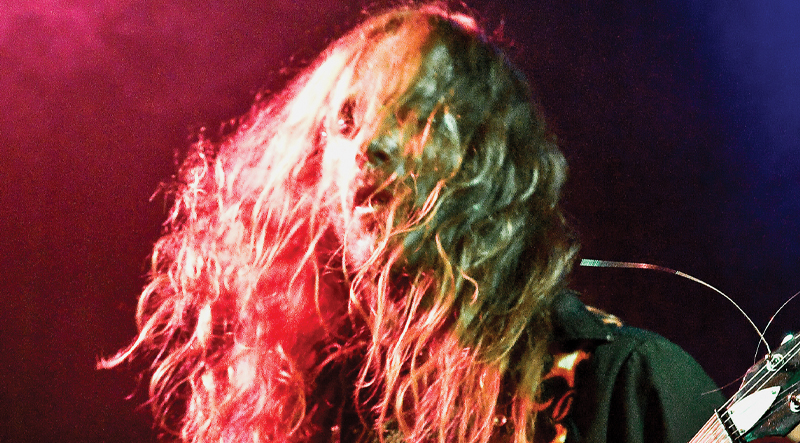
    Whitey Kirst: Heather Harris.

    Whitey Kirst is known for smoldering lead-guitar tone and collaborating with punk-rock pioneer Iggy Pop. After four albums and hundreds of shows, Kirst’s 13-year tenure with Iggy went on hiatus when the legendary frontman reunited The Stooges in 2003 (see the feature with Stooges guitarist James Williamson in this issue).

    Since then, he’s been fronting his own hard-rocking power trio, Whitey Kirst and the Web of Spider, utilizing a revolving rhythm section that has included original Motörhead drummer Phil Taylor, Black Sabbath touring drummer Tommy Clufetos, and Kirst’s brother, Josh, on bass.

    “I like to play as a three-piece,” Kirst said. “There’s a lot of space and you don’t have to worry about so many players being confined to the structure of something.”

    For their latest record, The Old Road, Kirst had the band play live in the studio. We recently sat to speak with him.

    Which amps did you use for the album?

    For most of it, I used a Crate amp modified by my friend, Doc. I call it White Lightning; it’s white with lightning bolts, chrome ladies taken from mud flaps, and 300 watts! It’s pretty loud. There’s an old Marshall JMP on there, as well.

    You often use amps atypical of expectations.

    On my last tour with Iggy, I used a Carvin X100B that I got in the ’80s. I really like the way that amp sounds. I also had a Marshall and a Crate VC5212, which I think is just a great-sounding little 50-watt tube amp with two 12s. I’ve still got it, but I blew it up (laughs)! For cabinets, Musiclord made me some with 50-watt speakers.

    You also built a career sans effects. Did you stick with that formula?

    Yeah, it’s just my guitar straight into the amp. When I first started playing with Iggy, I used to use a Rat pedal, not for the distortion, but I found that if you turn the distortion way down and the Volume way up, it would just make the amp louder and give it more bite. I stopped using it because it was just one more thing to worry about. People want great tone and they get an amp for that tone, then they put all of these things in-between it and it really makes no difference what you’re playing through at that point.

    And did you mostly play your SGs and Les Pauls?

    I did. I have a white 1990 triple-pickup Gibson SG with a Seymour Duncan Invader in the bridge. That’s a great guitar, but it used to waiver a bit when moved around, like a vibrato. The headstock is missing wood from getting hit with Iggy’s mic. He’d swing the mic way out and I’d straighten the guitar as a shield and the headstock got hit one night! It also suffered a crack at the body joint and neck. Then, my brother intentionally stepped on it and snapped it in half, re-glued it, and it’s been fine ever since. I’ve also got a black triple-pickup SG Deluxe with mini humbuckers. I really like Les Pauls from the ’70s with maple necks, and I have a few of those. They just feel more solid. I have a ’77 Les Paul Standard that has a three-piece maple neck and it just feels different.

    A decade or so ago, you had a custom guitar made, right?

    Yeah, I met a fella at NAMM who owned the guitar factory Al that made Tokai Love Rock guitars, which I liked. He made me some guitars and the SG-style was meant to be a cross between my white triple-pickup and a ’71 Pro/Deluxe. The ’71 was my favorite SG; it had a Bigsby, felt solid, looked great, sounded great, and played great. Mine are fairly standard, with roller bridges, Grovers, and a Bigsby-type vibrato. They’re pretty solid, and two of them are triple-pickup with Invaders in the bridge.

    But you’re certainly not a guitar snob…

    Not at all. In fact, I really like cheap guitars; they’re fun, you don’t have to worry about them too much, and if something happens to them, it’s not a huge deal. Mike Starr (the late Alice in Chains bassist) and I went to Guitar Center one day and grabbed the two cheapest guitars we could find. I grabbed a Fender Starcaster with this skinny little neck, it was like the Rock Band edition (laughs), and I loved it! Mike grabbed a Squire Mustang bass and we sat there and jammed. We bought them and ended up recording with them. They sounded great! I’ve since changed the pickups in the Starcaster, but I used the stock pickups for recording. I just plug it into a big amp and let ’er rip!


    This article originally appeared in VG May 2018 issue. All copyrights are by the author and Vintage Guitar magazine. Unauthorized replication or use is strictly prohibited.

  • Les Claypool

    Les Claypool

    Les Claypool: Paul Haggard.

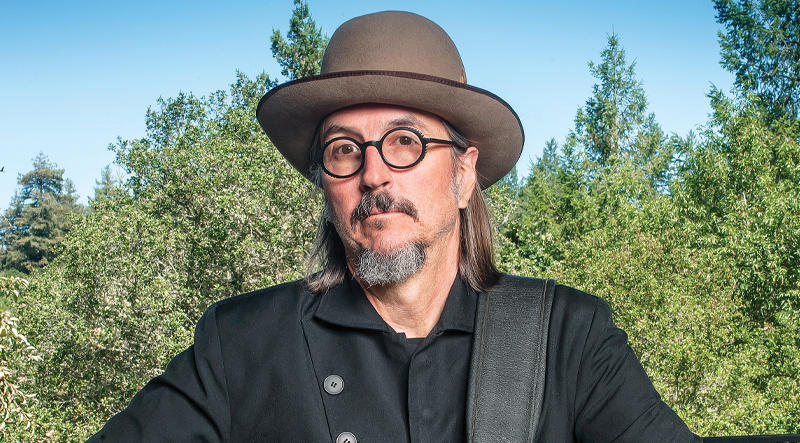
    The words “concept album” conjure images of long-haired, cape-wearing prog musicians from the ’70s.

    On their ninth studio album, The Desaturating Seven, Primus satisfies part of that equation, but with a twist. It turns a storyline based on Ul De Rico children’s book The Rainbow Goblins into tunes like “The Seven” and “The Scheme” while showcasing Primus’ quirky trademark sound. We asked singer/bassist Les Claypool about the album, his instruments, and other projects.

    How did you devise an album based on a children’s story?

    Years ago, it was one of the books my wife, Chaney, read to our kids, and I’d sometimes get roped in. And she read it when she was a kid. I remember looking at the artwork, thinking, “This is amazing. It would be incredible to put music to it.” Almost 20 years later, I finally did it.

    Was it difficult fitting the storyline to music?

    It was a bit of a challenge. I’ve always sort of avoided concept records because you instantly put up parameters. I like to shoot from the hip and write about whatever pops into my head or whatever happens to be going on; I like to be spontaneous.

    So, that made it a little more difficult, but it was also easier in some other ways by just giving jumping-off points for visuals and whatnot. But the hardest thing is you’re about to write an album about goblins and rainbows, and it’s hard to get in there and write it without sounding like an overly cheesy ’70s art-rock album. I don’t think I say the word “goblin” anywhere on the record, and I don’t say “rainbows” that much, either. It’s more that I ran with the metaphor aspect of each piece I took on.

    Which basses did you use to do the recording?

    I used my six-string fretless Carl Thompson I call “The Rainbow Bass” quite a bit, which I hadn’t done in a while. So, I think that was exciting for people who are fans of that thing. There was also my NS upright and my black Pachyderm bass.

    What’s the story of the Pachyderm?

    I spent a lot of years playing the Carl Thompson four-string and have always loved it, but the tonality of it is very much “that bass.” So, I’ve been chasing my tone for many years, and I wanted to develop something. And that bass is very good for certain things, but with a lot of the Carl Thompson basses, you kind of tailor your playing to the bass because they’re such a unique instrument.

    I’ve always wanted to design a four-string that was just exactly what I wanted. So, utilizing a bunch of ideas and a bunch of different elements of instruments that I’ve always liked, I came up with the Pachyderm. We’ve made several of them, and a good friend from high school, Dan Maloney, is making them for me. The latest is this black one. On the goblin record, I’m finally honing in on the tone I’ve always wanted. But you never know – I may look at it in a couple of years and go, “What the hell was I thinking?”

    You’ve utilized Kahler vibratos on some instruments over the years. Is it difficult keeping them in tune?

    Well, I’m in Primus… intonation doesn’t matter quite as much! It’s a balance. I can kind of tell when it’s out of tune, and if I bend up on notes, I can pull it back into tune. But there is a drunken quality to it, which I like. It’s got “loose intonation,” let’s just say that (laughs). But a lot of my favorite guitar players have that similar quality – a drunken tonality and intonation.

    At this point, what’s more satisfying – playing in Primus or being a part of Claypool Cellars wine brand?

    The wine is more my wife’s thing, but we definitely drink a lot of it (laughs). So, keeping me in high-quality juice is a wonderful thing. But as far as being able to pay for my kids to go to college, Primus is doing that.

    I understand you are working on a second Claypool Lennon Delirium album. What’s it like to work with Sean Lennon?

    It’s spectacular. We have a great friendship, but we also have a great working relationship. It’s a true give-and-take as far as bouncing ideas off of each other. There are not many people I can toss lyrical ideas back and forth with, as well as musical ideas. It’s a lot of fun.


    This article originally appeared in VG May 2018 issue. All copyrights are by the author and Vintage Guitar magazine. Unauthorized replication or use is strictly prohibited.
  • Rahul Mukerji

    Rahul Mukerji

    Rahul Mukerji: Lei Lu.

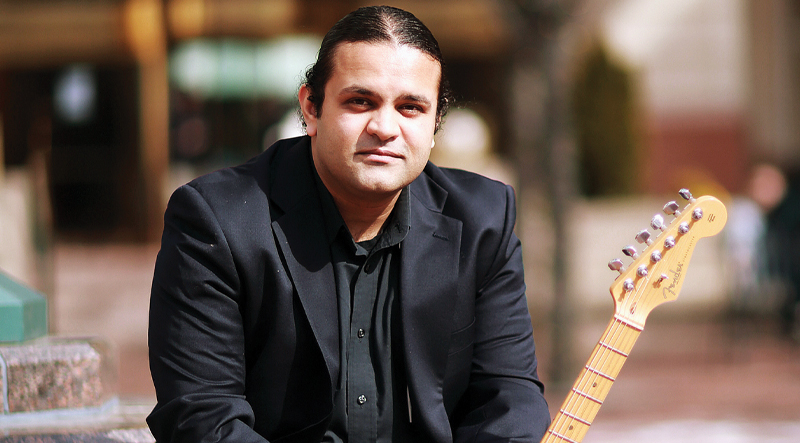
    Traditional music from India makes ready use of stringed instruments such as sitars, veenas, and tanpuras. But Rahul Mukerji is on a different tangent.

    “The influence of fusion has been more prominent in my life than traditional Indian music,” the guitarist explained. “I grew up on a diet of rock and metal, which are very different disciplines, so the complexities and intricacies of Hindustani and Carnatic music were difficult for me to grasp. As I grew, I learned to appreciate [those forms] a lot more, but the influence was minimal.”

    Mukerji moved to America to pursue a Master of Science degree, but was further attracted by its musical diversity.

    “I knew the U.S. would offer opportunities to push my boundaries and allow me to explore new bands and collaborations.”

    He used several guitars to record his recent instrumental disc, Ma De Re Sha. The album’s cover alludes to Mukerji’s heritage, with a tabla propped next to a natural-finish Stratocaster.

    “I bought that in 2009 from a local shop,” he said. “I’m drawn to natural finishes and it’s extremely comfortable to play. It has a swamp ash body with a maple neck with comfortable C profile.

    “My primary guitar was a Suhr Pro Modern M1,” he said. “It’s my favorite because it is so versatile. I also used a Brian Moore iGuitar 8.13 and a Line 6 JTV-89 for rhythm.”

    Taylor and Crafter acoustics helped on songs that needed a jazz vibe.

    “I really liked the mood on ‘Fingerprints’,” Rahul said. “I thought it was a refreshing break and provided something different. And I’ve heard from a lot of people who enjoy it, so I’m glad it made the cut.

    “‘Zidd’ definitely has jazz elements,” he added. “I’ve had that chord arrangement for years and was never satisfied with previous takes on it. One day, instead of trying the jazz tone, I kicked in the overdrive and went for it. It felt right; something about that raw guitar over that jazz structure. I added tablas, and the song took shape; it fit the theme.”

    “A Path Less Traveled” is a New Age interlude with harmonics.

    “I was looking to incorporate harmonics into chord voicings,” said Mukerji. “The fifth, seventh, and 12th-fret harmonics lent themselves particularly well to the G-major chord family. The tuning is standard, and I used the Brian Moore; the final sound is a blend of the piezo coupled with the pickup selector in the middle position. That setting worked best for the harmonics to pop.”

    The closer, “Sinner,” is a hard-rock tune conceived during a jam.

    Ma De Re Sha has garnered positive reviews and Mukerji is planning to assemble a touring band.

     I’d like to get an ensemble together and start with local shows in Washington D.C, Baltimore, and the surrounding tri-state area before I consider an East Coast tour,” he said. “Other than that, I am looking forward to collaborating with others on upcoming projects and eventually starting work on a follow-up.”


    This article originally appeared in VG May 2018 issue. All copyrights are by the author and Vintage Guitar magazine. Unauthorized replication or use is strictly prohibited.

  • Todd Park Mohr

    Todd Park Mohr

    Mohr: Jim Mimna.

    The latest album from Colorado’s Big Head Todd and the Monsters, New World Arisin’, delivers what fans have come expect from a band that has spent slightly longer than three decades honing its sound. The most obvious attributes are great songs and blistering lead guitar from namesake Todd Park Mohr.

    But, Mohr points to a subtle change that came to his mind when the band entered the studio.

    “I wanted to make a guitar pop/rock kind of record,” he said. “The last several have been very blues-based. I wanted this one to sound a little more aggressive.”

    The album was recorded at E-Town Studios, in Boulder, which has a large room with a lot of space.

    “It’s a really good room for recording a loud band, live,” said Mohr.

    The writing, he added, mixed old with new, and the band was always prepared.

    “I write all the time and usually demo things, then we rehearse. I never go into the studio without having all my ducks in a row. And, some compositions take a long time. I might sit on something for 10 years, so there are tunes on the record that have had parts around for a while.”

    Mohr and the band are still based in Boulder, where he grew up. His musical education started by playing clarinet and sax in the third grade. He still plays the sax on occasion, and dabbles with keyboards, but the guitar remains the focus. The instrument entered his consciousness because of his dad.

    “My father had a beautiful Gibson Hummingbird that he hardly ever played. All he could play was ‘On Top of Old Smoky,’ and he taught me to play that. Then I ended up plunking around more on that guitar and started taking it pretty seriously in high school and into college.”

    Taking it seriously meant playing in a band, and that band is essentially the same people he plays with now, though they’ve added a keyboard player. The group’s longevity, he says, is “very special.” When they first started rolling, they played nearly every gig they were offered.

    “We did house parties and just begged, borrowed, and stole for gigs. We drew a thousand-mile circle around Denver and picked places we could drive in our van – Chicago, Austin, Minneapolis, San Francisco.”

    Like most players, Mohr’s first guitars were cheap copies of popular guitars. He also remembers a couple of Kent hollowbodies.

    “My first what I would call ‘real’ guitar was a Strat that somebody actually gave to me. A college guy. I guess he was frustrated trying to play, so he just gave it to me.”

    Favorite instruments right now include John Page Classics.

    “I have an A.J. and an Ashburn,” he said. “I’ve become really fond of those guitars, and anything else just seems really clumsy to me. I’ve tried others, but can’t seem to get away from Strat and Tele styles.”

    His amp of choice is a Magnatone Twilighter he runs through a 4×12 cabinet with four Celestion 30s.

    Mohr never envisioned music as a career, but can point to many high points including opening for Robert Plant, the Allman Brothers, and Neil Young. He also got to record with one of his biggest influences, B.B. King, and for two months rode a bus with the late Hubert Sumlin.

    The band’s heavy road work early on helped them build a huge fan base that in the two decades since has nourished their every effort.

    “The music industry has changed drastically over the course of our career,” he noted. “Parts of it are very fluid. But, the bread and butter is playing live. Our fans enjoy seeing us, even multiple times.

    “We’ve been fortunate to have a steady fan base, and that makes certain business decisions really simple: Make your fans happy. That’s been our focus. Radio hits come and go, but the fans stick with you.”


    This article originally appeared in VG May 2018 issue. All copyrights are by the author and Vintage Guitar magazine. Unauthorized replication or use is strictly prohibited.
  • Have Guitar Will Travel – 016 Featuring Doug Kauer

    Have Guitar Will Travel – 016 Featuring Doug Kauer

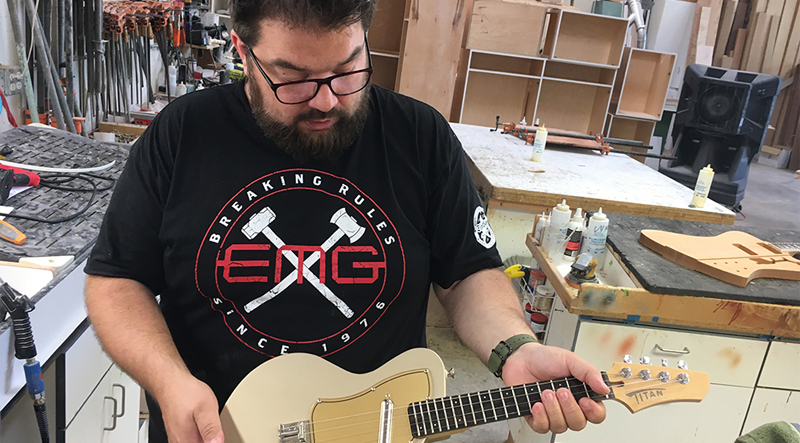
    Today, James Patrick Regan is speaking with Doug Kauer, a guitar builder and the owner of two guitar lines: Kauer guitars and Titan guitars.

    They talk about his start working in his dads cabinet shop all the way through having guitars he built be on the road with some of the most notable guitarists out there… and they talk about his customer appreciation festival the “Kauer-fest”. Also, they talk about his relationship with Gibson and some of the ins and outs with guitar wood and materials legal issues, and his furniture grade guitar stands that pass the relationship test… https://www.kauerguitars.com

    Please like, comment and most of all share this podcast with your friends. And send me any comments or show ideas to the Have Guitar Will Travel podcast page at Facebook Instagram and Twitter.

    Each episode is available on Apple Podcast, Stitcher, iheartradioTune In, Google Play Music, and Spotify!

    Images from Doug’s Shop:


    Have Guitar Will Travel, hosted by James Patrick Regan, otherwise known as Jimmy from the Deadlies, is presented by Vintage Guitar magazine, the destination for guitar enthusiasts. Podcast episodes feature guitar players, builders, dealers and more – all with great experiences to share! Find all podcasts at www.vintageguitar.com/category/podcasts.

  • Have Guitar Will Travel – 015 Featuring Spencer Henderson

    Have Guitar Will Travel – 015 Featuring Spencer Henderson

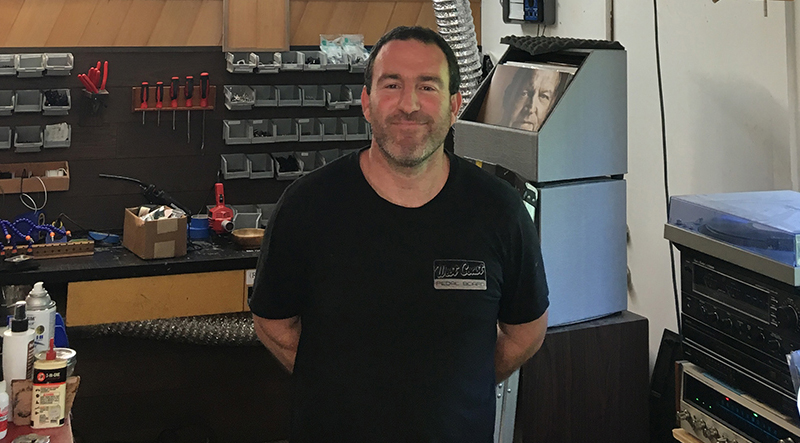
    Today guest is Spencer Henderson, the owner of “West Coast Pedalboards”

    We discuss his transition from working in IT (working temperature monitor in agriculture and training others) to building modern vintage pedalboards. Spencer has done a wonderful job of providing useful videos on social media for “do it yourselfers”. Everything from pedalboard construction to wiring and soldering. Check him out on Facebook and Instagram. We talk about Gary Holt’s (Exodus, Slayer) pedalboard and a build for Gibson for their NAMM booth. If you enjoy vintage styling his pedalboards are a joy to look at. https://westcoastpedalboard.com

    Please like, comment and most of all share this podcast with your friends. And send me any comments or show ideas to the Have Guitar Will Travel podcast page at Facebook Instagram and Twitter.

    Each episode is available on Apple Podcast, Stitcher, iheartradioTune In, Google Play Music, and Spotify!

    Jimmy from the Deadlies’ Pedalboard

    Have Guitar Will Travel, hosted by James Patrick Regan, otherwise known as Jimmy from the Deadlies, is presented by Vintage Guitar magazine, the destination for guitar enthusiasts. Podcast episodes feature guitar players, builders, dealers and more – all with great experiences to share! Find all podcasts at www.vintageguitar.com/category/podcasts.

  • Have Guitar Will Travel – 014 Featuring Robert Berry

    Have Guitar Will Travel – 014 Featuring Robert Berry

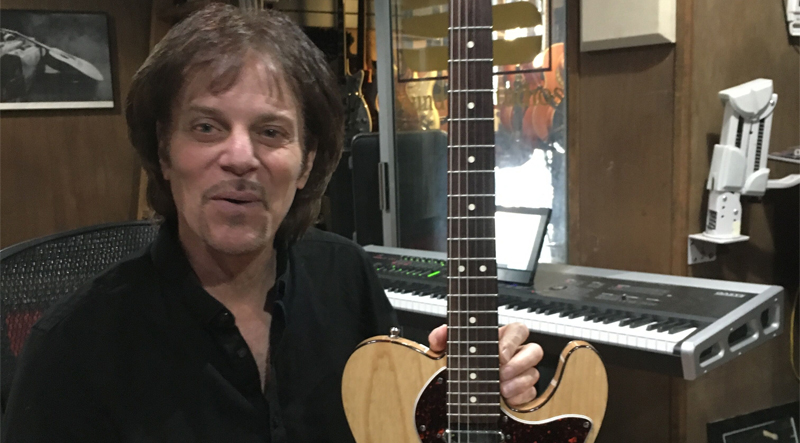
    The new episode of “Have Guitar Will Travel” features Robert Berry, renowned bassist in The Greg Kihn Band.

    A passionate progressive-rock guy, he worked with Steve Howe in GTR, with Carl Palmer and Keith Emerson in the ELP offshoot 3, and has performed with Ambrosia and The Tubes. His band, December People, which includes Sammy Hagar and members of Night Ranger, plays Christmas tunes in a classic rock vibe. He does it all while running a studio stocked with a collection vintage guitars. www.robertberry.com

    Please like, comment and most of all share this podcast with your friends. And send me any comments or show ideas to the Have Guitar Will Travel podcast page at Facebook Instagram and Twitter.

    Each episode is available on Apple Podcast, Stitcher, iheartradioTune In, Google Play Music, and Spotify!


    Have Guitar Will Travel, hosted by James Patrick Regan, otherwise known as Jimmy from the Deadlies, is presented by Vintage Guitar magazine, the destination for guitar enthusiasts. Podcast episodes feature guitar players, builders, dealers and more – all with great experiences to share! Find all podcasts at www.vintageguitar.com/category/podcasts.

  • Have Guitar Will Travel – 013 Featuring Josh Zee

    Have Guitar Will Travel – 013 Featuring Josh Zee

    In this episode of the Have Guitar Will Travel podcast, I speak with Josh Zee, who has recorded two major label albums on the Sony/Work label as the singer/guitarist and songwriter for the rock group Protein which played the Warped Tour and toured Europe and Japan as part of MTV Asia Summer Fest.

    Josh also played alt-country in The Mother Truckers with his talented wife, Teal Collins. They moved to Austin, released four albums, and were named Best Roots-Rock Band at the SXSW Austin Music Awards. They also toured the U.S. and Europe, and have played alongside Willie Nelson, Merle Haggard and many other traditional country acts. Teal later formed The Whiskey Sisters with Josh on guitar. Their eponymous album wa, co-produced by Josh and they were named Best New Band at the SXSW Austin Music Awards. Josh is currently with the Bay Area group Phantom Power. And his new project “Electro Sloth”. Check out more Josh Zee at: www.joshzee.com

    Please like, comment and most of all share this podcast with your friends. And send me any comments or show ideas to the Have Guitar Will Travel podcast page at Facebook Instagram and Twitter.

    Each episode is available on Apple Podcast, Stitcher, iheartradioTune In, Google Play Music, and Spotify!