Month: November 2008

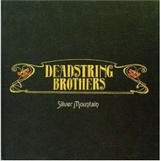
  • Deadstring Brothers – Silver Mountain

    The Deadstring Brothers hail from Detroit and bring a mix of crunchy rock and roll and rootsy country – think Rolling Stones. Cuts like “Ain’t No Hidin’ Love,” and “Queen of the Scene” are stompers in the best sense of the word. Their command of rock, country, as well as R&B mixes wonderfully on cuts like “If You Want Me To,” where guitars meld incredibly well and the slide of Spencer Cullum dominates. That happens on several songs, including “Some Kind of User.”

    Proving the Brothers are as comfortable playing acoustic music, the record wraps up with “The Light Shines Within,” a mix of acoustic (featuring Cullum’s slide) and jangly electric guitars that form the song’s backbone.

    While the players are more than up to the task, the vocal tandem of Masha Marjieh and Kurt Marsehke are like a tag team of Mick Jagger and Tina Turner. Both are soulful and brash while bringing to mind the music we grew up with in the ’70s.

    The Deadstring Brothers reference a lot of old music, but the beauty of Silver Mountain is they never push their own personality out of the way.


    This article originally appeared in VG‘s February ’08 issue. All copyrights are by the author and Vintage Guitar magazine. Unauthorized replication or use is strictly prohibited.



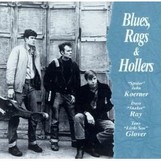
  • Koerner, Ray & Glover – Blues, Rags & Hollers: The Koerner, Ray & Glover Story

    The fact that this folk-blues trio existed at all is noteworthy. By the time KR&G hit the national scene, first at the 1963 Philadelphia Folk Festival and then Newport a year later, you could count the number of white blues performers on one hand (a very young John Hammond and, at times, Dave Van Ronk come to mind). “They went out and did it,” stresses guitarist Galen Michaelson in one of this documentary’s interview segments – underscoring what is now commonplace was virtually unheard of 45 years ago, when the trio started gigging around Minneapolis.

    This 1986 documentary was directed by the group’s harpist, Tony Glover, who added postscripts in ’95 and now in ’07, for this expanded, two-and-a-half-hour edition, which includes nine bonus performances from the reunited group in the ’90s.

    Glover’s nickname was “Little Sun”; acoustic guitarists John Koerner and Dave Ray (a Leadbelly-inspired 12-stringer) were “Spider John” and “Snaker,” respectively. Blues guys need nicknames, after all. It’s that kind of naivete that, in hindsight, makes the group so charming. It’s the same lack of self-consciousness that would allow them to sing a work song like “Linin’ Track” – something you’re not likely to see three white college kids doing today.

    An early business card read, “Blues-Ragtime-Folk. Available for concerts, lectures, clubs and house parties” – “lectures” being the most telltale word – and later performances, incorporating beat poetry, revealed the intellectual bent that was always under the surface. Thankfully, they didn’t play like academics, though they approached the music from a folk-informed angle. “We were the only cats playing any blues,” says Ray. “Everybody else was into that folk music stuff.” Koerner adds, “We insisted on being funky, no matter what.”

    The film chronicles the different paths the bandmates would eventually take, which included several reunions – fortunately, since the original incarnation was not captured on film until almost 20 years after they first formed. The credits point out that it was done with no grants or arts funding, which shows at times, but thank God it was made, since Ray’s death in 2002 (the youngest member, then 59) put an end to any further reunions of this seminal group.


    This article originally appeared in VG‘s November ’07 issue. All copyrights are by the author and Vintage Guitar magazine. Unauthorized replication or use is strictly prohibited.


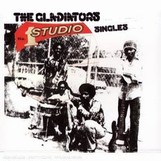
  • The Gladiators – Studio One Singles

    In the years before Bob Marley became the star of reggae and eclipsed most others, a galaxy of lesser luminaries shone bright. The Gladiators were one such band, and a luminescent one at that.

    Formed by the trio of Albert Griffiths, Clinton Fearon, and Gallimore Sutherland, the Gladiators were also one of the few reggae vocal groups who played their instruments. Most “bands” in that day used studio musicians to provide music behind their vocals.

    The Gladiators were also one of the premiere early roots reggae groups to make it on the international scene. With production by the famed Clement Dodd at the equally famed Studio One, they boasted a steady shot of hits from the late 1960s until their zenith in the late 1970s.

    Studio One Singles collects Gladiators singles, dubs, and overlooked rarities – something available in countless supply from reggae labels like Studio One. Tunes here like “Boy in Long Pants” display the groove the Gladiators could drive. Good stuff.


    This article originally appeared in VG‘s March ’08 issue. All copyrights are by the author and Vintage Guitar magazine. Unauthorized replication or use is strictly prohibited.


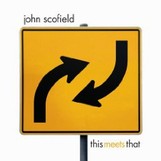
  • John Scofield – This Meets That

    It’s never good to expect anything from John Scofield because he likes to throw a curve. With his latest release, he mixes great originals with surprising covers on a trio record… sort of. Steve Swallow handles the bass, Bill Stewart drums, and their rapport with Scofield is immediately evident. But there’s also a horn section that contributes greatly, but never intrusively.

    “The Low Road” opens the set and showcases many great aspects, starting with a cacophony of harmonics that turns into a quiet jazz roadrace with Scofield soloing over the horns. The song has a jazz head that immediately sticks, and Scofield’s solo showcases his chops and sense of soul. “Strangeness In the Night” is slightly off-kilter, rhythmically and harmonically, going from ballad to swing tune for more than seven minutes while Scofield’s soloing plays tour guide. “Heck of a Job” has that wonderful New Orleans funk feel his music sometimes adopts. Is is a dig at the how the Katrina situation was handled?

    But the real surprise here is the choice of covers, like a lovely version of the Charlie Rich classic, “Behind Closed Doors,” with an exquisite statement of the melody before Scofield’s solo mixes double-stops, single lines, and chords in a churning mix of country and jazz. Bill Frisell joins for a version of “House of the Rising Sun” done up in a stomping swing. Wrapping things up are three minutes of great, funky rock in the form of the Stones’ “Satisfaction,” with a melody mostly stated with chordal work and a solo that’s as soulful as it gets.


    This article originally appeared in VG‘s Dec ’07 issue. All copyrights are by the author and Vintage Guitar magazine. Unauthorized replication or use is strictly prohibited.

  • The Charlie Sizemore Band – Good News

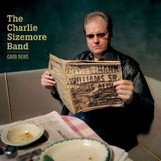
    Charlie Sizemore’s career began at age 17, when he was hired by Ralph Stanley to replace legendary lead singer Keith Whitley. After leaving Stanley’s band, Sizemore went back to school and graduated from the University of Kentucky with a law degree. He has since run a successful law practice in Nashville, while continuing to play bluegrass.

    Good News, features Sizemore’s regular band, Danny Barnes (mandolin), Matt DeSpain (dobro), John Pennell (bass), and Wayne Fields (banjo). On the very first song, “I’ve Fallen and I Can’t Get Up,” the band dispels any questions regarding its musicianship as they tear through the song at supersonic speed, finishing in 2:42 – and yes, everyone takes a solo!

    Sizemore penned four originals for Good News, and bandmates John Pennell and Matt DeSpain contributed one. Covers include Tom T. Hall’s “Whisky Willie,” Jeff Barbara’s “Blame it On Vern,” Hank Cochran’s “My Dying Day,” and Paul Craft’s “Mama Turn Aloosa My Soul.” The original “The Less I Drink” is a highlight, and typifies Sizemore’s clever yet pointed lyrics and catchy melodies.

    Not only can Sizemore write great songs, he also sings beautifully. His voice has a wonderfully warm, comfortable timbre that demands a listen. His take on bluegrass is closer to Doyle Lawson or the Nashville Bluegrass band, with an emphasis on tight harmonies and well-orchestrated arrangements instead of breakneck pace and instrumental pyrotechnics.


    This article originally appeared in VG‘s December ’07 issue. All copyrights are by the author and Vintage Guitar magazine. Unauthorized replication or use is strictly prohibited.


  • Danny Schmidt – Little Grey Sheep

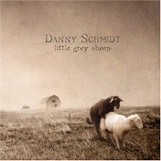
    Cover art matters. Take the image on Little Grey Sheep, displaying an artfully moody image of a black sheep and a white sheep “doing it.” If that doesn’t make you stop and think, nothing will. Schmidt’s music has similarly graphic yet poetic quality that puts things together in ways that lead in unexpected directions.

    The CD is made up of songs that didn’t fit into any of Schmidt’s previous four albums – they were too personal. But time changed his view, and songs such as “Go Ugly Early” resonate on multiple levels. The melody is reminiscent of Steve Earle’s “Ben McCulloch,” while Schmidt’s vocal inflections have a Neil Young-like lilt. The event is a simple visit to Hooters, but the story of father-son bonding ranks with the best. “Adious to Tejasito” celebrates Austin, Texas, while gently dissing the state’s other cities. Schmidt calls it his anti “Screw You, I’m from Texas!” song, which seem obligatory for Texas singer/songwriters.

    Little Grey Sheep production embraces a do-it-yourself creative ethic. Recorded in three weeks in the home studio of Devon Sproule and Paul Curreri, the album has a minimalist, unadorned sonic quality that moves the songs to the forefront. Schmidt’s vocals aren’t mixed to the front like on most commercial releases; instead they sit back, on the same plane as his acoustic guitar. The overall sound has a certain distance and natural reverberance that gives the listener the feeling the band is playing from the far corner of a sparsely furnished room.

    Just as little grey lambs grow into big woolly sheep, Schmidt’s songs expand with each listen.


    This article originally appeared in VG‘s April ’08 issue. All copyrights are by the author and Vintage Guitar magazine. Unauthorized replication or use is strictly prohibited.


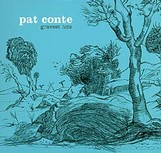
  • Pat Conte – Gravest Hits

    Long Island’s Pat Conte is a rarity among record and instrument collectors in that he can really play. Actually, that’s an understatement.

    One of the foremost experts on “world music,” Conte compiled and annotated Yazoo Records’ Secret Museum Of Mankind volumes – all manner of music, from all over the world, remastered from 78s recorded from the 1920s to the ’40s. If your “academic” alarm just went off, hit the snooze button. Conte is not folk music’s equivalent of the comic-book dealer from “The Simpsons”; he’s more the “world music” counterpart to folk music archivist Harry Smith.

    Ricocheting from style to style, he gets a wide array of sounds just on guitar, requinto, and banjo. An 1885 skin-head cello banjo, with wire strings and a rag wrapped near the bridge, sounds uncannily like an oud. Similarly, a short-scale Silvertone acoustic strung with super-light sitar and bouzouki strings, tuned as tightly as possible, resembles a tiple on “First Rain In Spring.”

    African guitarist John Bhengu is the inspiration behind several songs, though Conte is quick to point out that his fingerpicking is only a caricature of the master’s complex technique.

    The 52-year-old sings in a voice that’s sometimes thick and gruff, then clear and beautiful, as on “Three Wise Men.”

    Like his albums as one half of the Otis Brothers (with Bob Guida), the recording is low-fi – sometimes sounding like a field recording of Dock Boggs, other times resembling Geoff Muldaur – but not enough to detract or distract from the music’s impact.


    This article originally appeared in VG‘s October ’07 issue. All copyrights are by the author and Vintage Guitar magazine. Unauthorized replication or use is strictly prohibited.


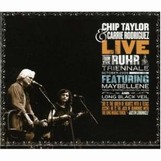
  • Chip Taylor and Carrie Rodriguez – Live from the Ruhr Triennale

    This live set features an especially outstanding back-up band. Festival curator and virtuoso jazz guitarist Bill Frisell joins Greg Leisz on steel guitar and mandolin, David Piltch on bass, and Kenny Wollesen on drums to form the core band. Cameo appearances by Katie Jackson and Denise Brown on background vocals and Buddy Miller on electric guitar happen on the set finale. Besides performing some of their previously recorded duo material such as “Let’s Leave This Town,” “Loredo,” and Red Dog Tracks,” Taylor and Rodriguez added a number of country standards including Lefty Frizell’s “Long Black Veil,” Johnny Cash’s “Big River,” and Chuck Berry’s “Maybellene.” The set wraps up with the Taylor classics “Angel of the Morning” and “Wild Thing.”

    Bill Frisell brings a unique musical aesthetic to any project, and this is no exception. His spare, resonant guitar lines contribute amazing depth and air to the arrangements. His simple, tasteful solos are slow and minimalist, yet musically correct. And Greg Leisz’s floating steel guitar lines add to the airy, otherworldly quality of the music. When you combine Frisells’ and Leisz’s floating musical lines with Taylor and Rodriguez’s rustic delivery, you have a combination that captures the earth below and heavens above of American roots music.


    This article originally appeared in VG‘s January ’08 issue. All copyrights are by the author and Vintage Guitar magazine. Unauthorized replication or use is strictly prohibited.


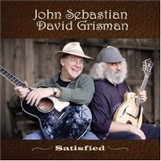
  • Grisman & Sebastian – Satisfied

    John Sebastian and David Grisman first ran into each other in the early ’60s, when Greenwich Village’s Washington Square Park was the epicenter of the national Folk Boom. They were both recruited by guitarist Stefan Grossman for a recording project to be dubbed The Even Dozen Jug Band – in hindsight, somewhat of a supergroup, featuring, among others, Steve Katz, Maria Muldaur, and Joshua Rifkin.

    Both, of course, went on to legendary status while crisscrossing the worlds of folk, pop, jazz, and rock – mandolinist Grisman with his groundbreaking David Grisman Quintet, singer, guitarist, autoharp and harmonica player Sebastian with the hugely successful Lovin’ Spoonful. Both also proved to be A-1 songwriters and composers.

    Still, the notion of the pair recording an all-acoustic duo album might surprise some. Grisman and his Acoustic Disc label has been home to numerous blazing instrumental virtuosi; Sebastian’s style, for the most part, is the epitome of laid-back. But it is that meeting – sometimes halfway, sometimes leaning more to one side of the fence than the other – that makes this long-overdue reunion so special.

    “I’m Satisfied,” by one of Sebastian’s chief influences, Mississippi John Hurt, is the perfect opener – relaxed but bouncy, showcasing Grisman’s sensitivity and economy and Sebastian’s rock-steady rhythm. At the other end of the spectrum, though, Grisman’s instrumental “EMD,” from the Quintet’s self-titled debut album, is reinvented – transformed from hard-charging neo-bluegrass to an airier melodic presentation, with John’s fingerpicked rhythm replacing Tony Rice’s fiery strumming.

    As Sebastian admits in the liner notes, “I’ve never had much visibility as an instrumental virtuoso,” but he does what he does about as well as anyone out there doing it! And that’s just his guitar playing; he also pulls out his harmonica and baritone guitar, while Grisman doubles on mandola and banjo mandolin. Add to that the songs – the Spoonful’s “Coconut Grove” sits nicely alongside the Everly Brothers hit “Walk Right Back,” the standard “Deep Purple,” and the Grisman-Sebastian jam “Harmandola Blues” – and this is the kind of album that transports you to another place.

    Your mileage may vary, but you’ll enjoy the ride.


    This article originally appeared in VG‘s Jan ’08 issue. All copyrights are by the author and Vintage Guitar magazine. Unauthorized replication or use is strictly prohibited.

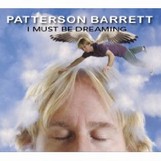
  • Patterson Barrett – I Must Be Dreaming

    “It’s been a long time co-min’” is applicable to Patterson Barrett, who for decades has played in Austin.

    Born in Washington, D.C., his family resided in a Maryland suburb of the District until he was in high school, when they moved to Manhattan.
    The first instrument he learned to play was cornet, followed by an Emerlee chord organ. When he was 12, his brother was given a nylon-string acoustic for Christmas. “But it ended up with me, and I started really getting interested in music,” he said. “A cousin showed me three or four chords and I went from there.”

    Barrett’s first electric Spanish guitar was a Japanese-made Cipher with pushbutton controls and four pickups. One day, he saw a print ad for a Gibson ES-330.

    “I didn’t really have any idea what it was, but I got it because I thought I could play it completely acoustic. I still have it; sunburst, with an American flag decal I applied when I was 15.”

    At the time, he became interested in country rock bands like Poco, Buffalo Springfield, and the Flying Burrito Brothers, which led to his becoming enamored with pedal steel guitar. As a high-school graduation gift, his parents got him a Sho-Bud Maverick.

    After high school, he answered an ad in the Village Voice placed by a band called Dufine. After the band recorded with Jerry Jeff Walker (including on his hit, “LA Freeway”), his eyes turned to Austin, where he moved in the mid ’70s.

    Barrett’s musical experiences have since included playing with the husband-and-wife team of Buddy and Julie Miller, as well as backing Chuck Berry, Al Kooper, Lou Ann Barton, and Nancy Griffith.

    In addition to the ES-330, he plays a ’77 Fender Stratocaster, an ’83 Fender Telecaster, a Yamaha nylon-string, and a 1970 Martin D-28. He also counts on an early Sho-Bud Pro-I pedal steel, a unbranded lap steel made by Magnatone, a Jerry Jones six-string bass, and an Ovation mandolin.

    Rather than tour relentlessly in an effort to “make it big,” Patterson has stayed in Austin, commited to his family.

    “There’s never a good time to be away from your kids when they’re growing up, because it happens so quickly, and it’s such a rich experience,” he said. “One opportunity came along when my first-born was about one, but I would have been gone when he said his first words or took his first steps, so I couldn’t do it.”

    In October ’07, Barrett released the first album with his own name on it, I Must Be Dreaming. All of his instruments were used, along with a friend’s late-’70s Rickenbacker 12-string.

    He describes the album as “A folky-country thing, but there’s… soul influences. There’s also some Gram Parsons/Flying Burrito Brothers influence.” And several songs are indeed about sleep or dreams.
    “I don’t ever sit down and say ‘I’m gonna write a song about such-and-such.’ I started to notice, though, there was a pattern when I decided to do a cover of a Band song called ‘Sleeping,’ which has a melancholy feel. And I really thought it came through after (Band keyboard player/vocalist) Richard Manuel died.”

    Being a multi-instrumentalist meant Barrett did numerous overdubs. His guitar on some tracks has a Tele twang, but, all lead breaks were done on a lap steel, and pedal steel can be heard on three or four songs.
    Buddy Miller played lead on “Take the Stage” and appears with Julie Miller on “Concrete & Steel,” a ballad with acoustic guitars, mandolin, and accordion.

    Another guest is Deborah Holland, former vocalist for Animal Logic (with Stanley Clarke and Stewart Copeland), who was Barrett’s high school sweetheart. She harmonizes with Patterson on “Somewhere Far Away,” which calls to mind duets by Gram Parsons and Emmylou Harris. Family also figures in, as Barrett’s son plays upright bass on “Concrete & Steel,” while “I’ve Been Loving You For Such A Long Time” was written for his daughter.

    Given his earlier homebody proclivities, to what extent Barrett will get out to promote I Must Be Dreaming remains to be seen, but the veteran has, after decades of experience, released a debut that he created on his own terms… and the knowledge that you got it right is an important part of any artist’s career.


    This article originally appeared in VG‘s Feb ’08 issue. All copyrights are by the author and Vintage Guitar magazine. Unauthorized replication or use is strictly prohibited.