On the heels of 2009’s Walking Stick, Byrnes once again displays his expertise at all aspects of making blues and soul music. Byrnes is an excellent guitarist as he proves here, particularly on Jimmy Reed’s “Take out Some Insurance on Me Baby” and his originals “Hot As A Pistol” and the autobiographical “Me And Piney Brown.” He and producer Steve Dawson on acoustic and electric guitar (straight and slide) are each other’s perfect complement, both completely comfortable and natural with the music. Byrnes and Dawson (on pedal steel) roll with ease from the easygoing country ballad “Walk On” to the country blues/rockabilly mix of “No Mail Blues” right through the sinister funk of Byrnes’ original “Storm Warning,” a Dixieland flavored version of Robert Johnson’s “Four Until Late” and a knockout slow grind take on Reed’s “Insurance” without a hitch.
Byrnes’ is kindred spirit of the first generation of newly electrified bluesmen and women whose music was a mix of rural and urban elements impossible to separate, and for whom the thrill of the experience was brandnew. When Byrnes sings and plays his heart out on songs like “Me And Piney Brown,” he makes it feel like things are still that way.
This article originally appeared in VG‘s Feb. ’11 issue. All copyrights are by the author and Vintage Guitar magazine. Unauthorized replication or use is strictly prohibited.
A Vox UL730 amplifier and cabinet used for the Beatles Revolver and Sgt. Pepper recording sessions is set for sale December 15 the London auction house, Bonhams. The amp was only recently discovered to have been used by the Beatles,
“Very few amps used by the Beatles have come to auction before, and to find one that was used on two such significant albums is truly rare and exciting,” said Stephen Maycock, Bonhams Entertainment Memorabilia consultant. “Beatles fans all over the world will be eager to own such an important piece of music history.”
Developed by amp engineer Dick Denney and introduced in 1966, the UL730 incorporated a solidstate preamp with a tube power section. The Ultra Linear (UL) was produced for both lead (700 series) and bass guitar (400 series). The initial 7 series models given to the Beatles by the manufacturers were 730s, to replace their Vox AC30 amps, and it is thought about six of these went to the band early in 1966. Lennon and McCartney moved to higher-powered models in the series later in the year, but Harrison continued using the 730.
Other Beatles items in the sale include an autographed black/gold label pressing of the Beatles’ debut album, Please Please Me, and photos of Lennon from May, 1975. For more, visit bonhams.com.
The new Sonic Edge Fluffer is an isolation buffer that reduces the loading effect caused by stacking multiple effects in a pedalboard. The company’s FXUL8R adds effects without the need for a built-in effects loop. It provides three options for feeding an amplifier signal: a JFET-buffered direct out, a mic preamp, and a blend of the two. Learn more at sonicedgeinc.com.
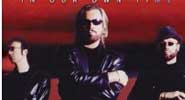
When the Bee Gees were inducted into the Rock & Roll Hall Of Fame in 1997, Barry Gibb acknowledged that they are “the enigma with a stigma.” Indeed, to find a musical act that has gained such enormous popularity while eliciting such passionate ire, you’d probably have to go back to Pat Boone.
The staggering stats of brothers Barry, Robin, and Maurice Gibb are well known. Originally Beatles influenced balladeers, their first five singles reached Billboard’s Top 20 in the mid ’60s. Eight years later, they began a string of number-one disco hits that culminated with six consecutive chart-toppers.
A career-spanning, four- CD boxed set and comprehensive, two-hour DVD mark their 50 years of music making. With so many unauthorized “critical analyses” flooding the market, it’s nice to see a proper documentary on any major group, and producer/director Skot Bright does a splendid job of telling the Bee Gees’ fascinating story – along with a lot of rock history. Interviews (some archival, including the late Maurice, some new for this project) and rare footage tell the story of the family’s move from the Isle Of Man to Australia; their early influences (adding a third voice to the Everly Brothers’ style); some initial TV appearances; and their decision to move to England – with Maurice laughingly recounting how they were advised, “Go back. Groups are dead, Clapton lives.”
The Bee Gees’ instrumental abilities have never received much recognition – overshadowed by their trademark vocal harmonies. But from their preadolescent beginnings, their sound was anchored by Barry’s rhythm guitar, with Maurice eventually adding electric 12-string, then bass and keyboards. He recalls a breakthrough on “Wind Of Change,” from 1975’s Main Course, when producer Arif Mardin gave his bass part a thumbs-up on the first take.
It’s almost unfathomable that Maurice is never mentioned in discussions of great funk bassists, considering he laid down the famous part on “Stayin’ Alive.” Produced by the band with Albhy Galuten and engineer Karl Richardson, it featured Maurice on bass, Blue Weaver on keyboards, and Barry and Alan Kendall on guitars. The producers had to turn two bars from “Night Fever” into an eternal tape loop when drummer Dennis Byron had to fly home, so the record listed “Bernard Lupé” as drummer on the smash.
It’s hard to criticize the Mythology box, because the format (one disc focusing on each member plus younger brother Andy) and song choices were made by surviving brothers Barry and Robin. They purposely didn’t trot out every hit, including some nice album cuts and rarities instead, but omitting “Fanny (Be Tender With My Love),” “How Can You Mend A Broken Heart,” and the aforementioned “You Should Be Dancing” is unimaginable. Perhaps stranger is the exclusion of “Nights On Broadway,” the song in which Barry discovered his falsetto – which Billy Corgan (of Smashing Pumpkins) credits in the liner notes as heralding what was to come. A better history (without much overlap) is the four-disc Tales From The Brothers Gibb, whose 71 tracks, sans Andy, go only as far as 1990.
This article originally appeared in VG‘s Mar. ’11 issue. All copyrights are by the author and Vintage Guitar magazine. Unauthorized replication or use is strictly prohibited.
For 30 years, Bensusan has been one of the wonders of the acoustic universe, a player so melodic, full, and lyrical that his solo playing often negates the need for an entire band.
Vividly keeps the magic going, as the French fingerstylist performs new gems like “Veilleuse,” “Le Chien Qui Tourne,” and “Kiss Landing.” Playing a Lowden six-string and occasionally accompanying himself on vocals (sung in both English and French), Bensusan has an amazing rhythmic sense that keeps things moving, but always with a shimmering melody on top.
Stylistically, it’s hard to pin down Bensusan, as there are folk, classical, jazz, pop, Gypsy, and World influences bubbling throughout his music. As an added treat, a live track called “Par un Beau Soir de Dimanche” captures his patented sound in concert. Vivdly is an amazing potpourri of sound and one that, in a world of copycats, reaffirms Pierre Bensusan as one of the most unique stylists in the acoustic-fingerstyle realm.
This article originally appeared in VG‘s Mar. ’11 issue. All copyrights are by the author and Vintage Guitar magazine. Unauthorized replication or use is strictly prohibited.
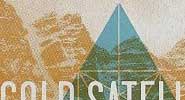
Cold Satellite is a concept album with songs co-written by Jeffrey Foucault and Lisa Olstein. Longtime friends, they began to collaborate in 2007, when Olstein sent Foucault a bunch of unpublished poems plus snippets of poems. Foucault sat with his guitar and began to put them to music, and this is the result.
The opening song, “The Deserter’s Information Center,” sets the mood with funeral-like slow solo acoustic guitar, snare drum, and solo vocals. As the song progresses David Goodrich’s electric guitar and Alex McCollough’s pedal steel elevate the energy level from just this side of dead to rock anthem powerful. The title cut is a straight rocker a la John Cougar what’s-his-name, with a dash of Steve Earl-ish funk, along with that other F word thrown in to keep it off NPR.
Olstein’s lyrics are beautiful, and often chilling. They contribute to the dangerous aura of the music – no June, moon, spoon, stuff here. Rather, they’re reminiscent of Jim Carroll’s best stuff – dark, full of anarchic Bacchanalian energy waiting to bust out.
Foucault’s arrangements modulate from acoustic minimalism to hard rock to electronique weirdness on a moment’s notice. This almost guarantees that some part of a tune might be a bit “much.” But his eclecticism is endearing because he’s willing to go to such measures to keep a song interesting. And interesting songs they are – every tune packs an emotional and musical punch. Which makes it a mighty powerful piece of work.
This article originally appeared in VG‘s Mar. ’11 issue. All copyrights are by the author and Vintage Guitar magazine. Unauthorized replication or use is strictly prohibited.
The Pick Bag is an organic-rubber cover that fits most guitar picks and allows players to modify the grip of their pick for better feel and control. It’s easy to remove and reusable. Check it out at the thepickbag.com.
Grateful Dead Productions and Rhino Entertainment have partnered with Dunlop to create pick tins with Grateful Dead artwork. Each tin includes six medium-gauge Tortex guitar picks with Grateful Dead imagery, including Steal Your Face, Skull and Roses, the Dancing Bears, and the Stanley-Mouse-designed cover art from the Europe ’72 Vol. 2 live album. For more, visit jimdunlop.com.
If you’re a member of Pan-Americans, “among others” is part of your resume – in terms of bands you belong to as well as instruments (and roles) played in them.
The band’s ad hoc leader is Joao Erbetta, singer/guitarist with Sao Paulo’s Los Pirata and producer and composer for TV and videogame soundtracks. The CD was recorded at L.A.’s Powow Fun Room, sonic laboratory for Pete Curry, who has played lead with the Halibuts, bass with Los Straitjackets and Davie Allan, and drums with the Torquays and Deke Dickerson. On bass is Rob Douglas, formerly with Everest and Chuck Prophet and producer of the way-cool Joe South Tribute Album. And guitarist number two, Eddie Angel, is a charter member of Los Straitjackets in addition to stints with the Planet Rockers, Neanderthals, and Ronnie Dawson – among others. (As if that weren’t enough multi-taskers, Ron Dziubla adds sax, organ, and melodica on a few tracks.)
The supergroup’s debut culls Brazilian songs from the ’70s all the way back to the ’30s. “Baia,” written by Ary Barroso (composer of the standard “Brazil”), is named for the Brazilian state Bahia and was featured in the 1944 film The Three Caballeros. It has an African-Brazilian feel, corresponding with the region’s music and culture, and Pan-Americans’ rendition is a bit smoother than the Mickey Baker version that inspired it. “Baiao,” on the other hand, is named for a rhythm from Northeast Brazil, and has a funky, Booker T. groove.
Erbetta plays the songs’ heads (beautifully stating the Jobim ballad “Ligia,” for instance), while Angel takes most of the solos. Their soloing duel on “Americanizada” could be a Chuck Berry/Dick Dale cutting contest.
Equal parts rock and easy-listening, this could have fit nicely between Al Caiola and the Shadows in the golden age of “electric guitar” vinyl.
This article originally appeared in VG‘s Mar. ’11 issue. All copyrights are by the author and Vintage Guitar magazine. Unauthorized replication or use is strictly prohibited.
The MXR Custom Badass Modified Overdrive is an overdrive circuit with modern modifications including a 100-hertz cut/boost control and a Bump switch that engages an alternate EQ voicing to boost lows and mids. Learn more at jimdunlop.com.

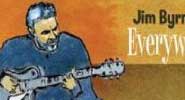
 On the heels of 2009’s Walking Stick, Byrnes once again displays his expertise at all aspects of making blues and soul music. Byrnes is an excellent guitarist as he proves here, particularly on Jimmy Reed’s “Take out Some Insurance on Me Baby” and his originals “Hot As A Pistol” and the autobiographical “Me And Piney Brown.” He and producer Steve Dawson on acoustic and electric guitar (straight and slide) are each other’s perfect complement, both completely comfortable and natural with the music. Byrnes and Dawson (on pedal steel) roll with ease from the easygoing country ballad “Walk On” to the country blues/rockabilly mix of “No Mail Blues” right through the sinister funk of Byrnes’ original “Storm Warning,” a Dixieland flavored version of Robert Johnson’s “Four Until Late” and a knockout slow grind take on Reed’s “Insurance” without a hitch.
  A Vox UL730 amplifier and cabinet used for the Beatles Revolver and Sgt. Pepper recording sessions is set for sale December 15 the London auction house, Bonhams. The amp was only recently discovered to have been used by the Beatles,






 The Pick Bag is an organic-rubber cover that fits most guitar picks and allows players to modify the grip of their pick for better feel and control. It’s easy to remove and reusable. Check it out at the
  Grateful Dead Productions and Rhino Entertainment have partnered with Dunlop to create pick tins with Grateful Dead artwork. Each tin includes six medium-gauge Tortex guitar picks with Grateful Dead imagery, including Steal Your Face, Skull and Roses, the Dancing Bears, and the Stanley-Mouse-designed cover art from the Europe ’72 Vol. 2 live album. For more, visit