The Lace Stonewashed Alumitone humbucker has a worn satin-black finisih with well worn edges. See it lacemusic.com.


The Lace Stonewashed Alumitone humbucker has a worn satin-black finisih with well worn edges. See it lacemusic.com.
David “Honeyboy”Edwards passed away at his home in Chicago on August 29. He was 96. Often cited as the “last link” between post-war blues and the current generation of players, Edwards was born in Mississippi and learned to play guitar as a child; his mother played the guitar, while his father, a fiddler and guitarist, performed locally. Edwards’s father bought the boy his first guitar and taught him to play folk ballads. At just 14 years old, he began traveling with Delta blues players including Howlin’ Wolf and Little Walter, then started playing professionally at age 17.
In the ’50s, he moved to Chicago, where he performed in the city’s clubs and the open-air markets on Maxwell Street, and recorded for the Artist and Chess labels. His first taste of mass popularity happened with the blues revival of the ’60s, during which he recorded with Buddy Guy, Willie Dixon, and Fleetwood Mac in its original configuration. Over eight decades, he knew or played with virtually every major blues figure.
In 1996, Edwards was elected to the Blues Hall of Fame. In 2008, he won a Grammy the collaborative album Last of the Great Mississippi Delta Bluesmen: Live in Dallas. In 2010, was presented with a Grammy for lifetime achievement.
Edwards retired from touring in 2008. He continued to perform occasionally through this year, including a final performance, at a blues festival in Mississippi, in April.
Edwards is survived by a daughter, stepdaughter, and several grandchildren.
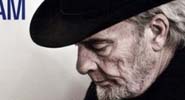
 Haggard’s first album for Vanguard recalls the folk music featured on that label in the 1950s and ’60s. Marked by minimal percussion, resonator guitar, acoustic (or subdued electric) leads, Haggard’s unmatched sense of melody and warm, clear, atmospheric production shows that besides being a traditional, progressive force in country music, Haggard is also a folk singer in the truest sense. Always a crooner, Haggard is now in his early ’70s and his voice shows no signs of age or wear.
Highlight tracks include “Pretty When It’s New,” with twin guitars from Tim Howard and Haggard’s son, Ben, that have all the charm they would’ve had 20 or 30 years ago. Rob Ickes’ Dobro on “Oil Tanker Train” calls up the early tunes that made I’m A Lonesome Fugitive and Branded Man showcases of taste and restraint without any sacrifice of goodtime
feeling. For “Live And Love Always,” Haggard breaks out his fiddle and his wife, Theresa, proves another fine duet partner as he pays tribute to the Western swing he loves so much; likewise “The Road To My Heart,” where Ben takes a tasty lead. Haggard has always taken a unique approach to guitar solos, and “How Do You Find Me Here” is no exception. Except for the title cut, it may be the most quintessential Haggard tune on the album – a definite highlight. Haggard holds himself to a high standard onstage and in the studio. Very little of his output slips below “good” and more often he lands smack in the middle of “great.” This one is his best in years.
This article originally appeared in VG’s Sept. ’10 issue. All copyrights are by the author and Vintage Guitar magazine. Unauthorized replication or use is strictly prohibited.

On August 12, the Country Music Hall of Fame & Museum unveiled an exhibit titled Chet Atkin: Certified Guitar Player, which pays tribute to the legendary guitar artist.
The Gretsch Company is the title sponsor for the exhibit; Atkins helped design and popularize several Gretsch models that are still best-sellers today. Prior to the opening, the Hall hosted an invitation-only reception that included a tribute performance by thumbstyle guitarist Ben Hall, and another by Steve Wariner.
On August 13, Wariner and Chet Atkins’ daughter, Merle, read a proclamation bestowing the final “Certified Guitar Player” honor on Paul Yandell, who was Atkins’ bandleader, friend, and confidant for more than thirty years. Only four other guitarists – Wariner, Jerry Reed, Tommy Emmanuel, and John Knowles—had received such recognition from Atkins.
The exhibition is scheduled to run through June 11, 2012, and will be accompanied by an ongoing series of programs. For additional information, visit Countrymusichalloffame.org and gretsch.com.

Lava Cable’s solder-free plugs are now being offered with caps available in four colors – black, white, red, and green, intended to help set up pedalboards using color-coded cables. The Lava Cap is made in the U.S. Learn more at lavacable.com.
 Robert Johnson’s “Cross Roads Blues” is more than just a song and artist that inspired and haunted Eric Clapton; it symbolized the conflicts in his own life and career. As he told me in 1988, “I don’t think I’ll ever get across the crossroads. It’s always standing right there in front of me.”
In Johnson’s recording and others he cut in a room at the Gunter Hotel in San Antonio in 1936, we hear a tortured soul. “I went down to the crossroad,” he sings; “fell down on my knees. Asked the lord above, ‘Have mercy now. Save poor Bob if you please.’” Mythology surrounded Johnson, who died less than two years later – to the point that musicologists actually debated the location of the Mississippi crossroads where he’d met the devil and sold his soul in order to become a better musician. This is (do we even need to point it out?) hogwash, but it doesn’t diminish the image Johnson conjures up when he sings, “Standin’ at the crossroad, tried to flag a ride/Didn’t nobody seem to know me; everybody
pass me by.”
After his well-publicized battles with substance abuse, Clapton named the treatment facility he built in Antigua the Crossroads Centre, and in 2004 held his first Crossroads Guitar Festival at Dallas’ Cotton Bowl – also auctioning off dozens of guitars from his personal collection, with all proceeds going to the rehab. He held another star-studded event, this time at Toyota Park, Bridgeview, Illinois, near Chicago, in ’07, and returned to Bridgeview for a third on June 6, 2010. Highlights from all three have been released on DVD – the latest edition (Crossroads: Eric Clapton Guitar Festival 2010 on Rhino) spanning two discs and clocking in around four and a half hours.
And highlights indeed abound, from the very first act, with Clapton joining slide wizard Sonny Landreth on “Promise Land,” then the instrumental “Z Rider,” featuring Landreth’s trio on its own. (If you’ve ever wondered how he milks so much texture out of just three pieces, watch and listen to the picked-bass style of Dave Ranson, who’s played with Sonny for 40-some years.)
After some sage advice and a story about meeting Muddy Waters from Hubert Sumlin, pedal steeler Robert
Randolph shows his gospel roots on “Travelin’ Shoes” before being joined by Joe Bonamassa and Italy’s Pino Daniele for Freddie King’s “Going Down.” Sumlin then backs Robert Cray on “Killing Floor” (having played on Howlin’ Wolf’s original version) and Jimmie Vaughan on “Six Strings Down.” Both performances are good (although, ironically, Vaughan’s voice has never been particularly suited to the song about the death of brother Stevie), but Cray and Vaughan not only appeared at the first two Crossroads concerts, they sang these same songs on the ’04 DVD.
Which brings up one of the few (but main) criticisms one can level at the DVD and the festivals as a whole. In only three festivals, ZZ Top, Jonny Lang, and James Burton make returns appearances from ’04, while Landreth, Derek Trucks and Susan Tedeschi, Cesar Rosas (with David Hidalgo, although this time with Los Lobos as a whole), Albert Lee, and Steve Winwood (reprising two tunes) were already on the ’07 set. Vaughan, Cray, and Buddy Guy (no doubt a reference to Stevie Ray Vaughan’s last show, which they played on with Clapton), as well as Randolph, Sumlin, Vince Gill, Doyle Bramhall II, John Mayer, and Jeff Beck have played all three fests – although, like Burton, Beck’s brief ’04 appearance didn’t make it to that year’s DVD. Likewise, Johnny Winter played 2007 and 2010, but only appears on the former release.
To be sure, booking something like this must be a nightmare, and, as a fundraiser, draw has to be a consideration. But, with so many fantastic guitar players out there, isn’t it a bit early for reruns? Also, the kickoff Dallas fest (from which I’m still applying zinc oxide) was much more eclectic. There was bluegrass (Dan Tyminski), hard rock (birthday boy Steve Vai), world music (Vishwa Mohan Bhatt), and jazz (John McLaughlin, who also played in ’07, and, although not on the DVD, Pat Metheny). One could argue that jazz doesn’t go over in football stadiums, but Larry Carlton got the Bowl jumping as high as any act that day.
That said, British folk pioneer Bert Jansch (showing where Jimmy Page got “Black Mountain Side” – the traditional Irish folk song “Blackwaterside”) and the pairing of acoustic bluesmen Stefan Grossman and Keb’ Mo’ are welcome additions here. Also, James Burton finally gets some face time, as part of Vince Gill’s ensemble – which somehow doesn’t sound like a cluster-pluck, despite having at least a dozen players up there. Burton, Albert Lee, and Gill constitute Tele’s Holy Trinity, while Keb’ and gut-stringer Earl Klugh join in on “One More Last Chance,” “Mystery Train,” and “Lay Down Sally.” But the sleeper star is the Gill band’s slider, Tom Britt, who Vince calls “part Sonny Landreth, part Ry Coder.”
The lone jazzer on the DVD, Klugh looks like he’s having a blast during the jam, but really gets to shine on his own – on the solo ballad “Angelina” (which director Martyn Atkins inexcusably, and unnecessarily, interrupts with an interview snippet) and fronting his quartet on the Latiny “Vonetta.”
John Mayer closes Disc 1, leaving at least one journalist to wonder, “What does Clapton see in this guy?” Sure, he’s got talent and looks enough to woo younger guitarists and teenage girls, but we’re talking Eric Clapton! He’s obviously heard every Mayer lick (by himself and other originators) and seen every affected pose and expression. So you’ve got Sonny Landreth, Billy Gibbons, James Burton, Jimmie Vaughan, Jeff Beck, Buddy Guy, and… John Mayer? Doesn’t make sense. (For better or worse, though, his presence here spares you, the reader, from one of my rants about Jonny Lang!)
Disc 2 has some nice turns by Derek Trucks and wife Susan Tedeschi (doing Joe Cocker’s “Space Captain” with Warren Haynes on guitar) and Buddy Guy joined by Lang and Ronnie Wood (a bit sloppy, but it’s Ronnie Wood, after all – and Buddy Guy). When I reviewed the ’07 DVD, top honors went to Steve Winwood, with Jeff Beck a close second. This year, I have to reverse those spots, thanks to Beck’s other-worldly interpretation of Puccini’s “Nessun Dorma” – although his jam with Clapton on “Shake Your Money-Maker” crashes and burns.
For his own part, E.C. plays well throughout (with a stunning extended solo on “I Shot The Sheriff”) – although his and Winwood’s dual solos on “Had To Cry Today” are far from the height of interplay. Paring down his three-guitar band (with Bramhall and Trucks) to just him works well, although how he could possibly think female backup singers fit the song “Crossroads” is a bigger mystery than his John Mayer fascination.
Little details like that, along with so many acts seemingly taking up residency, raise the question of whether the crossroads – not the rehab or the fest or the song, but the condition, and its inherent conflict – have become a tad comfortable for the guitar god in shorts and bifocals.
This article originally appeared in VG’s Feb. ’11 issue. All copyrights are by the author and Vintage Guitar magazine. Unauthorized replication or use is strictly prohibited.

 Singer/songwriter Chely Wright’s seventh album is different in tone – less solicitous and more emotionally purgative. To enhance her already well-crafted material, Wright has an empathetic producer and collaborator in Rodney Crowell and the aid of first-rate players including Nashville go-to keyboardist Tim Lauer, bassist Michael Rhodes, and guitarists including Crowell, Kenny Vaughan, Randy Scruggs, John Jorgensen, and Will Kimbrough. The latter three set the tone for the opener (“Broken”) and several tunes where Kimbrough shows why he was once again nominated for the Americana Music Association’s Instrumentalist of the Year Award.
Wright’s influences ring loud and clear; long before this album reaches “Snow Globe” it’s easy to tell Wright, a pretty good wordsmith herself, is a Bob Dylan fan. On the second song, “Heavenly Days” she displays a Dylanlike ability to turn a cliché on its head. Another thing the two share is self-confidence that allows her to set her own pace. Cool and controlled, but far from passionless, Wright’s songs have a steadiness. She’s candid, revealing, and tells her story straight – but in her own time and at her own pace.
This article originally appeared in VG’s Sept. ’10 issue. All copyrights are by the author and Vintage Guitar magazine. Unauthorized replication or use is strictly prohibited.
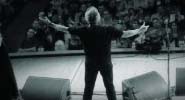
 John Prine almost single-handedly defined the term “Americana,” but he’s really a country-music artist – a bastard son of Merle Haggard in a genre so often wrongfully and automatically dismissed as simplistic that another phrase had to be appropriated to describe artists like Prine who exceed intellectual expectations for it.
There may be no better confirmation of Prine’s musical nature than “In Spite Of Ourselves,” his duet with Iris DeMent. Recorded and mixed by Andrew Primus and Nic Faddy, the album is crisp and warm-sounding. Prine is an underappreciated guitarist and the picture-perfect production highlights his unique ability to break a heart with an acoustic intro. He does just that more than once here, especially going into one of his best and most poignant numbers, “The Late John Garfield Blues” which is enhanced with fiddle and vocals from Sara Watkins. One particular thing that separates Prine is his affection for a crackling electric guitar, and Jason Wilber provides plenty, especially on “Saddle In The Rain” and A.P. Carter’s “Bear Creek Blues.” With bassist Dave Jacques, the three create a full sound with each element getting its due.
This article originally appeared in VG’s Oct. ’09 issue. All copyrights are by the author and Vintage Guitar magazine. Unauthorized replication or use is strictly prohibited.
 Named for its founder, this band is steeped in the blues and modern interpretations of classics. An album of covers? Not inasmuch as the arrangements are completely different which provides an unexpected character to familiar lyrics. So “It Hurts Me, Too” has a midtempo feel, “Ramblin on My Mind” is recast as a rocker, and “Sittin on Top of the World” becomes an uptempo dance tune. Carried by Dalton’s strong vocals, the rhythm section is firmly in the pocket while Dalton, a member of the Outlaws in the late ’70s, rolls his slide guitar while coguitarist Kim Shomaker blazes with soulful licks and fills that make these classic tunes sound new and different.
The arrangements have been worked out over many a night in bars and juke joints, and masterfully captured in the studio.
It’s good to see blues classics kept alive with a freshness and validity that makes for great listening.
This article originally appeared in VG’s Feb. ’11 issue. All copyrights are by the author and Vintage Guitar magazine. Unauthorized replication or use is strictly prohibited.
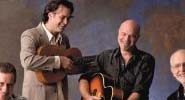
 Eric Brace and Peter Cooper’s label, Red Beet Records, has been busy lately with not one, but two newly released CDs. The first is a duo project uniting Peter Cooper with the legendary pedal steel player, Lloyd Green. The second is called Master Sessions. It features Brace and Cooper with Lloyd Green, pioneering dobro player Mike Auldridge, and veteran first-call guitarist Richard Bennett.
Brace and Cooper are not only fine singers, but excellent songwriters as well. Here, you’ll hear three Cooper and three Brace originals along with tunes from Herb Pedersen, Tom T. Hall, Jon Byrd, and John Hartford. “I Wish I had Our Time Again” opens with a perfect dobro kicker from Auldridge before Green’s pedal-steel takes over. The tune’s melancholy lyrics gradually convert its snappy melody from joy to regret. On the Herb Pederson classic, “Wait a Minute,” country superstar Kenny Chesney joins Brace and Cooper to form rocksolid three-part leads.
The duo’s style is closer to folk than country, and they deliver songs straight, with little in the way of the usual country vocal mannerisms or ornamentation; if Mary Chapin Carpenter is country, so are Brace and Cooper.
This article originally appeared in VG’s Feb. ’11 issue. All copyrights are by the author and Vintage Guitar magazine. Unauthorized replication or use is strictly prohibited.