

Month: July 2011

  • Eric Clapton

    Eric Clapton

    Eric Clapton
    Eric Clapton

    If you read Eric Clapton’s recent autobiography, you know he is very content with his life and were he stands musically. This album conveys that same feeling – laid-back and intimate – though there are some musical surprises.

    Among the players on the record are the rhythm section of Jim Keltner on drums, Willie Weeks on bass, and co-producer Doyle Bramhall II on guitar. Guests included Derek Trucks, Steve Winwood, J.J. Cale, Allen Toussaint, and Wynton Marsalis – the last two bring a jazz mentality to the proceedings.

    The Fats Waller classic “My Very Good Friend the Milkman” is a rollicking New Orleans ramble. That city is also responsible for “When Somebody Thinks You’re Wonderful.” Marsalis is featured on trumpet solos on both cuts. The mellow country-influenced rock that’s been a staple of Clapton’s music since the ’70s makes several appearances, including on a cover of Little Son Jackson’s, “Traveling Alone” and J.J. Cale’s menacing “River Runs Deep.” The blues are here, too; “Can’t Hold Out Much Longer” is Chicago-blues heaven with a nasty solo and fine harp.

    The closer, “Autumn Leaves,” is the real surprise. The standard gets a quiet, breathy vocal from Clapton and has two guitar solos – the first a quiet nylon-string affair, the second a jazzy electric bit. The song’s intimate take ref lects the feel of the album as a whole.

    Clapton’s first studio work in almost six years, this is not a guitarist’s record; rather, it’s carried by the songs and Clapton’s versatile vocals. Listeners who can put away their “guitar god” notions and give it an honest listen will be rewarded.


    This article originally appeared in VG‘s Dec. ’10 issue. All copyrights are by the author and Vintage Guitar magazine. Unauthorized replication or use is strictly prohibited.

  • The Rolling Stones

    The Rolling Stones

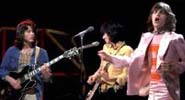
    Rolling StonesDespite the title, the focus of this “unauthorized” Stones documentary is not directly on Mick Taylor nor his guitar playing, but a general analysis of the band’s heyday. That said, there’s a lot to learn from The Mick Taylor Years, especially about the political and cultural environment of the day and the role of Taylor’s virtuoso blues guitar.

    Most importantly, you’ll hear about the Stones’ critical move from psychedelia and ’60s Brit-pop, and toward American country and R&B. This aggregate of events and inf luences – coupled with liberal amounts of hard drugs – created a string of albums and tours that not only redefined the band’s career, but also rock and roll as a whole.

    Adding perspective are interviews with Taylor’s former boss, John Mayall, Village Voice music editor Robert Christgau, and Stones session musicians like steel-guitarist Al Perkins and bassist Bill Plummer. There are also archival interviews with Taylor and passable live footage featuring Taylor and Keith Richards jamming on their beloved Gibson axes (look for SGs, ES-335s, and Les Pauls aplenty).

    The Mick Taylor Years succeeds in showing how Taylor raised the guitar standard of the Stones, as well as how Richards rose to the occasion, matching the younger musician’s brilliant playing with his own stellar performances, such as on “Brown Sugar” and “Happy.” Taylor made his own mark on guitar epics like “Sway,” “Moonlight Mile,” and especially “Time Waits for No One,” one of the most elegant guitar solos of the ’70s. You’ll also witness the tension between Jagger’s controlling persona and Richards’ drug-addled muse, how they clashed, and yet ultimately served the music.

    The DVD also attempts to answer the question “Why did Taylor leave?” Certainly, a lack of deserved writing credits seemed to have bred a resentment from the guitarist, along with the fact drugs were simply tearing the band apart.

    Ultimately, this film will make you reevaluate your opinion of the Rolling Stones and their early-’70s peak. You’ll wonder if Exile on Main Street is the classic everyone makes it out to be, or did the Stones actually hit the mark earlier on Let It Bleed and Sticky Fingers? Was Taylor as good, or even better, a guitarist than Brit blues icons like Clapton and Greenie? And how much were the mediocrity of the post-Exile albums related to Richards’ destructive lifestyle? This intriguing documentary will make you ask those questions, and more.


    This article originally appeared in VG‘s Nov. ’11 issue. All copyrights are by the author and Vintage Guitar magazine. Unauthorized replication or use is strictly prohibited.

  • Satriani, Vai Benefit Raises $100,000

    Guitarists Joe Satriani and Steve Vai hosted a benefit concert July 10 in support of music-industry veteran Cliff Cultreri. “A Benefit for Cliff II” took place at The House of Blues Hollywood
    and featured performances by Satriani and Vai, as well as special opening act featuring Brandon Small and friends.  Other special guests and friends of the duo, including Dweezil Zappa, Orianthi, Brendon Small and Tony MacAlpine, joined in for the ending jam.

    Between acts, a number of items from both Satriani and Vai’s personal collections were auctioned off, including custom amps, cabinets, pedals and guitars.  An autographed Satriani red JS1200 raised $6,200, while a custom Fibenare guitar raised $4,800.  Satriani and Vai, along with other artists, also graciously donated various items to be auctioned online.  In addition to the donations, some of the guitars played were auctioned at The House of Blues, and GuitarTV.com was able to raise nearly $7,000 by broadcasting the concert online to users throughout the world.

  • George Harrison Documentary Set for Broadcast

    HBO is set to air Martin Scorsese’s George Harrison: Living In the Material World, 
    a film was produced by Scorsese, Olivia Harrison, and Nigel Sinclair. The film traces Harrison’s life from his musical beginnings in Liverpool through his life as a musician, philanthropist, and a filmmaker, weaving together interviews with Harrison and his closest friends, performances, home movies, and photographs.  Much of the material has never been seen or heard by the public.

    The film includes interviews with Eric Clapton, Terry Gilliam, Eric Idle, George Martin, Paul McCartney, Yoko Ono, Tom Petty, Phil Spector, Ringo Starr and Jackie Stewart.  They speak honestly and frankly about George’s many talents and contradictions. The documentary will debut October 5 and 6 on HBO.


  • Travis Bean Passes

    Travis Bean
    Travis Bean at a NAMM show in 1977.

    Guitar maker and machinist Travis Bean passed awayJuly 10 in Burbank, California, after a long battle with cancer. He was 63.

    Born Clifford Travis Bean in San Fernando, California, he was famous for his enhancements to the electric guitar. He co-founded the Travis Bean guitar company with Marc McElwee, and from 1974 to ’79 it produced electric guitars and basses known for solid-aluminum neck and headstocks, and exotic hardwood bodies. Their distinctive sound, improved intonation and dramatically increased sustain made them popular with professional and amateur musicians. The company’s manufacturing standards and innovations were at the forefront of a trend in guitar manufacturing.

    Travis Bean guitars and basses were played by a diverse roster of players such as; Jerry Garcia of the Grateful Dead, Keith Richards, Ron Wood and Bill Wyman of the Rolling Stones, and jazz man Stanley Jordan.

    After making his mark in the guitar world, Bean worked as a television stagehand until his retirement. He is the subject of a documentary called “Sustain,” currently in production.

    Bean is survived by wife, Rita, son, Darren Miller, daughter, Dawn Norvell, and grandchildren David and Ashley Miller, Michael Thorne, and Jenell Norvell. A memorial will take place July 23 at the First Christian Church, Studio City, CA.  A website has been create to help Beans’ widow with medical bills. helptravisbean.com

  • Stevie Ray Vaughan and Double Trouble

    Stevie Ray Vaughan and Double Trouble

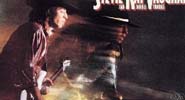
    Stevie Ray VaughanIt’s hard to understate how important Stevie Ray Vaughan was to the guitar. He emerged when the guitar had all but ceased to exist on pop/rock radio. Even hitmakers who played guitar, i.e. Bruce Springsteen, didn’t feature it. So “SRV” was a blast of fresh air.

     The Legacy Edition of Vaughan’s second album, Couldn’t Stand the Weather, features the original record with all the great cuts, like the impossibly funky title cut, the slow blues of “The Things I Used To Do” and “Tin Pan Alley,” “Cold Shot,” and “Scuttle Buttin’.” It also features “Stang’s Swang,” a jazzy tune of the sort that separated Vaughan from other “blues” guitarists. We also get 11 bonus tracks, eight of which were released on the expanded/ remaster from 1999. Three, including an incendiary “The Sky is Crying” have never been released.

     Disc two is a concert from Montreal in August of 1984. It shows a guitarist and a band at the top of their game, playing confidently off each other. Vaughan’s control of his instrument is simply amazing; he’s versatile, has all the chops, and his band – Tommy Shannon on bass and Chris Layton on drums – are right there with him. The liner notes essay is written by Andy Aledort, and it’s informative and interesting.

     There’s nothing surprising here, but this edition is a great reminder how a guitar can energize a lethargic pop world.


    This article originally appeared in VG‘s Nov. ’10 issue. All copyrights are by the author and Vintage Guitar magazine. Unauthorized replication or use is strictly prohibited.


  • Atlas Stands

    Atlas Stands Studio model

    Atlas Stands’ hardwood amplifier stands are made of ash, cherry, and walnut, and place an amp at an angle that makes it not only easier to hear on stage, but easier to mic. The amp rests on anti-coupling felt bumpers that protect it while highlighting its natural tone. A variety of custom features are available, including a built-in rack space, cooling fans, open or closed back, and more. When not in use, the stands folds flat, locks into place, and can be carried with a convenient strap. Read more at atlas-stands.com.

  • Steve Smith, George Brooks, Prasanna

    Steve Smith, George Brooks, Prasanna

    Raga Bop TrioBefore joining Journey in 1978, Steve Smith drummed on jazz violinist Jean-Luc Ponty’s Enigmatic Ocean, and before he left the band in ’83, he had already formed the fusion group Vital Information.

    The playing of saxophonist George Brooks ranges from blues to avant garde; his resume includes Harvey Mandel, Frankie Lee, Henry Kaiser, Zakir Hussain, and John McLaughlin. Guitarist Prasanna, who hails from India and graduated from Berklee, has released several CDs.

    The angular, hyper opener, “Tug Of War,” begins as a guitar/drum duo before Brooks’ alto doubles Prasanna’s melody. The sax lays out for an impressive guitar solo using sitar-like slides, jazz chords, and plenty of speed. Brooks’ “Miss Oma,” in the vein of a lilting Sonny Rollins calypso, is highlighted by Prasanna’s solo bursts that combine blues, Indian, and a touch of Hendrix. On “Love And Hunger,” Prasanna alternates between a droning arpeggio vamp and very capable jazz comping, making the absence of a bassist virtually unnoticeable. On “Ironically,” Smith even gets into some “konnakol” (vocal percussion), punctuated by staccato chords from Prasanna. “Dubai Dance” contains the guitarist’s bluesiest playing, squeezing some Clapton-esque bends from his Paul Reed Smith before a flurry of chords and descending pull-offs.

    The album was recorded live in the studio in four days, only three months after the group’s first rehearsal – testament to the formidable talents of all three players. Their sound is fresh and new and likely to please, whether you’re coming from a jazz, rock, or classical bent – East or West.


    This article originally appeared in VG‘s Nov. ’10 issue. All copyrights are by the author and Vintage Guitar magazine. Unauthorized replication or use is strictly prohibited.


  • Indigenous

    Indigenous

    IndigenousIndigenous is a highenergy blues-rock band fronted by Mato Nanji, disciple of Vaughan and Hendrix; its sound is defined by the chugging rhythms and fat tones squeezed from his Stratocaster.

    For this album, Nanji lays down the Strat in favor of acoustic guitars. Brother Pte, sister Wanbdi, and cousin Horse (on bass, drums, and percussion respectively) have stepped aside for the time being. In their places are Mato’s wife and songwriting partner, Leah, on background vocals, producer Jamie Candiloro on a variety of instruments, and Lisa Germano of John Mellencamp’s band on violin.

    Except for Roy Orbison’s “You Got It” the songs have appeared on other Indigenous albums; each is imaginatively reinterpreted by a guitarist who loses nothing switching to acoustic. He never overplays to compensate and doesn’t make changes just for the sake of doing so.

    In “Leaving,” he nudges the tempo a little, adding a slight country-soul feel, but retaining the song’s “Voodoo Child” flavor. The solo is almost a duel between Nanji and Germano. This version loses none of the tune’s bluesy guts or its energy. On “Now That You’re Gone,” a Stevie-Ray-inspired tune, Nanji is clean and precise, but still fiercely incisive as he rakes the chords and displays a wicked vibrato. The dreamy “Rest Of My Days” hints of early Traffic and bits of War and Santana.

    The Acoustic Sessions is one of Indigenous’ best. But no one who can do what Nanji does with a Strat could stay away from it for long. This isn’t a change in direction, but an exploration of his (and Indigenous’) great capabilities.


    This article originally appeared in VG’s Oct. ’10 issue.  All copyrights are by the author and Vintage Guitar magazine.  Unauthorized replication or use is strictly prohibited.

  • Mike + Ruthy

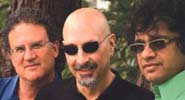
    Mike + RuthyMichael Merenda and Ruth Ungar formed The Mammals early this decade, and in 2008 put the band on hiatus so members could pursue other projects. For Michael and Ruth, that side project is Mike + Ruthy.

    How does Mike + Ruthy’s music differ from The Mammals? First, it’s a more-modern-sounding amalgamation, leaving banjos and fiddles for electric and acoustic guitars, and adopting an energy and twangy aesthetic that is at times reminiscent of another husband/wife duo, The Kennedys.

    All 12 tunes on Million to One are co-written originals. Some, such as “Be The Boss,” have a primitive rock-and-roll vibe with pentatonic riffs predominating. The title tune features a surf-rock beat coupled with folk-rock vocal harmonies. The resulting pop confection has the texture of Rocky Road – smooth and sweet but with enough nuts and chocolate chunks to give the music backbone. The last song, “Summer Sun,” is the most Mammals-like, but still has a modern/less-acoustic feel.

    While still “roots” music, Mike + Ruthy’s Million to One reveals another aspect of Americana – moving from the 1930s and ’40s to a late ’50s and ’60s folk-rock style that had such a huge influence on everything that followed.


    This article originally appeared in VG‘s Nov. ’10 issue. All copyrights are by the author and Vintage Guitar magazine. Unauthorized replication or use is strictly prohibited.