Month: December 2009

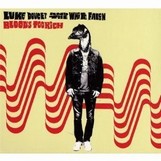
  • Luke Doucet and The White Falcons – Blood’s Too Rich

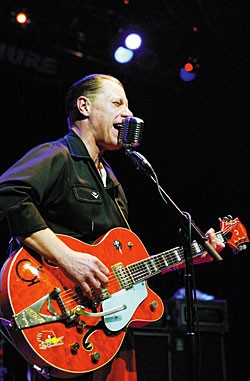
    Canadian singer/songwriter Luke Doucet is so dedicated to his Gretsch White Falcon that he named his band in its honor. Though that iconic instrument doesn’t take center stage until well into the album’s opening song (“Long Haul Driver”), when he gets it going he’s definitely got a handle on it.

    At times recalling Link Wray, as in the intros in songs like the title cut and some well-constructed solos, Doucet doesn’t overplay. Instead, he opts for memorable riffs with big doses of bright midrange twang on mostly original material that sounds like a cross between ’50s rockabilly and ’80s pop. Underscoring that is a faithful version of The Cure’s “The Lovecats,” which is a little cutesy compared to the better of Doucet’s songs, though occasionally (as on “Cleveland”) he’ll step into that territory himself. But most of the time he brings things around before going too far in.

    Doucet benefits from having his sincerity tempered with a small injection of cynicism. But he’s not self-indulgent or sappy; he’s got a good head for melody and there are all too many sourpusses and hardasses out there making music, anyway. But Doucet still believes in the magic. That, his pleasing voice, his knack for lyric imagery (“The Commandante”) and accomplished straight-ahead guitar playing combine to good result.

    This article originally appeared in VG‘s Dec. ’08 issue. All copyrights are by the author and Vintage Guitar magazine. Unauthorized replication or use is strictly prohibited.

  • Samuel James – Songs Famed for Sorrow and Joy

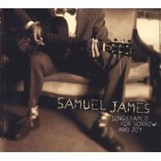
    The hoodoo factor in Samuel James’ music is strong. He is very connected to the eerie, mythical nature of early 20th-century country blues, his music conjures up images of Ol’ Scratch in his city-slicker high-button shoes, box-back coat, checkered pants, and Stetson, sipping iced tea and picking his guitar on the porch. Just who would tune whose guitar at the crossroads?

    James, whose Kurt Cobain-ish singing voice teeters on the edge of franticness, is one of a growing number of young African-Americans now embracing the blues after times when some saw that music as a painful reminder of America’s too-recent past. On Songs Famed for Sorrow And Joy he forges the history of music and culture into a remarkable album. James’ prowess at all sorts of guitar playing – from fingerpicking to gutsy, powerful slide – is stunning. He even incorporates banjo – which was once more a part of blues music as the guitar – into his one-man acoustic tour de force. An intelligent, imaginative writer with an ear for melody, James writes with wit and color; his sometimes chilling, sometimes amusing narratives of “One-Eyed Kate,” “Big Black Ben,” and “Ol’ Willie Chan” are laid over astounding fretwork. There’s force and confidence in his playing; a surety in the blues that can’t possibly come from someone only a few years out of high school; and from Maine, no less! But it does. Samuel James is already a great player; with time he may show himself to be one of the best since they stopped making 78s.

    This article originally appeared in VG‘s Aug. ’08 issue. All copyrights are by the author and Vintage Guitar magazine. Unauthorized replication or use is strictly prohibited.
  • Ana Egge

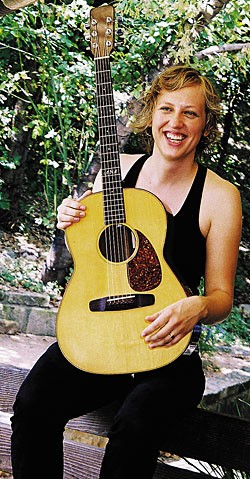
    ANA EGGE

    Photo: Dan Forte

    The myspace page of singer/ songwriter/ guitarist Ana Egge has the usual stuff most musicians put on their pages. Under “Influences,” there’s a long, eclectic list that ranges from Randy Newman to Redd Volkaert to David Byrne. But the most revealing, and accurate, bit of information is under the heading “Sounds Like.” The answer? “Ana Egge.”

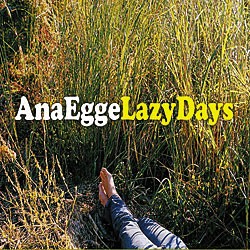
    Over the course of five albums, 31-year-old Egge has received high praise from the likes of Lucinda Williams, Buddy Miller, Shawn Colvin, and Ron Sexsmith for her compelling voice, deft guitar playing, and intelligently crafted originals. Her latest CD, however, is entirely covers, she explains, because she was too lazy to write an album’s worth of new songs. But the appropriately titled Lazy Days (Grace/Parkinsong) reveals that Egge is an adept interpreter with a wry sense of humor – culling tunes from the Zombies, Sandy Denny, and Gene Autry to create a concept album about laziness.

    Whether writing or arranging, she adds layers overlooked by too many folk/Americana types. “I think it’s because I fell in love with playing the guitar,” she muses. “I’ve always been blown away by solo players who could fill up a lot of space without making it seem crowded – playing the whole song with the guitar. It’s been a natural thing for me to write the guitar part with the melody, and have the hook be a guitar part, and find parts for other instruments to play off that for the recording.”

    Born in tiny Ambrose, North Dakota, her family moved to Silver City, New Mexico, when she was 10. Raised on Merle Haggard, the Grateful Dead, Dire Straits, and the Beatles, she was especially drawn to Elvis Presley. She met Sarah Brown through the blues bassist’s sister, Kate, who also lived in Silver City. “She turned me on to J.B. Lenoir, and he’s my favorite. That acoustic stuff he did, I never tire of it. It’s totally unique, and it never fades. He’s so undervalued – which I don’t understand. His voice was amazing, his guitar playing; he was so original.”

    Austin bluesman Steve James came to play the art center of the Down To Earth high school, founded by her hippie parents. “He was the closest thing I’d ever seen to a rock star,” she laughs. “From that moment on, I kind of followed him around and made him show me stuff. He gave me three extended-play cassettes – one each of Chuck Berry, Hank Williams, and Muddy Waters. He pointed me in the right direction over and over again.” She lists Mississippi John Hurt, Bukka White, and Big Bill Broonzy as other blues favorites.

    At 15, she wrote her first song, “Mind Over Matter,” which later appeared on her debut, River Under The Road and the live Mile Marker. “It doesn’t have to be complicated,” she says of songwriting, “but it has to be original for it to last, and it has to really mean something to you. And if it does, it will mean something to other people.”

    That same year, she took an astrology class taught by “this hermit,” Don Musser – in part because she knew he was a luthier. “I was playing guitar every day on a friend’s Gibson LG-2, or B-25. I was obsessed with guitar at that point. So I’d ask Don questions, like, ‘What does X-bracing mean?’ That summer he called me and asked if I wanted to work in his shop and build a guitar. I finished the guitar in a little over a year. It was an amazing experience.”

    ANA EGGE ALBUM

    She details, “I loved the way that borrowed Gibson felt, so I just copied everything about it – small body, X-braced, with a larger soundhole. It’s got a 14-fret neck and is made of spruce and mahogany. It’s got an unadjustable trussrod in the neck, because I liked the idea of it not moving much ever. Besides a little bit of swelling over the years in the belly, like behind the bridge, the guitar hasn’t moved at all.”

    At first, the finished product was “tight.” “It was like a new pair of shoes. You could tell that everything was working perfectly, but there was no room to breathe in it. The sound was going in and bouncing directly out. It wasn’t absorbing anything and bringing it back with some of its own character – because it didn’t have any character yet. Don stressed to use as few trees as possible – the wood from one or two trees. Because you want all these pieces, with the glue and lacquer, to have the same vibration. It takes time and a lot of playing and weathering to slowly make it fall into itself as one thing. It took about a year and a half before it developed a richer, warmer tone and its own character.”

    It’s remained her main guitar for 14 years – her other axe being a ’97 National resophonic Estralita that was a surprise gift from James and various music luminaries of Austin (which she moved to in ’95) – Brown, Ray Benson, Rich Brotherton, Cindy Cashdollar, Dave Sanger, Lee Barber, and James McMurtry.

    Now based in Austin and Brooklyn, with a house she built herself outside Silver City, Egge spends much of her time on tour. “On some level I’ve always known that this was what I was going to do. Because I love it, and it makes me feel alive. I definitely felt a complete push towards this. Besides the compulsion or obsessive need to do it, I don’t know what else I would do. Not that I’m incapable of working a day job – I’ve worked a ton of those, along with fulfilling this main job that I do – but it’s really a drive. And it’s not just me driving it. It has nothing to do with a need for fame or glamour. If I spent as much time promoting myself as I do writing and playing, I would have more people at my shows, but I might not have as many songs that I believe in.”


    This article originally appeared in VG‘s March 2008 issue. All copyrights are by the author and Vintage Guitar magazine. Unauthorized replication or use is strictly prohibited.


    ANA EGGE- A Summer Wasting

  • Greg Howe

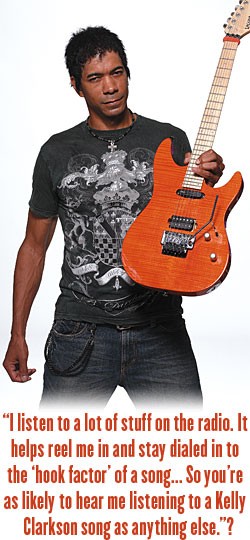
    Greg Howe

    Photo: Neil Zlozower.

    Rock-Jazz guitar virtuoso Greg Howe thought he had it all figured out by his mid teens. “It seemed relatively easy. The first solo I ever learned was from the Commodores song ‘Easy.’ After that, I quickly learned all the Jimmy Page solos and a bunch of others. I was learning solos by the guys who were considered the best, so, of course, I thought, ‘Here I am at the ripe old age of 15, playing these solos. I must be one of the best.’”

    But then along came a certain legend in the making. “My thoughts were rudely interrupted by the first Van Halen record,” he added. “Once that came out, I went from just messing around with the guitar to becoming serious because I thought ‘I have to tackle this mystery.’ And there was clearly something there I could not get.”

    Being a quick learner, all it took was an in-person view of the music to solve the mystery. “I hadn’t been able to figure out ‘Eruption.’ Me and some friends went and saw Van Halen live. When they dropped me off at home afterward, I ran upstairs at three in the morning and played ‘Eruption’ note for note.”

    Howe’s new record, Sound Proof, is the latest in a string that has allowed him the space to show off the chops that have given him a reputation as a versatile shredder. And it progressed a bit differently than other recent efforts.

    “The last record with (bassist) Victor Wooten and (drummer) Dennis Chambers ended up being really difficult because the three of us never tracked in the same place,” he noted. “In that way, it was kind of a nightmare. Even though it came out cool, it was one of the most difficult projects I’ve ever been involved with. So on this one, I just wanted four guys who knew each other to get into a room and see how things would come together. A lot of the stuff was written right before I went in the studio and when we were in the studio.”

    One of the record’s unique twists is a track that uses hilarious phone messages with “information” only the most extreme guitar geeks will appreciate. “There’s this kind of mystique about me,” Howe acknowledges. “A lot of times people think I’m thinking deeper than I really am. That was a side of me I wanted to reveal, you know? I’m just a guy like anyone else and I run into those issues. The phone calls are just me poking fun at myself and some of the people I’ve run into in this genre.”

    Howe is equally at home with metal sounds as he is playing through the changes of a jazz standard. His intro to the jazz world quickly followed his Van Halen revelations. “I really fell in love with music at that point. I was fortunate enough to run into friends in the jazz world and almost had a snobby outlook on my influences. I would challenge that, but at the same time they’d turn me on to guys like George Benson, Larry Carlton, Lee Ritenour, John Scofield, and Pat Metheny. At first I didn’t quite understand what was cool about that stuff, but after a while I got it. So my influences ended up coming from all these very different directions. Anything I heard that was fresh or new, regardless of what style it was, I’d spend a significant amount of time absorbing it.”

    Another unique aspect to Howe’s outlook some guitarists may find a bit odd is that he has no “favorite” axe. “As much as I love playing guitar, I never get emotionally attached to any instrument.” So he has used various instruments through the years, including many Fender Stratocasters and other offset-double-cutaway solidbodies, including ESPs. On Sound Proof, he made heavy use of an ESP Snapper. “It’s a real cool Strat-like guitar,” he said. “It’s pretty typical, but it’s got a tone that’s really, really nice. So I used that for all the stuff on the new one that has that spanky Strat thing going on.” He’s working with a company on a new guitar design, but at the time of our interview wasn’t able to discuss any details, though he says it’ll carry the Laguna brand and should be available this fall.

    Howe has also now found the amp that allows him to forgo most preamp effects. “I’ve been using the Cornford MK-50,” he said. “It’s the only amp I’ve ever played that didn’t require some kind of stompbox in between. Every other amp I’ve had, regardless of how good it sounded, the best results with them were always modifying the gain with a pedal. With the Cornford, there’s a lot more subtle, expressive things happening between the notes in your fingers. It doesn’t have as much of a compressed, evened-out feel as it would have with a stompbox.”

    Howe and his band are hitting the road this year and plan to do some work in Europe.

    When he listens to music for enjoyment, it may surprise fans to learn what’s in his listening room. “Because my brain is kind of odd and I write things that tend to be a little more out there, I actually listen to a lot of mainstream stuff. I listen to a lot of stuff on the radio. It helps reel me in and stay dialed in to the ‘hook factor’ of a song. And that’s good, because regardless of what you’re doing musically, if you want to reach people, you have to have something built into your creation that people can relate to – like hooks. So you’re as likely to hear me listening to a Kelly Clarkson song as anything else.”


    This article originally appeared in VG‘s December 2008 issue. All copyrights are by the author and Vintage Guitar magazine. Unauthorized replication or use is strictly prohibited.


    Greg Howe Performs “Come And Get It”

  • Gerry Beaudoin

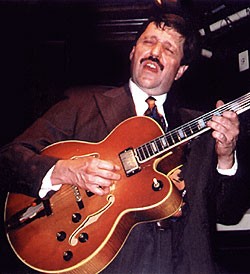
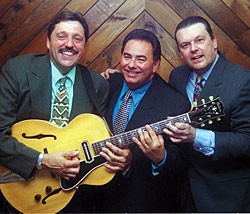
    Beaudoin with his late-'60s Gibson L-5 in 1999

    Beaudoin with his late-’60s Gibson L-5 in 1999.

    One gets the feeling the three members of the New Guitar Summit have a lot of fun. Consisting of veteran guitarists Jay Geils, Duke Robillard, and Gerry Beaudoin, the NGS is in its second decade of purveying primarily-instrumental swing music that pays exuberant homage to original saints such as Charlie Christian, Benny Goodman, and Lionel Hampton. And in spite of active individual careers, they’ve found time to record four albums and a live DVD.

    Gerry Beaudoin has been playing guitar since he was 10 years old and grew up admiring the Beatles as well as singer/songwriters like Kris Kristofferson and Joan Baez. He recalled hearing Robillard in concert around the same time he heard the first album by the J. Geils Band.

    “Jay and Duke had known each other since the late ’60s,” Beaudoin detailed. “Jay had the J. Geils Blues Band; Duke had Roomful of Blues. I’m younger, and a cousin took me to see Roomful of Blues when I was in junior high school. I fell in love with Duke’s playing – it changed my whole focus on music. My high school band director let me put together a little jump-music sextet. My father bought me the first J. Geils Band album for Christmas one year, and I listened to it all day, trying to figure out Jay’s licks. I loved the Allman Brothers; I was playing blues in high school, but I still played in a jazz band. I went to Berklee (School of Music), and I can’t stress enough how I got the best education possible there – theory, harmony, arranging, great guitar instructors. I was totally immersed in the jazz scene. That’s how I built my career, but my style is pretty bluesy.”

    During his days at Berklee, Beaudoin played a ’68 Gibson Les Paul goldtop. Considering how his style was developing, he realized the need for a jazz box

    “My father and I went to New York one weekend and bought a gorgeous sunburst late-’68/early-’69 Gibson Super 400 for $800,” he recalled. “And I put a DeArmond pickup on it. I also bought a 1970 (Gibson) ES-335, which I wish I still had.

    The New Guitar Summit: Gerry Beaudoin, Duke Robillard, and Jay Geils

    The New Guitar Summit: Gerry Beaudoin, Duke Robillard, and Jay Geils. Photo: Daniel Fogel.

    “If you want to get into jazz, there’s no better place than New York,” he added. “My sister was going to Columbia University, so I made every excuse in the world to go visit her as often as I could! I saw all the great players in New York – Kenny Burrell, Jim Hall, Chuck Wayne, Joe Puma. One night, I saw Bucky Pizzarelli’s trio at the Cafe Pierre, and he was playing a seven-string. I had no idea what it was. The next weekend, he was playing Pier 77 when I showed up. He showed me a couple things on the guitar, and I sat in. That was it – I looked in the want ads, found a Gretsch George Van Eps seven-string, and paid $600 for it.

    “I consider Bucky a mentor; he’s been the greatest friend and inspiration to me. Every seven-string guitarist in my generation owes Bucky, because he set the standard.”

    Beaudoin has also gigged with a late-’60s Gibson L-5, and he currently endorses Benedetto seven-string guitars. His association with that brand and configuration came about at the insistence of Pizzarelli.

    “I showed up with my L-5 at a gig where Bucky was playing,” Gerry recalled. “He was disappointed because he thought I still had my Van Eps. He called Bob and Cindy (Benedetto) the next day, telling them I needed a seven-string. I now have two and love playing them; I think the seventh string really adds something.”

    Beudoin’s primary gigs had been with the Boston Jazz Ensemble, and he recorded albums with David Grisman.

    “Since the Grisman recordings were pure acoustic, I played my Stromberg,” he recalled.

    The opportunity to work with Geils and Robillard seemed to have been in the cards, and he recalled with a chuckle a notion about the New Guitar Summit and how Robillard is the “blueser,” Geils is the “rocker,” and Beaudoin is the “jazzer” – and together, they play swing!

    “That’s exactly what the perception was when we formed,” Beaudoin recalled with a laugh. “And our first agent couldn’t get it straight! I’d met Duke in ’85 and we’ve been friends ever since. In 1992, I was playing at a guitar show in Washington, and Jay introduced himself after my set, telling me he had some of my records. He started guesting with my trio. One night I was actually gigging with Duke when Jay showed up and sat in. So that was the beginning.”

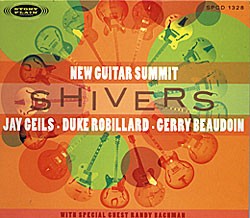
    New Guitar Summit Shivers

    The NGS has a policy of including at least one Charlie Christian or Benny Goodman song on every album, and Shivers (Stony Plain) continues the tradition with both the title track and “Flying Home.” There are also two Mose Allison numbers, “Your Mind Is On Vacation” and “Everybody’s Crying Mercy,” which include guitar and vocals from guest artist Randy Bachman, with whom the NGS had collaborated on an album called Jazzthing II, recorded in one day during an NGS tour in ’07.

    Beaudoin is an avid composer, so most of the original NGS songs were written by him. He noted that he was pleased with the way “Mediterranean Nights,” a duo between Geils and himself, turned out on Shivers, and he also cited “Blue Sunset” as having a “Kenny Burrell minor-blues mode.”

    Shivers continues an “if it ain’t broke don’t fix it” attitude for the New Guitar Summit. “We love doing this kind of music,” Beaudoin said, summarizing. “And since we love Kenny Burrell, Charlie Christian, and Oscar Moore, we also want to try to educate people about the guys who wrote the book.”


    This article originally appeared in VG‘s December 2008 issue. All copyrights are by the author and Vintage Guitar magazine. Unauthorized replication or use is strictly prohibited.
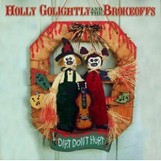
  • Holly Golightly – DIrt Don’t Hurt

    A lo-fi delight that features as much stringed-instrument work as you can handle, this record features Holly on vocals, guitar, and banjo, and Lawyer Dave on vocals, guitar, and as it says in the liner notes “things with strings.” The music is a treat, covering roots music from country blues to R&B to bluegrass and everything in-between.

    While the songs here harken back to a different era, the result is fresh and timeless. “Up On The Floor” is typical of the feelings evoked by this music. It’s a weepy country tune with a great lyric and steel guitar and dobro meshing with acoustic guitar in the perfect marriage. “My 45” is a stomper with a lyric that’s more than a little scary as the two trade verses about grabbing a gun to end a relationship… Slide guitar fits the menacing lyric. “Boat’s Up the River” adds reverb to the vocals to add more ambiance to a record already full of ambiance. “Slow Road” is a spooky tune that might call to mind Tom Waits; while the two appear to have a connection with instruments, the melding of their voices is also wonderful. They don’t always share vocals, but when they do, the result is usually perfect.

    This article originally appeared in VG‘s Dec. ’08 issue. All copyrights are by the author and Vintage Guitar magazine. Unauthorized replication or use is strictly prohibited.
  • Jim Heath

    HEATH PHOTO

    Photo courtesy of Atomic Music Group.

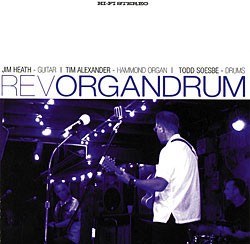
    Jim Heath is better known to most folks as psychobilly guitar fiend The Reverend Horton Heat. But on his latest release, he morphs into Reverend Organdrum and, as you’d expect, with the change of identity comes a change in music.

    The record is chock full of great organ-trio music, movie theme songs – and everywhere, fine guitar playing. Why the change?

    “In between Horton Heat stints I kind of look for something to take my focus off writing and put my focus on learning. I was riding around with Tim (Alexander, friend and keyboard whiz) and we were listening to Hammond stuff. He said “It might be kind of cool if we did this thing where I held down the bass and you and me just find a drummer and work up all these songs.” I thought that’d be a lot of fun, plus he’s won five Grammys and is a really great arranger, so I’d get to hang around with him and that would be my learning experience. We just worked up some standards and songs that would have been popular in the early/mid-’60s and started playing gigs. It’s a pretty low-key deal, ya know? It’s been great because Tim’s really good at teaching people music stuff without them knowing it. He’s such a sweet guy. He’ll say ‘hey, you know, a whole tone scale there. Try that.’ You do, and it’s like ‘Thanks a lot’.”

    Heath’s guitar career started with the help of cousins playing at family gatherings. “They’d do stuff like ‘Folsom Prison Blues,’ ‘Blue Suede Shoes,’ and Creedence songs, and I just thought that was the coolest thing ever. My folks got me a cheap guitar – it must have been a Stella. I started playing and got really interested when I visited the local record store and the guy had on some ripping blues stuff. I think it was Little Walter, then some Sonny Boy Williamson, and some Muddy Waters. I loved it because up to then I’d been buying all the Black Sabbath and Alice Cooper records. I thought the blues was pretty cool… of course, none of the other kids thought that was cool at all, until later! So, it was great that a mom-and-pop record store kind of guided me to something besides corporate rock. That’s been the key to my career, in a way.”

    Heath’s guitar education started with those records and a B.B. King book he found in a local store. He played in local bands which he calls good learning experiences. Then he started focusing on rockabilly during a resurgence of that musical form in the late ’70s. “I thought it was sort of what my cousins were playing back in the early ’70s. It was a bit of a revelation to me. I thought, ‘Instead of being another white kid playing the blues, I could play this.’ I could write my own stuff and find my own voice, and that’s where the Reverend Horton Heat started. Things morphed a little bit after that. The guys in the band wanted to play blues clubs and make 200 bucks each for a night. But punk clubs had better energy and were more fun. Of course, we only made 75 bucks for the whole band! But I just thought we can go with the alternative thing and have more high-energy gigs and I’ll bet by the end of the day it’ll be more of an event type of thing that’ll be better for us money-wise, eventually anyway. And, that worked out, too.”

    HEATH ALBUM

    Heath’s main axe these days is his signature Gretsch, the 6120RHH. “It’s a little different than my other Gretsches, but it certainly gets me in the ballpark.” Heath says the thing he likes about the guitar is it’s versatile, lets him gets lots of sounds and is extremely reliable. That reliability can be an issue with one of his favorite older guitars, a 1954 Gibson ES-175. “That guitar is just the most killer thing. But it buzzes in certain venues.” He points out, with a laugh, noting that it’s not always the guitar’s fault. “You never know about these idiots. They’ll put neon all around the stage so everything’s buzzing, or their brother-in-law wired the building…” The instrument’s wiring has also given him trouble, so he doesn’t take it out much. The problem has also intermittently affected several other guitars he owns, including a Guild Duane Eddy. “I’ve got some great stuff, but the hard thing about vintage guitars is they’re so popular I’m afraid to take ’em out with me!”

    When it comes to amps, Heath’s answer is short and sweet. “I’m really into Fender Super Reverbs.”

    The Reverend Horton Heat has gained notoriety lately by the inclusion of the song “Psychobilly Freakout” on one of the Guitar Hero video games. “Yeah, it’s weird. It’s like having a hit. It’s very cool for us and apparently what’s odd is they’ve set up the game so that this song is one of the hardest. I saw on You Tube some 8-year-old kid that was playing the song at the highest level and just going crazy.”

    Heath and the Reverend Organdrum play the occasion gig. “It’s a weeknight band,” Heath says. “Tim plays in the studio and with other bands, and with the Reverend Horton Heat playing, we always end up doing like Wednesday nights. So we play for lots of bartenders and waitresses!” As for Horton Heat, Heath is writing and says they’ll get in the studio eventually, but that’s not what it’s about.

    “I like to play music. That’s my artform, and to me, being a recording artist is not a valid art form. Being a recording artist is like saying, ‘Let’s make an advertisement for our band.” With that in mind, the band’s schedule is chock full for 2008.


    This article originally appeared in VG‘s April 2008 issue. All copyrights are by the author and Vintage Guitar magazine. Unauthorized replication or use is strictly prohibited.


    Reverend Horton Heat – Galaxie 500

  • Ibanez MC500 Musician

    Ibanez MC500 Musician photo: Michael Wright

    Ibanez MC500 Musician.

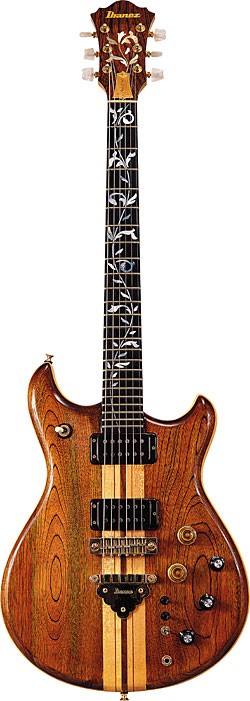
    Ahhh, the late 1970s… While many vintage guitar enthusiasts disdain the guitars from the “Me Decade” in favor of undeniably cool classics from the 1950s and ’60s, the ’70s was in many ways one of the most innovative eras in guitarmaking. It produced some of the great guitar brands and many superb individual guitars, including this spectacular custom-ordered 1978 Ibanez MC500 Musician.

    One might say the vintage guitar phenomenon was created by the success of guitars in the 1960s. Thank GIs returning from WWII (who created the Baby Boom) and John, Paul, George, and Ringo (who sold guitars to them after 1964).

    What followed was a symphony of big (sometimes marginally musical) corporations rushing to own guitar companies; Fender, Gretsch, Guild, Valco, Kay, Gibson. The result was something less than perfect, because while guitar guys may not always be the best businessmen, they love guitars. Corporate beancounters, on the other hand, look at things differently.

    By the 1970s, the American commitment to quality and innovation had been… well, compromised. This led to the notion of older guitars as first better, and then “vintage.”

    But the adverse situation for American guitars meant opportunity for ambitious – and talented – Japanese manufacturers, who hit on a strategy of copying popular historical American designs. They also began innovating, and American companies started sweating.

    Long story short, in 1977, Norlin, parent company of Gibson, sued Elger, the American arm of Hoshino/Ibanez, over trademark infringement for copying Gibson headstocks. The end result was an out-of-court settlement, and despite what you read on the internet, this was the only copy-guitar “lawsuit” of the ’70s.

    By ’78, the Japanese makers were selling new designs based on evolving tastes. Resorting to lawyers didn’t accomplish anything except to create new areas for Japanese successes!

    Ironically, Ibanez, the focal point of the American counterattack because of its growing market share, had already changed its headstocks to look more like – funnily enough – Guild! In any case, the first guitars out of the gate in ’78 for Ibanez were the Performer series, Les Paul-type guitars with a little Tele curve at the upper bout/neck joint. This shape would be used by other Japanese makers, as well, and has been more or less in constant use ever since. If you’ve ever played one, you know how good they are!

    The Ibanez Performers went into a easy holding pattern until two new series could be introduced – the Studios and Musicians. Both capitalized on late-’70s predilections for neck-through construction, brass fittings to enhance sustain, and active electronics. Neck-through guitars had gained favor through efforts of companies such as B.C. Rich and Alembic, who also championed active electronics. Travis Bean and Kramer were also pioneering sustain with their aluminum-necked guitars.

    The Studios and Musicians were fairly similar, except the Musicians were more upscale. The Studios had set necks, whereas the Musicians (except for the entry-level bolt-neck MC100) were neck-through-body.

    As the top of the line, the Ibanez MC500 Musician is a superb piece of guitar art and engineering from Fuji Gen Gakki. Meeting the taste for exotic woods with natural finishes, the MC500 was made using a sandwich of either carved walnut or dark-stained ash with a maple center and walnut or ash back, around a laminated maple and mahogany neck. Only the MC500 had a carved top. Hardware that wasn’t gold-plated was solid brass for enhancing sustain, including the extra-large scalloped tailpiece. As with all instrument series, electronics were more sophisticated as you moved up the line. The MC500 sported active Tri-Sound Super 88 humbuckers with a dizzying array of controls. Two three-way mini-toggles offered regular humbucking mode plus a coil tap and phase reversal for each pickup. A third mini-toggle activated an EQ circuit with volume and tone plus boost and cut controls for a three-band EQ (low, mid, high frequencies). All were controlled by a master volume.

    The beauty of the wood, the excellent construction, and the electronic horsepower would be enough to recommend the MC500 to anyone who likes a fine-playing, versatile-sounding guitar, but the original owner wanted this to be something extra special, so he custom ordered the gorgeous mother-of-pearl tree-of-life fingerboard inlay, which Fuji put on some of its showcase models. To make sure his prize was protected, he also got an aluminum flight case!

    The Ibanez Musicians were extremely well-received, much to the chagrin of American manufacturers, who had hoped to cramp the style of the Japanese makers with the challenge to copying. Other Japanese companies quickly joined the fray; Aria Pro II debuted its own RS Rev-Sound series and even the Korea-based Cort introduced models clearly following the Musician’s lead. Even Gibson joined the active game with its estimable RD Artist line in 1978, though the timing was probably due more to Zeitgeist than to emulating Ibanez.

    All Ibanez Musicians, and especially this MC500 are really nice guitars. They’re fun to play, and if there’s a downside to them, it’s that the search for sustain almost inevitably makes for added weight. Plus, as wonderful as it is to be able to fine-tune your sound with onboard EQ, there’s a powerful streak in many guitar players that likes to keep it simple. That’s the other extreme represented by a young Edward Van Halen, who wanted one pickup and one knob – a volume control! In any case, the rage for brass nuts, sustain blocks, and active electronics eventually passed, as all things do. The original Ibanez Musician line was gone after the 1980 season, replaced briefly by a bolt-neck with passive electronics, as the guitar business began its inevitable drift toward the Stratocaster-style guitars that would come, after a brief flirtation with exotic shapes, to define the decade of the 1980s.

    The success of Ibanez Musicians during their brief three-year run means they’re not especially rare birds. The carved-top MC500s were, understandably, less common and prime examples can easily sell today for $1,500. Only 164 were built in 1978, when this custom-ordered guitar was finished, and by the end of 1980, some 1,180 MC500s had left the Fuji factory – enough to make it possible to find one of these beautiful tributes to the search for sustain at the end of the 1970s.


    This article originally appeared in VG‘s Oct. ’06 issue. All copyrights are by the author and Vintage Guitar magazine. Unauthorized replication or use is strictly prohibited.
  • Jim Stringer And The AM Band

    It’s a slight generalization, but if you’re going to make a living playing music for any length of time, you pretty much have to do one of two things: concentrate on one thing and make that your calling card, or be able to play anything and everything that will yield steady work.

    In Texas, the latter is the norm – from sidemen who can seamlessly shift from lowdown blues to a polka (and do both and more convincingly) to leaders who synthesize all that “Texas music” implies (the ultimate example being the late Doug Sahm).

    Jim Stringer isn’t a native Texan (as the saying goes, “It just took him a while to get here”), but he became an Austin fixture as soon as he hit town from Kansas City – and in a town where you can’t swing a dead armadillo without hitting a monster guitarist, that’s no small feat.

    He quickly immersed himself in the scene as bandleader, guitarist, organizer, and head of his own Music Room studio and label. Not surprisingly, he invariably surrounds himself with similarly versatile figures from Austin’s fertile field of musicians, as illustrated on these two releases (one as leader, one as band member, both as producer/engineer) – one honky-tonk with an eclectic streak, the other small-combo jazz (something usually hidden in Austin’s nooks and crannies) with a late-night groove, occasional Texas twang, and elements of swing, both Western and Gypsy.

    The CD with the unpronounceable title is all originals except for two tracks; a cover of “Rebel Rouser” that trades Duane Eddy’s Gretsch twang for a crystalline Tele tone, as Stringer quotes everything from the Andy Griffith theme to “Green Acres” faster than you can keep track (was that “Day Tripper” at the fade?) while Roy Glaze’s pedal steel takes the place of the original’s sax breaks, and “Come A Little Bit Closer,” the Jay & The Americans hit that makes a perfect border-tinged ballad in the Marty Robbins mold.

    Speaking of versatility, Dave Biller (one of Austin’s best guitarists, cutting a swath similar to Stringer’s) alternates with Glaze on pedal steel, an instrument he’s a relative newcomer on – picking up more sessions all the time. Throughout, Stringer makes few if any concessions to Nashville sensibilities but (not surprisingly) sounds more true to “country music” because of it.

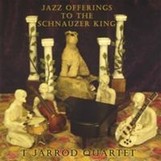
    T Jarrod Bonta’s piano provides the perfect honky-tonk touch on Triskaidekaphilia; then he takes over as leader on Schnauzer King – his ease at shifting from country to cool jazz recalling another Austin keyboard great, Floyd Domino. Likewise, Stringer transitions to rich chordal backup and keening single-note lines in the vein of Herb Ellis or Barney Kessel (check out his warm but defined tone on “Nine Or Two Tens”).

    On most cuts, there’s no hint that these jazzers might be wearing cowboy hats in the studio. The trick is that they have that added spice to summon – which is never a hindrance, always a fresh addition.

    This article originally appeared in VG‘s Nov. ’08 issue. All copyrights are by the author and Vintage Guitar magazine. Unauthorized replication or use is strictly prohibited.
  • Lee Ritenour

    Lee Ritenour

    Lee Ritenour.

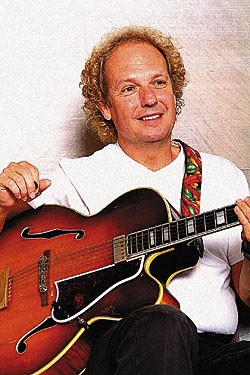
    Lee Ritenour’s solo career continues to glide along with the release of his latest record, Smoke ‘n’ Mirrors, which contains exactly what we’ve come to expect from the veteran guitarist – and a lot more.

    “It’s really, for lack of a better word, a world-music album, through the eyes of my guitar,” he said. “More than that, though, it seems like percussion was the link in the sense of different percussionists from different countries. I got to use some old tried-and-true players and then a couple of new ones.”

    While all of that is true, the album is ultimately propelled by Ritenour’s interesting, soulful, and chops-filled playing. His interest in various forms of music is nothing new. Growing up, his instrument led him to various genres.

    “I liked everything about the guitar. I liked anyone who could play the s*** out of the guitar,” he noted. “I didn’t care if it was a folk guitarist, or jazz, or rock, or country. It didn’t matter if it was James Burton, Chet Atkins, Hendrix, Wes Montgomery, Segovia, Albert King, Bloomfield, Clapton. That’s why there’s been such a diverse sort of music coming out of me for 40 years.”

    Ritenour grew up in L.A. and was fortunate to hit the studios early. “I did a session at 16, produced by John Phillips. That didn’t go anywhere, but he invited me to play on a track with the Mamas and Papas. From there, I just started meeting people. Dave Grusin was very busy writing, and he started using me. For other producers that was like, ‘Well, if Dave is using this young guy, Lee…’ That was pretty much it – my entrée into the studios.”

    There was, of course, help along the way, Ritenour notes, by teachers like Duke Miller, Howard Roberts, and even a couple of lessons from Joe Pass and Barney Kessel, all great jazz players who also did session work.

    “I was lucky to grow up in L.A. because that was a great period for guitarists. The studios were just smoking. There was lots of work and I had the opportunity. Back in those days you needed live musicians. That’s not the way it is today.”

    As you’d expect for someone who’s played so many sessions, he remembers some specific ones. “Oh yeah, there’s been lots. Like Pink Floyd’s The Wall. I came in with this huge guitar rig and lots of guitars only to be bested by David Gilmour with about 21 guitars sitting in stands. They were all vintage Les Pauls and Strats. And I always liked working with Quincy Jones. His sessions were amazing, and the variety was so cool. I got to work on some of George Benson’s records as a rhythm player. Quincy would hire me on stuff like ‘Give Me the Night’ to design George’s sound and bring it up to date.”


    Lee Ritenour & Dave Grusin – Smoke ‘n’ mirrors

    Being in the studios in L.A. in the ’70s inevitably meant interaction with Donald Fagen and Walter Becker, of Steely Dan. “They called me quite often, but I don’t know what their deal was, they’d always call at the last minute. I was usually working, so I couldn’t work with them too often. I did get to do some work on Aja. They’re just such perfectionists. So, even if you were playing a simple rhythm part, you played it for hours and hours and even days and days until it was absolutely perfect. It was not quite as much fun to work with them as it was to listen to and enjoy the final project. But their music is great, and they’re great musicians. I’m very respectful of those guys.”

    Ritenour’s favorite guitars are those that have been in the fold for a long time. “My favorite is probably my 1945 Gibson L-5 that my dad got for me when I was 13. I told him it would be the last guitar he ever bought.” With a laugh, he adds “That was not true.” It was purchased from an L.A. musician who was moving to Las Vegas. “We picked that guitar up for $600. About 12 years ago in Japan, a collector offered me a hundred grand for it!” “Rit” also favors a Gibson that Mike McGuire at the Custom Shop designed with him. “We copied the neck of my L-5 and the body’s a little smaller, not quite as wide. So, it’s really comfortable and plays great and sounds great. I also have my Red 335 Dot. It’s a 1960. I’ve had it since I was 17. As far as acoustics, I have a 1974 Yamaha Classical that was hand-made by a luthier who studied with the Ramirez family. That guitar’s been on pretty much every one of my records.”

    Ritenour admits to “having lots of Mesa Boogies” throughout his career, and still favors the Road King. “I actually have a kind of combination. I use the Road King with a 2×12 Boogie speaker cab as a middle setup. On the left and right for stereo, I use two Fender Vibroluxes.”

    Since becoming a solo artist and not doing studio work, he has done a variety of projects, including tributes to various artists like Bob Marley, a collaboration with fellow guitarist Larry Carlton, a beautiful labor of love dedicated to his hero, Wes Montgomery, plenty of diverse solo projects, and was one of the founding members of Fourplay, before leaving them to concentrate more on solo work. He’s hard at work right now on a record with another frequent collaborator, keyboardist Dave Grusin. “I’m really excited about it. It’s kind of a followup to a record we did in 2000, called Two Worlds. I’m playing a beautiful Ramirez on the record. It’s with an orchestra and is very challenging.”

    Given his upbeat attitude, it’s easy to see why after 40 years in the music business, Lee Ritenour is still at the top of the guitar game.


    This article originally appeared in VG‘s July 2007 issue. All copyrights are by the author and Vintage Guitar magazine. Unauthorized replication or use is strictly prohibited.