
Month: October 2009

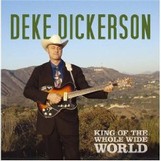
  • Deke Dickerson – King of the Whole Wide World

    Roots-rocker Dickerson has cranked out solo albums (along with his Dave & Deke Combo output prior to that, not to mention his recordings with Untamed Youth in his teen years) with such frequency and consistently high quality it’s almost annoying. He sings great, plays killer guitar, often supplies bass (and sometimes even drums and sax), and writes the best “new old hits” you’ve never heard. Plus, there’s invariably an oddball twist or two on every record, lest it ever appear that he’s taking himself too seriously.

    His latest, modestly named release (previous albums include Number One Hit Record, More Million Sellers, and Mister Entertainment begins with the titled track – a dead-on Jimmie Rodgers impersonation, complete with overdubbed 78 surface noise. But after that 38-second intro, Deke and his Ecco-Fonics blast into a rockin’ take on bluegrasser Jimmy Martin’s “Deep River,” with Dickerson achieving a typically round, popping tone.

    In other hands, an original like “I Can’t Wait To See You (Go)” might descend into novelty, but not so with Deke. No, he saves that for the next tune, “Misshapen Hillbilly Gal” – in the grand tradition of Merle Travis’ “I Like My Chicken Fryin’ Size,” and featuring “Crazy Joe” Tritschler trading guitar licks with J.W. Wakefield’s steel, along with guitarist Rusty Blake’s “takeoff” solo.

    Dickerson’s best quality, perhaps, is his ability to nail sounds and styles from 50 years ago without sounding like a museum piece. That said, his cover of Jerry Lee Lewis’ obscure “Put Me Down” (with, of course, Carl “Sonny” Leyland on piano-pounding) could be snuck into a mix tape of the Killer leaving diehard fans none the wiser.

    Most of the album was recorded at Deke’s own Ecco-Fonic Studios, but “Do You Think Of Me” was cut in Austin, featuring Dave Biller on pedal steel and Southern Culture On The Skids’ Mary Huff on higher-than-high vocal effects.

    Meanwhile, the instrumental “Double-Clutchin’” features the twin (and triplet, and maybe quadruplet) guitars of Deke and Crazy Joe, with some help from the oversized tube mixer that was built for Lawrence Welk guitarist Buddy Merrill and now belongs to Dickerson – the one guy who can do justice to such a piece of history.


    This article originally appeared in VG‘s June. ’08 issue. All copyrights are by the author and Vintage Guitar magazine. Unauthorized replication or use is strictly prohibited.
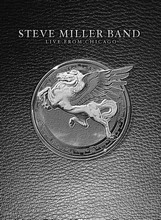

  • Steve Miller Band – Live From Chicago

    Producer/director Daniel E. Catullo has helmed DVD presentations from Godsmack, Rush, and the Dave Matthews Band. On this set (CD and two high-def DVDs in 5.1 surround) he utilizes that experience and state-of-the-art technology to present the five-man Steve Miller Band in footage from a 2007 show at Chicago’s Ravina festival.

    With 17 cameras catching every angle of the performance, Catullo keeps superfluous cuts showing the audience to a minimum, focusing on the action onstage. The result is a feeling of being right there with Miller and his impressive ensemble. Particularly gratifying are the closeups of players’ hands – especially Miller and guitarist Kenny Lee Lewis – during their solos. This savvy attention separates Catullo from most television directors who, after 50 or more years of rock and roll being broadcast on TV, still feel the action stops when the singer isn’t singing.

    Miller is something to see; of course, someone who had Les Paul as a godfather and T-Bone Walker as a frequent visitor to the family home was almost certain to grow up to be a pretty good guitar player. Fans of Miller from the blues/psychedelia music he made before his sharp career turn with 1973’s The Joker won’t be surprised by the results of that fortunate nurturing. But many who know Miller mostly from The Joker and the monster hits that followed it, or who were put off by their endless airplay in the 1970s and ’80s, have a treat in store. Sure, those chord-driven/hook-laden tunes had quite a shelf-life. But Miller doesn’t play them as obligations to be met; grudgingly ground out for those whose entertainment dollars helped finance the tantalizing array of vintage Telecasters, custom Bolins, and other enviably fine guitars he employs in concert. The show is heavy on songs from two of his biggest albums – 1976’s Fly Like An Eagle and ’77’s Book Of Dreams – and Miller plays his hits with good-natured enthusiasm; using them as launching points for spectacular interplay between himself and Lewis, who has been working with him onstage and off since the early ’80s. Miller even updates the show opener, “Fly Like An Eagle,” with a brief, spirited rap from keyboardist Joseph Wooten, whose interplay with the rest of the band serves as a binding thread.

    The CD contains 12 cuts culled from the concert. DVD disc two contains credits, a photo gallery, and two videos of Miller and San Francisco-based journalist Joel Selvin in a motor tour of Miller’s adopted hometown of Chicago. In them, Miller tells of being a young player benefiting from the serendipity of being able to jam with and learn from the likes of Muddy Waters, Howling Wolf, Paul Butterfield, and other icons. The stories are worth hearing. But more of the great concert footage would have been a definite plus.


    This article originally appeared in VG‘s July. ’08 issue. All copyrights are by the author and Vintage Guitar magazine. Unauthorized replication or use is strictly prohibited.


  • Amy Lennard – I Need To Love

    Amy Lennard writes with the declarative clarity and unvarnished eloquence of a musical Stephen Crane. But don’t let the literary comparison mislead, she’s no smarty-pants poseur, no distaff Beck. Lennard, a native New Yorker, is a straight shooter. Her country-flavored “singer/songwriter rock” has crackling energy and a city girl’s savvy; not unmarked by the real world, she’s not intimidated, either. She knows what’s up. “There’s a world of things I could change if I wanted to. But I can’t change you,” she sings in “I Can’t Change You,” one of several songs on I Need To Love that features Oz Noy on electric guitar. The stylistically wideranging Noy knows when and what elements to grab from his comprehensive, eclectic bag of resources, managing to stand out evening Lennard’s forceful presence.

    Lennard produced this disc and, like Noy, sees the big picture. She hits the right balance without gimmickry, assembling all parts to work in service to the songs and surrounds herself with an outstanding crew. Craig Bennelli and Josh Caban take up the slack when Noy isn’t on guitar. Tony Tino, Shawn Pelton, and Bennelli handle the tricky job of making drums an organic part of what is basically a folk ensemble. But mostly, Lennard rightly relies on her unerring musical sense and insightful songwriting, her romantic realism. And she has this stunning debut to show how well that works.

    This article originally appeared in VG‘s Nov. ’08 issue. All copyrights are by the author and Vintage Guitar magazine. Unauthorized replication or use is strictly prohibited.

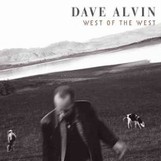
  • Dave Alvin – West of the West

    Dave Alvin is one of America’s best songwriters, and as such runs the risk of alienating casual fans when he does an album of covers. But then again, maybe not…

    The idea with his newest disc, West of the West, is to pay tribute to songwriters from the West Coast, where Alvin grew up. That means is you get stuff like “California Bloodlines” from John Stewart, with its gorgeous changes and nice, melodic lead guitar from producer/string-wizard Greg Leisz blending nicely with Alvin’s acoustic. A bluesy, and very menacing version of Jackson Browne’s “Redneck Friend” features a fine vocal and stinging leads from Alvin. “Down On the Riverbed,” by his buddies in Los Lobos, gets a folk turn with fine banjo.

    Alvin pulls out a wah pedal to highlight Tom Waits’ “Blind Love,” and grand treatments are applied to tunes by Jerry Garcia and Robert Hunter, John Fogerty, Merle Haggard, Richard Berry. And the surprise highlight is a stunning version of Brian Wilson’s “Surfer Girl.” It’s laid back and sparse, with marvelous harmony vocals from the Calvanes.

    The record does on occasion sound like someone treading water to his next effort, but the effort nonetheless is valiant, and Alvin never fails to sound soulful.

    The Great American Music Galaxy is a CD that Alvin originally sold at concerts. Alvin and his band deliver live on great cuts ranging from old Blasters standards to new stuff. Dave and Chris Miller handle the guitar work, and when they stretch out, it’s a joy to hear.

    These two records show Alvin at the top of the heap amongst those who record what he once referred to in song as “American Music.”

    This article originally appeared in VG‘s Oct. ’06 issue. All copyrights are by the author and Vintage Guitar magazine. Unauthorized replication or use is strictly prohibited.

  • Michael Burks – Iron Man

    Michael “Iron Man” Burks isn’t the first or last talented musician to have to work a straight gig for most of his adult life, delaying the doing of what he was obviously born to do.

    Burk’s nickname is appropriate for someone who stuck to his guns for so long. It would also fit his father, who schooled young Michael in the blues between dreary workdays in Milwaukee’s steel mills and refineries and nights playing bass in that city’s blues clubs; sometimes backing the likes of Aleck “Rice” Miller (a.k.a. Sonny Boy Williamson II). An injury forced the elder Burks to leave the factories and return the family to Arkansas, where he and his sons built and ran a popular 300-seat juke joint where Michael led the house band. Burks was 37 before he was able to hit the road in ’94 and begin wowing club crowds beyond tiny Camden, Arkansas.

    Wielding a scorching Flying V, Michael Burks mines territory explored by Freddie King and 1960s British blues/rock bands like Savoy Brown and Free; his steady-churning cover of Free’s “Fire And Water” – co-written by Burk’s spiritual kinsman, guitarist Paul Kossoff – shows how well he does. Bearing a vocal resemblance to another King – fellow Flying V player Albert – Burks has hit his comfort zone as writer and recording artist on this third album for Alligator. Having his longtime road band record with him for the first time no doubt helped. Iron Man comes from a player who is not just good but working to be better.

    This article originally appeared in VG‘s Jul. ’08 issue. All copyrights are by the author and Vintage Guitar magazine. Unauthorized replication or use is strictly prohibited.

  • October 2009

    FEATURES

    In Detail
    The Gretsch 1955-’61 White Walcon
    When it came to fancy electric guitars in the ’50s, Gibson and its Super 400 were ensconced as the undisputed King of the Hill. Through the years, though, others did pose the occasional challenge. This hotrod designed by Gretsch and Jimmie Webster is one example. By Ward Meeker

    Rick Derringer
    Six-String Knight
    His latest musical offering is an amazingly varied album highlighted by top-notch playing. And it reflects his attitude – confident moving forward and comfortable looking back. By John Heidt

    George Fullerton (1923-2009)
    Guitar Icon
    In his decades-long association with Leo Fender, he helped design the Telecaster, Stratocaster, and Precision Bass, thus ensuring his place in history. By Willie G. Moseley

    The Montgomery Ward 55 JDR 8437
    Another of the creative alternatives from the days before the cement had dried in the template for “the guitar amplifier,” this head-turner is known variously as the Danelectro Commando, Ward’s Airline GDR-8518A, or as you see it here. By Dave Hunter

    The Stromberg G-5
    In the big-band era of the late ’30s and ’40s, Stromberg represented the ultimate instrument – in size, at least. But this smaller G-5 from the ’50s may be equally important, not only in Stromberg history, but the overall history of the guitar. By George Gruhn and Walter Carter

    The España 6/12 Doubleneck
    It’s not clear when the first doubleneck guitars were made, but more is always better, right? That’s the premise behind this remarkable instrument from circa 1970. By Michael Wright

    Matching Mojo
    Matching guitars and basses always have an extra “cool” factor, but G&L’s original SB-1 bass and SC-3 have interesting similarities beyond their looks. By Willie G. Moseley

    DEPARTMENTS

    Vintage Guitar Price Guide

    Builder Profile
    Schroeder Guitars

    Upcoming Events

    Vintage Guitar Classified Ads

    Dealer Directory

    Readers Gallery

    FIRST FRET

    News and Notes
    James Burton Festival, Fender HoF, Guitar Club International, Brent Mason, Cheap Trick, In Memoriam, more!

    Ian hunter
    New Music and a Mott Reunion
    By Willie G. Moseley

    Otis Taylor
    Not-So-Silly Love Songs
    By John Heidt

    Ask Zac
    By Zac Childs

    Michael Schenker
    Acoustic Album, Electric Gear
    By Pete Prown

    Woodstock Turns 40
    Twenty-Some Hours of Peace & Music
    By Dan Forte

    Thriller
    The Guitarists of Michael Jackson
    By Pete Prown

    Drake Levin
    The Good Fight
    By Willie G. Moseley

    COLUMNS

    The (Way) Back Beat
    Burns, Late ’60s: Baldwin and Decline
    By Peter S. Kohman

    Q&A With George Gruhn

    Fretprints
    Michael Schenker, The UFO Years
    By Wolf Marshall

    Guitars With guts
    Mandolin Orchest
    1904 José Ramírez I
    By R.E. Bruné

    “401K” Guitars
    Mandolin Orchestra
    By Gil Hembree

    Acousticville
    Wedding-Bell Blues
    By Steven Stone

    TECH

    Talkin’ Amps With…
    Andy Brauer: Sleeper Amps, Part 2
    By David Jung

    DAn’s Guitar Rx
    Something Old, Something New
    By Dan Erlewine

    Shop of Hard Knocks
    Top-Tier Tech Tricks
    By Will Kelly

    REVIEWS

    The VG Hit List
    CD, DVD, and Book Reviews: Richard Thompson, Rick Derringer, Little Richard, Wilco, Tennesse Bo Diddley, Robert Bradley, By The Time We Got To Woodstock, more!

    Check This Action
    An American Institution
    By Dan Forte

    Vintage Guitar Gear Reviews
    Carr Raleigh, Godin Kingpin 90, Fluxtone, Leslie G37, J.L. Smith electric mandolin, Peavey Sensation 20, Redentore Santissimo, Digitech Timebender

    Gearin’ Up!
    The latest cool new stuff!

  • Jeff Barone – Open Up

    What happens when a classical guitar player goes jazz? If it’s Jeff Barone, the answer is he brings a classical sensibility to the jazz and creates one of the most listenable and accessible CDs of this decade.

    There’s no real secret here. Barone surrounds himself with a cream-of-the-crop list of studio vets who have played with the likes of Maynard Ferguson, Blood, Sweat & Tears, Herb Ellis, and Herbie Hancock. Then, he writes fine original compositions and mixes tasteful covers. Most of all, though, he brings a startling, effortless guitar style.

    While much jazz is a little busy, the tracks here offer instrumentation that is complex, yet easy on the ears – melodic rather than fast notes, grooving and tasteful. Some of the best tunes are Barone’s originals that show a maturity that belies his age and experience. Of course, an education at the Manhattan School of Music (and the city’s clubs and bars!) doesn’t hurt. This is a guitarist on the rise.

    This article originally appeared in VG‘s Sept. ’08 issue. All copyrights are by the author and Vintage Guitar magazine. Unauthorized replication or use is strictly prohibited.

    width=”425″ height=”344″>