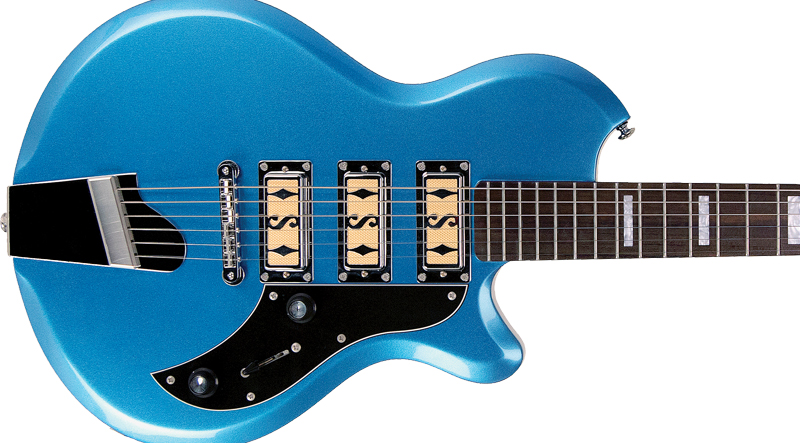
Supro’s vintage Ozark guitar is famed as Jimi Hendrix’s first axe. According to legend, his father bought him an off-white ’57 Model 1560S in 1959 from Seattle’s Myers Music for $89. It doesn’t get much more illustrious than that.
Fast-forward half a century and change, and the resurrected Supro company – highly regarded for its reimagined reissue amps – launches a new solid-body electric line based on the Ozark.
Today’s Supro labels this their Island Series, and the three guitars that comprise it are modeled on the ’62 Ozark; the base single-pickup Jamesport, the two-pickup Westbury, and the full-bore, triple-pickup, top-of-the-line Hampton.
Let’s get things straight right from the start: these are not reissues. The Hampton and siblings are billed as both “a 21st-century update” and “high-performance adaption.” In other words, the best of the old blended with smart modern innovations.
The Hampton’s alder body features the Ozark’s original shape with smoothly beveled edges. The set-neck construction offers ideal ergonomics, with black satin finish for ultra-fast hand movement. The C-shape maple neck topped with rosewood 12″-radius fretboard boasts a scale stretching 25.5″. All in all, the Hampton’s a supremely comfortable guitar.
The strings are routed from an updated Wave tailpiece over a Tune-O-Matic bridge to Kluson-style tuners. These fixtures mark the Hampton as a pro-level instrument, albeit at a budget price.
Fine and dandy, but how about replicating the famous Ozark voice? We plugged the Hampton into a new 1×10 Supro Comet 1610RT to try it out.
The original Ozarks had a lowdown, gritty growl, thanks to the single-coil pickups designed by electrical engineer Ralph Keller for Valco in the early ’50s. The pickups not only featured broadband, versatile sound, but did their tricks with remarkably low background noise.
Today’s Supro worked with vintage pickup expert Ken Calvet to craft a modern take on that old sound. The new single-coil Gold Foil mini-humbucker-sized pickups are faithful reproductions of the original Keller pickups – but with some twists.
The bridge pickup is wound hotter than the others and deals out twang that never ends. Hit the strings hard when the selector’s in the bridge position and you’re instantly transported back to a sock hop circa 1960 and the glory days of rock and roll.
The middle pickup, meanwhile, is reverse wound, reverse polarity, fully canceling any hum in the second and fourth positions of the five-way selector switch. So not only do the pickups sound vintage cool, they also boast modern amenities, such as low noise and little buzz.
The Hampton’s voice covers a lot of bases. In the neck position, the sound is wonderfully fat, providing warm, even jazzy tones. Switching to the middle, the sound truly sparkles – and if you dig in and play hard, you can unearth a funky spank. Go to the bridge, and you get that never-ending twang.
The second and fourth positions offer more magic. Unreel compressed-sounding double-stops or 200-proof rock rhythm riffs that make it clear why Dan Auerbach of the Black Keys has long been a vintage Supro fan.
Built in Indonesia, the fit and finish of the Hampton and its siblings shows care.
With prices of original Ozarks climbing, the new Supro Island Series is an ideal old-meets-new axe with vintage looks and smart modern tech that makes it a great all-rounder for the home, studio, or gigging.
This article originally appeared in VG May 2017 issue. All copyrights are by the author and Vintage Guitar magazine. Unauthorized replication or use is strictly prohibited.
While guitarists have more platforms than ever when it’s time to showcase their music, rising above a sea of marketing-savvy musicians makes it difficult to gain recognition. Gustavo Assis-Brasil is an artist whose music deserves greater acknowledgment. His album, Chromatic Dialogues, is a refreshing vacation from rock and blues, offering a compelling sophistication, and erudite exploration of jazz guitar. His clever arrangements and composition blend jazz, prog, and classical concepts. We recently spoke with him to learn more.
What was your introduction to jazz?
Pat Metheny. Before that, I was into Vai and Malmsteen. Then a friend played me Metheny’s Secret Story, which is a live concert. I remember thinking, “What the hell is he doing?” For me it was like the connection between rock and jazz. For one or two years, I didn’t know what he was doing – I didn’t know modes, I didn’t know anything. When I was in college, I found out about modes.
Allan Holdsworth was the transition from shredding, because I was a rocker. For one entire year, I forced myself into Holdsworth. I remember the album – Atavachron. That was out of this world for me. There were guys like Wayne Krantz and Wes Montgomery, but my first jazz heroes were Metheny and Holdsworth.
Your undergraduate degree is in classical guitar.
I’m from Santa Maria, Brazil. They didn’t have an electric-guitar course, so I learned classical repertoire – Bach, Villa-Lobos, and Fernando Sor. I did this for five years. Then I spent a year studying so I could come to Berklee to learn jazz. When I was in Brazil I wasn’t playing Brazilian music, but I was surrounded by it.
Your compositions have a Brazilian sense of time. Do you think that’s subconscious?
It’s true. Santa Maria is in southern Brazil. It’s more Astor Piazzolla than Jobim. The music of southern Brazil is a natural part of me. Not so much samba or what you hear in Rio. Southern Brazil’s music is not for dancing. It’s music to be in front of a fireplace – more introspective. On Chromatic Dialogues, I wasn’t blocking anything. I let a lot of stuff happen. What is there is very natural.
How did the album come about?
The concept came into my head in a half an hour. I was taking a shower and all of a sudden I had the concept in my head. It was to have a quartet and have a conversation with the musicians. In-between the conversations, I would have actual songs. That’s why in the CD there’s dialogue. My idea was to have one piece of dialog between each song, but I just put everything together because I thought that was a better idea.
Some of the songs were old, but most of the album was this concept. For six months, I did pre-production and everything at home. I’m happy with the sound and the musical result. Usually, after I record something, a few years later I think, “Ah! Why did I do that?” (laughs)
You use a Fractal Audio Axe-Fxpreamp/modeler.
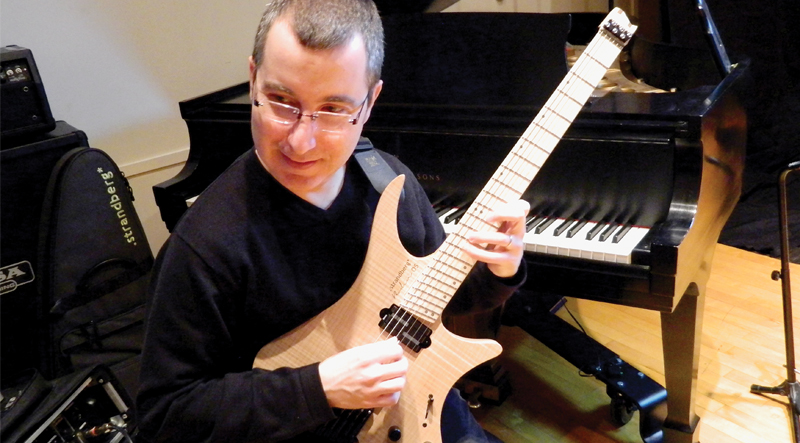
It took me a long time to program, but I had help. Javier Reyes and Tosin Abasi from Animals As Leaders sent me some patches. My main guitar is a production model Strandberg Bolden OS 6. It’s what I used for most of the tracks. I also used a Fender Eric Johnson Strat for the track “CC.” The Strandberg has a Seymour Duncan Jeff Beck pickup in the bridge and Seymour Duncan Jazz in the neck.
You managed to sound modern while upholding the jazz tradition.
One of the things I did was create a completely dry channel, and another completely wet. In the mix I used both, so it’s very organic-sounding. That was a big part of getting my tones. The Strandberg with the Axe-Fx was a very nice combination.
You’re also an author.
Yeah, I have three books – Hybrid Picking For Guitar, Single Note Permutations, and Hybrid Picking Lines And Licks. I never thought about writing a book until one of my students said, “You have so many handouts and you play with fingers and pick. Why don’t you write a book about it?” It’s me collecting things from my teaching. The hardest part was organizing the chapters. It’s exercises I wrote for myself. I play like a classical guitarist would normally play, but I have the advantage of having the pick, so I can do sweep picking and all those other things. I combine it into one thing without dropping my pick. The advantage is that I use my pinkie.
What’s next?
An album for solo guitar; I’m putting together new arrangements and compositions.
This article originally appeared in VG May 2017 issue. All copyrights are by the author and Vintage Guitar magazine. Unauthorized replication or use is strictly prohibited.
Jazz guitarist Ryan Carraher defines “vocturnal” as “a portmanteau of the words ‘nocturnal’ and ‘voyage.’ It’s a fitting title for his first album given that most of its songs were composed at night.
An intoxicating excursion through the harmonic undertow of contemporary jazz, it has a dark sophistication and melodic maturity that showcases the 23-year-old Berklee grad student. Thought jazz was dead? Not with Carraher so impressively carrying the torch.
You started in music as a rock guy. How did jazz find you?
Yeah, Van Halen was my big guitar hero. I took a bunch of lessons and was always interested in music, in general, not specific genres. During my junior year of high school I got into Allan Holdsworth. I never knew a guitar could sound that way; I don’t think I understood him fully when I was 12, but Holdsworth was the jazz gateway for me. From there, I got into all types of jazz, then other stuff followed when I was getting ready for Berklee. I never got into traditional jazz that much. I enjoy it, respect it, and play it a lot, but mainly, my listening diet is more modern, like Jonathan Kreisberg, Mike Moreno, and Kurt Rosenwinkel.
I’ve always been a music-theory nerd and always had a composer’s instinct. My main goal has always been to create new sounds. I’m trying to play what I hear. At Berklee, Alla Cohen inspired me so much to study composition. She really opened the door.
Many guitarists have strong ties to their influences, but you’ve been able to get beyond that at an early age.
I think about that a lot. People who cling to their influences… that’s how they were taught. Some teachers will put a player on a pedestal, and the student is taught to mimic that player. I never had the inclination to sound like anyone else; I was lucky enough to have an environment that echoed that inclination, and teachers that helpedalong the way.
A teacher I had at The School Of Rock, Mike Mariano, never told me I had to play exactly like Van Halen. He was always declaratively open about the possibilities of music. He never tried to force what he thought was musically correct on me. He let me grow naturally. It took a while to find a teacher at Berklee that had that same mentality, so I studied with David Tronzo. He’s amazing – blows my mind with every lesson. He’ll listen to you play and tell you things that inspire you, and put you on a correct path to let you grow as you’re meant to.
How did Vocturnal evolve while you were at Berklee?
It was written over a three-year period, sporadically, because I had a lot of class work. “Valantis” was the first song I wrote for the record, at the beginning of my sophomore year. As I grew as a musician, I was inspired by different sounds and directions, and I was constantly questioning myself. Since then, I’ve been able to accept what comes out.
Working with teachers like David Tronzo and Alla Cohen helped me grow as a composer. I was being exposed to all this information and different ways of thinking about music and I wanted to respond with my own music. I did a lot of experimenting with arrangements. They grew as I grew, so I thought the album would be a good way to cap off my Berklee career. It was released a few months before I graduated. It’s a coming of age story (laughs).
What’s your gear of choice?
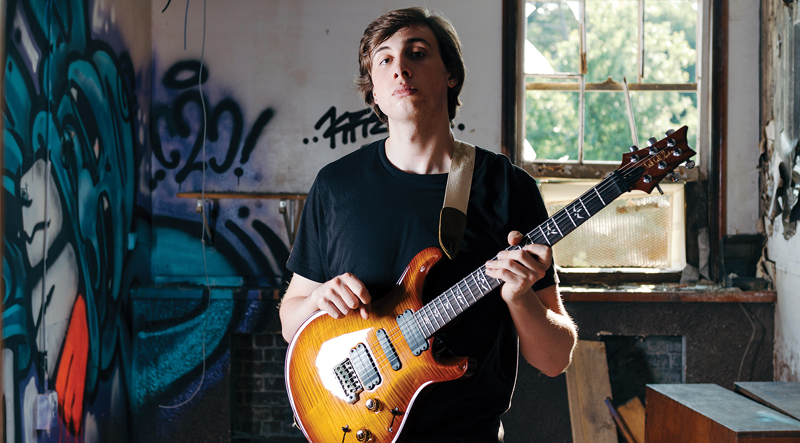
My main guitar is a Paul Reed Smith 513. It’s my child, at this point, and I used it for everything. For amps, I’m using a Fractal Audio Axe-Fx Ultra – the old, discontinued one. Live, I go direct through the mixing board. I use all the effects in the Axe-Fx and a Voodoo Lab Ground Control to control it. I also have an Electro-Harmonix POG2, which is my favorite pedal of all time. I use it on lead tones and chordal improv. There’s also an EarthQuaker Devices Rainbow Machine, which is another crazy pedal.
What are your plans for the near future?
I plan on continuing grad school while playing gigs. I’m working on a follow-up record; it’s a very big project and something I’ve wanted to do for a very long time. More on the modern/Avant side than Vocturnal. Hopefully, it will be done this year. I’m halfway through writing.
This article originally appeared in VG May 2017 issue. All copyrights are by the author and Vintage Guitar magazine. Unauthorized replication or use is strictly prohibited.
Born June 12, 1949, British bassist and front man John Wetton died of colon cancer on January 31 at the age of 67. In a career lasting more than four and a half decades, Wetton achieved many musical peaks, including chart success with Asia and fronting King Crimson during its most innovative period. In addition, he worked with the well-loved prog band U.K., as well as Roxy Music, Uriah Heep, Family, and Icon. His powerful, voice and muscular playing were hallmarks and, among the guitar aces with whom he performed are names like Steve Howe, Robert Fripp, Allan Holdsworth, Phil Manzanera, Steve Lukather, Mick Box, Scott Gorham, Pat Thrall, Guthrie Govan, and Alex Machacek.
For tone, Wetton’s massively fuzzed ’61 Fender Precision Bass was a critical part of the 1972-’74 King Crimson era, famously heard on “Starless,” “Lark’s Tongue in Aspic,” and “Red.” Many musicians point to his playing and tone in that era as being vastly influential. At the time, Wetton plugged his bass into an Italian-made Jen Double Sound Fuzz/Wah and his back line consisted of Hiwatt tube heads and Cerwin-Vega 4×12 cabs with EV speakers. In later years, he used basses by Zon, Gibson, and Fernandes.
The short-lived supergroup U.K. put Wetton on the map as a serious progger, featuring powerful melodies on “In the Dead of Night” and “Nevermore.” However it was 1982’s pop-infused Asia album that gave the bassist platinum success at last, thanks to a lineup with Steve Howe and Geoff Downes, from Yes, and drummer Carl Palmer of ELP. Hits like “Heat of the Moment” and “Only Time Will Tell” landed Wetton’s voice on radio and helped the LP go quadruple-platinum in the U.S. His good looks and understated stage presence only added to his reputation.
Asia’s follow-up, Alpha, was panned by critics, complicated by Wetton’s debilitating battle with alcohol. There were various Asia reformations over the years, some without him, and it wasn’t until the early 2000s that he became sober and relaunched his career. Wetton took part in several Asia and UK reunion tours, and the rocker’s renowned vocals remained in fine form.
Several years ago, word of the bassist’s cancer became public.
Hours after Wetton’s death, tributes began to flood in. “A legend and a friend – it was an honor to know him and work with him,” said guitarist Steve Lukather, while prog-guitar hero Steve Hackett added, “I am very sad at the loss of John, who was a special friend, a wonderful singer, and musician.”
“As a musician, he was both brave and innovative, with a voice that took the music of Asia to the top of the charts around the world,” said Carl Palmer. “John’s ability to triumph over alcohol abuse made him an inspiration to many who have also fought that battle. For those of us who worked with him, his valiant struggle against cancer was a further inspiration.”
This article originally appeared in VG May 2017 issue. All copyrights are by the author and Vintage Guitar magazine. Unauthorized replication or use is strictly prohibited.
“I wasn’t really a Coltrane fan, but when I heard Kind Of Blue I was like, ‘Hell, as long as it’s got soul.’”
For sacred-steel specialist Robert Randolph, it’s all about soul. After absorbing the philosophy of his church and using his talent to create a hybrid of uplifting secular music, Randolph has just released, Got Soul, with guests Darius Rucker, Snarky Puppy keyboardist Cory Henry, and R&B vocalist Anthony Hamilton. It’s an album full of incendiary pedal-steel assaults of sanctified exultation and intelligence.
Got Soul is more accessible than your past records.
We focused on sounding great and offering a universal message. The audience at my shows is all kinds of people – old, young, white, black, hippies, classic rock, and hard rock. That’s who we are, and that’s who I am. Eric Clapton and Carlos Santana told me, “As guitar players, we like to find songs we know we can kick ass on, so we can record it, make it great, and make it our own.” Clapton was telling me what he did on “I Shot The Sheriff,” Carlos about how he’d take old African music and make it his own. It started to sink in.
Your music always carries a strong sense of spirituality.
I come from the church. Collaborating with younger artists, they’ll say, “Why is this person’s song more famous than mine? Maybe I should do this, maybe I should try that…” instead of accepting who they are. For me it came full circle when I realized I’m the guy who’s supposed to bring the sense of spirituality, love, hope, and happiness to people through music – without being preachy.
I have a seven-year-old daughter, and I change the radio every second because I don’t want her singing those lyrics. I’ll always be known as a spiritual guy that gives people a sense of hope, and sound like a preacher, but not really. Someone who makes people want to be happy, be better, and do better. That’s who I’ll always be.
Describe how you’ve made the sound of sacred-steel your own thing.
We all have roots – where we come from, what we studied. If you look at all the guys who picked up an instrument and evolved, like Jimi Hendrix, he said, “I’m just playing the blues.” But people’d say, “You don’t sound like the blues. That’s something else.”
I’m trying to be like the older sacred-steel guys but there are other influences like Jimi, Stevie Ray Vaughan, and Muddy Waters but with different feels and scales. I’m a mix of all of that while also trying to play like the older sacred-steel guys – Calvin Cooke, Lorenzo Harrison, and Harry Nelson. If the world had known about them, they would have been stars. Part of it is that, musically, I keep trying different things.
Which amps and pedals are you using?
I use a Peavey Delta Blues and my Peavey signature Steel Amp One and Two; the Two is similar to the Delta Blues – 60 watts with a 15″ speaker. The One is a head, and it’s the loudest amp out there, which is how I get the low bass. It’s 500 watts.
My pedal board was made by Henretta Engineering. On the title song, “Got Soul,” and on “Lovesick,” you can hear their Moody Blue Reverb, which combines a few effects. There’s a lot of MXR Phase 90, which sounds great, and the wah is a Dunlop 535Q.
What’s next?
I’m trying to get Dave Grohl to produce my next record (laughs). It’ll probably be a power trio with me and Dave and a drummer. I’ve been writing in a bluesy-rock style with a dirty-gospel edge. I’ve got 12 songs ready to go!
This article originally appeared in VG May 2017 issue. All copyrights are by the author and Vintage Guitar magazine. Unauthorized replication or use is strictly prohibited.
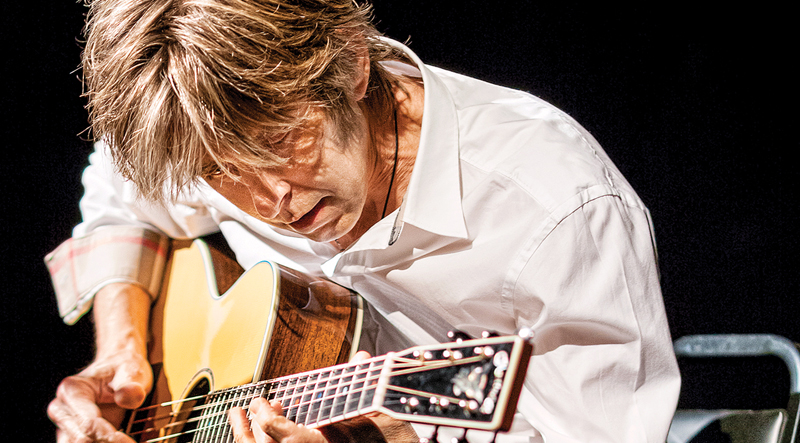
All photos by Max Crace. Johnson with his Maton CS Classic.
On Eric Johnson’s new – and first all-acoustic album – EJ, the guitarist takes a break from the intervallic inventions of his electric work and finds greater depth in his artistry, stripping away the non-essentials and exploring the purity of acoustic performance.
The compositions reveal an artist reaching for musical substance, humanity, and intimacy. On five tunes – “Wonder,” “Fatherly Downs,” “All Things You Are,” “Once Upon a Time in Texas,” and “Song for Irene” – he employs the 1980 Martin D-45 received as a gift from his late father. There are covers of Simon and Garfunkel’s “Mrs. Robinson” and “Scarborough Fair” – the latter highlighted by Johnson’s piano, and a nylon-string Ramirez is heard on the mellow instrumental “Serinidad.” “Wrapped in a Cloud” has Johnson accompanied by acoustic bass, cello, drums, and percussion, while a charming arrangement of Jimi Hendrix’s “One Rainy Wish” includes guitar and jazzy piano.
Known for a meticulous approach to making records, Johnson, unamplified and employing only a few microphones, relays a more-immediate feel thanks to being cut mostly live including a few tracks where he simultaneously played and sang.
You have a reputation for being a connoisseur of great electric-guitar playing, but you’re also a fan of Simon and Garfunkel. EJ includes covers of “Mrs. Robinson” and their version of “Scarborough Fair.”
A guy I work with who does road managing and sound for me sometimes also works with Art Garfunkel. He was out with Art and he said, “I work with this guy named Eric and he did an acoustic record. He did two Simon and Garfunkel songs.” Art looked at him and said, “Really? Why?” (laughs) He was kind of perplexed because he told him that I began it with a Simon and Garfunkel tune, and put another as the next to the last song. He was surprised (laughs).
I almost put three of their songs on it, but I didn’t want to be ridiculous. I could do the whole record as Simon & Garfunkel. I was thinking about putting “April Come She Will” or “Kathy’s Song” on there.
You could do more on another acoustic album…
Yes, and in fact I have 12 new acoustic pieces I’m planning on doing for Volume Two. I’ll start on it when I get back from this tour. I’ll probably do “April Come She Will.”
What made you want to record an acoustic album?
I’ve enjoyed folk and acoustic music since I was a kid; I got my first acoustic guitar and seriously started trying to play when I was 18, then got a bit of recognition on electric guitar. So that became what I did and I kept acoustic as part of my private life. It’s like getting a contract to be Andy of Mayberry and then you just go with it for 20 or 30 years. But at some point in the last few years, I thought I should do a better balance and include it for the public.
You have an idiosyncratic picking style with an acoustic guitar, which is really apparent on “Song For Irene.” Where does that influence come from?
On that tune, there’s some Chet Atkins and Merle Travis, but simpler. Most of that is like a James Taylor kind of thing – I’m a real fan of his playing. It’s so musical, with that groove. And it’s so dynamic, the way he lilts it with his voice. That kind of fingerpicking is more difficult than it sounds. Django, Paul Simon, Joni Mitchell, Andy McKee, Tommy Emmanuel, Doyle Dykes, and Doc Watson are great. John McLaughlin does beautiful things on acoustic.
If you listen to what Bob Dylan did – he was a pretty accomplished as a fingerpicker – he wasn’t going nuts, but he had a groove and he was playing the parts.
What is it about Paul Simon’s songwriting, in particular, that moves you?
When I was a kid, his songs were like chapters in my childhood. I remember how and where I was when those records came out, and they were killer songs – “For Emily, Whenever I May Find Her,” “Kathy’s Song…” I’ve always loved the sound of solo acoustic guitar – the early Joni Mitchell records, Song To A Seagull and Blue. Ladies Of The Canyon is, I think, one of the greatest pop records ever.
You made “Mrs. Robinson” all your own.
I was trying to think of something to open the record that was kind of a rocker, and that song came to mind.
Johnson live with his 1980 Martin D-45.
Is it harder to make an acoustic record because of the vulnerability and humanity that has to translate?
Absolutely. You don’t have the same latitude to go into a studio and piece it together. I have a different opinion about that now with electric music than I did. If you would have asked me three years ago, I would have said, “Yeah, lets record the bass drum, then the floor tom.” But I don’t subscribe to that. There’s dance music, electronica, and rap and all that where that works great, but what I try to do won’t turn out as good as if I performed it.
I think that’s true of any music for me, personally, as a directive of what I want to do in the future. Especially with a solo acoustic instrument, it’s immediately more demanding. You basically have to go in and just sing and play it live. You’re capturing an event and a feeling. It would be less apparent with multi-orchestrated electronic music.
It would be very apparent if I went into the studio and punched in a G chord and an A chord. It would be like that saying, “That was absolutely perfect but not very good at all.” I knew it would be challenging, because I had to practice a piece so I could go into the studio and perform it live.
You have to find the balance between technical perfection and a visceral performance.
Exactly. I like the fact that you don’t have a lot of options. You have to rise to the occasion to have that impact, have that feel, and have that emotive quality. You don’t have the loopholes. The loopholes are more blatantly there if you choose to have them and thereby you lessen the quality of what you’re doing. I like that. You have to do the best you can to make it work.
You chose to record yourself playing and singing at the same time.
I noticed that if I got into the right vibe and the right place, it kind of flowed. It started having this magic. It’s really a matter of you becoming a spectator. You become a part of the observer. Then this magic can happen. Anytime I’m thinking, “Look what I’m doing. I’m playing this acoustic part, I’m singing these songs,” the quality is not there.
That was the first thing where you have to go behind the curtain and look at all the constituents of how you feel and what you’re trying to say. Are you in a place emotionally or mentally where you are really clear with this? Is your intention to really be focused and make it happen and exemplify that emotion?
If you listen to the early Joni Mitchell and James Taylor stuff, your voice has to be balanced, decibel-wise, to the loudness of the guitar. My voice is too loud for my guitar. We had all sorts of trouble with the vocal mic or the guitar not bleeding into the vocal mic. I ended up almost turning the vocal mic off and there was plenty of vocal in the guitar mic.
I’m not accomplished enough as a singer to know how to turn down my voice, but a lot of singers, when they’re well-trained, know how to get the most use out of their air so they don’t have to sing as loud. They can balance it. If they’re playing an instrument at the same time, they can balance it together. There’s a negotiation of balance of the volume between your voice and your instrument. That was pretty tricky for me.
“…it’s no mystery why the electric guitar has become a bit archaic. We really squeezed the rag to the last drop…”
What did you record with?
I used a 1980 Martin D-45 and had the most luck with smaller diaphragm mics because they’re not as boomy. I used a Neumann KM56, which is a great mic for acoustic guitars. I also used a Maton guitar on one tune, an old Silvertone acoustic, and a Ramirez nylon-string on “Serinidad.”
Your duet with Doyle Dykes is a highlight.
He and I have been friends for years. I played on a couple of his tracks, and when I was doing this record I thought it’d be cool to have him on it. He’s such a fun player – he can do Chet Atkins and Merle Travis styles so well. “The World Is Waiting For The Sunrise” is like Les Paul and Mary Ford from 1951.
You play great piano on the record.
I played piano before I played guitar. I never became a super-accomplished pianist, but I can play pretty well and I’ve kept it up over the years. I decided to do more now because it’s close to my heart. I really enjoy it.
There’s all sorts of piano tunes that I have that I’ve never recorded and never done live. It’s one of the aspects of “me.” Three or four years ago, I started listening to my records and thought, “Where can I go from here?” I want to perform stuff more organically in the studio, so I can get a more-honest, sincere vibe.
I think there’s a way to make my music more profound or more interesting – for lack of a better word, make it better. It’s not “play louder” or “play faster” –if I’m going to do that, I’ll just keep rocking out on electric guitar – it’s to be more sincere and musical, more honest to what you are, what turns you on, and what you’re feeling.
I also feel it’s more honest of me to show all the sides that interest me, where my heart is, in the same way of me making more performance-oriented records. I need to be more honest about all the music that I’d like to do, instead of just sectionalizing it into only guitar music or even into guitar/shredding music.
It sounds like you’re exploring things that attracted you to music in the first place. You’re not distracted by gear and techniques that don’t serve the musicality.
It’s almost like a roller coaster. Sometimes it’s more fun to be on than it is to watch somebody on the roller coaster. I see things where I’m doing a solo on electric guitar, and two minutes into the song I’m going, “Great. Wrap it up, Eric.” But five minutes later, I’m still having a lot of fun watching me play. “We don’t mind you soloing, but Jesus! You’ve said what you needed to say! Get to the last chorus!” (laughs)
It’s an interesting thing where you check-and-balance your perspective as the initiator, the listener, the spectator, or the doer. You realize that it’s no mystery why the electric guitar has become a bit archaic. We really squeezed the rag to the last drop, because we’re so intoxicated with that doer aspect instead of the spectator. But it’s all good; it’s just a matter of tempering it.
What’s next for you?
I’m going to Europe, then coming back to tour America next year. Then I’ll get on this Volume Two acoustic record and “April Come She Will.”
This article originally appeared in VG January 2017 issue. All copyrights are by the author and Vintage Guitar magazine. Unauthorized replication or use is strictly prohibited.
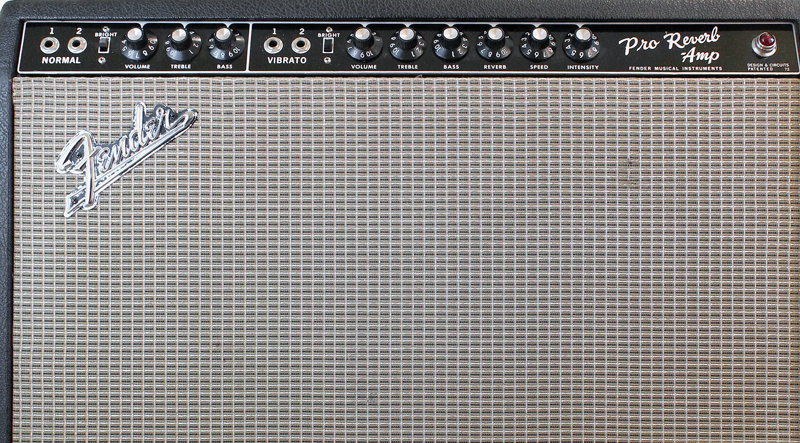
Amp courtesy of Steve Cole. Photos: John Maysenhoelder. • Preamp tubes: three 7025 (12AX7 equivalent), one 12AX7, two 12AT7 • Output tubes: two 6L6GC • Rectifier: GZ34 • Controls: Normal channel: Volume, Treble, Bass; Vibrato channel: Volume, Treble, Bass, Reverb, Speed, Intensity; Bright switches on both channels • Speaker: Originally, two Oxford 12T6 • Output: approximately 35 watts RMS
Fender’s “blackface” amplifiers made from late 1963 through ’67 have earned enduring “classic amp” status. Simultaneously collectible, they’re desired for their rich vintage tones and renowned as everyday workhorses that cover several sonic bases better than many bells-and-whistles amps manufactured today.
We tend also to ascribe pre-CBS goodness to blackface amps en masse, even in the knowledge that amps produced in ’65 and after were manufactured under the watchful eye of CBS. That’s as it should be, since most do retain full pre-CBS DNA because Fender was slow to change circuits, and several retained ’64-era specs into the silverface years of ’68 and ’69. The Pro Reverb, on the other hand, was never a pre-CBS amp; it arrived as a new model in ’65, and its 2×12″ cab signaled the death of the long-running 1×15″ Pro combo of the tweed, brownface, and early blackface eras.
So, should we treat it as some kind of ugly stepchild, unworthy of the admiration heaped on others of its ilk? Of course not! The Pro Reverb might have arrived after CBS had taken the reins, but its AA165 circuit was lifted directly from resolutely pre-CBS amps like the Vibrolux Reverb and Deluxe Reverb. Not too big or too small, neither over- nor under-powered, and with enough headroom for most modern gigs yet able to break up sweetly when pushed (shy of ear-splitting volumes), the Pro Reverb might be the best example of the versatile, utilitarian blackface combo.
The Deluxe Reverb has always been a hugely popular club amp, the Princeton Reverb likewise for smaller clubs and sessions. Stepping from 6V6s to 6L6s without adding a ton in size or weight, the Vibrolux Reverb 2×10″ has been declared by many the best all-round amp ever created by Fender. Well, we might posit that if you can only own one blackface combo and need to cover a diversity of gigs, the Pro Reverb makes a better choice. Its 2×12″ configuration gives it a deeper voice than the Vibrolux Reverb, yet it isn’t much more of a load. It has more headroom than the Princeton or Deluxe, yet its apparent volume isn’t so offensively beyond that of the larger 6V6-er – at least once you get it up into the sweet spot. The funny thing is, too, that a good Pro Reverb can often be had for significantly less cash on the vintage market than any of these other three, when considering amps of the same year and in similar condition.
The Utah speaker (right) dates from 1969 and briefly replaced the original Oxfords.
Its few detractors point to the undersized output transformer (also found in the Vibrolux Reverb), which essentially makes it a 35-watter rather than 45 or 50. The smaller OT means a lighter, softer low-end response, as well as an earlier breakup. If you want firmer and bolder, move to a Super Reverb or even a Twin Reverb. Over the years, some have loaded Pro Reverbs with larger OTs, but a big part of the Pro Reverb’s charm stems from its easier/earlier onset of tube distortion and the full 6L6 tone without 50 watts of pummeling sound-pressure levels. It seems a shame to ditch a vintage OT (and its oft-desirable characteristics ) to make one of these into something else.
All that aside, the bulk of the Pro Reverb’s appeal aligns perfectly with any good reverb-and tremolo-equipped blackface combo. For many, it simply feels like home. Archetypal clean machines with a clarity and bounce that lays waste to the wannabe “rhythm channels” of so many lauded channel-switching creations. Yet crank them up a little and you’re rewarded with toothsome bite and sting that really makes blues and rock-and-roll leads sing.
The “blackface sound” comes from several ingredients that show how these were very different from the tweed models Fender was producing five years before. In that span – 1959/’60 to ’63/’64 – Fender redesigned the preamp and EQ stages in its amp, and while alterations were also introduced elsewhere, they entirely changed the sound and feel of otherwise similarly spec’d models. Tweed amps routed signal straight from the first preamp tube to a Volume control then on to the cathode-follower stage in a second tube that preceded the tone controls. Blackface amps, on the other hand, went from the first tube stage, through the tone controls, and finally to the channel’s Volume control before hitting a second tube stage. Add changes in coupling-capacitor values along the way, as well as different voltage levels at many points within the preamps (blackface preamps, more often than not, running on higher plate voltages), and you’ve got very different sound and feel. Where the tweeds were midrangey, chewy, and a little forgiving in the pick attack, with warmer lows and grittier highs, the blackfaces were scooped and precise, with firmly twangy lows and sparklingly cutting highs.
Yeah, these are just a lot of words, but plug into examples of one after the other and you’ll get the picture.
This particular ’66 Pro Reverb is a beautiful example. It’s had a long and active life, and is still out there and kicking. But it’s also in impressively clean and original condition. Most stock components have been retained, including the sweet blue Ajax “molded” signal caps that players and collectors like to see, with only a few power-supply resistors and electrolytic caps having been replaced to keep it functional. Its factory speakers were long ago removed. From the factory it had Oxford 12T6s (which proved unpopular), while a few were given Jensen C12Ns; if this was one of those, their absence is a real loss. The only other change of note is a 5R4 rectifier installed by the current owner in place of the GZ34 to bring plate voltages back down to period-correct levels – important for retaining tone and response.
Now loaded with a reissue Jensen C12Q and, for kicks, one of Celestion’s new Neo Creambacks, this Pro Reverb is a thing of sonic beauty. Plug in a good Tele, Strat, Les Paul, or ES-335, get the tremolo throbbing and dial the reverb until it’s just short of splashing, and there are fewer more-compelling sounds in vintage-amp land.
The chassis has the blue signal caps purists like to see, with only a few replaced power resistors and filter capacitors to keep the amp alive.
This article originally appeared in VG January 2017 issue. All copyrights are by the author and Vintage Guitar magazine. Unauthorized replication or use is strictly prohibited.
Graham Clise is one of the most-heralded underground rock guitarists of the past 15 years. A mashup of Chuck Berry, BOC’s Buck Dharma, and Black Flag’s Greg Ginn, his style is unique and relentless.
Clise plays in a half-dozen groups, but his main gig is with scuzz rockers Lecherous Gaze, which will release its new album, One Fifteen, in January.
What gear did you use on One Fifteen?
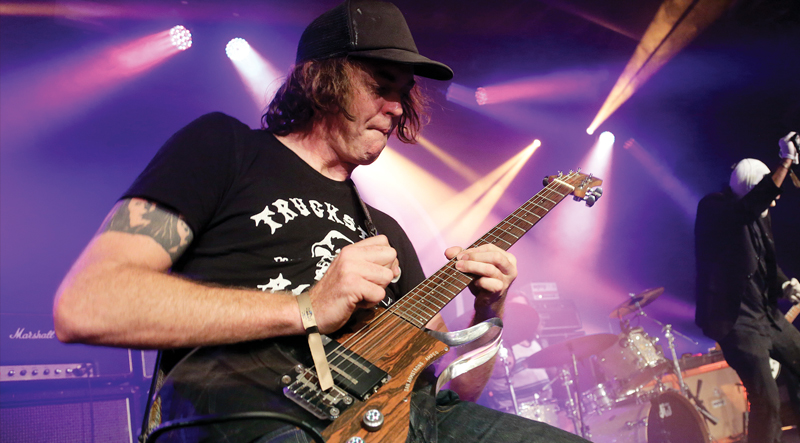
For the majority of the guitar tracks I used a 1970 Dan Armstrong guitar with stock Rock Treble pickup, which is a low-output single-coil. My main rhythm amp was a’68 200-watt Marshall Major. That amp sounds really great and is horrifyingly loud. They’ve got this clarity I haven’t found in other Marshall amps. But it’s super-unreliable – constantly blowing up on me, which is highly annoying, especially at a gig. But it sounds awesome, so I think it’s worth the hassle. For the leads I used a ’69 100-watt Marshall Super Bass into a cab with 65-watt Celestions, which gave me a really clean, clear sound but still kept it aggressive, which for me is always a hard balance to find in the studio.
How about pedals?
I went with an Analog Man Beano Boost treble booster for the lead tones and a King of Tone boost for the rhythm.
What’s your live rig?
The Dan Armstrong, the Marshall Major and Super Bass, a ’73 Marshall Super Lead, and three cabs with 65-watt speakers. I’ve got a King of Tone pedal going to two of the amps that are on at all times for my basic rhythm channel. When the lead loop is engaged in my pedalboard, it first hits a treble booster, then into a delay set to a slight slap-back, then into a Zvex Super Hard On pedal for added headroom, and finally out to the third amp that comes on when I step on a switching system. So, essentially it’s like having a 100-watt half-stack as a boost pedal. Having that much stage volume is really a sound guy’s worst nightmare.
The band’s sound has expanded with One Fifteen. “Blind Swordsman” and its opening acoustic guitar riff is a good example.
Our singer, Zaryan, had this sort of Ennio Morricone/Spaghetti-Western-sounding guitar lick that I really liked. It set the vibe for the whole song and the other parts just came together pretty effortlessly. We spent a lot of time layering different acoustic and electric guitar parts. It sounds pretty different from a lot of our older songs just because we were messing around with lots of different tones and dynamics this time. We even have a little synth stuff on this record. There’s a lot more experimenting. It’s less typical meat-and potatoes rock.
Your style is usually described as classic-rock-meets-hardcore. Do you think that’s accurate?
Yeah. I’ve always been super-obsessed with ’60s and ’70s rock and late-’70s punk, especially the English stuff. When my old band first started touring, playing all these brutal basements and squats all across the states and Europe, we’d attempt to play like sped-up Blue Oyster Cult and Hendrix-type riffs to all these confused and annoyed punks. It was really offensive to a lot of people! But I think things have changed a lot. These days, kids are way more open-minded and into a wider selection of music. The internet has made it much easier for younger people to get hip to cool old bands.
Which guitarists have influenced you the most?
As a kid, I saw Bl’ast play and was blown away by how intense they were. Mike Neider’s playing instantly inspired me. My other big influences are Larry Wallace and Paul Rudolph of the Pink Fairies. To me, that’s the perfect band. They had that ’60s west coast psychedelic sound, only through a UK filter and really nasty-sounding.
Also, for the past five-plus years, I’ve been the guitar tech for J Mascis, and he’s taught me so much. Just getting to pick his brain and geek out on gear over the course of all the tours has vastly improved my tone. I’ve really gained a lot of knowledge from hanging out and working with him.
Lecherous Gaze has played some exotic places. Do you have a favorite?
Australia is our favorite place to tour. We all really love that country and the two times we’ve gone have been a blast. In early 2016, we did a really fun southeast Asian tour of Singapore, Malaysia, and Indonesia.
Any broken-guitar horror stories?
Luckily, not yet! I make sure to never check my guitar when flying. If you get a small enough case, you can take your guitar on the plane, or at the very least check it at the gate, which is a much safer way to go.
This article originally appeared in VG January 2017 issue. All copyrights are by the author and Vintage Guitar magazine. Unauthorized replication or use is strictly prohibited.
Call it twang with attitude. Ruby Dee and the Snakehandlers’ new album, Little Black Heart, is a heady mix of rockabilly, country, swing, and jump blues – all propelled by the stellar guitar picking of Jorge Harada.
The Austin-based four-piece launched in 2002, but its latest may also be their masterpiece – at least so far.
“We’re definitely not what most folks call traditional anything – whether that’s country or rockabilly or Western swing,” said band leader Ruby Dee Philippa. “We do riff off of all those traditional sounds, though, mixing a bit of this with a swinging rock-and-roll beat. It all depends on what the song tells me it wants to be.”
Their sound also moves smoothly between genres, powered by upright bass, drums, and Harada’s arsenal of Gretsch archtops and Teles. But the band isn’t hung up on a vintage vibe, explains Philippa.
“We don’t go the full distance with low-fi electronics that sound period-specific. We turn it on and crank it up, so there’s a definite nod to all the classic sounds combined with a more rockin’, in-your-face crispness I associate with modern sounds.”
And she applauds Harada’s blend of style.
“He’d rather play with someone who has half the chops but twice the great attitude. I’m lucky in that I get to play with someone who has that mojo inside and out.”
In a recent talk with VG, Harada shared some of that mojo.
What are your major inspirations?
I think just about everything I’ve ever listened to has influenced me in some way. For guitar playing – Billy Zoom, Tony Gilkyson, and Dave Alvin during their tenures in X. The Beat Farmers and the Clash are big faves. It was through these bands that I discovered Gene Vincent and Eddie Cochran, Sun Records, rockabilly, country blues, and traditional country-western. I love Pete Anderson’s playing with Dwight Yoakam.
How did the album’s lead-off song, “Not For Long,” come together?
It was pretty organic. Ruby presented the lyrics and sang them to me with the melody line. It’s one of those songs where the entire thing is hinged together on a riff, playing along with the vocal. We tried different key signatures until we got one that sounded right in terms of the structure and her singing range, and we were off to the races! She really wanted a New Orleans rock-and-roll feel for the song. The sax on the recording really makes it.
Ditto for the title track?
“Little Black Heart” required more finesse. Ruby had the nucleus verse and chorus written; we recorded it onto the laptop so I could work on it. Eventually, I wrote a bridge that was a mini-song that split the song in two; Ruby put some lyrics on it, and it was a leadoff for the solo, which mimics the melody line. Dave Biller played some wonderful textures on the steel guitar that added depth.
What six-strings did you employ?
Most rhythm tracks were recorded live with the drums and bass using a custom-built Tele-style guitar with DiMarzio Twang Kings or a Gretsch G6120-DSW with TV Jones T-Armond pickups. Almost all the lead tracks were recorded with a Gretsch G6119 or the G6120-DSW.
On “I See Green,” I used a Fender ’50s Classic with Lindy Fralin Stock Tele pickups and a Collins B-Bender. On “Camille,” the lead is a ’90s Danelectro U2 baritone reissue.
There’s also a ’80s Telecaster Custom with a Bigsby for different textures throughout the record. Since it has a Gibson ABR-1 bridge that doesn’t pivot, it has a meatier, darker tone than your average Tele.
Most of the acoustic tracks were done with a Martin D16RGT or D28.
And what about amplification?
We kept it pretty simple. I ran the guitar into the first input on the Normal channel of a Fender Deluxe Reverb reissue; the second input was connected to an Alamo with a 15″ speaker – can’t recall the amp model, but it sounded huge!
Any effects?
The signal between the guitar and the amp was processed through a Barber Gain Changer, Xotic RC Booster, Catalinbread Belle Epoch Tape Delay pedal, and Strymon Flint. I primarily used the RC Booster to “wake up” the amp. I play fairly clean: I mostly hang out in the “right after clean right before distorted” zone, which seems to record real well, has clarity, and doesn’t clash with the vocals. I always have some kind of low-gain overdrive engaged and vary the picking attack or roll off the Volume on the guitar to adjust for the different songs and sounds, and turn it up for solos.
This article originally appeared in VG January 2017 issue. All copyrights are by the author and Vintage Guitar magazine. Unauthorized replication or use is strictly prohibited.
On Dust & Bones, Gary Hoey continues his foray into blues using one part guitar virtuosity, one part production skill, and two parts homage. It’s a muscular blues-rock recording with fat tones, a primal rhythm section, and plenty of pentatonic diversity. Wailing over feisty shuffles and post-Hendrix blues-rock, Hoey is taking his artistry to new heights.
Successfully combining technique and emotion has been every artist’s great challenge, but Dust & Bones has a greater significance.
What made you decide to dig deeper into the blues?
It’s always been a dream of mine, doing the blues-rock thing, and for a long time it wasn’t in fashion. If you did blues, you were off in the corner somewhere.
I love all kinds of music, so I’d always done what felt right at the time – it made sense and I wanted to commit to this because it was something I could do for the next 20 years and feel good about getting up in the morning.
As an artist, if you play ’80s spandex rock or whatever and you want to do that forever, you can if it’s what you really want to do. There are still bands out there carrying the torch of what they’ve been known for. The Rolling Stones are so old, but they’re still doing it because their music is timeless. That’s what I want to do now. I want to create a lot of music that is classic blues that will live on.
Who are your major blues influences?
Playing with Johnny Winter was an inspiration, and I wanted to keep that sound alive. The song “Steamroller” was all about him. I felt the same way about Robin Trower, and wrote “This Time Tomorrow” and “Ghost Of Yesterday.” It’s definitely in the style of Trower because his thing was that the songs were long and fun, and they felt live even when they were recorded in the studio. Brian Setzer was the influence on “Who’s Your Daddy,” which is a fast swing. “Born To Love You” was my tribute to ZZ Top and that whole driving blues-rock sound.
B.B. King and Jeff Beck were big influences on me. “Boxcar Blues” starts off the album, which has a Robert Johnson “Cross Road Blues” sound. I used my Republic Highway 61 Resonator with heavy strings on it – .017 to .062. The band kicks in and it sounds like Led Zeppelin. I wanted to fuse the old school with the new school.
Is it harder to create a blues album than an instrumental rock record?
Yes, much harder. It’ll scare the pants off you if you have any respect for the blues; you’re taking on the blues when there’s people like Buddy Guy still out there. I’m also coming up with lyrics and songs with meaning. Giving an emotional performance within the blues is way harder.
I was also struggling with tones, so I just took my live rig and plugged it in. I used the same pedals I use on tour, recorded my actual effects, and it sounded better. The album had a better live-sound feel because of it.
What did you use?
I used my EVH 5150 III and a Vox Time Machine Delay. I have the most incredible flanger I’ve ever heard in my life – the Barracuda, by Toadworks. I have a Dunlop Crybaby wah, a Tube Screamer, and a pedal I created called the Skull Crusher, made by Homebrew Electronics. It’s like a power booster but gives more volume and compression. It’s my signature pedal and sounds really good on my dobro.
I also have a Custom Shop ’60s Relic Strat made by John Cruz, a Shoreline Gold ’97 Big Apple Strat, and a blue Strat with a lefty headstock that I use for drop-D tunings. I also used a ’78 Fender Super Reverb that I used on “Soul Surfer” and “Born To Love You,” and a 15-watt Vox head on “Who’s Your Daddy” for clean rhythms. Most of the tracks were done with my 5150.
What’s next?
We want to play a lot of shows behind this record. We’re getting good exposure in Europe. They love this album in the U.K. and Italy, so we’ll be touring there in the New Year. I’m also building a new website with a bunch of cool guitar lessons. I’m transcribing the whole album in tablature for a book, so people can play the songs. I have a 14-year-old son who loves the blues, so this is for him.
This article originally appeared in VG January 2017 issue. All copyrights are by the author and Vintage Guitar magazine. Unauthorized replication or use is strictly prohibited.




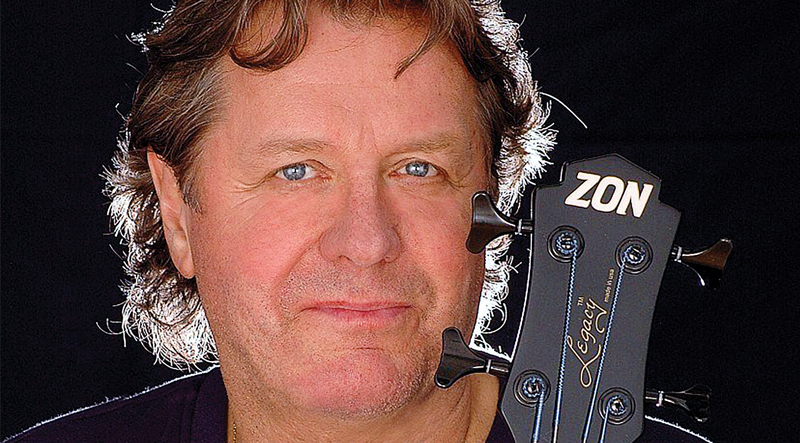
 Born June 12, 1949, British bassist and front man John Wetton died of colon cancer on January 31 at the age of 67. In a career lasting more than four and a half decades, Wetton achieved many musical peaks, including chart success with Asia and fronting King Crimson during its most innovative period. In addition, he worked with the well-loved prog band U.K., as well as Roxy Music, Uriah Heep, Family, and Icon. His powerful, voice and muscular playing were hallmarks and, among the guitar aces with whom he performed are names like Steve Howe, Robert Fripp, Allan Holdsworth, Phil Manzanera, Steve Lukather, Mick Box, Scott Gorham, Pat Thrall, Guthrie Govan, and Alex Machacek.