Tag: features

  • Billy Flynn

    Billy Flynn

    The phrase “electric blues” is a catch-all for many genres, but for aficionados it refers to a highly specific idiom from the Windy City. In fact, if you listen to Billy Flynn’s smokin’ new album, Lonesome Highway, you will identify it instantly, as his tone and sweet licks capture the nuance of Chicago’s best guitarmen. For Flynn, this kind of blues is less about chops, and far more about tone, soul, and the very deepest of grooves.

    Who are your main influences?

    B.B. King and Muddy Waters, but also Chicago’s West Side blues players like Magic Sam and Otis Rush. For slide, it’s Tampa Red, Robert Nighthawk, Earl Hooker, and Elmore James. My number one influence was Jimmy Dawkins; after seeing him play, I knew I wanted to play in the style that he created.

    The album’s opener, “Good Navigator,” has a feel and tone like Chuck Berry. You really nailed it.

    I bought my first electric guitar when I was about 12 and spent a lot of time playing along to his records. I used to watch him on TV, and he said he listened to Elmore James, T-Bone Walker, and Charlie Christian. Because of those guitarists, I thought of Chuck Berry as more of a Swing-era player from the ’40s and ’50s rather than a rock and roller. He had a real ringing tone.

    “Small Town” displays some blues-funk bottleneck.

    That sound was from Earl Hooker. When I was learning to play, I bought every album I could by Earl, and when I saw pictures of him, I noticed a small slide on his fingers. Now I use that small slide, too. It’s good for single-note runs.

    Your tone on Lonesome Highway is huge. Is there any secret to getting a big, fat tone?

    I try different things, like changing pickup positions and adding reverb or using different Tone-control settings. Where you pick on the guitar changes the sound, too. Also, when I used to play alongside bluesmen like James Wheeler, Louis Myers, and Little Smokey Smothers, I had to find a way to step up my rig and become aware of the things I needed to do to keep up.

    Is the dirty tone on “If It Was For The Blues” from the amp, or did you use a booster pedal?

    No overdrive pedal was used; we used a Fender Super Reverb and an original Peavey Bandit turned up loud! I hooked them up together, but miked each separately.

    What guitars and pedals did you use?

    I used a 1994 Gibson ES-335, a Squier Vintage-Modified Jaguar for some rhythm, and a Squier Strat. All guitars are stock. I had a Cry Baby Wah I’ve used since the ’70s. For gigs, I play Jay Turser semi-hollowbodies because they’re very light, play great, and are sturdy. I’ve taken them around the world and never had a malfunction.

    What kept you on an old-school blues path instead of playing louder blues-rock?

    I’ve always loved the true sound of the blues and was inspired by the blues greats. I also loved the rock and roll of the ’50s and early ’60s, but never really was a rock musician myself. I was much more into jazz and early rock with a swinging rhythm section. By meeting – and being encouraged by – many great Chicago players like Johnny Littlejohn, Jimmy Rogers, Mighty Joe Young, and Luther Allison, I knew I wanted to play blues. They sounded different than everyone else to me – that real Chicago sound.

    Your career started in the ’70s, when vintage blues was not much in fashion. Did that shape you as a blues musician?

    During that time, I had the pleasure of meeting B.B. King, Howlin’ Wolf, Charlie Musselwhite, Jimmy Dawkins, Jimmy Rogers, and Luther Allison, and many others. To me, there was never a lack of blues, and there was so much of it – there were lots of musicians touring and playing in a lot of venues. Later, I also played Top 40, disco, and country to keep busy and working. Playing all that stuff helped me develop as a musician and, actually, the blues also was being influenced by funk and disco at the time.

    What advice would give a young player who wants to learn more about traditional blues guitar?

    My advice would be to practice, listen to the original electric-blues artists, and not assume that blues is easy to play. There are some basic elements of the music that are sometimes overlooked, but give it that great sound. Once you’ve got the building blocks, you can develop your own style. Listen to lots of music and keep your ears open to new styles.


    This article originally appeared in VG October 2017 issue. All copyrights are by the author and Vintage Guitar magazine. Unauthorized replication or use is strictly prohibited.
  • Billy Sheehan

    Billy Sheehan

    Billy Sheehan: William Hames.

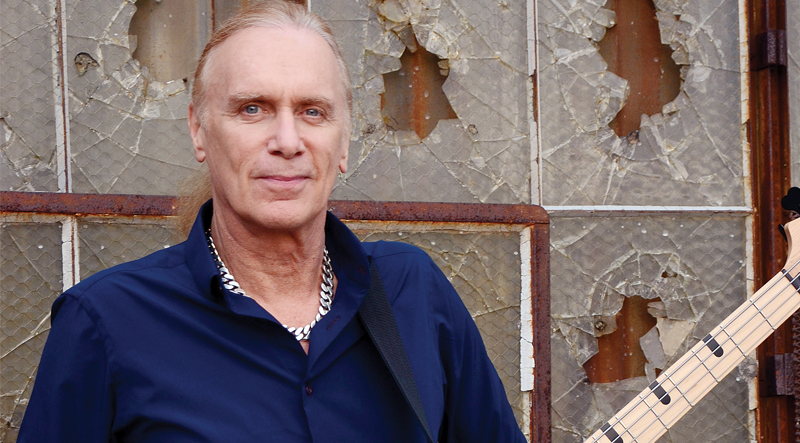
    Though there’s no denying Billy Sheehan’s exceptional technical talents on the bass, he has always kept sight on the importance of the song – as evidenced by his work with David Lee Roth, Mr. Big, and the Winery Dogs. He recently returned to the fold with Mr. Big, the rock band that also features Paul Gilbert, to record Defying Gravity.

    Which basses, effects, and amps did you use on Defying Gravity?

    Pretty much the same I use live – a Yamaha prototype bass that I’ve beat it up pretty badly touring the last few years on hot, sweaty nights. So this was probably the last album I’ll use it on. I’m replacing it with a production model, which is way better than the prototype! The prototype was made by hand, but the production models are perfect. That through my Hartke LH1000 amps. My pedalboard has an EBS [Billy Sheehan Signature Drive], which has great harmonic content, super-smooth distortion that can dial in as much or as little as you want without effecting the normal tone.

    From a bass-playing perspective, do you have some favorite new songs?

    There’s one called “Be Kind,” which is the last song on the album. It’s a beautiful, bluesy piece, and we played it straight. Nothing fancy, but just lock with the drums and do your thing. There’s one called “Mean to Me” which required me to adjust some technique because it was a blazing, typical right-handed thing. I ended up using the four-finger technique. People always ask me about my three fingers, and I went to four for this because it’s a grouping of notes to pluck that I could have done with three, but to really make it sound right, I had to do with four. That was a real challenge; I had to strap myself in and hit it hard. And there are a couple of ballads that are really nice. One is called “Damn I’m in Love Again,” which is basically straight-up-clean bass, playing the root fifth octave and a very simple super-deep low. It’s a beautiful, simple thing. I get accused of, “All he ever does is solo all the time.” No. That’s not true. The most successful song I ever played on was “To Be With You,” and there’s no bass solo on that.

    Was the David Lee Roth Eat ‘Em and Smile album and tour a high point of your career?

    In a way, yes. But I actually had more personal success with Mr. Big. But I came from almost zero to something with Dave. If it wasn’t for Dave calling and bringing me out to L.A. to start a band, we may not be talking together right now. It was such a pivotal moment in my life and a huge change of every aspect in my life – leaving Buffalo, starting a band was a whole new world, a whole new life. So yeah, I guess it probably is one of the most important things that ever happened. However, with Mr. Big we had a #1 single, and that was my band, so it was a bit more satisfying in that respect. But I still never doubt that none of that could have happened if I wouldn’t have been involved with Dave and the Eat ’Em and Smile record.

    Was there any professionally filmed footage of an Eat ’Em and Smile show?

    I have – on a hard drive – a full, professionally shot version of the Eat ‘Em and Smile show; I believe it may have been shot in Baltimore. But it doesn’t belong to me, so I can’t distribute it. In the end, Dave or Warner Brothers would own it. Hopefully someday, Dave will say, “Let’s play again, and let’s take out all the archives, and let the public have them.”

    Is your old Fender Precision Bass, “The Wife,” retired?

    It’s packed away, but I take it out every once in a while. Recently, I was working on a project and I had all these old spare parts leftover from the days putting that bass together – Gibson pickups and bridges and all kinds of stuff. So I went out and bought bodies and necks from Warmoth – who blew me away with the quality of work they do – and I used them to make two versions of the original Wife, just because I didn’t want to get rid of the old parts, and wanted to use them on something. So I’ll do a little photo essay of my adventure of making those basses soon and post it online.


    This article originally appeared in VG October 2017 issue. All copyrights are by the author and Vintage Guitar magazine. Unauthorized replication or use is strictly prohibited.
  • Jimmy Nalls

    Jimmy Nalls

    Jimmy Nalls: Jon Sievert.

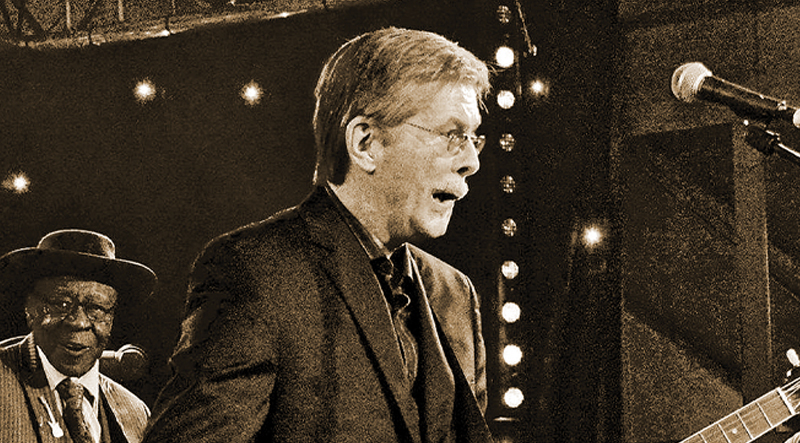
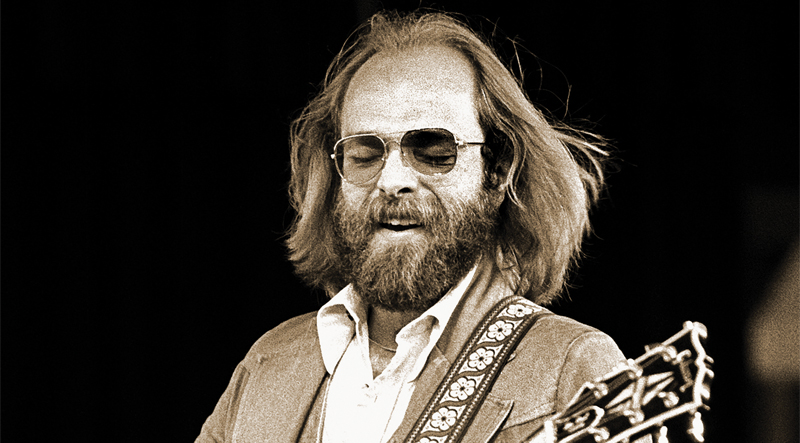
    On June 22, the musical journey of guitar great Jimmy Nalls ended due to the effects of Parkinson’s Disease and injuries sustained in a fall at his Nashville home. He was 66.

    In bittersweet irony, his death came three days after the release of the star-studded Jimmy Nalls Project – what was to be his sophomore solo album, shelved in various stages of completion 18 years prior, after Parkinson’s rendered him unable to play. Nashville luthier Joe Glaser, along with Gabriel Hernandez, of Blues Vintage Guitars, Inc., helped organize the project, with Warren Haynes, Robben Ford, Larry Carlton, Joe Bonamassa, Johnny Hiland, Chuck Leavell, Kenny Greenberg, Aerosmith’s Brad Whitford, and others lending their talents, along with engineers and studios, with 100 percent of the proceeds going to help defray medical and funeral expenses.

    Growing up in Maryland and Virginia, Nalls learned his first chords from his father at age five. He cited Roy Buchanan as his biggest influence, along with Duane Allman, Leo Kottke, and Lowell George for slide.

    He was probably best known as a founding member of Sea Level, formed in ’76 as sort of a splinter group of the Allman Brothers Band. Chuck Leavell first played with Nalls in 1970 as part of Alex Taylor’s band, then the pair joined Dr. John.

    “We traveled together, ate together, rehearsed together, played gigs together,” the keyboardist wrote on his website. “Jimmy and I… shared our dreams together, talked of our hopes and aspirations, as well as our disappointments and frustrations. We laughed and cried together. We were brothers.”

    The quartet (later adding guitarist Davis Causey) was the perfect showcase for Nalls’ versatility, spanning Southern rock to Steely-Dan-esque jazz, with Nalls occasionally serving up a blistering take on Freddie King’s “Hideaway.”

    His resume also revealed his range, with recordings by Doug Kershaw, Don McLean, Gregg Allman, Livingston Taylor, Bill Anderson, Bonnie Bramlett, and Bobby Whitlock. He also played on the famous “Wedding Song” by Noel Paul Stookey of Peter, Paul and Mary.

    In ’86, Nalls moved to Nashville, where he worked with country singer Charly McClain, and in ’88 he joined D.C. blues band The Nighthawks.

    “I first met Jimmy when he came to Nashville in the ’80s,” Haynes recalled. “I had admired his guitar playing for many years, but what I realized in getting to know him and hearing him in a lot of different situations was that he was holding a lot of cards he didn’t always play. Each time I heard him and in each different situation, I would hear different sides of his playing that all seemed equally natural. There was a time when I toured with The Nighthawks, not too long after he did, and I got to hear the tapes of him playing straight-up blues, and he sounded great. His playing could be beautifully understated; then out of left field, he would explode with some s*** you didn’t expect. He was also a very kind, shy human being who always made other people feel good about themselves.”

    Despite being diagnosed with Parkinson’s in 1995, Nalls recorded his first solo record, Ain’t No Stranger, in ’99.

    “Jimmy had such a natural relationship with the instrument that it seemed easy for the music to come through him, like he couldn’t help but play in a way that touched on all the nuances that guitar players revere, but not in any obvious, showy, ego-bound way,” said songwriter/guitarist Gary Nicholson. “He had plenty of chops but was always in service of the song. The times I got to talk with him were few, mostly just guitar-nerd stuff. He played with my friend T. Graham Brown, who recorded many of my songs, and we had quite a few common pals. I was honored to play on ‘Wood And Wire,’ a very cool commentary on the guitar-playing profession.”

    “I met Jimmy at a recording studio in Nashville, while doing guitar overdubs for his record,” Ford detailed. “He came in in a wheelchair with friends, and he appeared to be shining – very bright-looking. He was obviously happy to be in a recording studio and around musicians. I really liked ‘Natural Thing’ and have considered playing it myself. I know Jimmy’s a legend, and I’m happy that I was able to work on his record.”

    Hiland became a fan through Nalls’ work with T. Graham Brown,  “…plus, I’d heard that he was a killer session musician from other guitarists around Nashville. When Joe Glaser called and told me of this project for Jimmy, and that he was suffering with Parkinson’s, I jumped onboard immediately. To me, it’s always important to help any fellow musician who has fallen with major illness, and I was deeply honored to be asked to be a part.”

    Bonamassa summed up the feelings of many: “The world cannot afford losses like Jimmy. I am so sad to hear of his passing. It’s an honor of a lifetime to have appeared on his last album.”


    This article originally appeared in VG October 2017 issue. All copyrights are by the author and Vintage Guitar magazine. Unauthorized replication or use is strictly prohibited.

  • Rex Brown

    Rex Brown

    Rex Brown: Neil Zlozower.

    Throughout his career, Rex Brown has delivered the low-end as the bassist for Pantera, Down, and Kill Devil Hill. But for his new (and first-ever) solo album, Smoke on This, he picked up the six-string.

    Motivation for the effort came on the road with Kill Devil Hill.

    “This is purely for the love of music,” he said. “Sitting on the tour bus, I thought, ‘I need to watch the grass grow. I want to kick back. I want to watch my kids grow. I want to go play guitar.”

    Brown handled vocals, rhythm guitar, and bass while friend Lance Harvill contributed lead guitar, producer Caleb Sherman played keyboards and lap steel, Lynyrd Skynyrd’s Peter Keys offered further keys plus mellotron, and drummer Christopher Williams kept the beat. Stylistically, the album recalls a vibe straight out of the ’70s – not by accident.

    “I was listening to a lot of ’70s hits, which took me back to some really great [music] not only from the soul side, but the rock-and-roll standpoint.”

    “Get Yourself Alright” leans heavy on psychedelia (“I tried to make it even more psychedelic, but got tired of fighting the producer”), “Fault Line” is mellow tune (“The very first one I sang on…”), while “Buried Alive” possesses a Zeppelin vibe.

    “That one’s probably my favorite. Writing the lyric was cathartic, and there’s the jam at the end. I wanted to make songs that were catchy, but not every one had to have a lead. For me, it is about the composition. I did the arrangements in Pantera, so I know what to do here and when to go there, and ‘Buried Alive’ is the epitome of where I want to be.”

    A particular guitar and amp started the ball rolling.

    “I took my rebuild of a ’60s Telecaster – beat up, looks like it came out of a pawn shop, but plays like no other. I have a ’68 Fender Twin Reverb, so I plugged in and learned how to play guitar again. I’ve played guitar since I was nine years old, but I had to knock some rust off.”

    Several Les Pauls also proved prominent, including a VOS goldtop with a Seymour Duncan Custom Custom, as well as Teles and several by Prestige (“They make these insane Les Paul copies that play as good as anything I’ve ever gotten from the Gibson Custom Shop”).

    Various amps were utilized for the sessions, including a small combo and a few provided by Rascal Flatts guitar tech, Dave Graef.

    “I found this ’75 Marshall Super Lead, a ’76 Super Bass, and a 50-watt from 1967. The Super Lead had something about its tone where I could put the knobs straight up. We played it through a Bogner 4×12, with Celestion 30s. I was told it’s the head John Sykes used on Whitesnake’s Slide It In.”

    For Brown, this could be the start of a new chapter.

    “This is a new lease on what I do, musically. And I’m just barely getting my feet wet. There’s much more to do.”


    This article originally appeared in VG October 2017 issue. All copyrights are by the author and Vintage Guitar magazine. Unauthorized replication or use is strictly prohibited.
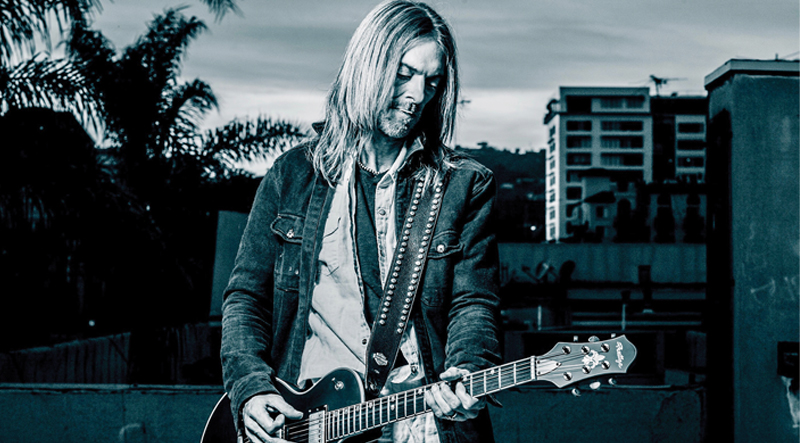
  • Kenny Wayne Shepherd

    Kenny Wayne Shepherd

    Kenny Wayne Shepherd: Kristin Forbes.

    Blues-rock suffered a blow in 1990 with the death of Stevie Ray Vaughan. But later in the decade, a crop of young guitarists emerged, versed in the style. One of them was Kenny Wayne Shepherd, whose 1998 hit “Blue on Black” launched a career that has never slowed, as evidenced by the recent release of his 10th album, Lay It on Down. The singer/guitarist talked to Vintage Guitar about the new album, his setup, and playing in a band called the Rides with a(nother) guitar legend.

    Which guitars did you use for Lay It on Down?

    As far as vintage stuff goes, I used three Strats – my ’61, ’59, and ’58. I also used several Custom Shop Strats built for me over the years by J.W. Black and Todd Krause, and some of my signature Strats, as well. I used Gibsons, also, but not necessarily vintage, like my Les Paul from the Custom Shop that I use a lot with the Rides. They sent me a Les Paul Axcess that I used on a couple of songs, and a Custom Shop Firebird VII. The acoustics were my signature series done with Martin back in 2000, and one by L Benito. They’re no longer in business, but Lito Benito made guitars out of 3,000-year-old wood from the bottom of a lake in Chile. They’re unique-sounding instruments, and I used it on the majority of the acoustic tracks.

    Which effects and amps do we hear?

    Mostly, it was a Custom Audio Electronics wah, an Ibanez TS9, Analog Man King of Tone pedal, and an Analog Man Bi-Chorus. I also have a couple of original Univibes, and one allegedly belonged to Jimi Hendrix. The analog delay is a Delay Llama by Jam Pedals, out of Greece. And I used a Roger Mayer Octavia. I tried to use guitar and amp most of the album, then one of those pedals here and there to give it a little color. But the majority is guitar straight into the amp.

    The amplifiers are a ’65 blackface Bandmaster that has been gutted and re-done by Alexander Dumble – all of the amps I’ve been using were re-done by him. So he calls that the Ultraphonix Bandmaster. I have a blackface Pro Reverb with his Rockphonics circuit and the Ultraphonix circuit. I also have a tweed bass amp, a ’59 Bassman he calls the Slidewinder, a tweed Deluxe called the Tweedle-Dee, and a couple of original Vibroverbs; he does to those what he thinks the next generation of Fender circuit design for the blackface amps would have been.

    Those were all the amps. We’d pick and choose a combination of two or three running at the same time and create a blend.

    Do you have a particular favorite solo on Lay It on Down?

    I like the one on “Lay It on Down” because it’s acoustic. I haven’t done that a lot on albums over the years, so it’s different. And it’s a really melodic composition, so the solo isn’t a lot of notes burning the house down. It was an opportunity to play something that really supports the song.

    How is it playing alongside Stephen Stills in the Rides?

    It’s awesome. He’s one of the greatest songwriters and musicians of our time, and I’ve learned a lot. He’s like a brother, so we have a really unique relationship. That’s the best part of the whole deal – our personal relationship. But making records, writing songs, playing live with him, and getting in his head about how he approaches telling stories through music, and performing it… He’s a wealth of knowledge and experience. I never consider myself unteachable or that I’ve gotten to the point where I don’t have anything else to learn. I soak it up as much as possible.


    This article originally appeared in VG October 2017 issue. All copyrights are by the author and Vintage Guitar magazine. Unauthorized replication or use is strictly prohibited.

  • Swart Atomic Jr.

    Swart Atomic Jr.

    Prices: $1,199 (head), $747 (cab, both list)
    Info: www.swartamps.com

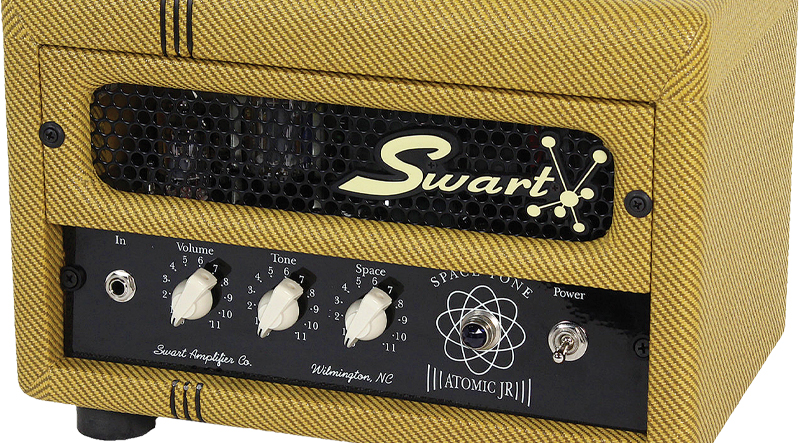
    When Swart decided to split their Atomic Jr. five-watt combo into a piggyback, they not only went from an 8″ speaker to a 12″, they added more speaker options, including the Mojotone BV-25 and Celestion’s Creamback 75, Cream Alnico, Anniversary, G12 Blue (as tested), and Alnico Gold.

    The resulting all-tube Atomic Jr. head features an Electro-Harmonix 6V6GT power tube, a JJ GZ34 rectifier tube (5Y3 also available), a JJ 12AX7 preamp tube, and a JJ 12DW7 for the reverb. Head and cab are finger-jointed pine; the circuit is point-to-point hand-wired with cloth-covered wire and uses CTS pots, Switchcraft 1/4″ jacks, American-built transformers, carbon comp resistors, and Mallory capacitors. Controls are basic: Volume, Tone, Space (reverb), and a hidden “set it and forget it” Clean/Hot switch atop the chassis.

    The overtone-saturated Atomic Jr. offered chimey top-end, punchy round bass, and thick perky midrange responsive to pick and finger attack. With the gain set to Hot, the front end was easily tickled into rich, harmonic overdrive. In “Clean” the amp responded more traditionally, staying clean and crisp longer with the midrange slightly pulled back yet still thick with overtones.

    The front end also played well with an Ibanez TS9; the tone remained lively with plenty of that punchy midrange, but with more drive and sustain. The Tone control made quick work of switching from bright single-coils to darker humbuckers.

    With the airy openness of the G12 Blue, the amp’s five watts still have plenty of horsepower, but are manageable for studio and rehearsal work. The reverb lives up to its “Space” moniker, with a long decay and slightly lo-fi tone that can be dialed in from a light sprinkle to a total drench.

    With its cool space-age vibe, the Swart Atomic Jr. piggyback is a versatile high-quality amp with killer overtones and big spacious reverb.


    This article originally appeared in VG September 2017 issue. All copyrights are by the author and Vintage Guitar magazine. Unauthorized replication or use is strictly prohibited.
  • Stomp Under Foot Ram’s Head

    Stomp Under Foot Ram’s Head

    Price: $185 (list)
    Info: www.stompunderfoot.com

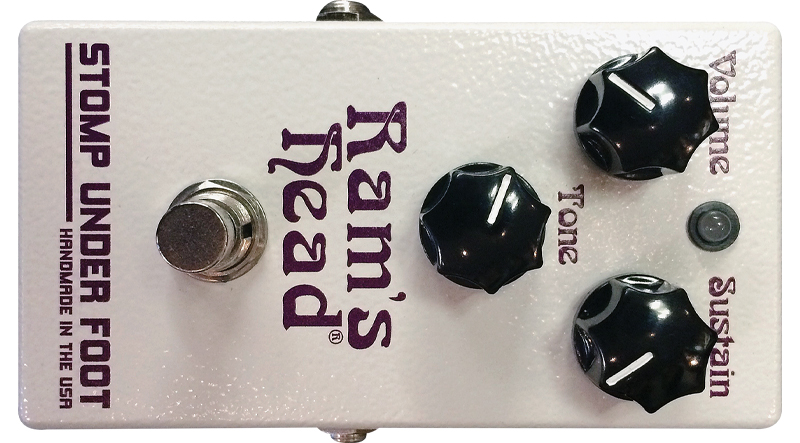
    Matt Pasquerella has a reputation as a pi connoisseur… no, not the eating kind, the fuzzy kind. The creator of Stomp Under Foot effects has been building some of the most sought-after Big Muff Pi clones on the market.

    Pasquerella’s Ram’s Head is a modified version of his favorite “violet ram’s head logo” version of the vintage Big Muff Pi.

    The Ram’s Head has a standard 4.75″ x 2.5″ x 1.5″ diecast chassis with a true-bypass footswitch, bright-white status LED, 9-volt power jack, and Volume, Sustain, and Tone controls. There are also chassis-mounted Alpha pots and Switchcraft 1/4″ in/out jacks.

    Testing was accomplished with a late model Gibson SG Standard loaded with 490R and 490T humbuckers through a Fender Blues Jr 15-watt 1×12″ tube combo.The Ram’s Head showed an abundance of that classic late-’70s fuzz tone, but with a fuller, warmer midrange and a more musical top-end that is less scratchy-sounding than a vintage counterpart. The Ram’s Head Tone control also has a generous sweep, allowing for a variety of fuzz/distortion sounds, from dark and smooth to old-school scratch.

    With the SG switched over to the neck pickup and the pedal’s Tone control on the darker side, the pedal’s drive and sustain were super-smooth with a singing musical quality that allowed single notes to hang on nicely, great for slow melodically phrasing. At the bridge pickup and with the tone control set on the brighter side, the tone was crisp and biting with a nice articulate percussive edge that wasn’t too harsh. With the sustain control set in the lower to middle range, the pedal also worked well to add a bit of analog lo-fi flavor to the amp’s overdrive channel, as well as sustain and percussive top-end.

    A well-built, thoughtfully engineered pedal with a smooth and full classic fuzz tone, the Ram’s Head offers up nice musicality and nearly endless sustain. Certainly a worthy update of – and affordable alternative to – the vintage classic.


    This article originally appeared in VG September 2017 issue. All copyrights are by the author and Vintage Guitar magazine. Unauthorized replication or use is strictly prohibited.

  • TWA Hot Sakè and Dynamorph

    TWA Hot Sakè and Dynamorph

    Price: $189, Hot Sakè; $299, Dynamorph (both list)
    Info: www.godlyke.com

    Totally Wycked Audio (TWA) builds a line of cool stompboxes that consistently push the envelope in the right direction. Two recent installments are perfect cases in point.

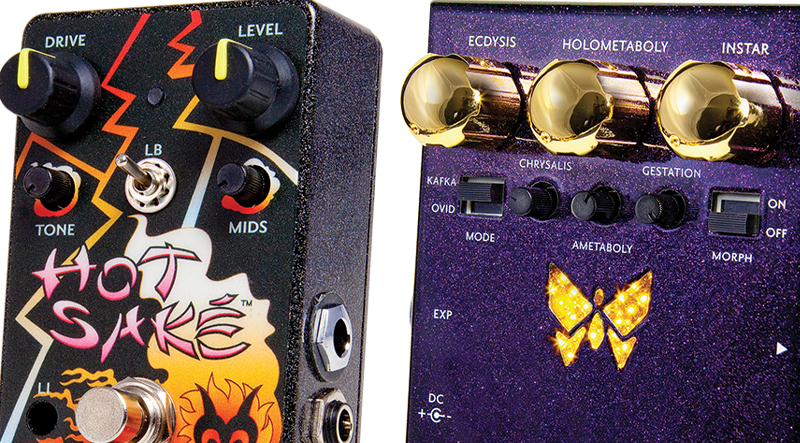
    TWA’s Hot Sakè is based on revered old-school Japanese circuits, notably the SD-9 overdrive, kicked up with some special sauce. Roughly MXR-size, the box works as two pedals in one: an overdrive and a distortion. The controls will be familiar to most: a Drive knob to dial in the amount of gain, and a Level knob for overall output. The Tone control is a passive lo/hi boost, but the Hot Sakè also has a Mids knob, which is an independent EQ that can boost the midrange spectrum. Accessed through an opening in the housing, an L1/L2 switch lets you choose between two filter caps for different tone choices.

    But the secret weapon is the LB switch, a magic button that takes the Hot Sakè from overdrive to raging distortion box. But let’s be clear: both circuits are cool and interesting. With the LB switch off, the Hot Sakè is a superb overdrive; running the box through a 1×10 tube combo led to a great range of off-clean to dirty tones. Particularly thrilling are the vintage Jimmy Page- and Ritchie Blackmore-styled settings, especially good with single-coil pickups and a cranked amp. From “Good Times, Bad Times” to “Burn,” these vibrant overdrive flavors are just killer.

    With the LB switch flipped on for a low-end boost, the Hot Sakè delivers fat fuzz and distortion with reams of sustain. Frank Zappa would dig this setting, which recalls his classic mid-’70s SG tone. Paired with the right tube amp, the Hot Sakè really is two dirty boxes in one that will deliver tons of vintage overdrive.

    Speaking of Zappa, he likewise would have dug the TWA Dynamorph, an “envelope-controlled harmonic generator.” If you have no idea what that means, don’t fret. In simple terms, this box produces all kinds of gnarly eight-bit fuzz and twisted envelope sounds that will make your guitar sound out of this world. There are knobs with names like Chrysalis, Ametaboly, and Gestation, and believe it or not, they all have real-world jobs. (You can even plug in an expression pedal to control some functions in real time.)

    The Dynamorph has two high-gain preamps and a bunch of rectifiers to torture your guitar tone into submission. Besides all the insane, synth-like fuzztone and envelope-swelling effects, it’s interesting to see how interactive the pedal is with pick attack and volume. Unlike many stompboxes that are simply “on,” the Dynamorph reacts to your playing. Some of its fuzz is so intense that it sounds even better if you roll off the volume knob. Those dynamics are reflected in the glowing butterfly-shaped LED.

    Sure, the Dynamorph isn’t for everyone, but for those who want a pedal that stands out from the pack, it’s a keeper. Record producers and studio players might consider it a “secret weapon” – think of that fuzzy, farty guitar tone in Norman Greenbaum’s “Spirit in the Sky” or Jeff Beck’s early fusion work. The Dynamorph is cool enough to deliver just that sort of unique, wonderfully weird tone and countless others.


    This article originally appeared in VG September 2017 issue. All copyrights are by the author and Vintage Guitar magazine. Unauthorized replication or use is strictly prohibited.

  • Fire-Eye Red-Eye Twin DI

    Fire-Eye Red-Eye Twin DI

    Price: $295 (list)
    Info: www.fire-eye.com

    In a simple system, even a basic direct-input box with little in the way of adjustments will work fine. But what if your setup includes a plethora of pedals and effects? This can lead to problems because each device raises the impedance and noise floor while lowering the overall signal output. Fire-Eye electronics has a solution.

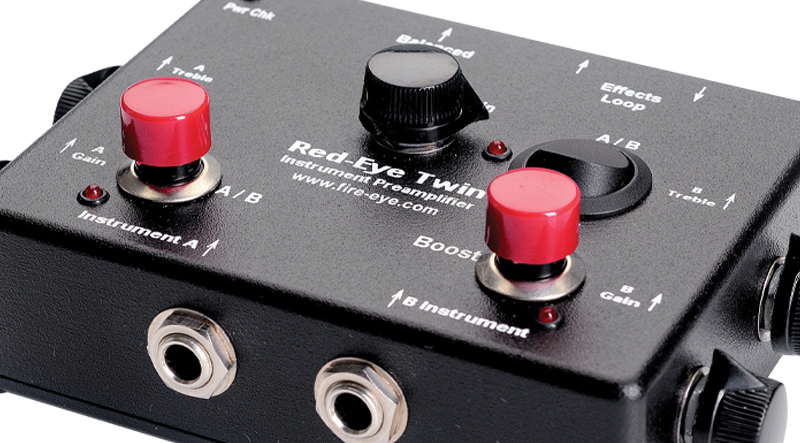
    The Red-Eye Twin DI delivers high-input impedance with a low-impedance 600-ohm XLR balanced output. And the Red-Eye Twin differs from the original Red-Eye in supporting two inputs rather than just one. The Twin has separate Gain and Treble controls for each input. In addition to the ability to switch from Input A to Input B, the Red-Eye Twin has an adjustable Boost Gain activated via a push-button switch that allows you to set Boost for solo level while the other level can be set for rhythm parts. You can also activate both inputs at once if needed.

    Plugging in an instrument or connecting to XLR phantom power turns on the Red-Eye Twin. It is normally powered by XLR phantom power, but if phantom is not available, an internal 9-volt battery automatically supplies power. And if you want to use a phantom-powered electret microphone, an available factory modification adds a small switch to supply phantom power to the Channel B input.

    Although it’s compact at just 1.25″ x 3.5″ x 4.5″ and lightweight at 18 ounces, the Red-Eye has a roadworthy solid-metal case that will survive anything short of being run over by your tour van. If you want a DI that can handle your pedal array and two instruments with aplomb, this is the box.


    This article originally appeared in VG September 2017 issue. All copyrights are by the author and Vintage Guitar magazine. Unauthorized replication or use is strictly prohibited.

  • MXR Dyna Comp Mini

    MXR Dyna Comp Mini

    Price: $99.99 (list)
    Info: www.jimdunlop.com

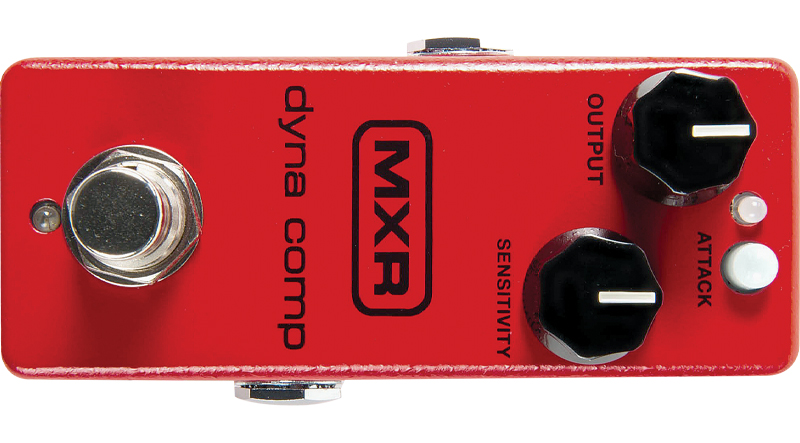
    In the ’70s, the original MXR Dyna Comp found its way onto a plethora of now-classic vinyl sides and was a key ingredient to the soundtrack of a generation. With an eye toward the latest trend in miniaturized effects pedals with full-sized sounds, MXR’s Dyna Comp Mini Compressor retains the same rich analog sounds of the original while serving up even more features in a much smaller package.

    The setup is simple. Two knobs let the player control Output and Sensitivity (i.e., the amount of compression), while a white push-button labeled “Attack” switches the box between slow and fast attack times. (In the Fast Attack position a small red light switches on; in slow Slow Attack the light turns off.) These controls allow adjusting the amount of squish for subtle R&B double-stops or the punchiest chicken pickin’ lines. Using the Sensitivity knob in concert with the Attack button yields a wide range of sounds, ultimately letting the player sculpt and fine-tune their amp’s personality.

    With a Fender Deluxe Reverb and an old Strat, the Dyna Comp Mini revealed all manner of squish and spank. In the Slow Attack position the sounds were warm, subtle, and musical, while in Fast the volume was slightly boosted and accompanied by a tougher, edgier sound. The Dyna Comp Mini also worked great for pushing clean single-note funk lines higher in the mix, and in Fast Attack mode it gave chords a more brittle and chunkier quality.

    To top it off, the pedal also added sustain to overdrive pedals without changing their tone. Notes sing with more volume and conviction, leaving the personality of the tonal recipe intact. Those looking for compression with musicality, all in a travel-friendly package, have come to the right place.


    This article originally appeared in VG September 2017 issue. All copyrights are by the author and Vintage Guitar magazine. Unauthorized replication or use is strictly prohibited.