
Tag: features

  • Sonny Landreth

    Sonny Landreth

    Sonny Landreth: Marco Van Rooijen.

    When music fans discuss upper-echelon slide mastery, the name Sonny Landreth tops most lists. The preeminent slide-guitar stylist of his generation, his touch not only harkens to the masters, but yields fresh and innovative techniques. His new album, Recorded Live In Lafayette, is two discs that join the rich influences heard on Bound By The Blues, with copious helpings of Creole flavor. Aided by the talented Sam Broussard on acoustic guitar, Live In Lafayette simmers with skill and fervor.

    Were there any epiphanies between Bound By The Blues and Live in Layfette?

    I wanted to do an acoustic album, so I started thinking, “Should I do a trio thing? Should I add a couple of guests and a couple of my best friends? Should we do this live?” So I ended up going for all of them at the same time (laughs), which is not the wisest idea. Then again, some really great stuff happened. As always, it’s good to know that when you surround yourself with great musicians and leave room for spontaneity, the magic does happen.

    If there was an epiphany, it may have been more along the lines of what kind of electric guitar player I really am, tackling an acoustic (laughs). It was the first time in years I’d played an acoustic, and it was a bit humbling.

    How did you choose songs?

    It was a bit challenging. I think the main thing for me has always been that some songs have a life of their own and stay with you. That’s what I learned from the repertoire on Bound By The Blues. Some of the songs had been with me so long and they’d come and go. They’d get away from me for a good while but come back again. So, I lean toward that and my own compositions. I wanted them to be representative of songs that came from different albums and different times. Songs like “Creole Angel,” which we hadn’t done in a long time, had always been an electric piece. That would be a great opportunity to show another side of that song, which is what I love about playing acoustic.

    You really strip it down to the soul of the song. I really don’t think you could really do otherwise. We literally had no rehearsals for all of that, and that was somewhat intentional. We wanted to tap into that spontaneity. You’re leaning on the tribe in such a way that’s so special. You can’t do that with just anyone.

    Which acoustic guitars did you use?

    I stuck with going for the reso-sound, and thought about going for the vintage sound and Nationals. I mostly used the guitar that Larry Pogreba made for me some years back – one of his hubcap resonators. They’re awesome. It’s aluminum-bodied, and he uses vintage hubcaps from a ’56 Oldsmobile. He cuts the top off, so that’s the cover plate. The way he designed the hubcap feels great. It has a midrange punch and an airy sound that’s brighter. The harmonics really pop.

    Do you still play Strats?

    Oh, yeah, and my Strats have undergone so much work over the years with the prototypes from Fender. Comfort is a big deal with me; the more comfortable I am, the better I’m going to be playing. That doesn’t mean there’s something to be said for getting out of your comfort zone, and getting something new and different.

    What kind of effects pedals do you use with your guitars?

    My reso goes into a Radial Engineering Elevator pedal. It works well to boost the signal and has a Mid control that works really well with that Teisco pickup. On my electric board, my guitar goes into a Fulltone Plimsoul drive pedal and from there, an Analog Man compressor. I have two pedal boards – a smaller board for the reso that’s bypassed for the electric guitar. For the electric, I use the Demeter Fuzzulator as a boost. The main pedal is a Nosferatu, and from there it goes into that same compressor, then a Voodoo Labs Giggity mastering preamp. It really fattens up the signal. That goes into a chorus and the Visual Sound Dual Tap Delay.

    What’s next?

    I’m going to get out and support the album. That’s still the ever-changing landscape in the business. When people are out and they get to see an experience, they make a connection with the actual album – where it came from and what it was all about. It’s the first live album I’ve done in a long time. As I go, I hope by sometime next year I’ll have perfected the acoustic a lot more.


    This article originally appeared in VG November 2017 issue. All copyrights are by the author and Vintage Guitar magazine. Unauthorized replication or use is strictly prohibited.
  • Shane Theriot

    Shane Theriot

    Shane Theriot: Greg Vorobiov.

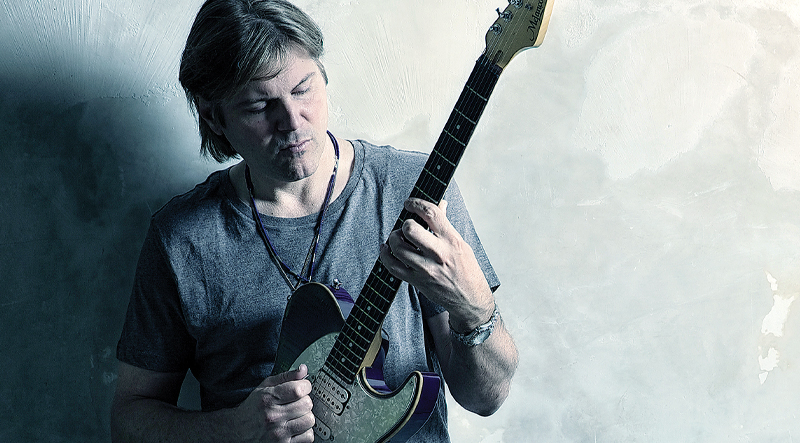
    Shane Theriot’s new album, Still Motion, is more stripped-down funky “jazz trio” than the lush soul he helps create as musical director for Hall and Oates. And that’s exactly what he was looking to do.

    “There were multiple reasons. First, I like the space on those beautiful ECM records,” Theriot said, referencing the label Manfred Eicher founded that features airy, atmospheric records by varying artists, including Pat Metheny, Jan Garbarek, and many more. “It can be uncomfortable because it’s like tension, and I wanted to see if I could pull it off. Also, other records I’ve done have been difficult to replicate live. This one, I can play with a trio and accent with a horn or keyboard. The idea is to have multiple rhythm sections, just like the record.”

    Jim Keltner and Kirk Covington played drums on the record, and Nate Wood or Chris Maresh were on bass. The third rhythm section was folks he plays with in New Orleans – James Singleton on bass and Johnny Vidacovich on drums. Obviously, the variation affects how tunes develop.

    “Before I started hanging out so much in New York, working on [“Live From Daryl’s House”], I’d started rehearsing the trio in New Orleans, so I thought I’d go back and record some. Then I went to Austin and worked with Kirk. It took about a year to put it all together.”

    “Just Sco Away” was inspired by a friend.

    “John Scofield and I were neighbors for a couple of years and became good friends. I had this track that reminded me of one of his tunes. Plus, he gave me one of his signature Ibanez guitars, and I used that guitar on that track.”

    If you’ve watched Theriot perform with Hall and Oates, you’ve likely seen his Melancon Tele.

    “Gerard Melancon builds really amazing instruments. I’ve been playing his stuff for years and I’m really happy with it.”

    Among the instruments from the Louisiana company is a Custom T Artist with humbuckers and a single-coil in the middle. “It’s really versatile,” said Theriot.

    You also see him playing an old favorite – a green Hamer double-cut he’s had for more than two decades. On Still Motion, he also used a ’59 Gibson ES-330, as well as a ’53 Martin 000-17 to add “ear candy” to certain cuts.

    The Hall and Oates tour has seen him use his ’71 Marshall Super Lead, which draws plenty of compliments, including from Cheap Trick’s Tom Petersson. In the studio, he also used an old Fender Deluxe, a Dr. Z Maz 18 Jr., and a Fuchs Bassman ODS.

    When his schedule allows, Theriot takes on work producing other artists, and the list was recently amended with a certain high-profile singer/songwriter…

    “I’m co-producing Daryl’s new record,” he said. “It’s soulful and funky, and I think people will love it.”


    This article originally appeared in VG November 2017 issue. All copyrights are by the author and Vintage Guitar magazine. Unauthorized replication or use is strictly prohibited.
  • Glen Campbell

    Glen Campbell

    Glen Campbell: Robert Sebree.

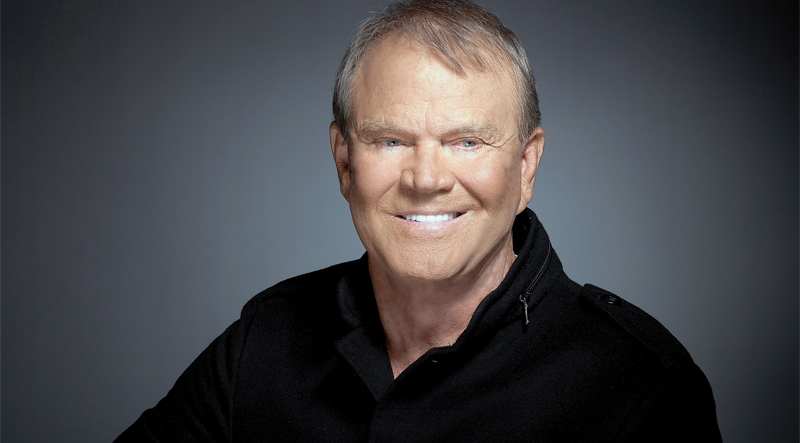
    The end of Glen Campbell’s journey was a matter of time once he and his family announced his Alzheimer’s diagnosis in 2011. With the media watching, his career ended with a farewell tour backed by a band that included several of his children. He was 81 when he died at a care facility in Nashville on August 9.

    Glen Travis Campbell was the seventh of sharecropper Wes and Carrie Campbell’s 12 children, born in 1936 in tiny Billstown, Arkansas. He eventually acquired a $5 Sears guitar; an uncle taught him the basics. When the family moved to Houston in 1950, Glen left school to play music, absorbing the country greats along with Django Reinhardt. At 17, he moved to Albuquerque to join uncle Dick Bills and his Western-swing band, the Sandia Mountain Boys, playing dance halls, radio, and TV. He made his first records there in 1958 – two rock singles and several country-jazz tunes recorded in Dallas with pianist Stan Capps.

    In 1960, he made a well-timed move to Hollywood and played sessions as L.A.’s studio scene was shifting from ’50s adult pop to rock. Campbell’s skills put him among an elite aggregation of younger players informally dubbed “The Wrecking Crew.” He worked alongside a group whose key members were Carol Kaye, Ray Pohlman, Tommy Tedesco, Bill Pitman, Leon Russell, Barney Kessel, and Hal Blaine.

    It didn’t matter that he didn’t read music. He played on many classics of that era, from Jan & Dean’s “Surf City” and “Out of Limits” by The Marketts to Wayne Newton’s “Danke Schoen,” “You’ve Lost That Loving Feeling” by the Righteous Brothers, “Strangers in the Night” and “That’s Life” by Frank Sinatra. Elvis Presley’s “What’d I Say” from Viva Las Vegas, Nancy Sinatra’s “Sugar Town,” The Monkees’ “Valleri” and early Merle Haggard hits like “Branded Man” also featured his work. For several months in 1964-’65, he replaced Brian Wilson on bass with The Beach Boys and later played on five tracks for Pet Sounds. From ’64 on, he occasionally performed on ABC TV’s rock showcase “Shindig!”

    When Capitol Records signed him in ’62, he recorded bluegrass and instrumental LPs. When they offered him greater creative freedom, he embraced glossy country-pop (backed by Wrecking Crew players) resulting in his Grammy-winning 1967 rendition of John Hartford’s “Gentle On My Mind” and Jimmy Webb’s “By The Time I Get To Phoenix.” In ’68, “I Wanna Live” became his first #1 single, followed by “Dreams of the Everyday Housewife.” Jimmy Webb’s “Wichita Lineman,” his second #1, also earned his second Grammy.

    Campbell used many guitars in the studio and became one of the earliest stars to embrace Ovation instruments. In a 1995 interview he said, “They just started the company when I started my TV show. I love ’em… They last. I can leave my 12-string tuned in the case and the neck don’t warp, it don’t come up and don’t do nothin’ – just fabulous.”

    He later added G&L and Hamer models, and had long owned an Epiphone Zephyr Regent.

    Campbell’s pivotal role in helping establish country music on network TV began when “The Glen Campbell Goodtime Hour” premiered in ’69, joined that year by Johnny Cash’s ABC variety show. Both found success presenting established showbiz favorites and country stars to mainstream viewers, and his versatility with the Wrecking Crew translated well to TV; he could work with a variety of acts, guitar dazzling whether he played solo or jammed with Jerry Reed or Roy Clark. “The Goodtime Hour” even presented Cream performing “Sunshine Of Your Love” before their breakup. When the show ended in ’72, Campbell’s greatest recorded successes were yet to come with his ’75 signature song “Rhinestone Cowboy” and, two years later, “Southern Nights.”

    Still active in the ’80s and ’90s, his achievements came into greater focus with his 2005 Country Music Hall of Fame induction and 2008 album Meet Glen Campbell, which reintroduced him, singing songs by U2, Tom Petty, Paul Westerberg, Lou Reed, and John Lennon in his usual country pop style.

    With considerable help, Campbell recorded two final albums – Ghost On The Canvas in 2011 and Adios, released this summer. A Lifetime Achievement Award from the Grammy organization came in 2012, but his communication abilities were fading by the time he entered a care facility in ’14. When wife Kim announced this past spring that he could no longer play guitar, it seemed fitting that Campbell’s greatest talent was the last to go.


    This article originally appeared in VG November 2017 issue. All copyrights are by the author and Vintage Guitar magazine. Unauthorized replication or use is strictly prohibited.

  • Schertler’s Magnetico AG6

    Schertler’s Magnetico AG6

    Price: $179
    Info: www.schertler.com

    For performers, the struggle to amplify acoustic guitars properly never goes away. But as Schertler shows, things are getting better.

    It’s generally accepted that a combination of pickups can yield better results, especially that special blend of a magnetic pickup and mini-condenser microphone. With their M-AG6 model, Schertler offers a solution.

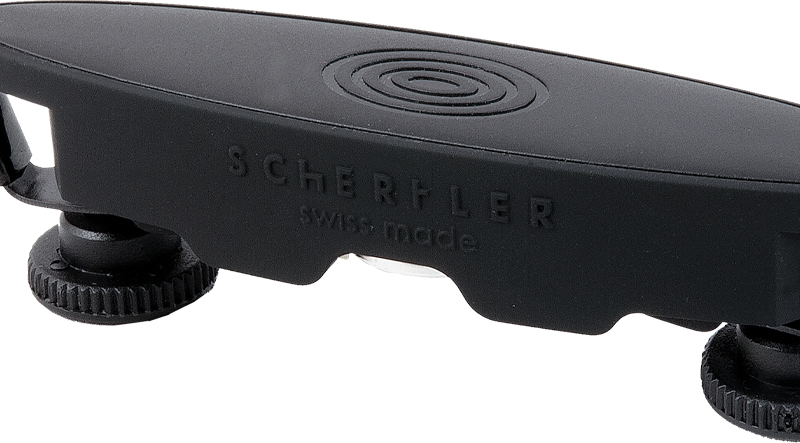
    The Magnetico pickup is both active and offers good electronics, with flat frequency response (i.e., an uncolored, truer acoustic tone) and fast transients, meaning it delivers each note with impressive speed. The AG6 also has a full, warm tone, unlike the thin, tinny sounds of some piezo systems. You just have to keep in mind that it runs on a 3-volt lithium battery that periodically needs replacement (though it can last up to 120 hours).

    The AG6 is mounted into the soundhole, and the female end of its output cable can be set up in two ways. To mount it permanently, the output jack replaces the strap’s end-pin and is screw-mounted onto the body. If you plan to use it on multiple instruments, you can buy the CA-M cable that plugs into the pickup housing and dangles from the soundhole.

    Schertler also provides another cool feature; thanks to a mini input jack (Ext-In), you can plug in your own pickup or one of Schertler’s condenser or contact mics. There’s another Volume thumbwheel for an additional pickup, allowing the user to blend the AG6 with the second unit to your own preference – again, that magic combination of different pickup tech.

    Fitted into a Yamaha dreadnought and acoustic amp, the AG6 gave strong results – a commendable tone that sounded like a natural acoustic guitar without any piezo harshness. If you’re looking to upgrade your flattop’s pickup, the AG6 is a solid contender.


    This article originally appeared in VG October 2017 issue. All copyrights are by the author and Vintage Guitar magazine. Unauthorized replication or use is strictly prohibited.
  • Gurus Amps’ SexydriveMkII

    Gurus Amps’ SexydriveMkII

    Price: $249
    Info: www.gurusamps.com

    Chalk up another score for Italian innovation. Chicco Bellini and his company, Gurus Amps, are among the top dogs in the Italian gear market. They’ve also been gaining steam worldwide since the release of their most popular pedal, the Echosex 2, a few years ago.

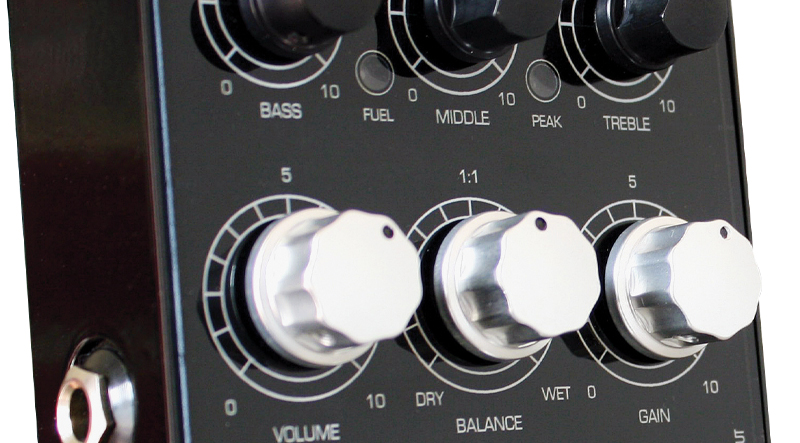
    The SexydriveMkII is a reissue of Gurus’ first pedal, the Sexydrive, with additions for further tweaking. It also conforms aesthetically to the Gurus look, with a Plexiglass faceplate that makes it feel premium and unique. On the front, the SexydriveMkII features a passive three-band EQ, the standard Volume and Gain controls, and a Balance control that gives you the ability to mix in your dry signal with the distorted one, essentially adding more shades to an already impressive palette of overdrive colors.

    Like its predecessor, the SexydriveMkII seeks to emulate the crème de la crème of driven amp and overdrive tones, mixing influences from the Dumble Overdrive Special and Klon Centaur. A few hours with the pedal left the impression of an overdrive designed by a hi-fi specialist – meticulously sculpted in all frequencies, with enough compression to make it feel tight but not noticeably squashed. With the gain cranked up, it responded to changes in dynamics with a nice smooth bite. The Balance control adds an interesting functionality to the drive characteristic; mixing in more of the dry signal makes the pedal feel bouncier and clearer, while mixing in more distorted signal makes the overall sound smoother (high-end doesn’t peek out as much).

    I found the sweet spot a few ticks above the 1:1 clean-to-distorted ratio, where it had enough dynamics and compression to sound like a classically smooth overdrive, but the added detail of a good clean tone lying right underneath.


    This article originally appeared in VG October 2017 issue. All copyrights are by the author and Vintage Guitar magazine. Unauthorized replication or use is strictly prohibited.

  • Ernie Ball’s Music Man Cutlass/Stingray

    Ernie Ball’s Music Man Cutlass/Stingray

    Price: $1,599 (Cutlass); 
$1,669 (Stingray)
    Info: www.music-man.com

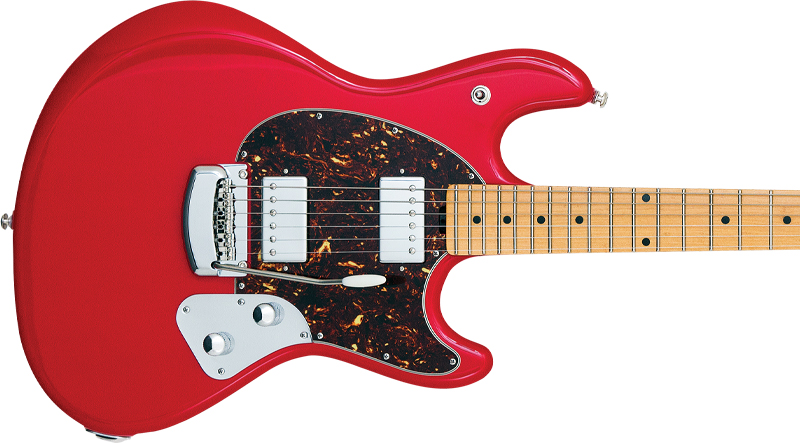
    For many builders of solidbody guitars, the challenge is to improve on a handful of pioneering designs from the 1950s and ’60s. No one knows this better than Ernie Ball Music Man – in fact, the brand was co-founded by Leo Fender in 1974. Its latest Cutlass and StingRay solidbodies are attempts to improve classic archetypes in very different ways.

    The Cutlass aims to perfect Leo’s 1954 Stratocaster without being a straight-up copy. The tester was an HSS rosewood-fingerboard version (though it’s also available in a more-traditional configuration with three single-coil pickups and a maple fingerboard). The HSS Cutlass is for guitarists who want more girth and firepower for solos and power chords. To eliminate noise, the ’60s-voiced single-coils in the neck and middle positions utilize their active Silent Circuit and buffered output and require a 9-volt battery in a rear chamber. Also look for a five-way pickup selector with 250k Volume and Tone controls.

    Other specs include an alder body, maple neck (25.5″ scale, 10″ radius), 22 stainless-steel frets, and Music Man’s trademark 2+4 headstock (for a straight string-pull) with Schaller M6 locking tuners. The bridge is a Music Man Modern tremolo with bent-steel saddles; it’s a dive-only vibrato, but, because it has locking tuners, you probably won’t be able to make the Cutlass go out of tune no matter how hard you try.

    The neck profile goes from a soft V (lower frets) to a C carve (upper frets) and the net result is fast and comfortable. Plugged into a tube combo and software-modeling SIMs, the Cutlass evoked old-school tones married to modern performance standards. There was plenty of single-coil quack, but the ’bucker in the bridge delivered additional lead cut and sustain. In fact, a humbucker fitted into an alder double-cutaway is a unique tone in its own right.

    The StingRay’s most dramatic departure from the Cutlass is its African mahogany body instead of alder. Combined with passive humbuckers and 25.5″ scale, this plank seeks the elusive sweet spot between Gibson and Fender sensibilities.

    Though the StingRay has the same 2+4 headstock and diving tremolo bridge as the Cutlass, its body is an offset shape and its pickguard configuration is different – where the Cutlass has a single sheet of tortoiseshell, this solidbody has tortoiseshell over the pickup cavity and a chrome section under the metal Volume and Tone knobs. Also, the three-way pickup toggle is located in the upper bout – another nod to Lester rather than Leo.

    On the job, the StingRay will give you many of the fat humbucker tones players want, from rock and blues to jazz and country. And that neck is super-fast. The mahogany yields hairier tones than the Cutlass, but as mahogany is a denser material, expect the StingRay to weigh a few ounces more.

    Both the Cutlass and StingRay give players modified Leo concepts. Cobble them together with the company’s obsessive attention to detail and playability, and you have a pair of superb, professional solidbodies. Right out of the box, each is impressive – though from Ernie Ball Music Man, we expect no less.


    This article originally appeared in VG October 2017 issue. All copyrights are by the author and Vintage Guitar magazine. Unauthorized replication or use is strictly prohibited.
  • EarthQuaker Devices’ Erupter

    EarthQuaker Devices’ Erupter

    Price: $145
    Info: www.earthquakerdevices.com

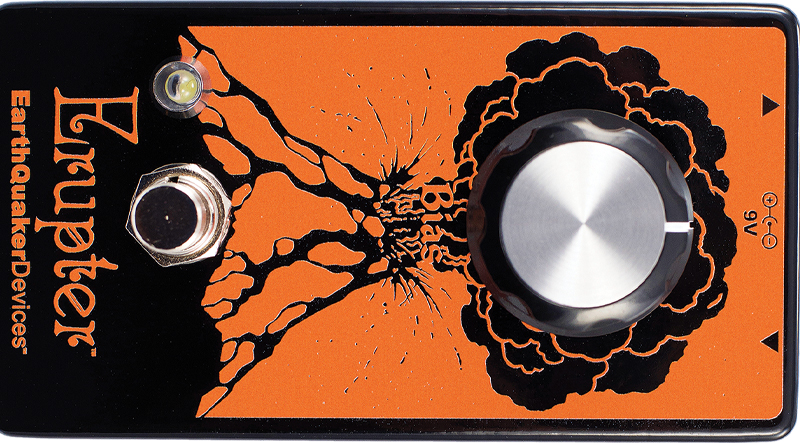
    EarthQuaker Devices is one of the most admired pedal builders today, thanks to their original designs that feature tweakable controls which allow players to easily dial in their own unique sounds. With more than forty pedal offerings, the EarthQuaker line covers everything from guitar synth to psychedelic reverb. Their latest – the Erupter – is a fuzz unit featuring an amazing amount of sophistication under its deceptive single Bias knob.

    Removing the back from most fuzz units, especially vintage ones, reveals a handful of components. Not so with the Erupter. A look inside this small box provides all the proof needed that the chaps at EarthQuaker put a ton of thought into the circuit design crammed within.

    First, there’s the small transformer on the board that mimics the output of a pickup, thus allowing the Erupter to be placed anywhere in your chain while remaining responsive to guitar volume changes. Also, unlike most fuzzes, the Erupter has a buffer to prevent loss on the high end. Other upgrades include a relay and soft-touch footswitch to engage true-bypass rather than the typical mechanical switch that is both prone to popping when engaged and not very reliable.

    As mentioned, the Erupter has a single knob controlling the bias to the transistors, with a center detent for the optimum bias setting. Turn it to the right, and it becomes louder and perhaps stronger sounding. Go to the left, and the fuzz begins to spit as it becomes more gated. The tone of the fuzz is strong and forceful, and features a significant volume boost to help keep the effect from getting lost in the mix.

    The EarthQuaker Erupter is a powerful fuzz device, with ingenious circuitry allowing, incredible signal-boosting capability, and variety of fuzz tones, all of which conspire to make it a great fuzz contender.


    This article originally appeared in VG October 2017 issue. All copyrights are by the author and Vintage Guitar magazine. Unauthorized replication or use is strictly prohibited.

  • Guild Bluesbird

    Guild Bluesbird

    Price: $999.99
    Info: www.guildguitars.com

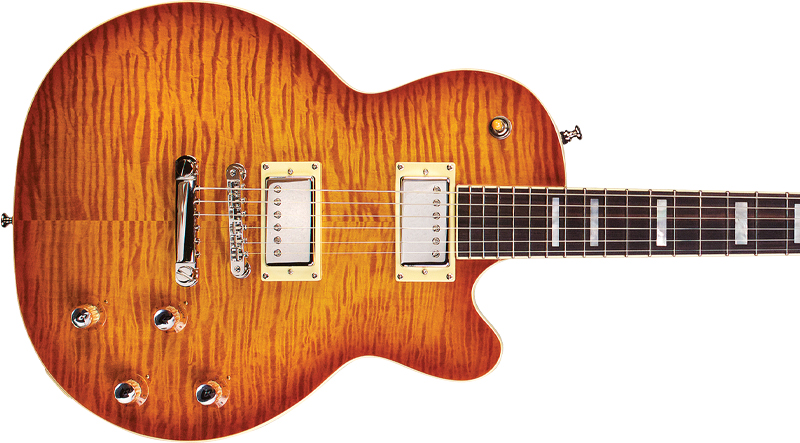
    The Guild Bluesbird has a long history that began in the 1950s with Guild’s answer to the Gibson Les Paul –the M-75 Aristocrat, later renamed the M-75 Bluesbird. The guitar appeared in the Guild catalog for years before it was discontinued in the 1970s. It remained off the radar until the mid-1990s, when Guild reissued it with changes to the body shape and certain appointments. Then it disappeared again – until now.

    The latest iteration of the Bluesbird is a mashup of features from past models. The body shape is nearly identical to the original M-75 Bluesbird. The traditional crown-like Guild Chesterfield headstock and logo are also employed, but that’s the end of its similarities to vintage models.

    The new Bluesbird features a body measuring only 1.5″ at the edge, considerably thinner than older Bluesbirds. A beautifully carved flamed maple top sits on a chambered mahogany body, bound on top and boasting a striking Ice Tea Burst finish (Solid Black is the other color option). The polyurethane finish doesn’t feel thick or sticky.

    Scale length is 24.75″, and the bound neck is a sleek vintage soft U shape that will please many guitarists (though those preferring thicker necks may balk). The rosewood fingerboard has medium-jumbo frets expertly installed and finished, and the nut is bone. Grover open back Sta-Tite tuners keep the Bluesbird nicely in tune. The pickups are USA-made Seymour Duncan JB (bridge) and ’59 (neck) models. TonePros locking bridge and stop tailpiece are included – very thoughtful touches.

    Bluesbird controls are standard two Volumes and two Tones with clear plastic knobs and a toggle. The test model was shipped sans a pickguard, although a guard is standard on the black version and is included in the gig bag for the sunburst model as an option.

    But how does the Bluesbird play?

    “Effortless” comes to mind immediately. This is a very resonant instrument that sounds bright and lively unplugged. Single-string riffing was a breeze, the intonation was right on target, and plugged in, a pleasing variety of tones were available: clean, rich mids and snarling high end with added gain on the bridge pickup.

    The Bluesbird would be comfortable in almost any musical setting, but make no mistake: this is a rock guitar at heart. The Duncan pickups and TonePros hardware are “built-in mods” that ratchet up the desirability. And with a street price under a grand, the Guild Bluesbird is an extremely viable alternative to similar looking, higher priced solidbodies.


    This article originally appeared in VG October 2017 issue. All copyrights are by the author and Vintage Guitar magazine. Unauthorized replication or use is strictly prohibited.
  • Wampler Pedals’ Bravado

    Wampler Pedals’ Bravado

    Price: $1,899.97
    Info: www.wamplerpedals.com

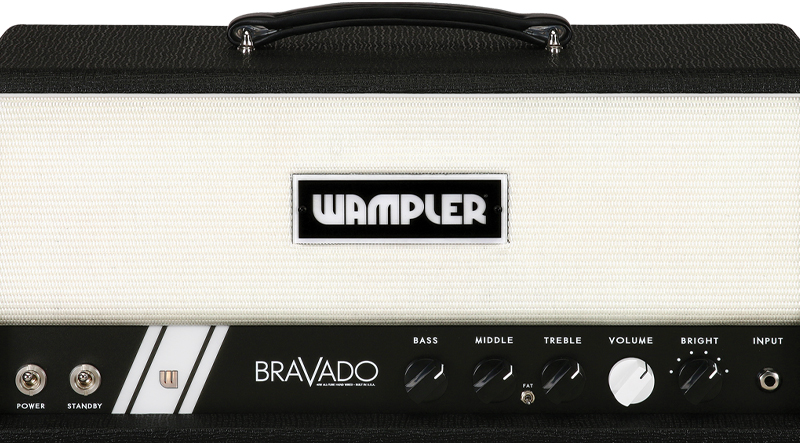
    What’s a pedal platform? Nope, it’s not a carbon-fiber Pinarello mountain bike with Shimano shifters and derailleurs. It’s another term for the Bravado 40-watt head designed by pedal impresario Brian Wampler for any player who wants to hear that floor-bound pedalboard climb high like a Pinarello.

    Behind the classy if understated exterior details and logo lie 6L6 power tubes and hand-wired circuitry. Power and standby switches are to the left of the front panel, with input to the right. And just one spot over, in white, sits the all-important Volume knob. There are also Treble, Middle, and Bass controls, and 16-, 8-, and 4-ohm speaker loads are selectable on the rear panel. No new bells and… wait – is that a Fat mini-switch? And a six-way Bright switch to give guitarists a sweepable selection of tone coloration to add a little sizzle to the high end?

    Indeed, the Bravado is for tone tweakers who can hear pedals that attenuate higher frequencies. Or fans of single-coils who could use a little help in the mids.

    Tested with Kent Armstrong single-coil  pickups through a 12″ Celestion Greenback in an extension cab, the pedalboard was subdivided to take advantage of the effects loop. Wampler Ego Compressor, Ibanez Tube Screamer, and Duncan Palladium went into the front input. Brian Wampler worked with Dave Friedman to develop an active effects loop that would deliver an unfiltered sound, or a sound filtered only by the effects, in this case an E-H Holy Grail Reverb, Seymour Duncan Catalina Dynamic Chorus, a Wampler Tape Echo, and a Crazy Tube Circuits SPT for tremolo and related craziness “Clean.” That generic term sums up the unprocessed sound of the Wampler Bravado head, with no Master and no onboard reverb. The stacked pickups liked Bright switch settings 2, 3, and 4 for a natural sound. Position 1, and a flick of the Fat switch, and the solidbody began to behave like a hollowbody.

    It’s all about the pedals, though, and the Bravado truly came alive when a Wampler Mini Ego compressor was activated with knobs straight up. Adding tonal color effects, starting with the Holy Grail reverb, the Bravado accentuated the impact of each pedal so that once “normal” settings seemed extreme. The whacky “Fleurb” setting of the Grail became detailed enough to cause mild vertigo. The Catalina Chorus and SPT reacted similarly, also with an apparent magnification of the impact of each pedal. Combining multi pedals only became unmusical when the effects were pushed to their sonic limits. But with typical settings, the characteristics of each individual pedal remained identifiably individual. Reference checks with a 60-year-old Ampeg Jet and a newish Fender Blues Jr. confirmed that the Bravado’s effects loop’s transparent sound outperformed both amps.

    The downside to this extraordinary clarity lies in the pedals themselves, especially noisy overdrive, fuzz, and distortion units. Extraneous hum and buzz are magnified, through both the effects loop and the front panel jack. Despite this, the Bravado screamed behind that extra juice, with rolling harmonics on chords and eternally sustained notes. Swapping in an ancient battery-powered DOD Overdrive/Preamp 250, dialing down the Bright switch and Treble control, activating the Fat mini-switch and the compressor, the neck stacked humbucker achieved a “Look, Ma. No rolling off the tone control” “woman tone.”

    At 40 watts, the Bravado is certainly club gig-worthy, but it could be the ultimate home dream amp. If those pedals you just couldn’t throw away are in a box in the studio, the Wampler Bravado demands that you take them out and revisit them.


    This article originally appeared in VG October 2017 issue. All copyrights are by the author and Vintage Guitar magazine. Unauthorized replication or use is strictly prohibited.

  • Pirate Guitar Effects’ Plank Overdrive and Boost

    Pirate Guitar Effects’ Plank Overdrive and Boost

    Price: $199
    Info: www.pirateguitarfx.com

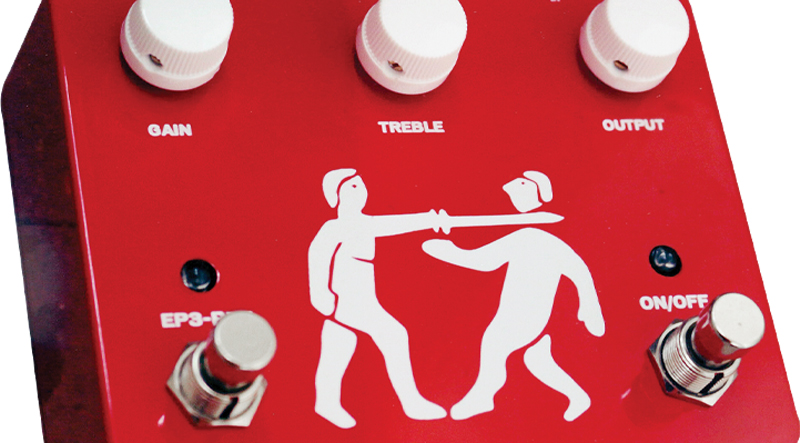
    Every pro guitarist who has laid eyes on the Pirate Guitar Effects Plank has initially thought they recognized the logo and taken a second look. The Plank is something other than a clone, though: it’s a take on a classic overdrive circuit – with added bonus points.

    Germanium this, true-bypass that – all of the Plank’s boutique bells and whistles reside inside a heavy-duty red casing with that eye-catching graphic. The Plank uses a 9-volt battery (now considered old-school) or a standard center-ring 9-volt power supply. With Gain, Treble, and Output dove-head knobs and a stomp switch labeled “On/Off,” it’s all self-explanatory territory familiar to OD pedal users.

    The left stomp switch, however, puts the Plank in unique territory, kicking in an Echoplex EP-3 preamp. And there are secrets to be explored by simply removing the back cover. For the musician who needs to compensate for differing outputs and sounds of humbuckers versus single-coils, there’s a Dark/Bright switch and the internal volume trim pot.

    An OD pedal needs to hit a tube amp to work properly, so a Tele-parts guitar was plugged into a late-model tube combo set flat with reverb on 4 for a classic rock/blues jam session. With all knobs turned straight up, the guitar and amp performed together with smooth added boost exhibiting little breakup or squashed compression. Finding a place in an unrehearsed band mix was easy with the Plank. It simply made a good-sounding amp and guitar sound better without the crunch that can overwhelm an onstage mix. A strong single-note solo voice was characterized by good note separation, and double stops with bent notes sustained and sang with clarity and attitude. It was still possible to color chords without damning dissonance, yet a bent B string could hang on seemingly forever with a little finger wiggle.

    Kicking in the Echoplex preamp circuit via the left stomp switch redefined the Plank, adding a hi-fi gloss with noticeable gain. Selecting the preamp before the right-switch circuitry produced different colors, and a few moments of tailoring the sound through the internal adjustments compensated for the impact of humbuckers in a hollowbody. Though these adjustments couldn’t be done on the fly, they maximize the usefulness of the Pirate Plank.

    Smooth, sustaining overdrive, not too gritty, is what characterizes the Pirate Plank. You want fuzz or ragged breakup? Check your pedal stash – you already got that. Maybe it’s time to walk the Plank.


    This article originally appeared in VG October 2017 issue. All copyrights are by the author and Vintage Guitar magazine. Unauthorized replication or use is strictly prohibited.