1962 Ampeg R-12-R Reverberocket Preamp tubes: two 6SL7, two 6SN7
Output tubes: two 6V6, cathode-biased
Rectifier: 5Y3
Controls: Volume, Tone, Dimension (reverb), Speed, and Intensity (tremolo)
Speakers: Jensen Special Design C12R
Output: approximately 18 watts RMS
In the view of Ampeg main man Everett Hull, rock and roll was not a musical form to which his company desired to cater. As related by the late amp guru Ken Fischer, who worked as an Ampeg engineer long before founding Trainwreck Circuits, Hull felt “rock and roll doesn’t swing – it never will.” What did swing for Hull? Jazz, of course, and the piano and bass-playing Hull himself preferred, therefore, to cast his pearls before the princes of the jazz world – not the swine of rock and roll. For that very reason, and very much by design, Ampeg guitar amps of the 1950s and ’60s were bold, clean, clear, and rich, but they didn’t really grind, bite, or sting unless you really pushed them past their optimal parameters. There was one amp, however – and again, this is a Fischer-certified tip – that fell through the cracks.
Part of the key to the early-’60s R-12-R Reverberocket’s rockability is its pair of 6V6 output tubes. This long-standing Ampeg combo went through several iterations from the late 1950s into the ’70s, and many were made with output tubes that just didn’t want to break up much. We already know, though, that 6V6s give up the goods pretty readily in plenty of other amps, and the rest of the Reverberocket of this era seemed predisposed to go along with it. “That was Everett Hull’s one effort to make an amp a little more Fendery,” Ken told me some years ago, and while it might have helped an Ampeg finally appeal to a more youthful crowd, its playing against type doomed it to an early demise. “You’ve got to keep in mind that Everett Hull hated rock and roll, he hated distortion – even when blues guys would play distortion,” Ken continued. “Amps were not to be distorted. So those R-12-Rs had blue Jensens in them, 6SN7 and 6SL7 octals [preamp tubes], which are always nice, fat-sounding tubes. That amp would be a great indie-rock machine. Ampeg made it for a short while and all the jazz guys were complaining, ‘What’s wrong with the new Reverberockets? They break up too early!’ So Everett Hull converted them back to 7591 [output tubes] because people were complaining. But if they had marketed them as a rock-and-roll amp they probably would have been very successful.”
Fischer’s analysis is fascinating because, the way tastes have shifted, the very same characteristics that made Hull and his jazzer pals denigrate the 6V6-loaded Reverberocket are more likely to make players today dig it. Honestly, you want to play one now, right? Be aware, though, that while Ken called our 1962 Reverberocket an amp that was “a little more Fendery,” in context, he only meant slightly so. As a point of pride, Ampeg never did anything quite like Fender, Gibson, Valco, or any other American maker of the day, and this R-12-R does plenty of things in its own way. The 6V6s are cathode-biased, a la Fender’s tweed Deluxe, but Ampeg adds a little negative feedback to tighten it up a bit, something Fender only did with its fixed-bias amps. The Reverberocket’s tremolo and reverb circuits were also very different from anything Fender ever used… even though, ahem, Fender didn’t have reverb in an amp until the year after this came out. The bias-modulating tremolo circuit is simple and a little weak, but sounds pretty good regardless, something akin to that of Gibson’s smaller amps of the era. Back to the reverb, though, which really lives up to the common acclaim for Ampeg’s watery wonders. The older amps like this often need a little circuit work, perhaps new caps and resistors for those that have shorted or strayed far from spec, and occasionally a replacement for that impressively long spring pan, too, but gotten up and running right, with a fresh couple of 6SN7s to boot, this Ampeg reverb can sound lush and thick, without burying the tonal clarity the way some overly deep reverbs do. Note, in fact, that the Reverberocket’s control panel calls it “Echo” and labels the depth control “Dimension,” which tells you from the outset that this might be something a little special.
In addition, Fender, Gibson, and Valco had all stopped using octal preamp tubes like the 6SL7s and 6SN7s here in the R-12-R nearly a decade before. Combined with the 6V6s’ easy crunch and chewy compression, though, these fat bottles are a big part of the Reverberocket’s magic. Put single coils through it and the Reverberocket retains decent clarity and a crystalline bite up to a usable club volume, then juices up as you roll the Volume on past noon or so. With humbuckers, it gets into bluesy or gritty rock-and-roll territory pretty quickly, though still retains a firm edge that helps keep from flabbing out – for a while, at least. Of course, the vintage Jensen C12R speaker will start to flab out a little in its own right after a point, though should sound glorious in doing so, and just before, but a stouter, more efficient speaker might be worth considering if you want to get maximum gusto out of the circuit here (the four-bolt speaker mounting even lets you easily sub a contemporary Celestion or other speaker with four-hole frame, if that’s your flavor of choice).
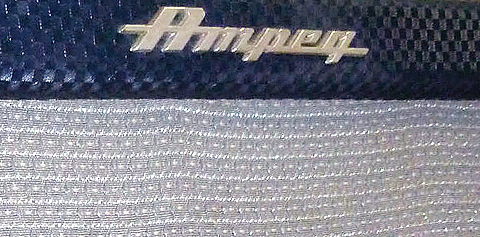
This Reverberocket also harks to an earlier age in the looks department, holding on to an aesthetic that was rapidly vanishing at the hands of other makers. The dark-navy vinyl is a little more fun than black, yet still quite serious and businesslike, and the checkerboard pattern adds a little extra flair, too. And with looks and tone admirably covered, it’s an impressively well-built combo, top to tail, too, from the logically laid-out and neatly wired circuit to the fingerjointed solid-wood cabinet and the plywood baffle.
As groovy a little rock-and-roller as this thing is, it’s difficult to pin its use down to any specific non-jazz players, and of course the long list of jazz artists who played its brethren helped drive it out of production alarmingly quickly, so it wasn’t on the shelf for very long. In good shape, though, and with fresh tubes and a lively speaker, the early-’60s Reverberocket still offers a lot of honey-drippin’ tone for not a lot of cash.
This article originally appeared in VG January 2013 issue. All copyrights are by the author and Vintage Guitar magazine. Unauthorized replication or use is strictly prohibited.
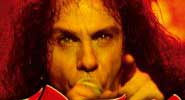
He produced wicked imagery, epic theatricality, and wielded an uncanny personal connection to his audience. And then there was the voice. The late Ronnie James Dio was the greatest metal vocalist of his generation, but he also had a knack for discovering great guitar players.
On Dio Live In London, Dio takes guitarist Tracy G on the road in support of the Strange Highways album. The year is ’93 and the venue is the Hammersmith Apollo. The band is tight, the set mesmerizing, and Tracy G is killing. As the most underrated guitarist in Dio’s history, G ignores his predecessors in favor of idiosyncratic brutality and relentless harmonic destruction. His untethered interpretations mirror the fresh direction of the studio album, making this a must for hardcore Dio fans.
This Is Your Life is about homage and the sobering reality that there will never be another Dio. Thirteen tracks from various bands pay tribute, doing a great job honoring his legacy. Highlights include riveting interpretations of “Straight Through The Heart” by Halestorm, “Holy Diver” by Killswitch Engage, and “Egypt” by Doro.
This article originally appeared in VG‘s September ’14 issue. All copyrights are by the author and Vintage Guitar magazine. Unauthorized replication or use is strictly prohibited.
Electra Guitars Invicta model has an ash body with a carved, quilted-maple top, set maple neck with medium C shape, sculpted heel with 22 jumbo frets, a 12″-radius rosewood fretboard, mother-of-pearl inlays, GraphTech Tusq nut, double-action truss rod, chrome hardware, and a TonePros bridge/tailpiece. It uses tortoise binding on the body, neck and headstock. The guitar also serves to introduce Electra’s Five-Position Coil Linkage System, which functions like a two-pickup/three-way toggle but offers nine pickup combinations/sounds. Visit www.electraguitar.com.
(LEFT TO RIGHT) A 1965 Ventures Model bass. A late-’60s two-pickup Ventures bass. A custom Maphis Mark X in natural finish. Maphis Mark X in blue-sparkle finish. Ventures Model bass photo courtesy of Bob Shade. Ventures bass photo courtesy of Mike Gutierrez. Maphis Mark X in natural photo: Bill Ingalls, Jr. Maphis Mark X in blue-sparkle photo: Michael Stewart, courtesy of Bob Shade.
Mention the Ventures to a pop-music aficionado and the conversation will likely focus on the surf-music phenomenon of the early 1960s or – if that person also happens to be instrument-savvy – the band’s affiliation with Mosrite guitars and basses.
Though the partnership lasted only a half-decade, the Ventures have been perpetually associated with Mosrite, as bassist Bob Bogle noted in a 1997 interview with VG.
“[The association with the brand] will probably follow us around for the rest of our lives,” he said. “We can’t seem to shake the connection.” A closer look back, of course, reveals more, including the fact that although the band recorded surf instrumentals as the music reached its peak, it actually preceded the genre, charting with “Walk Don’t Run” in 1960. Nonetheless, the Ventures and Mosrite are the first band/brand association recalled by many a babyboomer guitarist.
(LEFT) Combo CO Mark X Model 301. (RIGHT) Celebrity CE II Mark X Model 212. Mark X photos of Mike Gutierrez. Ventures flyer courtesy of Vintaxe.
The single-pickup version of the Ventures Model bass was part of the Mosrite line from 1963 to’65, while the two-pickup was offered from ’66 to ’69. The single-pickup example you see here is exactly like the one on the cover of the 1965 album The Ventures Knock Me Out!; its body has the classic Mosrite profile, M-notch headstock, planaria-head truss-rod cover, metal nut, zero fret, thin bolt-on neck with 20 frets (joining the body at the 18th), tiny fretboard markers, 301/4″ scale, adjustable/intonatable bridge with large silo-shaped saddles (covered here by a handrest), “German carve” around its body (as found on most Mosrite solidbodies), and a wood-trimmed tailpiece. The bodies were basswood, necks were maple, and fretboards were rosewood. Like many Fenders and Mosrites of that era, the white celluloid pickguard on this one has a slight “mint green” patina.
A 1965 Mosrite flyer hyped the Ventures Model with a bold-faced proclamation, “The finest performance demands the finest instrument!!” and showed the quartet of Don Wilson, Nokie Edwards, Mel Taylor, and Bogle in matching outfits with matching instruments. Other copy says, “A quality instrument, designed especially for the demanding professional musician and the amateur who desires the finest.”
Around the time the two-pickup Ventures models were introduced, the company had switched to “duckfoot” tuners on its basses, as seen on the three-tone sunburst example shown here.
When the Ventures’ affiliation with Mosrite ended in a controversial flameout in ’67, the guitar and bass models were continued as the Mark series (the bass was the Mark X Model 103).
Mosrite hooked up with another notable guitarist, Joe Maphis, for a signature series of instruments, and the bass in that aggregation was known as the Mark X Model 502. Maphis-series basses had the same neck, short scale, and features as the Ventures Model, but with slightly larger bodies that were a combination of a hollowed-out walnut base (with a depth of an inch and a half) with a spruce top that was, according to factory literature, “music grade.” The bass had binding (called “purfling” in the ’67 catalog) where the top and base joined. Guitar builder Bill Gruggett (1937-2012), who worked at Mosrite and had his own line of guitars and basses (VG, July ’12), recalled painting the blue bass during his tenure with Mosrite.
The Maphis silhouette was also used with the Combo series instruments, but the CO Mark X Model 301 bass was hollow (though a Mosrite catalog referred to it as “semi-acoustic”). Combos typically had a maple back and sides, with a thick hardwood top (note the bound f-shaped sound hole). Like the Maphis model, it also had a depth of 11/2″, but had “purfling” front and rear. The handrest has been removed from the example you see here. Note the similar pickguard silhouettes on the Venture Models, Maphis, and Combos basses.
The Celebrity models looked more standard/commonplace, which means they were the “odd man out” amongst the line. While their double-cutaway silhouettes resembled Gibson’s thinline series, Celebrity guitars and basses had bolt-on necks, and were promoted as “Acoustic Arch-Top Guitars.” The series also had multiple binding front and back, as well as bound sound holes.
The pickguard for Celebrity models was a blob-shaped item, and the controls (master Volume and Tone, three-way pickup toggle switch, and jack) were all top-mounted in another piece of plastic shaped like a painter’s palette.
Specifications on the bass in the Celebrity series, as listed in a 1967 catalog, show three variants. The CE I Mark X Model 203 had a body depth of 2 3/4″, 22 frets on a 30 1/4″ scale, and neck binding, while the CE II Mark X Model 212 had a body depth of 1 7/8″, with a bound neck of the same scale, and 20 frets. The CE III Mark X Model 221 had the thinner body, but a scale of only 24 1/2″ and no neck binding; i.e., the CE III was apparently a guitar with bass parts installed.
By the ’70s, Mosrite had fallen out of favor. In the ensuing decades, it opened and closed several production facilities. Company founder Semie Moseley died in August, 1992, soon after opening a facility in Arkansas; it closed the following year.
Despite its brevity, the pairing of the Ventures with the Mosrite brand motivated an untold number of guitarists to seek out Mosrite instruments. Today, the band and the brand enjoy unique status in the history of American guitar music.
This article originally appeared in VG July 2013 issue. All copyrights are by the author and Vintage Guitar magazine. Unauthorized replication or use is strictly prohibited.
Jazz guitar pioneer Mary Osborne was the only female guitarist to realize a significant impact on jazz in the 1940s and ’50s – and many aficionados agree that her swinging style earned her confirmation as one of the early architects of R&B and rock and roll.
Born July 17, 1921, in Minot, North Dakota, Osborne enjoyed a career that spanned the decades from the late ’30s until her death in March, 1992. And she called Charlie Christian her mentor; perhaps no other guitarist was more directly influenced by his genius.
The tenth of 11 children, Osborne grew up in a musical environment. Both of her parents played guitar; her mom sang and, though her dad was a barber by trade, he was also a bandleader. At the age of four, Mary was strumming a ukulele around the house. A few years later, she joined her dad’s group on banjo, then became precociously adept at singing, tap dancing, as well as playing the violin, bass fiddle, and guitar. In a 1974 interview in Guitar Player she told writer Leonard Ferris, “When I picked up that first guitar, that was it. I knew that’s what I wanted to play the rest of my life.”
Today, her son, Ralph Scaffidi, Jr., remembers how, “By her mid teens, she was good enough to play jazz and sing in an all-girl trio on radio and in the clubs around Bismarck [North Dakota, about 100 miles from Minot]. And she was really captivated by the playing of Django Reinhardt, Eddie Lang, and Dick McDonough.”
At age 17, Osborne’s life and approach to playing changed profoundly. Musician friends encouraged her to drop by a local club called The Dome to hear the Al Trent Sextet, a territory band that included guitarist Charlie Christian. “It was the most startling thing I had ever heard,” she said to Ferris in GP. Christian playing a Django-influenced version of “Honeysuckle Rose” was something she’d never forget. “I heard what I took to be a tenor saxophone,” she remembered. “I asked where the guitarist was, then realized the saxophone sound was coming from a crude amplifier attached to a guitar. I was so inspired, all I wanted to do was imitate him.”
She later recalled that some of the figures Christian was playing that night evolved into the tunes he recorded with Benny Goodman – “Flyin’ Home,” “Gone With What Wind,” and “Seven Come Eleven.” In the May ’02 issue of Just Jazz Guitar, writer Molly Cort cited Osborne’s recollection. “I watched how he played double notes… if you never had a lesson, it was clear what he was doing.” Osborne watched Christian for a few nights before approaching him, asking, “Those were Django’s chord changes on ‘Honeysuckle Rose,’ weren’t they?” She said he smiled and said, “Anyone who knows those were Django’s chords has to be a guitar player.”
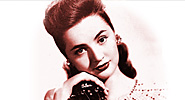
Mary Osborne in a promotional photo from 1946.
That brief exchange was a plot point in Osborne’s life, as recalled by her son. “They struck up a very nice friendship and, after he listened to her play, they jammed together and he gave her pointers and musical ideas,” he said. Christian then hipped her to a store that sold the Gibson ES-150 like he played, and told her where she could get an amp. Though it would be another year before jazz pianist Mary Lou Williams would recommend him to producer John Hammond, Christian was making a name for himself in jazz’s “Kansas City School.” Osborne was nonetheless impressed to find the guitar in a window display with a sign proclaiming, “As played by Charlie Christian, featured in the Al Trent Sextet.” The ES-150 cost her $85, and the amp another $45.
The Gibson archives tell us that until the introduction of the ES-175 in 1949, all Gibson archtops were made with solid arched tops, and the ES-150, introduced in ’36, was no exception. That was probably because no one, including Gibson, was sure if the electric guitar would catch on. The ES-150 was a lower-mid-level model with dot position markers, single-ply binding, a flat back, and little adornment. It did, however, have a reasonably large 161/4″ body with a carved spruce top, and its single-coil pickup was attached to an unusually large magnet mounted beneath the center portion of the top and held by three screws. It could accommodate a bold, percussive attack and produced surprisingly good definition.
There’s no doubt that pickup helped define and shape Osborne’s sound and contributed to the consensus of her being the doyenne of female jazz guitarists. She soon joined the small coterie of late-’30s electric-guitar pioneers that, besides Christian, included Eddie Durham, who recorded with Count Basie’s Kansas City Six, Eldon Shamblin with Bob Wills, and George Barnes, who first went electric recording with Big Bill Broonzy in 1938.
Excited about her new sound, Osborne hit the road for many months with the Winifred McDonnell Trio, playing mostly dance tunes, jazz, and Andrews Sisters pop songs. Because Osborne was a minor, McDonnell, who remained a lifelong friend, became her legal guardian. The trio traveled around North Dakota and Minnesota appearing on radio shows and in clubs before landing a daily show on KDKA in Philadelphia.
After a year in Philly, the trio was hired to appear in the stage show of actor-turned-bandleader Buddy Rogers. In a 1991 interview with Karen Schoemer of the New York Times, Osborne said, “He liked us so much he hired us. He was a very good musician and… looked like a movie star. Of course I was impressed. I thought musicians were movie stars, anyway.” But after several weeks on tour, Rogers dissolved his band after an appearance in New York City, where Osborne found herself embarking on the next phase of her career.
The Big Apple, Take One
Now a seasoned performer, Osborne took advantage of her surroundings. Almost immediately, she began exploring the New York music scene and meeting other jazz musicians. Back on it own, The Winifred McDonnell Trio found a gig where they were staying – the Piccadilly hotel in the Theater District on 43rd Street, west of Broadway. The Piccadilly was among many hotels during that era that catered to musicians. It was there that singer Johnny Drake introduced Mary to trumpeter Ralph Scaffidi, her future husband. Scaffidi, who was with the Dick Stabile band, was taken with Mary’s looks and demeanor. But when she mentioned that she played electric guitar, he wasn’t at all eager to hear her play.
Osborne in a Gretsch ad.
“My dad automatically assumed she played Hawaiian steel in the style of Alvino Rey, or some hillbilly stuff,” said Ralph, Jr. “Finally, when picking her up for a date, he heard her playing through her hotel room door and was stunned – and of course, very interested.”
As fate would have it, in the following weeks, romance blossomed for all the girls, subsequently bringing the trio’s career to a coda. All three had met their future husbands. The breakup was amicable, but no doubt bittersweet.
After an introduction from Ralph, Dick Stabile eagerly hired Osborne, but she was disappointed in not being featured. So she left for a Florida tour with yet another all-girl band led by Jean Wald. But a few weeks in the Sunshine State proved too similar to the road grind she’d already endured, so Osborne returned to New York.
She found a gig, again because of Ralph, with the Bob Chester band. But Chester wanted Mary for just four dates over a two-week period. She was puzzled because the band already had a guitarist and female vocalist. Her being hired didn’t make sense. The final date of her ad hoc employment was for prom night at Columbia University. So the event could feature continuous music, the college hired two musical acts and billed it as a “battle of the bands” contest. She arrived at the gig to find they were on the bill with Benny Goodman and his Orchestra, featuring her old friend, Charlie Christian. “She just cringed,” said Ralph, Jr. “She’d finally figured out she’d gotten the gig only because Chester wanted an electric guitar player for that appearance.” Osborne was, “…embarrassed, but Charlie was tickled about it.” It was the last time they would ever see each other.
The early ’40s in New York was a productive time for Osborne. In addition to recording with Bob Chester and Terry Shand, she worked with a number of name bands. She also landed a gig on Saturday afternoons in the house band at Minton’s Playhouse, where great players would jam. It was at Minton’s she first played with Coleman Hawkins, Ben Webster, Dizzy Gillespie, and Art Tatum, all of whom would later hire her for gigs and recordings.
Finally realizing enough stability to marry, Scaffidi and Osborne tied the knot in late ’42. By this time, Scaffidi was working with jazz violinist Joe Venuti’s stage show, featuring singer Kay Starr and the Andrews Sisters. The show had previously featured guitarist Eddie Lang, who was a big drawing card for Venuti. Lang had died and Venuti, who knew the value of a flashy guitarist, had never found a suitable replacement. Scaffidi naturally suggested Osborne. A skeptical Venuti honored the request, but probably had an agenda; a legendary practical joker, speculation had it that Venuti was going to teach the young girl how “real” musicians play. But what happened was similar to the birth-of-fire audition Benny Goodman had put Charlie Christian through by trying to lose him with the tune “Rose Room.”
After a show at the Capitol Theater, Venuti had Mary come by for an audition. “Word got around that Joe was going to humiliate some gal who plays guitar,” said Ralph, Jr. “So a crowd of musicians gathered outside his dressing room. Venuti chose some obscure tune like ‘Wild Cat’ or ‘Chop Suey’ – a tune from the ’20s. When my mom asked for the key, Venuti said, ‘I’ll just start and you follow.’ So he kicked it off at a frantic tempo but she started following him through the changes. He got to where he’d pull a key change every four bars, but she’d follow right along. This went on for 10 or 15 minutes before Venuti said, ‘You’re coming with me on the road!’”
Now in his new stage show, Venuti would have Kay Starr sing, followed by the Andrews Sisters. Then he’d call out Osborne and the two of them would duet for 20 minutes or more.
Venuti had a tour of the West Coast scheduled, and implored Osborne to join him. He said, “We’ll make records and it’ll be great. If you come with me, I’ll give you Eddie Lang’s guitar.” Osborne, however, remained in New York because she wanted to be with Ralph, who was very much in demand there.
(LEFT TO RIGHT) Osborne’s W.G. Barker was made circa 1962 with a single DeArmond pickup with Tone and Volume controls hidden under the pickguard. Osborne’s 1952 Gibson L-5, with DeArmond pickup. Osborne’s Stromberg cutaway.
The Windy City
Soon, an even better opportunity presented itself. The couple was offered a gig with the Russ Morgan Orchestra, featuring keyboardist Joe Mooney’s quartet. Mooney, a jazz guy at heart, in turn featured Osborne singing and laying down very hip lines on the guitar. Morgan had the orchestra in residence at Chicago’s Edgewater Beach Hotel. And it was there he had Osborne introduce his song “You’re Nobody ‘Til Somebody Loves You,” which would become a major hit for Dean Martin 20 years later.
World War II was raging, and Scaffidi, at 28, was still eligible for the draft. So he decided to enlist and serve in the entertainment corps at Great Lakes Naval Base in Chicago. Those few months were a rather romantic time for the young couple, with Osborne at the Edgewater Beach and Scaffidi in the Navy Band. Russ Morgan, however, wanted to move on, but Osborne elected to stay in Chicago with Scaffidi. But after a year or so, Navy brass decided there was too much talent concentrated at Great Lakes and shipped out many of the players to other venues. Scaffidi was sent to Newfoundland, where he became a bandmaster.
Osborne then began a series of Chicago club dates, including several at the prestigious Chez Paree. She also recorded sides with jazz violinist Stuff Smith including, “Blues in Mary’s Flat, “Blues in Stuff’s Flat, “I Got Rhythm,” and “Sweet Lorraine.”
Osborne with Billie Holiday in 1958. Photo: Nancy Miller Elliott.
Big Noise in the Big Easy
During this time, Osborne was befriended by writer and promoter Leonard Feather. She met Feather in New York circa 1940… “probably at Minton’s. So he knew how good she was,” recalls Ralph, Jr.
Feather’s far-reaching influence got her an appearance at the Esquire magazine All-Star Concert in New Orleans on a national radio network hookup. The show featured broadcasts from New York, Los Angeles, and New Orleans – a big deal in those days. Osborne was billed as a jazz newcomer. She sang “Embraceable You” and played a killer version of “Rose Room.” That broadcast got her deserved recognition from a national audience, and she was then in the rarified air of Esquire All-Stars including Duke Ellington, Louis Armstrong, Benny Goodman, Red Norvo, Billie Holiday, and Teddy Wilson.
Big Apple, Take Two
With the notoriety of that 1945 broadcast and the end of the war, Scaffidi and Osborne headed back to New York. “New York was the place to be… you got to play with every wonderful musician in the world,” Osborne once remarked. The couple focused on building a life for themselves and getting established enough to think about starting a family. Scaffidi began playing studio gigs and Osborne formed her first trio with pianist Sanford Gold and bassist Frenchy Couette. She also made “soundies” and took a gig for a year at Kelly’s Stables, a popular nightspot. By this time, Scaffidi was on staff at CBS, and eventually worked “The Ed Sullivan Show,” “Your Hit Parade,” and wherever else he was needed.
Osborne’s trio had signed with Signature Records and also cut sides for Decca. But after difficulties with management, booking agents, and personnel changes, the trio broke up. Osborne lamented at the time, “the better sides are still on the shelf.” Still, she was in constant demand for session work and recorded with many great artists, such as Mel Torme, Clark Terry, Tyree Glenn, Art Tatum, Dizzy Gillespie, Ben Webster, Mercer Ellington, Mary Lou Williams and Coleman Hawkins. And her hard-driving, aggressive, yet soulful style was a perfect fit for sides with early R&B artists Wynonie Harris and Big Joe Turner. Leonard Feather produced the Harris sides “Mr. Blues Jumped the Rabbit,” “Rugged Road,” “Come Back Baby,” and “Whiskey and Jelly Roll Blues,” in late 1946. And her recordings with Turner – “Roll ’em Pete” and “Ice Man Blues” – are coveted examples of early R&B.
Osborne achieved more national acclaim with an appearance on TV’s “Arthur Godfrey’s Talent Scouts” and got regular work with Godfrey’s stage shows at the Capitol Theater. Then, in ’52, she began a 10-year stretch on “The Jack Sterling Show,” a daily morning radio show on CBS.
“I remember she had a job on the Sterling show, where she had to play Al Cohn arrangements, but she was an excellent reader,” guitarist Bucky Pizzarelli told VG. “I used to listen to her in the morning on the way to work when she was at CBS. Johnny Smith was at ABC and I was at NBC. She recorded with Coleman Hawkins and Ben Webster and won a lot of jazz polls. And she’d always play clubs at night, as well. Every time she appeared, I’d go out to see her and she’d come to see me play in New Jersey. Believe me, she played like Charlie Christian. He was her main guy.”
“I hear Christian’s influence in so many great players of that era,” added Ralph, Jr. “But I think my mother had the strongest link to his style without being a copycat. She could play some of his licks if you asked her to, but she never did when soloing. Her solos were close to what Charlie did, but it was not intentional, it’s just how it was. And though her playing evolved over the years, you could always feel Charlie’s influence.”
In the late ’50s, Osborne was offered an advertising/endorsement deal with Gretsch.
(LEFT) Osborne onstage at the Concord Jazz Festival, July, 1973. (RIGHT) Osborne onstage with Arthur Godfrey in 1949, when Osborne was part of the “Godfrey’s Talent Scouts” revue.
“Gretsches weren’t her favorites at all – she usually played a Gibson L-5 or her Stromberg on gigs,” said Ralph, Jr. “In fact, her custom Stromberg is supposedly one of only seven cutaway models ever made.” She had an unwritten agreement to never be photographed with anything but a Gretsch even though she wasn’t necessarily playing one. Osborne was usually seen with a Country Club or, later, a White Falcon. This was before she opted for a Bill Barker custom guitar in ’64. Barker, from Chicago, was a Stromberg protege who built Osborne an instrument. After she started to use the Barker, she ended her ostensible exclusivity with Gretsch.
In addition to a full schedule, Osborne gave birth to three children between 1955 and ’59. In fact, A Girl and Her Guitar, her first non-78-rpm album, was recorded while she was expecting the third. The cover shows a very attractive Osborne posing with a Gretsch White Falcon.
When the Sterling show was finally cancelled, Osborne felt the need for a change. She had become bored with playing, and from 1963 to ’68 studied classical guitar with Albert Valdes Blaine. “She bought a Velazquez guitar but never used it professionally. She studied classical just for her personal enrichment,” said her son, Pete. Perhaps it was symptomatic because Osborne and Scaffidi had both become disenchanted with the music scene in the ’60s, and began looking for opportunities away from New York. Scaffidi knew the days were numbered for staff musicians.
(LEFT) The Osborne Sound Laboratories guitar has a maple body, rosewood fingerboard, and rosewood inlay running vertically across the body. It boasted fine touches including mother-of-pearl fretboard markers, Schaller tuning machines, two Hi-A humbucker pickups, and a Leo Quan Badass bridge/tailpiece combination. (RIGHT) The Osborne Sound Laboratories looked much like the production version, but had rosewood edges on its headstock, a wider fingerboard (with binding), and chrome Ibanez humbuckers.
Bakersfield
In September of 1967, Scaffidi got a call from Phil Brenner, a musician acquaintance who was working for the Mosrite Guitar Company. Brenner thought that Scaffidi’s personality and knowledge of music would make him a good sales rep. So, after a trip to Bakersfield to get acquainted with the Moseley brothers, Scaffidi took the job. Glen Campbell, Buck Owens, the Ventures, and a few other major artists were playing Mosrites and Scaffidi thought the opportunity might be what he was looking for. Plus, both Scaffidi and Osborne believed they could rejuvenate their playing careers on the West Coast, and they joined the Professional Musicians Local 47 union in Los Angeles, though the Moseleys preferred Scaffidi live closer to the factory. Consequently, the Scaffidi family reluctantly settled in Bakersfield.
“Mosrite had a lot of internal management problems and it became apparent the company wasn’t functioning as well as dad had been led to believe,” Ralph, Jr. said. At the 1968 summer NAMM show in Chicago, Scaffidi indeed saw trouble developing and stayed on only until early October. His assessment was astute. In ’69, Mosrite filed for bankruptcy.
Rosac Electronics
Scaffidi did, however, glean an idea from the Mosrite electronics division. Eddie Sanner, Mosrite’s electronics engineer, wanted to develop a better fuzz box, but the company wouldn’t go for it. So Scaffidi found investors Morris Rosenberg and Ben Sacco to fund a new company, Rosac Electronics. Scaffidi and Sanner developed the Nu-Fuzz, and it did well. But their best product was the Nu-Wah, a cast-aluminum pedal with sturdy steel gears. It was the Nu-Wah that created the famous guitar sound on Isaac Hayes’ recording, “Shaft.”
The company also made amplifiers and PA gear, but market competition was fierce, and Rosac simply couldn’t hang on; it closed in the mid ’70s. According to Ralph, Jr. his parents then founded the Osborne Guitar Company with the intent of building solidbody electric guitars and basses. “They hired guitar builders with many years in the industry,” he said. “And Mom was involved with the design of the neck and the fingerboard, as well as the overall balance and feel of the instruments.” Unfortunately, much like Mosrite, they had trouble cracking the market, in part due to Fender’s domination at the time.
The Mary Osborne Trio in August ’91, playing its final New York City appearance, at the Village Vanguard club, joined for a night by her sons, Peter Scaffidi (bass) and Ralph Scaffidi, Jr. (drums). For most of that week’s gig, Osborne was accompanied by Dennis Irwin (bass) and Charlie Persip (drums).
Undeterred, Scaffidi looked to use his years of experience selling musical instruments, as well as building and marketing amplifiers and PA systems. So the company became Osborne Sound Laboratories, and focused on electronics. Scaffidi purchased a huge lot of Phillips and Eminence speakers to use in their newly designed Osborne amps. Mary personally tested each.
“Their plan, though, was to eventually refocus on guitars,” said Ralph, Jr., and they did indeed, try.
“Dad hired Kerry Savie, who’d been with Rickenbacker, to design a solidbody guitar,” added Pete. “It looked similar to a Les Paul Junior and sounded great. And electronically, it still holds up. I have one.”
Ultimately, though, the venture wasn’t to be, and Osborne Sound ceased operations in 1980.
Osborne in a Gretsch promo photo from ’59. Her White Falcon was a pre-production prototype.
Coda
All the while the couple lived in Bakersfield, Osborne was gigging locally, teaching, and creating a career for herself. She landed a position on the faculty of Cal State Bakersfield, developed a close relationship with the local symphony, taught guitar at a school for blind children, and became a very visible and integral part of the city’s music scene.
In 1977, she was asked by friend/jazz great Marian McPartland to a make a live album for McPartland’s Halcyon label. The performance, released as Now’s The Time, was also filmed for public television in Rochester, New York. Just Jazz Guitar writer Cort talked to McPartland, who called Osborne “…very gifted” and said, “It’s a shame we didn’t hear more from her.” In ’78, Osborne was invited to the first Women’s Jazz Festival in Kansas City. On the bill was her’s old friend, pianist Mary Lou Williams, and McPartland. In 1981, after Williams had passed away, Osborne, McPartland, Dizzy Gillespie, and Clark Terry played during a tribute to her at Carnegie Hall.
But another decade passed before Osborne joined Lionel Hampton onstage at the 1990 Playboy Jazz Festival, held at the Hollywood Bowl. And later that year, she played her last major concert at the Los Angeles Classic Jazz Festival. Her final public performance was at New York’s Village Vanguard in August of ’91. Afterward, Osborne was quoted in the New York Times saying, “I thought, ‘Gee, it would be great to get to New York.’ It was fun just thinking about it. Just in our little world of music, New York seems the same to me… There are a lot of jazz clubs where the musicians are still appearing, and you see the same names…”
Reviews of the Village Vanguard show were excellent, and on closing night she got to play a set with her sons, Pete and Ralph, Jr.
At the time, few knew Osborne was suffering from liver disease, a consequence of leukemia, which had been diagnosed years earlier.
“It was a type of cancer that progressed slowly, and she just maintained,” said Pete. After her death in March of the following year, a scholarship was established in her name at U.C. Bakersfield. And shortly after that, Mary Osborne: A Memorial was released on Stash Records.
Osborne’s legacy comprises more than her body of work. Her memory serves as a monument of artistic and personal integrity. Her tenacity and talent manifested into an unusually high degree of artistic development. And she exuded the dignity and courage of one who refused to abide sexism and racism in an era when such attitudes were all too common. She was a cultural and musical pioneer who will forever remain in the pantheon of our greatest jazz artists.
This article originally appeared in VG February 2011 issue. All copyrights are by the author and Vintage Guitar magazine. Unauthorized replication or use is strictly prohibited.
You can receive more great articles like this in our twice-monthly e-mail newsletter, Vintage Guitar Overdrive, FREE from your friends at Vintage Guitar magazine. VG Overdrive also keeps you up-to-date on VG’s exclusive product giveaways! CLICK HERE to receive the FREE Vintage Guitar Overdrive.
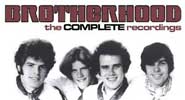
When guitarist Drake Levin, bassist Phil Volk, and drummer Mike Smith split from Paul Revere and the Raiders in spring of ’67, the Raiders had just scored five Top 20 singles in less than 12 months. They felt the need to create music that was more complex, more mature, and more reflective of musical personalities, rather than those of Revere and singer Mark Lindsay, the two Raiders still in the original quintet that helped forge the “Northwest sound” (think Kingsmen, Sonics, Wailers) before becoming TV stars and a virtual five-man hit factory.
Sadly, the band they formed, Brotherhood, was stifled at every turn – faced with lawsuits from Revere and Columbia Records, and signed to RCA, whose promotional budget was being shoveled into Jefferson Airplane. They recorded three albums, each more progressive than its predecessor, that have not seen CD light until now.
“Walrus”-era Beatles influence is obvious on songs like “Love For Free” from the band’s self-titled 1968 debut, while “Lady Faire” veers into lounge jazz, right down to French lyrics and accordion. “Louie Louie” this was not – although Levin could bring the gnarly, as on “Ice Cream.”
Brotherhood, Brotherhood is more pop-oriented, with a heavy, Vanilla Fudgey cover of “California Dreamin’,” but by the time of Friend Sound/Joyride the music was almost purely experimental (with “Joyride” crediting 15 songwriters). It’s a travesty that it’s taken 45 years for these albums to resurface and sad to think how much more recognition the late Levin’s guitar playing deserved.
This article originally appeared in VG‘s September ’14 issue. All copyrights are by the author and Vintage Guitar magazine. Unauthorized replication or use is strictly prohibited.
Nordstrand Pickups’ BigMan uses two single-coil pickups in one cover that matches the physical size of a Music Man bass pickup. Available in 4- and 5-string formats, it uses Alnico V magnets and has four conductor-lead wires to allow for many switching options. It is designed and built in Nordstrand’s shop, in California. Learn more at www.nordstrandpickups.com.
George Lynch is one of the premier axe men to emerge in the ’80s. His melodic hard-rock riffs were the driving force behind Dokken and he later launched Lynch Mob while releasing several solo discs and collaborations. He recently joined with former Dokken bassist Jeff Pilson and drummer Mick Brown under the moniker Tooth & Nail (abbreviated to T&N after a dispute with a record label using the name) and transforming material he and Pilson created for Lynch Mob. While the tunes didn’t work out for Lynch Mob, they became a perfect means for the trio to work together, and resulted in a killer debut, Slave To The Empire.
Why were the new songs “wrong” for Lynch Mob?
The band thought it wasn’t the right material – Lynch Mob was more organic and blues-based rock. So Jeff and I put it on the backburner, then the idea for another band with Mick came up.
How the idea for T&N come about?
We didn’t have a clear vision except for generally tying into our Dokken legacy by making half the record Dokken remakes. We used different singers on the Dokken songs to create a little more appeal and variety, rather than trying to “outdo” Dokken. Jeff sang the new songs; he and I have always had great writing chemistry, and we really love playing together. About 10 years ago, we did a record called LP, for Lynch/Pilson, and this is just an extension.
How did you select guest vocalists and the songs?
We made a list and whittled our way down, then matched singers to songs.
Did you encounter any obstacles?
We felt the original material and re-makes didn’t match up, so there’s no continuity between them on the record. That’s a challenge we hope to overcome while we write new music. In other words, we want to bridge the gap between the ’80s and the new material. It’s tricky, because I just can’t write the way I did back then. Some people think I’m still George Lynch from 1987 and they want me to write another Under Lock and Key. But I don’t play or write that way anymore. That’s always a challenge for any musician who’s had some recognition or notoriety – it’s hard to break the mold and be accepted. You’re kind of stuck, because on one hand, it’s your livelihood and people mark their personal history with these songs that are meaningful to them, and then you go on a different path and evolve. You want to try different things, but some people don’t want to hear it. So it’s tough to balance the two.
It was difficult to sequence because it felt like two different records. Since we’re older guys, we kept thinking in terms of vinyl, where the Dokken songs were all going to be on one side and the original songs would be on the other. Then we tried one from each, and that didn’t work, either. It took weeks to figure it out, and that’s why we have this issue with writing new material while keeping the old material in mind so, hopefully, the next record will sequence more smoothly.
What was used to track your parts?
I had my old ESP, which is like a Tele, and I used that on a majority of the tracks. To me, a Tele through a big rock amp or a combo is really interesting. That’s what Led Zeppelin I was recorded with, and it was good enough for Zeppelin, so it’s good enough for me! I usually do two rhythm tracks and often used it for one side of the rhythm. Many solos were recorded with it, as well. I played my ESP tiger guitar for the other side and a lot of solos, too. In addition, I used a Les Paul replica ESP built for me in the ’80s. It sounds and plays great. I play that when I need something a little beefier and chunkier. I also used my ESP Super V, which is all-mahogany. It has a very warm low-mid tone that fills up a lot of space. For acoustic parts, I used a vintage Gibson J-200 that belongs to Mick Jones from Foreigner, and a vintage Fender 12-string.
For amps, I used my Randall Lynch Boxes, which are 100 watts, my ’68 100-watt Marshall plexi, and a few different combos, like a ’65 Fender Super Reverb and a wonderful little ’30s Gibson combo that’s the same model Billy Gibbons used on his first records. We had a nice selection of stuff, and we wanted to use it all!
I’ve got hundreds of pedals, but I didn’t get too crazy on this record. I used an old Clyde wah and a Cusack Screamer, which is like a Tube Screamer. When I got into coloring and overdubs, I busted out my Echoplexes. I’ve got an EP-2 and EP-3 that I used for delay. I used an early-’70s Mu-Tron Octave Divider for an overdub on one song, and used my script-logo MXR Phase 90 quite a bit for solos to that Eddie “Eruption” thing. I used the ZVex Seek Wah and Seek Trem sparingly. For slide, since I’m not really a slide player, I faked it and used a 9-volt battery because I didn’t have a slide!
And you’re now building guitars…
Yes. I’m not a luthier, but I enjoy dabbling. They’re unique and built in the spirit of the early-’80s Charvels – a one-trick pony with a wide-flat neck. I don’t do lathing or frets because I don’t have the equipment or expertise, but I do the carving and everything else, including winding pickups. I make them in my backyard when it’s not raining – about 10 a year. I’m just trying to be a Renaissance man, like that other guy – Michelangelo! It’s a lot of fun!
This article originally appeared in VG June 2013 issue. All copyrights are by the author and Vintage Guitar magazine. Unauthorized replication or use is strictly prohibited.
The creative team of bassist Justin Currie and guitarist Iain Harvie led the band Del Amitri through several personnel changes over the years. The group was similar to the tough, passionate bantam British bands like Steve Marriott’s Small Faces, the Hollies, and other working-class ensembles on the English club scene of the ’60s.
Currie’s now back with a new solo album, this excellent, somewhat dark followup to 2010’s The Great War.
Currie’s confident, romantic, grownup rock and roll has always shown the right amount of pop sensibility. His confidence with his material is apparent from the start, the mid-tempo-yet-urgent Dylanesque opener “Falsetto.” “Bend To My Will” opens with Ricky Ray Jackson’s steel guitar and David Garza’s tinkling piano that give way to soaring guitar of the kind that marked Del Amitri’s albums.
Del Amitri is woefully under-appreciated in the United States. With luck, the two-pronged approach of another tour and Currie’s top-flight solo output will change that.
This article originally appeared in VG‘s August ’14 issue. All copyrights are by the author and Vintage Guitar magazine. Unauthorized replication or use is strictly prohibited.
Bauer playing the Epiphone Emperor DeLuxe in 1946.
Billy Bauer’s career was so steeped in tradition that he is often thought of as one of the first jazz guitarists. And while that’s true, his pioneering, progressive attitude and contribution to the artform endured for decades. His big-band time with Woody Herman’s First Herd was a precursor to his association with jazz visionary Lennie Tristano. He was in-demand for recording with the greatest jazz artists of his era, including Benny Goodman, Lester Young, and Charlie Parker. And he held a prestigious and coveted staff guitarist gig at NBC in New York.
Though he emerged during the bebop era, Bauer quickly became prominent in the “cool” movement of the ’50s. Later, as one of the architects of modern jazz and the avant-garde, he helped liberate jazz from the servitude of its prosaic ii-v-i chord structure. Many jazz aficionados place his importance within the evolutionary lineage of Django Reinhardt, Charlie Christian, Tal Farlow, Jim Hall, Larry Coryell, and Wes Montgomery. In 1992, on his weekly radio show, “Jazz Profiles,” Grammy-winning producer and jazz archivist Phil Schapp said, “Billy Bauer was both a participant and earwitness to the history of jazz.”
Bauer was born in 1915 in the Bronx. “My father was a song-and-dance man,” he said in a 2004 interview [with VG contributor Jim Carlton] for classicjazzguitar.com. “He used to bill himself as ‘Harry Nelson: He Says He Sings’ and he’d play amateur nights.”
And while his father’s profession may have played a role in Bauer’s means of making a living, fate and pop culture were greater factors.
“When I was nine years old, I broke my leg, so all summer I was in a cast up to my knee,” he said. “My dad got me a ukulele and I learned to play. The comic strip and movie character Harold Teen was big then, and Ukulele Ike (real name, Cliff Edwards), the guy who became the voice of Jiminy Cricket, was really big back then, too. So I learned ‘Five Foot Two’ and all those songs.
“The banjo player Harry Reeser was also a big star at the time. So Dad got me a tenor banjo when I was 12. He was always pushing me, and by the time I was 14, he got me a 15-minute radio show for several weeks. Many years later, in the ’50s, ‘The Jackie Gleason Show’ asked me to come on and play banjo for some production number with 15 other banjo players. I stood right next to Harry Reeser! Later, I found out he recommended me for a Paul Newman film, The Hustler, in which I was onscreen all of eight seconds!”
At 15, Bauer quit school and started gigging in the Borsht Belt of upper New York state before being hired to play the banjo in Far Rockaway (Queens), at the Palm Inn. “I worked in a speakeasy owned by the mobster Waxy Gordon. Sometimes we’d just drink and yap it up, but then they’d pull a job and we’d play for three days straight. They paid me $16 a week, which was great money! But I didn’t even think about that. But I had a girlfriend, and that’s where the money went.”
While Bauer held the gig at Far Rockaway, prohibition was repealed. So, he was sent to play in Broad Channel, still playing only banjo. It was the first in a series of gigs that served as catalysts for the creation of the musicians union.
“Anyway, the girl followed me to Broad Channel. I was just 15 and she was 21, but she used to go with a detective who she was going to marry. One night, we were playing and there was a big ruckus at the bar – the detective came in with his gun and was going to shoot me. But they pinned him down and took it.”
After that incident, Bauer moved to another gig at the Pelham Heath Inn, in the Bronx, where he began to make the transition to guitar. “It had a floor show with a seven-piece band, and you couldn’t hear a guitar. We had no mics or amplifiers, so I got a Dobro with a metal resonator and I learned a couple of chords and kept it next to me – pick it up and strum. But most of the job was banjo.
“When that job finished, I went to the Nash Tavern. We had piano, drums, saxophone, banjo and guitar. By this time, I’d gotten an electric guitar – [Rickenbacker] with a plastic neck, or Bakelite maybe. It looked like a frying pan with a little round thing on the end that looked like a banjo. I think it had a solid body. There was a little amp with it.”
Bauer kept the gig at Nash Tavern for a couple of years, and for a time he worked with Harry Raab, who was breaking in an act called Harry the Hipster – a charismatic, entertaining barrelhouse piano player many consider an antecedent of R&B and rock and roll.
“Harry and I moved to the Naughty Naught Cafe on East 55th in New York and became The Domino Twins, [billed as] ‘White Boys With Black Rhythm.’” Soon, Bauer’s reputation as a player secured him gigs at the Essex House and, later, Goldies on 52nd Street, where he scored his first review in Downbeat magazine. “Most of the guys in the dance field I knew who were playing swing went toward Django,” he recalled. “But I took the Charlie Christian route. I had heard him with Benny Goodman, and Benny was tops.”
Bauer (right) in the mid ’90s with Bucky Pizzarelli, Howard Alden, and Herb Ellis at a birthday party for jazz sax/clarinet player Flip Phillips.
In 1939-’40, he joined clarinetist Jerry Wald’s big band, where his role was to play rhythm guitar. For the gig, he purchased an Epiphone DeLuxe, but it wasn’t around for long. “It got crushed by the band bus,” he said. “It didn’t break, but it had a crack in the top. I took it to Eddie Bell, who had a music store on 6th Avenue. He got it fixed and asked if I’d like to sell it for $200.’ At that time, Guild wanted me to advertise for them, and Gretsch gave me a cherry-colored guitar, too. So I sold the Epiphone and used a Guild for a little while before I went to John D’Angelico’s shop to order a guitar. A couple of months later, he called and said, ‘Come down about six o’clock.’ When I got there, he locked the door, opened a bottle of wine, and said, ‘Play my guitar for me.’ I played some and he said, ‘Okay, you can have the guitar….” Not for nothing, but he meant he’d sell me the guitar!
“Years later, I was doing a gig with Barry Galbraith, helping him on a session, and the guitar fell over. The neck broke; I felt like I’d broken my arm. So I took it back and asked John for a zero fret. Boy, I had to argue for that! Another thing I had to argue for was for him to take a little off the headstock, because the guitar wouldn’t fit in my gig bag.”
Woody’s First Herd
In 1944, Bauer joined Woody Herman’s First Herd, billed as “The Band That Plays The Blues.” Herman was signed with Columbia Records and was making the transition from swing to what was called progressive jazz.
In 1945, the band had a major hit with “Caledonia” and recorded Igor Stravinsky’s “Ebony Concerto,” conducted by Stravinsky himself. A year later, the Herd walked away with the Metronome, Downbeat and Esquire awards for the best band. In addition to Bauer, many of the First Herd’s alumni went on to become major figures in jazz. Dizzy Gillespie, who often wrote arrangements, was succeeded by Ralph Burns and Neal Hefti. And drummer Davy Tough, saxophonist Flip Phillips, and trumpeter Pete Candoli all became major jazz stars. When Bauer left, he was replaced by the great Chuck Wayne.
The Lennie Tristano Years
In the fall of 1946, Bauer joined Lennie Tristano’s small group. Phil Schapp pointed out the key transition in Billy’s career – leaving Woody Herman, who had the most popular band in the world, and going with a relatively unknown trio. Tristano, a piano player, was an innovator and pioneer of the “cool” jazz movement, and the avant-garde. Schapp called Tristano, “One of the more striking individuals that music has ever presented.” Bauer was an integral and influential part of Tristano’s creations, which were noted for their complex grasp of harmony. “Even though it was complicated, I just felt at ease with it,” said Billy. “For the first couple of weeks I didn’t know what I was doing, but it didn’t matter.”
This session at Carnegie Hall in 1957 was recorded and released as Cootie and Rex, The Big Challenge. The band included Bauer on guitar, Rex Stewart, Cootie Williams, bassist Milt Hinton, and drummer Gus Johnson.
Schapp calls Bauer’s association with Tristano “a very important dimension of music,” and says Tristano obviously saw something special in Bauer and his musical vision. “His ability to create improvised passages on solo guitar show him to be one of the pioneers of the instrument, and its uses in jazz. He was part of a breakthrough in jazz and Tristano, who had devastating technique, a keen ear and a great mind, would rely on him in so many different ways. That automatically shows you that there’s something major within Billy Bauer.”
Tristano’s awareness was endorsed by having written an arrangement for the Woody Herman band that showcased Bauer. “It actually had ‘Billy’ written on the piece. I was looking though my old music and there it was with my name on it. There are a couple of lines that say, ‘read as written,’ then ‘ad lib on these changes,’ and back to ‘read as written.’”
In a 1972 interview in Guitar Player, Bauer said, “We’d put six men together and [Tristano would] say, ‘Here’s the start,’ and we’d keep playing. He called it ‘collision-type’ playing. No tempo, no key, no nothing.”
It was from this experimental playing that Bauer is often credited with developing the concept of comping on guitar. Strict 4/4 time was obviously not hip under such circumstances, so Bauer learned to fit in with chords and riffs when it felt right. “When I got with Lennie, there wasn’t much choice,” he said. “I figured if there was a hole I’d throw in something. So I guess I just listened. Lennie’s instructions were ‘Don’t play the melody. You can indicate it and that’s it. And don’t play rhythm,’ so that’s what became comping. Tristano’s avant garde and complex harmonies were so progressive that his record company didn’t release the group’s 1949 recording of “Intuition” for 10 years.
“Lennie had so much music education and I had none formally,” Bauer once told Schapp. “So, he kept asking me to study with him. And I did go over there two, maybe three times. He’d say, ‘Next week, know all your scales.’ I’d say, ‘I know my scales. I may not know them the way you mean, but c’mon.’ I’d been playing with him for a year and I know how fast he was and how he’d play one scale against another. Some nights, I’d play something and he’d play it in another key with me in harmony. But he kept after me saying, ‘You’ve got a great record inside you.’ Some people thought he played in too intellectual a way, but he really knew what he was doing.”
Jazz pianist and composer Dick Hyman was immersed in the era’s 52nd Street jazz scene and was a music director/conductor at NBC when Bauer joined him. Perhaps most famous for scoring the Woody Allen films Sweet and Lowdown, Stardust Memories, The Purple Rose of Cairo, Hannah and Her Sisters, among others, Hyman avoided Tristano’s tutelage at the time. “While it was a free type of jazz, Tristano still imposed a number of rules,” he said. However, in retrospect, as recent as last year, Hyman revisited Tristano’s compositions and methodology and found it “quite valid, legitimate, and fascinating.”
Bauer peeks out from behind bandleader Charlie Ventura in the late ’40s.
“A few years later, Ornette Coleman would edge toward an emancipation from much of the music’s rule book, but pianist Lennie Tristano and his small circle dove deeper into the rule book, working obsessively with a small group of standard tunes until they could take them in any direction,” added jazz critic Paul Wells.
“Bauer found a way to divert from Christian’s methodology, and leaving a very new tradition in order to do it,” added jazz guitarist and musicologist Skip Heller. “He becomes this hidden giant. And it’s very easy to forget how profound the influence of those Lennie Tristano records were.”
By 1949, Bauer’s visibility and prominence was rewarded. During this era, he was always among the usual suspects chosen for the yearly all-star selections from Metronome and Downbeat magazines. He won the Metronome Best Jazz Guitarist honors five consecutive years from (’49-’53) and the same award for Downbeat in ’49 and ’50.
His recordings from that time with saxophonist Lee Konitz, another Tristano disciple, showed off Bauer’s ability to complement virtually any other musician.
Critics were uniform in their praise for Bauer’s playing being integral in that small-group sound. Norman Mongan, in his book, The History of the Guitar in Jazz, wrote, “Bauer developed a highly original guitar style with solos moving across, rather than with, the chord sequences. He brought the guitar into the world of the ‘cool’ with its glacial ambience, where it remained for most of the 1950s.”
Perhaps the most famous jazz club ever, Birdland, opened December 15, 1949, and Bauer was there along with a stellar lineup of jazz all-stars. “I opened Birdland, which was named after Charlie Parker. They’d have five bands including Charlie’s group, Art Tatum, Bud Powell, and Lennie Tristano. So I was hearing all these great players every night. And we’d all get together as Charlie would come up and jam with us.” Among those jazz luminaries were Dick Hyman, Lester Young, Stan Getz, Roy Haynes, and curiously billed as “the great young vocalist,” Harry Belafonte. “Harry was a very hip jazz singer long before he became a big folk music star,” said Dick Hyman.
Billy and Bird
Issuing “all-star” recordings with so many great artists of the day was lucrative for record labels and certainly of historic importance. Once, when Bauer was riding home from one of those dates with baritone saxophonist Serge Chaloff, Chaloff said, “Billy, do you realize we were just playing with the best musicians in the whole country? You don’t seem too happy about it.” Bauer said, “You know what would make me happy? If Charlie Parker called and said, ‘Billy, do you want to do a record date with me?’
“One day, I picked up the phone and heard, ‘B.B.?’; that’s what he called me. He asked, ‘Are you working Thursday? I got a record date.’ (The Charlie Parker Quintet, on Verve, 1954). I got there early; all the lights were dim and there were no engineers. I took out my guitar and was going over the tune – I think it was ‘Love For Sale,’ because I wanted to get familiar with what I was gonna do. So I’m playing, and in walks Charlie. I said, ‘How does it sound?’ He says, ‘B.B., It sounds like music.’ We had no charts, but he’d say, ‘Okay, you guys do this, and he’d sing a riff – no rehearsal, no nothing. That’s how a lot of dates were in those days.”
The Studio Years
While Bauer was at Birdland, Johnny Smith, who was on staff at NBC, came in with pianist Sanford Gold, “Probably to see Lennie,” said Bauer. But Smith, who is now 90 years old, is emphatic about Bauer’s playing. “Billy was one of my very favorite players,” he said. “He was a superb jazz guitarist and I always loved hearing him. I did what I could to help Billy get a job at NBC.”
After the Birdland gig folded, Bauer ran into Gold at the local musician hangout, Jim and Andy’s, on 49th St. There, Gold mentioned that Johnny had just given NBC his notice. Tired of life on the road and with a wife and two kids to support, a “studio job” had appeal.
“Sanford told me to see this guy, Dr. Shields, who ran the music department at NBC,” said Bauer. “Well, I introduced myself to the secretary and found out that Johnny had told this Dr. Shields all about me. Shields said, ‘Come around and play next week.’ So I did the routine wherever they needed a guitar player. We backed Connie Francis and even (comedians) Bob and Ray. Then, on Friday, I rehearsed with the big band on ‘The Big Show,’ which starred Talulah Bankhead. Then I saw Shields, and he told me I had the job. He said, ‘You know who did it? Meredith Wilson. He came down after the show and told me you were the best rhythm guitarist he’d ever heard.’”
Bauer stayed at NBC for eight years and also worked staff gigs for CBS, in the incipient days of television broadcasting. He was a regular on “The Today Show,” “The Tonight Show,” and what, in retrospect, staff players facetiously refer to as “the days of silent television.” During that time, he honed his reading skills and, like so many staff players, worked hundreds of record dates.
“I was busy all the time with a lot of recordings then,” he recalled. “You’d get called to a date and you were in the band with whoever was there. Sometimes, I’d have five dates a week, often with big names.”
Appearing on TV frequently meant Bauer had to wear a toupee, which humored Johnny Smith and Bucky Pizzarelli. “When Billy got a toupee, his personality just lit up. Sometimes, he’d hang his rug on the hat rack at Jim and Andy’s,” said Smith.
“Once, after not seeing Billy for a while, I hugged him so hard that it came right off his head,” added Pizzarelli. “We just laughed. He had such a great attitude about it.”
A 14-year-old Bauer (center) in 1929 playing banjo with Johnny Lane and the Rainbow Club Orchestra. Other members of the band included (from left) Johnny Lane, Henry Rush, and Ed Meyer.
Later in his career, while gigging with Benny Goodman, Bauer experienced a common event among Goodman’s musicians; Goodman was notorious for being a moody and often-difficult leader, and for giving his sidemen “the ray” – a glowering look at anyone with whom he was displeased. Asked if he’d ever gotten on Goodman’s bad side, he said, “One time, he came up and put his hand on my shoulder kind of heavy, not hitting me, but I could really feel his weight. I told him, ‘Watch out, or I’ll flip my wig (laughs)!’ After that, he never bothered me.”
In 1950, Bauer began a stint teaching at the prestigious New York Conservatory. It lasted nearly four years, and though the conservatory and studio gigs were steady and lucrative, he still needed a jazz fix, so he continued recording with Tristano alumni tenor sax man Warne Marsh and alto player Lee Konitz. His 1951 recordings (with Konitz) of “Indian Summer” and “Duet for Saxophone and Guitar” were landmark records. In The Jazz Book, Joachim Berendt writes, “Konitz’s playing was a perfect match for Bauer’s guitar. The two musicians’ dialogue crossed styles from bop and cool to the avant-garde. The pairing redefined the role of jazz guitar.” And that’s true; Bauer’s comping complemented Konitz’s inventive improvising with rhythmic, melodic, and engaging counterpoint chord lines. “Konitz finally got what he needed from Tristano and had found his own voice,” Bauer said. “He really became himself.”
The Plectrist
In 1956, Bauer finally recorded his own album as a leader, The Plectrist. With it, he expressed himself in a new role. Critic David Adler’s review of its re-release explains that: “Billy, too, had moved away from Tristano’s influence and was playing more in the mode of such peers as Jimmy Raney.” Now a leader, Bauer could solo, express himself, and manifest what had lain too dormant. All About Jazz’s Andrew Hovan writes that “[The Plectrist] demands the attention of anyone even remotely interested in jazz guitar.”
Heller, who also writes for All About Jazz, posits, “Of course, Charlie Christian was as profound as any player, ever, and would have been profound during any given era. But certain players challenged the notion that jazz had to swing in the traditional quarter-note sense the way Basie did. The language had to be an immediately traceable by-product of the American Songbook. And one of the first places we hear a departure, not entirely, but a viable pass at it was with those Tristano recordings. And interestingly enough, there are two chord instruments in the group – guitar and piano.”
Perhaps the only two trios of the era with that instrumentation were the very popular King Cole Trio with Oscar Moore on guitar and Art Tatum’s group with Tiny Grimes on guitar.
“Lennie told me that he studied Tatum extensively and could play everything Tatum did,” Bauer said. “You didn’t hear it much in his playing because he’d take every phrase and interpret it a different way, so he wouldn’t be copying. ” Heller added. “Bauer’s tone was a bit leaner than Christian’s and we hear that spidery tone again with Jim Hall and then Larry Coryell. He was a precursor to such players as Coryell (with his breakthrough work on Duster with Gary Burton), Bill Frisell, Kurt Rosenwinkel, and even John Scofield. You can really trace the roots of all of them back to Bauer.”
Bauer, primarily known as a rhythm player, wasn’t held to the straight-ahead 4/4 structure as much as Freddie Green, who was in essence the engine for Basie’s band. But he was nevertheless happy with sideman was a role – he even titled his autobiography Sideman, an overview of a career that has too long been overlooked. But anyone who was lucky enough to study with Bauer, such as Joe Satriani, knew his prevailing philosophy was, “I teach you to be you.”
“A lot of people copy, and they copy exact,” he said. “Another guy listens, to say, Lester or Charlie Parker, but he doesn’t play like them. Charlie listened to Lester, but he didn’t play like him. What’s the use of copying a lick? You can hear that. Some guys just seem to flow. I heard Gene Bertoncini and Mundell Lowe; everything they play you don’t think you’ve heard before. It isn’t just a run. There’s a phrase to it.”
Bauer died in June of 2005, and Schapp’s 1992 tribute radio show provides a fitting epitaph. Schapp said to him, “When Neal Hefti put his arms around you and said, ‘You’re the guy,’ he had it right.”
This article originally appeared in VG June 2013 issue. All copyrights are by the author and Vintage Guitar magazine. Unauthorized replication or use is strictly prohibited.





 Electra Guitars Invicta model has an ash body with a carved, quilted-maple top, set maple neck with medium C shape, sculpted heel with 22 jumbo frets, a 12″-radius rosewood fretboard, mother-of-pearl inlays, GraphTech Tusq nut, double-action truss rod, chrome hardware, and a TonePros bridge/tailpiece. It uses tortoise binding on the body, neck and headstock. The guitar also serves to introduce Electra’s Five-Position Coil Linkage System, which functions like a two-pickup/three-way toggle but offers nine pickup combinations/sounds. Visit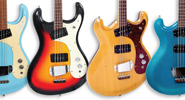





 Nordstrand Pickups’ BigMan uses two single-coil pickups in one cover that matches the physical size of a Music Man bass pickup. Available in 4- and 5-string formats, it uses Alnico V magnets and has four conductor-lead wires to allow for many switching options. It is designed and built in Nordstrand’s shop, in California. Learn more at www.nordstrandpickups.com.