Month: April 2010

  • Steve Lukather

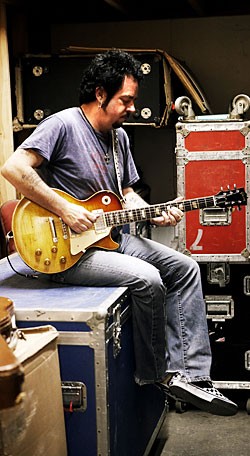
    Steve Lukather

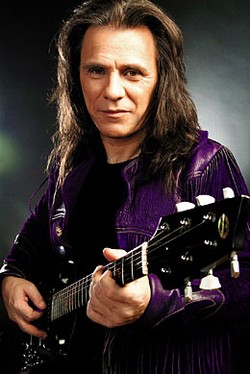
    Photo: Rick Gould.

    He’s a chops monster – the epitome of taste and understatement. An international pop star and a hard-rocking muso. A gifted songwriter and arranger, in a career spanning more than 30 years he has garnered acclaim as a Grammy-winning craftsman, prestigious record producer, and A-list session player. Just one of those accomplishments would last most a lifetime, but “Luke” is always looking ahead. Bottom line: Steve Lukather is an ultimate survivor of trends and tribulations in the music business. And by the way, he’s one of the finest guitarists to define the instrument in the modern age.

    Many aspiring players in the studio traded on the sonic cachet Luke established through his landmark outings with Toto, Paul McCartney, Michael Jackson, Eric Clapton, Chicago, Don Henley, Lionel Ritchie, The Tubes, Cheap Trick, Randy Newman, Stevie Nicks, Boz Scaggs, and others. And they still do – you hear it in well-turned licks that drift ubiquitously from TV commercials, pop and rock songs, film scores, and fusion recordings. Back in the day it was all about tone, technique, time, taste, and touch – and his energy and vibe. After Luke’s emergence, savvy guitarists everywhere scurried to get a handle on his mojo. Throughout the ’80s they scrounged for Floyd Rose-/EMG-equipped Strats, modified Fender, Marshall and Soldano amplifiers, and a host of exotic effects processors in an effort to corner the mystique. At the end of the ay there was still only one Lukather – and the school he set in motion.

    Luke built a reputation and following as guitarist extraordinaire with Toto as well as through illustrious studio guest spots, like Lionel Ritchie’s “Running With The Night,” Boz Scaggs’ “Breakdown Dead Ahead,” The Tubes’ “Talk to You Later” and Don Henley’s “Dirty Laundry.” His appearances at The Baked Potato in L.A. picked up where Larry Carlton left off and became required attendance for career guitarists on the scene. By the early ’80s, Lukather’s sound and approach set the standard, and in years that followed he won accolades ranging from gold and platinum records to guitar polls and Grammy awards. He released solo albums, stretched out with the fusion-oriented Los Lobotomies, collaborated as a songwriter on George Benson’s “Turn Your Love Around,” played guitar and bass on Michael Jackson’s multi-platinum Thriller, and was recruited as producer to record Jeff Beck in the ’90s (sadly, a project which was shelved). The new millennium saw Luke touring with Carlton, and releasing the live No Substitutions with his idol.

    More recently Luke performed at the prestigious Tokyo Jazz Festival with Herbie Hancock, Wayne Shorter, and “a cast of thousands” in late ’04, including a tour of Japan with Nuno Bettencourt.

    Luke returned recently with a new solo album. Ever Changing Times boasts a strong fusion of great songs, well-crafted arrangements and loads of guitar gems. We caught up with Luke for a chat and equipment hang at his gear haven in Hollywood Studio Rentals.

    Let’s talk about your guitars.
    Obviously, I’m a Music Man guy now, but I have collected some interesting pieces over the years. I could kick myself for selling some of the good old ones, like my 1958 Les Paul Standard goldtop and a ’60 Les Paul Standard sunburst. I sold them for a fortune about five years ago. I never played the ’60 much – the neck was too thin for me; didn’t feel right. I know it’s a bitchin’ guitar and worth a lot, but someone offered me an exorbitant amount of money. I almost didn’t sell the goldtop, but the guy kept upping his offer. I asked myself, “When’s the last time I played this?” and let it go. I kick myself now, but then I came out a billion percent up (laughs), and I still have some prized pieces.

    Like your famous Les Paul Standard, the “Rosanna” Les Paul?
    Yeah. The holy grail of the collection; it has a lot of history. I wouldn’t give that one up. It’s a ’59 and I bought it when [Toto was] doing the second album. I did that tour with it. I was basically a Les Paul guy at that point; I had the goldtop and it. I also had a sunburst 1971 Les Paul Deluxe with mini-humbuckers, which was the first good guitar I ever had. I got that one from my parents.
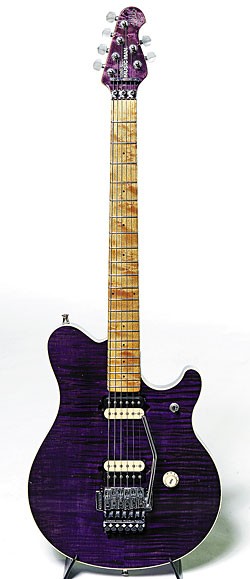
    1992  Ernie Ball EVH (3rd one made)

    1992 Ernie Ball EVH (3rd one made). Photos: Rick Gould.
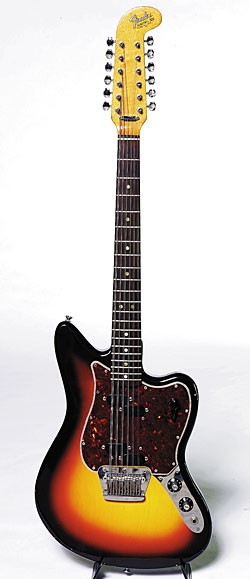
    1966 Fender Electric XII

    1966 Fender Electric XII.

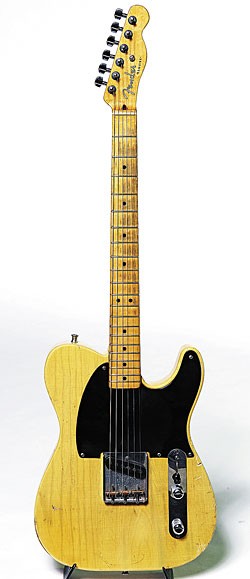
    1951 Fender Esquire

    1951 Fender Esquire.

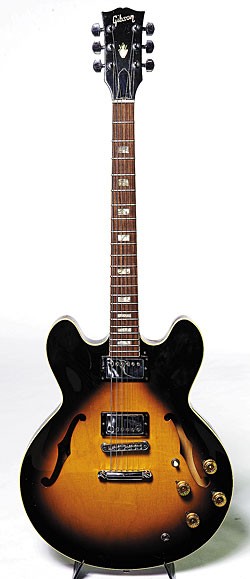
    1973 Gibson ES-335TD

    1973 Gibson ES-335TD.

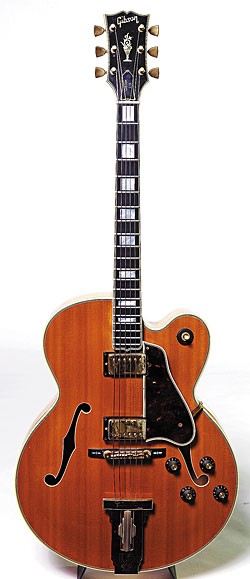
    1977 Gibson L-5CES

    1977 Gibson L-5CES.

    Did you use the Les Paul Deluxe on your early sessions and records, like the solo on “Hold the Line”?
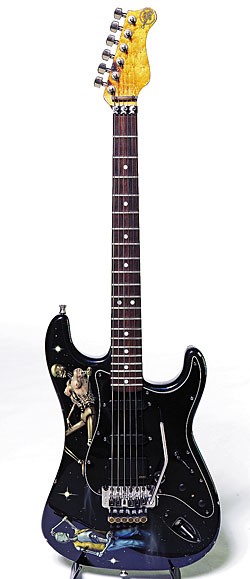
    Yeah, it was around before I bought the goldtop. The guitars I used on the first Toto album were the Deluxe, my 335, and the number three or four Valley Arts Strat-style guitar. That Valley Arts Strat is now the “Robot guitar.” It used to have a mahogany finish, but I painted it in the ’80s, when it was flash to do that sort of thing.

    Did you use the Deluxe for some of those famous solos, like (Boz Scaggs’) “Breakdown Dead Ahead”?
    No, that was already the ‘burst. I’d just gotten it. I did Boz’s earlier record, Down Two and Left, with the 335 and the Les Paul Deluxe. That was when I did the tour with Boz, around ’77.

    What is the state of things with Toto?
    We did a reunion awhile back and have a new DVD, but I’m done with it for now. I’ve got my own thing going. The guys I started the band with are no longer in the band. I was the last man standing; I looked around and thought, “This is a little strange.” They were all great players, but it was time for everyone to move on.

    What about some other classic Luke solos done with the ‘burst?
    I used it on so many recordings. I did Lionel Ritchie’s “Running with the Night” on that, the riff to “Beat It,”… a lot of hit records. Basically everything from 1980 to ’83 was all the ‘burst. Well, that and the first Valley Arts guitar.

    Didn’t you recently play it on a Les Paul tribute?
    Yeah, I went to the studio and there was Abe (Laboriel) Junior and Senior, and Kenny Wayne Shepherd – nice kid and great player. We did a couple of tracks, trading solos back and forth; I was playing my Music Man on the basic tracks and brought along my Les Paul – it’s a Les Paul album – I had to play a Les Paul. Then they asked me to do the live concerts in New York at Carnegie Hall, and at the L.A. Amphitheater. I didn’t want to take the ‘burst to New York, so I used a reissue for that. When I played L.A., I used the real one. Everybody else brought their reissues and their own customized versions and signature models – Slash, Frampton, Satriani, Joe Perry, Ace Frehley… I was the only guy who brought a real ‘burst. All my old guitar techs were there – Jerry Sambatino works with Joe Perry now, Matt Bruch. They were babysitting my guitar. Everyone was buzzing, “Wow! That’s a real one!” When I played, it was just a Marshall, a Tube Screamer, and the ‘burst. It filled the room!

    In your session days, what amps did you play with the guitar? Any favorite combinations?
    I played the ‘burst through Fenders and Marshalls. I had an old blackface Deluxe and some straight-ahead Marshalls from that era – late ’70s.

    Did you use any old Marshall “plexi” amps back then, or anything exotic?
    No, just stock stuff. A couple were customized slightly, but the mods were just midrange controls and stuff like that. There were guys around in the ’70s – the usual suspects – who modified amps for pro players in L.A.

    What about Strat tones?
    Strat tones, early on, were from my Valley Arts guitars. It’s funny; as much as I love Stratocasters I never collected them. I have a couple of Fender Strats, but they aren’t anything special. I bought a ’59 that I gave to Bob Bradshaw as a gift for tightening me up. He had his eye on that one. It didn’t have a vibrato; it was locked (hard tail) but had a nice sound.

    I kept looking for a real Stratocaster that felt good, but never found the one. I bought and sold Strats over the years; I went through a lot, but nothing ever clicked. Michael Landau has some great Strats. Guys like him got the good ones; they got lucky or knew where to look, did their homework. Mike’s always been a Strat guy; he’s brilliant, one of my favorite players. We’ve known each other since we were 12. He was always the Strat guy and I was into Les Pauls; when we played in bands together, it was the perfect mix. Later, I got into Strat techniques and tones because Jeff Beck is one of my favorite guitar players, not to mention Jimi. How could you not be into that?
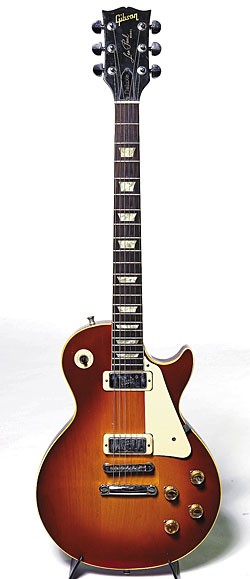
    1971 Gibson Les Paul Deluxe

    1971 Gibson Les Paul Deluxe. Photos: Rick Gould.
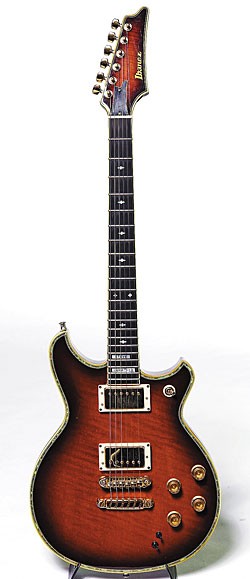
    1986 Ibanez Steve Lukather Model

    1986 Ibanez Steve Lukather Model.

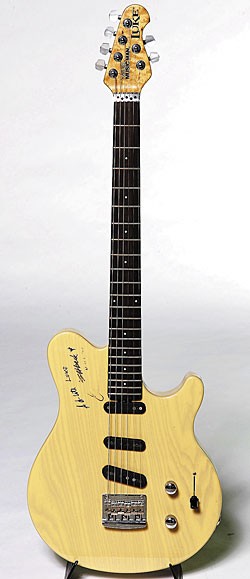
    1993 Music Man Steve Lukather Prototype

    1993 Music Man Steve Lukather Prototype.
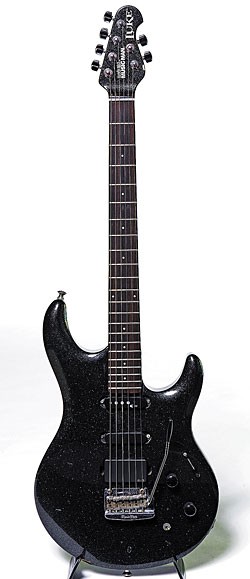
    1999 Music Man Luke #1 w/EMGs (black)

    1999 Music Man Luke #1 w/EMGs (black).
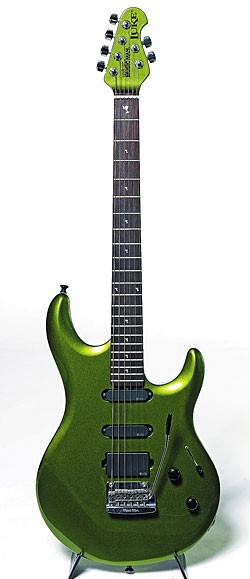
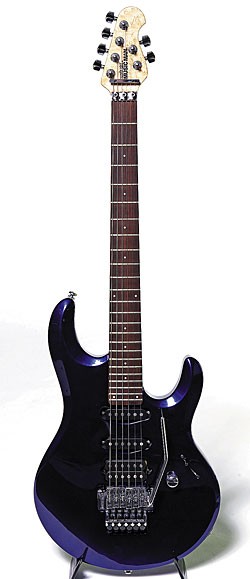
    2007 Music Man Luke (Green)

    2007 Music Man Luke (Green).

    What about the Valley Arts guitars?
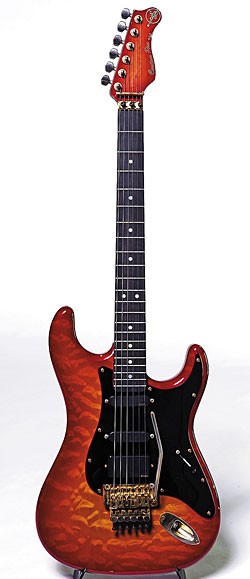
    I kept two because they have a lot of history. One is the “Robot” guitar, the other is a Cherry Sunburst model with a fancy maple top. They have Floyd Rose systems on them – I was still knee deep in all that. I had the third Floyd ever made, when he was making them in his garage. They have floating bridges – the guitar tech’s nightmare! I’ve always used that setup so I could pull the bar sharp.

    When I first got with EMG, we put three active single-coils in the mahogany Valley Arts guitar. I later routed it and put an active humbucker in there – the 85 Vintage model. I just fell in love with that combination: two single-coils and a bridge humbucker. Now they sell it as a set. We eventually moved that concept to Music Man.

    What is it you look for in a guitar with that setup?
    I go for my Music Man Luke models with EMG pickups. The combination of craftsmanship with those pickups is something I particularly like. Everyone has their favorite flavor. You can’t argue with Stevie Ray, you can’t argue with Jimi, you can’t argue with any legit Strat player; but there’s something about my playing and how the guitar reacts that really works for me. I have all this vintage stuff, but when I say I use Music Man guitars, I really do!

    Is it the versatility?
    Yeah, they get a lot out of one guitar. And you’re not talking guitars made in Korea or China where you get a good one, you get a lousy one, luck of the draw. These are hand-made instruments made by people in America. Sterling Ball is like family to me, and I’m treated very well. There are only a handful of Music Man endorsees with a signature model – John Petrucci, Steve Morse, Albert Lee… We all make our own noise with it. I’m very honored to be among some of greatest guitar players of all time. There’s a lot of camaraderie when we play together and you can really hear how different we are. I haven’t gotten into the seven-string like John has; I’m still trying to figure out what to do with six (laughs)!

    What about the 1951 Esquire?
    I got that in the late ’70s, early ’80s. I already had the goldtop and ‘burst, and I began to look into other vintage guitars. The Esquire just fell into my lap; I paid 600 bucks for it. I have to give Paul Jameson some credit there; you know, the legendary “Jamo,” the studio character we all love. He said, “Luke, you’ve got to start collecting these guitars. They’re going to be worth a fortune someday.” He actually hipped me to a lot of stuff. Had I listened more than I did – because I thought paying a couple of grand for a guitar was insane back then – I would’ve bought everything! But like a lot of guys, I’m kicking myself for selling stuff and not buying everything I could get my hands on in every pawn shop in America before everyone got hip to it. Now you can’t find them under grandma’s bed anymore. I should’ve collected more, but I was so busy working.

    Did you play the Esquire on many sessions?
    I played it a lot on the Toto IV record. Anything that sounds remotely like a Tele is that Esquire. It’s me doing my impression of Keith Richards! I remember working with Waddy Wachtel once and he hipped me to all the Keith stuff – pulling off the low E string, open-G tuning… suddenly every Stone song sounded right (laughs)! I never got into open tunings until later in life. I remember working with Joni Mitchell and she had all these D minor 11th tunings. It was so interesting how her tunings would work with standard-tuning riffs. It was a lovely noise. The unique timbres match and you create a whole new sound.

    Did you use your ES-335 a lot before the Les Pauls?
    The 335 was my guitar for the first record I ever played on, Boz’s Down Two and Left. I used it for the solo on “Clue,” which a lot of people have said they liked. That’s the 335 with an Orange Squeezer (Dan Armstrong compressor) through a blackface Princeton. That was what the cats were using back then: a 335 with Fender blackfaces and gadgets to make it sound different – like the Boss Chorus when it first came out. Jay Graydon turned me on to that one. They were all using them at the time, Ritenour and all those guys I was sitting next to.
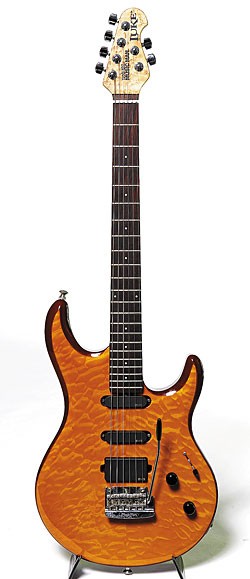
    2007 Music Man Luke (Green)

    2007 Music Man Luke (quilt top). Photos: Rick Gould.
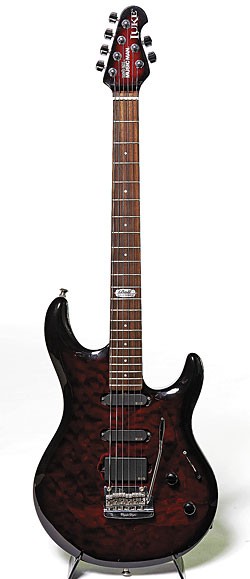
    2008 Music Man BFR

    2008 Music Man BFR (Family Reserve).

    1996 Music Man

    1996 Music Man (Luke neck on EVH body).
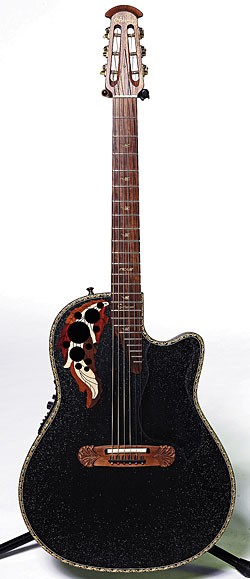
    2008 Ovation Adamas

    2008 Ovation Adamas.

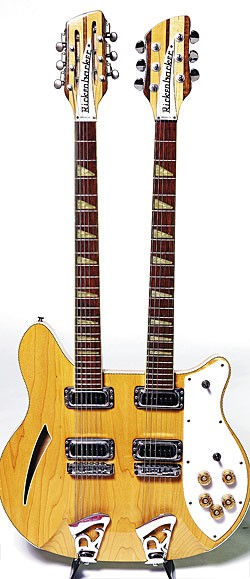
    1976 Rickenbacker 12/6 doubleneck

    1976 Rickenbacker 12/6 doubleneck.

    Do you still have those old effects boxes?
    Yeah, I had a couple rebuilt. Bob Bradshaw rebuilt one because sometimes the old stuff gets noisy. It’s cool for live playing, but when you’re recording you can’t have it. But a lot of my old stuff got stolen – old microphones, old guitars, old MXR effects and the like. We had so much gear we didn’t know where it all was.

    What are some other highlights of your guitar collection?
    I have a 1965 Fender electric 12-string that I got around the time of Toto IV, as well. I bought the most guitars from 1981 through ’85. I have a double-neck Rickenbacker that is such a weird guitar; I just thought it was unique piece. I used it in the studio, but it has never seen a stage; it’d be like tying a Volkswagen around your neck! Even as a young man, it’s too much. And Rickenbackers have that specific sound; you immediately start playing Byrds songs on them!

    I have a blond L-5CES I got that as a present from Boz Scaggs backstage at the Greek Theater in LA in ’77. Gibson brought a bunch of guitars down, and I started playing the L-5. I said, “This is neat, something I’d never buy for myself.” Boz saw me and said, “It’s yours, man.” That was very cool; it was the fourth guitar in my collection. I was still living at home with my parents when I was on the road with Boz, saving my tour money to move out.

    I have a lot of really weird ones in my collection. The Vigier is a strange guitar; Patrice Vigier gave me that one in Paris around ’81. It looks a little like a BC Rich mixed with an Alembic. There’s also an old Vox 12-string with all the weird effects built-in, like a fuzztone that sounds just like “Satisfaction.” It has the palm wah and a strange tone control and a button for an A440 tone so you can tune – it’s just a really unusual guitar, and it sounds great. That one fell into my lap too; I got it for 250 bucks.

    How did the Music Man Luke model come about?
    My Valley Arts guitars were custom-made, much like my Music Man guitars are now. Dudley Gimpell builds them for me, and what’s funny is he used to work at Valley Arts with Mike McGuire back in the day! So my transition wasn’t a big change. I didn’t want to stay with Valley Arts when they sold to the Koreans in the ’90s, and Sterling said, “Hey, Dudley’s over here now.” That’s where I got the number-three Eddie (Van Halen Music Man) guitar. They were putting it together and I just happened to be hanging out. They asked which one I liked the best in a blindfold test. I think they were happy with my opinion, but I don’t know if they used it.

    I’m good friend with the Ball family – their whole crew. I’ve used Ernie Ball strings forever, and Dudley knows exactly how to build and set up my guitars. I’ve been playing them since 1993.

    We tried a few different body styles. There’s a particular neck I like, it’s on the Robot guitar; it feels really good. We took it off and made a computer model with all the little quirks, and then improved upon it. The first one had a Floyd Rose but we eventually phased that out. I mean, who does divebombs anymore? That was unique to the ’80s, when everyone was trying to do their impression of Ed. But that got tired, and now we have a standard non-locking vibrato-bar bridge and nut. And I didn’t want the guitar to have “Lukather” on it. My nickname is “Luke” – nice and short – and we used that. I’m like Cher now (laughs)!

    How important are the EMG pickups to your sound?
    We tried other pickups in the prototype I used for “Never Walk Alone” on my second solo album, Candyman. That was a really good-sounding guitar but for some reason wasn’t responding like the EMGs. It didn’t have active pickups. I’m a big EMG guy; they’ve been good to me, too. Some people love ’em and some hate ’em, but for me they’re perfect.

    There was the myth that they are responsible for the “Lukather sound.”
    Listen, I play everybody’s guitars. I’ve been around a lot of great musicians, and when I pick up a person’s guitar I sound like me with their amp and guitar, and visa versa. A great instrument with great pickups is obviously a help, but give someone a half-million-dollar Les Paul it’s not going to make them play any better.
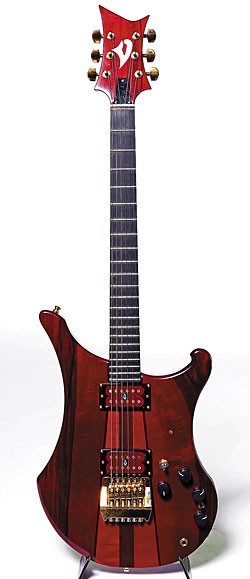
    1982 Vigier

    1982 Vigier. Photos: Rick Gould.

    1979 Valley Arts

    1979 Valley Arts “Robot”.

    1983 Valley Arts Custom Pro

    1983 Valley Arts Custom Pro.

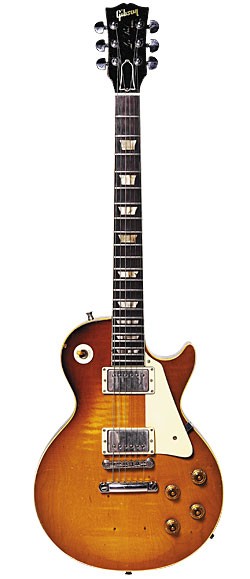
    This 1959  Les Paul Standard

    This 1959 Les Paul Standard (serial number 9 0494) was Lukather’s primary guitar during the heydey of Toto. He also used it on high-profile studio sessions in the early 1980s, including the riff to Michael Jackson’s “Beat It,” and Lionel Ritchie’s “Running with the Night.”

    Do people still apply that label these days?
    I hate that so many blame me for that over-processed guitar sound. I didn’t invent it and wasn’t the first to use all the grease. The producers asked for that sound. What gets me is when I go the NAMM Show and see some new box that has a “Lukather Sound” preset. I press it and it sounds like echo returns with the worst flanger you ever heard – cheese whiz. Is that what people think I sound like?

    There is some guilt there, but when that gear was new everyone overused it. To me, the ’80s have not worn well. Listen to ’70s records and they sound good, but when you get to the ’80s, the synthesizers, drum machines, and sequencers came in. And with them, the over-effected, over-processed, tri-chorused, harmonized, reverbed sound. Everything was cheese-whizzed; even the look, with the hair and MTV… It was a sad era for music.

    On the new record, you get back to more “honest” gear and music. Tell us about the equipment we’re hearing.
    For a lot of it I used my son’s Marshall 2000. He got a good one; I’m always borrowing it. It’s a three-channel amp, but doesn’t have a million knobs like the later ones. I also played through some great little vintage amps from Hollywood Studio Rentals; a 1960 10-watt Supro with EL-84s, a 1963 Magnatone Custom 260, a 1959 Gibson GA-6, and a 1964 Vox AC30 Top Boost. I also used an old Ampeg VT-22, a couple of 50-watt Marshall plexis, and a little John Suhr boutique amp.

    I used an ISP subwoofer system, too. I go out of the amp’s second speaker output into the sub. It has a power amp and crossover control; you can dial in just how much low-end you want. You get so much beef and chunkiness for power chords. You mic it with a kick drum mic or something you’d use for a bass amp, and put it on a separate track to have control in the mix. It’s subtle, but it’s huge. Then you add a little tube compression, like from a Neve. The desk we used to mix the record was the same desk they used for Dark Side of the Moon, the Neve at EMI with the original parts and some upgrades. You can’t go wrong with that old technology especially if you use Pro Tools software, which is the standard for recording these days. I like to use the best of the old analog and vintage stuff along with the new technology.

    How did the new album come about?
    It really started a while ago. I had a great time working with Larry Carlton back in 2001. We won a Grammy for the live record, and Larry was responsible for me getting back to the woodshed. On tour, I got paid to learn guitar from Larry Carlton! Every night, I’d come in an hour early and say, “What’s my lesson today?” He was so gracious and has a wealth of knowledge. He got me thinking “It’s time to take this all seriously.” I went through a period of fusion instrumental music for three or four years, between my stints out with Toto.

    Then, Randy Goodrum, my old songwriting partner, told me that a new label wanted me to be their first artist. But they wanted a rock-and-roll record with vocals. I realized I hadn’t done one like that in 10 years, and this might be a good time. They wanted something melodic, for me to sing and write songs – and to play, just not a fusion thing with 20-minute guitar solos. Randy and I got together, and it started to flow. So I called in Steve MacMillan, my co-producer and engineer. He said, “If we’re going to do this, let’s get all the vintage gear out. Leave the other crap at home. Let’s get in there with some really good guys and play.”

    I got Abe Laboriel Jr. on drums and Lee Sklar on bass, and Jeff Babko, Steve Weingart, Randy Goodrum and Steve Porcaro on various keyboards. Babko was on the basic tracks, helped me write the charts and co-wrote a song, “How Many Zeros.”

    Is that the one with the gospel feel?
    Yeah, I wrote that one with Stan Lynch. It has some interesting chord changes, adult chords; I’m not afraid of those (laughs)! With the songwriting process, I just wanted to write songs I liked. I didn’t try to write a hit single. I’m 50 years old. Do you think Top 40 radio is going to jump on my new record?
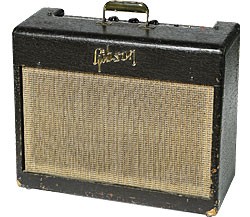
    1959 Gibson GA-6

    20) 1959 Gibson GA-6. Photos: Rick Gould.
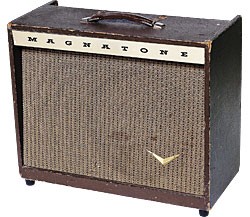
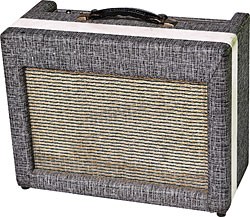
    1950 Magnatone Model 213

    1950 Magnatone Model 213.

    1966 Supro 1620T

    1966 Supro 1620T.

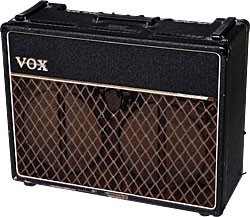
    1964 Vox AC30TB

    1964 Vox AC30TB.

    Was there a no-frills approach to composing and recording?
    When Randy came into town, we wrote songs with an acoustic guitar, a little teeny keyboard and little tape recorder in a room at the Howard Johnson’s on Vineland Boulevard. If it worked there, we knew it would work in the studio when the guys added their sheen, improvisation, and ideas for arrangements and licks. Randy and I wrote most of the record. I wrote two with my son, Trevor, which he played on. “Tell Me What You Want From Me” – that’s him playing all the heavy riffs. That one’s my Pink-Floyd-meets-modern-rock song. I used my influences shamelessly; I have my Steely Dan tribute, which is “Stab in the Back.” The closer it got to sounding Steely, the more I went with it, with the acoustic guitars, the talk box – let’s do a little “Haitian Divorce.” It went through all their eras. It’s my audition for Donald and Walter; I’ve been teasing them for years that I never got to play on a Steely record. I just wanted to write for fun; I didn’t care if the songs sounded a little like this or that. But I didn’t steal from anyone; I even thanked Donald and Walter on the liner notes.

    We cut the basic tracks live – old-school. The guys are so good it only took a couple of passes. We just wrote out some chord sketches, essential stuff; everything else was open. I never rehearse for a record; you rehearse the spontaneity right out of the music! You rehearse for a tour, not a record.

    Basically, I went in with some great players and had a great time. Steve MacMillan pushed me hard with the vintage gear. And Trevor would come down and give me flak, like “Dad, you can do a better solo than that.”

    Did you have any revelations with the vintage gear?
    I wanted the music to say, “Hey, it’s Luke again. Remember me? This is me plugged into an amp. I’m not using all that grease anymore.” There was nothing between the amp and me. I wanted the sound to be as organic as possible. We just used a little room sound and maybe some slap echo in spots. I used the tremolo on that Magnatone amp; it almost sounds like chorus. Some of the stuff that sounds chorused is actually double-tracked and de-tuned; that’s done with pitch-change speed alterations, an organic true chorus, not a pedal. The little Gibson amp really surprised me; it had such a great breakup, also the AC30s. All those old amps have a ring to them. When you play chords on the verge of distortion, and double it… that’s a wonderful sound.

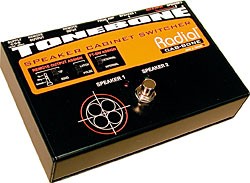
    I had these amps, 10 or 11 of them, set up in the room and listened to all of them. Radial sent me an amp switcher I used to step through different combinations. “Let’s hear the Gibson and the Supro, the Vox, the Ampeg”… I was able to audition different tones for the tracks. I work really fast, so I didn’t document every detail. I have to give a lot of credit to Steve MacMillan; he really knows how to capture the sound with a mic. We used vintage mics and vintage mic preamps with the vintage guitar amps.

    I used all the internal effects on the Vox 12-string, like the fuzz for some key licks. And I used a real talk box in “Stab in the Back.” I haven’t messed with one in 30 years. I used the Gibson amp on that track.

    Guitarists will be interested in the instrumental “The Truth.”
    That’s just Steve Porcaro and me. I wrote the song on piano; it was intended as an instrumental from the beginning. I had the piece lying around for a couple of years but never found a home for it. To me it was like the end-title theme for a movie, and an interesting way to end the record. I asked Steve to over-orchestrate it, then I played the solo guitar part in one pass, all with the fingers – no pick. And I was manipulating the tone controls on the Luke guitar and put a little slap on it. Obviously, it’s a nod to Jeff Beck, my favorite guitar player.

    Another nod is the Jeff Beck-Jan Hammer guitar-keyboard trading in “Ice Bound.”
    That was Steve Weingart; he’s going on the road with me. Steve’s brilliant, from the Joe Zawinul school. That was a slight reference to the fusion aspect of my style. It seemed natural; Steve and I went on the road with a band called El Grupo, a jam band. We (traded solos) all night long. His playing and phrasing inspire me to play different things. I’m sure I’ll be really inspired by the live band too. I’m going out with Tony Spinner from the old Toto band on guitars and vocals, Steve on keyboards, Carlitos “8 by 10” Del Puerta on bass and vocals, and Eric Valentine (T-Ride, Joe Satriani) on drums and vocals.


    This article originally appeared in VG‘s September 2008 issue. All copyrights are by the author and Vintage Guitar magazine. Unauthorized replication or use is strictly prohibited.


    Steve Lukather Emotive Soloing
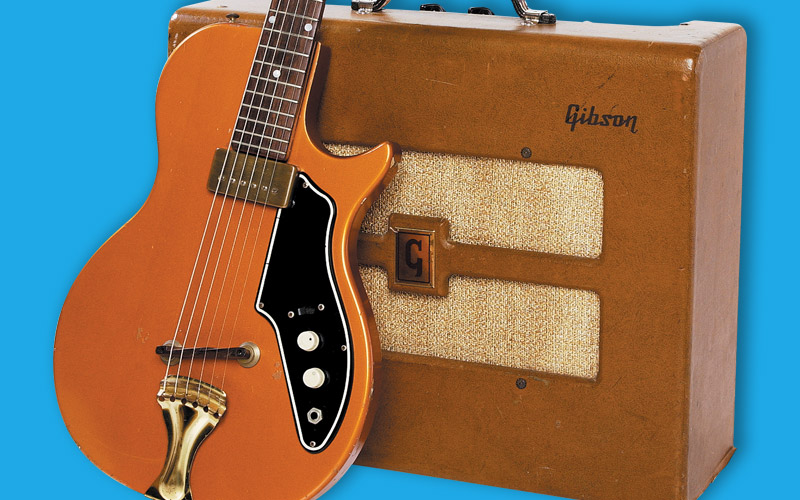
  • Valco ‘Thunder stick’

    Valco ‘Thunder stick’

    Photo by Kerry Beyer

    Put your gut money on a dark horse every so often, and you might find the rest of the regurgitating bandwagon world awash in your taillights. Every sublime guitar collection needs an old juke joint under-the-radar flamethrower, and the “Thunderstick” delivers the aforementioned wallop with enough kick to blow the scrotus maximus off a charging rhinoceros from 60 paces… or at least the doors off your local waterin’ hole.

    This one carries the Tosca brand on the headstock; you might find very similar gee-tars from the golden age of Valco with plenty of headstocks with the “Supro” moniker instead. Was Tosca a fine screw-top-wine department store brand or from some obscure cataloger, like Chicago’s Carson Perie Scott? Tough call.

    Regardless of the name game, it dates from the early ’60s, a time when cars had 3,000-pound steel grills and there weren’t no jaywalking problems. Ampex had just built the first videotape recorder, Jimmy Dean had just crooned “Big Bad John,” JFK and Fidel were doing the Macarena, while a drunken Kerouac was just getting off the road. And oh yes, Mississippi kingpin Jimmy Reed was deep into the seedy clubs throwin’ down with axes like the Thunderstick.

    Sure, size matters! So if you’re the measuring type, you’ll appreciate knowing that the neck on this thang’ is hands down the biggest hog you’ll come across other than the infamous Lester Junior. It’s indeed a 3/4-size body, which in many books is all the more interesting to hammer with a brass slide. While it may be amusing to mine the nut, feel free to unfasten your mental seatbelts and move about the neck. And speaking of necks, the absurdly overwound pickup on these will need no wussy distortion pedal – it roars from the starting blocks and never looks back. That’s not bacon you smell, pal. That’s the Thunderstick. Nothing like the feeling of unzipping your gig bag and whipping out the biggest rectifier in town.

    Knock, knock. Who’s there? Ry Cooder and David Lindley, sir. They’d like to come over and jam. Well, open the damn door and put some Dickel whiskey on ice.


    This article originally appeared in VG‘s August 2008 issue. All copyrights are by the author and Vintage Guitar magazine. Unauthorized replication or use is strictly prohibited.


  • Radial Cabbone, Switchbone, and Loopbone

    Radial Cabbone

    Radial Cabbone

    Switcher’s Paradise Radial Cabbone, Switchbone, and Loop-bone add incomparable versatility Bob Tekippe

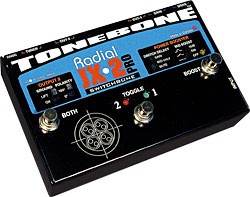
    Though Radial Engineering’s Switchbone, Cabbone, and Loopbone pedals can all technically be classified as “switchers,” each has a distinct function.

    The Canada-based Radial started making pedals in 2000 and today designs gear that is used by a long list of big-name artists.

    Tonebone pedals are housed in a heavy-duty steel chassis that measures 63⁄4″ x 41⁄4″ x 11⁄2″. Each is finished nicely and silkscreened to perfection. The switches are heavy-duty, and each included an AC power adapter.

    For this turn with Radial (our first involved the Classic, Hot British, and Switchbone in the April ’04 issue), we used two all-tube Peavey amplifiers, one 2×12″ cabinet, and one 4×12″ cabinet. Our signal originated with a Schecter solidbody with stock humbuckers.

    The Cabbone, Switchbone, and Loopbone pedals provide unique solutions to problems musicians have been battling for years.

    The Cabbone is a cabinet selector that allows a player to run two speaker cabinets using one amp head. With Radial’s patented Slingshot input and output jacks, you can also simultaneously switch channels on an amp. That means you can have your clean channel run your 2×12″ cab and your distorted channel run to your 4×12″ with just one switch! Ultra cool. The pedal uses one amplifer-input jack and two speaker output jacks, with an additional speaker output (ALT-Z) for amps with multi-tap transformers (and thus, variable speaker impedance options). It also features output-assign switches that let the player manipulate their amp’s channels. A speaker selector switch with LED indicators tell which cab is being used. The unit’s design ensures there is always a load on the amp, which not only protects its transformers, but eliminates “dead air” delays in the process.

    The Peavey JSX’s complex channel-switching design let us use the Cabbone to its fullest potential.

    Radial Switchbone

    Radial Switchbone

    The Switchbone lets a player run two amplifier heads into one speaker cab, with full channel/head switching capabilities. It’s available in three versions specifically for tube heads (VT), solidstate heads (SS), and the TS lets you switch between tube and solidstate amps. All three feature two amplifer input and output jacks, one speaker-out jack, and a Slingshot remote switch jack, one buffered and one direct input jack. The buffered jack is for guitar signals that have no preamp, while the direct accepts preamped signals. Again, LED indicators tell you which head you’re using (or if both are on).

    We plugged in the heads and cab per the instructions and found that the Switchbone does exactly what it promises, and does it very well. It can be a very useful unit, especially in a world where 99 percent of the channel-switching amps on the market have either a good clean or good distorted tone – it’s rare that one amp does both well.

    Radial Loopbone

    Radial Loopbone

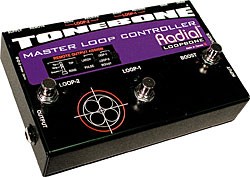
    The Loopbone is a master effects loop controller that allows for switching between or combining two effects loops. The unit also has a variable power boost for solos.

    With the Loopbone, you can isolate noisy, impedance-robbing pedals from the chain, or switch between (or combine) two chains of effects. With the Slingshot remote feature, you can also change an amp’s channel while you move between effects loops. This creates nearly endless switching options, especially when used in combination with the Switchbone or Cabbone.

    The Loopbone has two sets of effects send/receive jacks, and the Slingshot jack. It also features an adjustable gain, a drag control that eliminates signal loss, and a tuner-out jack.

    We set the Peavey Butcher for clean sounds and plugged in the Loopbone, along with Danelectro distorton and delay pedals in one loop, and a Danelectro chorus , MXR Dynacomp, and another Dano delay in the other. We adjusted the drag and pre-set the boost, then toggled between effects loops. One loop delivered a very nice delayed rock lead tone, while the other proffered a nice clean/compressed tone with a touch of chorus and delay.

    Switched to boost mode, the setup produced a transparent volume boost with a slight edge on the clean setting. Switching back to the distorted loop with the boost on produced an equally transparent, but searing, solo boost. Very likeable! The Loopbone’s boost feature is fantastic – and you can manipulate gain boost with its inset control.

    And again, even though the Peavey isn’t a channel-switching amp, with the Loopbone, we were able to do just that.

    This go-round with the Radial ‘Bone pedals reinforced what we found in our previous tests; they deliver as promised, giving a player extremely usable switching and effects options that simply haven’t been previously available. By combining the Loopbone with either the Cabbone or Switchbone, the options are numerous.

    Giving your rig the ability to achieve the perfect amp and effects setup, as these pedals do so well, is priceless.


    Radial Cabbone, Switchbone, and Loopbone
    Features 14-gauge steel chassis, baked enamel finish, ultra-bright 3mm LEDs.
    Price $300/each (retail).
    Contact Radial Engineering, 1638 Kebet Way, Port Coquitlam, British Columbia, V3C 5W9; phone (604) 942-1001, www.tonebone.com.


    This article originally appeared in VG‘s August ’05 issue. All copyrights are by the author and Vintage Guitar magazine. Unauthorized replication or use is strictly prohibited.

  • Robben Ford – Soul On Ten

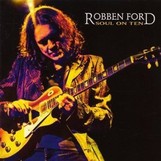
    Robben Ford’s last live album included only acoustic guitar. So, given that eight of the 10 cuts on this new disc feature Ford cutting loose on electric and his choice of material is pretty much perfect, this should be a huge hit with fans.

    Every track here is highlighted by a Ford solo that’s soulful, full of surprises, and takes roads (few if any other) guitarists would. Two songs from 1999’s woefully underappreciated Supernatural – the title cut and “Nothin’ to Nobody” – get the full treatment. The latter has a great lyric, killer changes, a guitar tone to die for. The former is a funky version with lots of wah rhythm guitar that works its way through mid-eastern guitar and a free jam before it wraps up.

    There are other gems, too, with “Indianola” rocking and “How Deep In the Blues” showcasing the entire band, which features Toss Panos on drums, Travis Carleton on bass, and Neal Evans on organ. The band takes on covers that cook, seemingly against all odds; “Spoonful” is played exactly as it should be, while the cover of Jimmy Reed’s “Please Set a Date” is boogie heaven. The disc ends with two new songs recorded in the studio. “Don’t Worry About Me” and “Thoughtless” point to a songwriter and player at the height of his game. The changes are nice and never clichéd. The solos are perfect and the vocals strong and assured. Soul On Ten is as satisfying a record as this great guitarist has delivered since he signed with Concord four albums ago.


    This article originally appeared in VG‘s Nov. ’09 issue. All copyrights are by the author and Vintage Guitar magazine. Unauthorized replication or use is strictly prohibited.

  • PRS 513

    PRS 513

    PRS 513.

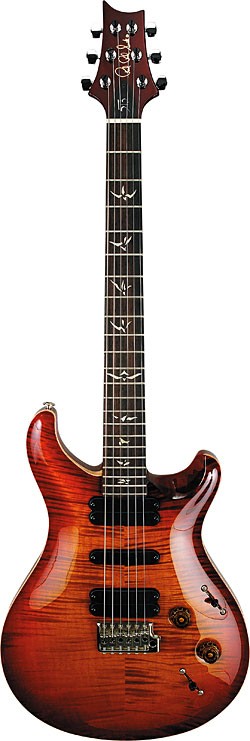
    The latest addition to the model line at PRS Guitars is the discretely-named 513, an axe that carries all the family traits, like a carved figured-maple top, double-cutaway mahogany body, set mahogany neck, 10″-radius fretboard, vibrato, and low-mass locking tuners.

    In fact, at first glance the 513 could be mistaken for a Custom 22 or Standard 22, but stands out thanks to its pickups and a 251/4″ scale length, more sculpted neck heel, and a neck profile and bird inlays designed specially for it.

    The 513 has the typical PRS high-quality feel, with well-conceived contours, control placement, and overall design. Its playability is very good, and it has a comfortable, slightly-thick neck profile that doesn’t feel at all chunky, with a nice low/choke-free action, nicely polished and leveled frets, and excellent access to the upper frets. The guitar weighs in at a comfortable 8.5 pounds and is well-balanced whether strapped on or perched atop a knee.

    Not since Leo was at the helm of G&L has a major guitar manufacturer offered a model with a truly new pickup system, but with the 513, PRS does just that; the guitar’s sound is produced via a totally new configuration that uses five specially designed single-coil pickups (four of which are mounted in pairs) with two blade switches, master Volume, and master Tone controls.

    The guitar’s five pickups can be used in 13 pickup combinations, and while the layout and function of the two blade switches could scare away the traditionalist, the system is quite straightforward: the five-way switch located just below the Volume control functions as a regular pickup selector (1 – bridge pickup cluster, 2 – bridge/middle, 3 – middle, 4 – middle/neck and 5 – neck cluster), while the three-way (near the Tone control) allows the player to choose from three pickup voicings (dubbed Heavy Humbucker, Clear Humbucker, and Single-Coil). The Heavy Humbucker setting produces traditional thick-midrange hum/single/hum sounds, while the Clear Humbucker setting gives more articulate, scooped-midrange hum/single/hum sounds, and the Single Coil setting offers classic triple-single-coil sounds.

    Through the clean channel of a 12AX7/EL34 1×12″ combo, the 513’s Single Coil setting produced a variety of solid traditional single-coil sounds, with nice high-end sparkle, punchy lows, and a fair dose of bell tone. The additional 1/4″ of scale length (compared to PRS’ standard 25″) adds noticeable twang to the pallet of the 513, and its two “out-of-phase” positions are especially nice, slightly thicker and less “quacky” than a Fender Stratocaster.

    The Clear Humbucker setting through the combo’s overdrive channel offered a hum/single/hum pickup configuration where the two humbuckers had a slightly crisper thinner tone than full blown humbuckers. The twangy tone of the single-coil setting is, of course, tempered by the additional coils, which add noise-canceling properties and a slightly thicker sound (except in the middle position), but are still very well-balanced both tone-wise and in terms of volume in all five pickup positions. The Heavy Humbucker setting performs as the name implies, producing a thick, harmonically rich distortion through the amp’s overdrive channel. The Clear Humbucker setting allows you to play chugging rhythms with a crisp, crunchy overdrive sound, while the Heavy Humbucker sound works well for soloing, giving slightly more gain and boosted mids that make single notes jump.

    The resonance gained with the set neck, combined with high-quality materials, give the 513 marked sonic advantages in terms of clarity, articulation, and note separation. And the 513 is easy to use. We’d pick a nit only with the fact that you cannot use the two outside pickups simultaneously, which would help it achieve sounds more reminiscent of a Fender Telecaster and/or a dual-humbucker setup. In terms of fit and finish, our tester 513 was outstanding, with a gorgeous Dark Cherry Sunburst finish. It suffered no flaws and had no issues.

    The PRS 513 is the complete package; it offers a variety of quality, usable tones with a well-conceived and easy-to-use configuration and controls.


    PRS guitars 513
    Price $4,200 (base MSRP)
    Contact PRS Guitars, 380 Log Canoe Circle, Stevensville, MD 21666; prsguitars.com.


    This article originally appeared in VG‘s August 2007 issue. All copyrights are by the author and Vintage Guitar magazine. Unauthorized replication or use is strictly prohibited.


    513 Demonstration with J Hayes

  • Stromberg Electro

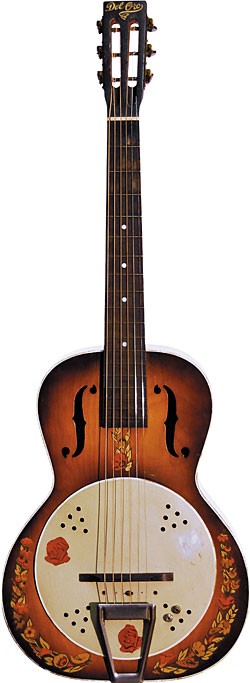
    30s Stromberg/Kay Del Oro

    Mid-’30s Stromberg/Kay Del Oro, with “resonator” containing the Stromberg electro unit.

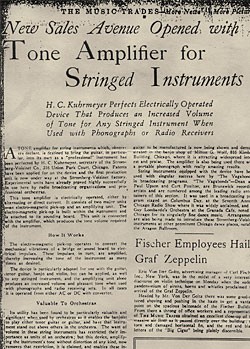
    Without specifically mentioning it, an intriguing headline in The Mustic Trades, dated October 20, 1928, heralded the launch of the first commercially manufactured electric guitar. At the time, the use of an electromagnet to convert mechanical vibrations of a musical instrument into electrical impulses was by no means new; various patents had already been filed that incorporated the same basic principle. Unlike previous inventions, though, Stromberg-Voisinet instruments were developed into a commercial product that was marketed to the public. The Music Trades article explains, “This tone amplifier is electrically operated either by alternating or direct currents. It consists of two major units – an electro-magnetic pick-up and amplifying unit. The electro-magnetic pick-up is built within the instrument and is attached to its sounding board. The unit is connected with the amplifier, which produces the tone and volume required of the instrument.”

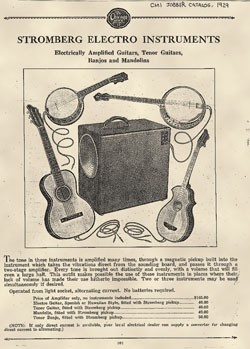
    The article later refers to use with phonographs or radio receivers, which by this time were being produced with built-in amplification – a fairly new piece of portable technology. The 1929 Chicago Musical Instrument (CMI) catalog contains a full-page ad verifying the availability of this groundbreaking idea. The ad, meanwhile, notes that this two-stage amplifier can be “Operated from light socket alternating current. No batteries required.” In previous years, the extra power was delivered by batteries, many of which were wet-cells. And most employed horns (rather than the now-common diaphragm speaker )that were limited in tonal range. The early units were also heavy, expensive, and sometimes dangerous.

    The advent of the new rectifier, along with power-tube technology that ran on available home current, solved the problem posed by the batteries, but not the problems of expense or weight.

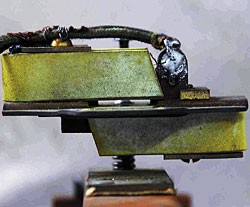
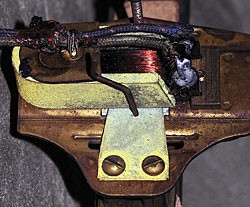
    Side of the Stromberg

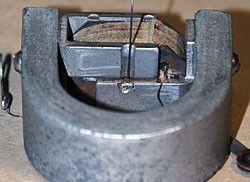
    Side of the Stromberg pickup, showing vibration transmission rod and actuator passing between the horseshoe magnet and coil.

    Side view of Stromberg pickup

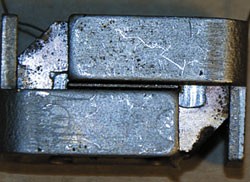
    Side view of Stromberg pickup showing actuator slot between the horseshoe magnets.

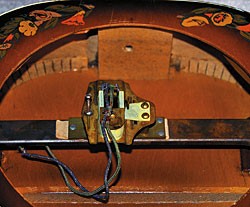
    Interior of the guitar

    Interior of the guitar, showing the Stromberg pickup and mounting bracket attached to the back.

    The original announcement claimed that the Stromberg amplification system “enables the banjoist to play either tenor guitar or guitar, and have that instrument stand out above others in the orchestra.” The 1929 ad does not indicate the amplifier’s output in terms of electric power, but if the weak units introduced just a few years later are any indication, an amplified Stromberg-Voisinet guitar was still no match for a banjo.

    Being cutting-edge, the new amplifier and speaker were not cheap, selling for $165, which, combined with the cheapest of their electric instruments (priced at $40) brought the total to $205. It was a princely sum compared to, say, a new automatic washing machine, which sold for $84.50 in 1929, or a three-oven, porcelain-enameled range with a gas broiler and four gas burners, which cost $98.50. Let’s see… upgrade the appliances, or buy a new guitar? The dilemma is as old as the electric guitar itself. And really, $205 was not an extravagant price for a professional-grade instrument. Martin’s top-of-the-line 000-45 cost $170. National’s innovative tricone resonators – loudest guitars of the day – ranged from $125 to $195. Gibson’s top model, the L-5, cost $304, and the company’s top banjo, the Florentine, listed for $500.

    Music Trades

    October 20, 1928, Music Trades article announcing the Stromberg Electro.

    1929 CMI catalog

    The 1929 CMI catalog ad announcing the Stromberg Electro.

    It would be interesting to speculate on what might have happened to this embryonic idea had the stock market not crashed on October 29, 1929. The Great Depression, which didn’t bottom out until March of ’33, put the brakes on production of many new inventions, and no other published reports of this early “tone amplifier” system have surfaced. On the other hand, the Depression was not strong enough to hold back the more powerful, direct string-driven electromagnetic guitar pickup that Ro-Pat-In (later known as Rickenbacker) introduced in 1932. An additional factor in the demise of the Stromberg pickup may have been its weight; it was a heavy unit that, as the article and catalog descriptions indicate, was built into the instrument. When this example was discovered, the mounting blocks had broken from the back and the pickup was held only by the vibration transfer rod attached to the top. The same problem in a fully constructed guitar, mandolin, or violin with glued on top and back would make it seem logical to discard the instrument rather than repair it, particularly if the damage occurred after the advent of more up-to-date commercial electrics.

    1927 Baldwin speaker

    The driver from a 1927 Baldwin speaker showing the actuator between the magnets – the same principle used in the Stromberg pickup.

    1927 Baldwin Speaker

    Driver from 1927 Baldwin Speaker showing the vibration transmission rod attached to the actuator.

    End of the input cable.

    End of the input cable.

    The pickup shown here closely corresponds to the October ’28 description in The Music Trades, although it was found in a later faux resonator guitar manufactured by Kay, successor to Stromberg-Voisinet. The ’29 catalog details, “The tone in these instruments is amplified many times, through a magnetic pickup built into the instrument which takes the vibrations direct from the sounding board.” In the price list shown in the CMI ad, all instruments are listed as “fitted with Stromberg Pickup.” For such a unit to be permanently housed in the interior of an instrument, the design would need to allow for adjustments, and this unit was smartly designed for the task. The vibrations from the top are transferred by means of an adjustable metal rod to the metal reed or actuator, which passes between two horseshoe magnets. The actuator, charged by the magnets, vibrates within the center of the coil, which induces a small current that is transferred through the cable to the amplifier. The vibration transfer rod is adjustable for height with a threaded fitting secured to the soundboard. This tension adjustment controls the magnitude of the vibration sent to the actuator. The entire unit has a tilt-adjustment screw that can be accessed through a small hole in the soundboard. This tilt is used to center the actuator in the coil, ensuring it vibrates freely. The entire unit is mounted to a metal bracket that spans the body. The bracket ends are attached to wood blocks glued to the back. Having undergone repair, this instrument still functions.

    Adapted Technology
    Under close inspection, the transducer mechanism bears a strong resemblance to related technologies of the period. Probably the most striking kinship is with speaker drivers of the mid/late ’20s. The 1928 Music Trades article states that Henry Kuhrmeyer, Secretary of the Stromberg-Voisinet Company, spent some six months at the United Sound Reproducer Company, perfecting the design. At the time, the term “reproducer” was applied to what today is called a speaker, since these devices reproduced the sounds that were electrically transmitted to the unit. The Stromberg-Voisinet pickup appears to be similar to a speaker driver operated in reverse, so it picks up mechanical vibrations and generates an electric signal, rather than transmitting electric signals to a cone, which vibrates, transmitting the original mechanical vibrations.


    Special thanks for Walter Carter and Arian Sheets.
    This guitar is part of the “Campaign for Volts – Wichita and the Electrification of the Guitar” exhibit at the Wichita-Sedgwick County Historical Museum in Kansas. Learn more at wichitahistory.org.


    This article originally appeared in VG‘s September 2008 issue. All copyrights are by the author and Vintage Guitar magazine. Unauthorized replication or use is strictly prohibited.

  • Frank Marino

    Frank Marino

    Photo courtesy of Frank Marino.

    Canadian fretmeister Frank Marino first came to prominence in the early 1970s, fronting Mahogany Rush. Often compared to Jimi Hendrix, Marino’s songwriting, playing, and singing interpolated other influences, as well, ultimately purveyed on a Gibson SG with a Vibrola.

    Marino was featured in VG in 1998 and has since, with his band, released a studio album and a double-disc live album.

    Marino describes the studio effort, Eye of the Storm, as “The album Maxoom (Mahogany Rush’s first) should’ve been. It was a great record, but one I didn’t think I was making! It was made over a couple of years, and was just music I wanted to make. It became a real turning point, though, because I really got back into my roots – the psychedelic/blues/rock/jazz thing; a little farther from straight rock.”

    Recent photos of Marino show him playing an SG with a custom pickguard, and a different pickup configuration and control layout.

    “That was my experiment with Stratocaster-style single-coils,” the guitarist chuckled. “And for any guitar guys out there, don’t try this at home. I ruined two SGs doing it. When you put those pickups in, you (remove) too much wood near the neck joint. I didn’t realize that, and when I was playing, the neck came off of one. I’d put the other in a case, and the pressure from the case made the neck move forward. We had gigs coming up, and I had to get ’em filled with epoxy. I still use one, but I still don’t feel comfortable with it.”

    These days, Marino relies primarily on an SG with PAFs and a hollowbody SG-style guitar made by Jim Glynn, which Marino says is, “…super-lightweight, but sounds good and resonates really well.”

    His amp setup still relies on a preamp he built and keeps modifying. He uses Crown or Ashley power amps, and still depends on homemade speaker cabinets he has had since the ’70s, with Fane speakers.

    RealLive, the recently released live set, was recorded September 8, 2001.

    “Again, we never thought that was gonna be a record,” he said. “We were recording every show, and when 9/11 happened, everything came to a standstill. I thought it would be a good time to look at what was on those hard drives. I picked the last show, September 8, from the top of the pile, and started mixing. And I started to realize it was a really good night.”

    The guitarist might still be inviting comparisons to Hendrix, since the first CD opens with a cover of “Voodoo Chile,” and contains a modified version of “Red House,” but Marino stressed that both tunes differ significantly from the usual way in which they’re presented.

    “‘Red House’ wasn’t even supposed to be ‘Red House’,” he said. “Anyone who plays knows that ‘Red House’ is not a 12-bar blues. So that’s actually my own blues thing. We were jamming, and when I came to the mic, I couldn’t think of any words. ‘Red House’ was just the first thing I thought of. It’s totally different; there are some jazz chords in there. I really wish I hadn’t sung those particular words that night, but since it was a live record, I didn’t want to do any overdubs.

    Frank Marino

    Photo courtesy of Frank Marino.

    “As far as ‘Voodoo Chile’ is concerned, nobody ever does that version of ‘Voodoo Chile,’ which is the one I like best. Most do [‘Voodoo Child (Slight Return)’]. When we’re gonna do a three- or four-hour show, we don’t like to come out with a bang, like a lot of bands do. I like to come out with something that builds slowly, and a tune like ‘Voodoo Chile’ is a great way to get into the mood. But on any given night, we never really know how we’re gonna start things.

    “When it came time to do the album, it would have been real stupid to pull ‘Voodoo Chile’ because of the Hendrix thing,” he emphasized. “I dare say I’m probably the only guy where some people would have a problem with that. When someone else does Hendrix tunes, nobody bats an eye. But when I do it, it becomes a little bit different. It’s gotten to the point that after 35 years, I really don’t give it a second thought. We’re there to play, and sometimes we do Beatle tunes, too. I don’t think an artist has to go onstage and sell his songs. You’re up there to create a mood, whether they’re your songs or someone else’s.”

    As if to underscore his commitment to create a mood utilizing covers, if needed, the medley “Poppy” from RealLive is founded on an original instrumental, delves into the extended break from the Doors’ “Light My Fire,” and segues into the Cream’s cover of “Crossroads” and segments of the Zombies’ “She’s Not There” before returning home. Running time, over 26 minutes. There’s also a cover of “Somewhere Over the Rainbow.”

    The tone on the instrumental intro to “Let There Be…,” which segues into “Strange Universe,” is decidedly different from Marino’s typical sound, and is played on the Glynn-made guitar.

    “When you hold a note, it really resonates,” Marino enthused. “The other guitars don’t do that. It has a totally different tone, and was intended that way. It’s so cool to be playing loud and have that kind of body resonance going on. I wouldn’t mind playing something like one of those fat-bodied Gibsons, but they resonate too much, and you can’t control it.”

    Marino also takes pride in the fact that he has eschewed his reliance on pedals, compared to his previous efforts (he had 22 in his rig at one point). There are a few moments where a listener will encounter a gizmo sound or two, but according to Marino, “Ninety percent of the album is straight guitar and amplifier.”

    The band plans to tour in 2005, and RealLive is perhaps a preview – and proof that Marino is in fine form these days.


    This article originally appeared in VG‘s April 2005 issue. All copyrights are by the author and Vintage Guitar magazine. Unauthorized replication or use is strictly prohibited.

  • May 2010

    Vintage Guitar - May 2010

    FEATURES

    The Beatles’ Casinos

    Of all the guitars made famous by the Beatles, the only one that John, Paul, and George had in common was the Epiphone Casino. Each owned one and used it for countless recordings and performances. By Andy Babiuk

    ’66 Epiphone Casino

    In the Epiphone line of the ’60s, the Casino occupied middle ground in appearance and electronics, ranking below the Sheraton, Riviera, and even the Crestwood Custom. But thanks to the Beatles, it is probably the best-known of all Gibson-made Epi models. By George Gruhn and Walter Carter

    The House of Stathopoulo Harp Guitar

    Surreal Missing Link

    One of the rarest Epiphone instruments lends a glimpse into a transitional era prior to the formation of what would become one of the most recognizable names in guitar history. By Paul Fox

    Trainwreck Express “Nancy”

    Amps bearing the Trainwreck brand have long been among the most desirable. And after the passing of Ken Fischer they’ve been fixed to an even higher standard by the laws of supply and demand. This one, dubbed “Nancy,” was built by Fischer in 1986. By Dave Hunter

    Kenny Sultan

    Left-Coast Blues Machine

    A blues-guitar authority, as a kid he hit L.A. blues clubs to watch T-Bone Walker and Doc Watson. A guitarist by age 12, he spent his youth and adolescence enamored with the form, and today purveys it as half of an acclaimed duo. By Preston Gratiot

    The Yamaha Image

    Whether you say “acoustic” or “electric,” Yamaha is never the first name that leaps to mind among guitar aficionados. Nevertheless, it has historically offered wonderful designs, innovative features, and exceptional quality. One Yamaha that answers all these encomiums is the Image. By Michael Wright

    The Vox Saturn IV

    In the mid 1960s, Vox was buoyed by endorsers such as the Beatles and Paul Revere & the Raiders. The company signed deals with almost every popular band; even one-hit-wonders such as Music Machine (“Talk Talk”) brandished Vox guitars like the Saturn IV. By Willie G. Moseley

    DEPARTMENTS

    Vintage Guitar Price Guide

    Builder Profile

    TogaMan

    Upcoming Events

    Vintage Guitar Classified Ads

    Dealer Directory

    Readers Gallery

    FIRST FRET

    Reader Mail

    News and Notes

    Musician’s Hall of Fame Closes, New Music by Beck and Frampton, Deke’s Guitar Geek Fest, In Memoriam, more!

    John Jorgenson’s Gypsy Jazz Orchestra

    By Michael Dregni

    Charlie Apicella

    Ain’t That a Groove?

    By John Heidt

    Ask Zac

    By Zac Childs

    J.D. Simo

    Young Tele King on Broadway

    By Zac Childs

    Winter NAMM ’10

    By Preston Gratiot

    Jimmy Wyble

    1922-2010

    By Jim Carlton

    Love and Theft

    Doing Time

    By Will Kelly

    Sean Chambers

    The Tampa-Texas Connection

    By Willie G. Moseley

    COLUMNS

    The (Way) Back Beat

    $100, 50 Years Ago, Part II

    By Peter S. Kohman

    Q&A With George Gruhn

    Guitars with Guts

    1846 Manuel Gutiérrez

    By R.E. Bruné

    Fretprints

    Robbie Krieger

    By Wolf Marshall

    Acousticville

    Every Decade Or So…

    By Steven Stone

    TECH

    Talkin’ Amps…

    Sleeper Amps: The Watkins Dominator MkI

    By David Jung

    DAn’s Guitar Rx

    New Bridge For an Epi Texan

    By Dan Erlewine

    Shop of Hard Knocks

    Resurrecting a “SuperStrat”

    By Will Kelly

    REVIEWS

    The VG Hit List

    CD, DVD, and Book Reviews: Sweet Mikey C, Debbie Davies, Oz Noy, Muriel Anderson, Bob Seger, Richard Bennett, The Modern Era of the Les Paul Legacy, more!

    Check This Action

    What Would Django Do?

    By Dan Forte

    Vintage Guitar Gear Reviews

    Godin 5th Avenue CW Kingpin II/Richmond Dorchester, Big Tex ’53 Blackguard, Boedigheimer BB-1/Boutique, Epiphone Emperor Swingster, WGS G10A/G10C, Danelectro ’59 Original DC, Bilt Relevator, More!

    Gearin’ Up!

    The latest cool new stuff!

  • April 2010

    Vintage Guitar Reviews

    FEATURES

    Bruce Kulick
    Wielding Power on bk3
    On his new album, the former Kiss guitarist raises the bar and offers songs diverse in terms of style, tone, and personnel. And to make it, he used an arsenal of vintage treasures, including his beloved ’53 Gibson Les Paul. By Lisa Sharken

    The Rickenbacher M11
    The name “Rickenbacker” conjures images of John Lennon’s 325, George Harrison’s 360/12, or Pete Townshend’s smashed guitars. Probe Rick’s earlier history, however, and you find a company at the forefront of electrification and amplification. By Dave Hunter

    Martin 0-42
    Through the years, Martin’s dreadnought, OM, and 000 guitars may have gained the most notoriety. But for the sweetest and best-quality sound, Martin itself recommends the size 0, exemplified by this 0-42. By George Gruhn and Walter Carter

    Fender Amps, by the Number
    The sixth installment in a series inspired by a “call to action” from the mid ’90s, the author tracks the serial numbers of Fender tube amps made between 1946 and 1984. By Greg Gagliano

    The Applause by Ovation
    The word “budget” has been part of its identity from the very beginning. But the Applause, conceived circa 1973, was also something entirely new to the guitar world. By Michael Wright

    Black Holes in the Sky
    Syd Barrett, Pink Floyd’s Psychedelic Avatar
    After guiding Pink Floyd to early acclaim, he was dismissed from the band. Then, in June, 1975, he appeared outside the studio where the band was mixing “Shine On You Crazy Diamond” – a song with lyrics written in tribute to him. By Pete Prown

    The Mosrite Standel
    Though labeled “Standel,” this guitar is a rare example of one built for another company by Semie Moseley’s Mosrite. By Willie G. Moseley

    DEPARTMENTS

    Vintage Guitar Price Guide

    Builder Profile
    KJL Amplifiers

    Upcoming Events

    Vintage Guitar Classified Ads

    Dealer Directory

    Readers Gallery

    FIRST FRET

    Reader Mail

    News and Notes
    Fans Honor Fogelberg, Elvis’ Kay on Display, Lowell Kiesel passes, In Memoriam, more!

    Well… All Right
    Buddy Holly’s Complete Studio Recordings
    By Dan Forte

    Paul Bremner
    The Wizard of IZZ
    By Pete Prown

    Ask Zac
    By Zac Childs

    Steve Rothery
    Melodic Ace for Medallion
    By Pete Prown

    Kirby Kelly
    Back At It
    By John Heidt

    Jim Campilongo
    Orange Peels
    By John Heidt

    Larry Gatlin
    Pilgrim’s Progress
    By Rick Allen

    Leslie West
    Still Climbing
    By John Heidt

    COLUMNS

    COLUMNS
    The (Way) Back Beat
    $100, 50 Years Ago
    By Peter S. Kohman

    Q&A With George Gruhn

    Fretprints
    Neal Schon
    By Wolf Marshall

    Acousticville
    Surprise! You’re Busted
    By Steven Stone

    TECH

    TECH
    Talkin’ Amps…
    Sleeper Amps: The Silvertone Twin Twelve
    By David Jung

    Dan’s Guitar Rx
    Custom Saddles for a Rick Bass
    By Dan Erlewine

    Shop of Hard Knocks
    A DIY Stompbox Kit
    By Will Kelly

    REVIEWS

    REVIEWS
    The VG Hit List
    CD, DVD, and Book Reviews: Paul McCartney, Love, Buck Pizzarelli, Nick Curran, Smokey Hormel, Jimi Hendrix Gear, more!

    Check This Action
    R&B Royalty
    By Dan Forte

    Vintage Guitar Gear Reviews
    Fender Bassman TV amps, Frenzel FM-DP1, TWA LD-01, ToneCandy Spring Fever, Kramer Disciple, MXR Fullbore Metal, Way Huge Angry Troll, Seymour Duncan Phat Staple/Phat Cat, Vintage Vibe HS-90A, KAM Plug & Play

    Gearin’ Up!
    The latest cool new stuff!

  • Chris Duarte Group – Vantage Point

    It’ll surprise few familiar with Duarte to learn that this disc is full of hardcore Strat tones, killer blues chops, and lyrics that get to the point. Cynics might say “What’s the point?” but that would be an indication that they’re missing the point.

    Duarte does what he does as well as anyone out there. The fire is evident and he’s helping keep alive a form of music that could easily sneak through the cracks; remember how fresh SRV sounded in the early ’80s?

    Duarte’s guitar chops are on full display on cuts like the aptly titled “More Boogie” where he goes for the throat with his clean (but still extremely nasty) tone. The stomper “The Best I Can Do” is a call-and-response do-it-yourself session with very hooky guitar and vocal figures. The pop-rocker “Babylon” is the real showcase for Duarte’s playing on the disc – rowdy, funky rock that ends with a melodic floating solo proving Duarte’s versatility. It’s the kind of thing he should try more often. Same for “Woodpecker,” a jazzy funk instrumental that again shows he’s no one-trick pony.

    Duarte’s vocals are always heartfelt and serviceable, even if at times they simply serve as a bridge between solos. And Joseph Patrick Moore (bass) and Jeff Reilly (drums) supply the perfect support.


    This article originally appeared in VG‘s May. ’09 issue. All copyrights are by the author and Vintage Guitar magazine. Unauthorized replication or use is strictly prohibited.