
Month: July 2008

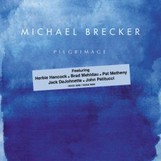
  • Michael Brecker – Pilgramage

    Jazz lost a major figure this past winter with the death of tenor-sax giant Michael Brecker, who died of a blood-marrow disorder. Yet as his health deteriorated last year, he still found the strength to record this album, which also features a “dream team” of instrumentalists – guitarist Pat Metheny, pianists Herbie Hancock and Brad Mehldau, bassist John Patitucci, and drummer Jack DeJohnette. The resulting album is contemporary “straight-ahead” jazz, yet with a few novel twists.

    The opener, “The Mean Time,” is a fast, melodic romp with hot solos tossed around by each player. One great surprise is that Metheny isn’t just a “fusion” guitarist, but can also wail on a straight jazz tune – his bop chops are impressive. Then there’s “Tumbleweed,” a mid-tempo tune with a loping groove and quirky melody. The cool thing is Metheny injecting his infamous guitar-synthesizer into a traditional acoustic-jazz format, and it sounds terrific. Many have a love/hate relationship with his synth tone, but here, Pat proves it’s a valid jazz instrument.

    On the other hand, the ensemble could turn around and conjure up the beautiful, old-school ballad, “When Can I Kiss You Again.” Here, Metheny goes the classic route, turning in a perfect “jazzbox” solo that’s melodic, rhythmically interesting and very emotive. And John Patitucci gets a chance to shine on “Cardinal Rule” with a sterling standup-bass solo.

    No doubt, Pilgrimage will earn a Grammy or three, both because of Brecker’s contribution to the jazz world, as well as for the merits of this stunning album alone. And come this fall, it’s surely going be the “Jazz Album of the Year” in many polls. Brecker’s last musical testament is just that good.


    This article originally appeared in VG‘s Aug ’07 issue. All copyrights are by the author and Vintage Guitar magazine. Unauthorized replication or use is strictly prohibited.
  • Ian Hunter – Shrunken Heads

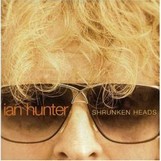
    Ian Hunter’s latest is straightforward, nuts-and-bolts rock and roll. The writing is fueled by personal and real politics, and the sound of the band and Ian’s voice are perfect. Some credit must go to co-producer Andy York (the Mellencamp-band veteran), who played guitar on the disc, along with Jack Petruzzelli and James Mastro, who supply stinging leads. But most of the stinging comes from Mr. Hunter.

    While Hunter manages to skewer George Bush, FEMA, and folks he sees as following blindly, he saves sharp arrows for himself, as well. “Words (Big Mouth)” is a funny poke at (and apology for) his own manners, which one can imagine have gotten him in trouble a few times. It’s especially fun to hear the “yakkety, yakkety, yakkety” chant as the song fades out and background singers, including Wilco’s Jeff Tweedy, sing about Ian’s big mouth. There’s also the wonderful “I Am What I Hated When I Was Young.” For aging babyboomers, it might hit close to home.

    While those songs are self-deprecating and funny, Hunter’s attitude turns on “Soul of America” and “How’s Your House,” the latter a Hurricane Katrina protest song. And the album wraps with the piano ballad “Read ’em ‘n Weep,” where Hunter talks about various things to be read, concluding with old love letters. The song is heartbreakingly brilliant.

    It’s nice that while young rockers appear confused about where to head in terms of musical direction, folks like Ian Hunter keeping blazing a path showing where rock has been, where it is, and where it should be going.


    This article originally appeared in VG‘s Oct ’07 issue. All copyrights are by the author and Vintage Guitar magazine. Unauthorized replication or use is strictly prohibited.


  • Larry Carlton – Live in Tokyo

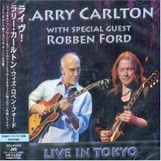
    Larry Carlton and Robben Ford share a special relationship. Carlton helped the young blues-slinger learn some of his licks and techniques when he got the gig backing Joni Mitchell. As he writes in the liner notes, “He had a unique approach to playing the blues (mixing bebop notes and phrasing). Man, could that kid swing!” By the same token, Ford inspired the studio ace to get out (and get out there) and play live.

    From their legendary Donte’s gigs in the mid ’70s (with Joe Sample, Pops Popwell, and Jeff Porcaro), whenever the two have gotten together, it’s been cause for celebration.

    Judging by this CD, such was the case when the two played Tokyo in September 2006. As Ford writes, “I haven’t enjoyed myself this much in a long time.”

    The rhythm section of drummer Toss Panos, keyboardist Jeff Babko, and bassist Travis Carlton (Larry’s son) establishes the mood with the steady-rolling groove of the opening instrumental, Ford’s “That Road.” A 335, a gold-top, two Dumbles, and a lot of soul.

    The players are about as well-matched as a pair could be, and, although details aren’t given, anyone familiar with their playing will be able to tell who’s playing what. That’s Ford taking the first solo, for instance, on Carlton’s “Burnable” – invariably applying a little more bluesy sting than Carlton, whose solo on the same song is more understated dynamically but more complex harmonically.

    The CD’s biggest treats are an extended workout on “Rio Samba,” the centerpiece of Carlton’s self-titled 1978 album, and the night’s only vocal offering, Ford’s take on J.B. Lenoir’s blues shuffle, “Talk To Your Daughter.” The perfect closer to an evening of all-star guitar playing.


    This article originally appeared in VG‘s May ’08 issue. All copyrights are by the author and Vintage Guitar magazine. Unauthorized replication or use is strictly prohibited.


  • Commander Cody – Live at Armadillo HQ

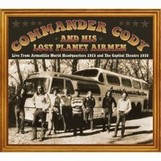
    A disc of outtakes from the classic Live From Deep In the Heart of Texas makes for a fine live record on its own, especially fun to again hear a young Bill Kirchen as he makes his way through the mix of country, rock, swing, and everything in-between.

    As they were wont to do, the band covers lots of classics. You hear “Blue Suede Shoes”(check Kirchen’s rockabilly chord intro into blazing single lines), “Milk Cow Blues,” “What Made Milwaukee Famous,” “Lawdy Miss Clawdy,” and lots of others, including their big hit, “Hot Rod Lincoln.” The Commander, or George Frayne, is in fine voice and state of mind throughout. It’s fun to think of what hippies thought of this on first encounter.

    The second disc is a concert from 1975, and while quite good, it doesn’t have the fire or charm of the ’73 disc. Certainly, there are great songs, like “What’s the Matter Now,” “My Window Faces the South” and lots of great fiddle from Andy Stein. But, pointless obscenity shows up in songs (“Everybody’s Doing It”) and in some song introductions by Frayne. The music at times seems tired and sounds like a band going through the motions. It’s easy to see why they only lasted another year or so.

    It is nice after all these years to have more Cody music. The first disc is a must-have for fans. The second, while not as strong, offers some moments. It’s all a nice reminder of how good a band this was.


    This article originally appeared in VG‘s Dec ’07 issue. All copyrights are by the author and Vintage Guitar magazine. Unauthorized replication or use is strictly prohibited.


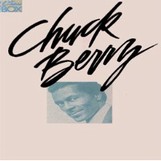
  • Chuck Berry – Johnny B. Goode: His Complete ’50s Chess Recording

    The best way to avoid people second-guessing your selections is to issue an artist’s work in its entirety. Not only are there no “glaring omissions,” there are no omissions at all.

    In the case of Chuck Berry, this is definitely the right call, since, even in cases of tracks that are somewhat substandard, this is Rock (and Rock Guitar) History 101.

    With 103 tracks, sequenced chronologically, spanning four discs, all the hits and classics are here (and there are dozens), from 1955’s “Maybellene” to “Brown-Eyed Handsome Man,” “Roll Over Beethoven,” “Rock And Roll Music,” “Memphis, Tennessee,” “Run Rudolph Run,” “Almost Grown,” “Back In The U.S.A.,” and more. And you can listen to his slow blues instrumentals “Deep Feeling,” “Low Feeling,” and “Blue Feeling” side by side. “Deep” features Berry on steel guitar, while “Low” is a slowed down version of “Blue,” played on standard guitar. And the 24-page booklets reveals that Hubert Sumlin is rhythm guitarist on all three as well as “School Day,” which was cut the same day.

    The evolution of “Sweet Little Sixteen” is illustrated over the course of five tracks, from demo to final release, which Chess Records sped up one half-step. Whether this was to pump up the groove or make the single a tad shorter for airplay, it does succeed in making it rock out just a little bit more.

    Producer Andy McKaie states that nearly all tracks were re-mastered from the original masters, with changes in EQ but no changes in the actual mixes – the barometer being “to make it sound ‘right,’” which he admits is subjective. He also points out that even going back to the original vinyl releases, singles were often mastered differently than the original LPs they appeared on. To my ears, the best-sounding versions can be found (after some searching) on the three vinyl Golden Decade double-albums. Re-EQ’ing to bring out the upright bass, for instance, is interesting but jarring, and some cuts here just seem to push the high-end too far (“Sweet Little Rock ‘n Roller,” for example).

    Speaking of decades, because this set ends conveniently at 1959, some favorites that came later aren’t included, such as “Promised Land” and “Nadine.” McKaie hints that a complete ’60s box is planned, to cover the remaining Chess years, before Chuck signed to Mercury.

    To quote the man himself, “Let it rock!”


    This article originally appeared in VG‘s Apr ’08 issue. All copyrights are by the author and Vintage Guitar magazine. Unauthorized replication or use is strictly prohibited.


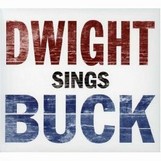
  • Dwight Yoakam – Sings Buck

    When Yoakam put the twang back into country music in the mid ’80s, his mere existence was a tribute to his chief influence, Buck Owens. And in 1988 he brought the then-retired Owens back to live performing – and, with their duet on “Streets Of Bakersfield,” the top of the charts.

    That Yoakam would record an entire album of Buck material after the country icon’s death in 2006 was a given; the only question was when.

    What made the remake of “Streets,” an obscurity from Owens’s catalog, work so well was that it contrasted two distinct vocal stylists and wasn’t afraid to add touches like Flaco Jimenez’s accordion and producer Pete Anderson’s octave guitar. On this self-produced effort, Yoakam is alternately experimental and overly reverent. Compare “Foolin’ Around,” which has Dwight’s sound and phrasing stamped all over it, to “My Heart Skips A Beat,” where he sacrifices his own identity to ape Buck’s trademark slurred delivery.

    On “Act Naturally,” Yoakam should have taken a cue from Ringo Starr – who made no attempt to imitate Buck on the Beatles’ hit version. It’s like Yoakam came to the studio some days and sent a Buck impersonator other days. For “Down On The Corner Of Love,” Dwight is back in the vocal booth, and even lets guitarist Eddie Perez break out an electric sitar, while pedal steeler Josh Grange thoroughly shines.

    In keeping with Buck’s tradition, Dwight uses his road band – Perez, Grange, bassist Kevin Smith, and drummer Mitch Marine – in the studio, along with keyboardist Skip Edwards. Like Buckaroo Don Rich, Perez provides the stinging Telecaster as well as high harmony vocals, and does a great job at both.

    Dwight Yoakam is the last artist one would suspect of being self-conscious, and he’s at his best when he just rears back and belts out rockin’ renditions of “Above And Beyond” and “Love’s Gonna Live Here Again” – simultaneously true to Buck’s spirit and his own personality.

    He pushes the envelope further on the slowed-down, percussion-laden “Close Up The Honky Tonks,” one of the CD’s most interesting tracks. Likewise, Buck’s trademark freight train rhythm is replaced with a quasi twist beat on “Under Your Spell Again.” “I Don’t Care” features some Beatles-ish guitar flourishes, and Yoakam actually alters Owens’ classic melody on a gospel-tinged “Together Again.” Is it as good as Buck’s original? Of course not. But this is, after all, Dwight’s album.


    This article originally appeared in VG‘s Mar ’08 issue. All copyrights are by the author and Vintage Guitar magazine. Unauthorized replication or use is strictly prohibited.


  • Bruce Springsteen – Magic

    Advance word on this album centered on its anti-war lyrics, but its true focus is on the return of the E Street Band and Springsteen’s classic signature sound.

    “In the Future” does discuss events in America the past few years, set to a rollicking Jersey sound that calls to mind “Tenth Avenue Freeze Out.” “Magic” is a folk tale that superficially discusses sleight-of-hand, but more deeply lets the listener know that Bruce is referring to the Bush administration, not Houdini. “Gypsy Biker” is an E-Street stomper about a friend returning from war – in a casket.

    So, yes, the war is on Springsteen’s mind. But his thoughts and emotions here are not in-your-face. Some might cry “cop-out,” it’s really just a case of a songwriter who truly knows his craft. And those songs are just the tip of the iceberg. “Girls in Their Summer Clothes” is a piece of Spector-like rock, “I’ll Work For Your Love” is full of Catholic imagery – perfect E-Street music with a hook big enough to drive a truck through.

    Guitar sounds drive all of these songs, which isn’t surprising from a band with three guitar players (Springsteen, Steve Van Zandt, and Nils Lofgren). Whether it’s jangly rhythms, driving solos, or layered acoustics, they’re everywhere. Producer Brendan O’Brien captures the band’s sound perfectly, and when mixed with great lyrics and hooks, it’s veritable rock and roll perfection.


    This article originally appeared in VG‘s Feb ’08 issue. All copyrights are by the author and Vintage Guitar magazine. Unauthorized replication or use is strictly prohibited.


  • Stamey & Holsapple – Mavericks

    It’s nice to see this 1991 classic re-released, hopefully to a bigger audience than it did on its original release. In the 1980s, Holsapple and Stamey were charter members of the db’s, which recorded some of the finest music of that era.

    “Angels,” with its jangly guitars, pop/rock melodies, and incredible hook is one of the finest singles of the past 20 years. Then, rockers like “I Want to Break Your Heart” combine fat power chords, an amazing solo, and an odd lyric. The ballad “She Was the One” is gorgeous in its folky simplicity. The Beatle-esque folk/rock of “Geometry” offers wonderful guitar playing – electric and acoustic.

    Guitars power all songs here, weaving in and out with unexpected phrases and big sounds that never fail; acoustics match the beauty of the voices.

    Bonus tracks like the beautiful “Hollywood Waltz” offer a country feel with steel guitar and doesn’t match the pop/rock ethos of the album as a whole. But it’s a welcome addition, as is the instrumental guitar tune “I Knew You Would,” followed by a short, quick quote from the Beatles’ “Do You Want to Know a Secret.” It’s the perfect way to conclude a masterpiece.


    This article originally appeared in VG‘s Apr ’08 issue. All copyrights are by the author and Vintage Guitar magazine. Unauthorized replication or use is strictly prohibited.


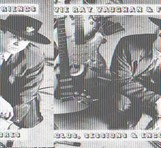
  • Stevie Ray Vaughan and Friends

    Years ago, in a BBC documentary about his former bandleader, bassist Noel Redding held up all the albums that Jimi Hendrix released during his lifetime (five, not counting Cry Of Love, which he was working on at the time of his death) alongside a huge stack of posthumous releases of varying quality and provenance – one point being that Jimi was being exploited and his catalog diluted.

    In his lifetime, Stevie Ray Vaughan released four studio albums and one live album with Double Trouble, and he completed work on the Vaughan Brothers’ Family Style,/I>, issued just weeks after his death. Since then, a steady stream of product has come out (compilations, live recordings, alternate and unissued tracks), and while the quality of the music has invariably been high, the presentation has sometimes been lacking.

    There are indeed some real gems included here, beginning with the one and only time he jammed with both Albert and B.B. King, on “The Sky Is Crying,” for B.B.’s 1987 TV special (which also happened to be one of the last performances of harp great Paul Butterfield, who also takes a vocal turn). To quote the show’s title, this is “Blistering Blues,” no doubt about it.

    Also included are studio sessions Stevie did with fellow Texans Marcia Ball, Johnny Copeland, and Bill Carter, and live performances with two more Texans, Albert Collins and Katie Webster. And there’s his “Saturday Night Live” appearance, with brother Jimmie joining Double Trouble on “Change It”; his surf jam with Dick Dale on “Pipeline,” from the forgettable bit of cinematic fluff, Back To The Beach; an incendiary 1984 showdown with Jeff Beck on Freddie King’s “Going Down”; and the cut that introduced him to the world at large, David Bowie’s “Let’s Dance.”

    But as top-drawer as the music (compiled by Bob Irwin) is, the package appears to be slapped together in several respects. There are no cut-by-cut personnel listings, even though most if not all are readily available. And “You Can Have My Husband,” a pre-Texas Flood track from Double Trouble’s first studio attempt at an album, is credited to singer Lou Ann Barton. This is inaccurate and misleading. The track was part of an album’s worth of tunes cut in Nashville in ’78, with the original edition of Double Trouble (after the dissolution of Triple Threat Revue), with Stevie, Lou Ann, drummer Chris Layton, and bassist Jackie Newhouse. That this isn’t listed as Double Trouble, coupled with the fact that Barton was left off the SRV boxed set, is either sloppy or a little bit fishy.


    This article originally appeared in VG‘s Apr ’08 issue. All copyrights are by the author and Vintage Guitar magazine. Unauthorized replication or use is strictly prohibited.


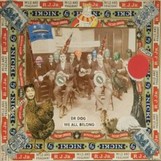
  • Dr. Dog – We All Belong

    Dr. Dog is five guys from Philly who’ve listened to more than their share of Beatles and Beach Boys. It’s not a bad thing. In the context of the band, their names are Tables, Taxi, Text, Triumph, and Thanks (no, really!) so identifying who’s playing what is challenging.

    This is hard music to describe. Songs like “My Old Ways” are driven by piano and great vocals. “Keep a Friend” is a soul ballad with a slightly distorted guitar beating out rhythms and harmonized guitars carrying it out. “The Girl” is an odd mix of sounds that at times crosses a Tom Waits-like vocal with big, heavy guitar sounds, with the Beatles. The odd party song, “Weekend” has semi-orchestral guitar parts. “Worst Trip” is a highlight, with its jazzy horns, cool changes, and guitar parts that alternate between dissonant cacophony and a lovely harmonized solo, then go back to dissonance.

    The band’s lo-fi approach sounds like it was recorded in the ’60s or early ’70s. It’s not at all primitive – it sounds gorgeous – but the feel is different than a lot of young bands today. Old coots like me will love the influences of the masters, while the oddities of the record invite younger listeners.


    This article originally appeared in VG‘s Jul ’07 issue. All copyrights are by the author and Vintage Guitar magazine. Unauthorized replication or use is strictly prohibited.