
Month: August 2013

  • Gary Clark Jr.

    Gary Clark Jr.

    Gary Clark Jr.After the hype, accolades, and Eric Clapton endorsements of the past few years, Gary Clark, Jr.’s first full-length record has finally arrived. With tracks culled from previous EPs, producer Mike Elizondo (Mastodon, Fiona Apple, Eminem) and Clark have crafted a record that illustrates how great musical influences, an honest point of view, and timing can make good commercial art.

    With one foot in the present and one in the past, Clark skillfully mines dirty Austin blues, ’60s psychedelia, R&B, rock, pop, and hip-hop. It’s everything a smart, forward-thinking, 28-year-old musician with good taste in music would be soaking up. The difference being that Clark takes the “less is more” approach to guitar while molding these genres to feed his artistic vision.

    While his blues guitar contemporaries could give a dissertation comparing the stylistic nuances of the most obscure blues artists, Clark simply keeps it real, as on the Chuck Berry-esque “Travis Country.” He has a raw but immaculate guitar style that truly communicates. What he lacks in vocabulary, he makes up for with authenticity, feel, and that ever so illusive aura.
    There’s an undeniable Hendrix influence on the record, and it works. Clark has his way with “Third Stone From The Sun,” and while the motif has been done to death, Clark magically morphs the groove into “If You Love Me Like You Say,” made popular by Albert Collins. The result is blistering.

    The Hendrix vibe continues on “Numb” with some deft use of an Octafuzz where he channels Jimi’s “Hear My Train A’ Comin’.” In a modern context, it beats the Black Keys and the White Stripes at the faux-blues game; Clark’s Epiphone Casino pushed to the brink, in conjunction with bona fide blues phrasing that simply kills.

    But there’s more to Clark than fuzz tones and Hendrix as he seamlessly segues into some fine Eddie Kendricks falsetto on the old school R&B cut “Please Come Home.” The contemporary neo-soul of the title track and “Things Are Changin’” explores his smoother side. Clark understands the value of a hook on the R&B pop of “Ain’t Messin’ Around,” and rocks out effectively on “Glitter Ain’t Gold.” “The Life” is a nice departure, grooving hypnotically and transporting us with testimonial hip-hop.

    Blak and Blu is a fresh and uncontrived record that draws from the best in African American music, past and present. The connective tissue throughout his music is soul. It’s the common denominator and spiritual glue that reinforces his music without superficiality. Clark’s artistic palette is made up of urban blues, old school R&B, black rock, and hip-hop, and it makes for good art. On the song “Bright Lights,” Clark says, “You’re gonna know my name by the end of the night.” He isn’t lying.

    This article originally appeared in VG‘s Jan. ’13 issue. All copyrights are by the author and Vintage Guitar magazine. Unauthorized replication or use is strictly prohibited.
  • The MXR M234 Analog Chorus and M87 Bass Compressor

    The MXR M234 Analog Chorus and M87 Bass Compressor

    The MXR M234 Analog Chorus and M87 Bass Compressor

    MXR M87 Bass Comp and M234 Analog Chorus
    Price: $318 (M87 Bass Compressor), $170 (M234 Analog Chorus).
    Info: jimdunlop.com

    For decades, players in virtually every musical genre have been familiar with MXR pedals; the name connotes a solid road-warrior stompbox associated with great tones from ’70s through today.

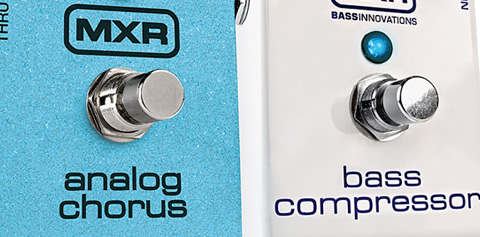
    The Analog Chorus M234 is designed to capture the properties of a classic chorus pedal with a few perks. It has the Rate and Depth knobs found on most chorus pedals, but there’s also a Level control, and separate Low and High controls, which is markedly different in that both go from a significant cut of frequency when rolled completely off to an actual “flat” frequency response when both are turned all up all the way. Players who like to experiment will dig this, since chorus pedals tend to be harsh in either EQ curve. And single-coil guitars can be brittle-sounding with the wrong chorus, so rolling off high-end helps tame them. The opposite holds true in low-end response with hollowbody instruments and basses, which can turn to mush in a heartbeat with certain chorus effects.

    Keeping the Analog Chorus straightforward and simple, MXR gave the pedal a small housing, used standard 1/4″ input and output jacks, along with an additional through output for dry signal.

    With a few strums, the Analog Chorus offered the classic sonic signature for which MXR is known, most notably in terms of lushness. It’s hard to beat an analog chorus for warmth and tone shaping, whether you’re playing guitar, bass, or even a vintage synthesizer. From subtle to warble, the Analog Chorus will appeal to chorus junkies.

    The Bass Compressor M87 offers a new approach to bass compressors in that it uses MXR’s Constant Headroom Technology (CHT), which incorporates the concept of a high-quality studio compressor in a compact box. Starting with a transparent signal – not always the case with some compressors, which significantly color tone – you have a five-knob setup with controls for Input, Output, Attack, Release, and Compression Ratio. It’s rare to have this much control in a compressor pedal. Even more impressive in this true-bypass gem are 10 gain-reduction-status LEDs that give an immediate warm-and-fuzzy visual to monitor the compressor’s function.

    Plugged into a variety of instruments ranging from vintage basses to exotic active instruments and even an upright, the M87 did not color the tonal properties in any shape or form. Studio-grade compressors should only do the job they’re designed to do – even-out notes and add articulation and attack when needed. The Bass Compressor did just that without sounding squashed or unnatural, no matter the bass instrument.

    Experimenting further with the M87’s claims of being studio-worthy, we put it through the paces with a variety of guitars and synthesizers. Again, the results fortified MXR’s mission; guitars smoothed out nicely while retaining their character and the ability to completely dial in the effect due to the five-knob layout is a knob-tweaker’s delight. Consider that it’s the size of a Phase 90, and it’s a package tough to beat.


    This article originally appeared in VG December 2012 issue. All copyrights are by the author and Vintage Guitar magazine. Unauthorized replication or use is strictly prohibited.


  • Perri Ink. Intros Memento Guitar

    Perri Ink MementoPerri Ink.’s Memento guitar pays homage to the film of the same name. Built to look like the mirror image of a standard right-handed guitar, it has a slightly distressed gold finish, Callaham vintage-style vibrato, three Bare Knuckle Irish Tour pickups, quartersawn maple neck with rosewood fretboard, and a reverse body, neck, and headstock. Perri Ink. guitars are American-made. Learn more at perriinkguitars.com.

  • Ernest Ranglin

    Ernest Ranglin

    Ernest RanglinStanding at a crossroads of reggae and jazz, Ernest Ranglin has crafted a unique voice. His mellow-toned and laidback fusion is singular. And stunning.

    To anyone familiar with Jamaican music and reggae, Ranglin is legend. He began on ukulele, then built his first guitar from a sardine can and wires. He played and recorded mento in the 1950s, moving on to serve as a session guitarist for the fledgling Studio One, carving out early ska with his trademark “core” style of scratch playing.

    While adding his backbeat to reggae hits, he also became enamored with Charlie Christian, and Ranglin’s subsequent music shows these dual influences. He first cut a solo album in 1958, for Chris Blackwell’s Island label. Since then, he’s released some 28 solo platters, ranging from jazz to calypso to reggae and back again.

    On Avila, neither Ranglin nor his stellar backing ensemble try to change that. Each song is based on elements of ska, rock steady, and reggae, layered with modern jazz elements. But whether it’s the superb backing and melodies played on sax, trumpet, melodica, or keyboards, Ranglin’s guitar is the centerpiece.

    The opening track, “Manenberg,” is a light jazz tune and shows what this group is capable of. Ranglin intermixes his sweet-souled guitar lines with the band, playing with the melody and timing of phrases, each echoing the other. Throughout, Ranglin is obviously enjoying himself, rejoicing in long, exploratory solos. His happiness here is palpable.

    “Ernossi” rides a funked-up reggae rhythm while “Ska Rango” kicks off like a Kingston ska tune circa 1955 before moving into a groove that Miles Davis might have appreciated. “Swaziland” blends reggae sounds with African vibes.

    Knowing they had it right from the start, the album closes with “Return To Manenberg,” offering even more of a good thing. Throughout, Ranglin’s sublime guitar reigns.

    This article originally appeared in VG‘s Jan. ’13 issue. All copyrights are by the author and Vintage Guitar magazine. Unauthorized replication or use is strictly prohibited.

  • The Epiphone ES-175 Reissue

    The Epiphone ES-175 Reissue

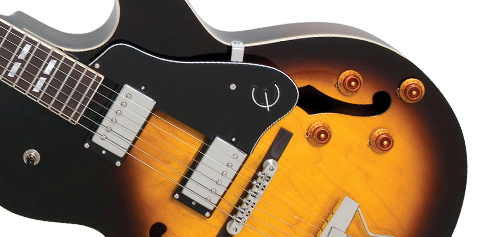
    There are plenty of affordable hollowbodies on the market, but Epiphone’s recent reissue of the Gibson ES-175 is almost a slam-dunk out of the box. Whether your guitar guru is Joe Pass, Pat Metheny, or Steve Howe, there’s a historical aura to the 175 design that transcends categorization. In that light, Epiphone has an instant advantage before you strum your first Gmaj7#13 chord.

    For materials and construction, the ES-175 Reissue has a laminated maple top, back and sides, along with a 243/4″-scale mahogany neck. The fingerboard is rosewood and sports 20 frets, along with the 175’s classic “split parallelogram” inlays. The nut width is 1.68″, and both the body and neck are bound. The guitar’s hardware is chrome, including the tuners (while the Gibson has Kluson pearloid tuners), and the zig-zagged tailpiece is also a different design from the elegant original. Add to that the Epiphone headstock and the big Epi “E” on the pickguard, and you have most of the cosmetic differences between the two guitars covered. Other features of note are the Alnico V Classic humbuckers, gold tophat knobs (two Volume and two Tone) and a lovely vintage-sunburst finish.

    Unlike some Epiphones, which can have chunky necks, the ES-175 Reissue’s is slim and fast. This, coupled with its low fretboard action and light strings, suggests the Reissue will appeal to rockers, while jazzers and blues players may install heavier flatwound strings in a jiffy. One cool aspect of the ES-175 design is its extra-deep body, which has a large heel at the 15th fret. This may seem like a disadvantage to rockers accustomed to soaring in the upper ranges, but actually, it encourages players to focus on the lower ranges where you can find sumptuously warm, woodsy tones. This is the ES-175’s sweet spot and, on the Reissue, works to perfection, especially on the neck pickup. The Alnico V Classic pickups are full and warm, too, adding to the jazz and blues vibe. Of course, the ES-175 also has a bridge pickup, which evokes a funky, twangy range of tones when coupled with the hollowbody design (for a demonstration of the 175’s bridge-pickup range, listen to Steve Howe on The Yes Album from 1971). Dial up the gain further and you’ll find some fat, commanding rock tones. Again, versatility is not a problem for this Epiphone.

    As for construction, the ES-175 Reissue has generally good craftsmanship. As previously noted, the finish is stunning, though you may find one or two blemishes in the maple grain below. The binding looks good, but our test guitar had one sloppy glue joint in its binding by the cutaway tip. If this was a $3,500 Gibson, it would be a point of concern, but it’s not so much on a mid-price axe. Also, the guitar is a hair on the heavy side compared to other import archtops, but it’s only a consideration if you specifically have a physical issue or a preference for extra-light guitars.

    The ES-175 Reissue is a classy, stylish guitar that says “vintage jazzbox” on the outside, but with its fast neck and punchy pickups, rock players will dig it, too.


    Epiphone ES-175 

    Price: $832 list (approx. $500 street)

    Contact: Epiphone.com


    This article originally appeared in VG October 2011 issue. All copyrights are by the author and Vintage Guitar magazine. Unauthorized replication or use is strictly prohibited.


  • Graham Dechter

    Graham Dechter

    Graham DechterIt’s always a treat when a young player arrives on the scene with an understanding of what came before him. Dechter is a traditional jazz player who lets us know right off the bat that he gets it by offering a swinging version of Wes Montgomery’s “Road Song.”

    Not content to just hang with the original melody, although he represents that wonderfully, Dechter supplies a solo that darts through the changes with single-note ease before he throws in some Wes-like octaves and block chords that would surely meet the master’s approval. The rhythm section sparkles. Veterans John Clayton on bass, Jeff Hamilton on drums, and Tamir Henderson on piano are the perfect backing for Dechter’s fretwork.

    Many of the songs here are covers. Barney Kessel’s “Be Deedle Dee Do” gets a bluesy take that finds Dechter’s solo showing a player mature beyond his years. It’s soulful and tasty. The chestnut, “Come Rain Or Come Shine,” features a blues intro before it makes its way to the familiar melody. A swinging solo from the guitarist builds beautifully as he leaves hints of the melody throughout while still forming an imaginative improvisation.

    There are a couple of Dechter originals on the record that show him taking the music different places. “Together & Apart” is a melancholy ballad with solos from Dechter and Henderson seeming to imply both ends of the song’s title. The other original, “Amanda,” is part of a medley with Cole Porter’s “Every Time We Say Goodbye.” Again the guitarist writes a gorgeous ballad that is in contrast to the swing delivered on the covers.

    Dechter should be on the scene for many years to come. Only in his twenties, he shows both a skill and maturity that many players don’t find until middle age.

    This article originally appeared in VG‘s Jan ’13 issue. All copyrights are by the author and Vintage Guitar magazine. Unauthorized replication or use is strictly prohibited.

  • Eastwood’s Airline Bighorn

    Eastwood’s Airline Bighorn

    Eastwood's Airline Bighorn

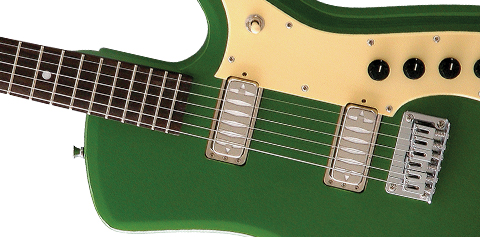
    Most everyone has seen a department-store-catalog guitar (or two!) from the ’60s or ’70s. With their funky, cool body shapes and smorgasbord of knobs and switches, their looks grabbed ya’. Trouble was, they were usually plagued with cut-rate hardware and electronics, low build quality, and crude playability. The latest creation from Eastwood, the Airline Bighorn, pays homage to one of those department-store classics while leaving to history all of its shoddier elements.

    The Bighorn stays true to its roots, with features like a cool, ’60s-style slab-cut basswood body (available in Green, Sunburst, or Red), bolt-on maple neck with rosewood fretboard, large dot inlays, retro pickguard and knobs, and classic Airline headstock and logo. Gone is the short-scale neck with its tiny (and poorly installed) frets, open-strip tuners, non-adjustable bridge, thin-sounding single-coil pickups, and funky slide switches. In their place is a 251/2″-scale neck with large, polished/leveled frets, Kluson closed-back tuners, a hardtail bridge with height and intonation adjustments for all six strings, a pair of high-output Airline Argyle Diamond pickups, and a three-way pickup selector.

    Eastwood head honcho Mike Robinson found inspiration for these pickups in the original DeArmonds used in guitars that carried brand names like Kay, Airline, and Silvertone, and updated them with wax potting to control squeal and feedback. The Bighorn offers excellent playability, with low, buzz-free action, a comfortable C neck shape, and a nice body chamfer that makes it comfortable on the forearm, while the neck heel is less bulky. Its longer scale and hardtail bridge make it comfortable to play compared to the short-scale vintage pieces, which also typically used archtop-style/floating bridges.

    Plugged into a Fender reissue Super Reverb (12AX7/6L6) 4×10″ combo with a Homebrew Electronics Power Screamer overdrive pedal, the Bighorn’s pickups had a classic, crystal-clear single-coil tone – punchy in the bridge and throaty-sounding at the neck. Engaging both produced lush jangle, and the well-voiced Volume and Tone controls for each allow good flexibility when dialing in tone, falling between traditional Strat pickups and P-90s, with snap, sizzle and stronger output/midrange punch. Even though the pickups are true single-coils, they are surprisingly quiet and hum-free, even with the overdrive pedal engaged. The 13/4″ thick basswood body  (3/4″ thicker than most of the bodies on old-school catalog guitars) along with the tight, well-fitted neck and hardtail bridge gave the Bighorn a surprisingly resonant tone acoustically and electronically, with a bigger, bolder sound than expected.

    Anyone whose first guitar came from a department-store catalog in ’60s or ’70s will be especially impressed with the Airline Bighorn. It’s a funky retro axe with great tone, excellent build quality, easy playability… it’s just plain fun!


    Eastwood Airline Bighorn
    Price: $399 (street)
    Contact: eastwoodguitars.com


    This article originally appeared in VG September 2011 issue. All copyrights are by the author and Vintage Guitar magazine. Unauthorized replication or use is strictly prohibited.


  • E-H Reissues Hot Tubes OD

    EH HotTubesThe Electro-Harmonix Hot Tubes OD reissue was designed to replicate the organic overdrive of a vintage tube amp. It has controls for Volume, Tone, and Overdrive knobs plus a Tone On/Off switch. Volume sets overall output level while Overdrive adjusts gain. The Tone control adds warmth or sizzle, and the player can disengage the Tone circuit for a more-transparent sound. True-bypass switching preserves signal integrity while the pedal is not in use. The pedal is housed in a compact die-cast package with a 9-volt battery and can be powered by an AC adapter. Read more at www.ehx.com.

  • Worland Guitars Adds Prairie Model

    Worland Guitars PrairieWorland Guitars’ Prairie model is an OM-size guitar available with cedar or spruce top, mahogany back and sides, mahogany neck, and ebony fingerboard. It has a 24.9” scale length, 1.75”-wide nut, slim C-shaped neck, bolt-on heel-less neck joint, and a compound radius fingerboard. Learn more at www.worlandguitars.com.
  • Tim Bogert’s Modified Fender

    Tim Bogert’s Modified Fender

    Modified Fender Bass
    The Gibson ES-335 played by Vince Martell in Vanilla Fudge.

    When Vanilla Fudge helped pioneer the progressive-rock movement in the latter half of the ’60s, bassist Tim Bogert played more than one Fender Precision – and usually installed Telecaster Bass necks on them.

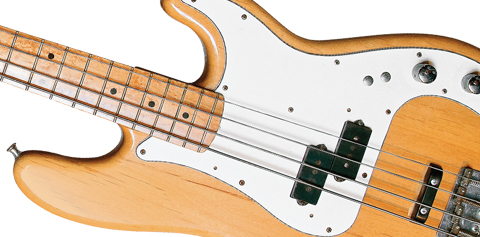
    Bogert preferred the chunkier feel of the Tele Bass neck, which reminded him of ’50s P-Basses. And for him, one instrument, in particular, became a favorite for nearly three decades as he used it during stints with the Fudge, Cactus, and Beck, Bogert and Appice. Like many dedicated musicians, through the years, he refined it as parts became worn or when he felt the need to experiment. From the top down, it epitomizes a perpetually viable piece of gear.

    The maple neck, for example, is its third, and was bought from a parts supplier that let Bogert search its inventory until he found one that looked and felt right. It has a plethora of birdseye figure markings, and he installed a brass nut and had a ’50s Precision Bass decal added to its headstock.

    Sharp-eyed Fender aficionados will note the lack of holes on either side of the pickup, where an arched handrest/pickup cover would normally be installed. Nor are there holes on either side of the bridge. That’s because the body is also a replacement!

    “It’s a body Fender gave me in the late ’80s,” Bogert recounted. “The earlier maple body had been chewed up over the years, and I asked for a new one; I’ve always liked a maple neck and maple body.”

    “The only original parts left on the bass are the tuning pegs, bridge, and neck plate,” Bogert said. “I was always f***ing around with it!”

    The two small chrome caps on the pickguard cover a spot where switches were once installed to control a two-pickup setup he used with a previous body. “One was an on/off, the other was a pickup select,” Bogert recalled.

    Though not an original part, he considers the bass’ pickup it’s “…most important part, because it came off a ’57 Fender I got in ’68 or ’69, when we played the Hollywood Bowl with Jimi Hendrix.”

    The finger rest, which was installed between the pickup and the bridge instead of the typical location on the pickguard, helped him manipulate the strings.

    “In ’65 or ’66, when I started working with the Pigeons, we would do these crescendos. But the volume on Fenders back then would drop off really quickly if you tried working the Volume control. So instead, I would brace my thumb on that rest and work the strings to make the crescendos smoother. I learned to do that very precisely.”

    In the late ’80s, he acquired a new body for the bass and installed the original bridge and ’57 pickup. But because by then he had begun playing basses with more than four strings, the warhorse was mostly relegated to storage. Today, he primarily plays contrabass.

    In the late ’90s, Bogert sold this vital piece of prog-rock history to New York music producer/collector Randolf Pratt, who also owns Fudge guitarist Vince Martell’s Gibson ES-335 (VG, April 2011).


    This article originally appeared in VG September 2011 issue. All copyrights are by the author and Vintage Guitar magazine. Unauthorized replication or use is strictly prohibited.