Kendel Carson may have titled her debut Alright Dynamite, but from the way guitarist John Platania’s graceful intro eases the ear into to its opener, “Baby Lay Down,” it’s clear Carson’s heat is more smoldering than explosive.
Like Roseanne Cash, Carson has a subtle but kitten-ish approach which only works when one has the goods to back it up; the sultry ballad “Baby” proves she does. And she follows through with the more uptempo “Belt Buckle.”
Carson is a fiddle player, and there’s an alt-country character to her music, almost a throwback to the left-of-center country of Merrilee “Angel Of The Morning” Rush. No surprise, though, given that Chip Taylor produced the CD and plays acoustic guitar. Platania’s Scotty-Moore-like echoes, in tandem with Carson’s fiddle on “New Shoes” (and his rockabilly rumbles on “Mercedes Benz”), remind the world that his contributions – here there and everywhere – are as welcome as a pay raise.
This article originally appeared in VG‘s Nov. ’09 issue. All copyrights are by the author and Vintage Guitar magazine. Unauthorized replication or use is strictly prohibited.
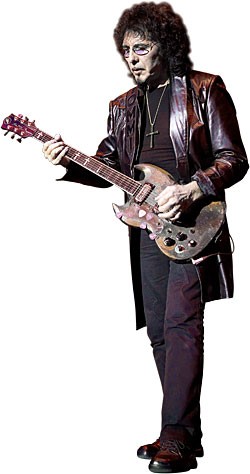
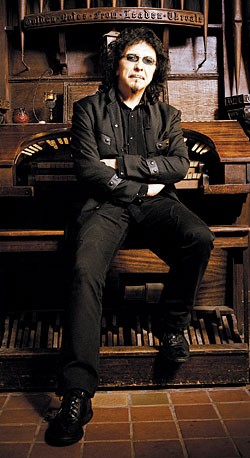
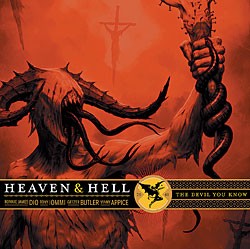
There is an undeniable power generated when certain musicians join forces. That is most definitely the case with Tony Iommi, Geezer Butler, Vinny Appice, and Ronnie James Dio, who originally connected in Black Sabbath following frontman Ozzy Osbourne’s departure in 1979. Since their reunion tour in 2007, this lineup has donned the name Heaven And Hell, and when they unite, the chemistry is overwhelming.
Guitarist Tony Iommi affirms that while the purpose of the quartet’s reunion was to write and record a few bonus tracks for Black Sabbath: The Dio Years, the sessions went so well they decided to stage the brief reunion tour, and after getting to know each other again as both musicians and friends, none of the members could deny that the bond was too strong to resist.
Iommi was enthusiastic when tellingVintage Guitar how things from a one-off project into a committed band with a mew album, The Devil You Know, and the world tour to support it. Let’s allow “The Godfather” to explain…
This started as a “Let’s see what happens” experiment that proved gratifying, first for the band, and then for fans. When did the group decide to continue to work together?
During the last tour in Japan, while out for a meal one night. We had a few drinks, then a few more… then I said, “We should do an album.” And everybody agreed. We had some great fun playing together, and as we were coming to the end of the tour, we wanted to keep it going. So we decided to have a crack at another new album, and we really enjoyed it!
Were any of the songs left over from the new material written for The Dio Years?
No, we started over. I came home from the tour, put some riffs down and came up with new ideas. We made our own CDs of ideas and riffs – everybody put something down. I sat in the studio at my house with the engineer, and he taped as I played. I was enthusiastic and came up with quite a bit of stuff, then Ronnie came here. I played him one of my tracks and he liked it, so he put a rough vocal on it. Then we met with Geezer and Vinny, and spent six weeks at Ronnie’s studio. We went through the ideas everyone brought, built up a list song by song, and put down six tracks in six weeks. Then we had a break to do the Metal Masters tour with Judas Priest and Testament, which was really good, then started working on the album again. I put some more ideas down and went back to Ronnie’s for another six weeks. Basically, we had the album then.
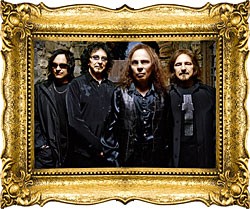
Heaven and Hell: Vinny Appice, Tony Iommi, Ronnie James Dio, Geezer Butler. Photo: Chapman Baehler/courtesy of Rhino Entertainment.
While writing songs, were you completing them one at a time, or working on several at once?
At Ronnie’s, we worked on one song at a time. But a lot of the ideas that took off were from some I brought that were half-done, anyway. And Ronnie brought one that was finished. So it was good, really, because we had loads of music, plenty of stuff to select from. And we’ve got loads left – which is unusual!
After recording demos, did you rehearse the material as a band before recording the final studio tracks?
Oh, absolutely. Once we had all the tracks written, we went to Ronnie’s house and got them right during a mad week of rehearsals, then came to England and recorded the album at Rockfield Studios, in Wales – the same studio we used on Dehumanizer, so the guys were familiar with it. We wanted a studio where we could stay and be on top of it, instead of having to go back and forth between hotel and studio. It’s nice to be together and really be part of it. For some reason, there are not many residential studios around now, so going to Wales worked out well. It was really a good experience.
Did you record parts in different studios? Many bands find that one studio may be ideal for recording drums, while another is great for guitars, and a different studio is best equipped for tracking vocals.
Well, that’s true, but we put nearly everything down at Rockfield. We played it all live, which is another great thing. That’s why we rehearsed. But I did do some of the guitars at home and some in Los Angeles, when we went there for the mix. But the majority of it was done at Rockfield.
So, the basics were recorded as a live band?
Absolutely, and it was great to do it that way. It keeps you on edge and everything. And to be honest, we didn’t do many takes. We’d have the track done within a couple of turns – three at the most – which was really good.
The album has a very cohesive sound and feel.
Sometimes when you do them on computer, “moving” a verse or chorus, instead of performing it that way, it sounds unnatural. But when you listen to the album, you can hear tempos fluctuate because we’re playing them live. And I think it makes a big difference.
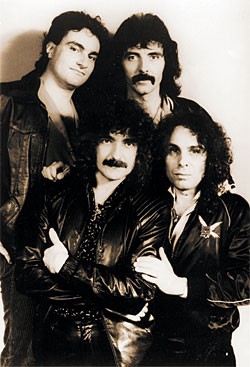
Black Sabbath in 1980: Vinny Appice, Geezer Butler, Tony Iommi, Ronnie James Dio. Photo courtesy of Rhino Entertainment.
Were the tracks recorded on tape or captured digitally? Many musicians prefer to record on analog equipment before transferring everything to digital.
That’s right, they do. But we did them on the computer.
How long did it take to record?
Not that long, because we’d rehearsed well. So it was a matter of going in and playing. We were at Rockfield for a couple of weeks – maybe two and a half. The main thing is the preparation, which we hadn’t done that much of in the past. So when we got to Rockfield, it was much like going onstage.
You mentioned material left over. Any complete songs?
No. The stuff left over is riffs and song parts. Geezer has a few riffs, Ronnie has some, and I’ve got God knows how many. There’s definitely enough to make another album.
So there’s nothing leftover that was completed to be used as bonus material?
We didn’t actually do a bonus track this time. I tend to find that bonus tracks disappear and you never bloody hear them! I remember doing some with Glenn Hughes when we did the Iommi album. We’d done three bonus tracks and I don’t remember if I’d ever heard them anywhere! They’re absolutely gone! One was a really good track. So I get a bit put off with bonus tracks because they tend to just disappear.
Sometimes the bonus tracks are included on versions of the album that are sold only through certain retailers or in particular countries.
Yes, it seems we always do a bonus track for the Japanese market. But this time, we had a camera crew there while we did a couple tracks, so we might use that video as some kind of extra thing.
That would be a cool bonus. It’s interesting to see how the process works.
You’ll see us wearing sweaters because it was bloody freezing! We picked the wrong time of the year to record in England.
Your guitar tone sounds a bit thicker on the album. Did you use a different rig?
Yes. I tried different heads and used some Engl stuff.
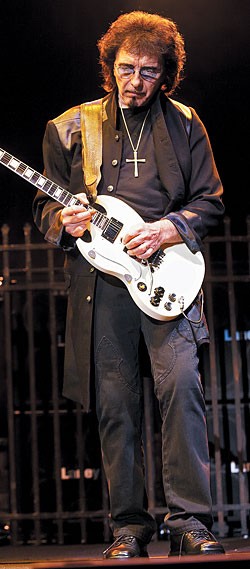
Photo: Rick Gould.
What was your setup?
Just an Engl Powerball 100-watt head and an Engl 4×12, which I think had Celestion Vintage 30 speakers. I plugged straight in. The Powerball has a lot of variation for getting different sounds, which is great for the studio. It really worked well. Live, it didn’t quite have that same thing as my Laneys, but it was very good for the studio. I did use the Laneys on a couple of things, too, but I can’t remember which tracks.
Did you have different setups for rhythm and lead parts?
No, I used the Engl on all the chord stuff. I may have used a Laney on one of the chord backing tracks. But it was mainly Engl. And at home, when I recorded a couple solos, I used the Engl, as well. It was different, because I usually use Laneys.
Was the Laney one of your signature models?
It is, and that’s what I use all the time onstage.
Do your Laney 4×12 cabs have Celestion Vintage 30s?
Yes.
What effects did you use?
I didn’t use any, actually, apart from the wah – the old Tychobrahe Parapedal on one track, and the Dunlop Crybaby a bit more.
Which of your guitars were used?
I mainly used the old Jaydee – the one that’s looking pretty old these days. I also used a Gibson Iommi model SG. So I just had the two. Mainly, I used the old Jaydee for the tracks, but I might have done an overdub with the Gibson. I used the Jaydee on most of the solos, as well.
Which guitars did you use to record acoustic parts we hear on a few songs?
I had a Taylor 914CE steel-string and a Taylor NS34CE nylon-string. The nylon-string is on the end of “Rock And Roll Angel.” They were really nice. I’ve got a Taylor at home, but I did those parts in Los Angeles, so Taylor sent them down. I ended up bringing a couple back because they’re really good.
Were acoustic parts recorded with a mic, DI, or a combination?
The guitars do have built-in electronics, but I also used a mic. So we had the two sounds.
Photo: Chapman Baehler/courtesy of Rhino Entertainment.
How did making this record compare to working on the new tracks on The Dio Years compilation?
It was totally different. For the tracks on The Dio Years, we basically put the ideas down first – Ronnie and myself – then Geezer played on them afterward. But Ronnie and I did most of that stuff, and we’d done the writing and recording at my house.
What did you enjoy most about making The Devil You Know?
I think the fact it went so smoothly, dare I say! You never know what’s going to happen when you do these things. I thought I’d go to L.A. for the six weeks, which usually turns into three months. But it didn’t! We finished on time, and were very creative. Everybody was bouncing off each other and we got on really well. It was nice to see Geezer really enjoying it, as well. We had a good vibe.
We had a laugh, playing jokes on each other. I really got one over on Vinny. He had his hair drier on the side of the drum kit, and every time we’d do a track, he’d start drying his bloody hair – all the time, without fail! Then one day, his drier broke, so he asked (guitar technician) Mike Clement to have a look at it. I went to the workshop with a load of talcum powder and put it in the drier, then we put it back on the side of the kit. I completely forgot about it, but after we did another track, Vinny went to dry his hair, and ended up covered in talcum powder, head to toe! The stuff was everywhere! I think I put too much in, but it was such a laugh! I got some great pictures of him absolutely covered in talcum.
Was there anything you found particularly challenging about the writing or recording?
It wasn’t a challenge to do the writing. The challenge was in the studio, when we were playing live, trying to get it right in one take. If somebody made a mistake, we’d have to do it again. But it wasn’t a challenge, really.
Everybody got along well in the process?
Yes. On a personal level, we get on quite well now. We’ve learned after all these years that we really have to understand each other and give each other space. So it’s all good and works well, where years ago, somebody might have said something and somebody else might have taken offense and jumped off the handle. But now we don’t do that. We’re more respectful of each other and we get on with it.
Since it went so well, musically and personally, will there be another tour?
No, we’ve broken up (laughs)!
You had such a good time, you didn’t want to ruin it?
Yes, we decided to quit while we’re ahead!
Actually, we’ll be in L.A. to rehearse, then we’ll do a week of interviews and whatever else for promotion. After that, we start the tour in Columbia. I’ve been to all the other places in South America, but never Columbia. So that will be different. Then we do Chile, Argentina, Sao Paulo, and Rio, and then we’ll come back and have a week off before we do five weeks in Europe, playing festivals. After that, I think we’re talking about playing in North America for August. If everything doesn’t go belly up, it should be good. I’m really looking forward to getting on the road again!
I think we’ll keep going until the end of the year. After that, who knows?
Is touring with Heaven And Hell much different from touring with Black Sabbath?
It really is. We’ve been able to play a lot more, so that’s been good, and I’m looking forward to this tour. The only issue I’ve got is a problem with my hand. On the last tour, I damaged the cartilage in the thumb of my fretting hand, so it’s been bloody painful and I’ve been getting shots to inject gel between the joints to stop them from rubbing against each other. It’s called proto therapy. Apparently, they use it a lot on knees, so I’m probably the guinea pig for hands.
Are there any plans to work with Ozzy in the near future?
There’s nothing on the table right now, but I talk to Ozzy a lot – once a week. It’s always casual conversation; “How’s it going?” and “How are you?” One day we might do it, but I don’t know when. We take it stage by stage and we’re all enjoying what we’re doing now. I think he’s doing an album of his own, and he’s busy doing his TV thing.
Have you continued doing your “Black Sunday” satellite/internet radio show?
Since we’ve been busy doing the album – writing, recording, mixing, press, and everything – I haven’t had time to focus on another 13 weeks of radio. They want me to do one, and I’d love to do it when I get time because I really did enjoy it. I’d definitely like to continue once I have time.
This article originally appeared in VG‘s August 2009 issue. All copyrights are by the author and Vintage Guitar magazine. Unauthorized replication or use is strictly prohibited. Heaven and Hell – The Mob Rules Black Sabbath Heaven and Hell
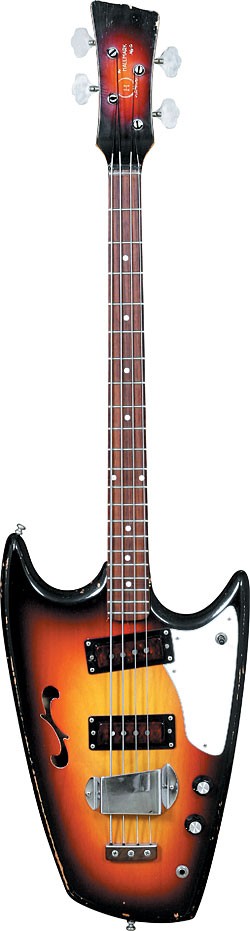
1967 Hallmark Swept Wing semi-hollow bass, serial #003127. Photo: Michael G. Stewart. Instrument and image courtesy of Bob Shade.
The murky history of guitar brands and builders from the Bakersfield area of California is part of American guitar lore. One of the most striking designs to emerge from that area in the 1960s was the Hallmark Swept Wing.
Hallmark was founded in 1965 by former Mosrite employee Joe Hall. It began selling the Swept Wing model solidbody guitars and basses in ’66, but the model didn’t “fly” in terms of acceptance among musicians and instrument retailers. One theory holds that at that time, psychedelic music was emerging from San Francisco, and West Coast musicians were picking up more semi-hollow electric guitars because they were better at generating the feedback and sustain that were part of that style. So, in ’67 Hallmark began building semi-hollow Swept Wing instruments by routing sections of their alder bodies to create a skeleton-like frame, then gluing a lift to support the arch of their plywood top and back. The top veneer on that plywood was birch or a similar wood that had a noticeable grain pattern worthy of a quality finish. The semi-hollow body was 121/2″ wide and 2″ deep.
The bolt-on neck of the bass was two-piece maple, and had a rosewood fingerwood with 21 frets plus a zero-fret, which was common on guitars built in the Bakersfield area. The neck’s slim profile and 30″ scale made it fast and easy to play.
The two pickups are covered in tortoiseshell plastic; the neck pickup is angled, a la Mosrite. Each has four exposed, non-adjustable Alnico rods, and though later Hallmark Swept Wing six-strings had slightly different pickups with adjustable polepieces on their pickups, bass pickups didn’t change.
Controls were a three-way pickup toggle switch on the treble cutaway, master Volume and Tone knobs, and a top-mounted jack.
Beyond physical proximity of manufacturing facilities and the angled neck pickup, the Swept Wing had other connections to Mosrite. Its bridge cover, nickel-plated brass bridge saddles, and strap buttons (among other parts) were made at Mosrite. However, Hallmark made its own bridge plate from stainless steel, while Mosrite used brass, and Hall’s company made its own tailpieces.
The three-tone sunburst finish was applied in the same process used at Mosrite. In fact, Bill Gruggett, another Bakersfield veteran who later started building guitars with his own name on them, did finish work at Mosrite before going to work at Hallmark in ’66.
Asymmetrical oddities on the semi-hollow Swept wings included a three-layer, white/black/white pickguard with a silhouette that looked like the blade of a battleaxe, as well as a small and odd-looking f-hole.
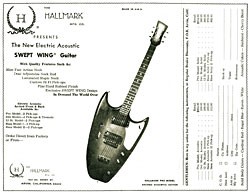
Hallmark serial numbers are found on the neck plate and the back, and did have a code somewhat like the Electronic Institute of America’s code on potentiometers. This bass’ serial number (003127) indicates it was the third instrument made in the 12th week of 1967. An order form from that year shows the semi-hollow line was marketed as “electric acoustic.” On it, the single pickup Acoustic I bass listed for $289.95, while the two-pickup Acoustic II listed for $312.95. The Acoustic series was only available in sunburst or Cherry Burst finishes.
Order form for the ’67 Hallmark Swept Wing.
Most of the Hallmark basses built were one-pickup instruments. Two-pickup models are quite rare; Hall believes this bass was a one-off, perhaps a special order instrument.
The present-day Hallmark company is under the aegis of luthier Bob Shade and offers several Bakersfield-inspired models. A modern version of the Swept Wing was the first six-string offered by the company.
“The original Hallmark made few more hollow-style basses, but not many,” said Shade, who owns the instrument shown here. “[It has] a very mellow, clear, and resonant sound. It really sounds quite amazing considering its small body.”
This article originally appeared in VG‘s August 2009 issue. All copyrights are by the author and Vintage Guitar magazine. Unauthorized replication or use is strictly prohibited.
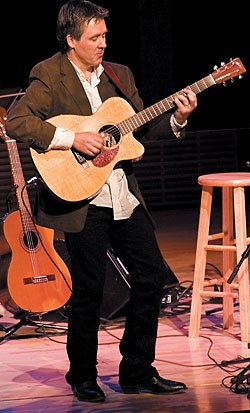
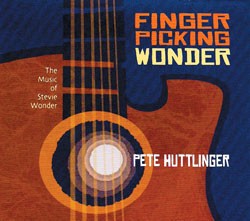
If such an award was given, Nashville-based guitarist Pete Huttlinger’s third solo album could be nominated for the “Most Unique and/or Obvious Album Title Pun,” as his Fingerpicking Wonder is a tribute to singer/songwriter Stevie Wonder.
Huttlinger was interviewed in VG‘s July ’01 issue, following the release of his first album, Naked Pop, which consisted of covers of hit songs. His second album, The Santa Rita Connection, combined three covers with 10 originals.
“I really felt like Santa Rita was my breakout CD,” Huttlinger recently told VG. “It featured me writing tunes in different styles, and I did all the arranging and recording myself.”
There was also Things Are Looking Up, which included more ensembles with other players. “It required actual composing rather than handing everyone a lead sheet and seeing what they came up with in the session,” Huttlinger said of it.
A resident of the Music City for more than 20 years, Huttlinger has developed his craft, but participated in less session work due to his solo career.
“I’ve done some work here and there with some small labels,” he detailed. “I worked with Lori Mecham, a jazz pianist, on some Brazilian-type stuff. In my own studio, I do tracks for all kinds of people all over. I’ve recently sent music to Colorado, New York, and L.A. I’ve kind of shifted my goals with the recording thing – there hasn’t been much big-name stuff, but it’s been a steady stream of work, and I’ve realized that my strength is in performing.”
The fingerpicker has also developed a musical association with singer LeAnn Rimes.
“She and I do special-event things,” Huttlinger said. “I don’t tour with her, but we did some songs for a show called ‘Live From Abbey Road,’ and I’ve done several other TV shows and a few performances with her.”
Huttlinger’s own performances have included more than one gig at New York’s Carnegie Hall.
“I did a trio thing there,” he recalled. “There are three performance halls at Carnegie, and we were in the mid-size one. The promoter liked what I was doing, so he asked me to open for a band he was bringing in later, in the huge main hall.”
Fingerpicking Wonder marks a return to solo acoustic turf. A longtime fan of Stevie Wonder, he spent a lot of time selecting tunes for the album.
“I wanted to pick tunes that people would know, because I wanted them to hear a different take on familiar songs. But I also wanted to pick tunes I was intimately familiar with. I have the opportunity to make a bigger statement if I take a tune like ‘I Wish’ and do it as an instrumental. If it’s familiar to a lot of people and they hear it in a different way, I have a chance to make a bigger impact.”
Wonder’s songs, he added, are more intricate and elaborate than many realize. “They’re deep musically and lyrically, and they’ll be around for a long time,” he averred.
Huttlinger used four Collings guitars on Fingerpicking Wonder – a D-1A, OM-1A, OM-1C, and an OM-2H. The album’s song list includes info on the instrument used on each track, its tuning, and the key.
“The OM-1C is my main road guitar, but when recording, I like having several to choose from,” Huttlinger noted. “I like my D-1A because I love a good dreadnought.”
The album’s opener, “I Wish,” exemplifies Huttlinger’s prowess, as the bass line and melody are played simultaneously, though he added second-guitar “chord punches.”
“I was just trying to produce a great track,” he said. “I initially recorded it as solo guitar. And when I first added those bits of second guitar, I didn’t like the tracks. But when I went back and listened, I decided it sounded really cool.”
Of the 10 selections, three – “Superstition,” “Sir Duke,” and “Overjoyed” – were on previous albums, but Huttlinger was determined to perform them better this time.
Were there any songs Huttlinger wanted to record, but didn’t?
“I really wanted to do ‘As’,” he noted. “Stevie’s version is so amazing, with the chorus in the background. I wanted to do something similar – a chorus with a solo guitar – but I ran into budgetary constraints.”
Huttlinger is already at work on his next projects, which include an album of Celtic-style music and a story-type concept album. Asked if he’s satisfied with the way his career has developed, he chuckles and says, “When I first got here, I didn’t even dream about playing Carnegie Hall!”
This article originally appeared in VG‘s August 2009 issue. All copyrights are by the author and Vintage Guitar magazine. Unauthorized replication or use is strictly prohibited. Pete Huttlinger’s Impossible Arrangement
The trajectory of the Japanese guitar industry in many ways has mirrored that of the United States, though in a slightly compressed timeframe on the front-end because America had a fairly big head start.
In any case, people worked for someone, had a better idea, went out on their own, and by the mid ’70s there was – on both sides of the Pacific – a plethora of small designers working on innovative guitar concepts. Many of the Japanese products never made it to the U.S., but a few, such as the remarkable Daion line, did, including this wonderfully-named 1982 Daion Headhunter HH-555.
The Daion brand has a typically convoluted evolution. Following the War, two brothers named Yasuyuki and Hirotsugu (this name comes from literature of their American distributor; Kazuyuki is given as his name in one online fan source) Teradaira got jobs with a guitar manufacturer called Tatsuno Mokko. A part of Tatsuno broke off to become Hayashi Gakki, which was purchased in 1954 or so by the music distributor Zenon, a brand that figures large among ’60s guitars sold mainly in Japan. Yasuyuki stayed with Hayashi/Zenon until 1962, when he left to begin his own distributorship called Daion (Japanese for “Big Sound”). Whether or not that brand was ever used on guitars in Japan is unknown, but probably. His brother Hirotsugu left the company five years later and started Yamaki (“Happy trees on the mountain”), a manufacturer of classical guitars. These were, understandably, distributed by Daion. By the early ’70s, the Yamaki acoustic line included Martin-style steel-strings and are remembered for their quality. By ’74, if not before, Yamakis were being imported into Canada by Great West, in Vancouver. A young Jerry O’Hagan of St. Louis Park, Minnesota, wanted to import them, but finding legal obstacles, instead invented the legendary O’Hagan Shark and the rest of his line.
Apparently any legal problems were resolved, and in 1978, Daion/Yamaki struck a distribution deal with MusiConics International, Inc. (MCI), of Waco, Texas. MCI is best known as the distributor of the famous Guitorgan invented by Bob Murrell, who supervised their musical products. The brand name was to be Daion, not Yamaki, which probably suggests the nature of the legal solution.
Several online fan sources indicate a collaborative relationship regarding instrument design, but how much this was the case is uncertain. MCI was really an electronics firm that fitted its creations into whatever guitars came to hand. Hirotsugu Teradaira is identified as a pioneer in the use of brass and cedar, both characteristic of Daion acoustics. A good guess would be that Yamaki took care of the woodworking and, if it had any input at all beyond marketing, MCI may have influenced the electronics.
In any case, in 1978 MCI rolled out a series of Daion acoustics including the Heritage and Mark Series. As usual these were graded according to appointments, but all had cedar tops and brass nuts and bridges, as well as groovy brass inlays. These were quite superb acoustics, worth checking out. Except for the details mentioned, they looked pretty conventional. In ’81 Daion rolled out two more radical designs – the Caribou and the Gazelle – with asymmetrical shapes and a dramatic scoop out of the butt-end. Both were acoustic/electrics with piezo pickup systems.
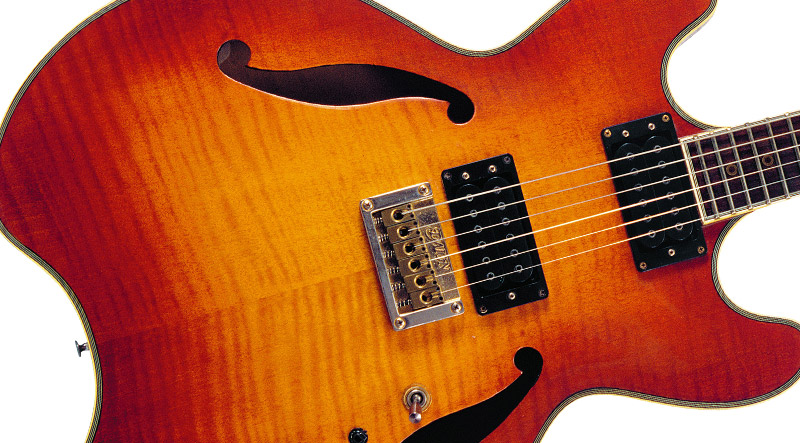
That same year, Daion introduced its first electric guitars, the spectacular rosewood-and-maple neck-through Power Mark Series, the asymmetrical bolt-neck Savage Series, and the semi-hollowbody Headhunter HH-555 shown here. All were twin-humbucker guitars with Power Pulse pickups.
Introduced as a “Future Shape,” quite a lot of care went into the design of the Headhunter that fans of thinlines should readily appreciate. Besides giving the guitar a novel look, the “negative space” at the bottom was claimed to improve the balance and make the guitar less tiring to play. It also was supposed to add strength to the “shell cavity,” which it probably does. Why a player would care isn’t clear, unless their roadie is a gorilla.
Otherwise, the appointments of this guitar are swell. The mahogany neck is glued in and has a bound rosewood fingerboard with pretty good access all the way up. The body is flamed maple, presumably laminated. The tuners are gold-plated, probably Gotohs. The bridge is polished aluminum. A plank of wood reinforces the center and cuts down on feedback. To increase sustain, the strings pass through the bridge and body, and mount through the back. The Power Pulse pickups each have a coil tap. There are more flexible tonal designs, but this is pretty good.
Headhunters shipped in a variety of finishes during their brief run. Honey sunburst is the most common, though a darker tobacco sunburst and a dark chocolate are also encountered. A metallic gold was available on special order and is probably quite rare.
Dating a Daion is pretty simple. Like most Japanese guitars by this time, the first digit or two encodes the date of manufacture; the one shown here is #82235, built in 1982, probably number 235 of the run.
Daion did a lot of promotion, but like many innovative Japanese guitars at this time, it met a market that was moving toward heavy metal and the “superstrat” era. If our assumption that the post-date numbers of the SNs are sequential counts (no other date codes make sense), all we’ve encountered suggest fewer than 500 per year were built, though this is hardly scientific.
Chris O’Connell and Ray Benson of the Texas band Asleep at the Wheel were the best-known Daion endorsers. Paul Yandell was associated with MCI, as well as a few other folks.
The last Daion ads appeared in September of 1983. Some sources put their demise at ’84, but that might be generous. Some Daion copy guitars show up, probably sold in places other than the U.S. The brands Dion and JooDee may also be Daions sold elsewhere.
Daions have a small but fairly rabid fan base, with good reason. While there were more innovative designs made at the time, these were very fine guitars indeed. If you’re looking to recruit an interesting piece for your guitar force, you could do a lot worse than a Daion Headhunter!
This article originally appeared in VG‘s July 2009 issue. All copyrights are by the author and Vintage Guitar magazine. Unauthorized replication or use is strictly prohibited.
Bay-area guitarist Brad Gillis has led something of a storied life. He was only 19 years old when he transitioned from playing guitar in his parents’ garage to playing in Rubicon, a funk band looking to add a rock element with a guitarist. The band experienced some success, released two albums in the late ’70s, and even played to 250,000 people at the famed Cal Jam II festival in March of ’78. After Rubicon reached terminal velocity in ’79, Gillis, along with drummer/vocalist Kelly Keagy and vocalist/bassist Jack Blades assembled a rock outfit they called Ranger before being threatened with legal action by a country band called The Rangers. Adapting its name to match the last song on its completed first album, they added “Night” and set off down the road.
Fate intervened in the form of Ozzy Osbourne, the former Black Sabbath vocalist whose band lost guitarist Randy Rhoads in a tragic small-aircraft accident in March of 1982. Gillis was invited to audition, where he played a handful of Sabbath songs, unplugged on a solidbody! He was offered the gig and spent a year touring with the Prince of Darkness before going back the Bay to make a run with Night Ranger. The band’s first album, Dawn Patrol, was released in late ’82 and got immediate attention via a single and video for “Don’t Tell Me You Love Me.” The momentum from it and other hit singles led to opening slots on tours with Black Sabbath and ZZ Top.
In January of ’84, the band released its second album, Midnight Madness, and scored more hits on the way to becoming one of the dominant rock acts of the mid/late ’80s. By ’89, Blades had left to join Damn Yankees with Styx alum Tommy Shaw and wild man Ted Nugent. Night Ranger carried on in various configurations through the ’90s before reuniting with all original members to record 1997’s Neverland. This summer it will release Hole In The Sun, and once again tour.
Gillis has been perpetually busy, even during down periods for the band. He runs a sound production studio, and several years ago joined the ranks of certifiable (in a good way!) guitar collector whose posse now numbers more than 100 instruments. We recently spoke with him about all of his goings-on.
How did you start playing guitar?
It was through a twist of fate on my eighth birthday. I wanted to play guitar so bad – I’d been playing drums and my parents couldn’t handle it (laughs), so dad said he’d buy me an electric guitar and amp if I took lessons. So we picked up a Kay guitar and amp for $150. I started taking lessons, then a friend of my brother’s came over and showed me seven or eight chords, and stuff like how to bar an E. I’d sit in my room and play all day, and one day realized I could play most of the songs on the radio. I learned a lot by ear, then quit lessons and had friends show me different licks and tricks. When Eddie Van Halen came along with his whammy bar and harmonics, I tried different ideas like pulling up on harmonics and banging the vibrato, and came up with a few sounds that I used on records to create my own style. It’s been a wonderful thing!
Who were your first guitar heroes?
Well, I was totally into Jimi Hendrix. He was very flamboyant, and I love that style. Then I got into Jeff Beck – totally into Blow by Blow – and then Led Zeppelin because Jimmy Page just had this great rhythmic technique using two- and three-note chords. Listening to what he was doing definitely helped my rhythm playing. When I was just starting to really play, a friend showed me “Over The Hills and Far Away,” and that got me started.
How much of your playing shows those influences?
Well, I guess a lot of the rhythm styles I’ve come up with in Night Ranger. Hendrix, definitely in my whammy technique, then Van Halen, of course took it to the next level. Beck’s influence, I think, shows. But by the late ’70s I was trying to come up with my own style, trying to be different and stand out from the pack.
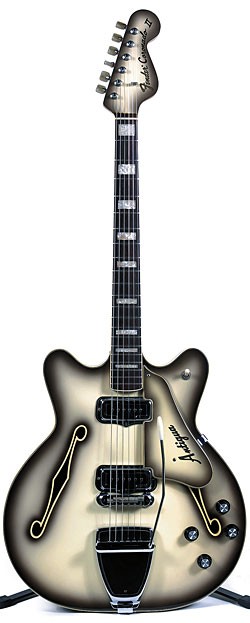
’67 Fender Coronado II. Photos by Pat Johnson.
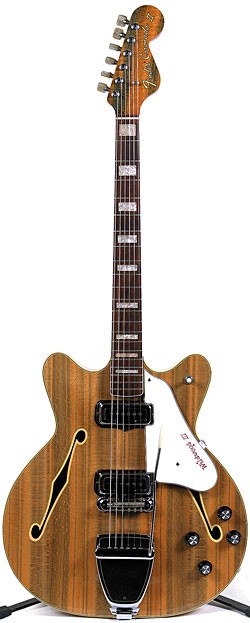
’68 Fender Coronado II Wildwood.
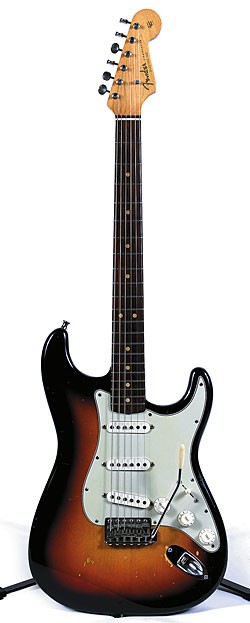
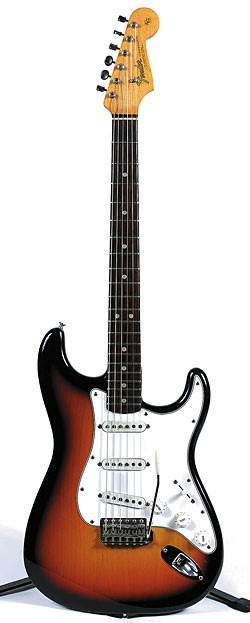
’64 Fender Stratocaster.
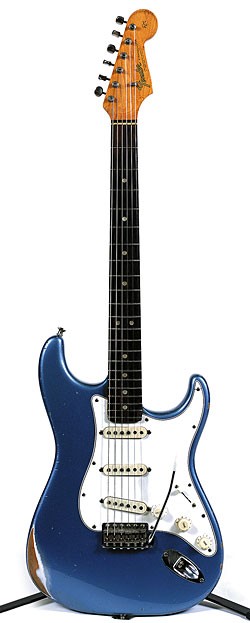
’65 Fender Strat in Ice Blue Metallic.
’65 Fender Stratocaster.
You first tasted stardom when you played in Rubicon, a funk-rock band based in the Bay area. What do you remember most about that band?
Well, playing Cal Jam II was huge. We were the only unknown band on a bill with Aerosmith, Ted Nugent, Heart, Dave Mason, and Santana. On the drive down, I remember hearing on the radio this song by this new band called Van Halen, “Runnin’ With The Devil,” and it blew me away.
How did your career progress after Rubicon?
After it broke up, Ranger formed in 1980 with two lead singers – Jack Blades and Kelly Keagy – and two lead guitar players – Jeff Watson and I. We wanted to stretch out on guitar harmonies, and you could hear that on our first single in 1983, “Don’t Tell Me You Love Me.” It was great because we had two different guitar styles that came together to play harmonies.
While we were trying to get signed in ’82, I got the call to join Ozzy Osborne’s band. I toured for 10 or 11 months with Ozzy and then, right when the tour was over, Night Ranger got a deal. So I made a choice to leave Ozzy and go with Night Ranger, and it was just starting to sprout when MTV put us on heavy rotation, which led to being guest VJs and different MTV events.
Yes, you guys were all over MTV at the time.
And you know, we held “Sister Christian” off the first record and kept it for the second, Midnight Madness, because the label wanted it to take us over the top. After we released “(You Can Still) Rock In America” we were on MTV and opening for everybody from Sammy Hagar to ZZ Top and Cheap Trick. Then we released “Sister Christian” which drew heavy radio airplay all over the country and brought us headline status. I’ll never forget in 1984, cruising into La Crosse, Wisconsin, on our tour bus, looking up at the auditorium sign that said, “Night Ranger: Sold Out.” It was our first headline sold-out show, for 8,000 people. We were excited!
After “Sister Christian,” the record company released more ballads like “Sentimental Street” and “When You Close Your Eyes.” That led to a nice run from ’84 to ’89, and then things started getting soft, so we took a break, then re-formed in ’95.
What caused the band to split initially?
Well, the label wanted another ballad single, and after that you could see us losing our rock audience.
But really, it was a mixed blessing. It was great because we took a break, and Jack went on to do the Damn Yankees with Ted Nugent and Tommy Shaw. And we all did solo projects. Gregg Allman sang two songs on my solo record, Gilrock Ranch, and we had a Top 20 single called “Honest To God.” Then in ’95, Night Ranger got a call from Mr. Udo, a famous promoter in Japan, who wanted us to do a record and tour. We jumped on it, did a CD called Neverland, and went to Japan. It went great and we came back and started touring the States again. We’ve managed to build it up in the past 13 years and now we’re still doing records and touring.
The band’s new album, Hole In the Sun has just been released in the States, but was released in Japan quite a while ago, right?
Yes, it was out there late last year, and then in Europe. We held off here to get the right deal, and went with VH1 Records. And it has gotten great reviews. We’re pretty excited to get it out there, and we’ve set up a nice tour through The William Morris Booking Agency and Doc McGhee Management.
You are starting with dates this spring in Japan, then back in the States for the summer…
Yes, and we just locked up shows with Boston, Styx, REO, and many more after we get back from Japan, and we’re headlining a bunch of festivals around the country..
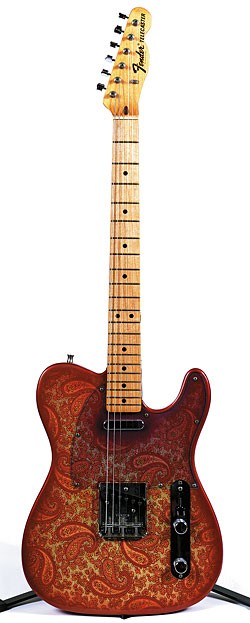
’68 Fender Telecaster in Pink Paisley. Photos by Pat Johnson.
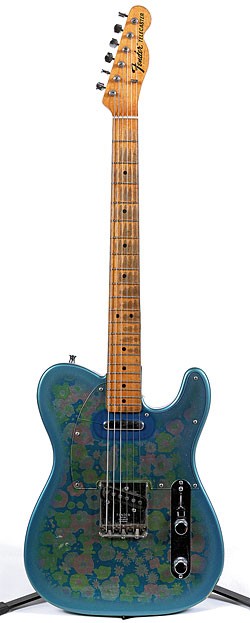
’69 Fender Telecaster in Blue Floral.
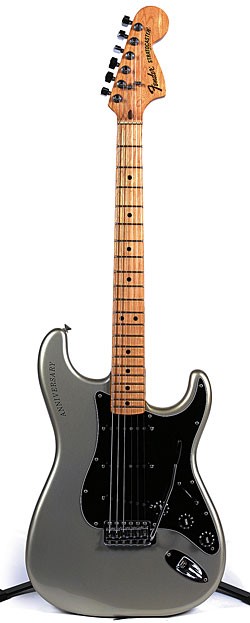
’79 Fender Stratocaster 25th Anniversary.
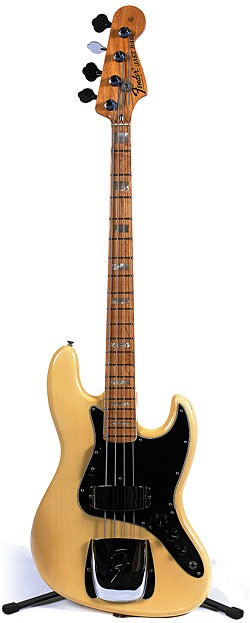
’76 Fender Jazz Bass.
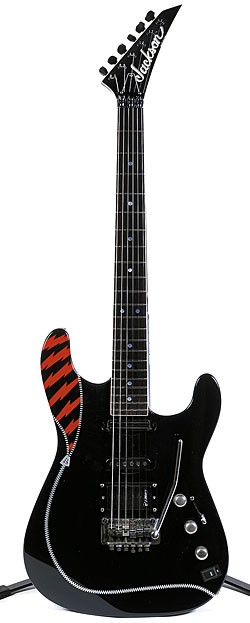
’84 Jackson Soloist with “zipper” finish.
What are the album’s high points from the perspective of guitar tones?
Well, we wanted to update our sound a bit, make it a little more modern – definitely with a more modern, raw drum sound and slammin’ guitars. I worked with many amps on the CD, but my Soldano Decatone through my ’62 Strat is my tone. We mixed it up using some computer software and my Boss GS-10. I also used some of my blackface Fender amps. We usually used Shure SM57s to mic the cabs.
And how about the playing?
The album starts with a bang, with the first two cuts where Jeff Watson and I are do a bunch of lead trade-offs and harmonies – classic Night Ranger. And we wanted to throw in some type of piano ballad for (drummer) Kelly Keagy to sing, sort of the same frame as “Sister Christian.” It’s called “There Is Life.” And there’s a real heavy tuned-down song I wrote called “White Knuckle Ride” where I took one of my old Les Pauls, put heavy-gauge SIT strings on it – .013, .018, .028, .038, .050, and .060 – started fiddling around down-tuned to C#, and came up with the riff..
That track is a great example of that modern sound. Is there a single on the album?
Well, VH1 Records is looking at two songs – “There Is Life” for a ballad, and the big rock anthem “You’re Gonna Hear From Me,” which I think would be a good first heavy single. It’s got that big vibe where you can imagine it being played over the P.A. at a football game – big drum intro and heavy guitar riff.
So there are some exciting things that we’re definitely looking forward to playing live. We’ve already incorporated a few songs into the set and we’re going to bring some old Night Ranger B cuts we haven’t played for a while, especially for the Japan dates. We go over there a lot – this is probably the 15th time – and it’s always great.
And you recently played for the U.S. Armed Forces at Guantanamo Bay. What was that like?
We had a few shows in Florida in January, with three days off between two of them. Ted Nugent had just played there a few months back, so we approached them. They picked us up in a Navy twin-prop and flew us to Guantanamo Bay. When we landed, we took a small boat to the admiral’s home for a nice welcoming dinner party and watched the NFL playoff game between the Packers and the Giants (laughs), then stayed in officer’s quarters. The next morning, they showed us around and took us to the detention camps, which was quite an experience. And then we went to the harbor, hopped on a Coast Guard Viper gun boat on the bay, with full-blown headgear – manning the 50-millimeter guns! Then we went to the border, where Guantanamo Bay meets Cuba. We talked with a few soldiers about the Cold War and the things that go on down there. It was a heavy experience. And we played a great show for about 3,000 troops. It was a very big day in my life.
For many years you’ve operated a sound-production studio called Liquid Hot Productions, where you’ve made music that has permeated our culture in very specific ways.
Yeah, I opened it with Jim Hawthorne back in the late ’90s and we started out doing the soundtrack for the Tiger Woods Playstation and Playstation 2 games. That led to different opportunities with ESPN, Fox Sports, Fuse, and other TV networks.
And where can this music be heard? Is it part of a theme to a particular show?
My music for ESPN has been used for “Sportscenter” and for the X-Games and a few worldwide applications – I did some flamenco and classical music they used for different countries. But basically it can be heard on “Sportscenter” as background, usually when they’re running highlights.
Is there any cross-influence between your work with Liquid Hot and your work with Night Ranger?
The pieces for ESPN and Fox Sports are driving rock, but the better stuff I keep to the side and try to use for Night Ranger. The Tiger Woods Playstation games used an eclectic mix, from orchestra to heavy metal (laughs)! The key is that Liquid Hot work keeps me constantly writing music. Jim is heavily into the orchestration end, but he’s got a funky side to him. So we collaborate well on different styles.
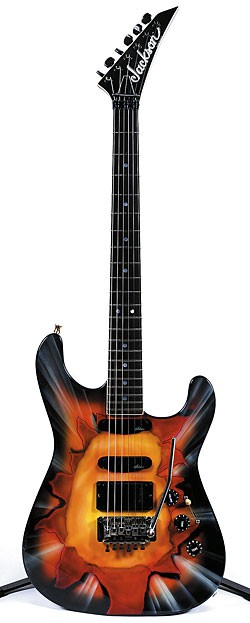
’84 Jackson Soloist with “exploding” finish. Photos by Pat Johnson.
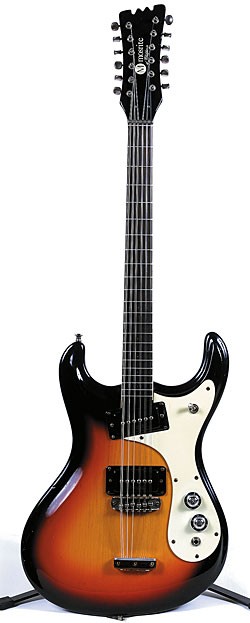
’66 Mosrite 12-string.
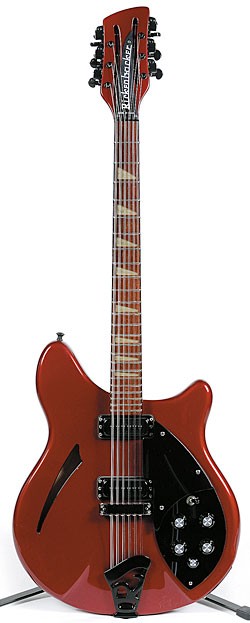
’86 Rickenbacker 360/12.
’64 Gibson C-1.
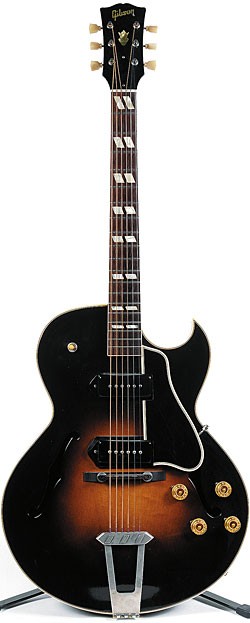
’53 Gibson ES-175.
How did you decide to get into collecting guitars?
Well, right after the new millennium, stocks were plummeting, real estate skyrocketed, and I was thinking about another place to put my money. And I’d been thinking about getting different guitars for my ESPN work. I started researching and found information on a guitar collector in San Jose named Robby Z. After talking to him on the phone, he invited me to his house; I was amazed by what he had – in a glass display case were Strats – a ’54, ’55, ’56, ’57, and ’58 – all in a row, and in beautiful condition. Then he had old Gibson L-5s and ’50s ES-175s. It was an amazing collection.
He was doing a CD and asked if I wanted to do some solos. So I played on quite a few cuts, and he ended up giving me a few guitars (laughs), like a ’47 Gibson ES-150 and a ’56 Les Paul Junior that was absolutely gorgeous. That got me goin’.
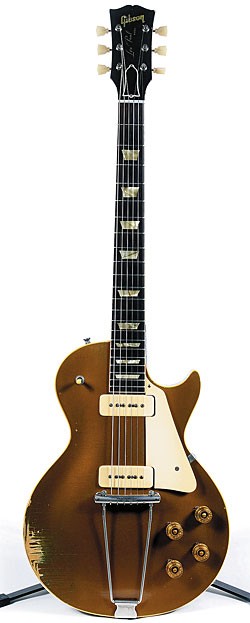
Then I started getting some really nice pieces to round out my collection. A ’52 goldtop, a mint ’68 Fender Telecaster in Pink Paisley. And then I did another CD with Robby, and he gave me a ’69 Blue Floral Tele for my collection. Then I started picking up old Strats; five or six years ago you could pick them up for $5,000 to $10,000. So I got a ’64, a ’65, and a ’67, all sunburst, plus a ’65 in Ice Blue Metallic and a ’63 in Olympic White.
Where were you getting them?
From Guitar Center, music stores, Craigslist, and on the road. I let people know I was into collecting, and they’d call when a piece came in. It’s great, looking at a dirty old Strat with fret gunk buildup, knowing when I take it home and do a number on it that it’s going to shine up real pretty (laughs)! That’s one of my favorite things!
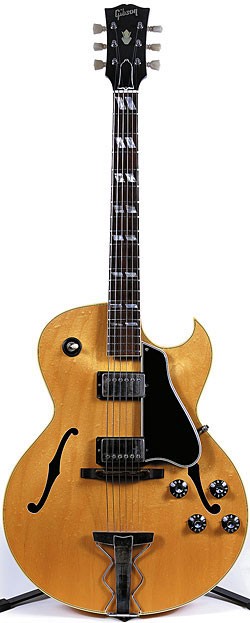
Then I started going crazy on Gibson Modernes. I ended up buying four of them, all early-’80s, all Korina – three naturals and one black. Then I started getting into the Gibson ES-175s and have about four of those – two ’65s, one sunburst, and one blond. After that, I got into Martins. In 2004, I was on Craig’s List and there was a guy who lives near me who was selling quite a few Martins. I went to meet him, and it was Dave Casper, the former right end for the Oakland Raiders. Being a major Raider fan, it was not only great to meet him and see all the memorabilia around his office, but to see all these beautiful guitars. I ended up buying two D-45s from him an ’86 and a ’92 – and two Brazilian D-28s, a ’68, and the other one I think was a ’67. Then I started getting into Gibson acoustics and bought a nice Elvis Presley J-200 with his name inlaid on the fretboard. Then a J-200 Vine, which has all the abalone inlay throughout the headstock and down the fretboard. And then I started picking up more Les Pauls. Got a few nice reissues and an early-’80s sunburst.
Were you focusing on anything in particular, or just kicking back and letting these shops call you as stuff came in?
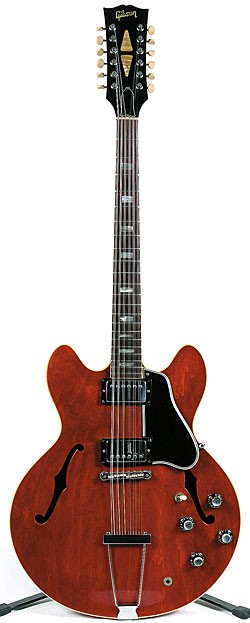
I was waiting to see what was available and picking anything up I felt I could use or was of vintage value. And I had my sights on different things; I started getting into 12-strings about a year ago. We recently did a show in Nashville, and I popped over to Gruhn’s Guitars and picked up a nice ’67 Gibson ES-335 12-string. Well that got me going, so of course, I had to buy a Rickenbacker 360/12. And then I bought a ’67 Mosrite 12-string. Lately, I’ve been getting into amplifiers. I found a nice ’65 Vox AC30 and an old HiWatt 100-watt head, an older Marshall MkII, and another trusty Soldano Decatone, which I use live and in the studio.
What got your started on old amps?
A friend of mine, Peter Kellett, collects guitars and amps. He also made anodized aluminum pickguards for Fender for years. A few summers ago I was at his place to record, and he had all these old beautiful Marshalls. He started fiddling around, plugging them in, I just didn’t realize the killer tone that some of these amps have. Then I plugged into his ’59 Fender Bassman, and I couldn’t believe how beautiful and fat it sounded, the natural compression. So I located and bought a ’59 Bassman through a guy here in the Bay area.
’65 Gibson ES-175. Photos by Pat Johnson.
’66 Gibson ES-335-12.
’52 Gibson Les Paul.
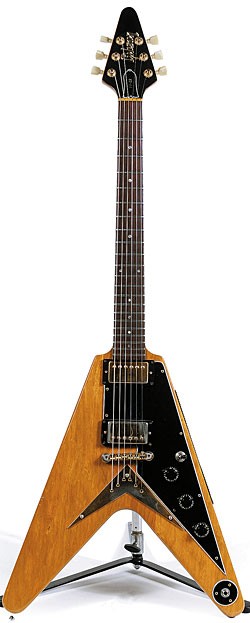
’82 Gibson Flying V.
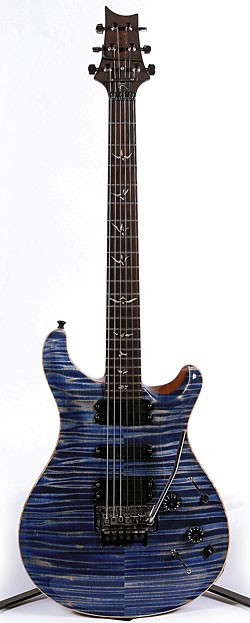
’06 PRS 513.
What sort of condition is it in?
It’s beautiful condition because it’s been re-tolexed. I went in and had all the tubes redone using NOS tubes, and bias set up perfectly so it’s ready to roll. One thing about my guitars and amps, I keep everything ready to play – fresh strings, tuned, and amps ready to fire.
You recently added guitar number 100 to your collection. When did it happen?
It happened right before Christmas. Actually, my 99th was a ’79 Stratocaster in Antigua. Then I held off because I wanted the Coronado to be my 100th. It’s in such good condition, it doesn’t even look real – it looks like a cartoon (laughs)! After I bought the Coronado II, I started getting into Coronados and found a guy five miles from me who was selling a ’67 Coronado II Wildwood. You gotta pay for the Wildwood, but it’s a beautiful, clean guitar… almost mint.
How’d you get into the Antigua finishes?
Well, I was at Robby Z’s house a few months ago, and he had Antiguas that totally blew me away. He said, “This is the next big thing, man.” So the next day I was looking to add the 100th guitar in my collection, and I bought the ’67 Coronado in Antiqua.
By the looks of the finish, it has never seen sunlight!
No, it has nice color and is just a dream to play. So now I’m in the market to buy Antigua Jazz and Precision basses… and a Tele, of course.
Are there a handful of favorites in your collection?
Well, my favorites right now are the Antiqua Coronado II, the Paisley Tele, a sunburst ’57 Strat with a ’63 V-shaped neck that plays wonderfully. I had a Nady wireless in that one – with no routing! I have quite a few guitars with built-in Nady systems, including my red ’62 Strat. My black Les Paul with the Floyd Rose, and the ’65 Stratocaster in Ice Blue Metallic, and a few Jacksons. My buddies Rich Bandoni and Anthony Woo have been installing wireless transmitters in my guitars for years.
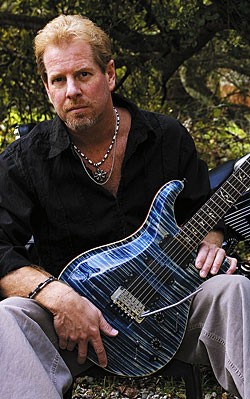
My new favorite guitar is a PRS 513 custom-built for me. After doing a few NAMM shows and jamming at PRS parties, I asked Paul Smith if he could put a Floyd Rose vibrato on a PRS. I sent him an original Floyd and a Nady transmitter, and they built me this beautiful blue 513. It’s one of my road guitars.
Speaking of road guitars, is the black Les Paul with the Floyd Rose the same one seen on the live Ozzy videos back in the day?
Yes, I had three guitars on the road with Ozzy. One was my red ’62 Strat, one was a pieced-together Strat with a Floyd on it. Then there was the Les Paul Custom, which I took to Star’s Guitars in San Francisco years ago to mount the Floyd Rose. That was scary for me and them, because they had never done it (laughs)! So after some detailed carving and placement, I had them route behind the bridge because I had to be able to pull and push the bar. It was a slammin’ Les Paul, with great tone. I played my red Strat or the other Strat during the show, and for the encore – we played “Iron Man” and “Paranoid” – I brought out the Les Paul.
Which pickups are in it?
They’re stock, I never changed them.
How about the red guitar?
The red Strat has a Duncan JB in the bridge, an original ’62 in the middle, and a stacked Duncan in the neck position.
How long have those been in that guitar?
Quite a long time. I was using a PJ Marx pickup back in the ’80s. That was pretty hot, almost a little too hot. I switched it out with a JB quite a few years back and got a little more control over the tone. My live rig is outstanding! I run my Soldano through a couple old HiWatt cabinets with Fane speakers. I’ve got great tone, live – I just plug in and go.
Is the Gibson Elvis Presley J-200 a Custom Shop guitar?
Yep, they made 150 of them. I’ve been getting into acoustics and even mandolin lately. I have a nice Ovation mando with a wireless installed (laughs)!
Are you going to start chasing vintage mandolins?
I’ve been looking into vintage mandolins, haven’t really found anything yet.
But are you looking for anything in particular, collection-wise?
The only thing I’m really missing is a nice old Gibson SG. I haven’t owned one since I was 15, so I’m in the market for a ’60s Standard or maybe a three-pickup Custom.
How many guitars do you take on the road now?
I only take three. Since we do a lot of flying, a lot of times I just take one.
If you’re taking just one guitar to a gig, it’s the red Strat, right?
Well, I retired the red one a while back. I don’t like the security at airports because you can’t lock cases anymore. I envision going to the baggage claim and opening an empty case. So I had to retire it. I use it at home and take it out to do local gigs. So I’ve been playing a Fernandez Brad Gillis model and a Fender BG replica that my buddy Brad Kelley built for me. The two Strats and my PRS 513 are my main live guitars now.
Have you replaced any parts on it over the years?
I never had to replace anything except the frets and one original Floyd bridge piece that broke. At one of our shows in Japan last year I met a man who came up to our van with an original Floyd in his hand and wanted to give it to me. It’s the one I sent to Paul Smith to use on my PRS.
Is it getting tough to find original Floyd Rose setups?
Not really. I have four or five at home and whenever I see one on Craig’s List or elsewhere online, I’ll pick it up. The original Floyds are the best because they are more case-hardened and don’t have fine-tuners; I never liked fine-tuners, they always got in my way when I’d palm on the bridge. And there’s two types of Floyd Roses – the original with the larger Allen nut, and the newer ones with a smaller nut. I collect the older ones.
Does the Les Paul have any special custom wiring?
Actually, I just wired the Tone knob from both pickups to one knob only and used the fourth knob as my wireless off/on button. That way I wasn’t doing any routing into the front of the body.
It’s a master Tone.
Yeah, I just didn’t want to rout it into the front… though it’s not like the Floyd Rose wasn’t much routing, anyway (laughs). But it’s got stock electronics.
Any other projects in the works?
I’ve been producing and mixing a 16-year-old girl named Grace Leer who took top 20 on American Idol Juniors when she was 11. She sings “The Star Spangled Banner” at many San Francisco Giants, Oakland A’s, and Golden State Warrior games. Her record should be out later this year. Night Ranger just finished mixing a live CD recorded in Japan with Reb Beach (VG, May ’08) and me on guitars. And I’m finishing 10 hard rock songs for ESPN.
This article originally appeared in VG‘s July 2008 issue. All copyrights are by the author and Vintage Guitar magazine. Unauthorized replication or use is strictly prohibited.
There Is Life – Night Ranger
OZZY Osbourme – Brad Gillis & Tommy Aldridge Solo 1982
Brad Gillis’ 1962 Fender Stratocaster
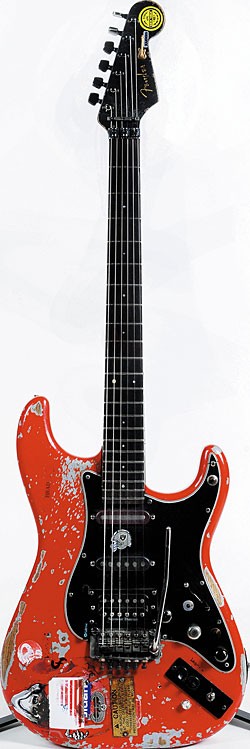
Seen far and wide on tour with Ozzy Osbourne in the early 1980s and on most Night Ranger albums, videos, and tours until its retirement in the late ’90s, Brad Gillis’ 1962 Fender Stratocaster is one of the highest-profile axes in hard rock. Here are its most notable elements.
“First-generation” Floyd Rose vibrato
Notched aircraft on/off switch activates Nady wireless transmitter mounted in control cavity.
Toggle switches; one once activated a Sustainiac that was built into the guitar.
Pushbutton for wireless effects switching. “My brother designed a system where I was able to switch effects through my guitar. I could be at the opposite side of the stage, hit the button, and turn on my lead channel or activate a chorus or delay.”
The third button has since been converted to a light, and the wireless switching removed. “The transmitter was too close to the pickup and if I wasn’t playing, it would make a bunch of noise when pushed.”
The neck was painted black in 1981 with an original Fender logo, and a 22nd fret was added.
Custom Gotoh tuners
Recessed Jim Dunlop strap locks
Miscellaneous stickers and (in Gillis’ words) “dumb stuff.”
Gillis’ playing style and use of Dunlop stainless steel picks helped create noticeable marks near the neck/body joint.
Buckle wear on the back is drastic. In one section, it has carved a groove that runs a 1/4″ deep.
The Massachusetts-based guitarfetish.com is an instrument/parts importer that carries a complete line of goods, from pickups and vibratos to knobs and pots.
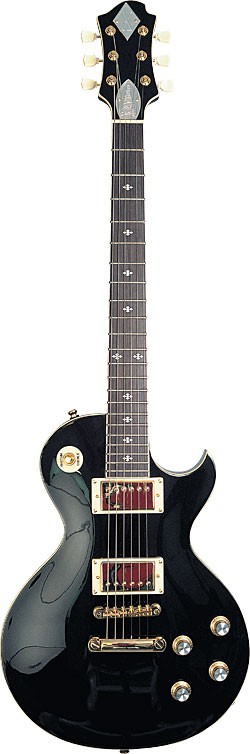
Its guitar line, dubbed “Xaviere,” consists of 11 single-cutaway solidbody guitars (the XV 500/700 line) and three thinline semi-hollowbodies. The solidbodies range in price from $300 to about $1,150, with the primary difference being the finish; at the entry level are opaque finishes with sparkle, while the upper crust gets you a pearl/abalone top. In-between are various sunbursts finishes on quilt- or flame-maple tops.
The XV solids have a distinct Gibson Les Paul/Zemaitis influence in terms of design and aesthetic, while the semi-hollows recall Gibson’s vaunted ES-335, with 11?2″-thick double-cut bodies.
One of the reasons we were motivated to order a Xaviere was the lofty verbage on the website that captured our technically-trained eye. “Each Xaviere guitar is meticulously set up by our pros…”it says, adding how the guitars have, “the kind of tone, sustain, and balls hard to obtain in a $2,000 instrument.”
After reading that, we just had to get our hands on one, and we opted for the entry-level XV 700.
Unwrapping the guitar, we were immediately struck with a couple of cosmetic elements, the first being the very funky metalflake finish. Not your run-of-the-mill metalflake with nearly-microscopic flakes in the finish, the Xaviere’s large copper-colored flakes give the finish remarkable depth. And as advertised, the guitar weighs in at just over seven pounds. The neck has a comfortable slim-taper profile, and the nicely polished/dressed frets make for a bump-free ride up and down the neck. The plastic nut is fitted nicely and cut with proper string radius – an oft-overlooked detail on import guitars, and one that can really affect feel and playability.
The 700 did indeed arrive set up well, with fairly low action and no fret buzz to speak of. The neck was straight and level, and the overall feel was fairly slinky and fast, due to its .010-.046-gauge strings and 241/2″ scale length. The body’s thin profile and set neck allow for excellent access all the way to the 22nd fret. Fit and finish are also good, with only a few minor issues, i.e. a bit of paint bleeding into the binding and the treble pickup ring didn’t sit flush on the body.
The guitar has gold-plated hardware, including the stop tailpiece, tune-o-matic-style bridge, strap buttons, Kluson-style tuners with plastic buttons, football-shaped jackplate, and pickup covers. The only hardware not finished in gold is the stamped aluminum truss rod cover and a stamped-aluminum badge on the headstock, which both tie in with the aluminum reflector caps on the knobs. The dual covered GFS alnico-magnet humbuckers have individual Volume and Tone controls with gold reflector-cap knobs, individual push/pull coil splitters, and a traditional three-way pickup selector toggle, all in a traditional layout.
We plugged the XV-700 into a tube-driven Crate head and Celestion-loaded 4×12″ cabinet. With the overdrive channel’s Gain control set just past halfway, we got a pretty respectable crunchy overdrive with tight low-end response and just enough bark in the midrange to make it interesting. It’s not quite as beefy as, say, a Les Paul or PRS, but it’s solid. The pickups have plenty of midrange definition and never got mushy, unless you really pile on the gain, and even then we experienced no uncontrollable squealing or feedback.
The coil splitters add a lot of versatility to the XV’s clean tone. If the humbuckers seem a bit dark-sounding, especially for your clean tone, you can simply yank one of the push/pull pots to add some single-coil sparkle.
Our experience with the Xaviere XV 700 was very pleasant. The guitar lived up to – and in some cases exceeded – our expectations, and the claims on the company’s website. It’s an instrument packed with features, it plays effortlessly, and is an outstanding value.
Xaviere XV 700 Thinline Features Mahogany body, carved top, set mahogany neck with bound rosewood fretboard, GFS Alnico-magnet humbuckers, push/pull coil tap on each pickup, gold-plated hardware, bound top, neck, and headstock. Price $299. Contact Guitarfetish, 2 Watson Place, Framingham MA 01701; www.guitarfetish.com.
This article originally appeared in VG‘s January 2006 issue. All copyrights are by the author and Vintage Guitar magazine. Unauthorized replication or use is strictly prohibited. Xaviere XV700
Hard to imagine that the only way this album was put back in print was by Concord re-releasing its Stax back-catalog.
Shot in late 1983 for a Canadian television show, Vaughan was at the time mostly known for his playing on David Bowie’s Let’s Dance album. He and King met years earlier, and the story makes up one of several entertaining asides featured between cuts here.
Guitarists, while they might enjoy the small talk, will really enjoy the playing. Both players bring their A-game as they zip through songs well-known and not so well-known. Slow blues like “Call it Stormy Monday” and King’s classic “Blues at Sunrise” are textbooks for players who want to learn how to play the blues. Even at 15:10, “Blues at Sunrise” never disappoints and never is boring. Funky uptempo blues numbers “Don’t Lie To Me” and “Ask Me No Questions” showcase both guys’ heartfelt attraction to the rockier side of the blues.
Vaughan’s only vocal, his then-new “Pride and Joy” gets a small-but-definite makeover with a slight change of tempo. It’s more relaxed than his studio version, and both shine on rhythm and lead.
Throughout the album, it’s obvious who is the teacher and who is the student, but both have an obvious affinity for each other.
This article originally appeared in VG‘s Nov. ’09 issue. All copyrights are by the author and Vintage Guitar magazine. Unauthorized replication or use is strictly prohibited.
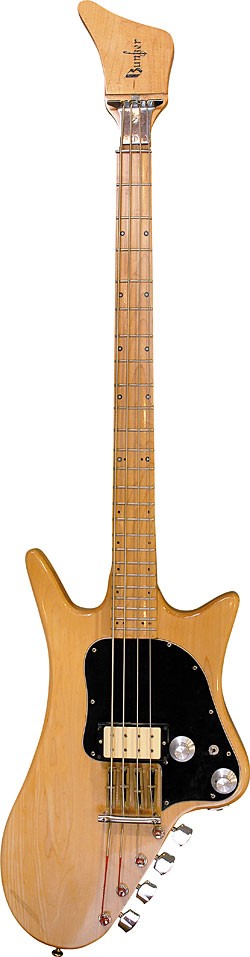
Photo: VG Archive. Instrument courtesy of Rick King.
Marketed before Steinberger headless instruments or the Kramer Duke series (VG, August ’04), the early-’70s Bunker Pro-Bass was radical for its time – even if it wasn’t all that radical for musician/inventor Dave Bunker.
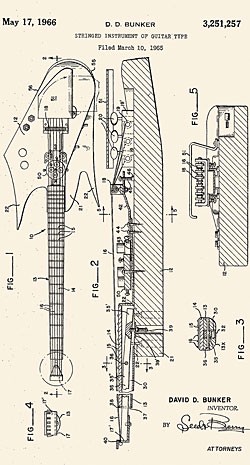
In fact, if you were familiar with Bunker’s work in the ’60s, the Pro-Bass wasn’t even all that unusual. Known for his doubleneck Touch Guitar and the two-handed tapping method by which it is played, Bunker (VG, August ’06) filed for a patent on a headless guitar in March, 1965, and was granted the patent in May of ’66. The design conformed to what became the ProStar series, and its origins were gender-specific.
“I had an all-girl band that played in Las Vegas, and I was trying to cut weight from the body for the instruments they’d use,” Bunker recently told VG. “I wanted the guitars to be petite and easy for the girls to tune… and thought it would be easier if the tuners were on the body.”
The ProStar guitars and Pro-Bass were equipped with Bunker’s patented “floating” neck, which utilized a 3/8″ steel bar acting as a cantilever for both ends, and the rod weighed about eight ounces more than a standard single truss rod, Bunker recalls. The neck attached to the body using a screw-and-dowel assembly, and the removable Gumby-shaped headstock was “…strictly for show,” according to Bunker. The ball-end of the strings anchored in a large bracket at the end of the neck, and per the era, both used a brass nut. Both guitar and bass were 24-fret instruments, maple fretboards were standard, and the inlays were unusual; on the first octave, Bunker used black dots with white centers (which he described as “plastic inside of plastic”), while the 12th fret was marked with an additional set of smaller solid-black dots, followed by smaller markers on the 15th, 17th, 19th, and 21st frets. The 24th fret was adorned with four small black dots. The Pro-Bass shown here is likely an early example, with a scale length of 30.5″. In its brief life, the Pro series was made up primarily of 32″-scale basses. The matching guitars had a 25.5″ scale.
The Pro’s body silhouette was designed with ergonomics and balance in mind. Bunker knew full well that a body with tuners mounted on it was going to look odd in the eyes of some, so he added small cutaway horns in deference to tradition.
The instruments were usually all-maple construction, though walnut bodies – as well as laminated bodies made from both woods – were also offered. Hardware included a massive Bunker-designed brass bridge (check out the length of travel for each saddle!), and Bunker recalls using Grover tuners on ProStars early on, then later switching to Sperzels. The input jack was mounted on the edge of the body, near the G-string tuning key.
The pickup on this example is a DiMarzio, and the mini-toggle switch is a coil tap, while the two knobs adjust the guitar’s Volume and Tone output. There was also a two-pickup version of the Pro-Bass.
Patent drawing for the Bunker Pro-Bass, dated May 17, 1966.
Now in his 70s, Bunker has been involved in other stringed-instrument ventures, such as the PBC line (made in the early/mid ’90s), and has developed other noteworthy – and by comparison, downright traditional – innovations for guitars and basses. One is the Electro-Mute, an electric string mute on the Touch Guitars that Bunker still makes. The system dampens individual strings, and according to his website “…enables the strings to be off at all times, which eliminates all hum, hiss and other noises.”
While his reputation for crafting odd designs was forged with the Touch Guitar, initial reaction to the ProStar series was both more pronounced and more positive. However, history has shown many times that things on the “cutting-edge” are also often the first to hit a brick wall. So it was for the ProStars, which foundered in the marketplace. Nonetheless, interest in the ProStar bass has recently surged, and he is planning a reissue!
This article originally appeared in VG‘s July 2009 issue. All copyrights are by the author and Vintage Guitar magazine. Unauthorized replication or use is strictly prohibited.
Maryland-based amplifier builder Vintage Vacuum Tube Amplifiers (you may know it as VVT) recently fielded a request from renowned pickup winder Lindy Fralin. He wasn’t looking for advice on wire or how hot to wind a pickup for best interaction with a particular VVT; rather, Fralin wanted an amp built to his specs and taste. And not just for him, but for the mass market. VVT, realizing the co-branding possibilities, jumped at the opportunity.
So, what does a tone guru like Fralin want in an amplifier? Well, he says the goal was “a clean, full-body-voiced amp that’s lightweight and able to sound good at low volume.” Sounds like something we’d like, too. So when VVT asked whether we wanted to hear it, we were happy to take up the offer.
At first glance, the VVT Lindy Fralin amp looks boutique in a way we’ve come to expect; i.e. it sports point-to-point wiring with carbon-comp resistors, an all-tube circuit, and a 12AX7-driven spring reverb and preamp. But, go deeper and you’ll quickly discover some seldom-seen features, like a trick self-biasing-cathode design that allows the player to switch between a pair of 6L6s (for 30 watt of output) and a pair of 6V6s (for 15-watts) without having to re-bias the amp. Part of its secret is a custom-wound Mercury Magnetics transformer designed specifically for the Fralin that allows the amp to switch between the 6L6s and 6V6s while maintaining stable impedance for the tubes and speaker load.
The amp ships with a pair of 6L6s, but will also accept 5881s or JJ 6V6s, for an altogether different favor. Another unique feature is Fralin’s choice of a single 15″ alnico-magnet Weber speaker instead of the more traditional pair of 10″ or single 12″ speaker.
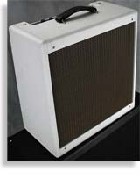
The overall look and layout of the amp is different, as well, but still boasts a vintage vibe with a neatly executed off-white tolex, oxblood grillecloth, top-mounted controls, and heavy-duty leather handle. There are no metal or plastic corner protectors, and no extraneous piping or badging. Its look is clean, simple, and classic. The control layout is accordingly succinct, with a single 1?4″ input, a switch for Bright, and controls for Volume, Treble, Bass and Reverb, along with switches for Power and Standby. Also worthy of mention is the 11-foot power cord.
VVT shipped our tester with a matched pair of 6L6s by TAD and a matched pair of 6V6s by JJ. We started with the TAD 6L6s and our test guitars – a Fender Relic Strat and a Hofner Verythin Classic with mini-humbuckers. After plugging in the Relic Strat and letting the amp warm up, we set the Volume at 3 o’clock, Bass and Treble at 12, and then we hammered a few chords.
We were immediately impressed with the amp’s complex overtones, its round, punchy low-end response, and its snappy highs. It didn’t take much noodling or knob tweaking to realize that the tone controls on this amp, along with its Bright switch, are exceedingly well-voiced. From a player’s perspective, that means it’s easy to find likeable sounds. The Bright switch compensates nicely for the slightly darker sound of mini- or full-size humbuckers, while the wide sweep of the Bass control keeps its frequencies full and punchy with single-coils.
While the amp is voiced for clean tones, it also does a good job when it comes time to get dirty, and is very responsive to changes in pick attack or guitar output. Simply backing down the volume control on the guitar and easing up on our pick attack, the Fralin cleaned up from moderately dirty overdrive with musical overtones to a sparkling clean sound that didn’t lose any of its life or attitude.
We popped in the matched set of JJ 6V6s and checked the tone at 15 watts output. The amp broke up quickly and had a slightly more boxy sound, with reduced complexity of overtones; still very lively and punchy, just not as big as 6L6s – fantastic for low-volume situations. The tube-driven reverb is also well-voiced. At lower settings, it adds a bit of ambiance that doesn’t get in the way or wash out the amp’s tone, and at higher settings it’s suitably splashy.
The boys at Vintage Vacuum Tube do a killer job on the Fralin signature amp. It’s loaded with big, dynamic, single-coil-friendly tone (that sounds pretty good with humbuckers, too!) in a nice, lightweight package.
Price: $1,799 (retail).
Contact: VVT Amps, Inc., 2580B Old Washington Road, Waldorf, MD 20601; phone (301) 396-4100; www.vvtamps.com.
This article originally appeared in VG‘s June. ’06 issue. All copyrights are by the author and Vintage Guitar magazine. Unauthorized replication or use is strictly prohibited.