
Month: October 2008

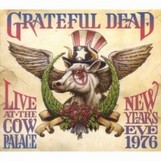
  • Grateful Dead – Live at Cow Palace

    The Grateful Dead was an electric jug band with more in common musically with Jim Kweskin than Jimi Hendrix. On this new three-CD set, you can hear this ultimate jam band at its loosest-tightest best.
    On this recording, the husband/wife duo Keith and Donna Godchaux held down the keyboards and background vocals. The rest of the band is the same as ever; Jerry Garcia (guitar and vocals), Bob Weir (guitar and vocals), Phil Lesh (bass), and Mickey Hart and Bill Kreutzmann (drums and percussion).

    Any serious Deadhead has at least 100 hours of bootleg recordings from various Dead concerts. One problem with many of these is they sound really bad. Live at the Cow Palace – New Year’s Eve 1976 was originally broadcast over San Francisco’s KSAN and sounds fantastic – even better than Live Dead. The balance between guitars, bass, drums, and vocals is nearly perfect.

    According to the liner notes, the Grateful Dead began this concert “somewhere after ten” and ended “close to three hours into the new year.” In other words, this was a typically long Dead concert. The setlist included standards like “Bertha,” “Sugar Magnolia,” “Good Lovin’” “Not Fade Away,” “Uncle John’s Band,” “Deal,” “Playing in the Band,” and “One More Saturday Night” as well as more obscure numbers “Samson and Delilah,” “Slipknot,” and “Help On The Way.”

    Like any Dead concert, moments of inspired brilliance are interspersed among many minutes of directionless noodling. But true fans know that the time spent waiting for the music to take off, phoenix-like, is all part of the journey.


    This article originally appeared in VG‘s May ’07 issue. All copyrights are by the author and Vintage Guitar magazine. Unauthorized replication or use is strictly prohibited.

  • Crowsong – Shelter

    Crowsong offers a couple of atmospheric new records that feature founder Randy Clark’s guitar playing and interaction with bandmates Joshua Zucker (bass) and Vince Littleton (drums). Here, they use one disc to highlight vocals and songs with words, and another for instrumental tunes.

    And no matter what sort of music Clark sends at the listener, it’s dominated by guitar that’s tasty and full of chops. Shelter features cuts like “Peace In My Mind,” with its lyric about the old days, and guitar playing that’s both stinging and elastic, a quality that is rare outside Neil Young. Folky rock tunes drive the first disc with cuts like “Anne Marie,” which features great guitar sounds. “Shadows Long Ago” is a rocker with a big, liquid sound. It’s nice to hear a player who can conjure images with just a few notes. Clark’s slide dominates cuts like the “Life Under the Moon” and “Seven Crows.” His vocals are heartfelt and earnest and, like his playing, make you believe in what he’s doing.

    Eternal is five cuts of guitar heaven; everything from surfin’/secret agent themes (“Cattle Call” and “Western”) to bluesy country (“Companion Song”) to vamps that turn out one interesting lick after another (“Mexican Summer”). Songs and solos go on for great lengths of time, but don’t feel like it. Instead, they let the listener focus on how Clark and the boys simply make great music that soars and dips.


    This article originally appeared in VG‘s Feb ’08 issue. All copyrights are by the author and Vintage Guitar magazine. Unauthorized replication or use is strictly prohibited.

  • Rick Vito – Rattlesnake Shake

    Covering the Peter Green title track may be a subliminal (or subconscious) way of reminding listeners of his early-’90s stint with Fleetwood Mac, but Vito was a Green devotee well before Green had vacated the band 20 years prior, let alone before joining the group himself. And that was just one stop on a road that’s also seen the guitarist popping up with Bob Seger, Roger McGuinn, Bonnie Raitt, Maria Muldaur, Jackson Browne, Glenn Frey, and the blues vanguard Green apprenticed with before forming Mac, John Mayall.

    As the list above suggests, Vito can adapt to a multitude of situations, but here he and his Lucky Devils don’t stray far from roadhouse blues – the tone set by the opening Elmore James-inspired “My Baby’s Hot.” As evidenced by his original “The Lucky Devil,” Magic Sam is another of Rick’s heroes; he’s put words to Sam’s boogie instrumental “Lookin’ Good” – no mean feat, since playing the thing is hard enough, forget about trying to sing at the same time.

    He reverses the formula on “A Change Is Gonna Come,” a moving instrumental arrangement of Sam Cooke’s timeless classic, featuring Vito’s haunting slide. The CD includes two other instrumentals: the relaxed, self-explanatory “Slide The Blues” and another Mac cover, “Albatross.” Even transferring parts of the melody to slide, as with “Rattlesnake,” Vito stays close to the original – perhaps a bit too much, instead of injecting more of his own personality.

    As if merely playing guitar so well weren’t enough, the multi-faceted frontman also designed the Rick Vito Signature Slingshot axe he uses here, for Reverend Guitars. And if you want to get a handle on his slide style, Hal Leonard has released Rick’s Complete Guide To Slide Guitar DVD – well worth checking out.


    This article originally appeared in VG‘s Jan ’07 issue. All copyrights are by the author and Vintage Guitar magazine. Unauthorized replication or use is strictly prohibited.
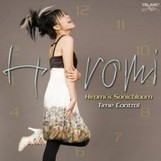
  • Hiromi’s Sonicbloom – Time Control

    Ignore the silly cover photo – this ain’t no pop-diva record. Instead, it could be the jazz-rock CD of the year. Hiromi Uehara is a monster jazz pianist who’s been making a name for her trio over the past few years. Sonicbloom, however, is the name of her expanded lineup, with the addition of fusion guitar whiz, Dave “Fuze” Fiuczynski.

    Both Hiromi and Fiuczynski are instrumental mavericks who are breaking down our preconceptions of what “jazz rock” is. The music teeters between straight-ahead jazz and crazy fusion, featuring virtuoso musicianship throughout, especially from the killer rhythm section of bassist Tony Gray and drummer Martin Valihora.

    Guitar fans will be most intrigued with Fiuczynski’s solos, which are simply explosive. Better known as leader of the Screaming Headless Torsos, Fuze has tremendous chops and clearly is a great sightreader – listen to him double Hiromi’s piano licks at the speed of light. But he has a great sense of groove and can hang back when necessary. There are also a bevy of strange guitar sounds, some of which Fuze achieves on his custom fretted and fretless guitars. For example, he uses a Johann Gustavsson doubleneck, which accommodates a 12-string fretless electric oud for the top neck, and a 7-string neck featuring a regular 6-string vibrato and fixed low-B string. Yikes!

    The CD’s Latin-tinged opening track, “Time Difference,” is a true scorcher, bringing to mind vintage Return to Forever, while “Time Out” is a funky jam featuring some of Fiuczynski’s loopy, out-of-tune lead licks. The guitarist’s barely tonal lines on “Time and Space” are just as crazy, but here long, Hiromi’s bluesy piano licks bring the music back down to Earth, creating a striking contrast. Ultimately, Fiuczynski’s kooky techniques may challenge the way you think a guitar should sound.

    At the end of the astounding CD, you realize that nothing is off limits for this groundbreaking jazz unit. Check it out, then work your way into the rest of Dave Fiuczynski’s fascinating catalog. This is contemporary fusion at its best.


    This article originally appeared in VG‘s Jun. ’07 issue. All copyrights are by the author and Vintage Guitar magazine. Unauthorized replication or use is strictly prohibited.


  • Pat Metheny – Metheny with Mehldau

    Guitarist Pat Metheny and pianist Brad Mehldau need little introduction, thus the near-cryptic titling of this new duet collection of jazz originals.

    The meeting of minds here brings back memories of guitarist Jim Hall and pianist Bill Evans’ classic 1960s duo, Undercurrent. Now we have a new duet for a new current in jazz.

    Metheny, of course, has proven himself over several decades of musical explorations that have come to almost define modern jazz guitar.

    Mehldau, on the other hand, is a relative newcomer from a new generation. He confesses to having been inspired at just age 13 by Metheny’s “Are You Going With Me” from Travels, before his life was changed by As Falls Wichita, So Falls Wichita Falls. He has since become a Gen X jazz piano god, prolificly releasing wide-ranging albums.

    Metheny Mehldau is new inspiration that jazz is far from dead. The 10 tracks are all original, each running into lengthy jams that dig into the nuances of the melodies. But as with the Hall-Evans collaboration, the magic is in the interplay. Metheny and Mehldau work back and forth on top of and behind each other. Rarely is one truly comping and the other soloing. Instead, their interplay winds within each other, demanding your attention – and then holding it hostage. Metheny unleashes a line, only to have the piano echo it, then rework it a bar later. Up and down and all around, it’s like a jazz rollercoaster ride.

    The duo is joined on two tracks by Mehldau’s trio mates, bassist Larry Grenadier and drummer Jeff Ballard. But beyond that, it’s all a duet.

    On “Make Peace,” Metheny plays a baritone acoustic guitar, making for a darker-toned mood. “Ring of Life” has him on guitar synth, creating the most pop-sounding, radio-friendly track here. “Summer Day” features Metheny on acoustic guitar, and the mix with the piano is at its purest.


    This article originally appeared in VG‘s Jan ’07 issue. All copyrights are by the author and Vintage Guitar magazine. Unauthorized replication or use is strictly prohibited.


  • October 2008

    FEATURES

    BEDLAM IN BELGIUM!
    Lord Bizarre’s Electric Guitar and Amp Museum
    When most Americans think of Belgium, they typically think beer, chocolate, or waffles. But for those with a passion for unusual vintage electric guitars, the city of Leuven holds an extra treasure. By Joe Bigley

    AMP-O-RAMA
    The Oahu 230K Tone Master
    Sold as part of a set when Hawaiian-guitar method books, music, and lessons ruled at 1,200 schools in the U.S., today it’s yet another rippin’ little 6V6-toting Valco tone machine. By Dave Hunter

    THE MARTIN F-9
    It has the dubious distinction of being rarer – but far less valuable – than a pre-war D-45. But it introduced the vertical C.F. Martin headstock logo and hexagonal fingerboard inlays that identified Martin D-series instruments. By George Gruhn and Walter Carter

    LES PAUL AND THE FIRST GIBSON ES-30O
    Given all that has been revealed about the accomplishments of Les Paul, it’s rare that a new tile can be placed in the mosaic that forms a picture of his life. But here is one such piece of history. By Lynn Wheelwright

    OLIVER LEIBER
    Welcome to The Tone Zone
    Raised awash in the classic sounds created by his composer father, he made a name for himself on both sides of the studio glass. Now he solves the mystery of the riddle, “What’s better than a great vintage ’Burst?” By Wolf Marshall

    THE GRETSCH NASHVILLE 7660
    The storied past of Gretsch is a microcosmic reflection of the many twists and turns of the American guitar industry. And while this 1972 Chet Atkins Nashville 7660 doesn’t have every element on that list, it has its share! By Michael Wright

    BASS SPACE
    The Peavey RJ-IV
    Long before “American Idol,” Randy Jackson played bass alongside everyone from to Mariah Carey to Bruce Springsteen. And in 1990 he collaborated with Peavey to design and build this instrument. By Willie G. Moseley

    DEPARTMENTS

    Vintage Guitar Price Guide

    Builder Profile
    GW Basses & Luthiery

    Upcoming Events

    Vintage Guitar Classified Ads

    Dealer Directory

    Readers Gallery

    FIRST FRET

    Reader Mail

    News and Notes
    Builders Shine in Montréal, Burtonfest, Djangofest, Fender HoF, VG Hall nominations, Stolen Gear, In Memoriam, more!

    Steve Cropper
    An MGs/Rascals Soul Summit
    By Dan Forte

    Dave Specter
    Sweet Home Chicago
    By John Heidt

    Richard Williams
    Still Kickin’ with Kansas
    By Willie G. Moseley

    Ask Zac
    By Zac Childs

    Denny Jiosa
    Instrumentally Sound
    By John Heidt

    Earl Klugh
    Respect for the Nylon
    By John Heidt

    A Return to Music City
    Highlights from Summer NAMM ’08
    By Preston Gratiot

    COLUMNS

    The (Way) Back Beat
    The Phantom Can-Can: The Pete “Buzz” Miller Story, Part 2
    By Peter S. Kohman

    Q&A With George Gruhn

    Acousticville
    Hand Upon the Trigger
    By Steven Stone

    “401K” Guitars
    The Gibson Advanced Jumbo
    By Gil Hembree

    Fretprints
    Lightnin’ Hopkins
    By Wolf Marshall

    TECH

    Dan’s Guitar Rx
    Funky Bushings on a ’59 Strat, Part 2
    By Dan Erlewine

    Talkin’ Amps With…
    George Metropoulos: The Hows and Whys of Kit Amps
    By David Jung

    REVIEWS

    The VG Hit List
    CD, DVD, and Book Reviews
    Beach Boys box, Tony Rice, Greg Koch, Greg Howe, James Brown, Interactive Gibson Bible, more!

    Check This Action
    Blue-Eyed Soul Men
    By Dan Forte

    Vintage Guitar Gear Reviews
    Blackstar Artisan 15/30, Seymour Duncan P-Rails, Dino’s Guitars Rust Box/Dynabox, Sommatone Roaring 40, Gary Kramer Guitars Kramertorium

    Gearin’ Up!
    The latest cool new stuff!

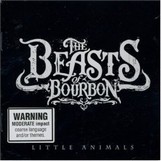
  • Beasts of Bourbon – Little Animals

    The Beasts of Bourbon have always been a vehicle for vocalist Tex Perkins, but have also been as much a side project as a major recording and touring force. Well-regarded and influential in their home Australia, they have never had much reason to venture forth. But the new work may break them big in spite of themselves; it’s 35 minutes of classic rock that blends familiar riffs, grooves, and feel, overlays hooks and gritty vocals, and gets it done in about three minutes before moving on.

    Every song on this disc is so to-the-point you have to ask what decade you’re in. If you melded ’60s AM rock to ’70s FM AOR or mixed the Faces with Ted Nugent and Motorhead (seriously!) you’d get the idea. Two of the strongest cuts have a Stonsey vibe, but are purely original. “I Don’t Care About Nothin’ Anymore” and “I Told You So” are mature rock, alive with vigor, and fresh even if familiar. That could be the Fender and Gibson guitars through Marshall amps relaying that classic sound. But more likely, it’s the creative energy of musicians who understand that the simplest approach can often create the best music.


    This article originally appeared in VG‘s Aug. ’07 issue. All copyrights are by the author and Vintage Guitar magazine. Unauthorized replication or use is strictly prohibited.