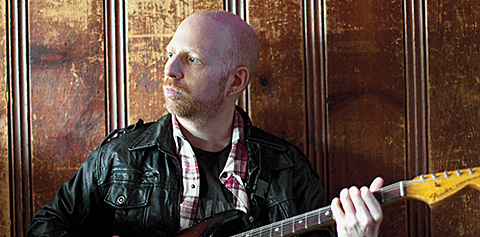
Oz Noy is talented enough to pay the bills not only as a first-call New York session cat, but also as a prolific creative force in contemporary fusion. His current release is Twisted Blues Volume 2, and it’s the perfect bookend to the critically acclaimed first volume. In it, he turns the much-loved genre of blues inside out.
Twisted Blues Volume 2 is so good.
This one was really hard to do. The recording didn’t take long but it took a while with everybody’s schedule. Then I had a problem with my amps and mixing it. It just took a long time to get it right. It turned out good, but it really was the hardest one I’ve ever done.
I get the feeling from this record that in a different life you might have been born in New Orleans.
(Laughs) I’ve never been to New Orleans. Allen Toussaint plays on the record, and, of course, he is the king of New Orleans so I guess something rubbed off on me.
You’ve taken blues to another level. There’s no cookie-cutter I-IV-V shuffles on Twisted Blues Volume 2.
It’s definitely not cookie-cutter (laughs). That was the whole idea of me doing this. It all started on Twisted Blues Volume 1. Sometimes, I’ll take a form of a song; “Twisted Blues” from Volume 1 is based on Wes Montgomery’s “Twisted Blues.” It’s the changes of that song but with a different groove. I stretched the changes to work for what I hear.
On Volume 2, there are actually four tunes that are pretty much inspired by drummer Chris Layton’s groove. I knew the groove that I wanted to write these songs to; we were doing dates in New York and he was playing the “Slow Grease” and “Blue Ball Blues” groove. When I heard that, I was like, “Man, I’m going to write something over these grooves.” I wrote those songs, and then I wrote this song called “Let Your Love Come Down,” which is kind of a similar idea. It’s based on a Stevie Wonder riff.
The groove is actually a Chris Layton groove from a Stevie Ray Vaughan record. That’s how I operate – I find a concept. A lot of times, I will start with a groove and sometimes I’ll start with harmony or melody. The groove is always what inspires me, and then I start writing over it. The whole harmonic thing comes on top of that. I already have the vibe of what I’m going for, and then I’m searching for harmony and melody.
Had you performed these compositions live before you recorded them?
Every record I do, I play the music at least a year to two years before. Some of those tunes we played up to a year or more before. I don’t go into the studio and just play. It never works out for me.
Did you record with Eric Johnson at the same time?
Yeah. “EJ’s Blues” was recorded at Eric’s studio. We all played in the same room together – no overdubs, no nothing. The base of the whole record has no overdubs. The only overdubs that happened were for Chick Corea, Warren Haynes, and Allen Toussaint because I couldn’t get them in the same studio. The reason the record took so long is because of scheduling the guys I wanted. My playing and the rhythm section playing are all live. I never overdubbed anything. I wanted to keep it like a jazz record.
What did you think of Warren Haynes’ performance?
I was there. He killed it (laughs). He really did! What are you going to do?
You shift effects from chords to single notes all within the same bar. It’s so seamless.
A big part of the time, my foot is on the switch to the Leslie pedal. It’s like playing an organ where you turn the Leslie on and off. It’s almost like I’m comping behind myself. When I comp and play the chords, I put the Leslie on. When I play melodies, I take it off. I’ve been doing this for a while. It’s what I do when I play live. I’m not overdubbing and punching-in stuff.
Which guitars did you use?
I used my ’58 Fender Custom Shop Relic Telecaster, which is actually on half the record. For all the stuff that’s a half-step down, I used a ’68 Custom Shop Relic Strat with a maple neck. For the stuff that was in regular tuning, I used a ’68 Custom Shop Relic Strat with a rosewood neck.
What’s next?
I have no idea (laughs). I don’t have a plan. It’s a weird time for me now because I completed my mission.
This article originally appeared in VG‘s October 2014 issue. All copyrights are by the author and Vintage Guitar magazine. Unauthorized replication or use is strictly prohibited.
Tremonti with Creed in 2001. Photo: K. Mazur/WireImage.
Many of the people we today consider “guitar heroes” – Eddie Van Halen and Stevie Ray Vaughan, to name a couple – spent more than their fair share of time stowed away in their bedrooms, playing guitar while other kids in the neighborhood played baseball, kick the can, or spin the bottle.
Rock guitarist Mark Tremonti is another member of that “lone wolf” club. After his parents moved the family from suburban Detroit to Orlando just prior to his sophomore year, he became the “new kid” at school. Sans friends (for awhile) and with older brothers who’d gone off to college, Tremonti, fully impassioned with the guitar, spent much of his free time with just a Les Paul Studio Lite and a four-track.
After a year of college in South Carolina, Tremonti moved closer to home and enrolled at Florida State. More-accomplished as a player and having honed his skills as a songwriter, one night in 1995 he ran into Scott Stapp, an acquaintance from high school, and soon after, they formed a band that would eventually be called Creed.
Within two years, the group had recorded its debut album, My Own Prison, using $6,000 borrowed from manager Jeff Hanson. Initially, they distributed the disc themselves to regional radio while plying it to major labels (14 of which told them “Thanks, but no thanks!”). Eventually, Wind Up Records, a startup with a distribution deal through Sony, took the bait and, with its help, the album spawned four Top 10 hits (a first for a debut album by a band). It went on to sell six million copies.
The band followed in 1999 with Human Clay, which entered Billboard’s Top 200 album chart at number one, helped by its first single, “Higher,” and the fact songs from the first album were still getting heavy airplay. Within two years, Clay had sold 12 million units and the single “With Arms Wide Open” had won Tremonti and Stapp a Grammy for Best Rock Song. In late 2001, the band released what would be its final album for nearly a decade; Weathered also debuted at number one on the Billboard Top 200, and it stayed there for eight weeks, tying a Soundscan-era record set by The Beatles. The band eventually released five singles from the disc, which in turn also sold six million copies.
After Creed disbanded in 2004, Tremonti grabbed his guitar and rig, then gathered friends including Creed drummer Scott Phillips, original bassist Brian Marshall, and singer Myles Kennedy to form Alter Bridge, a band with a heavier-rock attitude. Though it never achieved Creed’s astronomic level of album sales or gate receipts, its music was well-received by critics – and it scratched Tremonti’s itch to write and play heavy guitar licks.
This month, Tremonti begins guiding a solo project that bears his name and will release All I Was, which marks his debut as lead vocalist. With Eric Friedman on rhythm guitar, Garrett Whitlock on drums, and Marshall on bass, the group will tour this fall.
We caught up with him fresh off a spring reunion tour with Creed.
As a kid, what first caught your ear, musically?
Gutar-wise, it was when I heard songs like “Smoke On The Water,” “Love Stinks,” and “More Than A Feeling.” The parts where it was just guitar made me want to pick one up and play.
How old were you when you finally grabbed a guitar?
I was 11, and it was an imitation Les Paul called a Tara. I didn’t take formal lessons or anything with it, so I didn’t play it all that well.
Which guitars came along next?
I got a double-cut Tokai, and from the point when I started really learning to play, I wanted a Gibson Les Paul. So, in the mid ’80s, my dad got me a Les Paul Studio Lite, which was my first real, good guitar. I had it until Creed started touring, when it was stolen – one of my big heartbreaks was losing one of my childhood guitars.
And of course your tone now starts with your signature model PRS guitars, right?
Yeah, I don’t stray too much from them. I mean, I’ll play some Fenders at home… Martins and Taylors. But for the most part, I play the PRS.
What sort of tunes did you play in the early days?
The first melody I learned was probably just a 12-bar blues. The first lead sort of thing was Paganini’s “24th Caprice.”
What was the attraction of a challenging piece of classical music?
It was just fun.
Sounds like you wanted to show off a bit…
Well, nobody was impressed for quite some time (laughs)! It took a while.
What trained your ear to the differences in guitar tones?
It took awhile to develop. When I was young, I only really listened to the heaviest stuff I could find. And since my first amp cost me 50 bucks, my early tones were terrible! My first “big” amp, which I loved, was a Crate G1500 half-stack. For me that was just the epitome of cool tone back when I was a kid (laughs)!
What was your first “pretty good” amp?
The first decent amp I had was a Hughes and Kettner Attax 100, which I thought was pretty cool. After that, I got into Mesa Boogies, then I fell in love with Bogners. Fender Twins have been with me for a long time – I love Twins, and still use them today. From there, I branched out to all the high-end boutique stuff that I love. I buy all sorts of high-end amps for their different characters.
Any vintage amps in the collection?
The oldest I’ve had was a Marshall plexi, from ’69 or ’71, but I gave it to someone who was going to sell it for me, but I never got it back or got any money for it. That was a bummer.
Mark Tremonti’s signature PRS guitar has a mahogany body, figured-maple top, the company’s V12 finish with one of 20 color options, a mahogany neck with rosewood fretboad, Bird inlays, PRS tremolo with up-route, Phase II locking tuners, nickel hardware, Tremonti-spec’d pickups with Volume and Tone for each. It’s also availalbe in a more-cost-effective/dressed-down SE version.
Was it some kid in your neighborhood?
No, it was a shop in Detroit, and they took a bunch of my gear and never gave me any money for it. They lost it or sold it and never paid me.
When did that happen?
It was four or five years ago, when I had a house full of gear and I wanted to get rid of the stuff I wasn’t using. We loaded up their truck with tons of stuff, then they became impossible to get hold of.
What all did you give them to sell?
A ’59 reissue flametop Les Paul that I used throughout the early Creed days, the first PRS I ever owned – an Artist Series – and maybe 100 pedals. I can’t remember all the amps, but it was everything I had sitting around.
When you were a kid, who were your guitar heroes?
Early on, I used to sit with Paul Gilbert’s videos and learn his stuff. I also listened to a lot of Vinnie Moore, who I talk to now and then. Otherwise, Vai, Satriani – all the pure shred guys.
Were you drawn to their playing because they were fast, or was there something about their melodic sensibilities?
It was more the technique. Satriani has always had great melodic sense, I think. I still dig a lot of his stuff. Vai is very inventive and very cool and off-the-wall. I kind of stay away from the Yngwie-Malmsteen-type nowadays – those who play all that neoclassical stuff. That’s not as expressive, to me. I like the guys who can rip and play nice bluesy lines.
Who amongst your peers do you admire as a player?
Right now, Derek Trucks is number one for me. I’ve totally switched gears since I was a kid; I used to want to play as fast as possible, I wanted to play as heavy as possible. But now I just wanna express as much as possible. So it’s Derek Trucks, Warren Hayes, Doyle Bramhall, Jr., that kind of vibe.
As a kid, you didn’t have much use for the old blues guys…
No, I was too immature, I think. I grew up on heavy metal. I wanted my stuff to be heavy, and when I got into my first band, they weren’t into the same music as me, so my heavy-metal stuff got thrown out of the window and I had to kind of reinvent myself as a songwriter. That’s when I started transforming a bit.
Which element had the most impact on how you write a melody or how a song comes together for you?
There were certain things that helped develop my playing style. Songs like “The Call Of Ktulu” by Metallica, and playing that old classical stuff; Bach’s “Bourre in E Minor” was something I learned real early on. Those few things helped develop my right-hand style.
Songwriting-wise, it just happened for me. I didn’t have any tricks or influences to really push me along, I just naturally started doing it when I was really young.
(LEFT) Tremonti’s heavy rhythm live tones center on his Mesa Triple Rectifier and Bogner Uberschall. (RIGHT) One of two loaded guitar racks Tremonti uses on tour.
Do you start composing a song with a melody that pops in your head when you’re playing guitar, or do lyrics come to you first?
I’ll just start strumming and singing over the top of it, waiting for something to catch. I’ll strum around and sing nonsense words, and sometimes they stick.
How long did it take to do the new album, from the time you started writing songs to actually getting into the studio?
It took about three months to get it all ready to go, but a lot of the ideas had been written years prior; there’s one song I wrote in eighth grade – “I Wish You Well.” The verses, melodies, and the chorus were written back then; the guitar solos and stuff weren’t.
Three months isn’t very long…
We had a window. It took about a month to figure out what the song structures were going to be, and then it took another month of playing the songs, moving from one-take demos until we started tracking the drums, then we started getting through most of the guitars. Then I would go on tour, where I’d put together ideas for solos, come back, knock those out, then go back on tour and work on the lyrics, go back on tour, listen to what I’d done before, then fix whatever I didn’t dig. We had a lot of parts going back and forth, making sure it was just right.
Which parts did you leave to Eric Friedman?
He played rhythm guitars and bass on the album. I tracked the main rhythms, then he’d go and add any guitar parts that had effects. I’d hold down the rhythm and do leads.
The album has you doing lead vocals for the first time. How easy was the transition from backup/harmony vocals?
Well, as long as I’ve been writing songs and adding my ideas to various other songs, I’ve had to kind of sing them. Before, I just didn’t feel I had the voice to deliver my ideas in the proper way. But I’m comfortable doing it now. It just took awhile to step up.
How do you describe the songs on the new album?
It’s definitely a heavier record than either Creed or Alter Bridge. But there are three big, melodic, mid-tempo songs. Mostly, it’s something I wanted to be different from both bands.
You didn’t feel the need to throw a bone to fans of either of those bands…
No, this is purely a solo record – a chance to do whatever, no holds barred.
What do we hear on it in terms of rigs, effects, and amps?
I used a Mesa Boogie Triple Rectifier and a Cornford RK100 for the rhythm tones, the Cornford for the lead tones, and when Eric tracked his rhythms, he used my Bogner Shiva. And then for the other rhythm amp he used a Bogner Shiva with KT88 tubes – the 20th Anniversary model. They blend very well.
We tracked with just those amps because they were right there in the studio. At first, we were planning to re-amp some stuff, but at the end of the day, we thought it turned out just right, so we didn’t mess with re-amping.
And the guitar parts are all signature PRS models?
Right, I used just two – one of my earlier stoptail PRS Singlecuts and a U.S.-made baritone, which stays in tune perfectly and was very easy to track.
What about vintage amps?
I don’t have a lot of vintage stuff, but I have a lot of boutique stuff. A Dumble ODS 100 is my flagship amp.
Where did you get it?
A friend who worked at a guitar shop in Nashville knew a guy who had two of them, so I bought one of his about a year and a half ago.
Did you seek it out because you were looking for a specific recording amp?
Years ago, I played Paul Reed Smith’s Dumble, and I fell in love with it. Ever since, I’d been watching youtube clips of Dumbles being played, thinking over how Paul’s sounded… I was just beyond obsessed with wanting one! So I hunted for about a year before I found the right one, and I just love it. On my stage rig, I use a Bludotone, which are kind of replacing Dumbles among the guys who made Dumble famous – Carlos Santana, Larry Carlton, Robben Ford – they’re all using Bludotones. I’ve got two of them and another on the way.
Which models?
My first one was the Universal Tone, then I got a Bludo-Drive, which I use on tour for my lead tone, and I’ve got an Osiris coming, which is their answer to the Mesa-Boogie Triple Rectifier/Bogner Uberschall kind of sound.
Have you ever A/B’d the Dumble with one of your Bludotones?
Yeah, definitely. They’re different; the Universal Tone wasn’t supposed to be his Dumble clone – it was just something all on its own that he loved. The Bludo-Drive is more along the lines of the Dumble, but I haven’t been able to A/B those because as soon as the Bludo-Drive came, it was shipped out to go on tour.
I have a couple amps that are right up there with the Dumble in terms of quality of tone – the Cornford, if you really dig into it, has such great pick response – it’s amazing. I’ve got a Frantzen, which aren’t being made anymore, but compares very closely to a Dumble. I absolutely love that one.
Which tube complement do the Bludotones use?
He’s making me one with 6L6s, and he has a tube I’d never heard of – a 6250, which is, I guess, the English version of the KT88, and he uses it to get more power out of the Osiris. I think he makes each amp according to whatever the customer digs. And there’s a two-year waiting list.
Have you always leaned toward a 6L6 amp?
Yeah, 6L6s are a big part of my tone. I have a Two Rock Custom signature amp that I had as my lead tone on tour and had 6L6s in it. But for lead tone, I prefer EL34s, just because they’ve got a little more “sing” to them – they’re a little squishier. Just like the way in which a player’s fingers help make their tone, I think fingers react to different tubes. Some amps, you’d never guess in a million years are running 6L6s because they’re so singy and spongy.
When you’re assembling a road rig, how important is reliability?
I always carry backups for each amp, because I never know how an amp’s going to be when I take it out there. But I’ve never had many reliability problems.
What other boutique amps do you have?
Well, I don’t know if you’d call it a boutique amp, but I’ve got the newest Diezel Hagan, which is a great rhythm head. I can’t say enough about that Cornford, that amp is just incredible. I’ve got a Bruno Underground 30, which is like the perfect AC30 kind of tone – incredible amounts of super-clean headroom and amazing reverb. I’ve got a Bruno S100, which is a great amp that kind of lives in that same world as the Dumble. I’ve got my eye on a Marshall Super Lead, and I’d also like to get a Soldano SL-100. Recently, I’ve been using a VooDoo Amps V-Rock; Trace Davis’ amps sound great. But now I’ve got the Bludotone Osiris coming, and it’s going to be competing for the same spot.
One day, I’ll have all the amps I want. But of course then another 100 will come out that I’ll have to chase down!
Are there certain amps that just don’t cut it for you?
I guess as I’ve gotten more into boutique stuff, I’ve started to realize that certain mass-produced amps sound, to me, like there’s a blanket over the speaker compared to how clear and dynamic my boutique amps are. You pay an extra couple grand for them, but if you’re doing this professionally and need three or four amps that do everything for you, it’s worth it.
In other words you’re now a total amp snob…
You know… once you go boutique, you can never go back (laughs)! My stage rig rhythm stuff is pretty straightforward; there’s nothing fancy about a Mesa Boogie Triple Rec or a Bogner Uberschall. They’re great amps. And they’re the bulk of my big, heavy tones. It’s just when it gets to the lead stuff, and when I’m practicing at home, I prefer to use boutique amps.
This article originally appeared in VG September 2012 issue. All copyrights are by the author and Vintage Guitar magazine. Unauthorized replication or use is strictly prohibited.
In 1952, Gibson’s new Les Paul model was becoming one of the company’s most popular guitars, and though there was no way of knowing it at the time, it would ultimately achieve mythical status in the realm of the electric solidbody – and do much the same for the man whose name it carried.
Lester Polfuss was born in Waukesha, Wisconsin, in 1915, the grandson of German immigrants. As a very young boy, he would listen to his divorcée mother play the piano while he sat in the kitchen conducting an imaginary orchestra made up of pots and pans. The first instrument he played was a harmonica given to him by a worker repairing the street in front of their house; on lunch break, the man would play, and the sound caught the boy’s ear. Seeing the kid stare at him every time he made it sing, the worker eventually handed over the instrument.
At age 11, Lester was given his first guitar – a Troubador flat-top from Sears and Roebuck. At first, he couldn’t reach his fingers across all the strings, so he removed the low E then spent most of his spare time playing it, learning chords from a book. At the time, the guitar was far from being predominant in popular music, bowing to the tenor banjo, plectrum banjo, ukulele, piano, mandolin, and violin, but he happily whiled away countless hours practicing and keeping an ear tuned to famous guitarists of the day. Within a year, he was playing guitar and accompanying himself on harmonica, and he took to playing anywhere in Waukesha that would have him; his first paying gig happened when he was 13, with a group that billed itself as “Red Hot Red.”
In the following years he would expand his musical undertakings and begin to experiment with ways to amplify his guitar.
At 16, he played his first radio show, on WRJN in Racine, Wisconsin, followed by others around the state and region.
His first foray into experimenting with the construction of a guitar happened in 1934. While working at a radio station in Chicago, he learned that the Larson Brothers’ operation was also located in the city.
“I went to see them, and [we talked about making] a guitar with no f-holes. I talked them into it and tried to explain that I was going to put pickups on it. In those days it was difficult to break the rules.” And the Larson Brothers weren’t interested.
In the late ’30s, Paul moved to New York City and began to experiment further with building a solidbody guitar. In 1941, he visited the Epiphone guitar factory with an idea for a guitar… kind of!
“I told them, ‘I want to build this log.’ It was just a 4″ x 4″ with a pickup and an Epiphone neck. It took three Sundays, and a guy helped me put it together.
“I took it to a tavern in Queens, and people looked at me like I was nuts. The sound and everything was there, but I found out that people hear with their eyes, so what you’re playing has got to look like a guitar. So I thought, ‘I’m going to put wings on it, and make it look like a guitar, and see if that makes any difference.’ Geez, they went crazy!”
For a second experimental guitar he dubbed “Klunker,” he changed other elements (i.e. re-braced its body with a 3/8″ steel bar and installed hot pickups he wound himself) until he had a very playable, good-sounding instrument.
Lord of the Overdub
Beyond his reputation as a brilliant jazz/country/pop guitarist, Paul today is known as the father of multi-track recording. Working in Hollywood’s recording studios – and feedback from his mother – prompted him.
“I was at the Oriental Theater, in Chicago, in 1946, playing with the Andrews Sisters, when my mother called and said, ‘Lester, I heard you last night on the radio.’ I said, ‘Mom, it couldn’t have been me, I was onstage with the Andrews Sisters. It had to be someone else.’
“So I thought about it, then went back to California to develop a new concept… with slap-back echo and reverb and speeding up the tracks – all the creative things you can do to sound different as a player.” This new sound was employed on the instrumental “Lover,” his first hit for Capitol Records.
By 1946, Paul was doing nine “sustainer” shows each week for NBC radio in Los Angeles, playing jazz and pop. Harry Brubeck, the station’s program director, asked Les if he knew anyone who did a different style of music and could handle a workload like Paul’s. Remembering his days with his first groups, Paul offered to do the shows. Needing a “cowgirl singer,” he asked Gene Autry (who was working for CBS radio at the time) whether he knew anyone. Autry suggested Paul give a listen to one of the ladies in Autry’s Sunshine Girls trio. That girl was Colleen Summers, and when Paul called to gauge her interest, she admitted to being a fan of his music. The two connected and began working on material for the show.
In January of 1948, Paul and Summers, whom Paul had given the stage name Mary Ford, were driving from Wisconsin to California when they encountered a storm as they passed through Oklahoma. Paul, who was ill with a fever, was lying in the front seat while Ford drove. On an overpass between Davenport and Chandler, the car hit a patch of ice and plunged 20 feet into a ravine. Ford and Paul were ejected through the convertible’s cloth top while the car came to rest upside down in the river below. There was virtually no traffic passing by and the couple was discovered hours later, and only because they had knocked down a utility pole, which forced crews to search for a break in the electrical line.
Ford was not seriously injured in the crash, but Paul broke his collarbone, shoulder, six ribs, and some vertebrae. He also fractured his pelvis, punctured his spleen, and smashed his nose. Most critically for his career, his right elbow was shattered.
Doctors debated amputating Paul’s right arm – the normal course of treatment for a limb in that condition at the time – but one of the first doctors to see him knew of his music, and knew he needed that arm. After a couple of surgeries to fix it (including setting the shattered elbow in a position that would allow Paul to play guitar), Paul underwent 18 months of rehab and recovery.
After getting back in the groove, he continued to play jazz shows on NBC radio, and agreed to take on more work, including a country-music program where he would use the stage name Rhubarb Red while fronting a trio that included Ford. Their first gig was in Milwaukee, helping open a tavern for Les’ brother-in-law. Wanting to add another gig or two in the city, Paul drove down Milwaukee Avenue and spotted a club whose marquee advertised live music.
“I approached the owner and said, ‘I’d like to play in your club.’ He said, ‘I’ve lost a lot of money on everything I’ve tried.’ I said, ‘We’ll play for nothing,’ and he said, ‘Come on in!’ So we went in, and three months later they were lined up around the block. I said, ‘Mary, I think this thing is going to work.’”
In December, 1949, Les and Mary were married. And aside from their rising status as a live and recording act, they were also pioneers in the field of advertising, starting with a very successful radio/print campaign for Rheingold Beer and culminating with “Les Paul and Mary Ford At Home,” a television program produced and sponsored by Listerine mouthwash and broadcast out of their home/studio in upstate New Jersey. For five minutes every day, the two would act out a skit, perform a song, then go to commercial break for Listerine mouthwash or some other product. After the break, the show would resume with a second song, often an instrumental by Les. Each five-minute show was broadcast five times each weekday, and the audio portion of each show was broadcast on the NBC radio network.
Les and Gibson’s Solidbody Guitar
Among the many things under development by Les Paul, the eternal tinkerer, were several ideas for a solidbody electric guitar. Paul recalls approaching Gibson’s Guy Hart with the idea beginning in 1941, and for 10 years he tried to convince the company to develop a production model.
Finally, in the early ’50s, Gibson began to seriously consider making a solidbody guitar. Gibson was aware of Leo Fender’s success with the Esquire/Telecaster.
“Everything about the looks of the first guitar was discussed with Maurice Berlin and myself,” Paul said. “And when we were finished he said, ‘What color are we going to make it?’ Without really thinking, because it never entered my mind that anybody would ask, I said, ‘Gold,’ and there were two other people in the room, another manager and Mr. Berlin’s right-hand man, Mark Carlucci. One guy said, ‘It’s a terrible color to work with.’ But M.H [Berlin] said, ‘Gold it is.’
“Then they said, ‘What about the other guitar?’ I said, ‘Black.’ They asked why, and I said, ‘I like to see the player’s hands move…’
“Mr. Berlin and I talked about maple and mahogany bodies, and the Gibson people got them backward; the black guitar, which was the most expensive, was all mahogany, and the cheap guitar, with the maple top, cost the most to make.
“When I got my hands on the prototype, I found quite a few errors. I said, ‘Why don’t you… just make them all with a maple top and mahogany on the sides?’”
Living Legend
Les Paul did many things right; he found his passion at an early age, and he had natural rhythm and musical ability. He worked tirelessly and improved until he found his sound. And he also strived to be well-rounded – not only as a guitarist, but as an engineer, inventor, promoter, and celebrity.
Today, Les’ status as a legend is cemented. In 2006, he won two Grammy Awards for his album Les Paul & Friends: American Made World Played. And biographical documentary, Chasing Sound: Les Paul at 90, premiered last May at the Downer Theater, in Milwaukee. The film was broadcast on PBS as part of its “American Masters” series. Today, at 92 years of age and suffering from arthritis, he still holds down a weekly gig at the Iridium Jazz Club in New York City.
For more on Les Paul, see Les Paul: In His Own Words, by Les Paul and Michael Cochran, published by The Russ Cochran Company (2005), and “Les Paul: Birth of a Guitar Icon,” Vintage Guitar, November ’02, by Gil Hembree.
This article originally appeared in VG March 2008 issue. All copyrights are by the author and Vintage Guitar magazine. Unauthorized replication or use is strictly prohibited.
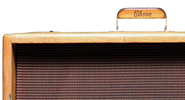
• Preamp tubes: three ECC83 • Output tubes: two EL34, fixed bias • Rectifier: solid state • Controls: volume, treble, middle, bass, presence • Output: 50 watts RMS +/- Amp and photos courtesy of Charles Daughtry.
Ken Fischer’s prolonged illness and subsequent death at the age of 61 remains one of the great tragedies of the guitar-amp world. Aside from the fact he was a good soul taken too soon, if this rare and genuine tube-amp guru had enjoyed better health and greater longevity, he would most likely have blessed the world with at least a few more of his glorious Trainwrecks.
An RCA-trained electrical engineer, former Navy aviation/anti-submarine technician, and Ampeg engineer, Fischer was running his own amp mod and repair business in New Jersey when he built the first Trainwreck at a customer’s request in late 1982 and early ’83. Through the ’80s and into the early ’90s, he built, in his own estimation, slightly fewer than 100 Trainwrecks, before chronic fatigue immune dysfunction syndrome and related complications slowed and ultimately halted his efforts. Fischer died at his home in Colonia, New Jersey, on December 23, 2006.
We featured a Trainwreck Express dubbed “Nancy” in May of 2010, and it would be easy to conclude this amp is much the same. But the truth is, every Trainwreck was an individual, as his naming regimen (as opposed to the more-traditional method of giving a serial number to a amp) declared. This one is particularly special, even aside from its undeniable sonic merits. Owned by Charles Daughtry, this Express – named Kaylene – is widely believed to be the last complete Trainwreck amp Fischer built, and it has an amazing story.
“I had always been an amp guy,” Daughtry said. “I collected vintage Marshalls, and had Dumbles for a while. I found my first Trainwreck in San Antonio in the ’90s, and as soon as I got it, I sold all my Dumbles.”
Five Trainwrecks into his obsession, Daughtry (also a noted vintage Les Paul ’burst aficionado) had already enjoyed several long telephone conversations with the creator of these amps when he decided to take a shot at getting Fischer back to his workbench. “I’d been talking to him on and off, trying to get him to build me an amp, and he’d say he couldn’t, or he was too tired, or he only had one chassis left. In the final conversation before he agreed to build it he said, ‘I found that one chassis that I had left, and the faceplate has an engraving of an Indian chief with a headdress.’ I said, ‘That’s funny, I’ve got a picture of my son wearing a headdress when he was young.’ Kenny just said, ‘Send me the picture,’ and that was that.”
Several months later, Kaylene arrived.
“I have no doubt he was not going to build me an amp but for the coincidence of my son having the headdress on.”
The Express is Fischer’s rendition of a Marshall-style amplifier, but only in the broadest sense, given the tremendous amount of originality in his circuits. It carries two EL34s in fixed-bias Class AB, with three ECC83s in the preamp, along with controls for Volume, Treble, Middle, Bass and Presence on the front panel – all looking very plexi-like. But, very little of what goes on inside is done quite like Marshall; rather than the archetypal cathode-follower T-M-B tone stack of the Marshalls (and Fender’s 5F6-A tweed Bassman), Fischer’s EQ stage follows the first preamp stage, with the Volume control placed after. Two further ECC83 gain stages, along with some interesting tweaks in each, ramp it up before it hits a long-tailed-pair phase inverter and what is a fairly conventional output stage. There are plenty of tricks throughout the rest of the amp, too, including a very robust six-diode bridge rectifier and heavy power filtering.
This photo of Charles Daughtry’s son proved pivotal in convincing Ken Fischer to build the amp.
And, while plenty of erstwhile amp aficionados have checked out pirated Express schematics online or poked a nose inside a Trainwreck chassis and sniffed, “Eh, nothing special,” the magic is very much in the way Fischer put it together. Component selection, transformer design and production, layout and wire runs, solder type and technique, and tube selection were all considered integral to the function of these amps, which were far from cookie-cutter designs. Shake up the bare bones of the schematic and assemble seemingly “qualified” components without consideration to the fine points – or, in short, without being Ken Fischer – and the results can very often be underwhelming. In this way, no two Express amps were built precisely the same, and every one was very precisely tuned with consideration of the whole.
How does this one sound? Daughtry is happy to elaborate.
“Kenny always told me they got better over time and had to break in,” he said. “I was always a little skeptical about that, but this one really did get better. When I first got it, it was great, but it sounded a little strident. But I played it over the years and now I think it’s my best-sounding Trainwreck. It’s got great mids, really sweet highs – just an amazing amp.
“[Trainwrecks] are the most touch-sensitive amps you’ll ever play, by far. If you have a bad right hand, you do not want to play a Trainwreck! The sound’s so immediate from the pick to coming out of the amp, [which] opens a whole new kind of playing. You’ve got to get used to it, I suppose. The best thing, in my opinion, about Trainwrecks, is the harmonics. With a fair amount of gain on them, you can hit a chord and literally hear every string and the harmonics developing off of the chord as you get further and further from [the attack].”
Fischer himself always considered his creations more instruments than mere “amplifiers,” and built them very much with the realization some guitarists just might not control them very well.
“There’s another analogy,” Fischer told us in 2004. “What makes an F-16 jet fighter able to turn so fast and do all these wacky maneuvers and stuff? If they didn’t have a computer onboard, the pilot wouldn’t be able to fly the plane. It’s the instability that lets the plane, in a fraction of a second, roll 180 degrees and make a 90-degree turn at the same time.”
The Trainwreck, then, is the hair-trigger fighter jet of guitar amplifiers. “When you start getting complex harmonics, that’s what you need to make an amp sound complex. The more stable an amp becomes, the less complex it is.”
This article originally appeared in VG January 2014 issue. All copyrights are by the author and Vintage Guitar magazine. Unauthorized replication or use is strictly prohibited.
Circa-1960 Gibson GA-80T Vari-Tone. • Preamp tubes: two 12AX7, two 5879 • Output tubes: two 6L6 • Rectifier: GZ34 • Controls: Ch1: Volume, Tone; Ch2: Volume, Tone, six Vari-Tone Selector pushbuttons, tremolo Depth and Frequency • Speakers: one 15″ Jensen P15P alnico speaker • Output: approximately 25 watts RMS Photos: Ricky Sanchez, amp courtesy of Eliot Michael.
In the late ’50s and early ’60s, Gibson was apparently convinced the Vari-Tone switch was the way of the future, with its instant access to six different tones. But a high proportion of players who clocked serious miles on their ES-345 and 355 guitars had the switches disabled (and the guitars rewired to mono!).
As for the rendition of this tone smorgasbord on the GA-80T Vari-Tone amp of 1959 to ’61, access to a range of voices makes a little more sense. Where the six-way Vari-Tone on Gibson’s guitars was always in-circuit – arguably loading down and thinning out a tone that really didn’t need such heavy-handed assistance (seriously, you want to cobble a bunch of caps and resistors and a couple of chokes between two PAF pickups and your output?) – there’s more logic to it as applied to a preamp’s EQ stage, even if it functions in roughly the same way.
Thanks to its general proportions, the tweed cabinet, and the 15″ speaker, the GA-80T of this era is another of those pieces that players point to and declare, “Yeah, Gibson’s ‘Fender Pro’.” In truth, the amp is very different from the tweed Pro of the day, and has little in common with it other than those aforementioned elements and its dual 6L6GB output tubes. For that matter, few of Gibson’s amps of the ’50s and early ’60s bore much resemblance to any particular Fender on the market. Thanks, in part, to its cathode-biased output tubes, its relatively diminutive output transformer, and the modest plate voltages, the GA-80T was rated at just around 25 watts, paltry by today’s standards – or even late-’50s to early-’60s standards – for a 6L6-based amp. The inefficient Jensen P15P speaker didn’t help matters much, either, but these same ingredients add up to a juicy, rich tone with easy-yet-elegant breakup, and for many players that means a lot more than raw decibels.
The GA-80T Vari-Tone uses a pair of 5879 pentode preamp tubes, best known in guitar circles for their appearance in Gibson’s GA-40 Les Paul Amp. Here, though, they are employed quite differently. Given its high amplification factor, the 5879 (like the similar EF86) frequently serves as a lone gain stage in guitar-amplifier preamps, but the GA-80T puts another triode in front of it, using each of the halves of a 12AX7. On Channel 1, a Tone control is coupled just ahead of the Volume control, and from there the signal runs straight into the 5879. On Channel 2, the signal leaves its first gain stage via the same .022-uF coupling cap, then hits the six-button Vari-Tone Selector network, which sends it through the player’s choice of five tone caps when set to buttons II through VI, or (with button I engaged) a traditional rotary Tone potentiometer, rendering it virtually identical to Channel 1 up to this stage. After the second channel’s Volume pot and 5879 tube, however, it also branches into tremolo territory, throbbing to a simple circuit powered by half a 12AX7 according to where you twist the depth and frequency controls. The phase inverter is really just that, a single-triode splitter formed from half a 12AX7, but it doesn’t need the driver stage that many such inverters use since the 5879s present enough oomph to keep your signal belting right along to the output.
With its initial goose from the 12AX7 and some beefy gain make-up from the 5879, the GA-80T Vari-Tone achieves a thick, meaty overdrive that starts to pay out at just short of noon on the dial, even with many single-coil-loaded guitars. When the amp is cranked, many would call it an archetypal blues tone, though there’s plenty more in here, from classic rock-and-roll to jazz to whatever breed of gnarly roots-rock takes your fancy. The GZ34 rectifier lends a stoutness among other tube rectifiers, but still gives up a delectably tactile feel when pushed hard, and is one of several ingredients that help to make the Vari-Tone superbly touch-sensitive, in a manner expected of any great vintage amp.
For all the bells and whistles on Channel 2, lots of GA-80T owners will tell you they mostly stick to Channel 1, or when using Channel 2 for its tremolo, keep button I engaged for the traditional Tone control. As used in this amp, though, the Vari-Tone switching isn’t radically different from the rotary “click switch” that Matchless would put into the similarly pentode-driven second channel of its C-30 series of amplifiers (which uses an EF86), and it can be a quick means of finding a good “set it and forget it” voice for that channel.
The GA-80T Vari-Tone was produced from 1959 to ’61. Gibson’s records show numbers declining from 282, to 181, to 131 year-to-year throughout that period. As scarce as they are, they command a little more on the vintage market than some other tweed-era Gibson amps of roughly similar specs, but are usually not priced too outrageously for what they are. Expect to pay a mere fraction of what the accompanying 1960 ES-355 will cost you, in any case. It is arguably a better-sounding and more practical amp than its even quirkier cousins of the same year, the GA-83S with stereo vibrato, or the famed angle-fronted GA-79T, but usually won’t command quite the price of either. The GA-80 also distinguishes itself from the otherwise outwardly-similar GA-77 or GA-70 Country Western (both dual 6L6s, single 15″ Jensen, 25 watts) in its 12AX7-into-5879 preamp, making it a true tone-alternative in the world of vintage amps.
This article originally appeared in VG September 2013 issue. All copyrights are by the author and Vintage Guitar magazine. Unauthorized replication or use is strictly prohibited.
Kilby with his custom guitar made by Richie Baxt. Geoge Kilby, Jr.: Katy Keen.
George Kilby, Jr.’s Six Pack is, he says, a “collection of singles” rather than an EP or album.
Kilby graduated from Princeton, where his mentor, J.K. Randall, introduced him to Pinetop Perkins, legendary pianist for the Muddy Waters Band.
“The main thing Pine gave me in terms of style and sound is economy,” Kilby recounted. “I’ll never forget some press I got as a young player that said something like, ‘George puts everything he has into every solo he plays,’ and it wasn’t really in a positive light. When I played with Pine, the beauty of playing with economy really sunk in.”
Kilby’s earliest electric guitar was an Ibanez LP copy, then, a good Gibson ES-335. “A red one, like Chuck Berry’s,” he said, along with Telecasters and a Gretsch Corvette. Today, he mostly plays an electric made by Richie Baxt with jumbo frets, Schaller-type tuners, and a brass nut.
“There’s a mini-humbucker in front, with a Tele/lipstick pickup tucked in as close as possible,” he said. “It creates a truer Tele sound for rhythm. In the middle, it’s not the same. The back pickup is a standard Fender, or at least looks like one.”
His acoustic is a TLH OOO/BR made by Terry Heilig. “It was one of his first, and he described it as a little overbuilt,” said Kilby. “But that appeals to me because I am very physical with guitars; I use big strings and play them hard. I use a K&K Pure Western mini pickup and a Radial direct box.”
Kilby’s amplifers are two Fender Deluxes – a mid-’60s blackface with a Mesa-Boogie Black Shadow speaker, and a circa-’74 with stock speaker. He doesn’t use them at the same time, and uses no effects.
Is it fair to call Six Pack “Americana” music?
“I’m fine with that,” he said. “Unfortunately, genres in the music business are created only to sell. [But] it makes no sense to adhere to the custom where records have to be 10 to 12 songs, and every song must sound similar. That was created by labels and is no longer valid. Good music is just music. If folks like it, fine. If not, that’s fine, too.”
Kilby and associates do some genre-hopping on Six Pack, utilizing accordion, fiddle, and dobro. “When the People Sang,” “Cro-Magnon Man,” and “You Never See the Hand Throw The Stone” offer commentary, and while the first two have a wistful/nostalgic quality, the third is more sociological.
“There are some serious sentiments,” he said. “Sometimes, you don’t have to say angry words to convey strong convictions. I’m especially proud of ‘You Never See The Hand.’”
A country-shuffle arrangement of Cream’s “Sunshine of Your Love” is full of low, twangy tones. A business associate requested a well-known cover for the assortment, and multi-instrumentalist Andy Goesling helped create it.
“The plan was to do only six songs,” he said of the request. “So I grappled with a few chestnuts and thought that if any song is well-known, that was the one. So I attacked it, determined not to copy. I fooled with the riff forever. Then, in the car one day, the rearrangement was singing in my head. Andy and I refined it, and he gave it the treatment on the record.”
Kilby will continue making music on his own terms, and Six Pack exemplifies his determination.
This article originally appeared in VG October 2013 issue. All copyrights are by the author and Vintage Guitar magazine. Unauthorized replication or use is strictly prohibited.
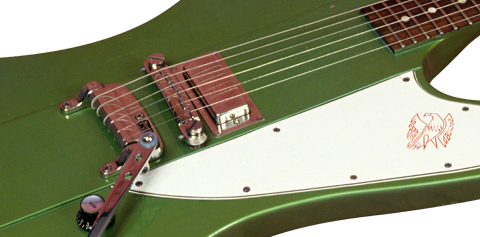
A Firebird I in Inverness Green, like this ’64 version, is rare. Add the Maestro vibrato and it’s even more so. A 1965 Firebird II in Aztec Bronze.
Say the words “custom color” to a collector or enthusiast and most will think of “Fender.” But Gibson had its own multicolored baby – the Firebird. Born in 1963 and put to rest in ’69, the Firebird was Gibson’s third full-line attempt at the solidbody market. While it did not do as well as the Les Paul or its younger brother, the SG, it was available in more variations.
While thought by some to be the poor cousin to the late-‘50s Explorer, the differences are greater than the similarities. From ’63 to ’65, it was produced in the “reverse” style, with four variations – the I, III, V, and VI. Common to all were the body shape, neck-through construction, mahogany body, mini-humbuckers, and banjo tuners. The earliest production runs did not have the distinctive logo on the pickguard.
The I and III came with an unbound rosewood neck and dot markers; the I had a single mini-humbucker pickup; the III had two pickups. A combination compensated bridge/tailpiece like that on the Les Paul Junior was standart on the I, and the III had a flat-blade vibrato with the same combination bridge as the I.
Moving upscale was the more deluxe V, which had a bound neck with trapezoid position markers and the deluxe vibrato – the same as available on the III, but with an extended trapezoidal-shaped casing. The bridge was a Tune-O-Matic. The VII was the Coupe DeVille of the ’birds. With white-pearl block inlays on a bund ebony fingerboard, three pickups, and gold-plated hardware, this guitar was no flipped-over Strat, but a real contender in the guitar wars of the early ‘60s.
The line was economically priced with a I being sold for $189.50 and the VII for $445. For those looking for something a little more special, an extra $150 would get you a Duco finished custom color. “Six new solidbody guitars and 10 exciting custom colors,” boasts the cover of the 1963 Firebird/Thunderbird catalog. And just what were those colors? Polaris White, Forst Blue, Ember Red, Inverness Green Poly, Silver Mist Poly, Kerry Green, Gold Mist Poly, Pelham Blue Poly, Heather Poly, and Cardinal Red.
A ’65 Firebird VII in sunburst and a ’64 V in Cardinal Red.
The most common colors are Pelham Blue, Cardinal Red, and Polaris Whtie. The least-seen would have to be Silver Mist Poly, Heather Poly, and Kerry Green. Black is common among other Gibsons but it’s highly disputed in the Firebird line. Why Gibson would not produce a Black ‘bird after finishing other models in black is ponderable.
Our examples carry two of the standard custom colors, the 1964 Inverness Green I and the 1964 Cardinal Red V. The 1965 II finished in Aztec Bronze is a rare find; the color is more commonly associated with the Epiphone line. The 1965 VII has the sunburst finish most often seen on Firebirds. The translucent cherry finish found on SGs is also commonly found on Firebirds.
The Firebird has seen duty with a very eclectic group of players: Steve Winwood in his Traffic days, Johnny Winter with his sunburst V, Roxy Music’s Phil Manzanera with a Cardinal Red VII, and Tommy DeVito and Nick Massi from the Four Seasons (shown on the cover of The Four Seasons Entertain You holding a Sunburst VII and II, respectively). Even the Stones’ Brian Jones and Keith Richard have played them.
The original “reverse” Firebirds are a rare breed. As with many guitars at the time of their production, they weren’t overly accepted, but as time passed their true appeal has taken flight.
This article originally appeared in VG Classics #01 issue. All copyrights are by the author and Vintage Guitar magazine. Unauthorized replication or use is strictly prohibited.
You can receive more great articles like this in our twice-monthly e-mail newsletter, Vintage Guitar Overdrive, FREE from your friends at Vintage Guitar magazine. VG Overdrive also keeps you up-to-date on VG’s exclusive product giveaways! CLICK HERE to receive the FREE Vintage Guitar Overdrive.
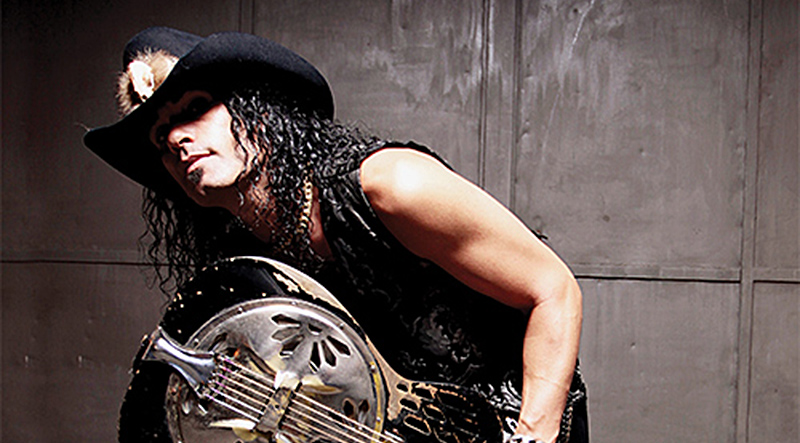
Resonator/slide specialist Eric Sardinas is no blues curator. While he pays homage to the music that inspires him, Sardinas is a fiery super nova that performs with a personalized blend of soulful musicality and showmanship. He and his band, Big Motor, unleash high-intensity blues-rock with an earthy accessibility and raw power driven by his resonator.
How do you approach getting your sound?
The way we approach everything is always organic, fresh, and of the moment. It’s always an honest way of recording. I’ve worked with Matt Gruber for the last two albums, and I like to push myself lyrically and musically. It’s a moment in time. I like to look back, build upon it, and push myself forward.
With the new album, Matt is involved for the third time in a row. I’m excited about it because I look at this as going back to ‘plug in and play.’ We’re about capturing something and having fun with the songs. The album is called Boomerang and it’ll be out in mid October.
You play more than 300 dates each year. You probably have a lot to write about.
It’s a blessing to be able to live the life I dreamed of – to be able to create, whatever the hardships. I have no complaints. My life on the road has its ups and downs, and it’s challenging. My life is music and music is my life, and there’s nothing I would do to change it. I’m very thankful.
You grew up hearing a lot blues players using Stratocasters. What was it about the resonator that pulled you in that direction?
I’ve never gravitated to solidbody guitars. I didn’t connect to it. What I connected with was my love for Delta blues. When I heard a player having something to say and having a connection with the music – that pure, open energy and connection with the instrument, it meant more to me than a Marshall stack. Listening to Charlie Patton, Bukka White, or Skip James play – and connect to that emotion – really made me fall in love. I started on a beat acoustic toy guitar, then an acoustic, and then a resonator. When I was a teenager, I drilled a pickup in because I wanted to electrify what I was doing so I could get off the chair.
I really connected with the resonator because of the romance I had with early players like Tampa Red and Fred McDowell. When slide players like Robert Johnson or Son House would speak on guitar, there was a connection with the voice. When I play electric, I push the instrument that I fell in love with from the Delta, the country, Texas, and Chicago blues, into a place where I found my voice.
Do you do anything special to your resonators?
What I need from my instrument is to take the guitar down to the sweet sound that is pure. I don’t have an interest in piezo pickups or anything like that. I like to work off a straight mic – I work off the cone and use my Volume as a tone control. Whatever the guitar gives me, I give it back.
For amps, I’m using Rivera Amplification. I use the Knucklehead, but it’s slightly tweaked. I like to use a crisscross organization of the speakers in my 4×12’s Greenbacks and straight ’68 Marshalls. I also use a sub for my lows. I like that to move the wind.
Do you use effects?
When it comes to effects, I use a Dunlop 95Q wah and an MXR Phase 90. I also use a capo because I use heavy strings; I like the tension because it affords me a little bit more of a direct attack and a little bit less give on the strings with the slide.
I have a signature slide by Dunlop called the Preachin’ Pipe. Dunlop actually took the slide that I had worn down to a nub, weighted and balanced it, and created this slide. I had worn down and played more than 5,000 shows with the slide they copied. On the signature slide, the temperament and the weight is exactly what I like. The wear and tear isn’t there, but that’s up to the player.
What’s your number one guitar?
It’s a cutaway resonator finished in black by Gibson, called the La Pistola. It’s my signature model. The other guitars are the runts that I threw pickups in, I believe in, and drag on the road. We have a heavy tour toward the end of the year.
This article originally appeared in VG‘s December 2014 issue. All copyrights are by the author and Vintage Guitar magazine. Unauthorized replication or use is strictly prohibited.
Bryan Sutton ranks as one of the most accomplished and in-demand acoustic players in Nashville. In 1991, fresh from high school, he joined the gospel group Karen Peck and New River. In ’93, he moved to Nashville and joined the band Mid-South for several months before studio work started to dominate his time and began full-time as a studio musician on gospel recordings.
In ’95, Ricky Skaggs hired Sutton to play mandolin, fiddle, banjo, and guitar.
“We may have done 15 or 20 bluegrass dates, then the next year we did 40, and by the time I left his band in ’99, we were doing nothing but bluegrass.”
Sutton’s recent solo release, Into My Own, has more blues and old-timey influences, and shows Sutton’s growth; besides stellar flatpicking and original songs, “Swannanoa Tunnel” highlights his nuanced, powerful lead vocals, and guest artists include guitar whiz Bill Frisell, Ronnie McCoury, and Noam Pikelny. The final cut, “Been All Around The World,” highlights the flatpicking style that draws from Norman Blake and Tony Rice, but expands it with precisely-articulated rhythm and subtle melodic flourishes.
For a number of years, Sutton’s go-to acoustic was his ’48 Martin D-28 with two black pickguards. Recently, though, he acquired another Martin – a ’42 D-28. “It has war-time specs with a T-bar truss rod, and has a punchy push of air that’s really good for bluegrass.”
The ’42 isn’t Sutton’s only “herringbone” Martin. He also has a 1940 Martin D-28. “The first time I played that guitar, I was hooked. I bugged Greg Luck for several years before he agreed to sell it to me.”
When it’s suggested that perhaps he could have merely borrowed the guitar for sessions, he pauses. “When I have a chance to play a guitar that great, I really prefer it to be an ownership relationship. I need to be able to make setup adjustments so it will play exactly as I want. There’s a certain ‘modern’ way to play bluegrass now that is very technically demanding, so a guitar’s playability has to be perfect to do the sorts of things that I need to do.” Comparing it to his other D-28s, he added, “The ’48 is a wonderful guitar for miking, and it’s very well-balanced. But, it doesn’t have the bloom of the ’40 and ’42 models.”
Sutton is also associated with Bourgeois guitars; Dana Bourgeois created the Country Boy and D-150 models Sutton used during his time with Skaggs. Bourgeois recently created the Bryan Sutton signature model, which will be based on the D-150 Sutton still uses on many of his studio sessions.
“It’s a very loud and responsive guitar,” he noted. “All of Dana’s guitars feel really good in my hands, and that has been consistent from the first instrument I played to this most recent model.” Only 30 BS D-150s will be produced, with an Adirondack-spruce top and bracing, Brazilian-rosewood back and sides, hide glue, double-scalloped X-bracing, and a vintage-type long-slotted saddle.
This fall and winter, Sutton will tour with Hot Rize, playing in Philadelphia, Washington, D.C., Chicago, and New York City.
This article originally appeared in VG‘s December 2014 issue. All copyrights are by the author and Vintage Guitar magazine. Unauthorized replication or use is strictly prohibited.
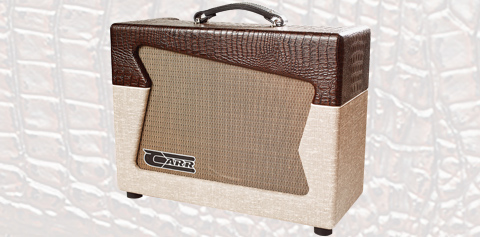
If you could own only a single guitar amp – horror of horrors! – Steve Carr’s new Skylark just might be the one.
When it comes to building modern boutique amps inspired by classic vintage designs, few people have the mojo like Carr. He founded his concern in 1998, and today is based in a former chicken hatchery in Pittsboro, North Carolina. Carr offers just 10 models, so when a new one comes along, it’s time to sit up and take notice.
Carr’s all-tube, point-to-point-wired Skylark may have been inspired by the old tweed Fender Harvard, among others. But along the way, he tinkered and tweaked his design into something unique.
The amp is an ideal home rig that can also stand up for itself playing gigs with that over-loud drummer and his monster crash cymble. It’s nicely compact, tipping the scales at just 36 pounds, so your roadie can have the night off.
The Skylark has tone in spades, but its most intriguing feature is its built-in attenuator.
A what?
Attentuators are typically wired into an amp between the output stage and the speaker, using a coil to reduce the output wattage. This allows the player to put more load on the amp at a lower volume, thus driving it harder. Dramatically harder. Few amp-makers offer a built-in attenuator, and most players are forced to add a stand-alone unit into their signal chain or effects loop.
So what does this electrical mumbo-jumbo mean to a mere guitar picker?
With the Skylark, players can adjust the amp’s output from a mere 1/100th of a watt up to a solid 12 watts. So if you’re playing at home or in a small club at a low-volume, low-watt setting, you can still make this amp sound like Bachman-Turner Overdrive at its finest.
Adding to the Skylark’s astonishing flexibility are its Mid and Presence controls, a High/Low gain toggle, built-in spring reverb, and a standby switch. All this in one amp.
The Mid control provides a wide range of sonic adjustment. The user can hollow out their tone at one extreme to just bass and treble with no middle, or conversely fatten that middle to potbellied proportions.
Presence works on the output circuit to buff up top-end muscle, as with an old Bassman. Dial it in to get a wide-open sound with glorious shimmer and sparkle. Or those picking a dark-toned vintage guitar can add bite. Lots of it.
The Skylark’s reverb uses a two-spring, 17″ reverb tank akin to those in ’60s Fenders. Carr adds an audio taper pot to control the reverb so it comes on more gradually, allowing the player to finesse levels.
And finally, there’s a new Celestion Type-A 12″ speaker that rings clear but still has nice compression. Thanks to the speaker’s smaller, lighter magnet, the overall amp doesn’t strain the back.
These features add up to one of the most versatile amps we’ve ever played. Distill that Mid and Presence to a pure treble tone that would make Don Rich grin ear to ear. Add a growl to the sound with the gain toggle on High and revel in Grady Martin-esque rockabilly tones. Or switch on that attenuator and make the amp grind out a power crunch like Eric Clapton playing the blues with Cream. And yes, once again, this is all in one amp.
Carr also prides himself on immaculate fit and finish. His team builds its own cabinets – one of the few boutique makers to do so. Carr employs solid pine, covers it with tolex, and tops it with a handmade leather handle, all done to ensure quality. And the ’50s styling speaks for itself.
Carr is a guitar player first and foremost, and his philosophy is that amps are instruments in and of themselves. The Skylark will make you sound good, and then make you want to play harder. And you can’t ask for much more than that.
This article originally appeared in VG December 2014 issue. All copyrights are by the author and Vintage Guitar magazine. Unauthorized replication or use is strictly prohibited.

 Oz Noy is talented enough to pay the bills not only as a first-call New York session cat, but also as a prolific creative force in contemporary fusion. His current release is Twisted Blues Volume 2, and it’s the perfect bookend to the critically acclaimed first volume. In it, he turns the much-loved genre of blues inside out.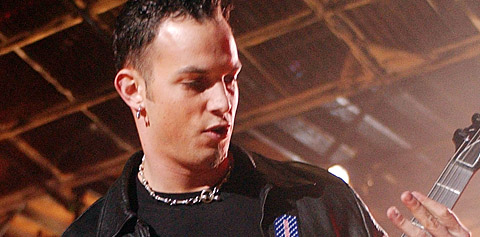












 Bryan Sutton ranks as one of the most accomplished and in-demand acoustic players in Nashville. In 1991, fresh from high school, he joined the gospel group Karen Peck and New River. In ’93, he moved to Nashville and joined the band Mid-South for several months before studio work started to dominate his time and began full-time as a studio musician on gospel recordings.