
Tag: features

  • Paul Mehling

    Paul Mehling

    One of the world’s foremost Djangophiles, Paul Mehling has for many years been at the forefront of Gypsy jazz in America. The new album by Hot Club of San Francisco exhibits his affinity for the Beatles.

    On the cleverly titled John, Paul, George & Django, HCSF plays Beatles tunes arranged Gypsy-jazz style.

    “When I was six, I saw them on Ed Sullivan,” Mehling recalled. “I was already deeply immersed in traditional jazz, though not by choice; my father was a serious record collector who liked only traditional jazz – Benny Goodman, Artie Shaw, Coleman Hawkins, Lester Young, Sidney Bechet, and Django Reinhardt were familiar to my ears. So, in my mind, I had to untangle the sound of Django’s guitar from that of the Beatles’ guitars. Growing up – maturing – meant understanding and confronting the gulf between ‘then’ and ‘now.’”

    How did they devise arrangements?

    “It was hard and fun,” Mehling said. “Picking songs was difficult. There were contentious rehearsals and tearful make-ups. We wanted to do a straight reading of some, some heavily arranged, and some in-between. We did not want to smother the compositions, but do them justice while leaving room for improvising without sacrificing the sing-along factor.”

    The Beatles’ breakup played a role in Mehling’s career.

    “I was devastated. I thought music had died and I wasn’t interested in anything on the radio. Consequently, I dove into traditional jazz and realized how great Django was. Then, as if the universe was trying to yank me into the present, I heard Dan Hicks and the Hot Licks. They were bringing Django and traditional jazz into the future; the lyrics were contemporary and the rhythms were swing! Dan was funny and profound, and the women singers were hot… remember, I was a teenager (laughs). It had everything I needed.”

    In the later years of Hicks’ career, Mehling played with him and the Acoustic Warriors.

    As a kid, Mehling tried electric guitar. “I took lessons, but I didn’t practice, so they cut me off. After that, I was self-taught [until] high school, when I had a girlfriend studying classical guitar with a jazz player. They both got me to seriously study jazz guitar.”

    His primary guitar now is a Maurice Dupont MD30 he bought new in 1990.

    “I ordered it because Raphael Fays played one. So, I wrote to Maurice, and I now have two Duponts and a very nice old Epiphone Deluxe – I think it’s a ’34.”

    As for the very clever title of the album, Mehling says there was only one way to go.

    “I’d been carrying the idea around and then, about four years ago, we were giving a lecture where we explain to audiences of all ages who Django Reinhardt was, who the Hot Club de France was, and why we’re called the Hot Club of San Francisco. During the Q&A, an elderly woman asked, ‘You keep talking about this Ringo guy. Why was he so great?’ And the big light bulb went off in my head. I almost forgot to answer her question, but I did turn to the band and say, ‘There’s our album title!’ And they knew it, too.”


    This article originally appeared in VG June 2017 issue. All copyrights are by the author and Vintage Guitar magazine. Unauthorized replication or use is strictly prohibited.

  • Greg Martin

    Greg Martin

    Albums by Kentucky Headhunters have a history of making guitar players shake their collective heads at the great sounds made by Greg Martin. The band’s latest, On Safari, is another collection of rock, country, soul, and other sounds that not only offer glorious tones, but songs that emit a sense of spontaneity.
    “It pretty much made itself,” he said. “I honestly love going to the studio and playing as a reaction to whatever is going on around me. Just seeing what happens. I don’t like sitting there and picking things apart.”

    Following the extended illness then passing of James Howard, father of Headhunters Fred and Richard Young, the album’s recording was a reunion, of sorts.

    “We hadn’t been able to get together much,” Martin noted. “Then after their dad passed, Fred really wanted to get together to help us get through the grieving. There was a spirit in the studio that helped us along. It’s probably my favorite Headhunters studio album.”

    Their approach was simple, which Martin appreciates in part because it creates a sound younger players try to emulate.

    “I’m 63 and very comfortable being 63, so I’m honored anyone would think of me as a guy who has a style and sound that younger guitar players can appreciate. I don’t have a pedalboard. In fact, this may have been one of my simplest setups ever. I used my ’58 Les Paul Standard on all but one track and played everything through my ’50s tweed Deluxe  and ’60 tweed Champ chained together. It’s the first album where I haven’t used Marshalls, though I do use them on the road.”

    Martin has become quite good at staying connected to fans. On Facebook, his “Licks From the Outhouse” posts are highly engaging and offer deeper glimpses of his command of tone and notes. They started as a joke – after all, why would anyone take seriously this guy who makes guitar videos in his pajamas and with a raging case of bedhead?

    “I’ve done several at home, blowing through vintage Marshalls and Fenders, and I’ve done several from hotel rooms out on the road with The HeadHunters. Those are usually through a late-’50s Champ. Playing in a hotel is tricky; I usually stick the amp in the bathroom, for ambience, and use the door as a master Volume. The clips are just a fun way to share whatever I’m into that day, and demonstrate various guitars.”

    Billy Gibbons has Martin send them via e-mail. “He seems to get a kick out of my sonic renderings and insanity,” Martin noted.

    Other Martin clips can be seen on the Vintage Guitar Facebook page and at VintageGuitar.com. And, for the past 15 years, he has been hosting a weekly radio show on WDNS in Bowling Green, Kentucky. Broadcast (including via stream) on Monday evenings, it’s three hours of the music he grew up hearing, and interviews with some of the folks who played it.

    The Headhunters are keeping busy, playing 60 to 70 dates each year. “We went to Sweden last year, and to the U.K for the first time,” Martin said. “It was a great experience. So, yeah, pretty busy for a bunch of older guys.”

    When asked how he became the player he is today, Martin says the process just happened.

    “I was never good at copying solos note for note, but got inspiration from lots of great players. Then, stealing a lick here and there helped me find my own sound. God gives each of us our own sound, it’s in our DNA and fingerprints. When people can recognize your playing by your tone, phrasing, and vibrato, you have arrived. It’s not about being the best, but being the best you can be, finding your sound, and passing it on.”


    This article originally appeared in VG June 2017 issue. All copyrights are by the author and Vintage Guitar magazine. Unauthorized replication or use is strictly prohibited.

  • The Taylor 712e

    The Taylor 712e

    Price: $3,898 (list)
    Info: taylorguitars.com

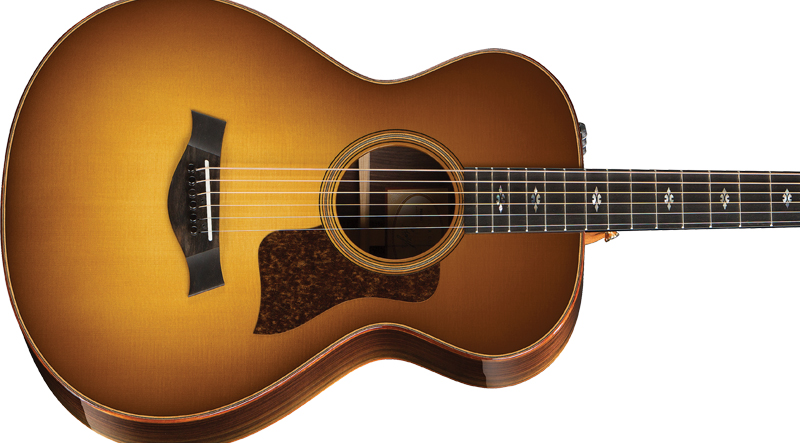
    Taylor Guitars recently redesigned their 700 Series, to add performance bracing, two-piece maple/spruce bridge plate, protein (hide) glue on bridge and bracing, and several new aesthetic features, including a re-shaded gloss western sunburst finish, Koa binding, maple and Douglas fir herringbone-style rosette, and a new weathered-look proprietary pickguard material. Taylor’s elegant yet earthy 712e certainly benefits from this rethink.

    The 712e features a grand concert body with a solid Lutz spruce top, solid Indian rosewood back and sides, 2478" scale tropical mahogany neck joined at the twelfth fret, ebony fretboard with abalone inlays, and slotted headstock with rosewood overlay. The fit and finish are outstanding. The sunburst finish, Hawaiian Koa body binding and inlays, and fretwork are all flawless.

    And the 712e’s tone is huge for a small-body guitar – a clear and punchy bottom end; an articulate and lush midrange; and a silky smooth high end. With the bridge shifted deeper in the lower bout, the 712e has added depth and bass response and a bit more projection without sacrificing any fingerstyle-friendly midrange. The harder you dig in, the more the guitar responds, never seeming to get washed out or compressed.

    Through a Fender Acoustic SFX combo amp, Taylor’s proprietary behind-the-saddle Expression System 2 electronics did a remarkable job of reproducing the guitar’s big tone with minimal feedback or handling noise. The guitar’s slightly shorter scale length, satin neck finish, and low action all conspired toward remarkable playability. Access to the upper frets is a bit limited with the neck joining the body at the 12th fret, but that’s a small price to pay for this tone.

    Indeed, the redesigned 712e is a very refined instrument, with impeccable quality, a bold sound, and a very down-to-earth vibe that makes it seem like Mother Nature herself had a hand in its creation.


    This article originally appeared in VG May 2017 issue. All copyrights are by the author and Vintage Guitar magazine. Unauthorized replication or use is strictly prohibited.

  • EarthQuaker Devices’ Space Spiral Modulated Delay

    EarthQuaker Devices’ Space Spiral Modulated Delay

    Price: $195 (list)
    Info: earthquakerdevices.com

    One particularly well-worn joke about playing a bad note advises you to play it twice so folks will think you meant it. But what about all those good notes that actually warrant repeating? Enter the Space Spiral Modulated Delay from Akron’s EarthQuaker Devices.

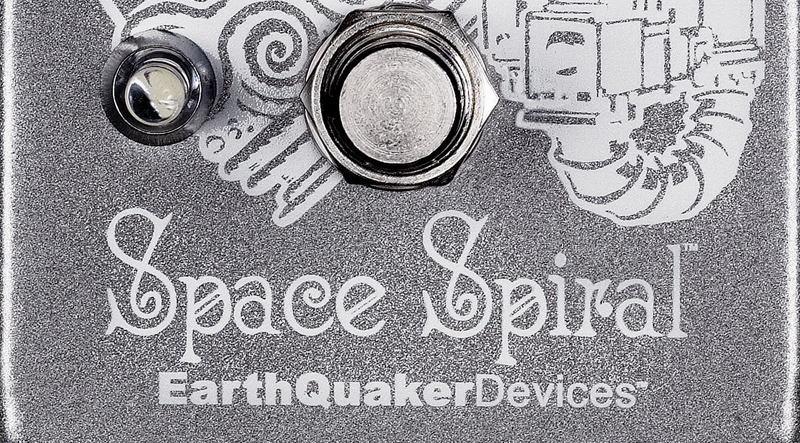
    The folks at EarthQuaker are into hip graphics and designs as simple as the one-knob Acapulco Gold distortion and as complex as the Space Spiral. True, plug-and-play with the Space Spiral is easy enough by simply concentrating on the top row of knobs – Time, Repeats, and Mix – to set up basic slapback, rhythm guitar accents, and delayed solo details. But the three bottom knobs are where the big fun begins.

    Depth, Shape, and Rate knobs bring the pedal into modulation territory, where old-school tape delays live when their tape and motor functions are showing some wear. The Shape knob controls the soundwave profile. Turning it hard right works better for slapback-type delays, producing an attack with definitive edge. The impact of the Shape knob becomes more dramatic when Depth and Rate are increased, with different wave forms creating textures neither flange nor phase, but somewhere in those sound families. Just a small tweak of the Depth knob can cause a pitch-shifting reaction in the repeats far beyond a simple chorus, but selecting several settings using all three bottom knobs produces remarkable orchestral textures – along with some unreal, space/industrial effects.

    The Space Spiral marries dependable digital delay from 30ms to 600ms to a warm analog voice, true bypass from top-mounted input to output. The extreme guitar enthusiast searching for unique sounds for sampling or looping will find an encyclopedia in the Space Spiral. With the even the simplest settings, the Space Spiral offers a fat sound, easily coaxed into a luxurious lushness with a twist of a knob, making anything played once worth repeating.


    This article originally appeared in VG May 2017 issue. All copyrights are by the author and Vintage Guitar magazine. Unauthorized replication or use is strictly prohibited.

  • Fender’s ’57 Custom Pro-Amp

    Fender’s ’57 Custom Pro-Amp

    Price: $2,499.99 (list)
    Info: fender.com

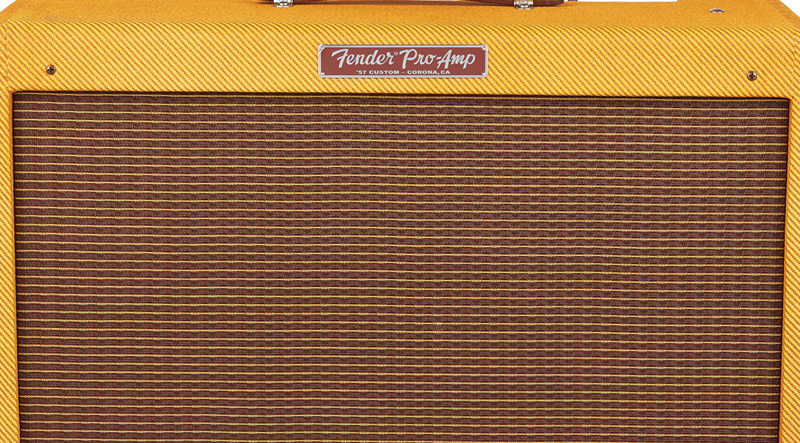
    When most guitarists consider Fender’s famed vintage tweeds, the first that come to mind are the 5E3 Deluxe and 4×10 Bassman. The 1×15 Pro-Amp? Not so much. It’s perhaps the least well-known of the line.

    That’s good news for Pro-Amp fans, who have long loved the amp’s distinct voice. It’s got the guts and tone of a Deluxe with the wide-open headroom of a 15-incher. And it’s got near the volume of the Bassman without the back-jarring weight and wallet-emptying price tag.

    Fender has never reissued the Pro-Amp – until now. And the ’57 Classic Pro-Amp is drop-dead wonderful.

    Fender introduced the Professional in 1946 at twice the price and twice the power of their 1×10 Deluxe. The design was revised and revisited several times until the narrow-panel 5E5 Pro arrived in ’55, updated with Bass, Treble, and Presence controls in ’56, and a revised tube array in ’58.

    Now Fender’s launching its Custom Shop-built ’57 Custom series, including not just the Pro-Amp, but a 1×8 Champ, 5E3 Deluxe, and the so-called “low-powered” 2×12 Twin.

    The Pro-Amp reissue is based on the 1956 update. It boasts 26 watts thanks to a single 12AY7 and two 12AX7 preamp tubes, two 6L6 power-amp tubes, and a solo 5AR4 rectifier tube.

    Yes, it’s all hand-wired – and using custom-made Fender Pure Vintage yellow capacitors and Schumacher transformers to get as close as possible to that original sound.

    The chicken-heads on the top-mounted panel include Mic and Instrument Volume and Bass, Treble, and Presence controls. A rubber-protected Standby switch is a welcome update.

    The Pro-Amp sings proudly through a single 15″/8-ohm Eminence Special Design speaker, which requires that finger-jointed pine cabinet that’s smaller than a Bassman but large enough to show you mean business. The tweed covering is lacquered for a warm vintage look.

    The Pro Amp’s original Mic circuit was designed with a microphone in mind but plugging a guitar into it yields a different and slightly darker tone that stays cleaner as the amp is turned up. The Instrument circuitry’s where good things happen.

    With an appropriate ’57 Fender Esquire plugged in, the Pro-Amp sounds both louder and larger than its 26 watts –without losing the warmth and grind of a small combo. The amp has a distinctive natural compression to its voice that makes notes pop when you play hard and soothing when soft. The amp is especially responsive to attack and fingering.

    The magic lies in that 15, which breaks up differently than a 10 or 12 and will make you a true believer. As noted, there’s so much more headroom to the sound, and the speaker seems to e-nun-ci-ate the details of your playing and the sonic attributes of your pickups and the music more so than a Deluxe or Bassman. It sounds simply full-bore compared to its little brother 5E3.

    The harder you play the Pro-Amp, the more it responds. Its tones are harmonically rich, ideal for recreating vintage guitar sounds, but with the power and breadth to handle modern stompboxes and pedalboards. 

    As you play the Pro-Amp, you get a sense of musical déjà vu, as if history is sneaking up and tapping you on the shoulder. Then you realize this is the amplified tone from many a classic blues and R&B record. B. B. King used one, as did myriad early country pickers and rock-and-rollers. The unsung Pro-Amp was the special sauce that made many of those songs sing.

    In considering a new amp, you might pass by the Pro-Amp, but you owe it to yourself give it an airing. It just might be the most underrated Fender amp.


    This article originally appeared in VG May 2017 issue. All copyrights are by the author and Vintage Guitar magazine. Unauthorized replication or use is strictly prohibited.

  • The DryBell Vibe Machine V-2

    The DryBell Vibe Machine V-2

    Price: $298.75 (list)
    Info: drybell.com

    DryBell is renowned for one of the most authentic and pedalboard-friendly Uni-Vibe recreations on the market. Five years after launching their original Vibe Machine, the fine folks at DryBell have reimagined that winning formula – and thrown in few welcome additions.

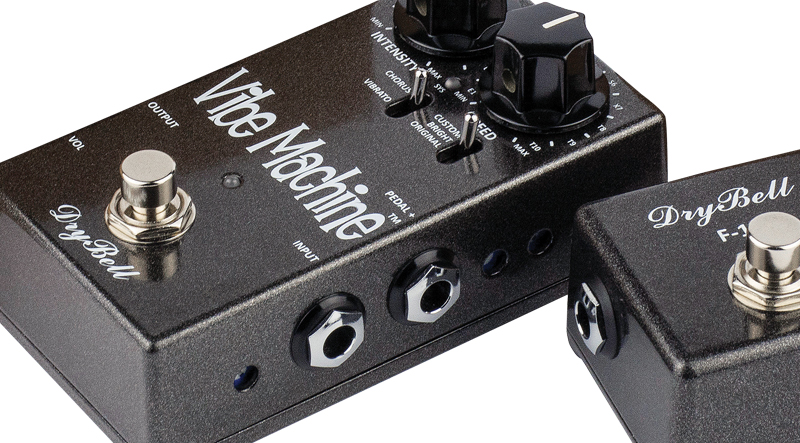
    The V-2 updates the original Vibe Machine for clarity and flexibility. On the front, two classic Uni-Vibe controls, Intensity and Speed, are tuned for vibing that seems to ebb and flow around your playing rather than just laying on top of it. Ramping up the Speed control gives plenty of low end thump and an uncongested high end for thick, burbling tone brimming with character. Slowing it down creates sonorous phasing with a three-dimensional sweep, accentuated in all the right parts of the wave for perfect throb and thump. These slower sounds are very liquid and clear, yet retain low-end muscle and warmth peppered with a faint chorus-like response.

    DryBell made the V-2 more versatile by including external trim pots and a voicing switch to further tailor harmonic response. In Original mode, the pedal’s high end is subtly rolled off, simulating the low-output impendence of the original Uni-Vibe. In Bright mode, the output impedance is at a more “modern” level, restoring the high-end response for a more hi-fi vibe. The Custom switch controls the input impedance. You can change almost all parts of the V-2’s sound and response, from volume to wave symmetry and range, essentially moving the throb to a different part of the wave for unconventional tones. And the V-2 worked wonderfully with fuzz and overdrive pedals, creating chewy and resounding tones.

    The V-2 is an easy choice if you like flexibility without losing authenticity. This, along with its compact size and clear, prominent tone, make it one of the best vibe pedals out there.


    This article originally appeared in VG May 2017 issue. All copyrights are by the author and Vintage Guitar magazine. Unauthorized replication or use is strictly prohibited.

  • The Dantzig Tulsa Korina

    The Dantzig Tulsa Korina

    Price: $3,800 base/$5,600 (as tested)
    Info: dantzig.com

    Legendary luthier Jol Dantzig’s “Team Built” lineup comprises guitars handcrafted by a small group of artisans under his direction. One of these, the Tulsa Korina, is an exquisite instrument envisioned as a comfortable guitar for Tele and Strat lovers who want a little Les Paul muscle without sacrificing their rhythm sound.

    Immediately noticeable is the Tulsa’s lightweight feel. Thanks to a chambered body, the Tulsa is incredibly comfortable for long stretches. In fact, the test guitar weighed in at under seven pounds.

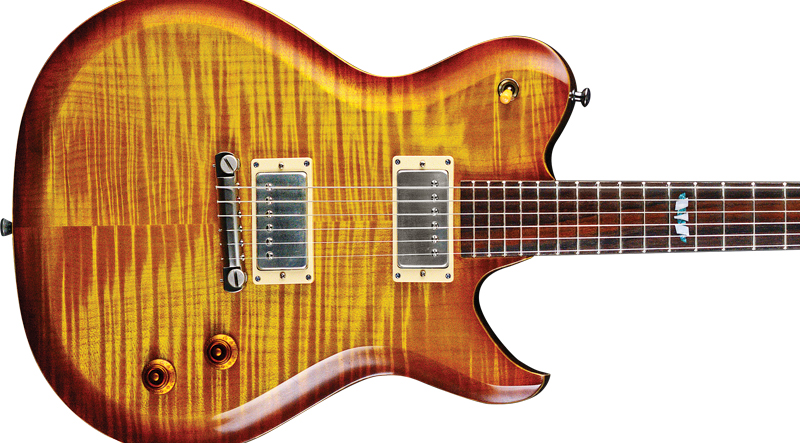
    Aesthetically, the Tulsa looks great with its nitro-based violin finish. The low-gloss lacquer is hand-rubbed in the French polish style to give the instrument a broken-in look and a warm, friendly feel. With its German-carved figured maple top over a figured korina body and neck, the Tulsa truly feels like a vintage guitar – without resorting to relic techniques. The Brazilian rosewood fingerboard with abalone and pearl claw inlay at the 12th fret is very comfortable yet full-feeling.

    Sonically, the Tulsa has a great range of tones way beyond what one would expect from a two-humbucker guitar. Equipped with a pair of matched Grail pickups and one Volume and one Tone control, the Tulsa is a real treat to play. At full output, it is a total rock and roll machine that pushed a brown ’61 Fender Deluxe into overdriven creaminess. Rolling off the volume and putting the toggle in the middle position produced Freddie King tones – clear with a nice bluesy bite. Pushing the volume back up and then backing off the tone conjured sounds ranging from mellow jazz to pure “woman” tones.

    The Tulsa will step Gibson players into new tonal areas and still feel like an old friend. Fender players will appreciate the lightweight, V-shape neck carve, and added muscle.


    This article originally appeared in VG May 2017 issue. All copyrights are by the author and Vintage Guitar magazine. Unauthorized replication or use is strictly prohibited.

  • Fishman’s Aura Spectrum DI, ToneDEQ

    Fishman’s Aura Spectrum DI, ToneDEQ

    Prices: $349.95
    Info: fishman.com

    Unlike most electric guitarists, acoustic-electric pickers tend to worry about preamps. A lot. This front stage is critical because acoustic players often rely on unruly PAs for amplification, especially if they don’t own a dedicated acoustic amp. It becomes doubly important because piezo and soundhole pickup systems can vary widely in audio quality. Fishman comes to the rescue with their Aura Spectrum DI and ToneDEQ preamps.

    Let’s paint a picture. A guitarist owns an acoustic/electric with built-in preamp and pickup, yet their tone at gigs is still wanting – it’s thin and generally sounds like anything but a studio-miked acoustic. This is where the player will seek out an external preamp like the Aura Spectrum DI, whose primary job is to fix the tone exiting the PA. The box has a built-in ¼" output and effects-loop out, as well as an XLR output for sending a balanced, noise-free signal to the mixer.

    The Aura has other important tools at its disposal, including an Imaging knob. Using the curved slider switch, players can choose the body type that matches their instrument (dreadnought, concert, nylon, 12-string, etc.). Each preset offers 16 digital “images” of actual instruments and mics recorded at Fishman’s sound lab, such as a spruce top and rosewood body with a Neumann mic, or cedar top and mahogany body with a Shure mic – a grand total of 128 presets to match any given guitar. Once a sound is dialed in, the Blend knob mixes this digital image with the internal pickup. This is a tremendous asset for the gigging musician, as every room or outdoor venue sounds different. Now players can deploy the Aura to find the exact sweet spot.

    Prices: $299.95
    Info: fishman.com

    The Aura also offers a three-band EQ, anti-feedback tools (a Phase switch and triple-feedback control footswitch), internal tuner, bypass, and a fantastic Compressor knob to tame dynamics and volume fluctuations. The Aura can solve a great many sound problems. It also has a USB jack to download even more digital images, adding to its flexibility.

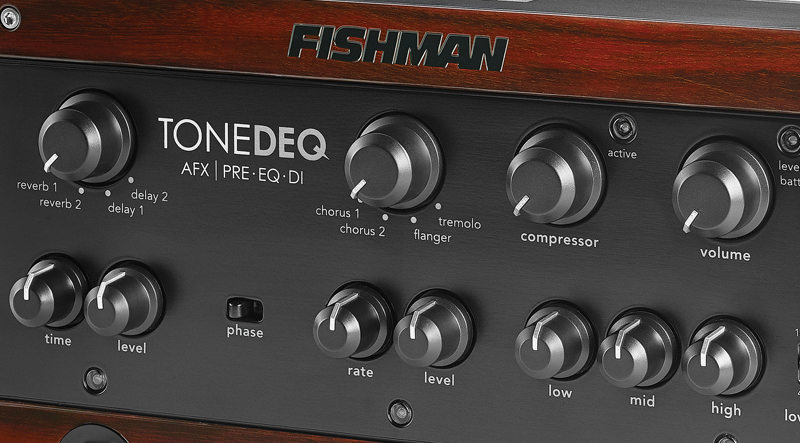
    Fishman’s ToneDEQ approaches the acoustic-electric preamp from a different angle. Instead of offering a wide array of digital images and feedback-fighting tools, this stompbox is a pre- and a multi-effects unit in a single stompbox. Players get a four-band EQ (Bass, Mid, Treble, and a Low Cut switch to knock out boomy bass frequencies); ¼" and XLR outputs; and mini switches to control input level (Trim) and the footswitchable Boost (3-6dB). The ToneDEQ also offers a one-knob Compressor and footswitchable Reverb, Delay, Chorus, Flanger, and Tremolo digital effects.

    Plugged in, the ToneDEQ sounds great, particularly when dialing in delay, reverb, and chorus. You could argue that flanger isn’t the most useful effect for acoustic guitar, but it lives in the modulation family and therefore makes sense, circuit-wise.

    Now the hard question: Why would a guitarist choose one or the other? Simply put, the Aura is for serious players who crave precise control over every aspect of amplified tone and plan to get their “sweetening” effects (such as reverb or chorus) elsewhere. Conversely, the ToneDEQ is all about convenience – it’s a complete front-end preamp and EQ, plus effects covering most of one’s acoustic/electric needs in one pedal. Both are outstanding tools that will help solve many preamp headaches acoustic/electric players deal with every day.


    This article originally appeared in VG May 2017 issue. All copyrights are by the author and Vintage Guitar magazine. Unauthorized replication or use is strictly prohibited.

  • Rupert Neve Designs’ Portico 5017/ SE Electronics’ Voodoo VR1

    Rupert Neve Designs’ Portico 5017/ SE Electronics’ Voodoo VR1

    Prices: $1,195/$1,045 (Portico 5017, list/street)
    Info: rupertneve.com

    Despite what some folks may tell you about the merits of “going direct” for guitar, nothing sounds better than a good microphone and preamp.

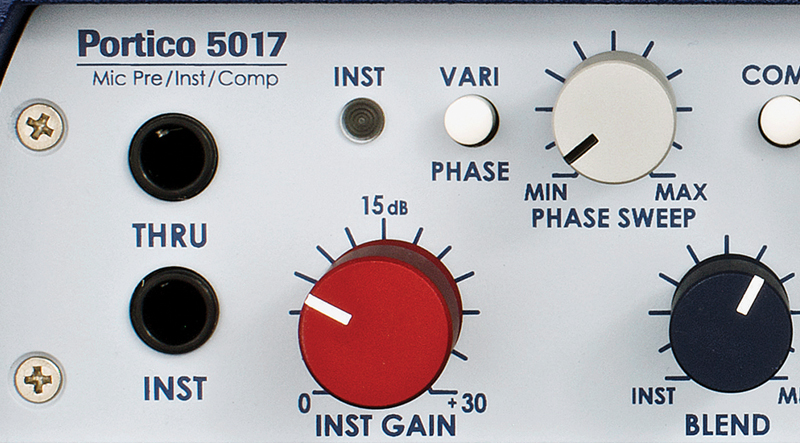
    The Rupert Neve Designs Portico 5017 is a small preamp that helps deliver the famed Neve sound heard on a million studio albums; better still, it’s highly portable. The rugged unit is made for guitarists, bassists, and singers who want to upgrade their studio or live tone without much fuss.

    Prices: $499/$399 (Voodoo VR1 list/street)
    Info: seelectronics.com

    The utilitarian preamp sports two channels, one for a mic and the other for an instrument. An acoustic guitarist playing a coffeehouse gig would plug a vocal mic into the back of the 5017 and a direct-out from their acoustic/electric into the front. There are Gain controls for both channels, plus a one-knob compressor that can be applied to either the mic signal only or the blended mic and DI.

    Another excellent option is to run the unit with both a mic and direct guitar/bass input, and use the Blend control to find the sweet spot between. The Vari-Phase button and Phase-Sweep knob shape tone and fix any phase alignment issues. The Silk button adds some classic Neve magic to the signal, a very musical kind of distortion and boost that sound engineers crave. If these features weren’t enough, a High Pass filter button knocks out boomy bass frequencies.

    Plugged in, the Portico 5017 was a Swiss army knife of audio solutions, making both acoustic and electric guitars sound better. The Compressor and Silk controls were icing on the cake; the Blend feature is perfect for guitarists who know the magic of microphones. A back-mounted button for 48-volt phantom power (for use with condenser mics) is more evidence of the 5017’s handiness.

    Speaking of which, the sE Electronics Voodoo VR1 is a wonderful mic to pair with the 5017. While ribbon mics have a reputation for smoothing out the harsh upper frequencies of bright-sounding sources (like a typical guitar amplifier or 12-string acoustic), the VR1 maintains more upper-range detail than traditional ribbon mics, but still delivers a warm, delicious tone. The advantages of the Voodoo are that it’s passive, so it doesn’t require phantom power, and it’s affordable, unlike many ribbon mics that are on the pricey side.


    This article originally appeared in VG May 2017 issue. All copyrights are by the author and Vintage Guitar magazine. Unauthorized replication or use is strictly prohibited.

  • Roland’s JC-22 Jazz Chorus

    Roland’s JC-22 Jazz Chorus

    Price: $399 (list)
    Info: roland.com

    The original Roland Jazz Chorus doesn’t get the kind of love that American and British amps in the rock and blues world receive, but its place in history is well documented. Dig a little and you’ll hear this amp on some of music’s most iconic recordings. From Andy Summers of The Police to Al McKay of Earth Wind & Fire, from Albert King to Metallica, its ultraclean shimmer is the standard for lush guitar sounds. With its Dimensional Space Chorus, its immaculate tones can be heard on pristine rock arpeggiations, searing blues, and bopping jazz textures – which, come to think of it, covers a lot more sonic real estate than its more famous counterparts.

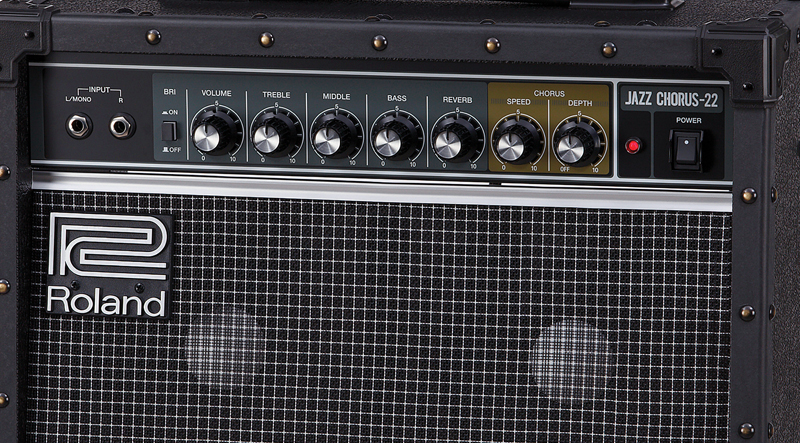
    The JC-22 Jazz Chorus is Roland’s 30-watt version of their JC-40, dimed for home use. All the beautiful single-channel, solid-state tones and functionality remain, but in a smaller, easier to manage 26-pound package. High-quality stereo reverb accompanies retro chorus sounds along with stereo and mono inputs, allowing the player to plug into their favorite stompboxes or multi-effects units. Two independent power amps project three-dimensional aural colors through a pair of 6.5″ custom-designed speakers.

    The front panel displays classic aesthetics along with a Bright switch, Volume, Treble, Bass, and Reverb knobs, as well as a Speed and Depth knob for the chorus. The rear offers headphone inputs and left and right line-outs for plugging into a recording console or mixing board. The effects loop works with either mono or stereo outboard devices and gives the option of either series or parallel operation. You can also connect footswitches at the rear for turning the chorus and reverb on and off during performance.

    Wielding a Strat, and with the amp’s Bright switch disengaged, the Reverb and Chorus knobs turned to 0, you get a full, warm, substantive sound that works great for clean blues or jazz. It’s the kind of clean that could embrace elegant major 9th chords or bite into the blues if you know how to finesse your attack. How you dig into the strings makes all the difference in the world and the JC-22 puts the kibosh on the theory that solid-state amps lack grit and humanity. It’s all right here with plenty of power for your practice space or recording. It sounds better the louder it gets, allowing more opportunities to coax subtleties using your fingers, or using your guitar’s volume control to conjure nuances.

    The Bright switch adds a smidgeon of top-end, and slowly dialing in the Reverb allows sounds ranging from subtle moistness to a full-blown surfin’ safari. Adjusted to its maximum setting, the Reverb produces a slight echo. Nice. While not exactly a blank canvas in terms of character, the JC-22 expresses what you put into it unlike many boutique amps with polarizing personalities. Its straightforward countenance makes it well suited to time-based effects and all varieties of dirt boxes. The truth shall set you free.

    Last but not least – the reason you came to this party. The Speed and Depth knobs for the Dimensional Space Chorus give control over a wide range of super thick, Mike Stern-esque, chorused sounds with liquid beauty and substance. Crystalline chime and jazzy bottom end is all right there within your purview. Blending the Reverb and Chorus together provides even more pedal-free opportunities, making this a wonderful standalone plug-in-and-go wonder – or a pedal-friendly base tone for your practice space or home recording studio.


    This article originally appeared in VG May 2017 issue. All copyrights are by the author and Vintage Guitar magazine. Unauthorized replication or use is strictly prohibited.