Tag: features

  • Crucial Audio’ Die Götterdämmerung Germanium Fuzz/Ring Modulator

    Crucial Audio’ Die Götterdämmerung Germanium Fuzz/Ring Modulator

    Price: $360 (list)
    Info: www.crucialaudio.com

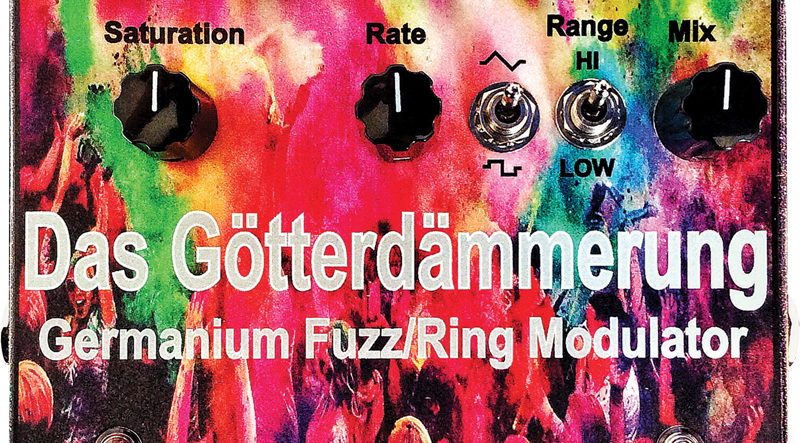
    Named by Flaming Lips guitarist Steven Drozd after composer Richard Wagner’s Ring Cycle opera, Crucial Audio’s lavishly named Die Götterdämmerung Germanium Fuzz/Ring Modulator is a wild, wicked pedal. (Note the double pun of germanium and Ring Modulator.) Built in Delaware by pedalsmith Steve Kollander, this box, as its name suggests, features two effects in one housing: a classic fuzz on the left and a ring modulator on the right.

    But don’t be daunted by all the controls. The unit is designed for tweakers and knob-twisters. The three controls on the vintage side are Fuzz Output, Fuzz Gain, and Shape, all taking advantage of dual NOS 2N404 germanium transistors. If you’re not a techie, don’t worry – Output sets the level, while Gain brings up the desired degree of fuzztone. For many, this will be sufficient fuzz, but dialing in Shape can deliver a real blast of sustain, like saturated fuzz, which you don’t find every day.

    The ring modulator side of Die Götterdämmerung has enough controls for the cabin of Apollo 11. Its frequency generator aids in the sound torture, as you take a standard guitar signal and whip it good. Using the parameter controls, you’ll find tones from “robot talk” and 8-bit squonks, to the classic ring modulations that Jeff Beck used in the ’70s Wired era. A Hi/Low range switch kicks the circuit from high-end squeak to low-end blast – again, turn knobs and flip switches until you find the sounds that will happily bliss your ears out. You can also plug in an expression pedal to adjust the ring modulator’s pitch and frequency at a gig.

    By combining ring modulator with real germanium fuzz, Kollander has created a cool hybrid of fun and functionality. Players who like Zappa and Beck, as well as modern rockers into shoe-gazer, industrial, and djent will love its extreme sounds. No question, Crucial Audio has raised the bar with Die Götterdämmerung.


    This article originally appeared in VG November 2017 issue. All copyrights are by the author and Vintage Guitar magazine. Unauthorized replication or use is strictly prohibited.
  • Strymon Sunset Dual Overdrive

    Strymon Sunset Dual Overdrive

    Price: $299 (street)
    Info: www.strymon.net

    Taste in overdrives is so subjective. A player might luck into a stellar $50 mini pedal or feel the absolute need for a $2,500 Klon. The only possible category killer would be a single stompbox that could generate convincing re-creations of time-honored overdrives and offer the adaptability to customize. Well, guess what?

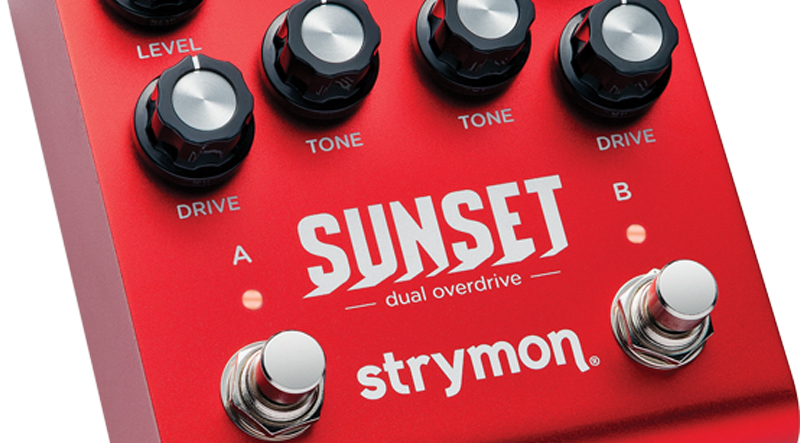
    The Sunset from Strymon is a dual overdrive with a hybrid analog/digital architecture and six classic voicings split out to two channels. Each channel allows a choice among three circuits. Channel A features two “soft” ODs plus a versatile treble boost; Channel B features two harder-clipping voices plus a JFET-type clean boost. The JFET taps directly into the Sunset’s analog input gain stage, which makes every voicing organic and responsive – with up to 20dB of all-analog gain – while the DSP back end adds harmonic complexity and enables control.

    Thanks to the Sunset’s three-position Config switch at the back of the unit, users can route Channel A through Channel B or vice versa – or route them in parallel. It’s like reordering your pedals without unplugging anything. You can set a slightly gritty rhythm sound using a clean boost, and then place a more dramatic drive before it for solos, regardless of which side either circuit is on.

    If you’re squinting at the $300 pricetag, look at it as two ODs for $150 each. And consider everything else the Sunset can do with its Expression jack, Bright switch, noise reduction, and favorite recall capabilities. All this versatility is incredible enough, but then consider the pedal can be switched from true bypass to buffered.

    Despite the Swiss Army knife options, rich and satisfying tones are available straightaway. And once you’ve selected a circuit (or two), fine-tuning is a simple, three-knob tweak using Level, Tone, and Drive.

    Why did Strymon call it Sunset? Maybe it’s the warmth and good vibe. Or maybe when it comes to swapping out ODs to meet changing needs and tastes, the day is done.


    This article originally appeared in VG November 2017 issue. All copyrights are by the author and Vintage Guitar magazine. Unauthorized replication or use is strictly prohibited.
  • Martin CEO 8.2E

    Martin CEO 8.2E

    Price: $4,499 (list)
    Info: www.martinguitar.com

    Which new Martin is based on a vintage-reissue with a pronounced low-end? Noooo, the model designation does not begin with a D! 

    The CEO 8.2E finds inspiration in the Martin Grand Jumbo introduced in 2009, with a distant ancestor in the similarly shaped 1979 J-35E. It’s one of several recent designs issued as part of Chris Martin IV’s personal contribution to his company and family legacy.

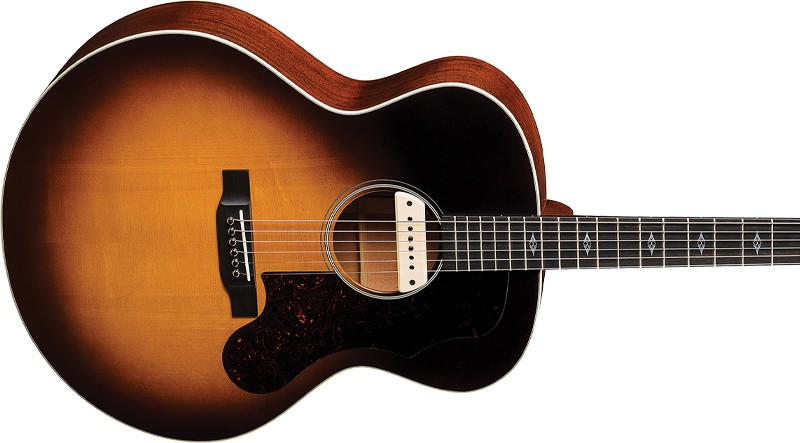
    The 8.2E shares a pillar of Martin’s flagship D models: a strong low end. Not unlike the oft-copied D-18, there’s an acre or two of perfect mahogany. Meanwhile, the European spruce has undergone Martin’s proprietary Vintage Tone System, which allows them to fine-tune the top to characteristics it might have after aging since the 1930s (not coincidentally about the time big ol’ flattops became a thing). Shiny “liquid metal” bridge pins, with a molecular structure that can add four decibels to the amplitude of a flattop guitar, hold down the nickel alloy Martin Retro strings gauged .012 to .054.

    Other features include the same headstock as that on the Martin CF-1 archtop. Enclosed repro vintage-style tuners with amber buttons are a nice lightweight complement to the oversize headstock, helping balance the guitar, which is ergonomically important with such a big instrument.

    Speaking of… the body width is 17″, just 1/8″ longer than the CF-1, though it’s much deeper at 4″. And with its Bourbon Burst finish and deep-waisted curves, the CEO 8.2E has a big-time archtop-y vibe. Black and white body binding, diamond/skeleton-pattern inlays, and a bold mother-of-pearl headstock logo all add to a gorgeous, distinctive acoustic.

    That big expanse of spruce and mahogany offers a ringing sound when hit with a set of fingerpicks or a stout plectrum, and it sounds very different when heard from in front. The response is a bit shy with bare fingers, but the 8.2E is set up with a hard hitter in mind. Even the oversize pickguard suddenly made sense: it was right in the path of a guitar pick smacking out the intro to “Bye Bye Love” with a good right-hand flourish on the ultimate downstroke. The tight-waisted body design offers a loud and profound but very different response than the oft-imitated Martin dreadnought. Tuning to open G, the ringing common tones of D and G are forceful but not overwhelming. Both a solid open-chord strummer and an aggressive blues fingerpicker will find their match in this stalwart. The ebony fingerboard is 25.4″-scale, and the 1.75″ fingerboard nut width and modern neck that Martin has adopted for many of its new models is comfortable, though wide for smaller hands.

    Plugging in the Fishman Blackstack pickup through a Fishman tower in a small club and playing with a lighter touch sounded even across the strings, facilitating a pianistic fingerstyle. Effort was put into setting up the electronics, as the CEO 8.2E has a high feedback threshold, with the low-end boom that often characterizes amplified acoustics easier to control.

    The Blackstack is a quiet passive humbucker requiring no batteries, and is designed for acoustic strings. Though not every player will like the aesthetics of the soundhole-mounted Blackstack, Martin simply found the best-sounding pickup for the guitar and gave it the Nazareth touch with an ivoroid cover to match the binding and heel cap.

    Martin’s various 0 models are so versatile, and the D’s are known especially for their bluegrass applications. OM models, meanwhile, are prized for the extra drive the longer scale gives them. But the CEO 8.2E has its own personality – and that big Martin sound.


    This article originally appeared in VG November 2017 issue. All copyrights are by the author and Vintage Guitar magazine. Unauthorized replication or use is strictly prohibited.

  • Ceriatone’s OTS Mini 20 Overtone Lunchbox

    Ceriatone’s OTS Mini 20 Overtone Lunchbox

    Price: $725 (list); $1,050 (custom colors)
    Info: www.ceriatone.com

    For years, Ceriatone fans have suggested the amp maker offer its stellar Overtone Special sound in a scaled-down, affordable package. The OTS Mini 20 was Ceriatone’s answer.

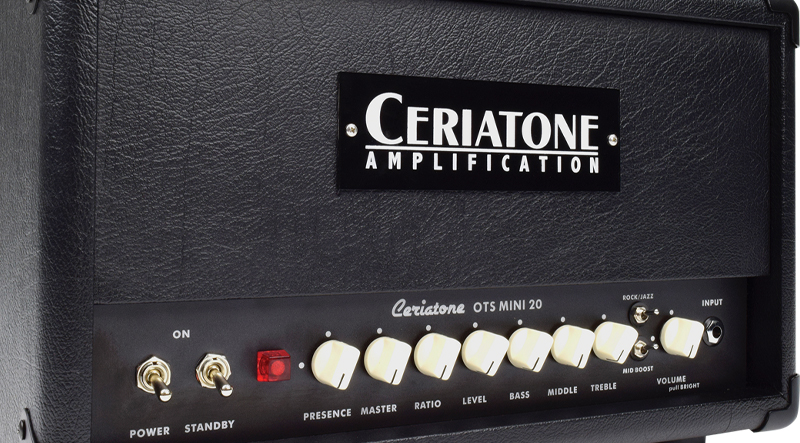
    The control layout is classic Dumble topology, with the familiar voicing switches, Ratio pot (sort of a blend control for the clean and dirty channels), and the Mid Boost switch. Players can dial in warm and distinctive cleans, throaty overdrive, and high-gain spitfire.

    At just 20 watts, this little lunchbox won’t blow the roof off your house. However, when tested with multiple cabinets, it managed to crank out a lot of volume for its size. Even at lower volumes the driven tones maintain their dynamic character while avoiding a thin, harsh sound, thanks in part to the over-spec’d 20-watt transformers.

    The review amp was the ’80s variety OTS-20, a bit darker and deeper than the typical OTS-20, which uses more traditional Fender component values. This makes it an excellent pedal platform when on the clean channel, where it has high headroom and enhances anything thrown at it. On the other hand, the driven channel’s gain structure is incredibly unique as well – meticulously voiced in every frequency, and with a sort of inherent compression that makes it incredibly responsive and dynamic. With an outboard reverb plugged into its effects loop and the driven channel engaged, it was easy to hear how pick dynamics affect tone, with the reverb blooming and moving with each change in play style and pick strength.

    At this price and quality, it’s a no-brainer to suggest this amp to anyone searching for Dumble tone. The OTS Mini 20 is beautiful, dynamic, and meticulously voiced, leaving just enough room for your own style to shine through.


    This article originally appeared in VG November 2017 issue. All copyrights are by the author and Vintage Guitar magazine. Unauthorized replication or use is strictly prohibited.
  • Walrus Audio Iron Horse Distortion V2

    Walrus Audio Iron Horse Distortion V2

    Price: $199.00 (list)
    Info: www.walrusaudio.com

    Like virtually every distortion pedal on the market, Walrus Audio’s Iron Horse Distortion V2 will produce enough distortion to molest anyone’s ears, but this box differentiates itself from the distorting herd with its versatility. Three updated controls allow the user to fine-tune the Level, Tone, and amount of Distortion. The V2 can provide just a bit of hair on a guitar with single-coil pickups or cranked to all-out aural assault mode. The user can shape the sound to suit almost any application.

    The Iron Horse V2 enters a crowded market with any number of very good distortion pedals at various price ranges. No two are alike, of course, and what works for one guitar-amp combo might not work for another. That said, the Iron Horse can achieve nuanced levels of distortion that are as good or better than those achieved by other pedals. Whether that makes this the perfect pedal for any person’s pedalboard depends on the person.

    Those who decide the V2 is the perfect distortion pedal will own a high-quality, well-built, and attractive unit. The pedal has a billet-like sense of sturdiness – a quality often lacking in boutique pedals. The controls are sturdy and easy to use in a dimly lit studio or stage floor. A player won’t have to squat and squint while trying to make adjustments on the fly – something anyone who has had to fiddle with a pedal while the audience waits impatiently will appreciate.

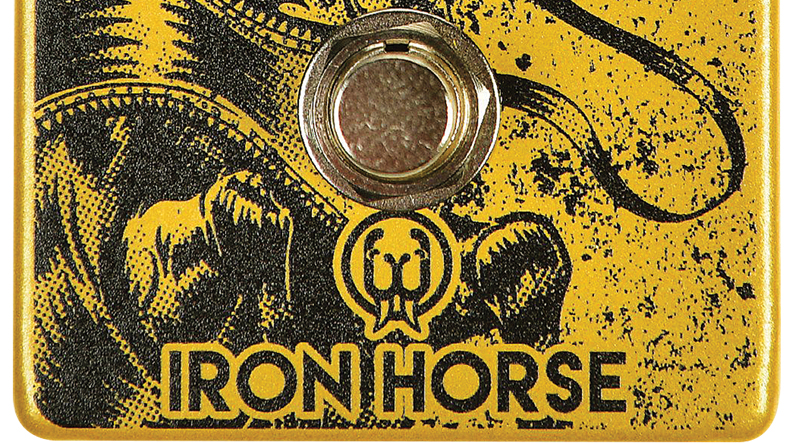
    And it’s attractive, with graphics by illustrator Adam Forster that strike a nice balance between bold and tasteful. This might seem a superficial consideration, but in a crowded market it can make a difference.


    This article originally appeared in VG November 2017 issue. All copyrights are by the author and Vintage Guitar magazine. Unauthorized replication or use is strictly prohibited.

  • Vox MV50 AC

    Vox MV50 AC

    Price: $199.99 (list)
    Info: www.voxamps.com

    Ready to step onstage but your amp won’t sing? Traveling, but don’t want to lug a lot of gear? Need a backup for a gig or session? Got a tiny apartment and no room for an amp stack? Call in the little amp that could.

    Vox’s new line of MV50 amp heads might be termed “micro stacks.” They’re about the size of a stompbox. And they tip the scale at just 1.19 pounds. No, that’s not a typo.

    These mini terrors make a Marshall stack look like it needs a workout regimen and diet of carrot sticks and celery. And the little guy makes a big sound.

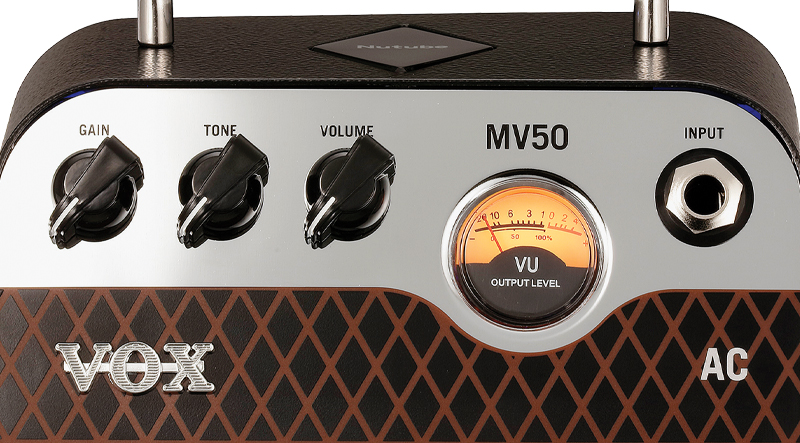
    The MV50 is powered by an analog preamp circuit. At it’s heart is a NuTube 6P1, a new “vacuum tube” that uses a vacuum fluorescent display with an anode grid filament. To the non-techie, the NuTube could be mistaken for a computer chip; it’s about 30 percent of the size of a 12AX7. Vox sees it as the way of the future.

    The miniaturized NuTube saves on power, size, weight, and cost while being long-lived – and cranking out authentic tube tone.

    With a 19-volt AC adaptor putting out a muscular 3.43 amps, the MV50 boasts 50 watts of power when plugged into a 4-ohm speaker, 25 watts into an 8-ohm setup, or 12.5 watts to 16 ohms. No matter how you look at it, that’s a lot of oomph per pound.

    The MV50 is available in three flavors. Clean is designed to mimic “classic American amplifiers” – you know, those dressed in tan tweed. The Rock is all about aggressive, high-gain British tones – think of that obese stack mentioned earlier. And the AC is voiced to serve that distinctive chime and classic crunch of an AC30 – without the need for an auxiliary fan to keep it cool or a dolly to wheel it about.

    The amps include headphone and speaker/line out options, so you can run direct to a mixer, PA, or computer. Vox offers its BC108 cabinet to pair the heads with an 8″ speaker. And yes, you can stack two – or more – of the cabs atop each other.

    An EQ option with a sliding switch allows the user to choose between Flat and Deep. When using a small cab such as the BC108, Deep emphasizes low frequencies and trims higher frequencies. The Flat mode is all-out, without emphasizing or reducing any frequency ranges.

    We tested the MV50 AC plugged into a vintage Fender tweed 1×10 extension cab and various guitars. Cranking it up, the MV50 immediately proved that size isn’t everything. This little fellow rocks. It offers solid tone and the power to express it.

    Playing blues, rockabilly, rock, and more, it sounds eager to please. Dial up more gain and it progressively goes from bark to bite with nice compression. The tone is thick and tasty with an aggressive, in-your-face edge.

    While the MV50 AC’s voice is strong, it’s also a bit flat without the overtones, richness, or headroom of an AC30. But that’s not for want of trying. Any amp has pros and cons, and here, the huge pluses of the small size and inexpensive price win out over any compromise.

    No, this is not going to replace your ’64 AC30 Top Boost. But you’re going to want an MV50 AC to use with a full stack, tucked on your pedalboard, or to carry in a guitar case along with an extra set of strings.


    This article originally appeared in VG November 2017 issue. All copyrights are by the author and Vintage Guitar magazine. Unauthorized replication or use is strictly prohibited.
  • Electro-Harmonix Operation Overlord Allied Overdrive

    Electro-Harmonix Operation Overlord Allied Overdrive

    Price: $132.80 (list)
    Info: www.ehx.com

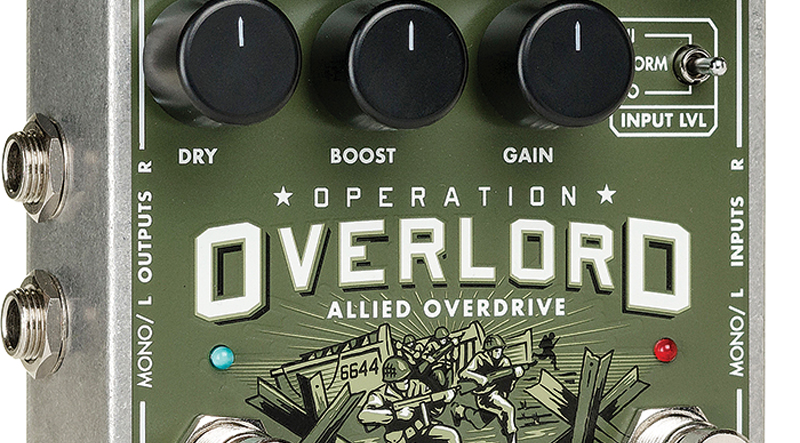
    Like its namesake World War II invasion, Electro-Harmonix’s Operation Overlord Allied Overdrive involves an assault of sorts – though this particular Operation Overlord’s attack is solely one of grease, gain, and grit.

    Originally developed to allow keyboardists to mimic the kind of tube overdrive guitarists have enjoyed since the birth of rock and roll, Operation Overlord also excels when plugged into a guitar rig. Equipped with Volume, Treble, Mid, and Bass knobs to sculpt EQ settings, this solid little pedal also has a Dry knob that dials in the amount of the affected signal, a Boost knob to control the extra gain fed into the main circuit, and a Gain knob for overdrive and distortion levels. An Input LVL switch that lets you control the input level of your instrument offers Hi, Normal, and Lo settings. Finally, the pedal, which sports an olive drab (natch) graphic of American soldiers busting through hedgehog obstacles on D-Day, also comes with Bypass and Boost switches. Input and output jacks (two each) allow for mono or stereo, and the pedal runs on an accompanying 9-volt adapter with a center negative plug.

    The Operation Overlord uses JFET gain stages for low to medium gain but walks the line between overdrive and distortion with an amp-like disposition. The Boost switch adds a classic-style overdrive circuit before the JFET stages, which sounds like an added feature on your amp. You can also flip a switch inside the pedal so the JFET and the boost work independently. The Input LVL is great for adjusting your level for keyboards, single-coils, hotter pickups, or gain stacking. It’s also useful for those who simply want to slam the front end of their amplifier.

    Operation Overlord’s overall quality is one of warmth and musicality. Everything from edgy cleans, midrange boosting, and chunk-infested hard rock can be conjured through small combos and 50-watt heads alike. Strats fatten up and Les Pauls croon long-term sustain with just a few adjustments. Using the Boost function in conjunction with the Gain knob unleashes nifty overtones and harmonics. And the Overlord proves sensitive to dynamics and a guitar’s Volume control while retaining a seductive amp-like character that never sounds fake or metallic.

    The Overlord Allied Overdrive pedal shines particularly well if you hanker for rich tones with warmth and boldness, but it could make a fine addition to any armory of sonic weaponry.


    This article originally appeared in VG November 2017 issue. All copyrights are by the author and Vintage Guitar magazine. Unauthorized replication or use is strictly prohibited.

  • Friedman Motor City Drive & Fuzz Fiend

    Friedman Motor City Drive & Fuzz Fiend

    Prices: $299.99 (Fuzz Fiend), $299.99 (Motor City, both list)
    Info: www.friedmanamplification.com

    An innovative designer, builder, and repairman, Dave Friedman has worked with some of the biggest names in the music industry, lending his artistry, experience, and great gear and amp mods to musicians of all levels of notoriety. Just as impressive as his amplifiers, guitars, and accessories are Friedman’s line of effects pedals.

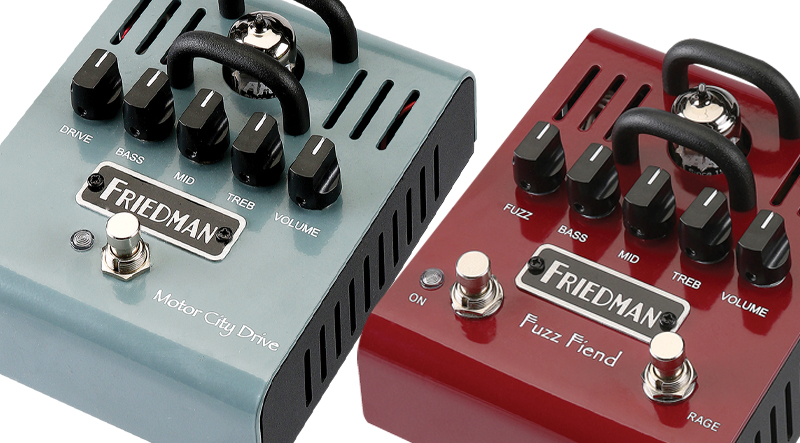
    Friedman’s Motor City Drive, for example, is a sonic love letter to his hometown of Detroit. Tough-looking, with a 12AX7 tube brought to life by 220 volts and an accompanying 12-volt power supply adapter, its five knobs – Drive, Bass, Mid, Level, and Volume – are keys to sonic glory. Plus, the tone controls are passive, allowing you to plug into a clean or dirty amp for big, fat overdriven vintage amp sounds.

    Straight out of the gate, instead of the thin, girthless, and toy-like reediness found in other drives, this bad mamma-jamma greets you with a big, breathy sound that moves the air. Played through a Deluxe Reverb and a 120-watt channel-switching half stack, it did everything from AC/DC to Mastodon, but was easily tempered for blues a la Gary Moore.

    The EQ allows a tight bottom-end and smooth mids for myriad era-specific saturation. Dialing back the Gain with a Les Paul morphed the sound to fit right into Gov’t Mule or Black Crowes type of rhythm sections – gritty, complex, full, and organic. Leaning more toward the best lead tones of the ’70s and ’90s than the ’80s, the Motor City Drive is a smokin’ pedal with plump, chewy overdrive.

    Sticking with the concept of a visible 12AX7, 220 volts, and 12-volt adapter, Friedman’s Fuzz Fiend has a three-band EQ – Bass, Mid, and Treble – along with Fuzz and Volume knobs plus a Rage switch that produces long sustain – and just maybe neighborhood riots. Adjusting the guitar’s volume when this button is pushed down transforms sustain into freakish oscillation. Adjust the Fuzz knob while the Rage switch depressed, and the oscillation changes pitch.

    More reminiscent of modern overdrive-style fuzzes than classic ’60s and early-’70s ripped-speaker sounds, the Fuzz Fiend still puts you directly in the front pew at the Church of Fuzz. Quick adjustments allow you to approximate “Spanish Castle Magic” or your favorite unshaven grunge fuzz tones. More importantly, the Fuzz Fiend will positively color any amp regardless of humbuckers or single-coils to create individualized nasty recipes with upscale beauty and vivid harmonics.

    The Motor City Drive and the Fuzz Fiend are excellent concepts in design. The addition of the 12AX7 and simple (but effective) three-band EQs will help even the most sophisticated tone aficionado get lost in a den of sonic rapture.


    This article originally appeared in VG November 2017 issue. All copyrights are by the author and Vintage Guitar magazine. Unauthorized replication or use is strictly prohibited.
  • Tyler Amp Works’ HM-18 Combo

    Tyler Amp Works’ HM-18 Combo

    Price: $1,499 (list)
    Info: www.tyleramps.com

    New Jersey has a history as home of some iconic amplifiers, and Tyler Amp Works in Westfield is a father-son operation that uses local resources in producing some of the finest boutique amps around. Owner John Brinton has been building and designing circuits for twenty years and works closely with several Nashville session players.

    Tyler’s latest creation is a compact powerhouse with a simple layout. At first glance, the HM-18 resembles a take on the classic 5E3 design, with two inputs and Master, Tone, and Volume knobs. But this is an EL84 output-tube design with a GZ34 rectifier. It’s best compared to the power section of a Vox or Matchless paired with the preamp from an 18-watt Marshall.

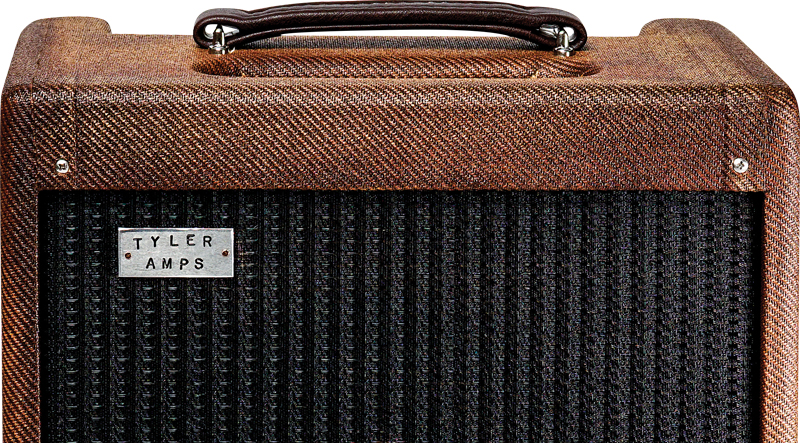
    The HM-18 has an impressive feel. Its stain-lacquered tweed breathes timeless class and durability, and the cab is locally built of high-grade birch ply. Electronics are mounted in a thick steel chassis to eliminate vibration, and the transformers are built by Classic Tone in Chicago to Brinton’s specifications, with one of the power-transformer’s special features being an extra set of ground wires to make the amp virtually noise-free. It is also tapped for two 1/4″ speaker outputs, 4 and 8 ohms.

    The HM-18 comes with a 150-watt Eminence speaker comparable to a Texas Heat but with slightly different specs. It translates all the nuances and intentions beautifully.

    First impression when plugging in is balance – it feels like everything is represented fairly and the bottom is solid and doesn’t fall out when the amp is cranked to its limits. Input 1 lets you drive the preamp section a little harder, and it naturally has a bit more output than the cleaner Input 2. It also responds well to dynamics and cleans up nicely when the guitar volume is being rolled back.

    The HM-18 handles pedals well, and playing with the balance between the Volume and Master knobs moves the breakup point to different levels.

    Although inspired by classic circuits, the HM-18 does not have Fender chime or Vox compression, but it tastefully delivers both a clean and classy spectrum of driven settings. It’s a versatile-sounding amp that feels modern and delivers familiar sounds.

    With the HM-18, John Brinton has added another classic to his already impressive line. It’s exciting to see imagine what Tyler Amp Works will bring forward in the future.


    This article originally appeared in VG November 2017 issue. All copyrights are by the author and Vintage Guitar magazine. Unauthorized replication or use is strictly prohibited.

  • D’Angelico Premier Bob Weir SS

    D’Angelico Premier Bob Weir SS

    Price: $1,099 (list)
    Info: www.dangelicoguitars.com

    When Bob Weir introduced his D’Angelico Premier SS at NAMM last January, he performed a set of Grateful Dead and solo tunes for a select audience with backing from an all-star band including Steely Dan/Doobie Brothers guitarist Jeff “Skunk” Baxter, former Guns N’ Roses drummer Matt Sorum, steel guitarist Robert Randolph, and others. Weir was all over that guitar, playing songs that ranged from “Dark Star” to “Touch Of Grey” – proof of the sonic capabilities of his latest signature model.

    Weir of course was one of the founding members of the Dead, and the musical (and otherwise) adventures of the band need not be mentioned. Weir’s also widely regarded as one of the most inventive rhythm guitarists ever.

    Everything comes together in this guitar. You can trust the reborn D’Angelico to make a rock-solid instrument; it’s Weir’s touches that add further magic.

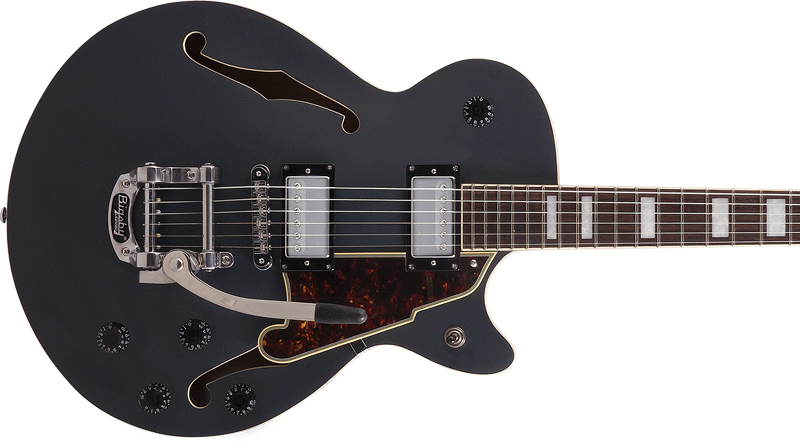
    The signature model is based on the Premier SS – a single-cut, thin-bodied, semi-hollow instrument with a center block for added sustain and resonance. The body is 1.75″ deep and 15″ at its widest, with top, back, and sides of laminated maple. The body color is a matte stone finish, a rich grey-black that Weir describes as somewhere between “smoke and a rain cloud.”

    The maple neck is sublime – a silky C-shape with 22 medium jumbo frets and a 25″ scale and 111/16″ nut topping the rosewood fretboard.

    Crowning it all is that headstock. Modeled after John D’Angelico’s original, it’s like a New York City skyline with mother-of-pearl art deco flash against an ebony-veneer backdrop. Add to that effortless Grover Rotomatic Stairstep tuners and Weir’s name on the truss-rod cover, and there may not be a more stylish – or larger – headstock in all guitardom.

    The bridge is a chrome roller Tune-O-Matic backed by a dual-action Bigsby B-50 tremelo tailpiece. All ideal for playability.

    It’s in the pickup arrangement, though, that Weir worked his wizardry. The guitar features two D’Angelico dual-coil humbuckers controlled by a three-way toggle selector switch, twin Volume and Tone knobs, plus a single Master Volume knob on the top bout.

    Those Tone controls are push/pulls that allow you to select between humbucker and single-coil sounds, which this is a where the sonic adventure begins.

    Plugged into a reissue Supro amp, like Weir and band used for the NAMM show, and switched to the native dual-coil humbucker setup, the Premier Bob Weir SS had a vibrant, lush tone. It doesn’t growl like a ’58 PAF, but it’s full and lush, capable of jazzy warm sounds or deep-throated, hard-rocking power chords.

    Adjusting to single-coils, you get an instant primal rock and roll slap to the sound that’s urgent and demands to be heard.

    The best is yet to come, though. Mix one pickup set on humbucker with the other on single-coil – front or back, it doesn’t matter – and the tone is drop-dead stunning, both rich and resonant with a lethal sting to its tail.

    The Master Volume provides immediate control over the guitar. Plus, the knob makes volume swells simple.

    With the pickup setup and control arrangement, the versatility and options are phenomenal. In fact, it’s tough to think of another guitar with such sonic flexibility – and easy playability to boot.

    If you’re a confirmed Deadhead and the Premier Bob Weir SS is too staid for you, D’Angelico also offers its new Premier Grateful Dead DC, a thin-bodied double-cut featuring the steal-your-face red, white, and blue lightning-bolt motif.


    This article originally appeared in VG November 2017 issue. All copyrights are by the author and Vintage Guitar magazine. Unauthorized replication or use is strictly prohibited.