Tag: features

  • Vintage Instrument Research

    Vintage Instrument Research

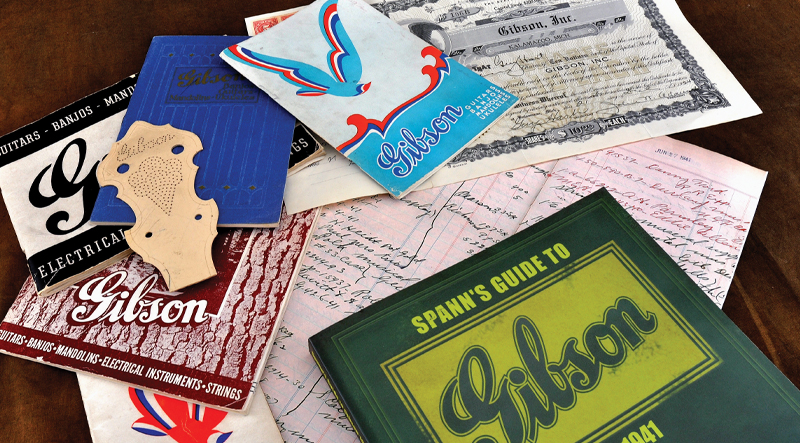
    Vintage instrument research is conducted with a mixture of source material including factory records, catalogs, and compiled sources.

    Fretted instruments can be examined in much the same way as zoological taxonomist or forensic pathologist would approach them. They fit well into a Linnaean taxonomic order, and in fact that is very much the approach we use in identifying and dating fretted instruments.

    In addition, these instruments can be examined much the same way a forensic pathologist would examine a body to determine what has happened to it during its lifetime, including any modifications, damage, or previous repairs. The conclusions we reach are constantly changing, adapting and hopefully always getting closer to the truth.

    Instrument catalogs often contain erroneous information. On this page taken from a 1935 Gibson catalog, the RB-3 Gibson Mastertone banjo is shown with the wrong style of construction, and an inlay pattern that didn’t exist. The specifications also call for a 27″ scale length, when in actuality the scale length was 26.375″.

    For the serious scholar, it is important to work from as many primary sources as possible. Primary sources are defined as evidence which has not been interpreted or compiled. Examples of primary sources in the vintage instrument world would include unadulterated exemplars of the instruments themselves, and internal factory documentation which is contemporary with the production of the instruments in question. When I started into business almost fifty years ago, examination of the instruments themselves was my foremost source of information. Especially valuable were examples which included provenance like an original bill-of-sale. By comparing and describing the physical characteristics of such examples alongside other documented instruments I was able to begin to form the outline of what is known today. I was also in a position to see a significant number of these examples, a necessary condition in order to draw valid conclusions.

    Of lesser value are company catalogs, trade magazine material (articles and advertising), and perhaps surprisingly, employee interviews. Any lawyer can easily explain why eyewitness accounts are not considered as reliable as other evidence, especially when many years separate the event from the witness. Company catalogs and advertising literature, can provide general guidance, but it should be noted that many models were introduced prior to their introduction in any literature and catalog descriptions are not always completely accurate. For example, in the pre-1930’s catalogs Gibson referred to many mandolins and guitars as being made with maple back and sides when in fact many of these models featured birch rather than maple. Catalog art was often notoriously inaccurate, frequently depicting outdated specifications and appearance.

    This page from Gibson’s shipping ledger on the August 17, 1939, appears to show L-5 serial number EA-5205 being sent to L. Neal in a #600 case. However, this is only one of six times that this L-5 was shipped and Mr. Neal was actually a Gibson salesman, not a customer. Careful interpretation is necessary when working with original factory records.

    Company shipping ledgers and other internal factory correspondence were not available to us fifty years ago. These documents often provide much greater in-depth and more reliable information than catalogs or advertising literature. Some researchers such as Joe Spann who was spent over 40 years studying Gibson literature and Greig Hutton who has spent many years studying Martin ledgers going back to the 1830s have amassed a treasure trove of information which in quite a few cases has caused us to have to revise some long-held opinions when confronted with incontrovertible new factual information.

    The researcher’s quality of education also plays a crucial role. The wide knowledge of an educated mind brings many important factors into play which allow for better interpretation of evidence. For example, it is impossible to fully understand and correctly interpret the actions of Gibson and Martin in the early 1930’s without underlying historical knowledge of the Great Depression. The designs of C.F. Martin Sr. cannot be correctly understood without knowing the influence of the classical Spanish school and the German luthiers of Markneukirchen. The popularity of the guitar in America is a study which includes early classical pioneers like Madame de Goni, as well as the rock-n-roll of Chuck Berry.

    Perhaps not so evident on the surface are the innate abilities of the individual researcher. Qualities like imagination, intuition, pattern recognition and powers of synthesis are all of supreme importance in evidence interpretation. A danger to be avoided at all costs is the tendency to describe the motivations of people in the past through the lens of present-day knowledge. It is easy to immortalize people as “genius” or events as “landmark” when in fact they were not considered as such at the time. The Gibson F-5 Master Model mandolin and the Les Paul Model guitar were both commercial failures when originally produced. It was in large measure subsequent events in the evolution of music which brought these instruments to worldwide acclaim. The 1943 obituary of former Gibson acoustic engineer Lloyd A. Loar does not laud him as a genius designer, but merely as a proficient musician. History is replete with examples such as these and the researcher must be conscious of the tendency to create revisionist history.

    This page for Gibson’s 1917 A-1 mandolin is described as having maple back and sides. In fact, they were birch.

    Unfortunately, published Information often becomes concretized in the public mind, accepted as truth, when in fact it is sometimes merely ill-informed opinion. Much information which was originally published in book form has now been transcribed to the Internet, allowing its instant and worldwide dissemination. Earlier ideas, over time and with uncounted repetition, have become widely accepted or even more dangerous, entered the realm of dogma. I have been in business long enough now, that it is not uncommon for me to talk with well-meaning individuals who wish to debate historical points, based on out-of-date information that I myself would have accepted in the past.

    When all of these research techniques are combined, we have a more accurate view than any one technique alone. Detailed inspection of significant examples, access to internal factory documents, and an educated mind which can liberally use knowledge, imagination, and intuition create the ever-changing landscape of vintage fretted instrument research. Any research which does not evolve over time and uses absolutisms like “always” and “never” should be viewed with healthy skepticism.


    This article originally appeared in VG December 2017 issue. All copyrights are by the author and Vintage Guitar magazine. Unauthorized replication or use is strictly prohibited.
  • Matchless JJ-30

    Matchless JJ-30

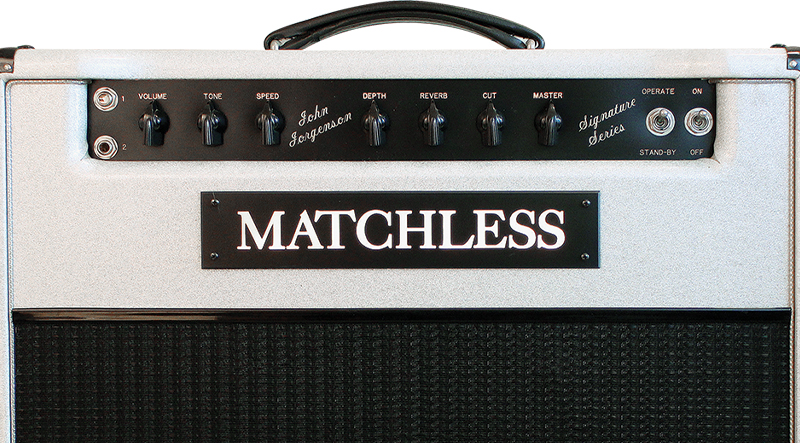
    1997 Matchless JJ-30 John Jorgenson
    • 
Preamp tubes: one EF86, plus assorted 12AX7s for effects and PI duties
    • Output tubes: four EL84
    • Rectifier: GZ34 (or two 5V4)
    • 
Controls: Volume, Tone, tremolo Speed and Depth, Reverb, Cut, Master
    • 
Speaker: one 12″ Matchless-treated Celestion G12H-30
    • Output: approximately 30 watts RMS

    Rare and sought-after, in part because only about 40 were built, the Matchless JJ-30 John Jorgenson is the only Signature Series amp ever made by the original company.

    Designed for Jorgenson, guitarist with the Desert Rose Band, the Hellecasters, and Elton John, the JJ-30 was made from approximately 1992 until ’98. It combined existing design elements with his request for built-in tube tremolo and reverb – not available together on any Matchless amp of this format at the time – into a 1×12″ combo. Its single preamp channel came from the EF86 “click channel” side of the dual-channel C-30 chassis (used in the DC-30 2×12″ combo, SC-30 1×12″ combo, and HC-30 head), so-called for its six-position Tone switch, while it also reflected that platform’s 30-watt output stage derived of four EL84s. Given the way Matchless did things, though, there’s an awful lot more to it than even those specs might reveal, and a ton of nuance and sophistication went into making this what might be the “ultimate Matchless.”

    Most JJ-30s sported extra-nifty cosmetics such as the fetching sparkling-silver vinyl that covers this example. Add the backlit logo and face plate – a trademark, of sorts – and it’s an impressive-looking combo.

    Matchless was founded by Mark Sampson and Rick Perrotta in 1989. As chief designer, Sampson recalled that, “Rick wanted to build an AC30 that wouldn’t break, and after seeing the rigors of the road, I could see there definitely was a need for that. The concept behind Matchless was basically to build a roadworthy amp that sounded good, but the ‘roadworthy’ was the stress, initially.”

    A big part of achieving that was the point-to-point wiring for which Matchless became famous. Players and manufacturers often refer to any hand-wired tube-amp circuit as “point-to-point,” but the term is more correctly applied to circuits in which the connection point of one component is made to that of the next with no intervening circuit board, even one that’s hand-wired. For example, a resistor connects the input jack to the socket of the first preamp tube, or a capacitor connects the output of the first gain stage to the input of the Volume control.

    The 1×12″ carries a Celestion G12H-30 speaker custom-treated by Matchless.

    A look at the chassis quickly conveys the idea. Strictly speaking, Matchless did use a few terminal strips to help support many of the connections, but there’s no circuit board in sight. A perusal also helps answer the often-asked question about why a Matchless was so expensive: a lot of man-hours go into wiring a chassis in that way, and proper execution requires a lot of skill. In addition, components were universally top-notch and included custom-made signal capacitors that were “Matchless” branded, along with big one-watt carbon-comp resistors in almost all positions (rather than the half-watt carried by most guitar amps). At the heart of this tone engine is a set of custom transformers designed and supplied by William (Woody) Wood, Sr., of Transformer Design & Supply, to meet specific criteria for tone and performance. Put it all together and the JJ-30 (or any Matchless) is not only expensive, but darn heavy. This one – a 1×12″ combo of relatively compact proportions – weighs a whopping 71 pounds.

    Though the JJ-30 stems from Sampson and Perrotta’s desire to “build a better AC30”, its front end is based entirely around the EF86 pentode preamp tube that the original Vox AC30 used for only about a year and a half, dropping it by 1961 in favor of the ECC83 dual-triode (a.k.a. 12AX7). The EF86 soldiered on in the AC15 until that late ’60s, however, and it’s via that smaller Vox that this thick, punchy, and well-balanced preamp tube entered guitar-tone lore. To this meaty, high-gain tube Sampson added a six-position Tone switch, which simply selects between six values of coupling capacitor to voice the signal as it passes from the tube’s output to the Volume control. The entire configuration leads to a rich, full-frequencied response that’s equally adept at lush clean tones and juicy drive.

    The reverb and tremolo circuits are fairly “standard application” stuff, yet of a high order and extremely robust in design and tone. The output stage, though, gets very much back into AC30 territory – a long-tailed-pair phase inverter feeds four EL84s which are cathode-biased with no negative feedback. Whether or not this is “Class A” by definition, it’s certainly what the industry and most players generally refer to as Class A, and indeed Matchless amps are oft-cited examples of the breed. Best not to quibble about technicalities, then, and simply understand that when we talk about Class A amps, other than in the case of small single-ended examples, this is the sound. It all goes through a Celestion G12H-30 that has been custom-treated by Matchless for a slightly more-dynamic playing feel.

    The amp’s power supply derives its DC current from a GZ34 tube rectifier, and coupled with stout filtering and a hefty choke, the entire stage encourages firm lows and a fast response from the signal-carrying stages it feeds. One other thoughtful aspect of the design is the two rectifier-tube sockets, allowing guitarists seeking a little more sag in their amps’ playing response to substitute a pair of slightly softer 5V4 rectifiers in place of the single GZ34.

    The inside demonstrates genuine point-to-point wiring, with most connections made by the components themselves rather than with a circuit board. In addition to custom-made signal capacitors, the JJ-30 carries unusually large one-watt carbon-comp resistors.

    Guitarists who don’t quite “get” Matchless sometimes cite their loud, brash nature, but the amps were made to be professional, touring-grade equipment, and they excel in a band context. What some find harsh and unforgiving in a basement or bedroom becomes superbly responsive and present in a full mix onstage or in the studio. In use, this JJ-30 itself proves incredibly crisp and bold, and insanely articulate. It displays loads of depth and richness, bags of body and character. More than anything, though, it’s an extremely immediate amp; you really do feel the signal is blasting through that circuit from input to speaker with little getting in the way. This yields a very detailed clean tone at lower volumes, the consummate “jangle,” and much more. The EF86 gets cooking fast, though, and with a Les Paul the amp is just starting to break up a little before 11 o’clock on the Volume. Pushed hard, it has that characteristic EL84 glassiness in the overdrive, yet a bigger low-end and lower-midrange punch and grind that you often expect to hear from a four-EL84 amp, with a superbly rich harmonic shimmer. And as lush and atmospheric as the reverb and tremolo are on top of it all, you could even call this the ultimate grab-and-go combo, if only it were easy to grab!


    This article originally appeared in VG December 2017 issue. All copyrights are by the author and Vintage Guitar magazine. Unauthorized replication or use is strictly prohibited.

  • Tracii Guns

    Tracii Guns

    Tracii Guns: Dustin Jack.

    The hair/glam metal movement of the ’80s spawned its share of guitar shredders. One often overlooked is Tracii Guns, whose fleet-fingered work was a highlight of the first three albums by the band he founded, L.A. Guns. He recently added to his resumé with the release of The Missing Peace, the first L.A. Guns album in 15 years to feature Guns together with singer Phil Lewis.

    How does The Missing Peace differ from earlier L.A. Guns albums?

    Twelve more years of practice, 12 years of stockpiling ideas and recordings of stuff I didn’t use in other projects. L.A. Guns is super-diverse, musically, from album to album, but it does have a tonality – a personality – that I took for granted for the first 10 years we were making records. And I had a lot of help from a friend, Mitch Davis, who I’d written music with for some other stuff – film, TV, and commercials. He wrote a couple songs on my solo albums, and came with the lyrics for this one. I introduced him to Phil, and they got together and put all the melodies and lyrical ideas together. So, it’s really Mitch’s brainchild, and we worked hard as opposed to, “Hey, let’s write songs and hopefully the recording will make them great.” They started out great. I think it was the whole experience – studio, songwriting, being outside of the band long enough to look in and see what it’s really about. I couldn’t be happier with this record. There’s not one thing I would’ve done differently.

    Which guitars, amps, and effects did you use?

    Mostly my friend’s 2011 Les Paul ’59 reissue because he was doing some modifications on my R9. It happened that I tracked guitars at the time he was doing mods for me, so I borrowed his, which has Bare Knuckle pickups. The magic really came from amp setup – mainly a Bugera – and Mooer pedals was developing these preamps and sending them to me. The ones I used most was their UK Gold 900 and their Brown Sound. Most of the rhythms are the UK Gold pedal going right into the effects loop of the Bugera, through Marshall 2×12 cabinets. When it kicks into the more-neoclassical-metal stuff, I went to the Brown Sound. I didn’t record any delays – all that was printed after.

    I also have a Magnatone Twilighter Stereo amp I used for a lot of the clean stuff. With that, I just plugged in direct; it’s got the best reverb sound in the world. On the ballad, “Christine,” there’s a ’74 Fender Super Reverb that has a really nice low tremolo effect. On some of the solos, I experimented with the Mooer pedals, particularly one called Grey Faze Fuzz, which is this really unique, psychedelic, Yardbirds-fuzz kind of sound you can hear throughout the record. With that pedal, I used a Japan-made ’62-reissue Strat that Phil gave me.

    Have you embraced new recording software and technology?

    Yes. On “The Flood is the Fault of the Rain,” I was trying new software on my iPad; I actually recorded organs and guitars directly into the iPad, then transferred them into Protools, intending to change them later. But they sounded fantastic, so I left them. On that song, there’s actually a lot of iPad plug-ins making the sound, which is further proof that I probably don’t need all the stuff we love, hug, and that clutters up my studio. And I hate that, but the software is really simple to use. It’s unfortunate, though… I listen to a lot of songs where people have done their own recording, and while they don’t sound like demos, they sound like something other than records. It’s interesting to me how people don’t use the tools that are available to teach them very quickly how to go from sounding like an amateur to a professional recording. It’s so simple. Apogee has a video series online that breaks down stuff in the recording universe – five-minute videos that make all the difference in the world.


    This article originally appeared in VG December 2017 issue. All copyrights are by the author and Vintage Guitar magazine. Unauthorized replication or use is strictly prohibited.

  • John Abercrombie

    John Abercrombie

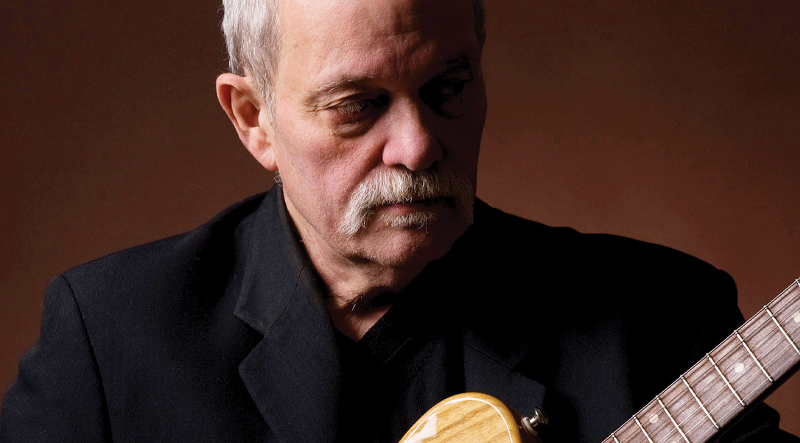
    After a lengthy illness, jazz guitarist John Abercrombie died August 22 at a hospital outside Peekskill, New York. He was 72.

    Abercrombie was part of the first wave of jazz-rock, or “fusion” guitarists emerging at the end of the ’60s, notably in the horn-driven band, Dreams. He studied at the Berklee College of Music and played sessions for, among others, drummer Billy Cobham and saxophonists Gato Barbieri and Dave Liebman on the Europe-based ECM records. That label became known for its subtle, atmospheric approach to jazz-rock and Abercrombie would remain there for much of his career, including his latest, 2017’s Up and Coming. Reflecting on his long recording and performing career, the guitarist said, “I’d like people to perceive me as having a direct connection to the history of jazz guitar – while expanding some musical boundaries.”

    Abercrombie’s early influences began with Chuck Berry and Bill Haley, but evolved toward jazz-guitar stalwarts like Barney Kessel, Jim Hall, and Wes Montgomery, as well as trumpeter Miles Davis and pianist Bill Evans. In 2012, he told notesontheroad.com, “I was influenced when I heard the Hungarian guitar player Gábor Szabó play with Chico Hamilton. He played in [a] freer style and I really liked it. When Larry Coryell first arrived on the music scene, he was playing so differently, utilizing rock and country influences, and distortion like I hadn’t heard before. Later, it was John McLaughlin and that whole era of guitar players – but I was influenced probably by every guitar player who ever played.”

    As there were few antecedents fusing jazz and rock, John had to figure things out himself. He told Jazziz, “I grabbed onto every device I had in my arsenal – my knowledge of harmony and the guitar, the few little fuzztones or pieces of gear that I used at the time – and tried to fit in. When I’d play with [Miles Davis drummer] Jack DeJohnette and [bassist] Dave Holland in the band Gateway, I responded to what I was hearing around me and let the sound of it teach me what I was supposed to do.”

    Virtually all fusion players were impacted by the arrival of the Mahavishnu Orchestra, even Abercrombie, who’s 1975 album, Timeless, featured DeJohnette and Moog-synth master Jan Hammer. The recording is now revered as a fusion masterpiece, highlighted by John’s high-speed picking, overdriven tone, and explorative compositions. “I hired two ridiculous guys who were so good, so wide open, so exploratory, so full of amazing chops, it was all I could do to keep up with them to make the record,” the guitarist told Downbeat magazine about the sessions.

    In ’76, he worked with acoustic virtuoso Ralph Towner on the gorgeously recorded Sargasso Sea, surely influential on the New-Age-guitar movement of the ’80s. In ’78, he made a bold artistic move with his John Abercrombie Quartet, which cut the brilliant trilogy of Arcade, Abercrombie Quartet, and M. These records found that balance between jazz-rock and straight bop, Abercrombie deploying a rich, chorus-like guitar tone not unlike ECM labelmate Pat Metheny. In the mid ’80s, he further departed from old-school fusion by exploring the guitar synthesizer, then in the ’90s returned to straight electric. Interestingly, he also stopped using a guitar pick, deploying his fingers to derive a more organic, intuitive sound.

    As word of Abercrombie’s death spread, accolades from fellow guitarists appeared online.

    “John was a really great musician, guitarist, and composer,” said fellow fusionist John Scofield. “I met him in 1974 – he was established and I was a rookie. He treated me as an equal when he didn’t have to, and made me feel at home in the big city. The world won’t feel the same without John.”

    “Your influence on me as both guitarist and as composer is deep and vast, like your wondrous legacy,” added Nels Cline, while John McLaughlin simply wrote, “You will be missed.” Jazz-loving metal guitarist Alex Skolnick tweeted, “Just as there’d be no EVH or Satch without Allan Holdsworth: no Metheny, Scofield & many more without #JohnAbercrombie. RIP.”

    Joe Satriani chimed in with a personal anecdote: “I had the privilege to take a lesson from the great John Abercrombie in NYC back when I was 18. Timeless still blows me away.”

     “John was a big part of my life and early musical adventures; the Gateway trio was one of the highlights of my life,” added DeJohnette about the loss of his artistic companion. “He was not only a great musician, but a great human being and will be greatly missed. John’s musical contribution will live forever. Miss you, brother, but will always hear you – you are now truly Timeless.”


    This article originally appeared in VG December 2017 issue. All copyrights are by the author and Vintage Guitar magazine. Unauthorized replication or use is strictly prohibited.
  • 100 Years of Boston’s MFA

    100 Years of Boston’s MFA

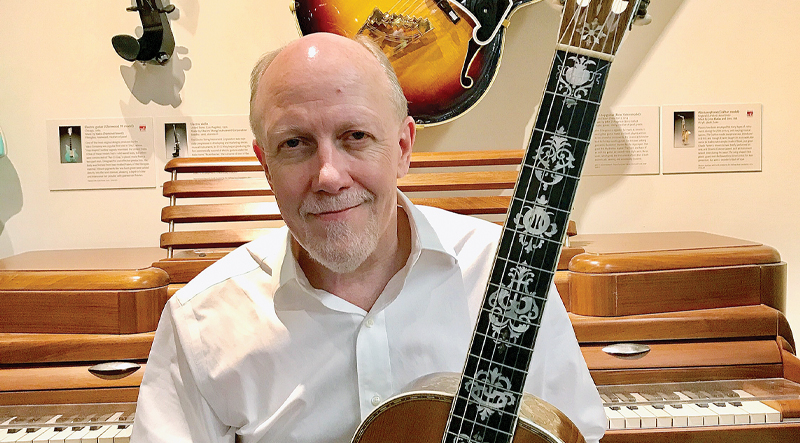
    Darcy Kuronen with an 1890s Bay State Excelsior.

    Musical instruments – guitars – present an interesting philosophical dichotomy. On one hand, they’re utilitarian objects whose very purpose – arguably their only purpose – is to create art, to play music. On the other hand, musical instruments can be, and very often are, beautiful works of art in themselves. Play them or display them. It’s an age-old debate between musicians and collectors (who are often one and the same), and a fundamental issue at the core of the musical-instrument collection at the Museum of Fine Arts (MFA) in Boston, which is celebrating the centennial of its creation. 

    From the MFA collection: a 1972 Ampeg Dan Armstrong See-Through Guitara.

    There’s a fascinating story behind how the MFA came to have a collection of musical instruments, and it directly reflects that dichotomy. The idea of collecting and displaying things began in the 1600s, as well-to-do (and generally eccentric) European gentlemen began to assemble “cabinets of curiosities.” These were eclectic collections of oddities that could include mastodon bones, noteworthy paintings, Leif Erikson’s sword, stuffed two-headed goats, live fish, and Egyptian mummies. In 1753, The British Museum became one of the first public museums to exhibit art and artifacts. Boston’s MFA opened its doors in 1876.

    Interest in archaeology – “scientifically” studying the past – began in the 19th century and included folks like Francis William Galpin (1858-1945), who began collecting old musical instruments in England. The tale includes a generous dollop of fraud (what’s new?) and the occasional Frankenstein reconstruction because Galpin and his confreres thought the instruments should be playable. Galpin collected approximately 650 instruments and, indeed, is commemorated today by the Galpin Society, dedicated to the professional study and preservation of musical instruments and their history.

    Enter Bostonian businessman William Lindsey (1852-1922), his connections to England, and (for unknown reasons) an interest in the Galpin collection, which came up for sale in the early teens. In 1915, his daughter, Leslie, married an Englishman and sailed for their honeymoon on the RMS Lusitania, which encountered German U-boats. Leslie and her new husband were killed, and the U.S. was brought into World War I. As a memorial to his daughter, Lindsey bought the Galpin musical instrument collection, donated it to the MFA in her name, and it arrived in 1917. Thus, the centennial.

    From the MFA collection: a ’33 Supertone 12D213.

    According to Darcy Kuronen, the MFA’s Pappalardo Curator of Musical Instruments, the organization’s early attempts at preservation included “restoration” to playability, per Galpin’s wishes. Indeed, the arrival of the Galpin collection coincided with the interest in playing early music on “correct” instruments, a trend that swept Europe and the U.S. in the early 20th century and in which museum-held instruments played an important role. A small subset of performers who use lutes and Baroque guitars thrive to this day.

    Today, the MFA has largely abandoned restoring instruments to playability in favor of historical cosmetic fidelity, however, instruments are always available to researchers, and, on special occasions, musicians are allowed to perform on “playable” instruments in the museum’s galleries. Kuronen explains that many of these performances have been recorded and as part of the centennial celebration, with video posted at youtube.com.

    On November 16, the MFA will host an event with (among others) Olav Chris Henriksen playing 19th-century French guitars in duo with flutist Peter H. Bloomin in a gallery featuring French paintings of the period.

    In 2000, the MFA, under the direction of Kuronen, became one of the first major art museums to feature a successful guitar-specific exhibition. Titled “Dangerous Curves,” the accompanying catalog is out of print but readily available and worth seeking out (Ed. Note: the author, a longtime VG contributor, also served as a consultant on that exhibition and provided several guitars on loan, some of which were subsequently sold to the MFA to become part of its permanent collection).

    Some musicians cringe at the thought of guitars sitting in museums instead of being played onstage, as they were intended. But the reality is that there are far more guitars than musicians, and it’s certainly better they be preserved and studied – and, like many of the MFA’s collection, occasionally played – than allowed to fall apart or end up in landfills, which has been the fate of far too many musical instruments throughout the ages.


    To view some of the MFA’s collection, visit mfa.org/node/9489.


    This article originally appeared in VG December 2017 issue. All copyrights are by the author and Vintage Guitar magazine. Unauthorized replication or use is strictly prohibited.

  • Philip Sayce

    Philip Sayce

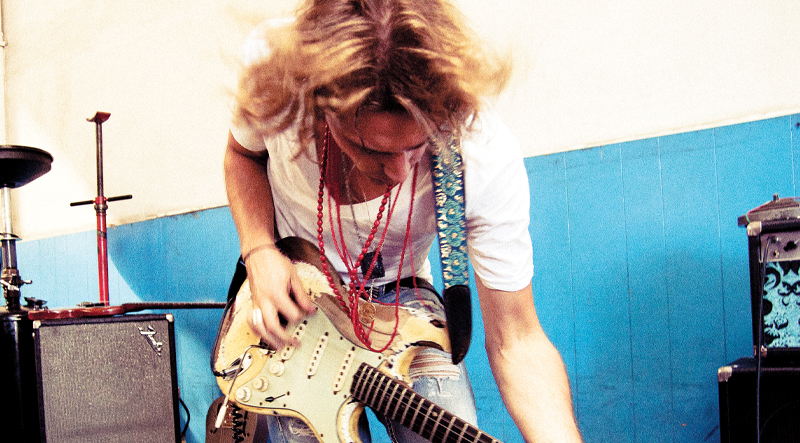
    Philip Sayce: Masaki Koike.

    Philip Sayce’s album Scorched Earth Volume 1 was a live recording from 2016 that displayed the kind of blistering blues-rock ferocity that left many asking, “How does he do that?” As a veteran musician and songwriting professional, Sayce has held tenure with Jeff Healey and Melissa Etheridge. His guitar artistry goes hand-in-hand with choice gear. Here’s the lowdown on what Sayce uses to achieve tonal superiority.

    How do vintage Stratocasters make a difference?

    They have a thing. I can play a new guitar, and sometimes they’ll rival a vintage one, but the mistake is trying to get a newer guitar to sound like an old one instead of celebrating the guitar that it is. I came to a place where I said, “Why am I trying to get this new guitar to sound like an old guitar?” It’s not setting up that guitar for success.

    The ’50s and ’60s guitars have a patina, older wood, as opposed to chopping down trees that are still green and wet. Whatever was happening energetically in the world at that time is different. There are so many things we could go into. When you get your hands on a good one, there’s something really alluring about those smoothed-out edges and things that are unquantifiable. Once you find a good one and your heart and soul connect… game over.

    What’s your favorite era for the Strat?

    ’59 through ’65, when they transitioned to rosewood – the Strats I have right now are both from ’63. My main one is called Mother and I’ve had that guitar for 19 years. I saved up for my Mother Strat and it became the criteria for good tone. It’s had between five to 10 re-frets. The original ’63 pickups went south about 10 years ago – I played a solo with a beer bottle and ended up getting beer in the pickups. About a month later, all three pickups said good night.

    I called a buddy who lives in Edmonton and said, “Dude, I need some pre-CBS pickups.” He said, “I have a great set that just came out of a ’58 hardtail.” They’re glorious-sounding! So, Mother is a ’63 with ’58 pickups but otherwise it’s pretty stock other than the frets.

    The other ’63 is a sunburst, and I first played it many years ago when I lived in Toronto. A good friend was selling it but I didn’t have the bread at the time. Years later, another friend said, “I came across this ’63 Strat and it made me think of you.” He sent a photo and I knew it was the same guitar. It had a unique finish – almost entirely black but with a little sunburst right around the bridge. I ended up selling some things to get it. It’s 100 percent stock.

    Those are my two guitars. I play them hard, love them a lot, and I’m glad to have them.

    How about amps?

    I’ve been traditionally a late-’60s amp guy – Fender or Marshall. I have a ’66 Super Reverb and a ’60s Princeton. Both were completely rebuilt by Cesar Diaz and they are not run-of-the-mill! I’m a huge fan of Cesar’s work. I’ve never heard amps that sounded better after he touched them. The Princeton is like a Diaz CD-100. It’s really beautiful.

    I’ve also been using amps by an engineer named Tommy Cougar, who lives in Sweden. I’ve been working with him for about 10 years now. He’s an exceptional amp designer. Another is a head called Gladys; he names amps after famous singers like Gladys Knight.

    Do you have a favorite pedal right now?

    Fuzz is very important to me. There are so many tones you can get with just a tiny move with the guitar’s Volume knob. I have a Square Fuzz Face that Cesar Diaz built for me that I love, a red ’68 Fuzz Face BC183, and a NKT275 from late ’67, which I found in Austin. They can do a full-on Tube Screamer or “Foxy Lady” and it takes you to that happy place.

    What’s next on your agenda?

    I’m signed with Warner Music Canada and at the beginning of creating a brand new studio record. I just did a song as part of Warner Music Canada’s 50th anniversary celebration. Steve Waxman asked me to record Joni Mitchell’s “Woodstock.” I sat with it for a while and came up with my own version. I played the song with love and respect.


    This article originally appeared in VG December 2017 issue. All copyrights are by the author and Vintage Guitar magazine. Unauthorized replication or use is strictly prohibited.
  • Sonny Burgess

    Sonny Burgess

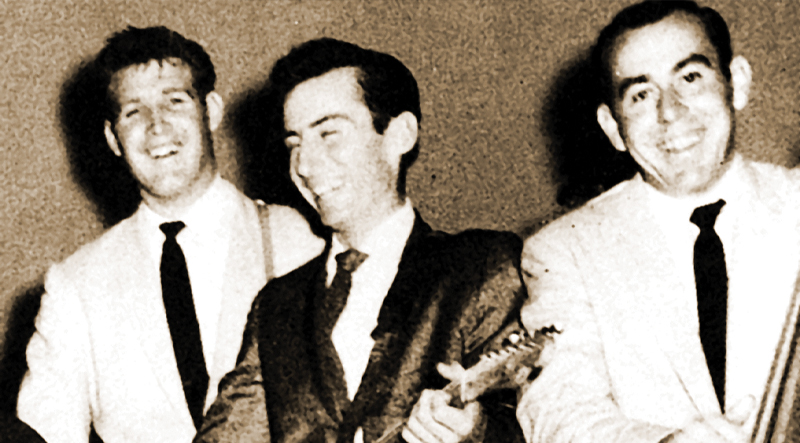
    Burgess in the ’50s with his Gibson ES-295.

    Sonny Burgess, one of the last of the great Sun Records stars, died August 18. He was 88 and had been performing with his old band, the Pacers.

    Burgess was born on a farm near Newport, Arkansas, in 1929. After graduating from high school, in the early ’50s he began playing what he called “boogie woogie music” in dance halls and juke joints. 

    “We opened for Elvis in 1955,” he remembered in 2010. “Elvis suggested that we go to see Sam Phillips, so in the latter part of ’55 we went to Memphis. Sam said, ‘Add a couple more pieces and come back.’” 

    With the addition of a trumpeter – Burgess couldn’t find the sax player he sought – the Pacers returned to Sun several months later with Sonny on lead guitar. Their first record, “We Wanna Boogie”/“Red Headed Woman,” was issued in 1956.

    During that interview, Burgess spoke of the glory days pioneering rock and roll.

    “I never heard the term ‘rockabilly’ back then. Nobody did. Everybody said, ‘Where’d that term come from?’ I don’t know. We never really pinned it down. When people asked what music we played, we were rock-and-rollers. We didn’t think about ‘rockabilly.’

    “It was shocking music to people at the time,” he added. “Elvis, Johnny Cash, Jerry Lee Lewis, Warren Smith, Billy Riley, Roy Orbison, Carl Perkins, Johnny Burnette and the Rock and Roll Trio—we played shows together all over the country. It was wild back then.

    “In the Pacers, we had a real show. We used 50-foot-long cables we had specially made for our guitars, which would allow us to jump off of the stage and play in the crowd. One night in ’56, we were playing a show with Marty Robbins, the Maddox Brothers and Rose, and Ray Price at Robinson Auditorium in Little Rock, Arkansas. My guitarist, Joe Lewis, our bassist, Johnny Ray Hubbard, and I all jumped off the stage – and didn’t look before we leaped. Usually, stages were about 12 inches up to three foot high. We just assumed this was the same and jumped off, but there was an orchestra pit and we went down. We must have dropped 10 foot. Johnny Ray’s upright came all to pieces. But the show had to go on, so we climbed back up onstage and kept playing.

    Burgess onstage with his red Tele.

    “Another time, I tried to dye my hair white. It was black and I wanted to dye it white; Carl Perkins was blue with his blue-suede shows, Elvis was pink and black. I wanted a color, too. I was reading about a guy named Shell Scotty, a detective in pulp magazines, and he had white hair with black eyebrows. I thought that would be really cool, different. Me and my wife, Joann, decided we’d do it – but it turned out red. It was really red. We were heading to California that week to join the tour with Cash in ’57. So the Pacers and I all got red tux jackets with black shirts, black ties, and black pants. I had that red tuxedo and got red shoes, red socks, and played a red Telecaster and red Stratocaster. I sure stood out.

    “When Sam Phillips recorded us, he just sat there and rolled tape. He let us set up our equipment wherever we wanted, just like we were onstage. He had that one good mic, an RCA 77, in the middle of the room and we’d all stand around that mic. Sam didn’t say anything; he just turned that machine on and we’d play like he was 10,000 people in an audience. We were a-beating and a-banging around in there, just like we do onstage. And he’d say, “Well, go through it again.” When he got the one he felt was right and sounded good to him, that’s what he put out. He had a talent for putting out stuff that was different, that felt good. 

    “Back then, we didn’t have any sort of feeling we were doing anything revolutionary. If we had, we would’ve put out more records! We weren’t even trying to make a dollar – there was no money to be made back then. That wasn’t why I was in it, to make money. You had a lot of fun. And you’d meet a lot of gals. You felt good playing it – got your high off the music. You didn’t have to have whiskey or drugs. It was just fun, and you’d get high off that music.”


    This article originally appeared in VG December 2017 issue. All copyrights are by the author and Vintage Guitar magazine. Unauthorized replication or use is strictly prohibited.

  • Tom Feldmann

    Tom Feldmann

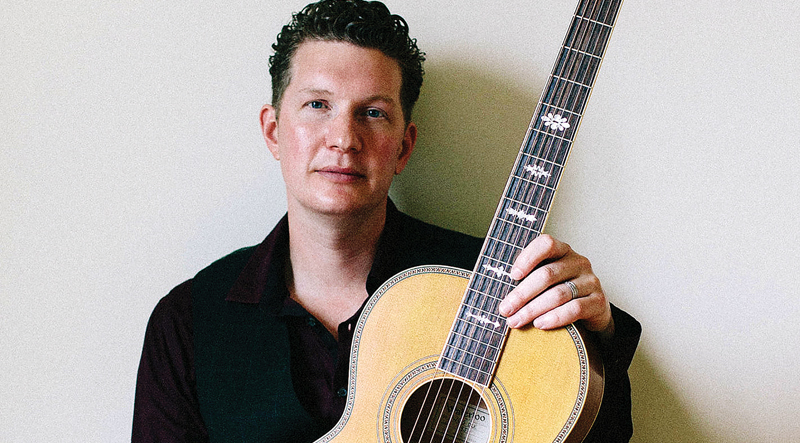
    Tom Feldmann burst out of Minneapolis with an authentic take on acoustic blues unlike anything heard in years. Gifted with fine slide and fingerstyle chops, he also possesses a strong, gritty voice. His new album, Dyed in the Wool, showcases his heartfelt and powerful compositions.

    Dyed in the Wool is eclectic – a compelling mix of Delta blues and contemporary material.

    The last two albums were mostly covers of my favorite blues and gospel tunes. The plan here was to let the songs be whatever they would be and allow the vocal melody to drive the guitar arrangement. That brought about a more-diverse group of songs.

    What inspired the opener, “Going Now, But I Won’t Stay Long”?

    When I was playing with different arrangements, I suddenly recalled Furry Lewis, a Memphis blues legend, and his recordings like “Judge Boushe Blues” that did a similar thing with the lyrics and melody. So, in my mind, the song is my nod to Furry Lewis.

    “Hands in Hand” and “Well Done” sound like Rolling Stones acoustic songs from the ’70s, while the fingerpicking on “Potato Soup” is more Jorma Kaukonen.

    Embarrassingly, I’ll have to plead ignorance on the Stones because I’m really not familiar with their music aside from the hits. “Potato Soup” is definitely a tribute to Jorma Kaukonen. I was asked to assist Jorma at Fur Peace Ranch with his guitar workshops, and one weekend we did a bunch of Drop-D songs, a tuning I rarely play in. We had potato soup for lunch – basically, a bunch of things cooked in a pot – and when I got home, I started messing around a bit more with Drop D. So I did the same thing as the soup chef and threw a bunch of the Drop-D ideas into one song. And out came this instrumental.

    What were your main guitars while making the record?

    A Collings 002h and Waterloo WL-S Deluxe, plus I grabbed an electric for “Hallelu,” but I can’t remember which one.

    What are your primary open tunings?

    Spanish [open G/A] and Vestapol [open D/E]. To me, Vestapol is a sweeter sound and evokes the human voice in a gentler way. Spanish tuning is more of that “driving” Delta sound. I enjoy both and really it depends on the vocal melody, as you can do anything in either one.

    What is your choice of slide?

    Glass double-cut bottlenecks. I’ve played a lot of slides over the years, and really, the tone comes more from the thickness of the material than the material itself. Heavier and thicker will give a warmer tone where lighter, thinner will be thinner in tone.

    Do you use fingerpicks?

    Not currently. I’ve used various thumb and fingerpicks over the years; it really depends on the tunes I’m playing and the tone I’m looking for.

    Some guitarists avoid slide because they don’t understand dampening. How do you control overtones?

    Honestly, just practice. I’ve spent over 20 years playing slide, and while learning to play a song came quickly, learning how to control other aspects of the slide is a lifelong pursuit. Like anything, you have to love it to succeed.

    You have a fair amount of ragtime in your playing. Did you start off with Delta blues or the more rag-oriented Piedmont styles?

    I learned to play from the Delta side more than anything else. On this record are a few songs, like “Have Ourselves A Time” and “Keep It Hid,” that are rags, but that’s because the vocal melody called for it. I really don’t mess around much with the Piedmont players, as they never hit me as hard as the Delta ones.

    Who would you recommend as the best “interwar” bottleneck players?

    Hard to say which are the best, but my favorites are Son House, Charley Patton, Sam Collins, Bukka White, and Fred McDowell. They really shaped how I play. Also check out Black Ace, Casey Bill Weldon, Tampa Red, and Oscar Buddy Woods for a more “city” style.

    Tell us about the online course you’re teaching for Vintage Guitar?

    It’s an eight-part set of beginner fingerpicking lessons. I use “C.C. Rider” by Mississippi John Hurt to teach alternating fingerpicking, and “Mojo Hand” by Lightnin’ Hopkins to teach a shuffle in E. Those two styles are really the bridge to everything else in the fingerpicking world. I think I performed and toured for a good five or more years just knowing those two things!


    Check out Tom’s exclusive free lessons at VintageGuitar.com/features/lessons.


    This article originally appeared in VG December 2017 issue. All copyrights are by the author and Vintage Guitar magazine. Unauthorized replication or use is strictly prohibited.

  • Jonny Lang

    Jonny Lang

    Jonny Lang: Joe Ryan.

    Since bursting on the scene in the ’90s while still a teenager, Jonny Lang has stayed true to his vision, merging blues and rock, often leaning to the bluesy part of the equation.

    The title track of Lang’s 1997 album, Lie to Me, is one of his most renowned songs and led to his being personally invited by Eric Clapton to perform at the first Crossroads Guitar Festival.

    His new studio album, Signs, proves that Lang’s fondness for the blues has not diminished.

    How is the new album different from your others?

    Compared to the last couple, the guitar is more up-front – a bit more raw. I had the intention of having at least a few of the songs harken back to some old blues guys; I’d been listening to Howlin’ Wolf and stuff like that, and was a bit inspired to go down that road. I caught the bug!

    Which guitars did you use most?

    I have a ’59 reissue Les Paul that’s probably 15 years old and was on most of the stuff. I also used a custom Tele I’ve had for about that long on some stuff, and an old Supro Dual-Tone that I think is from the ’60s… that was on a few songs.

    How about amps and effects?

    I used almost no effects; just had this tiny National amp – five watts and a little 8″ speaker. My buddy, Matt, who engineered the record, has a bunch of old stuff and that was one he brought. I used it on every song except “Bring Me Back Home.” I just changed guitars and messed with the Volume or Tone on the amp to change the sound. “Bring Me Back Home” was a Princeton, so it was just little amps on the whole record.

    What are your thoughts on the state of modern blues music?

    As a business – as a marketable thing – I think it’s doing pretty good. The shows I’ve seen, like Buddy Guy, he’s always selling shows out, and people love him. There are a lot of new young people playing guitar that have those older influences, too, so it has probably got a little stronger since I was a kid.

    You’ve played Clapton’s Crossroads Festival a couple times. What was it like?

    It’s such a cool thing. I felt like a kid who got to hang out with all these legends – an amazing meet-and-greet. At the last one I did, 2010 in Chicago, Jeff Beck came on after everybody had played, and the whole stage – the wings and the back – was lined with legendary players ready to watch. I was just like, “Yep, he’s the king.” (laughs) And of course, Beck stepped it up. He can reach as high as he needs to, and dude… he was unbelievable. Rose to that occasion. It was a really cool.


    This article originally appeared in VG December 2017 issue. All copyrights are by the author and Vintage Guitar magazine. Unauthorized replication or use is strictly prohibited.

  • Jim Peterik

    Jim Peterik

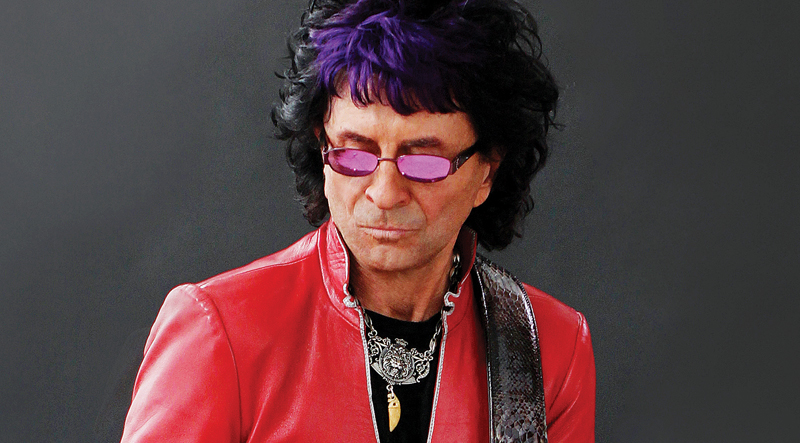
    Jim Peterik: Kristie Schram.

    Guitarist/songwriter Jim Peterik, who helped compose hit songs like “Eye of the Tiger” and “Hold On Loosely,” has remained active in music and other artistic pursuits – and has long been an avid guitar collector.

    “I’ve added a few beauties in the last couple of years – a ’67 Firebird I in Inverness Green, near-mint condition and its P-90s scream,” he said. “There’s also a one-off Gibson Custom ‘map guitar’ and an Epiphone Crestwood from ’59; I once saw Steve Marriott playing one of those, and searched for years to find one.”

    Other additions include two ’50s Les Paul Customs, Jazzmasters from ’59 and ’65, and two ’56 Gibsons – an ES-295 and a Switchmaster.

    Of course, he still has the ’69 Les Paul goldtop he has used for decades, particularly in the Ides of March. “It’s in constant stage and studio use,” he said. “I used it recently on the PBS Soundstage ‘Cornerstones of Rock’ special.”

    In 2014, Peterik issued an autobiography, Through the Eye of the Tiger, and for ’18 he’s producing a calendar that showcases his collection thematically – Jaguar and Jazzmaster “surf guitars” with a Seeburg jukebox, “desert island” essentials, and back-to-school “student models” in September.

    “It‘s a teaser for my coffee-table book, Guitars That Followed Me Home, which will have more-detailed shots and stories behind the guitars,” he said.

    He has also put a unique twist on a way to benefit local charities.

    “Nearly every year, I auction off a ‘guitar tour’ as a part of my contribution to causes such as Chicago’s H Foundation for cancer research,” he said. “The dads and moms who bid invariably do it so their children can see my collection and hear my stories. I stress the charm inherent in older instruments. I’ll do a Pagey lick on my ’56 Tele, and they get it; they’re literally shaking when I let them hold and strum a ’58 Les Paul.”

    While discussing the vintage-guitar phenomenon, Peterik cited the affection for instruments shared by musicians of his generation.

    “Babyboomers like me certainly have a special lust, especially for the instruments they couldn’t afford or their parents wouldn’t let them buy when they were teens,” he said. “Now they have the means, so it’s ‘Dammit, I’m gonna buy that ’61 slab-board no matter what my wife says!’ (laughs) These axes are more than great guitars, they’re recovered pieces of our past.” 

    He’s also encouraged by the enthusiasm babyboomers show when they talk to younger players about the historical importance of vintage instruments.

    “The more millennial bands I do shows with, the more I see how the legend of seasoned wood and hand-wound pickups has really seeped in,” he said. “Many are using their first royalty check to buy a (vintage) axe.”

    As for collectors, he says the best is yet to come.

    “I feel we’ve not yet hit a peak in prices,” he said. “As rock legends pass away or age out, the guitars they made famous live on. The more great instruments are displayed in places like the Songbirds museum, in Chattanooga, and the Musicians Hall Of Fame, in Nashville, the more prestige they will garner. They become stars in their own right.”


    This article originally appeared in VG December 2017 issue. All copyrights are by the author and Vintage Guitar magazine. Unauthorized replication or use is strictly prohibited.