Tag: features

  • Rivet ’63/’64 Pickup Set

    Rivet ’63/’64 Pickup Set

    Price: $329
    Info: www.rivetpickups.com

    Rivet Pickups founder David Petschulat made the first locking vibrato with fine tuners for the EVH company, and worked stints at Kahler and Gibson.

    With Rivet, Petschulat has developed a unique pickup design with two mini-coils that, once connected to their base, allow a variety of tonal options via various wiring cards.

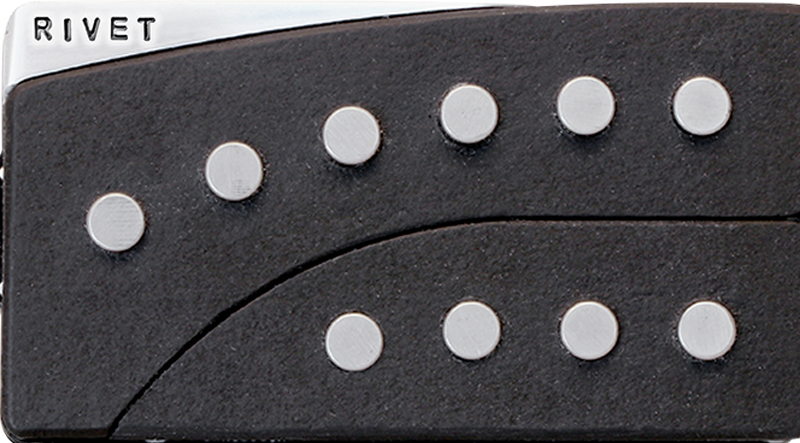
    Rivet pickups are the same size as standard humbuckers but have a very unique appearance thanks to their arrangement and number of polepieces. The ’63 is designed as a neck pickup and has a row of six pole pieces alongside a mini-coil of three poles; the bridge-position ’64 has a row of six poles with a four-pole mini-coil. The pickups connect to a card base with slip-on connectors; the base, in turn, has a slot for an interchangeable card. The unit tested with the Crunch 108 card allowed for a hotter output when the push/pull pot is in the down position. Other available cards include a Glass model, designed to give a more Tele-like tone from the set.

    But where Rivet pickups really outshine other passive pickup designs is in their unique use of mini-coils to produce a clearer-sounding neck tone and a fatter-sounding bridge tone thanks to the arrangements of the mini-coils. For example, when the neck position is chosen, various amounts of the bridge’s mini-coils, positioned under the high strings, are added in to create a clearer and wider overall “neck” tone. Conversely, in the bridge position, the neck mini-coils positioned under the bass strings are mixed in to fatten things up.

    The Rivet system is a highly idealized and extremely versatile set of pickups. Thanks to the ingenuity of founder David Petschulat, the ’63/’64 set offers a wider variety of tones and output levels than traditional humbuckers via it’s card system and imaginative use of mini-coils.


    This article originally appeared in VG February 2018 issue. All copyrights are by the author and Vintage Guitar magazine. Unauthorized replication or use is strictly prohibited.
  • Tsakalis Experience, Emma ON-1 Okto-Nøjs, and Mad Professor Twimble

    Tsakalis Experience, Emma ON-1 Okto-Nøjs, and Mad Professor Twimble

    Prices: $235 (Tsakalis Experience)
    Info: www.tsakalisaudioworks.com

    It seems that every other stompbox on the market has dual-footswitch functionality, packing two entirely different circuits into one housing. And judging by the trio here – all three of which hail from Europe – it’s a global trend.

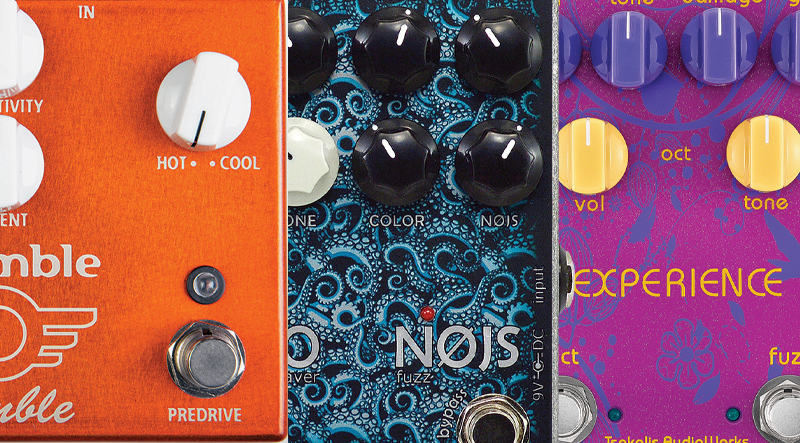
    The Tsakalis Experience from Greece packs a fuzz and an octave, conjuring psychedelia via two silicon transistors and all hand wiring. The results are vintage tones, plus blasts of analog synth, harmonica, sitar, and even trombone. The Level, Tone, and Gain knobs control the fuzz signal, while a fourth knob, labeled “Damage,” sets the bias of the fuzz circuit, thereby selecting the type of fuzz. Bring the octave section online via the footswitch and feel the full roar. The joy here is the burpy, farty nature of the tones, which are ’60s accurate and bring to mind guitarist Ed King’s perfectly sick fuzztone on the Strawberry Alarm Clock’s 1967 classic, “Incense and Peppermints.”

    Prices: $236 (Emma ON-1 Okto-Nøjs)
    Info: www.tsakalisaudioworks.com

    The Experience’s real sonic signature, however, comes from its FET clipping design. The way the circuits strangle-off each note is distinctive. Set its fuzz and octave as mild or hairy as you want, but that cool clipping effect is the star of the show. And, you can use either the fuzz or octave circuit on its own.

    From Denmark, the Emma ON-1 Okto-Nøjs is an analog fuzz/octave with more emphasis on the low-end. The Okto control dials in as much sub as you desire, from a mild thickening of the tone to full-on bassy thud. Dry blends as much or as little guitar tone into the effect as desired. Full up, the unit delivers fairly seamless tracking; with guitar dialed down, expect more sputtery, lo-fi bass tones.

    Stomp on the Nøjs (“noise”) footswitch for the fuzzier side of things. It’s an interesting circuit, with its own 8-bit flavors somewhere between fuzztone and ring modulator. Deployed together, the Okto and Nøjs produce everything from classic Hendrix to that ’70s Jeff Beck attack. A harmonic-distortion generator creates cool, weird textures, at times sounding like an octave up, as well as another down. It recalls the clipped, singing tone Jimi got on “Purple Haze.” The Emma ON-1 Okto-Nøjs is not an over-the-top dirty fuzztone, but a cool-sounding effect for guitarists and bassists alike.

    Prices: $229.95 (Mad Professor Twimble)
    Info: www.tsakalisaudioworks.com

    Finally, from Finland comes the Mad Professor Twimble, combining MP’s Simble Overdrive and PreDrive into a single unit. The pedal delivers sweet, organic overdrive that reacts to the playing, much like a good tube amp. The Overdrive section sports volume and tone-shaping knobs. Sensitivity dials in distortion and compression, but it’s highly interactive with the next control, Accent, which manages the top end. It’s a powerful knob that can boost the crunchiness and make the overdrive section explode. Contour is a subtler EQ shift, brighter or darker.

    The other footswitch fires up the PreDrive, a booster offering two gain levels: Cool (6 dB boost) and Hot (+10 dB). Use this side independently of the Overdrive for clean-boosted leads with just a little grit. Conversely, combine both sides of the Twimble for maximum firepower, with Overdrive setting rhythm crunch and PreDrive delivering a compressed punch for solos. The Twimble is a powerhouse pedal that captures the nuances of analog overdrive. Paired with a nice tube amp, it’ll put most players in tone heaven.


    This article originally appeared in VG February 2018 issue. All copyrights are by the author and Vintage Guitar magazine. Unauthorized replication or use is strictly prohibited.

  • JHS Pink Panther

    JHS Pink Panther

    Price: $249
    Info: www.jhspedals.com

    To mark the 10th anniversary of its original Pink Panther delay, JHS has created an updated edition that packs a plethora of cool appointments in an attractive box.

    Modeled after the sounds of the old DOD DFX9, Boss DD-5, and Ibanez DE7, the new Pink Panther not only delivers the crisp flexibility of a digital delay, but a fine impersonation of a cozy tape echo.

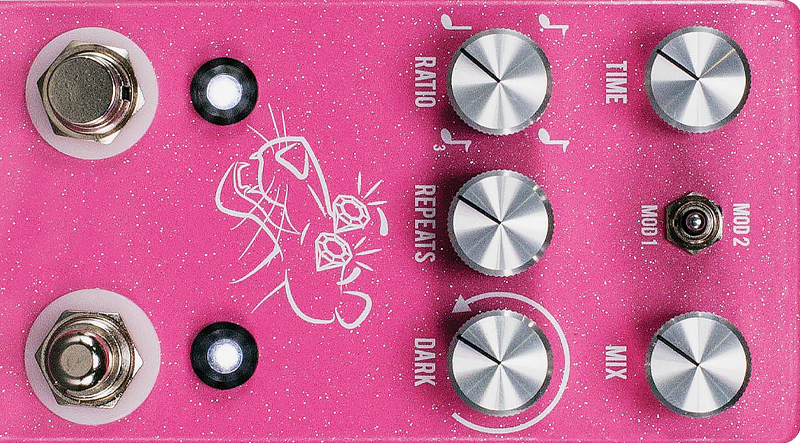
    Among the many features making the new Pink Panther such an adaptable delay are subdivisions, modulation, tap tempo, and up to a full second of delay. A side switch for Digital and Tape modes yields endless pristine repeats and warm, saturated compression. Global controls include a Time knob to adjust the speed of the repeats, a Mix knob to control the level of the effect, and a Modulation toggle with two choices of modulation as well as an Off setting.

    But JHS didn’t stop there. The Ratio knob lets the user choose from several subdivisions – quarter notes, dotted-eighths, eighths, or triplets – while the Repeat knob controls the number of echoes, and the Dark knob brightens or darkens the signal. The pedal, which powers up with a 9-volt adapter, also has a Tap Tempo button.

    But the proof is in the signal chain, and the Pink Panther indeed packs all the sounds promised by the many controls on this small, rock-solid package. Plugged into a Fender blackface combo, position one on the Modulation toggle yielded subtle shimmery chorus, while position two added warbling psychedelia. The Digital/Tape switch would prove extremely helpful, nailing everything from those U2 tribute band needs to full-blown rockabilly by emulating vintage-sounding slap-back tape echo.

    Overall, the new Pink Panther’s ease of use makes it a delight for the compulsive knob turner, serving up the best of both worlds: the punch and fidelity of a digital delay and the plush earthiness of analog counterparts.


    This article originally appeared in VG February 2018 issue. All copyrights are by the author and Vintage Guitar magazine. Unauthorized replication or use is strictly prohibited.

  • Andy Green Pedals’ Seaverb

    Andy Green Pedals’ Seaverb

    Price: $99.99
    Info: www.andygreenpedals.com

    Andy Green offers “basic building blocks” of tone – a concise lineup of effects including distortion, overdrive, fuzz, and reverb.

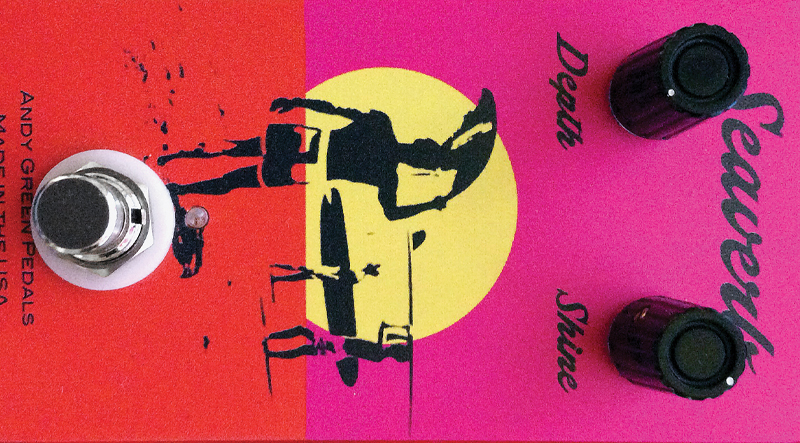
    One of those blocks measures 4.75″ x 2.5 x 1.625″ and is painted with a surf scene riffing on the iconic Endless Summer film poster. The Seaverb is a hand-assembled spring-reverb simulation with a slew of chassis-mounted components – pots, Switchcraft jacks, 9-volt power, and true-bypass footswitch with green LED. Controls include a Depth knob for dialing in the mix of reverb and dry signal, and a Shine knob for the reverb tone and dwell.

    The Seaverb was tested with a Fender Custom Shop 1960 reissue Strat loaded with a trio of Custom Shop pickups and a 15-watt Fender Blues Junior 1×12, and its tone proved to be classic blackface-style spring reverb with a very authentic, slightly trashy splash to the top end and an abundance of clear smooth decay. The Depth control dives deeper into an ambient wash of cool, old-school reverb while maintaining the amp’s natural tone and clarity – without washing-out the sound or losing definition and presence. The Shine control acts like a dwell control on a traditional spring reverb unit and does a great job of controlling the top-end decay and reverb tone.

    One thing missing from the Seaverb that’s prevalent on too many other reverb pedals is background noise. The Seaverb is very quiet, adding little or no background to the signal. Its overall analog flavor and tone give it a more-musical, “sweet” sound without that sterile digital vibe.

    In all, the Andy Green Pedals Seaverb does an outstanding job of transforming a dry guitar tone into a thoroughly drenched day at the beach, thanks to a spot-on spring reverb simulation in a high-quality – and quiet – compact pedal.


    This article originally appeared in VG February 2018 issue. All copyrights are by the author and Vintage Guitar magazine. Unauthorized replication or use is strictly prohibited.
  • Radial Tonebone Hot British V9 and North-Star

    Radial Tonebone Hot British V9 and North-Star

    Price: $169.99 (each)
    Info: www.tonebone.com

    Since the mid ’90s, Radial Engineering has been making audio products with a rep for superb performance and top-tier construction. Its Tonebone pedal line has gained exceptional street cred, finding long-term arrangements on the pedalboards of some of the baddest cats in the six-string arena.

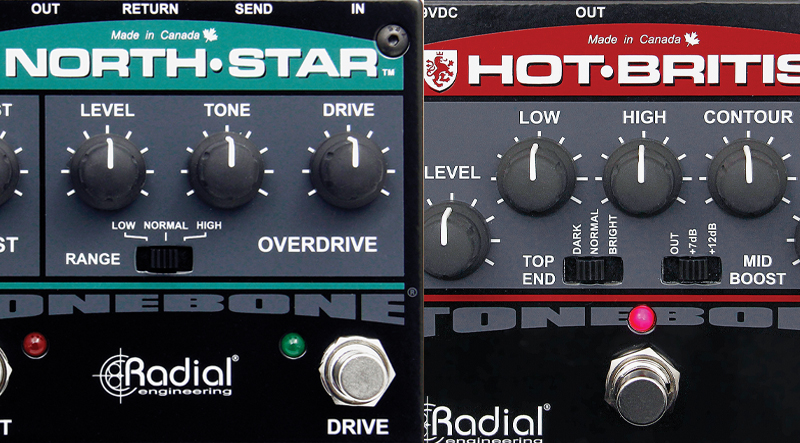
    The company’s Hot British V9 is an updated solidstate version of the Hot British tube distortion pedal. It’s smaller than the original but has all the ballsy Marshall plexi-isms, powers with a 9-volt adapter (instead of the 15-volt), and no longer has a 12AX7.

    The unit’s switches and knobs deliver a cornucopia of tonal settings, its tight work area is home to Level, Drive, and two post-distortion EQ knobs labeled Low and High. The Contour knob controls the personality of the rig from easygoing to outright rude. The two switches offer three-position tone-shaping (Dark, Normal, and Bright), with the second switch offering variations in Mid Boost. 

    The unit also contains a Class A buffering circuit to drive longer cables and maintain tonal integrity. It’s small yet heavier than most pedals, but it unleashes a wide variety of heavy-duty distorted sounds. Played through a Fender blackface combo you have your pick of everything from gritty Chicago blues to a London street riot with goo-gobs of cantankerous crunch and daylong sustain.

    A relatively quiet pedal, the V9’s swarm of controls also presents the option of mix-slicing top-end with thickness or lower-gain midrange chunk. It’s a versatile pedal with the potential for violence, but its strength lies in its portability and willingness to help you get what you need out of mystery backlines. In other words, it’s a great traveling companion.

    Price: $169.99 (each)
    Info: www.tonebone.com

    Another Tonebone offering is the North-Star Overdrive, marketed to country guitarists with a rock-and-roll edge. A two-in-one pedal, the North-Star delivers articulate overdrive as well as 24dBs of clean boost to push a clean amp to the outskirts of chunky oomph. Tough and compact like the Hot British, the North-Star has a user-friendly interface that allows you to jump right in and get going with Level, Tone, and a Drive knob, and a three-way Range switch (Low, Normal, and High) to finetune EQ.

    Max the Drive knob, and you’re instantly aware that the North-Star is made for rock guys who work in the cleaner end of the sonic spectrum. Also perfect for country players who require beaucoup articulation, clarity, and zero mud, this pedal works great when stacked with other overdrives. It’ll also push a dirty amp for some righteous solos without messing up your tone. Its clean responsiveness shines with a Telecaster and propels you to kick out your best double-stop twang and cluck.

    The Boost side is a thing of beauty, offering the absolute correct amount of robust gain without being an overdrive. The North-Star also comes with Send and Return inputs that engage when the Boost is on, allowing you to add time-based effects along with clean boost.

    From diabolical distortion to semi-breakup, Radial Tonebone’s Hot British and the North-Star stomp boxes provide the teeth that give your music bark some bite.


    This article originally appeared in VG February 2018 issue. All copyrights are by the author and Vintage Guitar magazine. Unauthorized replication or use is strictly prohibited.

  • EHX Good Vibes, Tone Corset

    EHX Good Vibes, Tone Corset

    Prices: $89.50 (Tone Corset)
    Info: www.ehx.com

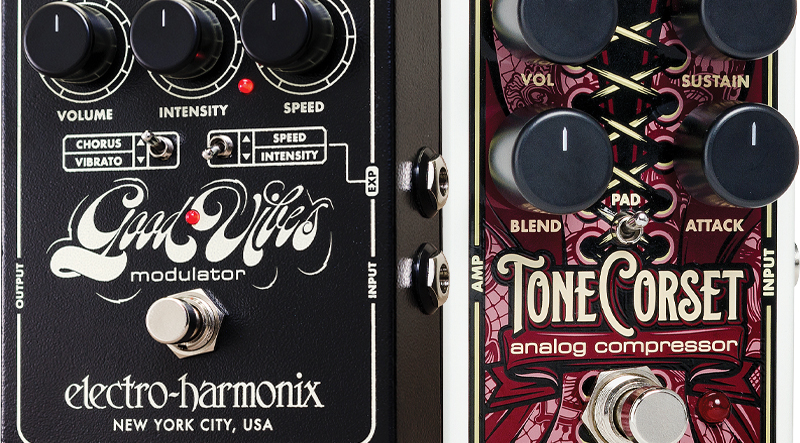
    The musical spirit of the ’60s and ’70s lives again in two of EHX’s latest stompboxes: the Good Vibes analog modulator and Tone Corset analog compressor. Whether it’s chorus and vibrato swirls or that funky squeeze, these pedals are pure classic rawk.

    The Good Vibes recaptures the soul of the great Uni-Vibe, complete with photocells. Switching between chorus or vibrato effects, it produces a liquid groove that’s both flowing and undulating.

    The pedal’s controls include Volume, Intensity, and Speed knobs. A sold-separately expression pedal control of Speed or Intensity is available at your feet; a toggle allows you to switch between the two.

    But this isn’t just a throwback ’box. The Good Vibes is hopped up with boosted power rails that provide modern-day clarity, definition, and headroom to that vintage sound.

    The vibrato adds a lovely movement to your playing without the need to concentrate on a whammy bar or Bigsby. This augments chords with a shimmer, and sounds gorgeous on country tunes or soulful R&B.

    Prices: $137.40 (Good Vibes)
    Info: www.ehx.com

    Whether you’re after Jimi-style psychedelic flower-power or SRV spin in your rhythm or solos, the Good Vibes offers a compact alternative to a Leslie or Fender Vibratone rotating speaker. The sound is warm and rich, with ample troughs and peaks in the sonic waves. The chorus lets you range from lush jazzy or bluesy chords to all-out space-travel flourishes. It’s thoroughly groovy.

    While an original Uni-Vox may have a special vintage tone to it, the Good Vibes boasts solid modern construction – it won’t leave you stranded on the edge of the stage at a gig.

    The Tone Corset squeezes signal in all the right ways. The pedal has four controls; its Sustain knob controls the amount of compression while Attack adjusts how quickly the compression recovers. Turning Attack clockwise, the response is slower and more of your pick attack shines through.

    Blend mixes the dry and compressed signals, and Volume dials in the overall output level. Together, the controls allow you to shape sound dynamics to the nth degree. Adjust the clipping to get a countrified spank that accentuates the twang of a Telecaster. Or go all out for a funky burp that emulates a Les Paul through a Mu-Tron III. It’s a flexible pedal, with a range of sonic control. In addition, the Pad switch “pads” down the input signal to harness unwanted distortion if you’re using it with high-output humbuckers or a bass.

    Both pedals are wried for tru-bypass operation and 9-volt powered.


    This article originally appeared in VG February 2018 issue. All copyrights are by the author and Vintage Guitar magazine. Unauthorized replication or use is strictly prohibited.
  • Republic 207 Tricone

    Republic 207 Tricone

    Price: $719
    Info: www.republicguitars.com

    Resonator guitars appear to inspire a particular kind of affliction among players. And it’s a difficult addiction to maintain, given the paucity of vintage National and Dobro instruments, their much-cursed playability, and their ever-climbing prices.

    Frank Helsley, Jr. is wise to all that. As a teen in Texas, he first heard Johnny Winter play the blues on a resonator guitar and it sparked what’s become a lifelong obsession with the instruments. Frustrated by the lack of affordable options, in 2007 he founded Republic Guitars, based first outside Dallas, now near Austin.

    Sourcing affordable resonator guitars means going through China. And while this has brought a range of fine Republic instruments to players who may never have gotten their hands on one, it has also brought a share of criticism from the strident among the afflicted. Set that aside for the moment, though, and consider Republic’s Tricones and single-cone guitars on their own merits.

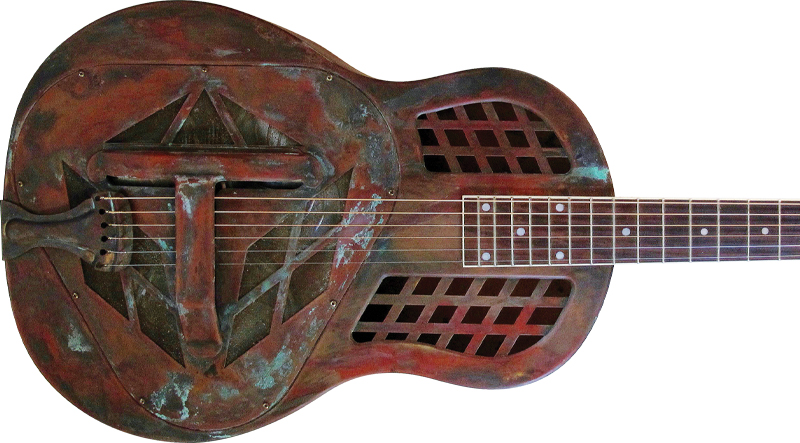
    Republic offers its Tricone with a body made of several different materials: wood, steel, and bell brass, the latter of which was tested. 

    First thing you notice about the bell-brass Tricone is that it’s one hefty instrument. That body feels solid enough to pound nails or split firewood. The body size is similar to a vintage National Tricone, with a 20″ length, 10.25″ upper bout, and 14.25″ lower bout, all 3″ deep. Still, due to that brass construction versus an original National’s German Silver, the Republic weighs a good bit more. Brass also imparts a certain tone (see below).

    The trio of aluminum cones includes two small hand-spun examples on the bass side, one on the treble side – just like an old National. They’re connected via a metal T-bridge with a maple saddle. The mahogany neck attaches to the body at the 12th fret and is capped by a bound rosewood fretboard with dot position markers. The scale is 25.5″. The bone nut runs 1.875″. The stylish Republic logo shield is screwed to the headstock.

    An important – make that, essential – upgrade is the adjustable truss rod. The lack of a truss rod leaves too many vintage Nationals requiring a regimen of expensive heated-neck resets to keep them anywhere near playable.

    Republic offers its metal-bodied Tricones in a variety of finishes. There’s a painted sunburst, polished nickel, brushed steel, antiqued copper, various engraving styles, and red copper rust, which is pure juke-joint chic. All in all, the fit, finish, and form are lovely.

    Holding the guitar upright in your lap, that body weight is actually nicely balanced. It might prove tiring to your back and neck on a strap, but sitting down it’s just right.

    Strum those strings and you instantly hear what a Tricone is all about. This guitar is loud. It’s also clear and articulate – something that can only be said of the best vintage National Tricones, which if not perfectly set up can have a bit of buzz or static in their voice.

    The choice of body material influences the tone – even with a resonator. Wooden tricones have a more… woody sound. Steel can be thinner, shriller. The bell-brass body, however, provides a warmer, thicker, and more resonant sound, ideal for deep blues playing, whether you’re fretting or playing bottleneck.

    Our brass-bodied, red copper rust Tricone is not only a powerfully voiced guitar, it also has a full range of tones well beyond its price point. And it likes to be played hard: dig in with your fingers or pick and slide with purpose and the guitar comes alive.

    It’s not beyond belief that the guitar’s sound will continue to improve with age and use.


    This article originally appeared in VG February 2018 issue. All copyrights are by the author and Vintage Guitar magazine. Unauthorized replication or use is strictly prohibited.

  • Yamaha’s THR100HD Dual Amp

    Yamaha’s THR100HD Dual Amp

    Price: $799
    Info: www.usa.yamaha.com

    Modeling amps have evolved rapidly as software and circuits have improved and become, dare we say, more organic sounding. The Yamaha THR100HD is a prime example: a digital head that offers tube-based tones in a remarkably flexible unit.

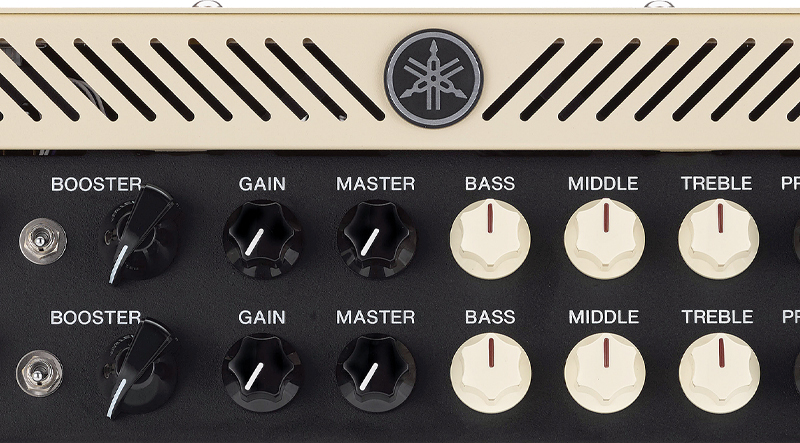
    The basic skinny on the THR100HD is that it’s not merely two channels in a single head but rather two completely independent amps in one chassis. Labeled Channel I and Channel II, each amp has separate inputs and outputs that can also be used simultaneously for a standard lead/rhythm setup. The preamp sports five models simulating classic tones: Solid (solid-state), Clean (Fender), Crunch (Vox), Lead (Marshall), and Modern (Rivera-, Boogie-, or Soldano-type saturation). The preamp also provides separate channel and master Volume controls, Presence, a three-band EQ, and footswitchable reverb and boost functions.

    A knob in the back allows the player to choose digital models of power tubes like the EL34, EL84, 6V6, KT88, and 6L6GC tubes. A variable output switch offers 25-, 50-, and 100-watt power, a choice between Classic A and Class AB circuit emulations, and an effects loop (though Y cables are required for stereo functionality). A USB output connects to a computer to deeply edit reverbs, boost types, and noise gates, and to upload IR speaker simulations.

    All of these features get ramped up when the head is combined with the dedicated THRC212 cabinet, which has two different Eminence speakers. And, each channel can run to a separate speaker, which means the user can set Channel I and Channel II as fully separate rigs, adjusting the amp model, power-tube sim, and speaker choice for each. Two guitarists can even play through the THR100HD head, each using their own amp type, EQ, and speaker. The amp’s versatility also allows the player to have two guitars ready to go at all times. Set up Channel I for a single-coil Strat or Tele, and then dial in Channel II for a humbucker-fitted electric. Onstage, you could simply swap guitars and adjust volumes for two vastly different rigs.

    Plugged in, THR100HD delivers convincing amp models and allow massive control over every aspect of your tone. Overall, this won’t replace a favorite vintage-style amp, but considering the huge array of quality sound choices at your fingertips – all in a light, portable head – its immense ramifications quickly become obvious. The Yamaha THR100HD is a tone-tweaker’s delight with a mind-boggling range of gig and studio uses.


    This article originally appeared in VG February 2018 issue. All copyrights are by the author and Vintage Guitar magazine. Unauthorized replication or use is strictly prohibited.
  • Collings Julian Lage OM1 JL

    Collings Julian Lage OM1 JL

    Price: $6,150 as tested (adirondack top), $5,150 (sitka top)
    Info: www.collingsguitars.com

    The late Bill Collings and his craftsmen are renowned for their beautiful-sounding guitars. It’s apt they’ve connected with a beautiful-sounding guitarist: jazzer Julian Lage, a rising musician known for his sophisticated acoustic and electric work. With the OM1 JL, Collings brings Lage’s nuanced approach to a physical instrument.

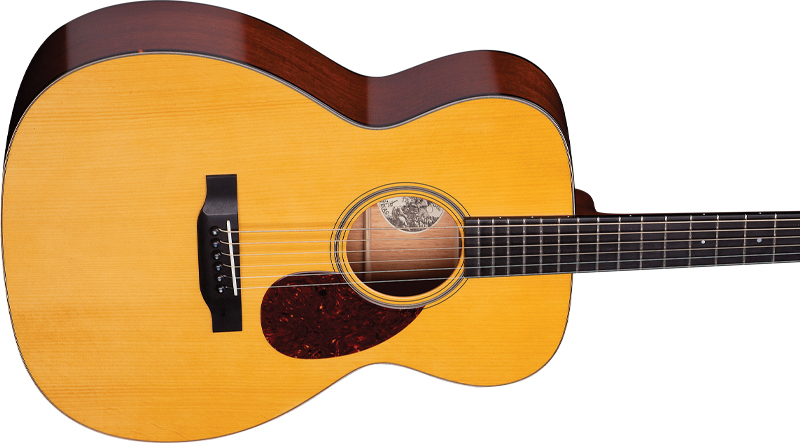
    This medium-sized acoustic is based on Lage’s beloved 1939 Martin 000-18, which he’s used for years, and the Collings T (or traditional) series. The aim is to bring that interwar acoustic mojo into the twenty-first century.

    The OM1 JL has Honduran mahogany neck, back, and sides with an Adirondack spruce top (Sitka is also available), and animal-protein glue construction. The unbound fingerboard is ebony with small, tasteful gold mother-of-pearl dots and eighteen medium frets. As you might expect on a guitar evoking the past, the tuners are open-gear Waverly units with vintage oval buttons (16:1 ratio) and a nicely relic’d nickel finish. Other accoutrements include ebony bridge pins with gold dots, a bone saddle, and a tapered square headstock with inlaid Collings logo. There are also a classic tortoiseshell pickguard and wood rosette. Nothing about the ornamentation of the guitar is particularly over-the-top – it’s all utilitarian and refreshingly restrained.

    The devil is in the details with the Julian Lage box. The finish is crucial, for example – a very thin nitrocellulose lacquer on the body and neck enables the sound of the tonewood to emerge. Inside, a vintage-style X brace with no tongue brace across the underside of the top bout again speaks to flattop design of the 1930s.

    The neck is equally interesting. It has a hand-rubbed nitro finish and is attached with a mortise-and-tenon joint. Like a well-played old guitar, the OM1 JL has a compound radius on the fingerboard, going from 14″ to 26″ and suggesting years of being played in.

    First thing you’ll notice upon picking up the OM1 JL is the wonderfully light weight – the tester came in around three pounds 10 ounces, a nice break from heavy dreadnoughts and jumbos. The guitar’s neck, with its 25.5″ scale, is superbly comfortable and again feels like it’s been played for decades, something that Collings excels at. In fact, it’s one of those necks you feel you can play forever and not get any hand weariness. It has a very natural, broken-in feel with just about perfect setup and action.

    The crowning achievement, however, is the tone, and it’s a showstopper. The OM1 JL achieves that rare combination of materials and finish that yields a warm, sweet tone perfectly balanced on every string. Many acoustics off the rack have that same thin, treble-edged tone coming from the upper strings, but this guitar is all about a lilting midrange – and more bass than you’d expect from a medium-sized body. As with tubes in a vintage amp and aged tonewood in an old Les Paul or Strat, the sound of a sweet midrange is a holy grail for tone enthusiasts and the Collings Julian Lage has it in abundance. It’s difficult not to be impressed by such dulcet tones.

    Granted, the Julian Lage Signature isn’t within everyone’s price range, but the OM1 JL illustrates the truism that ornament doesn’t equal tone. This Collings is a simple and traditional-looking acoustic, without much of the fancy décor and inlays that mark other premium guitars. But if you want a top-end instrument that delivers gorgeous tone and superior playability, this one is hard to beat. It’s a once-in-a-lifetime guitar.


    This article originally appeared in VG February 2018 issue. All copyrights are by the author and Vintage Guitar magazine. Unauthorized replication or use is strictly prohibited.

  • Reverend Mike Watt Wattplower

    Reverend Mike Watt Wattplower

    Reverend Mike Watt Wattplower
    Price: $1,679 (retail), $1,399 (street)
    Info: www.reverendguitars.com

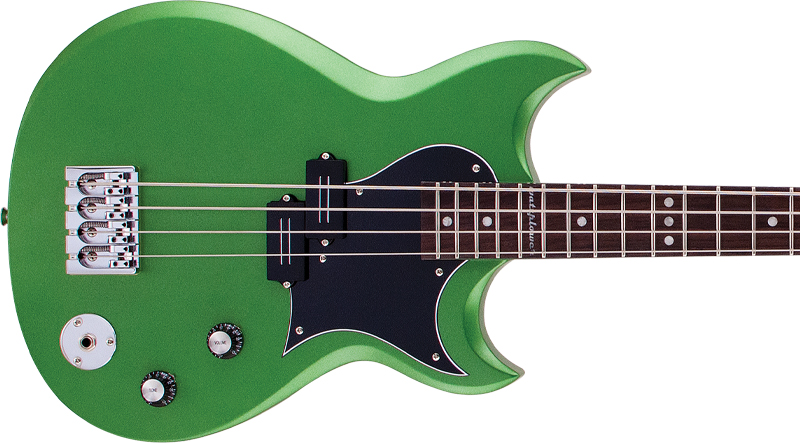
    During four years of back and forth, Reverend Guitars and legendary punk-rock bassist Mike Watt (Minutemen, Firehose, Stooges), developed a partnership that ultimately produced the Wattplower signature bass.

    The Wattplower has a korina body, a set 30″ short-scale neck with a Blackwood Tek fretboard, Hipshot Ultralite tuners, Hipshot Type A bridge with brass spacer block, custom P-blade pickup, and a satin finish.

    Thanks largely to the short-scale neck and the Hipshot tuners, the bass is well-balanced and hangs great – a lightweight, comfortable body and no neck-diving. The five-piece walnut and korina neck has a nice rounded D profile with a rolled fretboard edge and an abundance of side and top fret markers, including an inlayed MOP anchor in tribute to Watt’s father, a Navy veteran. That neck also gives a slinky feel, allowing for fast runs, chording, and string bending – all musts for the punk trio bassist. The satin finish also adds to the instrument’s comfortable playability and its retro working-man vibe.

    Plugged into a 300-watt tube head and 8×10 cabinet, it had a distinctive, gritty tone with a ton of midrange punch and low-end growl. The custom P-blade pickup, in combination with the extra mass of the bridge spacer and extended midrange inherent in korina give it a ton of attitude that aggressively pushed the front end of the amp.

    The Reverend Wattplower is a high-quality, distinctive instrument with a cool vibe and tone that does justice to its namesake.


    This article originally appeared in VG February 2018 issue. All copyrights are by the author and Vintage Guitar magazine. Unauthorized replication or use is strictly prohibited.