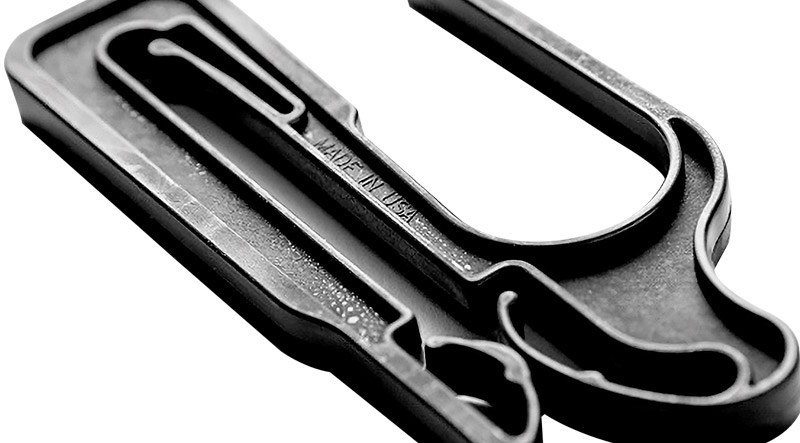
Much of a musician’s setup time is relegated to detangling cable thought to be wrapped pristinely at the previous gig. Even if you use Velcro to wrap the cable neatly, the end can slip through the windings, causing a spaghetti mess. The Cable Porter tool solves that by keeping the windings parallel, one right next to the last. The result? Even if you have a twisted mess loaded onto the Cable Porter, it comes out straight with no knots.
This article originally appeared in VG’s September 2021 issue. All copyrights are by the author and Vintage Guitar magazine. Unauthorized replication or use is strictly prohibited.
During a recording career that spans three decades and includes 19 albums, blues guitarist Eric Gales has achieved a reputation for solos that are a deluge of precise notes delivered with passion. When pedal and accessory manufacturer Jim Dunlop asked Gales what he would like in a pedal, the guitarist was quick to respond, “A Tube Screamer with more bite!”
Dunlop got Gales in touch with Jeorge Tripps, of Way Huge pedals, and in a few months Gales had exactly what he wanted.
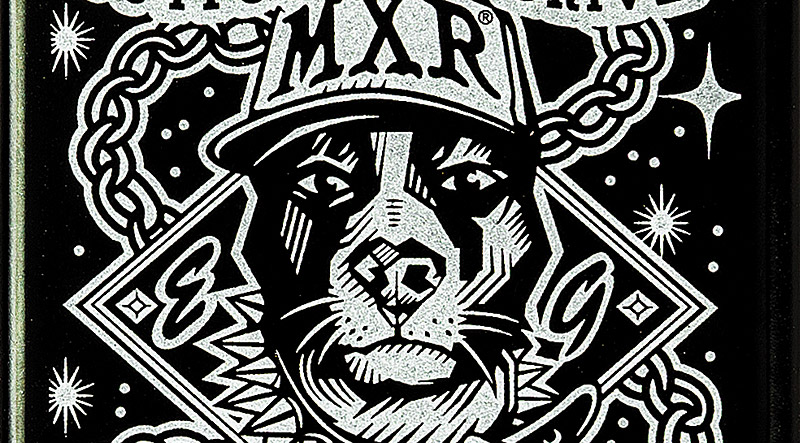
The MXR Eric Gales EG74 Raw Dog overdrive is a mini pedal with controls for Output, Tone, and Drive housed in an attractive box sporting an image of Gales’ beloved pitbull, Little Bud.
Tested side by side with a recent TS808 reissue, the Raw Dawg showed subtle (but significant) differences. Though voiced similarly, the Raw Dawg is harmonically richer, with greater texture. It also has more low-end, mitigating the mid bump common in Tube Screamers. And, used as a clean boost with the Drive set low and Output high, the Dawg hits the front end of the amp harder and earlier.
The MXR Raw Dawg is an excellent, pedalboard-friendly, economical choice for those wanting to sink their teeth down to the bone of tone.
This article originally appeared in VG’s September 2021 issue. All copyrights are by the author and Vintage Guitar magazine. Unauthorized replication or use is strictly prohibited.
Twelve-string sales ebb and flow in part with the popularity of a song featuring one. Orangewood Guitars aims to change such fickle trends with an affordable 12 that plays and sounds great in any situation.
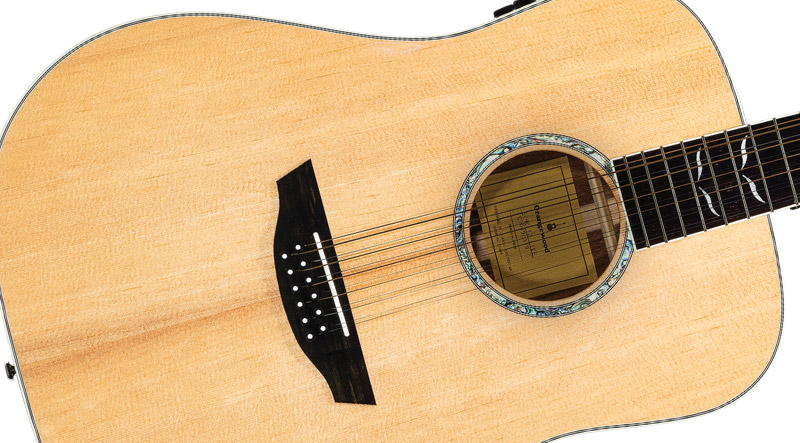
The Echo 12 Live has a dreadnought body with a solid Sitka spruce top and layered back and sides made of Pau Ferro, a South American wood that looks and sounds like rosewood. It’s finished in a very high-gloss UV-cured poly. The two-piece mahogany neck has a headstock attached after the bend under the nut to prevent breakage. Both the fretboard and bridge are made of Ovangkol, a wood from tropical West Africa closely related to rosewood.
The neck has a moderate C shape with a 25.5″ scale topped with a bone nut and gold diecast tuners. Three Orangewood guitars have come through the door so far, and the Echo shares perfect fit and finish with its predecessors.
The 48mm nut is just nine percent wider than Orangewood’s six-string models, yet the string spacing avoids that cramped feeling common with 12-strings. The bass E string clears the 12th fret by just 0.066″, identical to the six-string Orangewood Mason Live, making barre chords no problem at the 10th fret.
Boominess can be an issue with 12-strings, too, but the Echo is remarkably balanced. Every string comes through loud and clear; the treble strings even have a shimmer usually reserved for much more expensive instruments. The Fishman Flex Plus-T EQ pickup system with a built-in tuner and controls for Volume, Bass, and Treble accurately reproduces every nuance.
The Live 12’s quality-to-value ratio is remarkable. If you’re looking to add a 12-string to your arsenal without breaking the bank, it could be a contender.
This article originally appeared in VG’s September 2021 issue. All copyrights are by the author and Vintage Guitar magazine. Unauthorized replication or use is strictly prohibited.
Famous for well-regarded interfaces, plug-ins, and vintage-gear emulations, Universal Audio has entered the pedal business with the Astra Modulation Machine, Starlight Echo Station, and Golden Reverberator. Each has an array of effect types modeled after a specific piece of gear, has a global control for each mode, and offers a variety of sounds that can be accessed via toggle switch.
The dual-processing engine housed inside a rock-solid box endeavors to replicate period-correct sonics. The Starlight Echo Station offers tape delay, modulation bucket-brigade analog delay, and digital delay, while the Golden Reverberator dials up classic amp-style spring, plate, hall, and chamber reverb.
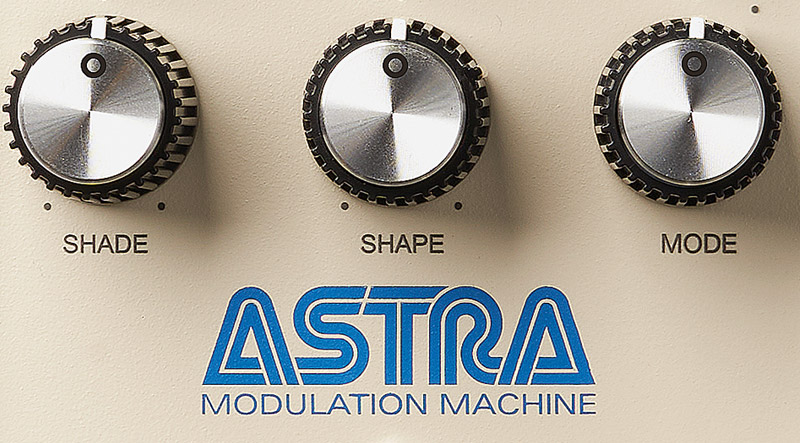
The third in the line-up is the Astra Modulation Machine with its warm bucket-brigade chorus, flanging, and tremolo. The Astra Modulation Machine is a trip back in time to the cool studio flanger sounds of the ’70s. It’s lush, warm, and gritty, offering Boss Chorus, MXR phasing, and tube-style tremolo with additional modes for vibrato and a doubler effect. All three UA pedals have stereo inputs and outputs with buffered and true-bypass selections, optional trails, and silent switching. It even allows storage for presets and has a USB input for downloading additional effects from Universal Audio. In stereo, you can use the Mode knob to switch between classic routing and stereo separation.
When set up in stereo, the Flanger-Doubler mimics the sound of the old MXR studio flangers. Dial-in anything from whooshing jet plane sounds to guitar presets for a Police reunion concert. It nails the tones of the ’80s but warms up nicely for ’70s sounds. And the Trem 65 toggle setting yields classic Fender blackface tremolo tones but with more control.
The Astra Modulation Machine shimmers, stutters, and returns notes like a boomerang. Universal Audio’s pedals ain’t cheap, but if you want rackmount gear in pedal form, this is state-of-the-art.
This article originally appeared in VG’s September 2021 issue. All copyrights are by the author and Vintage Guitar magazine. Unauthorized replication or use is strictly prohibited.
Italy’s Cicognani Engineering makes amplifiers, pedals, and nifty accessories. With a client list that includes Robben Ford, Richard Fortus, and Kee Marcello, Cicognani is the real deal when it comes to effects technology.
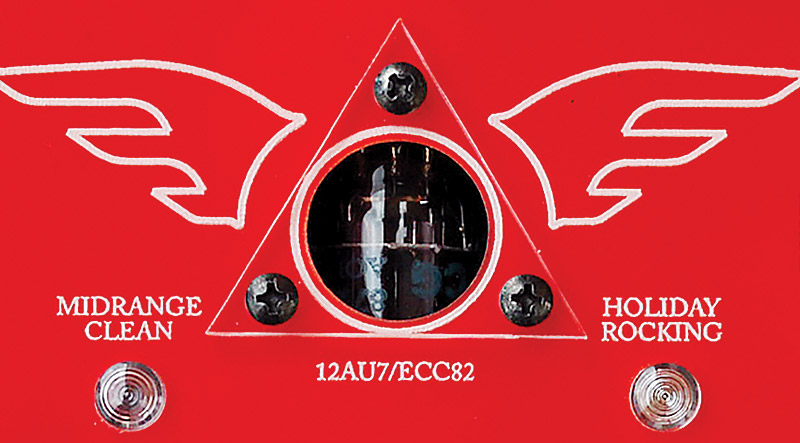
One example of their top-tier wares is the analog Cicognani SexyBoost2, which combines a transparent clean boost with a midrange boost and can be used in front of an amp or in the effects loop. Combining top-notch materials and intuitive functionality, the true-bypass SexyBoost2 allows the user to switch between two flexible sounds. With a 12U7/ECC83 preamp tube housed inside, the Clean Boost control offers -30 dB to +10db gain. The Mid Boost knob delivers -30 dB to +8 dB of gain, and the Cut knob is a global treble/bass cut for dialing in sounds with precision.
The SexyBoost2 not only adds clean volume, it allows the user to sculpt tone from ultra-clean boost to a midrange-packed note thickener. It can also add low-end beef – perfect for pumping up frail tones – and it sounds outstanding with single-coils or humbuckers and has the flexibility for exquisite high-mids or quack.
The SexyBoost2 is excellent for rhythm or lead and provides unique options for tone-shaping. It will also add a new level of upscale sounds to a pedalboard.
This article originally appeared in VG’s September 2021 issue. All copyrights are by the author and Vintage Guitar magazine. Unauthorized replication or use is strictly prohibited.
The ZZ Top guitarist once again stretches his Texas legs on this, his third solo LP. While most of Hardware’s predecessors – Perfectamundo and Big Bad Blues – were comprised of covers, this time, Gibbons and his main collaborators, drummer Matt Sorum and guitarist Austin Hanks, dish 11 originals and one cover (Augie Meyers’ “Hey Baby, Que Paso”).
There’s plenty of Top tone here, notably on “S-G-L-M-B-B-R” and “I Was a Highway,” the latter complete with the sort of extended metaphor Gibbons has perfected over the years.
Where it gets really interesting, however, is with the other genre-hopping tracks. That Gibbons uncorks a wicked slide on “My Lucky Card” and “More-More-More” will come as no surprise, but the true standouts are surf-drenched “West Coast Junkie” and the cowpunk-ish “She’s On Fire.” The prowling “Stackin’ Bones,” presumably a nod to Gibbons’ fascination with the dice he collects, jumps nicely with background vox from duo Larkin Poe. The closer, “Desert High” is a spaghetti-flavored, spoken word ode to the recording locale outside Palm Springs.
Hardware is a must-listen even for the most rigid of ZZ Top fans. Its breadth is a glimpse into the mind of the record-collecting kid from Houston who never lost his curiosity.
This article originally appeared in VG’s September 2021 issue. All copyrights are by the author and Vintage Guitar magazine. Unauthorized replication or use is strictly prohibited.
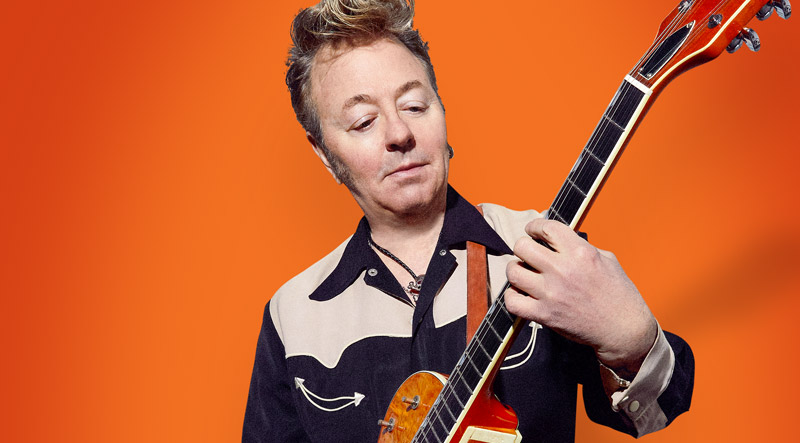
Like any guitarist at his level, Brian Setzer lives life answering the call of music. Grateful for the gift, he’s able to instantly convert thoughts to riffs and songs, as effortlessly as inhaling. His new album, Gotta Have The Rumble, revisits the tried-and-true rockabilly themes that have spurred him for decades – motorcycles, hot rods, girls, and guitars – but also meets his self-imposed challenge to make music that sounds fresh.
For the recording sessions, Setzer relied mostly on one of his signature Gretsches that had proven so roadworthy it only made sense to reward it with studio time. A vintage 6120 carried the remainder of the load. The same, though, couldn’t be said for his recent touring amps.
“All of the amps I’d taken on the road were toast,” he said. “Luckily, I had a couple of good vintage Bassmans laying around; one of them nobody had seen before because I had put it away a while ago.”
Recording during the pandemic forced him to work without other musicians in the studio, which was a first. He tracked guitar and vocal parts in his adopted home state of Minnesota and sent them to players in Memphis and Nashville, who added bass and drums. If the scenario presented any challenges, you won’t know it by listening, and Setzer is genuinely pleased with the results.
“I think this is one album I’ll keep going back to,” he said. “All the tones were captured, they’re really good songs, and it doesn’t sound like an old record, which is the hardest thing to do – that’s the trick.”
How did you choose guitars for these sessions?
I lined up four or five of my signature guitars, and one was the winner. And it’s not from the Gretsch custom shop – it’s an off-the-line 6136 Black Phoenix with TV Jones Classic pickups. I tried some of the vintage 6120s, too, but when it comes down to it, a guitar’s got to work and have the tone. That one had the whole deal – played in tune and sounded amazing through the Bassman. Once you nail a sound in the studio, you don’t want to change anything, so that guitar is on three-quarters of the album. For the rest, I used a ’59 6120 that T.V. Jones worked on for me. He’s a master scientist.
Did the Bassman make it all the way through?
Yeah, except for the first track, “Checkered Flag,” which is a really clean ’64 Bandmaster I used because it has vibrato. That amp’s trick is its original Oxford speakers, which sound fantastic. Over the years I’d swap them out so I could turn it up; I was basically using a Marshall by the end, it got so loud (laughs). Then I tried it again with the original speakers and thought, “Oh, this is sweet.”
Did working without other players in the studio affect the way you played?
Well, I had to imagine a band was backing me because with a band, you lay into it more in certain spots and you lay out in certain spots. We used software to create drum sounds instead of just a click track – we chose Ringo’s drums (laughs) – and it really locked me in. Playing to a click track is like the old pong video game – beep, beep, beep, beep – but with an actual drum sound it was very comfortable, and when the first track came back from Julian [Raymond, his co-producer], I was really blown away.
The positives about doing it this way was it’s less cluttered – you’re not tripping over cords in the studio and if there’s a mistake, it’s you making it. I’d do it again.
Setzer’s 6120T-BSNSH signature Nashville model (left) did the lion’s share of recording for Gotta Have The Rumble, with this ’59 6120 handling the rest. One of Setzer’s vintage pieces is this ’58 6128 Duo-Jet (right) in original blue-sparkle finish, now faded to a green hue.
When did you first connect with Julian?
Julian, I met in Nashville when I played on a Glen Campbell tribute album he was making. For this record, I told him I wasn’t expecting much, but he said, “I’ve got [bassist] Dave Roe in Memphis and [drummer] Victor Indrizzo here in Nashville. Send down the parts and we’ll get back to you.” I’d never made a record this way, and I was really, really surprised by how well it worked. It was so easy.
How about Jason Orris?
Jason is an engineer who owns Terrarium, a studio in Minneapolis. I met him a couple of years ago. He works really quick, which is good because in the studio I get that quick New York thing going. So, we had that connection and once we’re in there, we just want to work. We don’t want to stop and have lunch, we don’t want to talk on the phone. We love getting the job done.
Did you have guitar rhythms or leads worked out in advance, or did you want to be spontaneous?
Well, the solos are half and half. I get a really cool idea for a guitar solo and I’ll base it on that then let it take off. On “Cat With Nine Wives” I came up with a couple of cool almost-bebop solos, like starting with something Cliff Gallup might do then taking it somewhere else. I said, “Let’s come up with a cool, jazzy kind of thing.”
With all of my songs, I come up with a riff out of nowhere. It always works that way for me – they’re gifts I receive from the songbird. It’s funny when people say, “That’s one quarter Les Paul, one quarter Jimmy Bryant, one quarter…[someone else].” But it’s not. It’s just these little ideas that come, and once I turn the faucet on and get rolling, it really snowballs. The first song I wrote this time was “One Bad Habit,” with its crazy augmented-triplet thing. I don’t know where that came from and it has no business being in a rockabilly song… or any song (laughs). It’s something I made up while sitting around, noodling.
Another one that started with a different sort of riff was “Smashup on Highway One,” and I don’t know what that is – some kind of Middle Eastern riff. It came from playing “Miserlou” with the Stray Cats one night. I started on it, and it just sounded so cool and brought the house down. So I came up with that riff and stuck it in a rockabilly song, and it’s very different in that context. I like to take that music out of the ’50s and move it forward.
Is that a real Coral Sitar we hear on that?
It’s not. It was a Coral copy I had laying around the studio, and it was hard to work with because the intonation was terrible. I had to re-tune it every time I did the riff (laughs). It’s blended with my Gretsch.
Which banjo do we hear on “Rockabilly Banjo?”
That’s my Gibson Earl Scruggs. It’s 10 or 15 years old.
You collaborated on most of the songwriting, especially with Mike Himelstein. What did he bring?
Mike wrote quite a few lyrics. With him, it’s the chemistry. I like the way he puts words together; he’s not flowery. I only ever had that with one other guy, and that was Joe Strummer. When Mike sends lyrics, I get lit up and basically write the rest on the spot. I did that with “The Cat With Nine Wives,” and it was so clever and fun; I loved its story and how the words played out. He told me, “Most songs are about the guy that doesn’t want to get married, but I’ve got one about a guy that loves getting married so much he’s done it nine times.” I had this bebop rockabilly riff laying around, and when he handed me those lyrics, I said, “We’ve got to go through the wives… (sings) I’ve got one, two…” And then instead of a turnaround, I played that F6/9, Bb6/9, to the D. It was a jazz thing. And that’s what really flipped it in my head. That would not have been done in rockabilly, but it’s valid in my world because it’s different. And I was blown away by what Dave and Victor came up with to follow my guitar.
You wrote two songs on your own – “Drip Drop,” which has a cool Buddy Holly vibe, and “Turn You On, Turn Me On,” which is an ode to a motorcycle and hints at Bo Diddley.
“Drip Drop” started when winter was finally over and I saw icicles dripping. But you can’t sing, “Drip drop, the icicles go dripity drop.” That’s not poetic (laughs). So, what else goes drip drop? It has to have a ring to it; “My tears go dripity drop… I don’t know why my tears won’t stop.” And then it snowballs quickly to become a song.
“Turn You On, Turn Me On” came to me one day when I started humming, “High compression, low compression…” It was train-of-thought; “All gas, no brakes, adrenaline, head rush, no shimmy, no shakes.” It was catchy.
“This is the place to do it,” Setzer says of riding his ’57 Triumph Tiger 650 in his adopted home state of Minnesota. “It’s wide open, beautiful, and has good roads. It’s a piece of paradise, kind of like where I grew up 40 years ago.”
The outro to “Off Your Rocker” is hilarious, with the conversation where a girl is asking questions and the guy she’s addressing is trying to answer.
Oh yeah, that’s my wife and her friend; they were in the studio that day, so I said, “I’ll come up with some lines and cue you with my hand.” They had no problem doing the interruptions (laughs). It was just a fun outro bit that was easy to catch.
If it weren’t for the pandemic, might this have been a Stray Cats record?
That could have happened, but Lee [Rocker] kind of beat me to the punch when he put a record out. So I sat around and wrote songs just to see what would happen, then it was simple enough to think “I’ll just go demo them.”
Do you play guitar every day?
Oh, yeah. I roam around the house and pick up a guitar all the time. Then I might ride my motorcycle to the hardware store, come back, and pick up a different guitar. That’s how I get ideas. I might get one on a long motorcycle ride; I’ll think “I’ve always wanted to try that Bb with a different key,” then I’ll come back and fiddle on a different 6120. I’m always twanging on them.
Do you still buy a vintage guitar or amp when you see one or hear about one you want to try?
I still buy, yeah. It’s funny, I have some things… there’s a group of guitars that I won’t sell, and they’re all Gretsches and they’re part of me. But I do get smitten with other guitars – I still have the bug (laughs). I bought a beautiful ’56 Les Paul with the Tune-O-Matic, and it plays similar to a Duo-Jet, but those P-90s give it a sound I really like. I love that guitar with flatwound .011s. I also just bought an acoustic Super 400. I love those big old jazz boxes, and what a sound out of that thing!
Where did you find them?
I got the Les Paul from Dave Davidson at Well Strung Guitars. He’s got the craziest things and he’s a straight shooter. It’s weird to buy something sight-unseen, and I have been ripped off in the past – I’ve spent my life learning how to play, not really caring what bridge should be on a guitar or if someone changed the Tone knob. I don’t look at instruments like that. I pick them up and feel them. I don’t look to see if something has been changed. So, I have to get a feel for a dealer. A couple other good ones are Elliot Rubinson from Rumbleseat Music and Gary Dick, from Gary’s Classic Guitars. There are very few guys I buy from.
This article originally appeared in VG’s September 2021 issue. All copyrights are by the author and Vintage Guitar magazine. Unauthorized replication or use is strictly prohibited.
Alligator Records founder Bruce Iglauer: Chris Monaghan.
Anyone wondering why a young Bruce Iglauer was so impassioned about recording the raw, high-energy blues of Theodore Roosevelt “Hound Dog” Taylor can find context in the artists that captivated him in the years before he founded Alligator Records.
“I first was turned on to the blues by Mississippi Fred McDowell, who played mostly inexpensive guitars, almost always with a slide,” recalls Iglauer. “And I consider Elmore James one of the greatest singers and easily the most influential slide player in blues or rock. I am fascinated by slide players. The sound of steel on steel is such a bedrock of the blues, and it always attracts me.”
It sure attracted Iglauer to Taylor, a tall, rail-thin Mississippian who smoked Pall Malls and famously had a sixth finger on his left hand; Iglauer first heard Taylor at Florence’s Lounge, a no-frills joint on the South Side of Chicago.
Captivated by what he calls “the most joyous music I had ever heard,” Iglauer, 22 years old in 1970, began pestering his boss, the late Delmark Records founder Bob Koester – for whom Iglauer was working as a $30-per-week shipping clerk – to cut an album with Taylor. When Koester resisted, Iglauer (with Koester’s blessing) took Taylor into the studio in the spring of ’71. After two nights, no overdubs, and $900 in costs, Hound Dog Taylor and the HouseRockers was in the can – and Alligator Records was born.
In the ensuing 50 years, Iglauer would record scores of guitarists, many among the elite in modern blues, each with their own sound, style, and technique.
‘Passion, Originality, and Emotional Honesty’
Iglauer’s adventures with Taylor not only marked the beginning of Iglauer’s five decades as a label boss, they were the beginning of a decades-long master class on all things guitar, from the world of open tunings to gear to the glorious, time-honored process of “tension and release” that gives the blues its cathartic emotional energy.
“In choosing artists, I listen for passion, originality, and emotional honesty,” Iglauer explains. “Over the years, Alligator has released close to 200 albums featuring guitar players, and only a handful with no guitar at all. Though I can only play a few chords, I’ve heard so many immortal blues guitarists I can hear and feel when a player is in a class by themselves.”
Bruce Iglauer established Alligator Records specifically to make Hound Dog Taylor’s (left) first album. Albert Collins (right) was Alligator’s biggest early act; his 1978 album, Ice Pickin’, gave the label a national profile and earned a Grammy nomination.
Frank “Son” Seals was one. The son of a juke joint operator, Seals was also pivotal in Alligator’s early days; the Arkansas native played a slashing, stinging blues punctuated by a furious attack and stinging single-note volleys.
Taylor and Seals had a few things in common. Both worked clubs and taverns on the city’s South Side and West Side in the early ’70s, and neither spent much time worrying about gear; Taylor played a heavy Japanese-made Kingston-branded Kawai electric (“…built when ‘Made in Japan’ was the mark of cheapness, not quality,” Iglauer says). Taylor actually had two Kingstons, both with action so high that fingerstyle playing would have been all but impossible. Seals, meanwhile, went with a Fender-knockoff Norma, also made in Japan.
For many Chicago bluesmen in those days, guitars were simply tools of the trade that served a crucial purpose – to help them make a living.
“A lot of blues musicians didn’t make much money, so they played whatever they could afford,” Iglauer remembers. “Son was living in a basement when I met him. He played the Norma on his first album (The Son Seals Blues Band), but for the follow-up, Midnight Son, he’d moved up to a Silvertone modeled after a Gibson 335 or 345. Then he got his first quality guitar – a dark-green custom Guild Starfire IV with a whammy bar he never used. It played great and we cut a number of his albums with that guitar.”
As it turned out, the absence of expensive guitars wasn’t necessarily a bad thing. If anything, it enhanced the authenticity of the art.
“Sometimes cheap instruments sound great, especially if they have attractive distortion,” Iglauer explains. “Hound Dog’s two Kingstons were like that. A lot of his sound was in his hands. I once heard him play a Les Paul through a Fender Twin Reverb and it sounded like he was playing a Kingston through a battered Silvertone amp. I’m sure Son Seals didn’t want to play a Norma or Silvertone, but that’s what he could afford. Magic Sam often borrowed a guitar because his was in the pawn shop.”
Another notable early release was Fenton Robinson’s 1974 label debut, Somebody Loan Me a Dime – a classic that remains something of a departure from Alligator’s ’70s output, thanks to its musical sophistication.
“Fenton was the first very musically knowledgeable guitar player I recorded,” Iglauer says. “He started under the influence of T-Bone Walker, who crossed between blues and swinging jazz then studied under Reggie Boyd (a highly regarded guitar teacher in Chicago who gave lessons to Otis Rush and Howlin’ Wolf, among others). Fenton loved to build solos by stacking chords rather than doing dramatic string bending. He got tons of respect from fellow musicians.”
And no account of Alligator’s initial decade would be complete without mentioning Albert Collins, Master of the Telecaster and arguably the most significant signing in the label’s history. By the time of Collins’ 1978 Alligator debut, the Grammy nominated Ice Pickin’, Iglauer had recorded only Chicago-based artists; Collins, a Texas native and already a star, helped give the label a national profile.
Luther Allison (left) cut three studio albums for Alligator in the ’90s before being stricken with cancer. Bruce Iglauer and Lonnie Brooks (right) circa 2012.
Collins, Iglauer says, is one of the three most-exciting guitarists he has seen live, the other two being Luther Allison and Freddie King.
“They were all incredibly physical players who played from the feet up,” he recalls. “I don’t think any blues guitarist could create more pure intensity.”
As the ’70s gave way to the ’80s, Alligator’s roster grew to include Phillip Walker, Lonnie Brooks, and Magic Slim. But until ’84, there was one thing it didn’t include – an album featuring a white blues man. That changed when Johnny Winter headed to Chicago.
White Guys Play the Blues?
The 74-year-old Iglauer has evolved when it comes to white musicians playing blues, but as a younger man he was an uncompromising purist and the idea of recording white guys bordered on sacrilege.
“I figured that Black people created this music – and there were plenty of great Black blues musicians who hadn’t been recorded, hadn’t been recorded right, or hadn’t been recognized,” he explains. “My attitude was that people who grew up with this music all around them would make more soulful, honest records than people – like me – who had learned about the blues from recordings.”
A blues devotee who spent most of the ’70s playing rock, Winter’s career had fallen on hard times by the early ’80s. Signing with Alligator marked a decisive return to his roots.
“Johnny sang in his own voice, played his own style, and loved the blues,” Iglauer remembers. “We met when he showed up backstage at a Son Seals show in New York, eager to meet Son because he was a fan. Johnny came to Alligator to record with real Chicago bluesmen and get back to the music he loved. From that point on, Alligator was open to white artists, but they had to have their own statements to make. No imitators allowed!”
Two other iconic white players joined the fold the following year – Lonnie Mack (who famously played a ’58 Gibson Flying V) and Roy Buchanan. For Mack, 1985’s Strike Like Lightning marked a major re-emergence for an artist who had been toiling in obscurity for nearly a decade.
Bruce Iglauer listened for passion, originality, and emotional honesty in the artists he signed. Frank “Son” Seals, son of a juke-joint operator, was a pivotal early example. Here, he’s backing Koko Taylor with Lonnie Brooks (right).
“Lonnie was the first blues-rock guitar hero,” Iglauer says, citing classic instrumentals like “Wham!” “He was a truly American musician who wasn’t hampered by genre classifications. To him, blues, country, and rock and roll were all a piece of the same pie. He was a very emotional player, and his leaps into the upper register were exhilarating. Very few people play like him.”
Buchanan, who Iglauer considers perhaps the greatest all-around player he ever recorded, cut three LPs for Alligator. His first, When a Guitar Plays the Blues, was also released in ’85.
“Roy was amazingly creative and seemed to pull licks and melodic ideas out of thin air,” Iglauer said, citing his chops, knowledge, and technical proficiency. “He was famous for wild string bending, melodic ballads, and his harmonics. Roy told me how he practiced without amplification because he figured that if he could execute his signature style that way, it would only be easier when he plugged in. He also told me that he was a lazy player. He didn’t like to move his hand up and down the neck a lot, so he learned finger stretches and figured out ways to find unusual note choices without undue physical effort. Roy loved to accompany other artists. He was a reluctant front man.”
The year 1985 also produced Showdown!, with Collins, Johnny Copeland, and a young Robert Cray. It eventually sold more than 300,000 copies, making it one of the biggest sellers in the Alligator discography. And the involvement of Stevie Ray Vaughan (who co-produced Mack’s Strike Like Lightning) and Cray in key releases is now ironic given that Iglauer passed on the chance to record both.
Johnny Winter (left) signed to Alligator in 1984, becoming the label’s first white bluesman. Tinsley Ellis (right) earns Bruce Iglauer’s praise for his intensity and interpretation of Freddie King songs.
“To my everlasting embarrassment, in 1979 I turned Stevie down for a one-record deal that probably would have made a pile of money,” Iglauer writes in Bitten by the Blues: The Alligator Records Story, published last year. “Stevie just didn’t impress me; I thought he was the world’s loudest Albert King imitator and couldn’t hear what made him special.”
Cray, he thought at the time, was a work in progress – shy onstage and not fully realized as an artist, plus his music was more soul and R&B than straight blues.
The Important Notes
The resurgence of Luther Allison unquestionably stands as one of Alligator’s greatest successes. A veteran Chicago blueser who first recorded in the ’60s, he found his greatest creative and commercial success near the end of his life, cutting four albums that appeared on Alligator in the U.S. and on Ruf Records in Europe – Soul Fixin’ Man, Blue Streak, Reckless, and the posthumous Live In Chicago.
“He was one of the most exciting, most physical players ever,” Iglauer recalls of Allison, whose career revival was upended by his death from cancer in 1997, just days before his 58th birthday. “He played with such intensity, such confidence, and a very aggressive attitude toward the groove, playing blues more like a rocker than a bluesman. Plus, he was a great Memphis soul-style singer. There are so many great songs and guitar performances.”
One of the most satisfying aspects of the last 50 years for Iglauer is bringing world-class (but lesser known) players to a wider audience, Atlanta-based Tinsley Ellis among them. Iglauer was sold the first time he heard Ellis perform Freddie King’s “Double Eyed Whammy.”
Lil’ Ed & the Blues Imperials have been with Alligator since 1986.
“He has one foot in the blues, one foot in Southern rock,” Iglauer said. “He also has great intensity, and he’s maybe the best interpreter of Freddie King’s songs. Tinsley has a lot of guitars, but he sounds best to my ear on his ES-345. When he plays slide on a Moderne, guitar collectors in the audience drool.”
Ellis is one of the most-recorded artists in Alligator’s history, along with Lil’ Ed (Williams) & the Blues Imperials, who have been with the label since 1986. Williams, a fiery slide player who tunes to open D, prizes his Gibson Firebrand and Airline 59. Both were played by his greatest influence (and uncle), Chicago bluesman J.B. Hutto.
Iglauer also has high praise for New York bluesman Michael Hill, who cut three albums between ’94 and ’98 with a Steinberger GL4-TA.
“Michael has really big ears and a very broad definition of blues,” Iglauer noted. “He was a source of constant musical surprises to me. He liked creating an intro that grabbed your attention, then he’d startle you by going in a different direction after the intro was over.”
If there’s a single artist today who embodies the spirit – and future – of the label, it could be 22-year-old Christone “Kingfish” Ingram, a Mississippi native Iglauer likens to “Buddy Guy on steroids.” Ingram’s debut, Kingfish, was released in 2019 while the follow-up, 662, dropped in July.
Iglauer says a positively blistering set delivered by the then-19-year-old at the 2018 Chicago Blues Festival sealed the deal.
“I’d seen him when he was much younger, on a tiny stage at the King Biscuit Festival in Arkansas,” said Iglauer. “At that time, his technique was dazzling but he played way too many notes for me. In Chicago, he delivered the music, playing and singing, with remarkable maturity and emotional effectiveness. He plays with youthful attack and energy, but with the subtlety and dynamics of a top-rank veteran.
“When I describe the players I like, I often say, ‘He knows what the important notes are.’ With Kingfish, that was the performance that showed me he knew those notes, because it was soul-to-soul communication. He didn’t play like a teenager; he played like a grown man. I knew then that he had to become an Alligator artist.”
Rick Estrin and Kid Andersen: John Alcala.
’Gator Bites
Bruce Iglauer’s Favorite Guitar Moments
Brewer Phillips (1924-1999) – “Phillips’ Theme,” Hound Dog Taylor & The HouseRockers (1971). “Mostly, he played ever-changing bass lines on a Telecaster, but when he was unleashed on lead, his playing was searing. His playing was sloppy as hell and he only played in a few keys, but his attack was ferocious and he had a beautifully distorted tone. He played with a thumb pick and bare fingers, but often used the thumb pick as a straight pick.”
Wendell Holmes (1943-2015 with The Holmes Brothers) – “I’m So Lonesome I Could Cry,” Simple Truths (2004); “Pledging My Love,” Feed My Soul (2010). “He combined blues, R&B, gospel and country licks. I’d normally see him with a Telecaster. He could get down and dirty and distorted.”
Michael Hill – “Heading Home,” Bloodlines (1994); “Rest in Peace,” Have Mercy! (1996); “I Always Get My Man” from Shemekia Copeland’s Turn the Heat Up! (1998). “His vocabulary includes Albert King, Hendrix, various reggae players, funk, and some jazz. He executes with great precision.”
Little Charlie Baty (1953-2020) – “I’ll Take You Back,” All the Way Crazy (1987); “Jump Start,” The Big Break (1989). “His playing sometimes went to Mars without warning. Charlie could sear you with one blue note or swing like a madman.”
Coco Montoya: Frank Vigil.
Coco Montoya – “It’s My Own Tears,” Dirty Deal (2007). “One of the most melodic and stinging of blues-rockers and a disciple of Albert Collins. He has beautiful tone and plays just the right number of notes to tell the story of the song.”
Michael “Iron Man” Burks (1957-2012) – “Empty Promises,” Iron Man (2008); “Count On You,” Show of Strength (2012). “He was a bluesman but liked rock, too, and used to play [Hall & Oates’] ‘Sara Smile’ regularly. He played with tremendous intensity and confidence, doing super-long sets and working his solos up to soaring climaxes. His attack reminded me a lot of Freddie King’s.”
Kid Andersen (with Rick Estrin and the Nightcats) – “Broke and Lonesome” and “The Legend of Taco Cobbler,” both from One Wrong Turn (2012). “He’s unbelievably talented. He has a huge vocabulary of blues, rock, and other genres, and a completely wild musical imagination. He can play great straight blues or present a musical commentary on a fictitious western.” – Sean McDevitt
Pat Faherty and Matt Stubbs with the gear used to pay tribute to Hound Dog Taylor, including a Teisco Kingston and Silvertone 1454 along with a Silvertone 1482 amp (right): Fancey Pancen.
Dog Tracks
GA-20’s Hound Dog Taylor Tribute
Beyond being the first artist to release an album on the Alligator label, Hound Dog Taylor was an ebullient, full-steam-ahead guitarist and performer with an influential approach.
Two players today who best exhibit its impact are Matt Stubbs and Pat Faherty of the guitars-and-drums three-piece GA-20, whose music (like Taylors) bypasses a bass instrument.
In ode to Alligator Records’ 50th anniversary, Stubbs conceived GA-20 Does Hound Dog Taylor: Try It…You Might Like It! for the Colemine label. The album – 10 songs written or performed by Taylor for his self-titled 1971 debut and ’74 follow-up Natural Boogie – are set for release in cooperation with and distributed by Alligator, and it’s a study in the HouseRockers’ approach to blues and the interplay between Taylor and co-guitarist Brewer Phillips.
“I’d listened to them for years, but until we started this album never really sat down and dissected what they were doing,” said Stubbs. “But Brewer Phillips was playing all kinds of bass-line stuff, and re-creating some of that was tougher than I expected. It was unique, and fun to learn. If you listen closely to the verses in ‘Give Me Back My Wig,’ he plays these blazing-fast fills. It’s low in the mix, but if you have headphones and really hone in, you’ll hear how cool it is.”
Stubbs shared the details of his band’s approach on the tribute album.
Which blues artists do you first remember having an impact on you?
Jimi Hendrix. As a kid, though, I first heard Lenny Kravitz’s “Are You Going To Go My Way?” and I was like, “Man, this is cool.” My father said, “If you like that, you’ll like Jimi Hendrix.” So I got into Jimi then within a year or two I’d gone back to Buddy Guy and Albert King. From there, I dug deeper and deeper into earlier blues and by 16 I had blinders on; I loved Johnny “Guitar” Watson, Earl Hooker, Guitar Slim, Gatemouth. I didn’t have many friends listening with me, but I was hanging out with older musicians, trying to find people playing traditional blues.
When did you first hear Hound Dog?
I don’t remember exactly, but he’s always been in my album collection. I love Chicago blues, and “Give Me Back My Wig” was the first song I remember hearing by him.
Whose idea was Try It…You Might Like It!?
Last July, Bruce saw GA-20 when he came through Chicago, and he later reached out to see if we were interested in doing a record with Alligator. He didn’t realize we were with Colemine Records, but I had an idea that maybe Colemine could work in partnership with Alligator to do something for the 50th anniversary of Hound Dog’s first record. I proposed the idea to Terry Cole, who owns Colemine, and he loved it. Then Bruce called, so I pitched the idea to him and he seemed to really like it, and his whole staff and team are doing a great job getting behind it.
How did Taylor and the House Rockers affect the music you make in GA-20?
I think all three of us – myself, Pat, and our drummer, Tim Carman – connect heavily with a lot of Chicago acts from the ’50s through the ’70s. There were a lot that didn’t have bass – just two guitar players. I wasn’t walking around thinking about doing a tribute record, but with Bruce reaching out I thought it could educate people. Plenty who hear our music might not be blues fans or not listen to blues of that era. But there has always been a connection between GA-20 and the HouseRockers; GA-20 has been around for a couple of years but we still get a lot of “Where’s your bass player?” And we didn’t start super heavily influenced by Hound Dog’s band. It was more about Little Walter records and even earlier Chicago stuff – the Meyers Brothers and Robert “Junior” Lockwood. That’s where it started, and Pat and I were just doing local gigs without a drummer. We first had a harmonica player, then realized we wanted drums, so we morphed into what we are now.
Do you ever miss having bass in the mix?
I don’t, and I don’t think Pat does, either. One of us was always playing a bass-like part, and we arrange our music that way. When we’ve had bass players sit in from time to time, it always feels kind of awkward.
Pat Faherty with one of the Teiscos used to re-create Hound Dog Taylor’s sound for GA-20 Does Hound Dog Taylor: Try It…You Might Like It!.
What’s the most profound thing about Hound Dog’s music?
When Hound Dog digs into a slide solo or even plays just one note, man, I get goosebumps! It’s just so raw and captivating.
As a trio, they really played off of each other; it’s not just drums doing a straight beat or Brewer Phillips playing rhythm with maybe a walking bass line, then Hound Dog soloing. They didn’t sound like “just” a front man with people behind him. Everything was an interaction with that band; Ted Harvey was like a jazz drummer going off the rails half the time. When Hound Dog leans into a solo and starts going crazy, it’s totally off the rails. That is what speaks to me about Hound Dog. Unfortunately, I never saw him live. I’ve seen videos and it’s easy to imagine his stage presence.
To re-create the Hound Dog sound, you needed old Teisco guitars. Where did you find them?
Neither Pat nor I owned a Teisco – we’re into old Harmonys and Silvertones. But yeah, right away we said, “We’ve got to at least get in the ballpark with the gear.” I didn’t want to exactly copy Hound Dog, but I wanted to do our best to capture the spirit. So, we started researching the guitars, and I wanted to get the right drum sizes – all of it. So I talked to Bruce a few times and he sent me pictures. He still has one of Hound Dog’s guitars, so I asked him about models, then Pat and I went down that rabbit hole, looking online and locally. I think Pat ended up buying six of them – different models with different pickups. A few are the exact model Hound Dog had. Then we tried them through different amps, playing the record, listening to different songs. From there, we searched out what sounded as close as possible to our ears.
Did you already have Silvertone amps like Hound Dog played?
I had a few, but the amp Pat used, I found two or three weeks before the record. It’s not the exact model Hound Dog used on those recordings – he had a big piggyback one with a 6×10 cabinet that was a really loud; Bruce told me Hound Dog cranked the thing and one or more of the speakers was probably blown. Anyway, I have a 1482 from the early ’60s. We recorded in my studio and wanted to all be in the room together so I could use room mics and the guitar wouldn’t overpower drums or vocals. It’s a five-watt amp. Pat plugged in and we turned it all the way up and put the Treble all the way up, and it was in the ballpark.
It was important to be in the same room like Hound Dog and the band were?
Yeah, Bruce told me when they went in for both the first album and the second, Natural Boogie, they were in a room with no headphones or anything and recorded to a two-track with minimal mics. So that was the idea for us. The only difference was we did use headphones so we could hear vocals, just because my recording room is so small and the drums were pretty loud.
A lot of the songs were one or two takes. We just came in, spent time working on arrangements, and did the whole record in a day and a half.
It’s exciting to bring Hound Dog’s music to a bunch of new people. Hopefully, they check out his catalog. – Ward Meeker
This article originally appeared in VG’s September 2021 issue. All copyrights are by the author and Vintage Guitar magazine. Unauthorized replication or use is strictly prohibited.
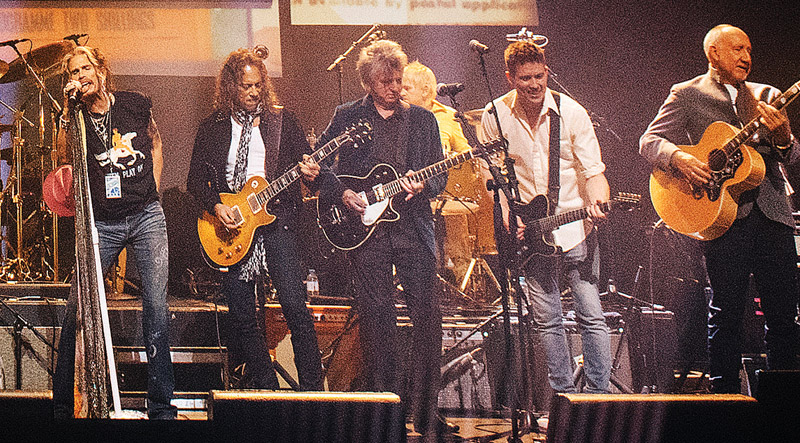
A stage full of all-star guitarists honor Peter Green.
Mick Fleetwood with “Greeny.”: RossHalfin.
British blues icon Peter Green passed away July 25, 2020, at the age of 73. As one of the founding members of the original Fleetwood Mac with Mick Fleetwood and John McVie, Green influenced a generation of guitarists. His exquisite phrasing and tone were his hallmark as he interpreted American blues for a switched-on generation.
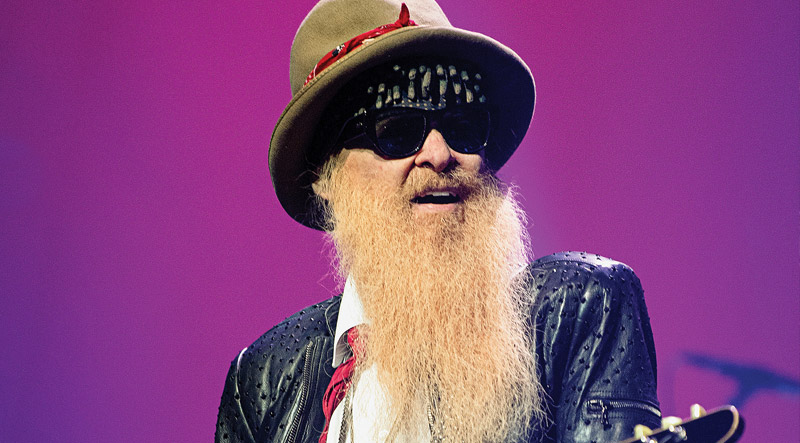
Six months earlier, Fleetwood had organized a concert at the Palladium, in London, to pay tribute to the Mac founder. This sold-out show featured a huge cast, all marked by the supernatural magic of Green. The event bristles with energy, superb playing, and great songs. Jonny Lang’s powerful performance of “Need Your Love So Bad” counterbalances Steven Tyler’s rousing “Rattlesnake Shake,” featuring Billy Gibbons. Pete Townsend, Jeremy Spencer, and David Gilmour also deliver visceral performances.
Rick Vito is the glue that holds things together, with the icing on the cake being an appearance by “Greeny,” the guitar previously owned by Green and later, Gary Moore. It’s now owned by Kirk Hammett, who wails on a mighty version of “The Green Manalishi (with the Two Prong Crown).”
This article originally appeared in VG’s September 2021 issue. All copyrights are by the author and Vintage Guitar magazine. Unauthorized replication or use is strictly prohibited.
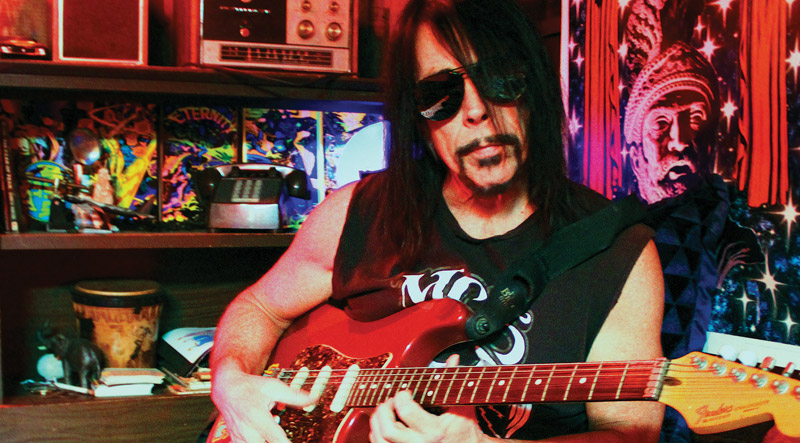
Like most rock bands, the men of Monster Magnet found themselves with a lot of time on their hands once Covid effectively ended tours in 2020. But instead of going into hibernation, Dave Wyndorf and company went to work in the studio, recording an all-covers album, A Better Dystopia, which focuses on proto-metal obscurities (only the hardest of hardcore record collectors will be well-versed with Poo-Bah, Table Scraps, the Scientists, etc.). And as with previous Monster Mag offerings, it rocks… ferociously.
How did an all-covers LP come about?
It came about because we were raring to go. We were on a two-pronged Powertrip tour – the first half in Europe, second half in the U.S. We’d finished the European part in early March and just made it out of Europe before all cities started going down with Covid; Italy had all those deaths two days after we were in Milan. We were riding in a bus in Spain, saying, “This thing looks like it’s going to get really big.” At that point, everybody was guessing. So, we did our gigs in Spain then came home, and we had a three-week wait before the American tour, which we then had to cancel. Then, everybody in the rock business flipped out; “What are we going to do? We’re all out of a job!” We looked around, explored options, and then I brought out the cover-record thing. I had the idea in my back pocket for years, and this was the perfect time to do it.
How did you select tracks?
I had these songs in my head for a long time. I’m a big garage-rock fan, big underground-rock fan – that specific time between the end of psychedelia and the beginning of what we call “mainstream rock.” Before FM radio got money-smart and started programming, there was this weird time in between – about ’68 to ’72 – where FM radio was a place for anything. And that’s where this stuff would show up. It didn’t show up on any charts. It was below the hits, below the Top 100. Under that was just a bunch of leftover freaks – proto-metallers. I’d buy these albums that were on major labels but were basically write-offs. A lot of obscure “What the f**k?” records.
To me, that was the perfect reason to do a covers album. This stuff is really cool, hardly anybody has ever heard it, some of the stuff was [originally] recorded so badly, so I thought, “What if we record better-fidelity versions of these songs, and most important, put them in sequence that sounded like an album by the same band?”
For awhile you were primarily using Gibson SGs. What about now?
This record was done with very few guitars. It was a Les Paul, an SG – I think it’s a ’64 – with a Bigsby on it, and we used a Strat for one song. I ran a 50-watt Marshall – an older one – and every once in a while we’d switch out a different cabinet, but mostly switched mics.
Do you have any vintage gear in your collection?
I have fuzzboxes galore – Old Echoplexes, original Maestro stuff, Electro-Harmonix, Fuzz Face, a couple of British Tape Echoes.
What’s your most obscure stompbox?
I’ve got this one thing – it has nothing but the name “Columbia” on it. I’ve never found out what it was. It’s square, like a giant sugar cube. It’s just the most godawful thing you’ve ever heard. You step on it, and it’s this squeezed out, shredding, almost octavating sound. But I think it’s only octavating because it’s so distorted.
Do you miss the days of being able to find affordable vintage stompboxes?
I think about it all the time. How much fun was that? When stuff was just out there and nobody wanted it. I remember when it started to turn. There was one point in the late ’80s, when Monster Magnet first started, when I’d go to my local music shop and they’d look in the basement and come up with old Electro-Harmonix pedals, and they’d be original price – “Oh, that’ll be $15.” New, in the box! That set me off, so I drove up and down New Jersey to every music store that I could think of, and just cleaned them out.
Out of all Monster Magnet albums, which one are you most proud of guitar-wise? Spine of God and the last three (Last Patrol, Mindf**ker, and A Better Dystopia). I’m not talking songs here, just guitars – the sounds are better, there are more different sounds, and I experimented a lot. And a variety of different guitars – from Gretsch to Gibson, single-coil, double-coil – to amps and all this stuff. It’s a feast.
This article originally appeared in VG’s September 2021 issue. All copyrights are by the author and Vintage Guitar magazine. Unauthorized replication or use is strictly prohibited.