
 The Loar’s LH-301T s a fully hollow electric archtop with a 1.5” body depth and 16” lower bout, a P-90 pickup, maple top, back, and sides, and a C-shaped mahogany neck. See it at www.theloar.com.
Month: April 2014
-
The Loar Adds H-301T Model
-
Bedell Offers Antiquity Milagro
 The Bedell Guitars Antiquity Milagro has sides and back made of Milagro, a Brazilian rosewood that was sourced from a tree estimated to have germinated in the early 1600s, paired with a Sitka spruce top sourced from a 400-year-old tree. Learn more at www.bedellguitars.com.
 -
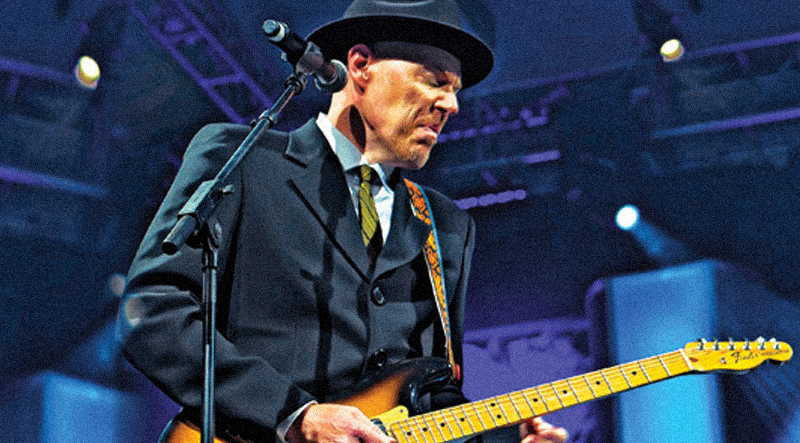
Hadden Sayers

If Hadden Sayers’ 2011 release, Hard Dollar, was a way to get his feet wet again, his latest, Rolling Soul, represents a full return to the music world. The guitarist had been at it hard and heavy for more than a decade before personal events took him a bit out of the music realm.
“I was doing well, keeping my act and recordings in-house, just doing albums and touring in my van. But, things were getting smaller and smaller for me. I passed on a couple of record deals that might have been a good idea, and I took one that wasn’t a good idea. At the same time, my wife was getting her Ph.D and we knew she could get a job wherever it took us.”
The couple ended up in Columbus, Ohio, where Sayers started playing with relatives of his wife. “They were really good musicians,” he said. “They were kind enough to include me in their band, and I started to include them in my band. Then the drummer – my wife’s uncle – died on a gig. It was a heart-wrenching experience.”
That was followed by the death of his wife’s boss, the person who brought them to Columbus. For awhile following, Sayers didn’t play much.
“It was a crazy time, a shock really,” he said. “We bought this old cabin and I met this old man who showed me how to repair it, and we worked on it for a little while. That took the focus off my troubles. After about 18 months, I found a way to start recording and writing again.”
It was about that time a break came his way that brought the excitement of music back and served as impetus for his new record.
“A gig popped up to play with Ruthie Foster. That soul trip she’s on is just amazing. Rolling Soul was me trying to refine the songwriting process and enjoying that world of soul she exposed me to. I had been aware of that world, but not entrenched in it like I was after playing with her a little bit.” He says at that point he started writing a lot again. “I’m not disciplined in the sense that I sit down and say, ‘I’m going to write a song today,’ but I’m kind of a sponge for ideas and thoughts and how they may be turned into songs. So, when I’m traveling and listening to music, reading the paper – anything really – I’m looking for any nugget that might lead me to a song.”
Growing up in east Texas, Sayers’ main influences were the blues and the rock and roll of the day. “I took lessons when I was a kid, but it kind of turned me off. Everyone was learning out of the Mel Bay book that had all the sight-reading single-note stuff, and it wasn’t exciting at all. I wanted to be like the guy in Kiss, but was being taught how to sight-read ‘The Bells of Scotland.’”
Rolling Soul has a huge helping of soul music with plenty of R&B and rock mixed in, but Sayers says despite the variations of sound, most of the guitar work was done on a single guitar he put together. “I had gotten a ’64 Teisco Del Rey from Billy Gibbons years ago. I took the pickups out of it. I have a loose relationship with Fender and Epiphone, and I took a Strat that Fender had given me and I put the Teisco pickups in it. The rest of the guitar was built from parts of different guitars Fender had given me. So it’s got a Tele neck, a Strat body, and the pickups from the Teisco. I put the thing together when I started playing with Ruthie about three years ago, and I just got more and more enamored with it. That’s the main guitar on this record, and my main guitar live.”
Sayers’ gigging amps are a pair of Marshall 2×12 combos, one a 1978 master-volume. In the studio, things get a little trickier. “I own a bunch of amps, probably about 30. I use a lot of them in the studio, but on this album mainly I used a ’64 Fender Vibroverb, a ’55 Tweed Pro that’s been on every one of my albums, and a ’64 Vox AC30.”
While he still plays with Foster, this year, he’s concentrating on his own career. “I still play occasionally with Ruthie when she uses a full band, but my own band has a lot of club dates lined up and we’re going to be doing a lot of festivals.” Sayers’ band is a four-piece with a drummer, bassist, and keyboardist joining him onstage. Those familiar with his history know a van has always played an important role in his career and, with a laugh, he says that continues. “Yeah, we are flying a bit more than we used to, but we still load up the 15-passenger band van for plenty of gigs.”
With the release of Rolling Soul, Sayers is re-establishing himself as a triple threat singer/guitarist/songwriter. He’s enthusiastic about being back in the game. “I never thought my troubles were bad, because lots of people have things way worse than me. Looking back now, I realize it was a journey, and here I am.”
This article originally appeared in VG July 2013 issue. All copyrights are by the author and Vintage Guitar magazine. Unauthorized replication or use is strictly prohibited.
-
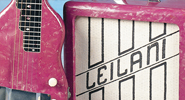
The Leilani Lap Steel and Amplifier

You can receive more great articles like this in our twice-monthly e-mail newsletter, Vintage Guitar Overdrive, FREE from your friends at Vintage Guitar magazine. VG Overdrive also keeps you up-to-date on VG’s exclusive product giveaways! CLICK HERE to receive the FREE Vintage Guitar Overdrive.
As Hawaiian music gained popularity in the 1920s and ’30s, performers turned from guitars made of wood to metal-resonator instruments produced by the National Stringed Instrument Company. By the mid ’30s, many began to play electrically amplified instruments because they were louder and sweeter-sounding than even the resonators – and more practical when performing before large crowds. Students of the guitar often learned the Hawaiian style first, with the guitar flat on the lap and the strings tuned to an open chord, played by moving a metal bar up and down the strings to produce the flowing, melodic sound associated with luaus, palm trees, leis, and pineapples. This was an easy way to start playing, and today these early student instruments often bear fretboard markings from 1 to 12, either as factory originals or thoughtfully inked into place by a helpful teacher to assist in navigating the strings.
These early lap-steel instruments were often made from plain planks of wood, though Rickenbacker offered both Bakelite and metal guitars for professional use, while National/Dobro used solid metal. Gibson and many other manufacturers stuck with wood for their lap steels, and many were constructed like smaller guitars, with standard headstocks and tuning machines, bound bodies, flame maple, and (sometimes) round necks. For the student market, feedback from merchants indicated something more was needed to dress up the lower-line guitar. They tried simply painting the wood, adding a companion amplifier, and using a celluloid material resembling a pearl to dress up their exteriors.

In the ’20s, simulated pearl was used on the necks of banjos, a few guitar headstocks and fingerboards, and it became a popular covering on accordions. The material seemed the perfect covering for popular student lap steels, since it was moldable, stain-resistant, was made in a wide variety of colors, and could also be used to cover amplifiers to create a matching set. By the late ’30s, lap steels were available in this covering. Advertising from the period described it as “non-cracking mottled plastic,” “pearl effect celluloid,” and “rich pearlescent covering.” The covering came to be called “pearloid” (or more affectionately, “mother of toilet seat”) and became standard for student and amateur-grade instruments in the late ’40s. Several larger manufacturers produced pearloid lap-steel guitars under a variety of brands, one being the Valco Manufacturing conglomerate, which sold instruments under the Supro, National, Airline, Bronson, Kay, Silvertone, Lomey, Tonemaster, and Oahu, among others. Nearly all manufacturers were active in the lap-steel market because of its size, and Gibson, Regal, Epiphone, Rickenbacker, Fender, Magnatone, Harmony, Carvin, Vega, and even the Japanese manufacturers of Teisco and Yamaha instruments took part. As the popularity of Hawaiian music began to fade, students were often ushered into the guitar-playing fraternity via the lap steel, which had now found a new home in country-and-western music, albeit in a more-complex instrument that could change the pitch of strings via levers and pedals, and which often sported multiple necks. In the ’50s, thousands of lap-steel guitars were sold, and demand stayed strong until the Beatles invasion. By ’65, the giant Sears & Roebuck catalog no longer listed lap-steel guitars, and other manufacturers cut back offerings. Only Rickenbacker and Fender still offered a lap steel (without legs) as late as 1975.
The importance of the lap steel cannot be understated. Some of the earliest electrically amplified guitars were lap steels. The first appearance of the famous Gibson “Charlie Christian” pickup was on a lap steel. Leo Fender actually got his start building lap steels. For thousands of youngsters, it was their first exposure to the joys of making music, being simpler to play than a regular guitar. Guitar manufacturers were able to profit from the sale of thousands of lap steel guitars and combo outfits, money that could be invested for development of new guitar designs. It can be argued that without the success of the amplified lap steel, the solidbody Spanish guitar might have come much later.

The Leilani lap steel and amplifier combo typifies all that is wonderful about these instruments. The pearloid finish covers both guitar and amplifier cabinet, the guitar has a symmetrical “guitar-shaped” body with upper and lower bouts, and there’s an Art Deco efficiency to their styling. The amp has a sort of “refrigerator” carrying handle, and is just the right size with its 6″ speaker, two inputs (in case a friend wanted to join in!), and single Volume control for its four watts of power. The grillecloth announces the name boldly, and while the headstock reads “Leilani, Mfg. by Gourley,” Hollywood CA,” it has all the identifying marks of a Magnatone product of the mid ’50s, particularly the location of the pickup, concealed underneath the pearloid. The fretboard’s diamonds and stylized “f” markings are exactly like those on other Magnatone products of the period.
The most interesting thing about this combo, however, is its purple-ish pearloid. Some colors were much more common than others – white, brown, different shades of blue and gray, yellow, and cream are seen often. Green or red is not so common, and purple is unusual, indeed – and makes this shiny little set both desirable and perfect for playing Santo and Johnny’s 1959 hit, “Sleepwalk,” the only single played on a lap steel guitar ever to hit #1.
Lap steels are popular among collectors today chiefly because of the “cool” factor associated with any period artifacts. Laps from the ’30s are historically interesting because they were some of the first electronically amplified instruments. Many of the post-war years have a compelling Deco styling. While many lap steels, particularly early Bakelite Rickenbackers and some later Valcos, are sought-after, lap-style playing is fairly uncommon these days, and most lap steels are sought more as works of art or interesting objects to hung on a wall. The variety of pearloid coverings, body shapes, and specialized appointments such as fancy bindings, sparkly tuner buttons and knobs, or contrasting paint schemes, make these irresistible collectors’ pieces.
This article originally appeared in Vintage Guitar Classics #04. All copyrights are by the author and Vintage Guitar magazine. Unauthorized replication or use is strictly prohibited.
-
Paul Asbell
 On Chicago’s south side, Paul Asbell recorded and played with Howlin’ Wolf, Lightning Hopkins, John Lee Hooker, and other legendary greats, including holding down the rhythm guitar chair for the studio side of Muddy Waters Fathers and Sons LP. Moving east, he expanded his scope to work with Big Mama Thornton and folk, soul, and jazz luminaries including Rosalie Sorrels, Curtis Mayfield, Sun Ra, Sonny Stitt, and David Bromberg.
 This new album is the third part of a loosely aggregated trilogy, that includes previous albums Steel String Americana and Roots and Branches. Asbell’s originals “Atchafalaya” and “Bound For Adamant” cohabitate gloriously with Steely Dan’s “Deacon Blues,” Robert Johnson’s “Four Until Late,” John Coltrane’s “Naima,” and Charles Mingus’ “Goodbye Porkpie Hat” as well as with tunes whose versions by Elmore James, Big Bill Broonzy, and Blind Blake have become indelibly etched in our musical souls.
“I’ll Be Seeing You,” a favorite of World War II era GIs and their sweethearts, is also among the tunes given this remarkable guitar player’s unique treatment. Throughout, Asbell is adept at enhancing the distinct specialness of the familiar versions rather than diminishing them.
This article originally appeared in VG‘s May ’14 issue. All copyrights are by the author and Vintage Guitar magazine. Unauthorized replication or use is strictly prohibited.
-

Ricky Byrd

Ricky Byrd with his 1961 Epiphone Coronet.
Photo: Bob Gruen.“I wanted to make the type of album I would’ve liked to have heard when I was 13 – cool and greasy,” said ex-Blackhearts guitarist Ricky Byrd of his debut solo album, Lifer.
Byrd worked with Joan Jett and her band from 1981 to ’91, while they amassed a string of hit records, most notably “I Love Rock and Roll” and “Crimson And Clover,” along with popular MTV videos. They also opened for the likes of The Who, Deep Purple, Aerosmith, and ZZ Top.
After leaving the Blackhearts, Byrd toured with Roger Daltrey and Ian Hunter before focusing on a solo career. More than 45 of his songs have been covered by other artists.
Getting his first guitar at age nine, Byrd’s first six -string heroes were Paul Kossoff, Jeff Beck, Jimmy Page, “Bluesbreaker-era Eric Clapton,” and Peter Green. Those players, their music, and his vociferous appetite for reading interviews in the British magazine Melody Maker led him to learning about the musicians like Scotty Moore, Muddy Waters, Buddy Guy, Freddie King, and Albert King.
“The British gave it back by mixing those influences into a stew that became British rock and roll,” Byrd acknowledges. “All of the bands I love, like Free, The Who, The Rolling Stones, all have that in common – deep roots in American soul and R&B. I mean, Paul Rogers is really a blues singer.”
On Lifer, Byrd isn’t reinventing the wheel. His influences are openly displayed – Mott The Hoople, Humble Pie, Stooges, New York Dolls, Faces (“It takes a lot of rehearsal to play that sloppy,” he says, laughingly referring to Rod Stewart and Ron Wood’s former band). There are also obvious Wilson Pickett, Al Green, and Otis Redding Stax-like horn parts, courtesy of the Asbury Jukes, though the 56-year-old Bronx native performs the 11 original compositions with such enthusiasm and exuberance, he makes it all sound fresh. Those who are familiar with Byrd’s guitar work only via Blackhearts music will be pleasantly surprised by his soulful vocals and fine songwriting.
The album’s opening track “Rock ‘N Roll Boys,” seems almost autobiographical…
Well, in high school I wasn’t one of the bright nerdy kids, but I also wasn’t one of the tough greaser kids. So, that left me kind of isolated. But I eventually learned that once you started playing guitar, the girls started looking at you differently and the tough guys wanted to hang out with you.Was there any specific event that really inspired you early on?
It was definitely seeing the Rolling Stones on “The Ed Sullivan Show.” The girls were screaming and Jagger reminded me of myself – sort of disheveled, skinny, with bad teeth! What struck me the most, though, was how disgusted Ed looked. To me, that was the perfect reason to investigate.What kind of gear did you use on the album?
I’ve always been a Gibson guy, but I mixed things up to make it sound like a live band. My main electrics were a ’53 Gibson ES-295, a ’75 blue-sparkle Les Paul Deluxe, a ’77 black Les Paul Deluxe, and a 2004 Gibson Les Paul Standard. Amps were a ’65 blackface Deluxe, a ’75 Champ, and a ’77 Marshall. For acoustics, I played a ’64 Gibson Country and Western, a ’61 Gibson SJ, and a ’90s J-200. I like to do some fingerpicking when I can.Lookin back, “I Love Rock and Roll” was dominated by power chords, but your solo is laid back, befitting Joan Jett’s vocal delivery…
I had originally heard (ex-Sex Pistol) Steve Jones playing on the demo, but instead of trying to copy that, I took the advice of my good friend, [Mountain guitarist] Leslie West. He always told me, “Just play off the melody of the song like the soloists in the big-band era used to do.” It turned out to be the right break for the song. As you said, it’s not flashy – just very simple. But it fit the song perfectly. In the long run, you just want to play for the song, whatever instrument you’re on.You’ve been open about your problems with drugs and alcohol. Was there any one particular incident that made you realize you were headed to be another rock and roll casualty?
Yes. One day in 1987, when, fortunately, I had a moment of clarity. I weighed around 128 pounds and my nose was always bleeding, from cocaine. I was drinking a lot and always getting sick. I probably would have died if I didn’t stop. I’ve been clean and sober now for 25 years, and I’m a better musician.You’re involved with Rockers In Recovery, a group that does fundraisers and raises awareness amongst young musicians about the pitfalls of what you and others in the industry have gone through.
When you’re in that world (of drugs) you’re always high, because you don’t know any other way to live. You get up in the morning, and that’s the first thing you think about. A lot of people think Keith Richards is invincible, but he’s not. None of us are. He could still die from cirrhosis of the liver if he’s not careful. Our goal is to show kids that you can be a rock and roll pirate without drugs and alcohol.Joan Jett and The Blackhearts were nominated again for induction to the Rock And Roll Hall Of Fame. How optimistic are you of the band’s eventual induction?
I think it’s going to happen. I don’t lie awake thinking about it, but of course it would be great to be in the same place with all those very special people you grew up idolizing. One day, you’re a kid with a lot of rock and roll dreams, and then all of a sudden you’re in the Rock and Roll Hall of Fame. It’s like, “Whoa! How’d that happen?”
This article originally appeared in VG July 2013 issue. All copyrights are by the author and Vintage Guitar magazine. Unauthorized replication or use is strictly prohibited.
-
The Strypes
 Here’s rock and roll like it used to be – ageless, timeless, and ready to count off again.
 The Strypes are a quartet from Ireland, all just 15 to 17 years old, running on pure raging teen energy, Ray-Bans, and Clearasil. And they play wailing, howling, and strutting R&B with raw force. Yes, this is a boy band, but in age only, not inclination; it ain’t NKOTBSB, Justin Bieber, or One Direction. The Strypes’ music goes in both directions at once – rhythm and blues. They actually play and write it themselves, and their sound is as vibrant and powerful as if it was ricocheting out of the Cavern or Marquee clubs.
Listening to their debut U.S. EP, Blue Collar Jane, one thing’s clear – the inspiration of Howlin’ Wolf and Bo Diddley, maybe the Zombies and the Monks, for sure Doctor Feelgood and Dave Edmunds. But, they’re also fans of modern, retro-fueled rock including White Stripes and the Black Keys, and their sartorial sense is pure old-school R&B. It includes three hard-driving originals capped by a ferocious version of Nick Lowe’s “Heart Of The City.” The title track is an oldfashioned homage to a working-class girl, with requisite spelling-bee chorus. Singer Ross Farrelly’s vocals are tough and wise beyond his years (of course). The song swells into an out-of-control solo pitting overdriven guitar against blues-wailing harmonica. Guitarist Josh McClorey is babyfaced and mop-topped, yet with astonishingly good vintage chops; rest assured, he knows his double-stop licks and how to use them, and makes his sound on all the right guitars – Teles, Strats, Firebirds, ES-335s.
The Strypes have a debut album in England, but we’ll have to hold patient through the summer for it to arrive stateside.
This article originally appeared in VG April 2014 issue. All copyrights are by the author and Vintage Guitar magazine. Unauthorized replication or use is strictly prohibited.
-

Michael Lee Firkins

Michael Lee Firkins began his career as the ’80s shred era wound down and grunge began to boom. His out-of-the-box guitar style showcased a blend of country, blues, and hi-tech rock. His new release, a Southern-rock opus called Yep, was about a decade in the making, as other projects – even other albums – called him away from time to time.
Yep has so much flavor. Did you know what you wanted it to be when you started it 10 years ago?
I [always] wanted the same thing, I just didn’t know how to get there. Some of the songs got to grow, but I didn’t cut them up or rearrange them. The vocals were the most fun, and easiest, but I’d sit and look for great guitar tone, working on some new speaker and thinking, “I’m looking for AC/DC tone!” Then I’d press record and realize the song didn’t need that. I would mess around for a couple of days with a new amp and say, “Hey, here’s my new sound.” Halfway through the record, it wasn’t about sounds at all. It was about getting it done (laughs)!Your playing style has changed slightly since the early ’90s. You’ve gone from imitating slide guitar using the vibrato to actually playing slide.
There’s some of that on this record; 50 to 75 percent is slide, the rest is whammy bar. My dad played lap steel, saw Speedy West in 1951, and ordered a lap steel right then. A lap steel and a Magnatone amp were in the house my whole life. But I didn’t put two and two together until 15 years ago, when I grabbed dad’s lap steel. That started me on slide guitars, lap steels, and resonators. One of my favorite guitars is an Oahu lap steel – that thing is just tone! It’s fun when you just plug in and get that sound. I still like the whammy-bar stuff and plan on doing tons with it in the future. On this particular record, I was set on making a rock-and-roll record.Your first album made big waves, yet you slowly dropped out of the scene. What happened?
The ’90s was a lost decade for a lot of people, especially me. Though my first album was successful, it came at the end of the instrumental-guitar thing. I remember seeing myself in Yamaha ads in every guitar magazine, but when I got to Europe, the record company was saying, “Even Vai and Satriani aren’t selling well anymore!” (laughs) Everyone went to grunge.Talk about your electric resonator.
I got a Johnson resonator and thought it would be nice to have one in a Tele-type guitar – it was just small enough to fit. I went to a guy who builds woodies – car doors, out of wood, not guitars – but the first two guitars he made were amazing.What’s next?
Well, I don’t want to do any more records that take this long (laughs)! I’ve written hundreds of songs, so I want to record right away – walk into the studio with a band and record a song by the end of the night.
This article originally appeared in VG January 2014 issue. All copyrights are by the author and Vintage Guitar magazine. Unauthorized replication or use is strictly prohibited.
-
Sixty Years of Tele-Kinetic Guitar Heroes

Albert Collins, Danny Gatton, and Roy Buchanan. Photos: Ebet Roberts.
Taking a cue from the burgeoning world of television, in 1951, Leo Fender married the name “Telecaster” to his new electric-solidbody guitar.Originally dubbed “Broadcaster” (which infringed on a Gretsch trademark), after being given a new name, the Telecaster became a new guitar for a new age of popular music. At the time, country, jazz, pop, and blues were reaching new levels of post-war stature, but the music was generally getting louder and faster, and guitarists needed to keep pace. The Tele’s design helped alleviate feedback issues hollowbody players were experiencing, plus they provided a whole lotta neck for guitarists to delve into the instrument’s hitherto-unexplored upper ranges. In modern parlance, Leo Fender’s new invention screamed “game on.”
To mark the Telecaster’s 60th anniversary, Vintage Guitar is taking a voyage back through the decades, spotlighting the guitar’s top players, songs, solos and, of course, its elegantly twangin’ tones. Naturally, this includes the entire Tele universe, including any and all “nocasters,” Esquires, G&L ASATs, and just about any weird-ass mod, copy, and permutation in-between.
Twang Begins
The 1950s was an incredible era for guitar music, not just because of fresh technical innovations (like the Tele, Strat, Precision Bass, Les Paul, humbuckers, and bigger, better tube amps), but also for the great players that came in their wake.
One would be hard-pressed to name the first great Telecaster player, but perhaps it was Jimmy Bryant. Part of the flourishing country scene in Southern California, he had the speed and melodic sense of a nimble jazz musician. In 1950, Leo Fender got one of his new Broadcasters into Bryant’s hands and the effort paid off, as you can hear on many of his recordings with partner/steel-guitarist Speedy West; cue up “Bryant’s Boogie,” “The Night Rider,” and “Frettin’ Fingers” to hear Bryant saw up the neck of his Tele with runs that effortlessly mixed country, jazz, and blues. Today, Bryant’s playing isn’t as well-known as it should be, but to those in the know, he’s right there with Merle Travis and Chet Atkins as one of the best country guitarists of all time. And if you don’t believe, ask some of his fans, such as Albert Lee or Scotty Anderson.
Another ’50s Tele hero was Muddy Waters, greatest of the Chicago bluesman. Armed with a Telecaster, Muddy recorded many definitive electric-blues songs, including “(I’m Your) Hoochie Coochie Man,” “Walking in the Park,” and “Rolling Stone.” His high-volume, two-guitar band also created the blueprint for later rock bands like the Rolling Stones, Yardbirds, and Aerosmith, and he often laced his performances with raw, Delta-rooted slide licks. Waters may not have been the most proficient slide guitarist of his day (having fairly stiff competition from Elmore James, Robert Nighthawk, and Earl Hooker), but if you consider the sum total of his songs, attitude, and that mighty voice, Muddy’s guitar work adds up to the stuff of legend.
As rock and roll burst into the ’50s pop scene, a new generation of guitarists joined the fray. Among rock’s important first wave was James Burton, who played with pop idols Ricky Nelson and Elvis Presley, as well as Merle Haggard and Emmylou Harris. Along with his “chicken pickin’” technique, Burton’s key innovation was replacing the wound G string with a lighter banjo string, allowing him to bend notes like a pedal-steel player, as on “Corn Pickin’,” from 1967. And thanks to Burton’s weekly appearance with Ricky Nelson on the popular “Adventures of Ozzie and Harriet” television show, the Fender Telecaster was seen by millions of viewers each week and became firmly ensconced in the guitar-playing public’s mindset. Considering this media coup, you can argue that Burton is the man who really put the word “tele” in Telecaster!

Telexplosion
It’s a common misstep among rock fans to equate “the ’60s” with Jimi Hendrix, Woodstock, and psychedelia – ostensibly, the second half of that decade. In reality, however, its first half was nearly as strong – an era when blues, surf, jazz, and country guitar flourished and produced terrific music. Let’s start in 1962, with “Frosty,” the Tele-fueled hit from Texas blues ace Albert Collins. A driving instrumental with a cool riff and brilliant, stinging leads, “Frosty” is a Telecaster feast for the ears. Even cooler is the way you can hear Collins’ fingerstyle attack as he pulls and snaps the strings for emphasis, and his masterful wrist vibrato. From the same era, check out Robbie Robertson’s highly innovative Tele work with singer Ronnie Hawkins, such as on “Who Do You Love” and “Come Love.” Years before Clapton, Bloomfield, and Beck, here was a skinny white kid playing the heck out of dirty electric blues.
Another Tele giant of this period was Steve Cropper, of Booker T. & the MGs. Not a flashy soloist, Cropper was arguably the first white guitarist to emphasize “groove” and the importance of the rhythm guitarist to supporting the beat. Using a Telecaster, Cropper was an expert at little spot licks and chords that added flavor, such as on Sam & Dave’s “Soul Man” and “Hold On, I’m Coming,” or Otis Redding’s “(Sittin’ on the) Dock of the Bay.” But for guitarists, it’s hard to resist the MGs’ 1962 instrumental “Green Onions,” which Cropper imbued with brief, tart blues licks and chord slashes. In fact, his sense of economy influenced another great rhythm player, the Who’s Pete Townshend, who himself grabbed a black Tele-style Schecter from 1979 to ’82.
It’s impossible to talk about ’60s guitar without getting into country music. The early ’60s were boom years for vocal-oriented Nashville artists, but out west in Bakersfield, a number of musicians were hot on putting the “western” in country and western music, concocting a sound that was leaner and edgier than its genteel cousin from Tennessee. If you’re looking for cool Telecaster teams from California, look no further than the singer/guitarist duos of Buck Owens and Don Rich, along with Merle Haggard and Roy Nichols. For Rich’s tough Tele twangin’, cue Owens hits like “Buckaroo,” “Love’s Gonna Live Here,” and “Act Naturally.” For Nichols, try Haggard tracks like “Branded Man” and the Strangers instrumental “Blue Rock.” And don’t forget Johnny Cash’s Tele man, Luther Perkins, who perfected the boom-chicka guitar rhythm in country music.
Later in the decade, bluegrass flatpicking hero Clarence White grabbed a Telecaster and joined the Byrds in time for 1968’s seminal Sweetheart of the Rodeo, the album credited with launching the country-rock genre. To top things off, he co-invented the B-bender, a device that mechanical raised the pitch of the B string to imitate the sound of a pedal-steel guitar.
The Tele in Swingin’ London
In 1965, the British pop scene was deep into the Beat scene, but the Yardbirds began crafting a sound that bridged pop, electric blues, and even World music in an uncanny way. In June of that year, the band scored a hit with “Heart Full of Soul,” a 45-r.p.m. single showcasing their 21-year-old guitarist, Jeff Beck. Armed with a ’54 Fender Esquire and a fuzztone, Beck added a new dimension not only to Tele tone, but rock guitar as a whole. He also used the Esquire on unequivocal Brit-rock classics like “I’m a Man” and “Train Kept A-Rollin’.”
Joining Beck on guitar in ’66 was Jimmy Page, who switched from bass to add his own Tele musings to the increasingly heavy Yardbirds. In the fall of ’68, Page formed Led Zeppelin and, after the January ’69 release of its debut album, effectively launched the era of hard rock and heavy metal. Though Page is better known for his Les Paul/Marshall rig, the first Zep album is all Telecaster, as Page rips through “Communication Breakdown,” “Dazed and Confused,” and “Babe, I’m Gonna Leave You” on his dragon-painted Fender. In 1971, Page again grabbed his Telecaster, this time for perhaps the most famous guitar solo of the entire decade, “Stairway to Heaven.”
Keith Richards of the Rolling Stones has been a loyal Tele user for decades, often tuning them to open-G for his trademark chord riffs (and leaving the low E string off, playing it as a five-string). And within the trippy, psychedelic universe, its quintessential Tele player was the late, great Syd Barrett of Pink Floyd. Using an Esquire and a Binson Echorec, Barrett painted brave new soundscapes in Brit-psych epics like “Interstellar Overdrive” and “Astronomy Domine.”

(LEFT) The Telecaster as it was introduced in a Fender-issued flier. (RIGHT) In this early-’70s Telecaster ad, Fender was already marking the guitar’s historical relevance, and, of course, patting itself on the back for not changing the base model! Deep Sonic Exploration
By the beginning of the ’70s, the Telecaster had begun to lose some of its appeal as FM rock proliferated and heavier guitarists wanted either humbucking-fitted guitars to handle the high volumes, or Stratocasters to help get their Jimi on. But the guitar still found its way into the hands of some of the era’s top players. A quick scan of the ’70s rock universe finds Telecasters in the hands of everyone from Rick Parfitt and Francis Rossi of Status Quo, to punk and New Wave players such as Joe Strummer of the Clash and Andy Summers of the Police. The Tele also reached greater visibility in the hands of Bruce Springsteen, who posed with a Tele on his hip for the cover of Born to Run. The Boss also played the bejesus out of one on “Badlands” and other rock-rejuvenating cuts. And, of course, the country cats were rockin’ their Teles, too, from session giant Reggie Young to the king of “outlaw” country music, Waylon Jennings. Some things never go out of style.
During the “me decade,” the Telecaster assumed a new persona in the hands of jazz-rock players who began to see it as a bridge instrument between the two genres (thanks, perhaps, to Tele-picking jazzers like Ed Bickert and Ted Greene, as well as the introduction of the humbucker-fitted Telecaster Deluxe in ’72). Within the fusion camp, you can find Denny Dias of Steely Dan (dig his dizzying Tele licks in the first solo to “Bodhissatva”), and the formidable Terry Kath of Chicago.
Diving deeper into the jazz-fusion world, Jeff Beck grabbed his “TeleGib” – a humbucker-loaded Tele built by Seymour Duncan – for his epic solo in “Cause We’ve Ended as Lovers.” And from 1977 to ’83, Steve Morse of the Dixie Dregs fried listeners’ ears with speedy runs on his “Frankenstein” Telecaster. This plank was modded with an ungodly array of single-coil and humbucker pickups, plus a hex pickup to run an early guitar synthesizer. Certainly, this was not your father’s twangy Telecaster.
If one had to award one player a “Telecaster MVP” for the entire decade, it might be a toss-up between Roy Buchanan and Albert Lee. Buchanan was a guitarist who traversed rock, blues, country and jazz with ease, using volume swells and masterful blues bends to make his Tele “talk” like no one before him. His landmark 1972 performance on “The Messiah Will Come Again” was so powerful it made Jeff Beck dedicate his epic “Cause We’ve Ended as Lovers” to him and Gary Moore to reverently cover the song decades later. Buchanan broke more new ground in ’77 by teaming with fusion bassist Stanley Clarke for the barnburning Loading Zone, its cover sporting a photo of Roy sitting in a bar with his beloved ’53 Telecaster (named “Nancy”) laying on the table next to a tall, cool beer. Buchanan made another Tele-rific gesture by covering “Green Onions” on the record, soloing alongside fellow Tele master Steve Cropper.
Albert Lee, meanwhile, gained notoriety playing in Emmylou Harris’ seminal Hot Band and backing Eric Clapton for several years. But if you had to pick one track that sums up Albert’s scarifying Tele work, it’s “Country Boy” from his ’79 solo album, Hiding. This legendary recording includes an outro solo featuring Lee blazing up and down the neck of his Tele. Although a speedy player by nature, Lee broke fresh ground by sync’ing his echo unit to the beat to create fast, repeating 16th-note runs in a sound now referred to as “cascading echo.”

Roots Rediscovery
While the ’80s is best known for MTV, electronic dance beats, and a return to frothy pop, the decade also saw a significant “roots revival” in rock, blues, and country music. In hindsight, this may have saved the Telecaster from obscurity. The roots mania continued into the ’90s, part of a sound and gear revival that saw venerable Tele, Stratocaster, and Les Paul models reissued vigorously while vintage prices soared.
Not that all ’80s pop was bad. Stars like Prince and Chrissie Hynde of the Pretenders put the Tele (or Tele-shaped guitar) in front of millions of video-gawking teenagers, thanks to the rise of cable TV. And though known more as a pop/funk star, Prince is, in fact, a badass guitar player, something he quickly proved on the tracks “Let’s Get Crazy” and the title cut from his smash 1984 album and movie, Purple Rain. You could even find Tele-style guitars in the fusion world, thanks to Bill Frissell and Mike Stern, the latter of whom uses a humbucker-loaded Yamaha Pacifica to display his ferocious jazz-rock chops
On the roots-rock side of the coin, Danny Gatton emerged from the shadows of rumor and myth to prove himself the King Kong of contemporary Telecaster players. Like Buchanan, Danny could jump between genres effortlessly, playing a blues lick next to a jazz figure, all on top of a rockabilly run in a mere matter of seconds. Getting his start with rockabilly revivalist Robert Gordon, Gatton blew minds with his blinding technique and extreme stagemanship (such as playing slide onstage with a full beer bottle and then soloing through a damp towel on the neck). Check out his breakthrough album 88 Elmira Street to hear some of Danny Gatton’s fretboard mastery, but connoisseurs will steer you toward the fabled live album, The Humbler, for his best Tele wrangling.
Over in Nashville, a new, back-to-roots country style emerged in the ’80s, pushing the Telecaster back into the realm of hipness. Certainly, there were dozens (if not hundreds) of Tele aces in that town, but Marty Stuart represented a new breed of country star who was not only a singer and frontman, but a sizzling lead player. And 25 years after the days of Hank Garland and Grady Martin, hot Nashville session players re-emerged as guitar heroes in their own right; among this ’80s/’90s crowd, the name Brent Mason reigns supreme. A dazzling virtuoso (often sawing it up on a custom Valley Arts guitar), Mason played on smash records by Alan Jackson, George Strait, Chet Atkins, and Clint Black, among zillions of others, imbuing all with his jaw-dropping style and technique.
Following Gatton’s suicide in 1994, the Telecaster could have back-slipped into obscurity, but, thanks to three red-hot players in L.A., the axe received another few years in the limelight. This trio – Will Ray, Jerry Donahue, and John Jorgenson – is better known as the Hellecasters, and its debut album, The Return of the Hellecasters, grabbed the guitar community by the ears and treated it to one of best albums of the decade. Part of the band’s magic was the melding of Ray’s driving country-jazz style with Jorgenson’s rock, twang and jazz sensibilities and Donahue’s fret-defying fingerstyle approach. For a few years, they comprised the most exciting guitar band on the planet.

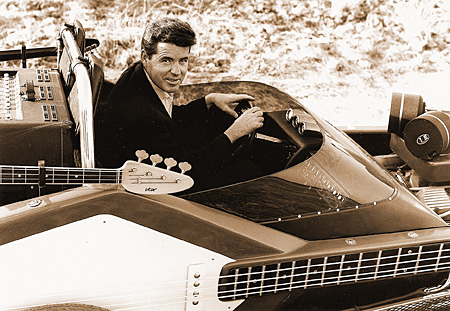
Jimmy Bryant in the ‘60s at the helm of the highly promotional Voxmobile. Twangin’ in the 21st Century
Sixty years on, the Telecaster is alive and well. Fender is still producing reams of them and, in the ’90s, opened up a new arena by introducing popular Mexico-made models. Today, there are even lower-end Asian models from Squier, creating a spectrum of Telecaster models from under $200 to “anything you can dream” models from the Fender Custom Shop. This doesn’t include the numerous Tele-inspired guitars created by other companies, including Leo Fender’s later companies, G&L and Music Man.
As for guitarists, there are Tele pickers just about everywhere you look these days, from alt-rockers like Johnny Greenwood and Thom Yorke of Radiohead, to modern blues, country, and roots rockers like Jonny Lang, Brad Paisley, G.E. Smith, Johnny Hiland, Greg Koch, and Redd Volkaert.
After walking through this pantheon of great guitarists, we must ask, “Why is this one electric guitar so enduring?”
One obvious answer is that Leo Fender nailed the solidbody concept right out of the gate. While the Stratocaster and Les Paul offered important refinements a few years later, the Telecaster’s shape, tone, and vibe were dead-on from its inception 60 years ago. Furthermore, the Tele is the definitive “plank,” an exercise in design simplicity that never gets tired. It’s a piece of sculpted ash or alder (or, early on, even pine), fitted with a maple neck and a pair of modest-powered pickups. But this combination creates heavenly tones that range from sharp and twangy to round and jazzy. It’s that simple – and that good.
So while Leo himself has been gone for nearly 30 years, let’s all take a moment to express quiet appreciation for his wondrous invention – an amazing tone-tool that, for many of us, has become our best six-string buddy. Thanks, Leo!
Special thanks to Rick Allen, Dan Forte, Rich Kienzle, and Jas Obrecht for their insights and suggestions.
We don’t have room to rave about every deadly Tele slinger out there. Fortunately, though, you can help remedy that – surf over to VG’s Facebook page and tell us about your absolute favorite Tele twanger!
This article originally appeared in VG December 2011 issue. All copyrights are by the author and Vintage Guitar magazine. Unauthorized replication or use is strictly prohibited.
-
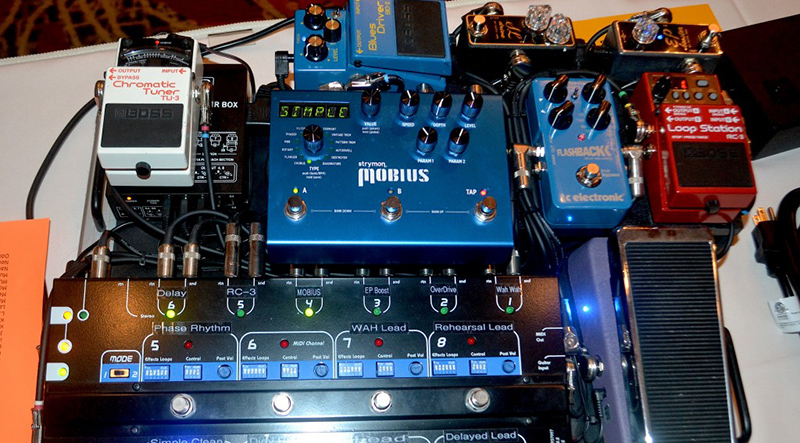
L.A. Pedal Expo
Here’s a look at what what VG contributor Oscar Jordan found at this year’s Guitar & Pedal Expo, held March 30 in Van Nuys, California. Lonnie Specter’s second event, it’s been a successful add-on to his popular Amp Shows.

Pedal Expo organizer Loni Specter. 
The work of Tone Zone L.A. 
Gale Estrada, of Mod Kits DIY. 
A pedalboard by Decibel Eleven. 
Jeff Floro (left) and Scott Sill, of The Flo Guitar Enthusiasts Radio Show. 
Eric Olson jamming with EarthQuaker Devices. 
Joe Golden, of EarthQuaker Devices. 
Electro-Harmonix’s own Kevin Jolly. 
Chris Eschborn, of Tube Tone. 
Peter Swiadon demonstrating orchestral maneuvers at Roland. 
Owen Barry demonstrating EBS effects for TrueTone Music. 
David Jenkins (left) and Owen Barry, of TrueTone. 
EBS Effects. 
Guitars in waiting at Tone Bakery. 
Diego Costantino (left) and Eric Dahlberg of Tone Bakery. 
Jonathan Meleika, Oddfellow Effects, runs a board through its paces. 
The wares of Oddfellow. 
John Holdt (left) and Thomas Nordegg in the Temper Profile room. 
Hector Robles (left) and John Pegler at Mad Professor. 
Pedal Expo staff Sarah Solis (left), Jeff Frazin, and Dennis Snyder. 
Phil Woodward riffing at TMG Guitars. 
Taylor McGrath, of TMG Guitars. 
Former Racer X guitarist Bruce Bouillet (left) meets fan Louie Concotiloi, of Mugsy Music.


