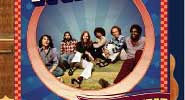
In the 40 years since Brothers and Sisters was released in 1973, we’ve lived roughly half our lives. And if you are a fan of classic rock, this album likely provided a soundtrack – and you probably wore out several copies of the original vinyl along the way.
It’s also an album with a story, the kind of tale most fans know by heart. And we all are probably telling that story to our own children – even grandchildren – now as we play “Ramblin’ Man,” “Southbound,” and “Jessica” for them.
To wit: Brothers and Sisters was to be the Allman Brothers Band’s fifth album, but it was a record that almost didn’t get made by a band that almost didn’t survive. Since forming in 1969 in Jacksonville, Florida, the group had slaved its first couple years building ts collective chemistry and crafting a new fusion of blues, country, rock, and even jazz. They finally broke out with the live double-set At Fillmore East in 1971. Then tragedy struck.
Founder, leader, and visionary Duane Allman died in a motorcycle crash on October 29, 1971. Bassist Berry Oakley too died in motorcycle wreck one year and two weeks later – and just three blocks from Allman’s crash site.
The band itself now stood at a crossroads. Following Duane’s death, they questioned whether they could soldier on. The remnants rallied, and with Dickey Betts as the lone guitarist and brother Gregg Allman’s organ playing a more prominent role, they cut Brothers and Sisters.
The album bested the sales of any of their previous releases, spent five weeks at #1, and became the first Allman Brothers Band Platinum-seller.
Which brings us, 40 years on, to this anniversary Super Deluxe Edition. The collection includes four discs: the original album remastered; a second CD of previously unreleased rehearsals, jams, and outtakes; and two discs encompassing the entire legendary live show from San Francisco’s Winterland on September 26, 1973.
The unheard studio tracks are where things get interesting. Betts’ plays slide guitar on a lazier version of “Wasted Words,” then blazes through an instrumental of “One Way Out.” “I’m Gonna Move To The Outskirts Of Town” blends Betts’ countrified fretwork with Gregg’s jazzinflected organ. Good stuff.
But it all gets great at the Winterland show, which features the band playing with renewed fire. Betts’ slide on Blind Willie McTell’s “Statesboro Blues” sizzles. The album’s “Come And Go Blues” and “Jessica” – as well as Betts’ “Blue Sky” – are glorious. And the finale of “Whipping Post” displays the band’s creative rebirth loud and proud for all to hear.
This is an anniversary collection done right. Period. It pays homage to the original with a remastered version plus supports that classic with worthwhile, insightful outtakes and wraps it all up with a stunning live show.
And hopefully, in another 40 years your children or grandchildren – or even greatgrandchildren – will be playing this album and telling the story still.
This article originally appeared in VG‘s November. ’13 issue. All copyrights are by the author and Vintage Guitar magazine. Unauthorized replication or use is strictly prohibited.

 The Demeter TGA-1 pedalboard guitar amp was designed at the request of Sonny Landreth, who needed an amp that could travel with him on an airplane. Made in the U.S., its tube-driven preamp uses the company’s Tube Driver stage, with a Jensen audio transformer that controls a Class D power amp. It produces 180 watts output into 4 ohms, 100 watts into 8 ohms, or 60 watts into 16 ohms. Controls include Gain, Bass, Midrange, Treble, Master, and a standby footswitch. The Master control has a push/pull pot with a 20db pad, allowing the player to dial up the Gain control while maintaining volume range on the Master. A regulated 9-volt DC output jack powers pedals. Learn more at www.demeteramps.com.
 EVH is now offering the Wolfgang Custom Relic USA and Wolfgang Custom Deluxe USA models. The Custom Relic U.S.A. has a set mahogany neck with a vintage-style ’50s neck profile and a hand-oiled relic finish. Its body has a 1.5”-thick mahogany core with arched maple top, simulated wear, and aged black-and-white binding. The compound-radius ebony fingerboard has 22 vintage-style stainless-steel frets, mother-of-pearl block inlays, and aged white binding. Other features include two direct-mount Wolfgang Zebra humbucking pickups with three-way toggle, two Bourns 500k volume potentiometers, two Bourns 250k tone potentiometers, dual graphite neck reinforcement rods, Floyd Rose R2 locking nut, truss-rod adjustment wheel at the butt end of the neck, TonePros adjustable bridge, Schaller fine-tuning tailpiece and Schaller chrome string retainer bar on headstock. The Custom Deluxe U.S.A. has the same features as the Relic Custom without the wear and aged binding, and with a TonePros adjustable bridge with stop tailpiece. For more information, go to www.evhgear.com.
 3RD Power is now building its Dream Weaver and British Dream amps with HybridMaster-Plus, a proprietary volume-management technology that includes a Venue Selector switch, which allows guitarists to adjust volume levels to match their environment. The amps have rear-panel access of the switch’s Stage and Studio modes; Stage represents full power output, while Studio represents an 80 percent reduction in perceived volume level. Fine-tuning final volume is handled by the HybridMaster control, and when combined, they give control over volume while retaining full touch-sensitivity and tube-amp tone. There is an upgrade path available for current owners. Learn more at www.3rdPower.com.




 Aristides Instruments’ 070 seven-string guitar has a 26.5” scale and a C-shaped neck that measures 1.89″ wide at the nut and is topped with a compound-radius ebony fretboard with 24 medium-jumbo frets. The passive models are equipped with a Seymour Duncan Pegasus in the bridge position and the Duncan Sentient in the neck position controlled via five-way switch, a push/pull Volume control, and single Tone. Active models use Duncan Blackouts or an EMG81/60 combo, a three-way toggle, single Volume and a single Tone. Hardware is available in chrome, black, or gold finishes and includes a Hipshot Hardtail or Floyd Rose Original vibrato, Hipshot Griplock tuners, and Schaller straplocks. Each guitar is set up with either a Graphtech Black Tusq nut or Floyd Rose locking nut. Learn more at