Robert Plant and his band, The Strange Sensation, play 11 songs; covers, old Zep songs, and newer Plant tunes. The band is the perfect complement, anchored by guitarists Liam “Skin” Tyson and the versatile Justin Adams, who handle everything from a smoking “Whole Lotta Love” to the funky, and political “Freedom Fries.” In between, there’s fabulous takes on old stuff. “Black Dog” has never sounded this funky or this good. The riff is there, but it gets a bit of a makeover. “Gallows Pole” stays close to the original until Tyson’s guitar comes in. It’s a nice update. The atmospheric “The Enchanter” is pushed along by fine slide playing, “Four Sides” pays tribute to John Bonham.
The disc comes with two bonus tracks; one a fascinating take on a song that is so associated with a certain sound it almost seems sacrilege to change – “Hey Joe.” But it works incredibly well. There’s also a folky take on Dylan’s “Girl From the North Country.”
The band is splendid, and it’s no surprise that Plant is, too. He sings well and knows how to work the crowd. While age may show in his face, it hasn’t diminished his ability to sing, his taste, or his songwriting. Any fan would have to have this for both the good old days and the new days.
This article originally appeared in VG‘s Feb. ’07 issue. All copyrights are by the author and Vintage Guitar magazine. Unauthorized replication or use is strictly prohibited.
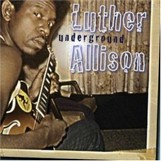
When Luther Allison died in 1997, he was 57 years old – and just hitting his stride.
Allison grew up in Mississippi and Chicago, playing the blues with many of the greats. He was of a younger generation, inspired equally by the blues establishment of Muddy Waters, the new West Side Soul revolution, Buddy Guy’s pyrotechnics, and Hound Dog Taylor’s gutbucket slide. Then, he moved to Paris, where he became a French blues hero before several of his 1990s albums – such as his ’94 masterpiece Soul Fixin’ Man – brought him belated stardom back home.
Now, Allison’s guitar-toting son, Bernard, has uncovered tapes of what may be his father’s first sessions. Underground collects these 1958 one-take demos, and the result is an instant classic for Luther fans.
At the time, Allison was just 18 and playing guitar behind bandleader/vocalist Bobby Rush, a more-experienced 25-year-old. With Rush’s support, they went to Chicago’s Wonderful Records studio late at night when the price was right and cut a series of demos. The songs were played live with the tape rolling through the session; they did most tunes in one take. Though intended strictly as demos, the songs could – and perhaps should – have been released. The disc kicks off with “Hide Away,” Allison’s take of a Hound Dog Taylor tune cut two years before Freddie King made it a hit. Allison plays it hot – and with humor. His guitar work is sure – he’s 18, ready to conquer the world, and he rarely misses a beat even if at times he lacks the confidence and power he’d display in the ’90s.
If you’re a Luther Allison fan – or a fan of any sort of classic Chicago blues – this is a must.
This article originally appeared in VG‘s Apr. ’08 issue. All copyrights are by the author and Vintage Guitar magazine. Unauthorized replication or use is strictly prohibited.
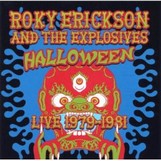
The story of the former singer of Texas’ 13th Floor Elevators was well known to rock fans, who’d given him up for lost prior to his miraculous comeback of the past few years. In fact, his already nebulous mental state was going from bad to worse, as illustrated in the documentary “You’re Gonna Miss Me.”
But what the film doesn’t show is that, in spite of his illness, there were periods of surprising productivity. The seriousness of his condition and the recovery that accounted for his triumphant appearances on “Austin City Limits” and at Lollapalooza last year should not be trivialized. But these live recordings from 1979 to ’81, backed by the same band who is touring with him today, illustrate, perhaps better than anything before, the downright scary intensity of a Roky Erickson show.
Roky powers through essentially the same repertoire he’s performing today, culled from sets in Austin, Houston, San Francisco, and L.A. – “Two-Headed Dog,” “Bloody Hammer,” “I Walked With A Zombie,” “Stand For The Fire Demon,” and others. The Explosives prove they’re his best-ever backup band, with drummer Freddie Krc and bassist Walter Collie thundering the bottom end as guitarist Cam King knifes over, under, around, and through Erickson’s distorted rhythm. As Krc explains in the liner notes, the spirited rendition of the Beatles’ “I’ve Just Seen A Face” was as much a surprise to the band as it was to the audience – a one-off impulse Roky broke into one night.
The audio quality isn’t perfect, but it’s more than good enough to recommend this ultimate Roky Erickson experience. The CD is on Austin’s Steady Boy label, who in a short time has released a great new offering of mostly originals from Krc (The Freddie Steady 5’s Tex-Pop), as well as singer/songwriter Vince Bell’s Recado and the jangly self-titled debut of Jenny Wolfe & The Pack – each featuring Krc and King as players and producers. The teenaged Pack mixes infectious Krc originals with ’60s covers of Motown, British Invasion, the Lovin’ Spoonful, and, for good measure, a sprightly reading of Erickson’s Holly-esque “Starry Eyes.”
This article originally appeared in VG‘s May ’08 issue. All copyrights are by the author and Vintage Guitar magazine. Unauthorized replication or use is strictly prohibited.
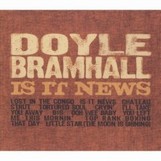
Yes, it is! Any re-lease by Texas blues stalwart Doyle Bramhall is something to get hot and bothered about. But from the first big bang of his bass drum to the last reverberations of smoldering electric guitar, this new album marks Bramhall’s first-ever collection of all-original tunes.
Bramhall needs little introduction. He’s been at the heart of the vibrant Texas blues scene for more than four decades. His teenaged band, the Chessmen, opened for Jimi Hendrix in Dallas in 1968. Moving on to Austin with the Chessmen’s guitarist, Jimmie Lee Vaughan, the duo formed Storm. And when Bramhall later left to start the Nightcrawlers, he now boasted JLV’s baby brother on guitar, SRV.
Any Stevie Ray-ologist knows Bramhall’s name from his several compositions that became integral to SRV’s repertoire – songs like “Change It” and “Lookin’ Out The Window” as well as collaborations including “The House Is Rockin’,” “Wall Of Denial,” and “Tightrope” from In Step and three further tunes from the Vaughan Brothers’ Family Style,, which also featured Bramhall’s drumming.
Yet while he may have been central to the Texas scene, he has not been prolific in recording on his own.
Bramhall released several solo albums over the years, including his 1994 debut Bird Nest On The Ground as well as his blues and R&B ode, Fitchburg Street, from 2003. But with a full slate of original compositions, Is It News is special.
Kicking off with that big bass drum on “Lost In The Congo,” the groove never lets up. Bramhall’s band is tight and right. From the bottom end to Bramhall’s vocals to the guitar frontline, they’re truly inspired.
Denny Freeman and Mike Keller crank out 100 percent Texas-style lead guitarwork, backed by rhythm guitarist and producer C.C. Adcock. Doyle Bramhall, II adds slide guitar on “Tortured Soul” and “I’ll Take You Away,” while none other than Jimmie Vaughan lends his gutsy guitar growl to the closer, “Little Star (The Moon Is Shining).” Penned by a drummer, this is still a rocking guitar album all the way.
Each tune here surprises with tones that you don’t expect. There’s that distinctive heavy kickdrum. And again, there’s that fretwork. The guitars are always on the move, from waves of wah-wah to Leslie-drenched reverb, tremolo-laden slide guitar to good old Austin “sicker is better” sleaze. More than anything – from the fine compositions to the stylish arrangements – it’s the underlying brilliance in the blending of tonalities that astonishes here. This ain’t just your typical blues album.
And while there’s a healthy dose of blues tunes, Bramhall’s written a songbook of roots music. There are dapper uptown shuffles, vibey New Orleans jaunts, classic R&B, Louisiana swamp rock, and, yes, guitar-powered Texas blues. Among the best of the last here is the instrumental jump, “Chateau Strut,” penned by Bramhall and SRV long ago.
Is It News is more than news. It’s a small masterpiece of Texas music.
This article originally appeared in VG‘s Jan. ’08 issue. All copyrights are by the author and Vintage Guitar magazine. Unauthorized replication or use is strictly prohibited.
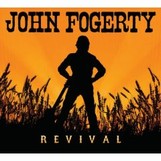
John Fogerty is the rare case of a songsmith who can use the same elements and devices repeatedly, even recycling and permutating earlier licks and melodies, without it ever wearing thin. Sure, it’s familiar; that’s why it feels so good.
Which is not to say that he has nothing new to say. As he proved on “Déjà Vu All Over Again,” he has plenty to say about what’s going on today. In that mode, Revival‘s “Long Dark Night” takes swipes at some guys named George (“in the jungle”), Dick, and Brownie, while “I Can’t Take It No More” may be the rockin’est anti-war song ever, not to mention the shortest (clocking in at barely a minute and a half). “I bet you never saw the National Guard,” the former Army Reservist sings; “your daddy wrote a check and there you are – another fortunate son.”
“Don’t You Wish It Was True” opens the album with loping rhythm guitar, then double-times the chorus, similar to Fogerty’s arrangement of “Midnight Special” with Creedence Clearwater, while “Natural Thing” churns over a beat reminiscent of “Hot Rod Heart.”
Offering up a sincere homage titled “Summer Of Love” (dialing in a Claptonesque “woman tone” and tossing in a snatch of “Sunshine Of Your Love”), Fogerty sounds vital instead of nostalgic. He saves his hottest licks for the rockabilly ride “It Ain’t Right,” which takes a jab at today’s misbehaving starlets (“shaking your booty for the magazine”).
The backup band of drummer Kenny Aronoff, rhythm guitarist Hunter Perrin, and bassist David Santos is tight and economical. Benmont Tench adds Hammond organ and Wurlitzer electric piano on three tracks, to great effect on the set’s most soulful cut, “River Is Waiting,” a spare but stirring gospel tune featuring vocal backing by the Waters family – Maxine, Oren, and Julia.
Fogerty light-heartedly immortalizes his former band with “Creedence Song” – singing “You can’t go wrong if you play a little bit of that Creedence song” over a beat that can only be described as “chooglin’.” The old man down the road is fronting a travelin’ band in a bar somewhere between Lodi and Green River.
This article originally appeared in VG‘s Dec. ’07 issue. All copyrights are by the author and Vintage Guitar magazine. Unauthorized replication or use is strictly prohibited.
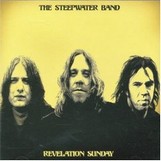
The Steepwater Band’s 2004 release, Dharmakaya, was a very strong effort, and this is an equally strong followup. The band is a modern version of the classic rock trio many grew up loving. The boys also grew up on those bands, and their own music conveys lots of hard blues and country. They put it into a fine mix that, while sounding familiar, creates its own musical space.
Guitarist/vocalist Jeff Massey powers these tracks with his big sound; the stomping “Mercy” has enough big, aggressive guitars to fill auditoriums for weeks. Throw in some wah and a little duet solo between Massey and drummer Joseph Winters, and you’ve got rock heaven. “Collision” offers up some of the variety that most trios never approach. It’s a pop-rocker with big-sounding slide and a subdued midsection with dreamy guitar that recalls 1971. “Steel Sky” is quintessential trio rock with a great lyric and slide that sounds bigger than the Grand Canyon. “Halo” is a ballad with a country feel and terrific bass from Tod Bowers. Massey gets to go solo on “Slow Train Drag,” where he unplugs and plays the country blues like he grew up on the Delta. The tune leads into “Indiana Line,” which opens with electric and acoustic guitar before yet another big slide solo. Massey adds a little more variety, with big double- and-triple-string bends and booming bass notes on the solo out.
The Steepwater Band is one of the simple joys of music – just straightforward rock and roll, done with precision, passion, and soul.
This article originally appeared in VG‘s Jan. ’07 issue. All copyrights are by the author and Vintage Guitar magazine. Unauthorized replication or use is strictly prohibited.
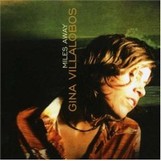
Gina Villalobos proves that a contemporary artist of the female persuasion doesn’t have to possess an “American Idol” voice to create powerful music. Remember Kim Carnes or Bonnie Tyler?
At times, Villalobos’ voice is reminiscent of both, but with a heaping helping of grit and backroads dirt. On other songs, her vocals drift into a softer, more wistful sonority closer to the singer/songwriter Wendy MaHarry. But comparisons aside, Villalobos churns out country-inflected roots rock that will have you reaching to turn up the volume.
The 10 original songs on Miles Away display a remarkable level of musical and emotional consistency. Although it isn’t a concept album, all songs share an acute awareness of pain and celebrate the strength required to live in the face of that pain. But this album isn’t gloomy; dark, yes, but not depressing. From the opening tune, this set demonstrates the rock and roll pedigree of rebellion and self-affirmation.
Co-produced by Villalobos and Erik Colvin, the sonics here are rock and roll rude. Guitars are up-front. This doesn’t qualify as easy listening music.
Some music is created to soothe the savage beast, but not Miles Away. It’s more about feeding the beast, then kicking it while it stuffs its face.
This article originally appeared in VG‘s Jun ’07 issue. All copyrights are by the author and Vintage Guitar magazine. Unauthorized replication or use is strictly prohibited.
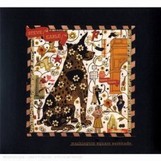
Whether or not you appreciate the politics that have dominated his latest records, it’s hard to deny that Steve Earle is a brilliant songwriter. On his latest, Earle has gone back to a folksy feel, and while the politics are still around, they aren’t nearly as heavy-handed.
Even with plenty of acoustic instrumentation propelling songs like “Tennessee Blues,” “Down Here Below,” and “Satellite Radio,” Earle manages to slip in a slight hip-hop feel with the percussion on a few cuts. A lone acoustic guitar repeats in “Come Home to Me,” spotlighting the longing and despair. “Sparkle and Shine” is as a superlative example of a love song. The acoustic solo at the end is a real gem. Steve pulls out the banjo for the drug tale, “Oxycontin Blues.” Various instruments mix well with the imagery on “Red Is the Color.” The sing-a-longs “City of Immigrants” and “Steve’s Hammer (For Pete)” are just what you’d expect – acoustic anthems, one celebrating the complexity of the American populace, and the other celebrating Pete Seeger. Lyrically, Earle is as sharp as ever. Vocally, he’s strong and assured.
Since this is an advance, I’m not sure who is playing what, but it’s all right on the money. Earle really is at the top of his game in a number of ways. The music and lyrics are focused and this one adds a fine chapter to his burgeoning songbook.
This article originally appeared in VG‘s Dec. ’07 issue. All copyrights are by the author and Vintage Guitar magazine. Unauthorized replication or use is strictly prohibited.
Neil Young has been prolific in recent years, releasing material from his vaults in the form of early concert performances and new material.
Chrome Dreams II is a mix of newly recorded versions of songs written in the ’70s, and recently-written songs. Stylistically, it stays close to Young’s vision – which is to say he’s all over the map. Most of the cuts have the acoustic resonance of his earliest and best-known songs, from the Harvest, Prairie Wind, or Harvest Moon periods, with unamplified guitar with banjo and mandolin accompaniment. A few veer into amplified bombast and lengthy solos of the Crazy Horse incarnations.
But mostly, Young is comfortable here with regular contributor and multi-instrumentalist Ben Keith and several Crazy Horse longtimers. These are slow-to-medium tempo songs of introspection, searching, and longing, all consistent themes in the Young oeuvre. The standout cut, “Ordinary People” is an 18-minute paean to regular folk, but may simply be too long for non-fans to relate.
Fans will love Chrome Dreams II, and may compare it to Neil’s best, even knowing as they do that you get what you get from a Neil Young record. There’s good and not-as-good, but seldom bad. This one is mostly good, and no bad.
This article originally appeared in VG‘s Feb. ’08 issue. All copyrights are by the author and Vintage Guitar magazine. Unauthorized replication or use is strictly prohibited.
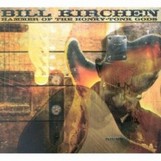
In 1994, Nick Lowe released his best album in 10 or 15 years, the country-slanted The Impossible Bird, featuring ex-Commander Cody guitarist Bill Kirchen. After stellar albums for Black Top and Hightone, Kirchen essentially reunited the Impossible Birds, as Lowe’s studio and subsequent touring band was dubbed, for his Proper American debut. It not only outstrips Kirchen’s previous solo efforts, it is at least the equal of the Lowe album that brought this aggregation together – which is saying a lot on both counts.
The main lineup alterations are that bassist Paul Riley is engineer and co-producer (with Bill) here, with Lowe moving from rhythm guitar back to the instrument he played with Rockpile and Little Village, the bass. And Austin DeLone (the Moonlighters, Eggs Over Easy, Elvis Costello) joins Geraint Watkins in the keyboard section, with Robert Trehern still on drums.
Even though the self-proclaimed King Of Dieselbilly is arguably the best country picker of his generation, Kirchen has always been faithful to the genre without letting it hamstring him. This, however, is his most eclectic release so far, as well as the most accurate freeze-frame of his personality, with his best songwriting to date.
The opening title track is an ode to the Fender Telecaster – something Kirchen knows a thing or two about, having played the same now-weathered axe for 35 years. “It was born at the junction of form and function,” he sings over a floor-tom rumble, while paying tribute to Tele-masters from Luther Perkins and Don Rich to Albert Collins and Chrissie Hynde. If Fender doesn’t adopt this as its theme song, it’s crazy.
The mood shifts to the eerie, melodic “Rocks Into Sand” – its poignant lyrics and spare lead lines riding atop a subtle cowboy clip. A honky-tonk two-step finally arrives in the form of the catchy “Get A Little Goner,” featuring the pedal steel of Hacienda Brother Dave Berzansky.
Longtime Kirchen cohorts contribute fine tracks with “Skid Row In My Mind” (the ultimate barroom ballad by Blackie Farrell) and “Heart Of Gold” (a swinging boogie by Tony Johnson). Kirchen’s “Working Man” falls somewhere between Johnny Horton country, doo-wop, and a chain-gang holler, and the set concludes with a beautiful reading of Arthur Alexander’s “If It’s Really Got To Be This Way” – like much of the composer’s work, equal parts Nashville country and Southern soul.
Longtime Kirchen fans will revel in this dream-team offering, while newcomers will discover an American treasure in full stride.
This article originally appeared in VG‘s Mar ’07 issue. All copyrights are by the author and Vintage Guitar magazine. Unauthorized replication or use is strictly prohibited.