
Month: May 2008

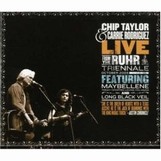
  • Chip Taylor/Carrie Rodriguez – Ruhr

    This live set features an especially outstanding back-up band. Festival curator and virtuoso jazz guitarist Bill Frisell joins Greg Leisz on steel guitar and mandolin, David Piltch on bass, and Kenny Wollesen on drums to form the core band. Cameo appearances by Katie Jackson and Denise Brown on background vocals and Buddy Miller on electric guitar happen on the set finale. Besides performing some of their previously recorded duo material such as “Let’s Leave This Town,” “Loredo,” and Red Dog Tracks,” Taylor and Rodriguez added a number of country standards including Lefty Frizell’s “Long Black Veil,” Johnny Cash’s “Big River,” and Chuck Berry’s “Maybellene.” The set wraps up with the Taylor classics “Angel of the Morning” and “Wild Thing.”

    Bill Frisell brings a unique musical aesthetic to any project, and this is no exception. His spare, resonant guitar lines contribute amazing depth and air to the arrangements. His simple, tasteful solos are slow and minimalist, yet musically correct. And Greg Leisz’s floating steel guitar lines add to the airy, otherworldly quality of the music. When you combine Frisells’ and Leisz’s floating musical lines with Taylor and Rodriguez’s rustic delivery, you have a combination that captures the earth below and heavens above of American roots music.


    This article originally appeared in VG‘s Jan. ’08 issue. All copyrights are by the author and Vintage Guitar magazine. Unauthorized replication or use is strictly prohibited.
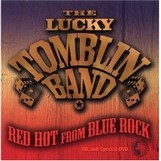
  • Lucky Tomblin – Red Hot From Blue Rock

    Another surefire batch of songs with great pickin’ by the amazing Redd Volkaert and John Reed, many of these songs fit into the honky-tonk heaven category.

    Mel Tillis’ “Honky Tonk Song” is prototypical. Same goes for “Howlin’ At the Moon,” “Good Lookin’ No Good,” and “A Fool Such As I.” Country swing is represented with “I’ll Keep On Loving You” and “Time Changes Everything,” and good ol’ rock and roll surfaces with “Red Hot” and “Party Doll.” Through it all, the two guitarists dip and dive through plenty of twin leads. In between, Reed serves up on-the-money solos. When Volkaert takes a turn, though, you expect the unexpected. His take on “Howlin’ At the Moon” is a typical scratch-your-head-and-laugh excursion, and his fills throughout are jazzy snatches that show how well country and jazz can fit – in the right hands. Lucky supplies fine vocals throughout, as do Redd, bassist Sarah Brown, and pianist Earl Poole Ball. All are so good they make this a perfect listen.

    A bonus DVD lets you in on the recording process, and it’s easy to see why the record is so much fun to hear – everyone is enjoying themselves. And there is one surprise for guitarists – video of Redd soloing with a Les Paul!


    This article originally appeared in VG‘s Dec. ’07 issue. All copyrights are by the author and Vintage Guitar magazine. Unauthorized replication or use is strictly prohibited.


  • Steve Khan – Borrowed Time

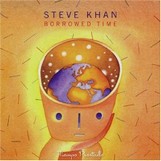
    Steve Khan once again proves he’s among the top guitarists of his generation. Khan has always been a fine composer and writer, but here he penned just two cuts – the other seven are by the likes of McCoy Tyner, Thelonius Monk, and Ornette Coleman, as well as a couple of standards, one written by his father, Sammy Cahn. One of the most interesting cuts is near-14-minute original called “El Faquir,” which has a decidedly Eastern flavor, with tabla and tamboura joining traditional instruments. The intro, where Khan mixes bubbling, jazzy guitar blurbs with the Indian instruments gives way to a churning bop feel. The solos by Khan and Bob Mintzer (bass clarinet) are inspiring, and the rhythm section cooks. That rhythm section, by the way, is anchored by the legendary Jack DeJohnette on drums and John Patitucci on bass. Evidence of Khan’s brilliance as a soloist is on display on literally every cut. His mix of solo lines and chordal work is really a trademark and is showcased on cuts like “I Mean You,” “Blues for Ball,” and “You’re My Girl.” His ballad work shines on the mysterious “Face Value,” where his acoustic solo, and Randy Brecker’s melodic flugelhorn, are sheer delights.

    The record wraps up with two pieces that have a Latin feel. “Luna Y Arena” features a lovely vocal from Gabriela Anders and an incredibly musical solo from Steve, while McCoy Tyner’s “Hymn Song” is a showcase for percussion that morphs into a Latin sound with more stunning fretwork.


    This article originally appeared in VG’s Sept. ’07 issue. All copyrights are by the author and Vintage Guitar magazine. Unauthorized replication or use is strictly prohibited.


  • Wilco – Sky Blue Sky

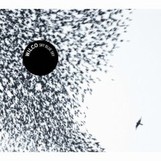
    The most guitar-heavy album yet from Wilco has Jeff Tweedy, Nels Cline, and Pat Sansone weaving parts like insane musical tailors. A perfect example is “Impossible Germany,” which starts with lovely guitar that (after a Tweedy vocal) morphs into a guitar symphony. It’s not what you expect, even as their approach and style have changed since Cline joined the band a few years ago.

    While that’s the most obvious example of the guitar work, there are others. “Side with the Seeds” features swirling strings and guitar midway, with monster soloing out. “Hate It Here” is a melancholy tune about a guy wondering through the house he used to share with his lost love, and the several solos, full of descending lines and soul, are a perfect match to the lyrics.

    Even with the interesting six-string work on every cut, there’s a lot more to like about this offering; like Tweedy’s vocals, which have a “dry” sound most performers eschew these days. No effects, just straight-ahead delivery of the lyrics (all of which are wonderful). And the songs have great changes, often deviating from the norm. And of course the overall style is laid back. Between Tweedy’s excellent, sometimes obtuse lyrics and the fascinating music, this is one of the best records of the year.


    This article originally appeared in VG‘s Oct. ’07 issue. All copyrights are by the author and Vintage Guitar magazine. Unauthorized replication or use is strictly prohibited.

  • Scott Biram – Graveyard Shift

    Scott Biram is one of those musicians – like Lightnin’ Hopkins with a bent toward heavy metal, or Red Simpson meets Tom Waits. Or maybe Johnny Rotten meets Conway Twitty. Get it? Well, anyway…

    Most of these tracks feature Biram, his guitar, the occasional harp, and distortion so thick on the vocals it sounds like he’s found that telephone you lost 20 years ago. The music falls into the country category for the most part, with an edge – sometimes loud – that sounds like it may fall apart at any second. But never does, as Biram walks a musical cliff with skill.

    Lyrically, this stuff is nasty, crude, and sometimes mean. “Plow You Under” is plain old nasty, with a metaphorical lyric for getting rid of a woman. And the nasty guitar matches the lyrics’ ferocity. “Reefer Load” is one of several trucker songs on the record, and is not for the faint of heart. And speaking of, this is not a record for the kiddies (or old folks, for that matter). The punk-country lyric and music of “Church Babies” may throw them into cardiac arrest.

    If it sounds like Biram is a bit of a madman, well, that’s really not the case; he’s really a fine writer, and a glimpse at the lyric sheet offers proof. Dark at times, but always thought-provoking. And as a one-man band, he gets the job done. It’s not hard to envision him playing a bar full of cowboy hats, Harley gear, and spike-hairs, all enjoying the show. If you want something a bit different, check it out.


    This article originally appeared in VG‘s Feb ’07 issue. All copyrights are by the author and Vintage Guitar magazine. Unauthorized replication or use is strictly prohibited.


  • Pink Floyd – Meddle: A Classic Album Under Review

    Pink Floyd on DVD

    Meddle: A Classic Album Under Review analyzes this pivotal Pink Floyd record from 1971. Released two years before the mega-success of Dark Side of the Moon, Meddle was in many respects where the modern Floyd era began. It also featured the band’s first real epic, the 23-minute “Echoes.”

    Along with commentary from UK rock critics and early producer Norman Smith, interesting anecdotes about the sessions abound. At the beginning of “One of These Days,” for example, you hear an electric bass playing a riff through an echo unit. That’s David Gilmour playing a crisp bass line through a vintage Binson echo. Eventually, he’s joined by Roger Waters, playing a similar bass part, though quite sloppily and with dead strings. In the brief duel, you get a symbolic glimpse of the growing Gilmour/Waters rivalry, one that would eventually implode the band in the 1980s. “One of These Days” is also noted for a torrid slide guitar solo, the first time that Gilmour really cuts loose on a Pink Floyd album.

    In the end, Meddle is portrayed as a key transitional album, the “bridge” to Dark Side of the Moon and Wish You Were Here. While all the critics here acknowledge that it’s not a perfect album, it certainly deserves greater acclaim in ’70s rock lore, and this DVD does a creditable job illustrating that fact.

    The Pink Floyd & Syd Barrett Story (203 mins.) tells the story of the original leader and guitarist of Pink Floyd, a young man who was the architect behind their 1967 psychedelic masterpiece, The Piper at the Gates of Dawn. In this documentary, we hear background tales of Barrett’s upbringing in Cambridge, England, and his move to London to form Floyd with Roger Waters. While the writing and recording of Piper is barely covered in the narrative, we do hear vivid recollections of British psychedelia and beyond from Waters, David Gilmour, Rick Wright, and Nick Mason. We also hear from early Floyd bandmates (like guitarist Bob Klose), managers, and girlfriends, all striving to create a picture of Barrett’s eccentric personality, rather than an analysis of his music.

    The singer’s drug-induced breakdown in 1967 gradually takes center stage, along with discussion of his uneven, but influential solo albums, The Madcap Laughs (1969) and Barrett (1970). Finally, we hear the tale of Barrett’s surprise appearance at sessions for Floyd’s Wish You Were Here album in ’75. By this point, Syd was a full-blown schizophrenic, having shaved his head and eyebrows, and behaving very erratically. It was a traumatic experience for the band, leaving Roger Waters in tears, yet all the Floyd members point out the irony of his appearance during the recording of “Shine on You Crazy Diamond,” itself a tribute to Barrett’s demented, bittersweet genius.


    This article originally appeared in VG‘s Dec. ’07 issue. All copyrights are by the author and Vintage Guitar magazine. Unauthorized replication or use is strictly prohibited.

  • Randy Kohrs – Old Photograph

    Randy Kohrs’ life story reads like a Nashville fairy tale. He came to town in 1994 and played dobro behind Hank Williams III, Tom T. Hall, Dierks Bentley, Dolly Parton, and others. Old Photograph, his second album, proves Kohrs is a musical force to be reckoned with.

    Kohrs wrote or co-wrote nine of the 12 songs here, and several display his fondness for historical scenes. “Two Boys from Kentucky” uses the Civil War to frame a tale of sibling devotion, while “Rockwell’s Gold” recreates the lawless west. Both have a strong bluegrass inflection but still qualify as country due to their contemporary instrumentation and arrangements. Kohrs’ other originals also display a reverence for older musical forms, while maintaining a contemporary edge. And, he produced the entire album with no help; his arrangements combine acoustic with electric instruments to create organic textures that avoid being too slick or too funky.

    Being a first-call Nashville studio player made it easy for Kohrs to lasso a bunch of other super-musicians. Scott Vestal and Scott Haas play banjo, Jim Hurst, Clay Hess, and Andrew Crawford play guitar, Tim Crouch, and Ashley Brown play fiddle, Aaron Ramsey and Jesse Cobb play mandolin, Jim Weaver and Darren Vincent play bass. With this kind of a talent, the playing on Old Photograph is top-drawer.

    Do you like bluegrass, and good songwriting? If so, Old Photograph should be on your stereo about now.


    This article originally appeared in VG’s Jul. ’07 issue. All copyrights are by the author and Vintage Guitar magazine. Unauthorized replication or use is strictly prohibited.


  • Jake Shimabukuro – Hula Girls

    Just as he did with his incredible solo version of George Harrison’s “While
    My Guitar Gently Weeps” on his 2006 CD, Gently Weeps, this 31-year-old ukulele maestro reinvents his instrument just as he reinvents the familiar songs he plays on it. His six-song EP, My Life, takes its title from another Beatles song (Lennon’s “In My Life”), and, while that cut includes bass backing, the set is mainly all Jake.

    There is nothing quite as fiery as his “Gently Weeps” workout (which has become a hit on youtube), but his rendition of Led Zeppelin’s “Going To California” stirs up plenty of dust. And “Somewhere Over The Rainbow,” Sarah McLachlan’s “Ice Cream,” and the Beatles’ “Here, There And Everywhere,” and the CD’s highlight, Cyndi Lauper’s “Time After Time” (featuring understated rhythm guitar and percussion), are quite simply beautiful.

    Among its bonus tracks, Gently Weeps featured two originals from the soundtrack of the movie Hula Girls. That soundtrack is now available in its entirety, illustrating another side of the Hawaiian-born phenom: Shimabukuro the composer. Here, chops aren’t front and center; in fact, one-fourth of the songs don’t even feature ukulele. Still, Jake’s keen musicality comes through loud and clear in his sense of melody and texture. “Walking Down Rainhill” has a distinct Knopfleresque/”Local Hero” feel.

    And the cuts that do feature the humble four-string set this apart from other soundtracks enough to make you want to rent this film (based on the true story of a Japanese coal mining town in 1965) immediately.


    This article originally appeared in VG‘s May ’08 issue. All copyrights are by the author and Vintage Guitar magazine. Unauthorized replication or use is strictly prohibited.

  • Grant Green – His Majesty King Funk

    It’s been awhile since we saw and heard any vinyl, but these welcome guitar releases come courtesy of the fine folks at Sundazed. The sound, as you’d expect is wonderful. Everything’s big and full with that warmness that comes from a record. And, the choice of music is a perfect set for guitarists.

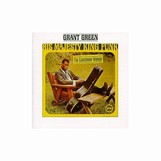
    Green’s His Majesty King Funk is well-named. With five cuts of soul-drenched jazz, it’s easy to see why he’s the darling of the acid-jazz movement. He had an earthiness to his playing not found in lots of other jazz guitarists, and this set, with Larry Young on organ lets that shine through.

    It’s always fascinating to hear Gabor Szabo. The Hungarian-born guitarist, who died way too early, was a kind of bridge, I’ve always thought, to the smooth jazz of today. He wasn’t afraid to try pop tunes of the day and give them a jazz turn. This record shows that with takes on “It Was A Very Good Year,” and an actual vocal run at “Bang, Bang (My Baby Shot Me Down).” While the latter might have been ill-advised, versions of “Witchcraft,” “Autumn Leaves,” and the title cut swing like a mother. The rest of the trio is wonderful also, with Ron Carter on bass, and Chico Hamilton on drums.

    Last but not least is Mel Brown’s Chicken Fat. That title perfectly describes the nine instrumentals contained within. Brown’s mix of soul and jazz on this Impulse Records release was, at times, breathtaking. One oddity about the record is the second guitarist. It’s none other than Herb Ellis, who fits in nicely, playing rhythm guitar. One other oddity… Herb actually plays an acoustic 12-string on two blues cuts!

    Releases like this are reason enough to still have your turntable hooked up. Sundazed has done their usual fine job with packaging with original liner notes intact. It’s really a treat to be able to walk over to the old Bang and Olufsen and put on side two.


    This article originally appeared in VG‘s Oct. ’07 issue. All copyrights are by the author and Vintage Guitar magazine. Unauthorized replication or use is strictly prohibited.


  • Bob Seger – Face The Promise

    Anyone who saw Bob Seger & The Silver Bullet Band’s Letterman appearance several weeks ago can attest that he’s lost none of his power or edge during his decade-long hiatus. But, as his searing “Wreck This Heart” (not to mention Paul Shaffer & Co.’s solid string of Seger classics going into every commercial break) evinced, rock radio has been sorely lacking the kind of punch the Michigan rocker has delivered time and again.

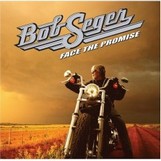
    Face The Promise illustrates that the 61-year-old has also lost none of his relevance, as not only a champion of straight-ahead rock but also a first-rate, thinking man’s songwriter and great interpreter of other’s material. “No More,” with a muscular string section bolstering the heavy acoustic strumming that has colored much of Seger’s catalog, is a pointed indictment of the status quo, with lines like, “Tomorrow is the price for yesterday/A billion waves won’t wash the truth away.” But immediately following that catharsis, Bob rips through Vince Gill’s country-rocker “Real Mean Bottle,” with Kidd Rock dueting on vocal, while guitarists J.T. Corenflos and Kenny Greenberg trade blazing solos.

    Most of the album was recorded in Nashville, with its session aces proving they can handle more than just country, while Seger shows he can meet them more than halfway on “The Answer’s In The Question,” a duet with Patty Loveless. Two tracks were recorded at Bob’s home studio, with him playing all instruments (except Eric Darken’s drums on “Won’t Stop”), although they sound every bit as immediate (and CD-worthy) as the ensemble tracks cut at Ocean Way Studios. In both cases, Seger serves as his own producer, which makes him a threat on so many levels it’s pointless to keep count.

    As intelligent, blue-collar singer/songwriters with roots-rock sensibilities go, John Fogerty and precious few others are in his league. And admit it: As tired as you’ve gotten hearing “Like A Rock,” it still makes you want to drive a big-ass truck up a mountain.

    As he revealed talking to David Letterman, Seger’s 11-year absence was self-imposed. The biz didn’t leave him behind; he walked away from it to raise a family. Luckily, along with being a soccer dad, he also found time to write a bunch of great songs, and there’s apparently plenty more where this stellar batch came from. Hopefully, he’ll get around to releasing his next CD sooner than later, but in the meantime the Silver Bullet Band is hitting the road as we speak. Should be one hell of a tour.


    This article originally appeared in VG‘s Jan. ’07 issue. All copyrights are by the author and Vintage Guitar magazine. Unauthorized replication or use is strictly prohibited.