Month: April 2008

  • Nick Russo +11 – Ro

    Nick Russo’s Ro is not an easy listen, but it sure is rewarding once you’re able to digest it. It’s somewhat indescribable; one could point out how it’s got hard-swinging post-bop, some free jazz, some middle-eastern music, and even a song with Russo on tenor banjo and chants, and it would all be correct. But it still wouldn’t really capture what this is.

    On first listen, Russo’s traditional chops capture one’s attention. “Triggered” kicks things off, with a weird mix of quirky swing and break-neck-speed bop. “Mmm” is a nice walking blues with some of the best playing on the record. He solos wonderfully around the changes while remaining bluesy and soulful. And Russo’s tone is very near perfect – big and bold, but still subtle. Not thin, like some new players, but very full in the line of players like Jim Hall, Kenny Burrell, and Tal Farlow.

    Ro offers an interesting mix of songs. It’s not for everybody. The nearly 11 minutes of “Please Come Home” may require some adjustment, with its buzzing, squeaking intro that leads into a free jazz sound where Russo and his horn section spread out. At first listen, it’s tough, but his playing lets you grab hold. The song, by the way, is for a buddy in Iraq, and its internal struggle matches what one might imagine is going on there.

    It’ll be fun to see where Russo goes next. There are many interesting jazz guys out there these days, and he’s on the front line.


    This article originally appeared in VG‘s Jan ’07 issue. All copyrights are by the author and Vintage Guitar magazine. Unauthorized replication or use is strictly prohibited.


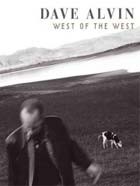
  • Dave Alvin – West of the West

    Dave Alvin is one of America’s best songwriters, and as such runs the risk of alienating casual fans when he does an album of covers. But then again, maybe not…

    The idea with his newest disc, West of the West, is to pay tribute to songwriters from the West Coast, where Alvin grew up. That means is you get stuff like “California Bloodlines” from John Stewart, with its gorgeous changes and nice, melodic lead guitar from producer/string-wizard Greg Leisz blending nicely with Alvin’s acoustic. A bluesy, and very menacing version of Jackson Browne’s “Redneck Friend” features a fine vocal and stinging leads from Alvin. “Down On the Riverbed,” by his buddies in Los Lobos, gets a folk turn with fine banjo.

    Alvin pulls out a wah pedal to highlight Tom Waits’ “Blind Love,” and grand treatments are applied to tunes by Jerry Garcia and Robert Hunter, John Fogerty, Merle Haggard, Richard Berry. And the surprise highlight is a stunning version of Brian Wilson’s “Surfer Girl.” It’s laid back and sparse, with marvelous harmony vocals from the Calvanes.

    The record does on occasion sound like someone treading water to his next effort, but the effort nonetheless is valiant, and Alvin never fails to sound soulful.

    The Great American Music Galaxy is a CD that Alvin originally sold at concerts. Alvin and his band deliver live on great cuts ranging from old Blasters standards to new stuff. Dave and Chris Miller handle the guitar work, and when they stretch out, it’s a joy to hear.

    These two records show Alvin at the top of the heap amongst those who record what he once referred to in song as “American Music.”


    This article originally appeared in VG‘s Oct ’06 issue. All copyrights are by the author and Vintage Guitar magazine. Unauthorized replication or use is strictly prohibited.


  • Tom Rush – How I Play My Favorite Songs

    On this vid, Tom Rush demonstrates what makes his playing so special. His teaching style is perfect for beginning acoustic guitarists who haven’t had much experience with capos. He knows how to break a song down so you can work on the smallest details. And again, Homespun’s split-frame format lets you see both hands simultaneously.

    Along with chord shapes and left-hand technique, he breaks down his right-hand fingerpicking technique, which is essential to his delivery. He also discussses open tunings.

    For a guy who says he doesn’t know what he’s doing, Rush sure can play guitar. Even if you don’t plan to hit the folk club circuit, How I Play (Some Of) My Favorite Songs contains more than a few nuggets that can be mined and incorporated into any style of playing.


    This article originally appeared in VG‘s Feb ’07 issue. All copyrights are by the author and Vintage Guitar magazine. Unauthorized replication or use is strictly prohibited.


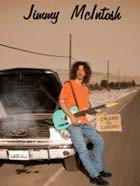
  • Jimmy McIntosh – Orleans to London

    At first glance, this record appears odd for a first-call player in Las Vegas. But the title says it all. Not only does it signify where parts of the record were recorded, it also points to the players and the music as McIntosh is joined by members of the Neville Brothers and on several cuts by Rolling Stone guitarist Ronnie Wood. It’s a perfect blend.

    Half of the songs here are make-you-move funk, which isn’t surprising when Ivan Neville is on keyboards,”Mean” Willie Green plays drums, and Cyril Neville is on percussion. There’s beauty in the ease with which the band’s groove allows Jimmy to play. For instance, “Biker Babe” is a slinky funk where he slips into fusion changes, soloing throughout with a big, fat tone before breaking into bends that’d make Albert King proud, then a little octave lick. It’s the perfect example of everything good about his playing, showing his skill, taste, and versatility. That formula works well on other cuts here, like the hard funk of “A.K.A. Papa Funk” with nasty soloing and soaring, soulful leads. “Rogent” is a jazzy ballad that builds and builds until we have several guitars meshing. One of those guitars is McIntosh, another is Ronnie Wood, and the other is attributed only to “Hot Rod.”

    Speaking of songs building, there’s a cover of Hendrix’ “Third Stone From the Sun” with 10 minutes of wild wang-bar sounds.

    In all, this is one fine guitar ride. And with the players involved, everything is so in the pocket you can’t help but move your feet. The mix of funk and fusion would make a fine addition to any guitar recording library.


    This article originally appeared in VG‘s Jun ’07 issue. All copyrights are by the author and Vintage Guitar magazine. Unauthorized replication or use is strictly prohibited.

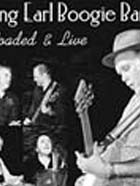
  • King Earl Boogie Band – Loaded & Live

    England’s Dave Peabody, this quintet’s frontman, is usually found performing acoustic solo blues or in tandem with pianist Bob Hall, but is also an excellent photographer and music journalist. But there’s nothing academic about this spirited live outing; this is music to stomp and dance and drink to.

    The opening “Money To Burn” is a steaming Peabody original, featuring Dave’s electric resophonic slide, John Coghlan’s backbeat snap on drums, and Mungo Jerry (“In The Summertime”) alumnus Colin Earl’s pounding piano. Elsewhere Peabody switches to a Fender Coronado Antigua – not your typical blues guitar – and does a decent job on straight guitar, but slide is his strong suit (check out his massive tone on “Blue Slate Slide”). Ian Campbell is best at handling the single-string leads; that’s him on the sustainy solo on “Matchbox.”

    “Somebody Stole The Lock” has a New Orleans groove, with Earl showing off his Prof. Longhair licks, and “Going To The Dance,” another Peabody original, has a relaxed Jimmy Reed feel.

    The only criticism is that the repertoire relies a bit too much on warhorses, like “What’d I Say” and “Who Do You Love,” although “Slow Down” gets a nice, mid-tempo makeover that distinguishes it from the countless Beatles and Larry Williams revamps. And “Rollin’ And Tumblin’” harkens back to Savoy Brown’s rocking take on “Louisiana Blues” – appropriately, since Colin is the brother of Savoy (and Foghat) drummer Roger Earl.

    Even with that minor reservation, it’s obvious that the only thing better than listening to this live CD of KEBB would be attending one of their gigs.


    This article originally appeared in VG‘s Jul. ’07 issue. All copyrights are by the author and Vintage Guitar magazine. Unauthorized replication or use is strictly prohibited.


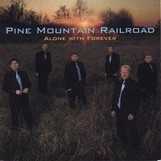
  • Pine Mountain Railroad – Alone with Forever

    In a world where everything is at our fingertips, anyone with access to the internet can instantly listen to original recordings by Bill Monroe, Flatt and Scruggs, Stanley Brothers, Osborne Brothers, Red Foley, or Doc Boggs.

    For new bands, this plethora of original material means that to grab the attention of listeners, you must, in Hemmingway’s words, “Beat dead guys at their own game.” Pine Mountain Railroad does just that, delivering “authentic” bluegrass music that would make even Bill Monroe smile.

    Alone With Forever is PMR’s seventh release. The band’s sound is heavily reliant on vocals with multiple harmony parts. And they don’t go for the easy baritone parts, either, but often add a high baritone over the tenor – up at nosebleed altitude; true high-lonesome harmonies. The opening cut, “Clementine” demonstrates this “stacked harmony” with Mark Cable singing a high lead over Cody Shuler’s tenor.

    Along with their spot-on harmonies, they deliver great instrumental breaks. Cody Shuler’s mandolin, Matt Flake’s fiddle, and Elmer Burchett, Jr.’s banjo handle most of the solos. Every note is right.

    Bluegrass purists who bemoan the diluting of the form by the evil influences of jazz, swing, old time, and rock and roll, will love Alone With Forever. Pine Mountain Railroad even has a food sponsor, just like Flatt and Scruggs did! Instead of some wussy ‘ol white flour, though, PMR sings the praises of Odom’s Tennessee Pride Sausage. You can’t get more old school than that.


    This article originally appeared in VG‘s Jun ’07 issue. All copyrights are by the author and Vintage Guitar magazine. Unauthorized replication or use is strictly prohibited.

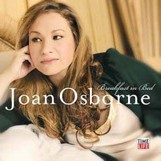
  • Joan Osborne – Breakfast in Bed

    In other hands, Osborne’s penchant for jumping from genre to genre could peg her as a dilettante. But she’s just so good at everything she tackles – her 2006 Nashville CD, Pretty Little Stranger, touring with the Dead, fronting Motown’s Funk Brothers – you can’t wait to hear what she’ll do next.

    Here, she dips into ’70s Philly soul, in an album of half originals, half covers. It’s a stronger effort than her 2002 album, How Sweet It Is, which was all covers and encompassed everything from Otis Redding to Jimi Hendrix to The Band.

    Cover albums are often a stopgap measure when an act can’t come up with any good new material, but Osborne’s own compositions on Breakfast (the beautifully melodic “Alone With You” and the wrenching “Heart Of Stone”) are as strong as the covers. Which is saying something, because her renditions of Hall & Oates’ “Sara Smile” and Bloodstone’s “Natural High” are as good as the original versions.

    “I Know What’s Going On” features a Stonesy/”Miss You” type of groove, while “Eliminate The Night” could have been a hit for Bobby “Blue” Bland in his prime. That they don’t merely fit in with but stand out alongside the Stylistics’ “Break Up To Make Up” and the Manhattans’ “Kiss And Say Goodbye” is a testament to Osborne’s nonpareil instrument (her voice) and her artistic sensibilities.

    And just as Osborne chooses a subtle, nuanced delivery where others would resort to histrionics, guitarist Jack Petruzzelli is the picture of good taste. Like the respect Osborne shows for the genre, he pulls out the Coral Electric Sitar or employs wah where appropriate without smacking of mere nostalgia.

    A worth-admission bonus: Osborne’s two live turns with the Funk Brothers that stole the show in the documentary Standing In The Shadows Of Motown – “Heat Wave” and “What Becomes Of The Brokenhearted” – are included.


    This article originally appeared in VG‘s Aug ’07 issue. All copyrights are by the author and Vintage Guitar magazine. Unauthorized replication or use is strictly prohibited.


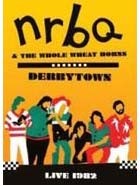
  • NRBQ and the Whole Wheat Horns – Derbytown: Live ’82

    NRBQ is one of the most underappreciated bands in rock and roll history, and even this poorly-shot live show from 1982 does not change that. In fact, despite the grainy appearance, odd angles, and overall amateurish approach here, this is a must-have.

    The beauty of NRBQ is you never know what’s coming. Their show this evening opened with “That’s All,” and features Al Anderson on lead guitar and vocals. He really was Big Al then, and his growling vocal and incredible guitar playing really let you in on the secret of the band…they are (and were) great musicians. This one swings and Anderson’s soloing crosses genres from rock-to-jazz-to-blues and everything in-between. Some parts have a decidedly bop feel. And Terry Adams goofing at the keyboard (for that matter, all over the stage) starts here and doesn’t let up until the show’s over.

    Before all is said and done, we hear the kind of pop magic that bassist Joe Spampinato brings on songs like “I Love Her, She Loves Me.” How about a quirky version of “Mambo Jambo?” You want quirky? Bring Donn Adams down from the horn section and let him sing a made-up version of “Sink the Bismark.” There’s a lot of great “normal” tunes, too. “Green Lights” gets full treatment here. It’s hard to believe the song was never a hit.

    Production be damned, the music and sheer fun of the band manage to override that. Throw in fun extras like “Me and the Boys” from a TV promo where the boys actually don’t play the right instruments, and other promo clips, and you’ve got a treasure trove for fans, and a fine introduction for other folks.


    This article originally appeared in VG‘s May ’07 issue. All copyrights are by the author and Vintage Guitar magazine. Unauthorized replication or use is strictly prohibited.


  • Dolly Parton – My Tennessee Mountain Home

    If the first songs that come to mind when you think of Dolly Parton are “Two Doors Down” and “9 to 5,” you need to pick up these albums – all three of them.

    Dolly had already recorded a stack of albums and even had her own “best of” (in addition to one by her and partner/bandleader Porter Wagoner) by the time she cut Coat Of Many Colors in 1971, but this was a major step. By now her singing, songwriting, and charisma had eclipsed Wagoner’s, and in songs like “Early Morning Breeze,” “The Way I See You,” and the classic title track, a distinctive voice was becoming a mature artist, even at age 25.

    My Tennessee Mountain Home, from ’73, was a further break, consisting entirely of originals for the first time. Most dealt with being homesick for her home in the Smoky Mountains. As with Coat, Bob Ferguson produced, and the session crew included some of Nashville’s finest – Buck Trent on banjo, Charlie McCoy on harmonica, Johnny Gimble on fiddle, Pig Robbins on piano, Pete Drake on steel, and Jimmy Colvard, Chip Young, Jimmy Capps, Bobby Thompson, and Dave Kirby on guitars, along with Parton herself. And once again, the title tune was a true, real-country classic.

    But Jolene marked her separation from Wagoner; in fact, “I Will Always Love You” addressed that very thing. Already covered impressively by Linda Ronstadt, it of course became a mega-hit when Whitney Houston’s version was featured in the movie The Bodyguard. But Dolly’s version is the best by a country mile – the most emotional without resorting to histrionics.

    She also decided to re-cut “Early Morning Breeze,” and the difference between this take, from 1973, and the 1971 version on Coat is another illustration of how rapidly Parton was growing artistically. But the title track, with its haunting acoustic fingerpicking, is the obvious standout, and will no doubt always remain Parton’s signature song.

    Legacy’s expanded reissues feature rich, clear sound, excellent liner notes by Chet Flippo, plenty of pictures, and a total of nine previously unreleased bonus tracks. This is a no-brainer; it’s prime Dolly.


    This article originally appeared in VG‘s Aug ’07 issue. All copyrights are by the author and Vintage Guitar magazine. Unauthorized replication or use is strictly prohibited.


  • April 2008

    FEATURES

    MICK TAYLOR
    Shedding Light on the Genius
    As young musicians in the U.K. began to channel American blues in the ’60s, guitarists emerged with names like Clapton, Beck, Green, and Page. These days, one name often tends to be forgotten… By P.J. Cotroneo

    AMP-O-RAMA
    The Fender 5E3 Deluxe
    The details of its ubiquitous design is hardwired into every guitarist’s genetic memory. Still, it’s too delectable a morsel to resist nibbling. Plus a few pointers on modifying yours for more headroom. By Dave Hunter

    GIBSON SUPER 400
    When introduced in 1934, it seemed more appropriate for the opulent 1920s than the economically shell-shocked ’30s. But it became the archtop for players and industry leader for a new era of super-sized “jazz” or “orchestral” guitars. By George Gruhn and Walter Carter

    ARLEN ROTH
    Flourishing After Adversity
    His recent spate of creativity would be impressive regardless. But in the context of the life-altering events that befell him in ’98, it’s a wonder he’s able to get out of bed every day – and testament to the human spirit. By Dan Forte

    PIECES OF A PROTOTYPE
    Secrets of a SoCal “Parts” Guitar
    The story of a California family whose father brought home a box of parts from Fender’s plant in Fullerton. They heated up a soldering iron on the kitchen stove and started assembling a guitar on the kitchen table… By Willie G. Moseley

    RICKENBACKER 481
    It’s hard to imagine an instrument that has undergone more innovation through its modern history. And while some guitar innovations are wonderful and remarkable, others leave you scratching your head. One of the latter can be found on the 1975 Rickenbacker 481. By Michael Wright

    IN DETAIL
    Fender’s Telecaster Thinline
    A two-in-one response to the trends that favored lighter, natural-finished instruments, the Thinline put a twist on the Fender company’s oldest (and still best-selling) model. By Ward Meeker

    BASS SPACE
    The Rickenbacker 4005
    Rickenbacker has a tradition of doing things a bit differently. So it’s no surprise that in 1965 it melded a hollowbody electric guitar with a bass, possibly as a response to Gibson’s EB-2 and Epiphone’s Rivoli. By Willie G. Moseley

    DEPARTMENTS

    DEPARTMENTS
    Vintage Guitar Price Guide

    Builder Profile
    Backline Engineering

    Upcoming Events

    Vintage Guitar Classified Ads

    Dealer Directory

    Readers Gallery

    FIRST FRET

    Reader Mail

    News and Notes
    Gibson merges with TC, Fender to Market Taylor, Gretsch and Martin anniversaries, In Memoriam, more!

    Bob Brozman
    World Instruments, World Music
    By Willie G. Moseley

    Classic Concerts
    Bob Seger, April ’73
    By Ken Settle

    Jimmy Leslie
    From the Bay to the Swamp and Back
    By John Heidt

    Ask Zac
    By Zac Childs

    Ted Greene Remembered
    By Jim Carlton

    Jim Heath
    A Reverend
    By Any Other Name By John Heidt

    Carl Filipiak
    Knack for Jimi
    By John Heidt

    COLUMNS

    The (Way) Back Beat
    Fab Gear, The Pre-Historic Age: 1950s Guitar Marketing in the U.K.
    By Peter S. Kohman

    Q&A With George Gruhn

    Acousticville
    Dream Recorders
    By Steven Stone

    “401K” Guitars
    A Good Point?
    By Gil Hembree

    Fretprints
    The Edge
    By Wolf Marshall

    TECH

    Guitar Shop
    Shop Essentials
    By Tony Nobles

    Dan’s Guitar Rx
    Flotsam Fever
    By Dan Erlewine

    Talkin’ Amps With…
    Billy Yates: Building a Killer Amp for Less Than $200
    By David Jung

    REVIEWS

    The VG Hit List
    SRV, Chuck Berry, Drive-By Truckers, Levon Helm, Marshall Tucker, The Fender Electric Guitar Book, more!

    Check This Action
    The Independent
    By Dan Forte

    Vintage Guitar Gear Reviews
    Collings SoCo, Harmonic Capo

    Gearin’ Up!
    The latest cool new stuff!