Tag: features

  • Joe Satriani

    Joe Satriani

    Vintage Guitar magazine from January 2012. All photos by Neil Zlozower
    The cover of VG‘s January ’12 issue.

    When he emerged in the late ’80s, rock guitarist Joe Satriani stood apart from the hair-band crowd for several reasons. Like most of his contemporaries, his style was a mix of classical and classic rock, heavily influenced by Jimi Hendrix and Jimmy Page. Also like his peers, he was fully capable of the shred-tastic scalar runs and quick-fingered tricks that were the flavor of the day.

    But the similarities mostly ended there, because while most ’80s rock players  were working solos to dress up regular ol’ songs, Satch’s music was almost entirely instrumental. His style focused on melodic runs like those heard on “Surfin’ With the Alien,” his 1988 song that set him apart from the crowd in that 1) it was an instrumental and 2) it was a hit!

    While you’ll rarely see him onstage playing anything other than his signature-model Ibanez, in the studio, he makes heavy use of a bevy of cool vintage instruments.

    Most recently, Satriani joined Sammy Hagar, Michael Anthony, and Chad Smith in Chickenfoot, a straight-up rock-and-roll collaboration that, as we’ll learn, first happened in Vegas… but didn’t stay in Vegas! We caught up with him as Chickenfoot’s second album, Chickenfoot III, was set for release.


    You can receive more great articles like this in our twice-monthly e-mail newsletter, Vintage Guitar Overdrive, FREE from your friends at Vintage Guitar magazine. VG Overdrive also keeps you up-to-date on VG’s exclusive product giveaways! CLICK HERE to receive the FREE Vintage Guitar Overdrive.


    What are some of your earliest musical memories?
    I remember a moment… My family was in upstate Vermont, on summer vacation. I couldn’t have been more than six or seven. We were dropping off my older twin sisters at a dance for teenagers – they’re eight years older – and they let me step in the door for a minute. The band was playing “Satisfaction” by the Rolling Stones, and the feeling I got watching the sax player doing Keith’s riff was the greatest I’d had up to that moment. The excitement of it – the sound of the band. I remember thinking from that moment, “That’s what I want to do. I want to make music.” Even at that young age, I knew it was the greatest thing ever. I was there for, literally, 30 seconds. Maybe it was really loud, and I remember being ushered out. But I couldn’t stop talking about it.

    Then, I remember watching “The Ed Sullivan Show” with my family, and how we’d wait weeks to see a rock-and-roll band do the show. Then, after I saw the Stones and Beatles, I wanted to play the drums; I was the youngest of five kids, so making a lot of noise was part of the program!

    I studied drums for two years, but at the same time, my sister, Marian, who is about five years older, started playing guitar. She had a nylon-string acoustic, and started to write songs. I got to see her perform at her school, and it was the strangest experience, watching her go through songs I’d heard in her bedroom or in the backyard. There she was, onstage. I remember worrying whether she was going to get through it okay. But I remember loving it, as well. I kind of connected that emotion to what I felt listening to that band in Vermont.

    Also, my sisters’ boyfriends used to play records at our house. They’d ask me, “Hey, Joey. What do you think about this?” It would be Hendrix and Led Zeppelin, the Stones, and the Beatles.

    So I started to get more into guitar, and I sort of turned into a Hendrix fanatic – I took to every Hendrix record that wound up in the house. And I started to go to shows; the first I saw was either Jethro Tull or Chicago Transit Authority at the Westbury Music Fair, on Long Island. It was all sort of happening around me. I was too young to experience the ’60s, but through my siblings, the records were handed down starting with the rock of the ’50s and leading up to everything that was happening from the beginning of rock through ’66, right up until ’70.

    As my sisters would leave go to college or move out, their records would be left behind, and I absorbed all of it.

    JS Batch 01

    In Deep With Professor Satchafunkilus
    A Look at a few of Satriani’s Guitars, Vintage and Otherwise

    1955 Gibson Les Paul (1) The goldtop. When Mike Pearce brought that to me, I fell in love because of the way it sounded. But I also loved its look; it’s exactly my kind of guitar – totally beat-up look. Mike said, “I think this belonged to Steve Hunter,” which that added to its caché.It looked right and came in a case that had “Steve Hunter” on it. We were just psyched, because Steve Hunter is part of our rock-and-roll DNA. I was gonna get the guitar, anyway, just because it was a beautiful piece.

    Fast-forward a year or so, and I’m onstage with Steve Hunter at a benefit for a friend. Afterward, I said, “Steve, I have this beautiful goldtop that used to belong to you.” And, right away he says, “I don’t know where the heck that started, but I’ve never owned that.” It was further proof that often in life, so much is in the mind! We look at an old guitar and if somebody says something like, “Jimmy Page owned this for a year,” your brain goes haywire and you start to think the guitar’s got more mojo. I have to remind myself, any time Mike brings over a guitar, to not buy something because it was once owned by someone or was once on the cover of Vintage Guitar or something!

    1958 Gibson Les Paul Junior (2) Pierre de Beauport found that for me around the time of The Extremist. It and the ’58 TV Special started me thinking about collecting guitars not as primary instruments. I had my Ibanez model and knew it was the tool I’d need to express myself. But I started to realize that in order to create textures you’d call “classic rock,” you needed tools from that era. I’ve had quite a few Juniors and got rid of most because they didn’t compare.

    1958 Gibson Les Paul TV Special (3) That is such a great player. I walked into Chris Cobb’s shop, Real Guitars, in San Francisco, one day, not thinking of buying anything. But there were two ’60s Strats – a ’64 and a ’61 – on consignment. I couldn’t believe it, I’d been looking for something like them for 10 years. So then and there, I bought them. Then Chris said, “If you’re in the mood for buying stuff, I’ve got my Special here.” He brought this thing out, and I could not believe it. I’d owned some nice ones, but they always fought me, as a player. This one, though, is amazing. Talk about mojo! I couldn’t believe how great it sounded and how easy it was to play. He had bought it from an old rock-and-roll player who told him he was the only owner. My neurosis kicked in, and I had to have it. So that was an expensive afternoon, as I walked out with three cases!

    1960 Gibson Les Paul Special (4) The Cherry Red double-cutaway. I got that at Gruhn’s, in Nashville. I loved that guitar up until two weeks ago, when we did the photo shoot. I was like, “How come I haven’t played this recently?” So I plugged it into Sam’s half-stack there in the studio, and I just didn’t get anything from it. I was like, “Oh no,” which is the beginning of the reverse neurosis, where I tell myself, “I have to get rid of this because…”

    What was your first guitar?
    It was a Hagstrom III, white with a black pickguard – a very cool guitar. It had the smallest, most-narrow, finished neck I’ve ever played. I used it for a year and a half, and played my very first shows on it.

    Do you still have it?
    No. But on a Chickenfoot tour a couple years ago, a fan who knew I’d been looking for one brought one to a show for me.

    What was your first amp?
    A Univox U65Rn, I think. We lived a few miles from Plainview, New York, where Unicord was based. It imported or distributed Marshall at the time, and made a couple budget amps; mine was one of them – narrow 1×12, solidstate with reverb. Not very reliable.

    I eventually got into a band with a guy who had a stack made by Lafayette, which was an electronics shop, like Radio Shack, on the East Coast. I believe his was tube. And our bass player had a Heathkit amp, where you buy the parts and build it yourself. Eventually, I wound up with a Fender Bandmaster. By then I’d sold the Hagstrom and found a late-’60s Telecaster with a maple neck. Someone had painted it black. I had a humbucker installed at a shop in New York City where Larry DiMarzio was working. That was my first brush with Larry, but I didn’t know who he was (laughs)!

    Was that Tele your first good guitar?
    It was great, had a Bigsby. With that guitar, I think I fell in love with the sound of wood, or at least understood what a guitar was supposed to sound like. The Hagstrom was just such an odd-sounding thing, had microphonic pickups, very thin and electronic-sounding. The only thing it had going for it was it was light, like an SG, and it had a great vibrato, much like what Brian May put on his guitars. So I learned how to do vibrato-bar tricks even before I knew much about music. I didn’t know modes or what was going on with chords, but I knew how to do dive-bombs, squeals, and make a fool of myself in front of my friends.

    After that, I was in a band with a lead-guitar player named John Ricio, who took me under his wing and guided me toward the Tele, and eventually, a Les Paul Deluxe we found in the paper. The guy was wiling to trade for the Telecaster, which by then I had almost destroyed. The Deluxe’s mini-humbuckers made the transition from a Fender to a Gibson guitar a little easier.

     Hagstrom III
    This Hagstrom III was a gift to Satriani from a fan.

    What did you do to progress as a player?
    I studied chord charts and my sister moved on, so I wound up with a couple of books. I’d bug my friends to write down all the chords they’d learned, so I had a couple loose-leaf pages with hastily drawn barre chords, and I’d play every chord on a piece of paper every day, over and over, figuring out how to connect chords to the music I was hearing on records.

    At the time, I was going to a public high school – Carle Place High School – but it had an amazing music program headed by this guy named Bill Westcott. And I had to be in the school chorus, so I had to learn how to sight-read because we sang classical choral music. By that, time I was playing in bands that were doing Sabbath and Zeppelin songs, and I was taking a music theory class that was absolutely amazing; he gave us a college education in music. I graduated a half year early, so, the first part of my senior year, I took double courses of everything, including his advanced music-theory class that only had myself and another student in it. We covered everything.

    So, while I was playing in bands doing free shows in the park and at parties, I was learning about Lydian-Dominant, how to sight-read and play piano. It was like I went to school in some small European principality – pretty remarkable, and Bill was a gifted young concert pianist who wound up at this small high school… poor guy! I can imagine him looking at me, a kid in motorcycle boots, black jeans, a t-shirt, hair down to his shoulders. All I wanted to do was play heavy rock. So, like a good teenager, I’d resist every time he’d try to teach me something! Eventually, though, we saw eye-to-eye and I wound up actually working with him; I played bass for these gigs he did in restaurants. He’d play standards – he was a brilliant piano player, could play any kind of music and turn any song into any style. I’d very lightly follow the lines around him.

    I started to understand how you collect intelligence on being a guitar player. Not only with the music I was doing in school, but how to stretch a Rolling Stones song to 12 minutes at a backyard party, which was fun. My friends now tell me I took it very seriously! And I did spend a lot of time practicing. They’d tell me, “Hey, there’s a party over here.” And I’d be, “Ahhh, see you later.”

    During this time, I went to three lessons with Billy Bower, who had a pamphlet of arpeggios and extended scales, which was just what I needed, because I was getting kind of overwhelmed interpreting music theory and trying to put it on the fretboard. This was right around the time I switched to the Les Paul Deluxe, because I remember practicing all that scale work, eight hours a day on it.

    JS Batch 03

    1958 Gibson L-5CES (5) I struggled with that guitar. It’s one of those where you open the case, look at it, smell it, and fall in love. But if I can’t figure out how to play good music on it, eventually it starts to bother me that I’ve got this expensive guitar and there’s 100 guys out there who could play beautiful music on it. Instead, it’s in my closet. That really bothers me. It and the Cherry Red Special are on the list labeled “Maybe I should sell them and find another Hagstrom III or something…” (laughs) Who knows?

    1965 Gibson J-45 (6) I was in Caracas, Venezuela, one evening and a guy walked up to me in front of a restaurant and said, “I am such a big fan of yours, I would love for you to have this guitar.” So I said, “Well, thank you.” Great, you know? It has the adjustable bridge and is a beautiful guitar. I loved it immediately, and I wrote songs on it right away; I wrote “Bitten By the Wolf,” that wound up on the first Chickenfoot record. I think I wrote “Different Devil,” too, on the new Chickenfoot record. The bridge was a mistake for Gibson, but the guitar is a beautiful example of the magic they can create with their acoustics. I had Gary Brawer put on a new bridge, and man that guitar sounds great – best Gibson acoustic I’ve ever owned.

    1966 Fender XII (7) Michael Pearce got that for me. I’d mentioned to him I wanted one. I had a Rickenbacker and he said, “A lot of people who say they used the Rickenbacker, actually used Fender XII.” So he shows up one day with this beautiful Candy Apple Red XII, and I put it on just about every record. It’s just an amazing-sounding guitar. I learned that it does what the Rickenbacker doesn’t – but it doesn’t do what the Rickenbacker does (laughs)! The Rickenbacker goes “twang” like nothing else. Put it into an AC30, turn it up, and it’s the ultimate “fairy dust” guitar, for if you need a little sparkle for a bridge or chorus. Anytime I have difficult parts to play that need to be mellow, and not overtly twangy, I use the Fender. There’s a song called “Cool New Way,” on the Super Colossal record that’s just guitars with harmonics – no chording – and I put the Fender on the left channel and the Rickenbacker on the right, and they complemented each other so well.

    It led me to create the Ibanez JS-1200, and I actually took detailed pictures of this guitar’s finish and told Ibanez, “It would be nice to have a JS with this color.”

    1990 Ibanez JS-2 Chrome Boy and Refractor (8, 9) I originally had three of these from that period, called Chrome Boy, Refractor, and Pearly. Pearly was stolen years ago while I was touring. The Chrome Boy was my favorite, while Pearly had a lighter tone, for some reason. The chrome finish really created a different tone every time a body was dipped in that material. Unfortunately, they used real chrome, and any fissures created when the finish lifted the sealant off the body would crack and create a knife-edge. So there’s a lot thick plastic applied to the guitar to protect my hands from being shredded by chrome dog-earring from the body. These sounded better year after year. At first, when the guys delivered the guitars, I remember thinking, “Boy, these sound compressed or something,” and I put them in the rack. And I don’t know if just being jostled around and exposed to stage volume every night sort of seasoned them, but later, they became my favorites, especially the Chrome Boy.

    Do you still have that guitar?
    No, I sold that, too… it followed me to Japan and California, and I traded it to Second Hand Guitars in partial payment for a ’54 refinished hardtail Strat.

    Going back a bit, there’s a rather romantic, folklore-like twist in your history having to do with your reaction to hearing about the passing of Jimi Hendrix…
    Yeah, that was very traumatic for me. I really loved Hendrix, and I didn’t realize just how much I did until I was told he had died.

    It was an otherwise beautiful day in September, early days of the school year. I loved football, though I wasn’t a great player; I loved puttin’ on the gear and hittin’ everybody, running around. And I remember, very clearly, being outside the gym doors on the way to practice when a friend told me Hendrix died. I remember turning around and walking right into the coach’s office; coach Reddon was a wiry, intense ex-Marine who ran the gym like we were Marines. So I was kinda petrified, but I was going through this cathartic experience, dealing with the news. I remember blurting out, “Jimi Hendrix has died. I’m quitting the team. I’m gonna be a guitar player.”

    To my surprise, he didn’t say anything to dissuade me. He just said, “Okay, bring your gear back.” That’s all I remember from that exchange because it was such a tumultuous moment in my life. I remember sadness, then going home and putting on Hendrix records. An hour later, with the seven Satrianis at the dinner table, I told my family what I was planning to do. There was shock and horror (laughs) in the kitchen! But my sister, Carol, had just finished her first week teaching art at a local high school, and she said, “Well, I’ll donate my first paycheck to get you a guitar.” So I had a budget, and eventually that Hagstrom fit into it. It was $120.

    1959 Gibson ES-335
    Satriani used this ’59 Gibson ES-335 on “Somethin’ Gone Wrong,” from Chickenfoot III.

    So you weren’t thinking about a Stratocaster?
    I don’t think I knew what it was, to be honest. I don’t think I understood what Gibson or Fender or any of that stuff was. I just kind of looked at the shapes and knew Hendrix had a white one and a black one, and that’s all. Someone should have sat me down and told me what was going on!

    Still, the Hagstrom looked cool, and it put me in “the club.” Most of the guitars in the local store were atrocious-looking, and I didn’t know where another music store was, so… (laughs)!

    As your career progressed did you develop a preference for certain instruments?
    Well, there was a long period of anxiety, like most players, about what I should play. I’d be in a band and have some sort of a Fender-y kind of a setup, then the band would change or someone would say, “You know, that doesn’t really sound like Tony Iommi or Jimmy Page,” and I’d have the wrong tool. And I couldn’t even think about having three or four guitars… or even two! I just had one. So making a leap to a Gibson was huge in terms of tone. You either played a Fender or a Gibson, and god forbid if you should switch to an SG or a Les Paul, then the band wants to do a lot of Hendrix. You’re kinda like, “Oh, no!” (laughs)

    And I was dealing with amps that were not even remotely professional. I could never afford a Marshall, and loud Fenders were not part of my scene. I was lucky to have that Bandmaster! It was big, but didn’t make much of a sound. So I struggled with that. Once I started to play the Tele, though, I knew it was a real guitar and I started to understand what it could and couldn’t do. I guess that drove me to the Les Paul, but that was frustrating, as well, because I was familiar with all of the Tele’s Fender characteristics. So I flipped into a ’54 Strat, which was beautiful but had been refinished. So it had a gold-tint neck and the body was refinished in what we called “avocado sunburst.” The guy who did it was a true artist, it was beautiful. It had weak pickups, so it had beautiful sustain and very nice presence, and it was a hardtail, which was kind of interesting, and I really got into that. That was when I’d returned from bouncing between Japan and New York, and was setting down roots in Berkeley. I did a lot of teaching with that guitar, but I realized I needed to take advantage of parts being offered by different companies like Boogie Bodies and ESP. So I started to put together my own guitars with humbucking pickups with a bunch of electronics configurations. Those were my main guitars for four or five years.

    JS Batch 05

    1984 Kramer Pacer 10) This is the guitar I used for the first two solo albums, Not of This Earth and Surfin’ With the Alien. After I finished Surfin’, I went to a NAMM show and we started passing the album around. That’s when my relationship started with Ibanez; I was introduced to D’Addario and DiMarzio and, through Steve Vai, the guys at Ibanez. They said, “We’d love to make you a guitar.” And I said, “Please! Help me.” Because the Pacer was constantly falling apart or went way out of tune.It was unusual because it wasn’t a production model. I bought it at Guitar Center, and it was put together, I believe, in the back. It had a Pacer body, the neck was from some other Pacer, and it had a mixture of gold and silver hardware. The original Schaller pickups were long gone, I’d replaced them with Seymour Duncans or DiMarzios, and every couple of weeks there’d be something different in that guitar. At one point, back when Floyd Rose vibratos used to screw right into the body, the wood was so light the post would be stripped within a couple of weeks. I was so happy to stop playing that guitar (laughs)! It was rough. But it’s a cool part of my history.

    1990 Ibanez JS 3 Donnie Hunt 11, 12, 13) I have three original Donnie Hunt guitars. Donnie was an artist in the Bay Area who passed away a couple of years ago. He taught art at the Oakland School of Arts and Crafts, and basically painted everything in his environment – his loft, his phone, refrigerator, shoes, jackets, whatever. I had him paint a couple of guitars, then took him to Ibanez, and they basically hired him. I think he painted 300 versions, all incredibly different. Donnie also did a lot of embarrassing clothing from my early career! It was thrift-store stuff – very difficult to clean on the road! I originally had four of them, but my favorite one was stolen.

    What time period was that?
    This was around ’78 through ’84. Then, somewhere in there, I picked up a Kramer Pacer with an original Floyd Rose without the fine-tuners. I was in a band called the Squares, which was like Van Halen meets the Everly Brothers – it was weird, sorta like Green Day, except we weren’t good (laughs)! We floundered, maybe because I was really bringing heavy metal and fusion; I liked the Ramones, but I liked Van Halen, so it was kinda mixed up, and the guys weren’t into it. My current drummer, Jeff Campitelli, who I’ve played with more than anybody, was in that band, and was more into traditional rock – definitely not into the stuff I was into! Our bass player was a whole other case. But during that period, the guitars I put together were fantastic for what we were doing. I needed something that took advantage of the Floyd Rose, and I was trying to develop a melodic solo voice, rather than just a wall of sound, which is what my guitar did in the band.

    So you were right there early in the Superstrat thing…
    Yeah, in the late ’70s, if you were a rock player, you were probably frustrated with the Fender vs. Gibson dilemma. I knew a hundred guys who were doing the same thing. And when Van Halen came out, we all went, “See! That’s what we’re talking about.” We felt kinda vindicated by Eddie. Suddenly, those weird Frankenstein guitars gained validity.

    So, when did you start scoring cool vintage guitars?
    It’s funny, when you talk about “scoring” guitars, I remember some that had jewelry-store value, but I could never connect with them. And others maybe have less value as collectibles, but they give me love year after year.

    I have a ’58 Esquire with a Tele setup that a friend, Chris Kelly, found for me while I was recording The Extremist. I used it right away and it wound up on every record after that. Most of my other guitars have come from Mike Pearce, who in my address book is called “International Man of Mystery” (laughs)! I’ve known Michael for a very long time, he was actually a student of mine back when I was teaching at a guitar store in Berkeley. Fast-forward a couple decades, and he owns two music stores in Japan. But as we became friends, he wound up being this procurer of vintage and unusual instruments. My goal has always been to find great examples of great player instruments, so I can use them on records, and Mike educated me on all the elements.

    I’ve had great Strats I never should have sold – mint and beautiful, but they just didn’t like me. I never played anything good on them. So I let them go.

    1958 Fender Esquire
    Satriani has been making heavy use of this ’58 Fender Esquire since recording the 1992 album The Extremist.

    Do you have any favorite guitars at the moment?
    I used my ’59 ES-335 a couple of months ago on the new Chickenfoot record, for a song called “Somethin’ Gone Wrong.” We were looking at the song – it was pretty much finished – and our engineer/producer, Mike Fraser, said, “I’ve got an idea. Why don’t you put on a guitar and just kinda play some melodies wandering around? Then we’ll see if there are spots where we can mix it with Sam’s voice.” There was already a bunch of Ibanez guitars on the track, and I remember thinking, “Let’s just pull out the 335.” So I plugged it into the Marshall and got a very nice, warm tone out of it. So I just started wandering through the track. And when Mike mixed it, he kept all of it. I was shocked, but everybody who heard it was like “Wow, what is that?” It was just the perfect moment, the perfect suggestion, and the perfect guitar with the perfect amp. And I played in a way I’ve never played before; that guitar worked its mojo on me. I restrained myself just right, and it sounds huge.

    Are there other vintage guitars in your collection that have similar stories or for which you have a similar affinity?
    Sure. The ’58 Esquire. There was a period in the mid ’90s when I was into that thing so much. We used it extensively on The Extremist to do Tele-like things – add that sparkle. For the Time Machine compilation, we recorded three new songs, and I decided, “I’m just gonna play the Esquire.” I think we had Seymour Duncan pickups in it at the time – the thing has had about a hundred different pickups. I plugged it into a little 17-watt amp made by Matt Wells, then ran it through a vintage Marshall 4×12, and recorded three songs using it as the primary guitar – “All Alone,” the Billy Holliday song, a trio recording called “The Mighty Turtle Head,” and the title track “Time Machine,” where I used it for the rhythm parts. Then, I wound up using it quite a bit on Joe Satriani, which Glyn Johns produced. That was a bit rougher, because those were live recordings in a situation where I wasn’t sure what I was doing on some tracks, so you hear me struggling with the Tele.

    The Telecaster is the one electric guitar you can never dominate, really. There are guys who come close, but most of the time, it has its way with you.

    The Ibanez still figures heavily into your recordings…
    Yeah, it’s on just about everything. And on tour I play strictly Ibanez guitars because I have so much catalog to cover, with melodies and solos using every conceivable technique. The JS (Satriani’s signature Ibanez line) guitars have been molded since ’88 to reflect this “job” I’ve fallen into. It’s the guitar that allows me to do all those things I can’t do with the Esquire or the 335, which goes out of tune after eight bars! The JS resolves the struggle – “Am I going to play Fender or am I going to play Gibson?” Instead of having to make a choice, I’ve got a 251/2″-scale guitar with humbuckers, compound radius, frets are just the way I like them, and its neck feels more vintage. But the guitar is like a modern sports car.

    Do you have a favorite tone or setup?
    I don’t think so. I’d say just about anything through a Marshall is really good. There are so many different ones, but the basic Marshall is the “kitchen sink” sound – it gives you everything. More than you want, maybe! It’s the most revealing amp you’ll ever plug into, I think.

    Early in my career, I tried to run from it. On the first couple of solo records… for Not of This Earth I didn’t even bring one into the studio. I was such a contrarian, I remember calling [recording engineer] John Cuniberti and saying, “I’m gonna use whatever is in the closet.” I thought that was a cool, artsy way of doing things. What happened to be in the closet was an early-’70s Pro Reverb, and I just plugged little (effects) boxes into it. We’d record quietly and use microphones like a C12A, Boss pedals, and early tube drivers made by Paul Chandler. Parts of Surfin’ With the Alien were done with a JC-20 and the DS-1 instead of the Marshall stack. We began to realize [the sound] had a lot to do with the mic and the relative tones of the other elements in the band, which was very liberating. You can say, “I need a Strat and a full stack. That’s the only thing that’s gonna make me rich, famous, and a great guitar player.” But history says, “No.” If you really look into it, you go, “Hendrix used a Tele on that song? And Jimmy Page played through a Supro?” You realize that all the great players and great albums were made with ingenuity, using unusual ingredients in terms of guitars and amps. Once you get that in your skull, you realize, “I can do what I want and I should use these tools in a creative way.”

    I look at each song as its own little world, a concept I was introduced to through Hendrix and Page. I’d call them the opposite of the guitar hero who always wants to remind you of everything they can play and what their signature tone was. That wears thin on me after a song or two. Hendrix changed his sound for every song – he’d either play crazy or he’d play demure, whatever he needed to get something across. Page was the same. On some songs, his sound was small and thin, other times it was huge; sometimes it was only one guitar, sometimes he’d layer. It was artistic. I tried to carry that through my solo career, and with Chickenfoot I have a broader canvass to practice those influences.

    In terms of your playing, is Chickenfoot more meat-and-potatoes?
    The obvious main difference is there’s no singing in the solo gig. Melody guitar parts take the place of the vocals; the human voice is such an incredible instrument, and it changes everything, even the way the bass player and the drummer are playing. In Chickenfoot, I’m part of the rhythm section. We’re playing rock music, applying classic-rock stylings and kind of celebrating our roots. You can hear on the new record where I’m a Jimmy Page disciple until the solo, then you hear a real Jimmy Page influence. It’s kind of schizo, but it’s a support part and you can pick a lot of interesting colors that can contrast the meaning of the song. Because you’ve got lyrics, a singer, in this case Sammy, who’s delivering some kind of a message, and you can work off that in many different ways.

    In an instrumental song, I don’t have the benefit of lyrics. So texture has to make that point to the listener. It’s very different. I think about “Wind In The Trees” from Black Swans and Wormhole Wizards. I was putting a melody on it and thinking, “I need something unique that can convey the feeling I had when I was a kid looking out my window in Long Island, late at night, watching the wind blow through the trees, and about what was ahead of me in life.” That’s a difficult thing to convey without lyrics.

    JS Batch 07

    Ibanez Futura14) Doug Doppler gave that to me as a gift a couple of years ago. Nice big piece of wood, I like that guitar. It’s really super-warm-sounding. I haven’t yet used it to record, but I keep it in the back of my mind as a great guitar for a slide part or something.

    1948 Martin 000-21 15) That has an interesting bit of modification – a Sunrise pickup, which I used quite a bit on a couple of records. I asked Gary to replace the bridge and put on one of those two-piece saddles. We used it for “Starry Night” and so many songs where there’s an acoustic bed. Me and my son, ZZ… it’s our favorite acoustic in the house.

    1969 Fender Stratocaster 16) That’s an all-original Olympic White/maple-cap Strat. It’s really beautiful; take off the pickguard and you see the original color, it’s pretty stunning. I used that for the melody on “Two Sides to Every Story” on my last solo record. Fender guitars had all sorts of tonal qualities in different years, as their pickups got hotter or weaker, they used different woods and stuff. I relate to the ’60s Strats more than I do to ’50s Strats. I was kind of brainwashed earlier in my collecting career, thinking, “You had to have a ’55 and a ’56 or whatever.” But after owning so many, and getting rid of all of ’em, my Strats now start at ’60 and I’m still looking for perfect examples of ’64 through ’69 models, because that’s what I heard on records when I as a kid.

    1964 Fender Stratocaster 17) This guitar has “it.” You know how when you plug in a Strat, switch on the neck pickup, and play the G string at the 12th fret, you know right away if it’s got that beautiful tubular tone? Not too skinny, not too bright, but not dead. I plugged it in, played two notes, and I went, “Oh, this is it.” The ’61 sunburst Strat does not have that lead-guitar thing, but it has better rhythm sound than this one. That’s why I got both. I thought, “For one or two or three songs, these are gonna be the perfect guitars.”

    Daunting, to be sure…
    And somehow, it led me to use auto-tune, which is the weirdest thing for the melody, exploiting it… Not hiding behind it, but using it the way a guitar player would use a wah pedal. When the solo came, I looked for something different, and wound up using the Sustainiac pickup and Sansamp software.

    The opposite happens in Chickenfoot, where there’s three guys in a room, Sammy in the vocal booth, and we just want to make our point, then and there, with a live track. It’s very different.

    Whose idea was Chickenfoot?
    I was the last guy in the band, so I’m gonna take a guess that Sammy brainstormed it! He very slowly pulled in Mike and Chad, and they’d been playing for about six months when he called me and said, “We’re playing in Vegas tomorrow. Why don’t you fly down and jump onstage for the encore? It’ll be fun.” And I thought that was what we’d be doing. So I went for a Sammy Hagar weekend, and by the time I walked offstage, we were looking at each other like, “Wow! We sound like a band. We should try this somewhere away from 5,000 screaming people and see of it works the same!” And that’s how it started.

    You went in with no expectations?
    None. I was busy, just about to go on tour. I’d just finished mastering Professor Satchafunkilus and had months of touring ahead of me. There was no time for another band. But this one worked for the right reasons; as soon as we played “I’m Going Down,” “Mr. Fantasy,” and “Rock and Roll” onstage, it was obvious we connected. There was that thing you always want – undeniable chemistry. We knew it was impossible – Sam was working on an album, Chad was about to go back to the Chili Peppers… It was an impossible idea, yet we pursued because it felt right.

    As you see it, how does the second album compare or differ from the first?
    It’s quite different. With the first, we didn’t know each other as well, personally, and it was successful because of our overwhelming enthusiasm. When we were finally on tour and reflecting on what we’d recorded, we thought, “Wow, I wish we would’ve spent more time on that.” Every week, we’d realize more about each other as players. In my case, I’d think, “Too bad I didn’t know that about Chad. I would have written more songs to exploit it.” As I got closer to Sam, I realized he’s got so much to offer, which I think is very important in a rock band, that you get to know the singer on a more intimate level, what they’re about, what’s bugging them and all that kinda stuff that’s part of rock music.

    So as we got into the second record, not only did we have the experience of the first one, but we had become a touring band – had crazy jams, great times and horrible times. So we had more to bring to the party. And I had more to write about. We came in wanting to pull things out of each other. I told Sam I wanted him to sing in a lower register and get a more-intimate thing going with the fans. And he wanted me to go crazy more, loosen up. He wanted to hear more of what he saw me do onstage. So we’d exert those influences on each other, and I think we wound up with a much tighter album that sounds better, more like us. We developed a Chickenfoot sound, and we know what it is.


    Satchurated


    This article originally appeared in VG January 2012 issue. All copyrights are by the author and Vintage Guitar magazine. Unauthorized replication or use is strictly prohibited.

  • Sturdy and “Purdy”

    Sturdy and “Purdy”

    Price: $199 Info: www.dashboardsonline.com
    Price: $199
    Info: www.dashboardsonline.com

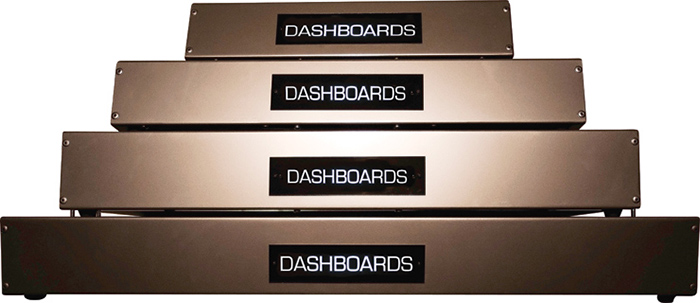
    Founded in 2010 by guitarist Ashley Dasher and based on his vision of the ideal touring pedalboard, Dashboards offers well-crafted, easy-to-use pedalboards. And they look sharp, too! With lightweight, yet sturdy, one-piece aluminum construction, they’re dressed up with a powder-painted finish and polished chrome handles.

    Dashboard_1

    Our test pedalboard had an optional backlit logo, 1/4″ solderless jacks (XLR also available), and a built-in A/C outlet. This great feature lets the player plug guitar, amp outputs, and power cords into the side of the pedalboard, keeping them out of the way of their snakeskin boots.

    Dashboards offers a variety of sizes, including 18″x12″, 25″x13″, 30″x16″, and 36″x18″, and encourages players to ship their pedals to their shop (or stop by if they’re local or passing through Atlanta) for custom wiring. Options include power supplies and switching systems. Dashboards will also find the correct signal path for each board.

    As with most high-quality pedalboards, Dashboards offers padded carrying cases to ensure pedals are protected while getting to and from the gig.

    Dashboard_4


    This article is a VG Signal Chain issue #1. All copyrights are by the author and Vintage Guitar magazine. Unauthorized replication or use is strictly prohibited.


  • MTD Kingston Rubicon 6-22

    MTD Kingston Rubicon 6-22

    MTD Kingston Rubicon 6-22

    MTD Kingston Rubicon 6-22
    Price: $999
    Info: www.mtdkingston.com

    Intuitive, player-oriented design, prime materials, and first-class execution distinguished Michael Tobias’s work even before he began concentrating on innovative electric basses in the late 1970s. And let’s not forget Michael Tobias Designs (MTD) helped introduce the newfangled term “ergonomic” to electric guitars and basses.
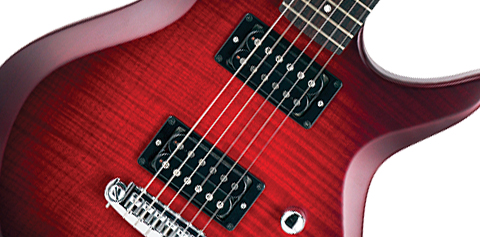
    The Kingston Rubicon 6-22 is a perfect example of Tobias’s forward-looking designs. This six-string/22-fret instrument (as its name suggests) features an alder body with a flamed maple top for a bit of added mass, not to mention added class. The curvy two-horn design with belly cut and top-edge bevels is visually unique, with the diminutive treble bout just big enough to ensure a comfortable sitting position.

    The distinctive look of the Rubicon’s body is echoed in the offset headstock, a modified snakehead with an attractively detailed crown. The neck is constructed with a scarf joint at the E tuners (with an overlay for extra strength and good looks), and is joined to the body with a tightly fitted four-bolt system at the tapered heel. The flat-sawn maple neck on the test model, which showed a nice curl that complemented the figure of the maple cap, was finished in natural catalyzed polyester, while the body was an attractive dark cherry satin called “Dr. Brown’s Burst,” Dr. Brown’s being a soft drink dating to 1869 (for true vintage lovers).
    The Rubicon’s OEM tuners and Graph Tech ResoMax bridge (an adjustable wraparound bolt-mount design) feature a dark finish, while the designer’s inclination to asymmetrical detail on the headstock and body extends to the neck: The rosewood fingerboard is a compound radius with a 25.5″ scale, while the neck profile is a touch thinner on the treble side, and fatter on the bass.

    The Rubicon’s electronics are as straight-ahead and sensible as the hardware, neck, and body. Two coverless proprietary humbuckers are height-adjustable in their bezels, with individual string voicing possible through six pole pieces. Single tone and volume controls and a three-way selector are augmented by two mini switches for parallel and series output. Though the single-coil/humbucker switching remains a popular feature of many guitars, on the Rubicon this option is noise-free, as the pickups never leave humbucking mode. The skinnier parallel sound, with the two coils wired independently to their output, offers the lower output typical of a single-coil, while the fatter-sounding series wiring, with the two coils wired consecutively to their output, delivers a humbucker sound more familiar to electric guitarists.

    Any gigging player who has had to cope with extraneous noise due to lighting, electrical issues, and single-coil pickups will appreciate the 60-cycle hum-free response of the 6-22, as well as the versatility of the eight discrete pickup tones. Plugged in through an early-’80s Mesa amp with a 12″ Fender Eminence speaker, the Kingston Rubicon 6-22 sparkled even in the beefiest settings, providing excellent note separation even with the master volume dimed. The parallel settings on both pickups were forceful enough to drive the amp nicely, and flipping the switch to the series option gave an extra solo boost that threw the amp into full-tilt Boogie mode.

    The pickups came adjusted for a distinct balance of volume, and the middle selector switch position was only a touch quieter due to the typical frequency cancelation that occurs when two pickups are played together. The several tones available through manipulation of the switching system were all musical, helping build the dynamics of a solo section by shifting to higher output settings as the music developed (or you could use your fingers, of course).

    The easy setup and compound radius fingerboard made rapid single-note lines and extreme bends equally accessible, and Lenny Breau-inspired arpeggiated passages came through cleanly even with the amp in overdrive. Not even several effects chained together – an original MXR Dyna Comp, an Ibanez Tube Screamer TS-808, a Holy Grail reverb, and a Boss Digital Delay – could muddy the waters, making the Rubicon 6-22 an excellent choice for pedalboard-oriented guitarists. And thanks to the Buzz Feiten Tuning System, the Rubicon 6-22 played in tune in every position.

    Although Michael Tobias achieved his greatest success with his bass designs, he’s been a guitarist from day one. The MTD Kingston Rubicon 6-22 finds him crossing back over to where he started. And that’s our good fortune.


    This article originally appeared in VG May 2014 issue. All copyrights are by the author and Vintage Guitar magazine. Unauthorized replication or use is strictly prohibited.

  • Dunlop Fuzz Face Mini Distortion Pedals

    Dunlop Fuzz Face Mini Distortion Pedals

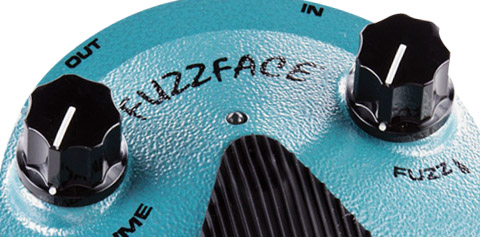
    Dunlop Fuzz Face Mini Distortion Pedal

    Dunlop’s Fuzz Face Mini Distortion Pedals
    Price: $129.99 (Germanium, street);$99.99 (Silicon and Jimi Hendrix, street)
    Contact: www.jimdunlop.com.

    When it comes to fuzz pedals, the one that comes to mind for most players is the iconic Fuzz Face. With its cool, round spaceship design and classic fuzz tone, it’s been a favorite of legends like Jimi Hendrix and modern shredders like Eric Johnson and Joe Bonamassa.

    While most love the look, vibe, and tone of a classic Fuzz Face, it does take up a lot of real estate on a pedal board. It also lacks a few critical modern features. So the folks at Dunlop put the Fuzz Face on a diet, shrinking its diameter in half, from 7″ down to 3.5″. During this shrinking process, Dunlop took care to retain the cool round shape, classic textured enamel paint finish, funky rubber foot pad, and retro knobs of the original, while adding a few modern features like a no-tools battery door, an on/off status LED, and a 9-volt AC power jack. To top it all off, Dunlop offers the Fuzz Face Mini Distortion Pedals in three varieties: a version featuring a pair of slightly mismatched germanium transistors like the original Fuzz Face; a version with silicon transistors like the later ’70s Fuzz Face; and a version of the JHF1 Jimi Hendrix Fuzz Face.

    We plugged them in between a Fender Custom Shop 1960 Relic Stratocaster and a Marshall JCM 900 head and a Celestion-loaded 4×12 cab.

    The Germanium Mini offered the classic warm-fuzz sound with a moderate amount of gain and a nice percussive pick attack. The Silicon Fuzz Face Mini exhibited more gain/sustain with more of the midrange scooped out and a more biting top-end. The Jimi Hendrix Fuzz Face Mini combined the best of both – a lot of sustain, great percussive pick attack, and a smooth-yet-aggressive sound – and it worked well both as a stand-alone fuzz and as an added drive on top of the Marshall’s overdrive. All three pedals maintain good note separation and clarity, even with the fuzz control cranked. There’s no mushy low-end or overly scratchy highs – all are very musical and articulate.

    True to the intent of the folks at Jim Dunlop, Fuzz Face Minis are pedal-board-friendly versions of classics with some modern features. Most importantly, they don’t sacrifice any classic Fuzz Face sound or vibe – and they accomplish it at half the size.


    This article originally appeared in VG May 2014 issue. All copyrights are by the author and Vintage Guitar magazine. Unauthorized replication or use is strictly prohibited.


  • Movie Star, Rancher

    Movie Star, Rancher

    Tender Mercies Rancher
    The case for the Tender Mercies Rancher was dressed with stickers courtesy of the movie’s props department. Photo: Greg Barnhart.

    In the years immediately after World War II, Americans were settling into a new way of life, and plunging headlong toward an economic prosperity never before experienced by everyday people. Change was also afoot among the nation’s guitar manufacturers.

    Having been restricted by materials shortages and/or re-tooling to bolster the war effort, guitar makers like Gibson and Gretsch rolled out of the war with a renewed sense of adventure that was quick to take advantage of changes in popular music – fading quickly were big-band music, swing, and be-bop, replaced by simpler, more aggressive types of music that would eventually take on labels like “rock and roll,” “rockabilly,” “country and western,” “folk,” and “blues.”

    The predominant trend among guitar builders at the time was the shift to electricity and (a bit later) the solidbody guitar. But there were more nuanced changes, as well, like the burgeoning popularity of folk music, which in 1947 spurred Gretsch to design three flat-top acoustic guitars – the 16″ Sierra Synchromatic 75 (model number 6007), the 17″ Jumbo Synchromatic 125F (model 6021), and the 18″ 400F (6042). Though none went on to achieve status as truly noteworthy collectibles, the 125F evolved to become the most popular Gretsch acoustic ever made.

    In 1954, Gretsch removed the word “Synchromatic” from the headstock of the 125F and re-named it the Town and Country. Still a fairly well-dressed critter, it retained the 6021 model number, 17″ body, maple back and sides, laminated spruce top with natural finish, ladder bracing, multi-ply binding on its top and back, and bound fretboard with block inlays. It also carried over certain design elements from the Jumbo Synchromatic, some functional (arched maple back, height-adjustable bridge), others downright funky, like the triangular sound hole, triangular rosewood bridge, and slanted metal string-anchor plate.

    Introduced alongside the Town and Country, the 6022 Rancher was simply a 6021 dressed up in what Gretschheads call the “cowboy” treatment – Amber Red (a.k.a. “Western Orange”) finish, a tortoiseshell pickguard with engraved steer head, “G brand” logo on the lower bass bout, “cows and cactus” inlays, and the steer-head inlay on the face of the headstock.

    Tender Mercies Poster
    Robert Duvall with the Rancher and co-star Allan Hubbard in the lobby card for Tender Mercies.

    Not exactly renowned for their sound or playability, the Rancher and Town and Country are today viewed much more favorably for their catchy looks.

    “They are both artistically avant-garde interesting pieces of art,” said George Gruhn, co-author of Gruhn’s Guide to Vintage Guitars. “However, their laminated top construction, heavy bracing, and bridge design are not conducive to producing good acoustic sound. While they have some appeal as collector’s items, I view them as musical stage props.”

    “I agree,” added Walter Carter, Gruhn’s Guide co-author and author of several other books that chronicle guitar brands and models. “You have to string it up with the heaviest strings you can find and play it as hard as you can. That’s the only way to get any sound out of one!”

    So it was that the Rancher mostly languished in terms of popularity, and thus was subject to Gretsch’s treatment of similarly dressed guitars (the company also slapped the “cowboy” dressing on the 6120 Chet Atkins Hollow Body, the 6121 Chet Atkins Solid Body, and the 6130 Roundup – the last two were essentially Duo Jet models in Rancher duds) when bits of the “cowboy” detail were dropped from the Rancher with each passing year. Not cool, but certainly better than the fate suffered by the Town and Country, which Gretsch dropped from the line by ’59.

    Sans cowboy attire, the Rancher sallied forth, lasting in its original form until 1973, when it was discontinued for two years, reintroduced, then discontinued again in 1980.

    955 Gretsch Rancher
    The 1955 Gretsch Rancher that “co-starred” with Robert Duvall in Tender Mercies. Photo: Greg Barnhart.

    While its story is mostly unexciting, one particular 1955 Rancher did become a Hollywood movie star, of sorts, when it appeared in the hands of actor Robert Duvall in his portrayal of has-been country singer Mac Sledge in the 1982 film Tender Mercies. The character is an alcoholic who seemingly lives out the lyrics of a country song by drinking away his career and family before one day waking up on the floor of a motel in Texas, fresh off an ass-whoopin’. Flat broke, he is forced (or allowed) to “work off” his bill, and the subsequent story of redemption centers around his relationship with the widowed hotel owner, played by Tess Harper, and her son, played by Allan Hubbard.

    Lauded by critics, the film scored five Oscar nominations including best director, picture, actor, original screenplay, and original song. It is also regarded as one of Duvall’s finest performances, and marked the only time in six nominations that he was awarded the Oscar for Best Actor. And the Rancher played a significant role in his role.

    The guitar Duvall used in the film now belongs to Claude Armentrout and his son, Randy, both of whom are fans of Duvall and the film.

    “In 2005, I bought a reissue single-cut Rancher simply because it reminded me of the one in the movie,” Randy said. “But of course I never expected to own the real thing.

    “The two play and sound amazingly similar,” he added. “I was impressed to find the ’55 was still in excellent playing condition, with clean, low action that’s as quick and light as any guitar I’ve played. Its sound is thin and bright, but very well balanced, similar to a J-series Gibson, but not as deep.

    “Both have the neck contours common to all Gretsches I’ve played, which is my favorite thing about a Gretsch.”

    Obviously delighted, Armentrout recalls that after acquiring it, questions abounded about various oddities. So he set out on a mission to gather its history, and his search eventually put him in contact with every person who has owned the guitar since the mid ’60s. Here’s what he has learned so far…

    History

    Though its earliest history is unknown, in the mid ’60s, concert promoter/record collector Edward Guy bought the guitar, used, from New York’s famed Manny’s Music.

    “I liked it because it was very different in color, and because of the shape of the sound hole,” Guy recently told VG. “It had a good neck and a hardy bass sound. Plus, it had the G brand on its top, which just happened to be my last initial!”

    A friend of Duvall since the mid ’50s, in 1982, the actor asked Guy if he could use it in a movie because of its authentic, “seasoned” appearance.

    “Bobby had a Martin D-28 that his fiance at the time time, Gail Youngs, had given him. But he felt it was too common-looking, and wanted to use a distinctive guitar for the film.” So the guitar made its way to Duvall, who used it “…for six months or more,” Guy said, while preparing for the role in some fairly “method” ways. Guy recounts that Duvall drove more than 600 miles through Texas, recording local accents and sitting in with local country bands.

    Gretsch Guitars
    Two other guitars that were given the “cowboy” treatment include the 1955 6130 Roundup (left) (which was the only one given a “belt buckle” tailpiece), and the model 6120 Chet Atkins Hollow Body.

    Guy also invited Duvall to attend the 1982 Waterloo Bluegrass Festival, where Duvall spent time with musical legends like Bill Monroe and Charlie Waller, studying their performances and watching as they interacted with fans and fellow players. When invited, he’d hang out on tour buses.

    Guy’s input also affected a certain behavioral trait of Duvall’s character.

    “I contacted the Country Music Hall of Fame and obtained a rare video of Hank Williams on the ‘The Kate Smith Show’ in 1952,” Guy recalled. “I found out that Hank never removed his hat because his hair was thinning. Bobby thanked me for that tidbit, and said he would thereafter keep his hat on for the majority of the film.”

    Finally, Guy and his partner, George Argast, arranged for Duvall to perform with the guitar as the opening act for Don Williams at a concert in Morristown, New Jersey.

    The roadwork apparently paid off, as Duvall then sang the songs for the Tender Mercies soundtrack, and even had a hand in writing some of them.

    Shortly after, the guitar was one of three at a party hosted by Duvall in his New York apartment following a screening of the film. Cast members, along with Willie Nelson, reportedly played it as guitars were passed around.

    “Bobby had me smuggle in two guitars and hide them upstairs, to avoid being too presumptuous with Willie,” Guy said. “But Willie didn’t need any encouragement. He asked, ‘Does anyone got a guitar?’ and he played and sang for hours… to the frustration of his wife, Connie, who left, somewhat unhappy!”

    In 1983, Guy moved to the West Coast, where the guitar was routinely present at jam sessions and parties at Duvall’s home in Malibu, attended by music industry luminaries such as Nelson, Waylon Jennings, Johnny Cash, and Steve Goodman.

    In the mid ’70s, Guy replaced the pickguard with a custom version. “The original pickguard dampened the sound,” he remembered. “So I had Matt Umanov replace it.” In ’81, its tuning machines were replaced with Grovers. “I did that because one of the strings kept slipping out of tune. Plus, the gold Grovers really dressed up the guitar, and I wanted it to look good for Duvall.”

    The Lone Star Beer Armadillo decal was partially placed over the G brand by the film’s props department, looking to avoid legal/usage issues. Today, it is as it appeared in the film.

    Before sending the guitar “on the road” with Duvall, Guy bought a more-durable Guild case to better protect the instrument. Though the case was in like-new condition when it later arrived on the film’s set, the props department (in a move decades ahead of its time!) “relic’d” it and applied backstage-pass stickers, all in the name of authenticity!

    In the mid 2000s, the guitar was sold to Peter Trauth at AJ’s Music, in Las Vegas, who sold it to the Armentrouts in 2010. Randy recalls how right after they scored the guitar, he and a friend got completely geeked out with it one night. “We put in the Tender Mercies DVD and I played along with Duvall in the kitchen scene,” he said. “It was spooky how you could tell it was the same guitar, just by the sound! We’d look at the screen, then down at the guitar… it was truly surreal.”

    Fans of The History Channel’s “Pawn Stars” reality series might also recognize the guitar, as Trauth appeared with it on a 2009 episode titled “Sink or Sell,” where head honcho Rick Harrison politely declined to pay $10,000 for it.

    The guitar will soon be displayed along with other film memorabilia as part of an exhibit at the Country Music Hall of Fame.


    This article originally appeared in VG January 2011 issue. All copyrights are by the author and Vintage Guitar magazine. Unauthorized replication or use is strictly prohibited.

    CLICK HERE for Tender Mercies scene with Gretsch Rancher.

  • ToneVille Amplifiers Broadway

    ToneVille Amplifiers Broadway

    ToneVille Broadway

    ToneVille Amplifiers Broadway
    Price: $2,295
    Contact: www.tonevilleamps.com

    What is it that drives boutique amp builders to expend gallons of skull sweat striving for a more-perfect union between the pluck of steel strings over wire-wound magnets and obsolete 1950s audio technology? If you have to ask (or if you can’t appreciate the differences between an overdriven power tube and a clipped transistorized signal), then you are clearly not in the market for a hand-wired work of beauty like ToneVille Amplifiers’ Broadway.

    Like many point-to-point tube amps, the Broadway’s visual style recalls a ’50s motif – aerodynamic, round-shouldered, with a touch of console TV thrown in for good measure. When the standby switch is flipped on, a warm white light shines behind a translucent logo on the front panel. You almost expect it to start out as a dot of light and slowly expand into a full episode of “I Love Lucy.” The control knobs are all in front, alongside inputs for low and high gain.

    One of the most distinct visual features with ToneVille amps is their cabinet construction – beautifully finished, light-colored maple for the top and front panel complemented by dark walnut sides, all sourced near ToneVille headquarters in Colorado Springs. No need for Tolex or tweed here. Perfectly fitted and visually striking dovetail joints accentuate the contrasting wood tones and undoubtedly contribute to the amp’s sonic characteristics.

    Speaking of tone, this baby breathes! The lows have tremendous punch and the highs are very Vox-like. ToneVille uses a 12″ Celestion speaker voiced to their specs and that, at low- and mid-gain levels, helped the Broadway deliver chimey, clean tones that paired well with flat-wound strings on a Gretsch 6122. It also delivered surprising volume with plenty of headroom – nothing like one might expect from a 15-watt amp. It will easily hold its own in the mix with bigger brethren. The amp’s ability to move a lot of air is likely a combination of the AC15 circuitry and the obviously beefy, hand-wound transformers that ToneVille has custom-made in the United States to their specifications. There’s a lot of iron in these amps – you’ll know it when you pick it up to haul to your next gig! That’s the trade-off when an amp is built like a ’58 Cadillac El Dorado.

    At higher gains, the Broadway crunched beautifully enough to impress a young shredder who ditched his OD pedal for the chug of the dimed Broadway. Fortunately, the amp has a Master Volume push/pull pot that engages an attenuator so you won’t have to achieve that overdriven tone at the expense of your marriage or your neighbor’s goodwill. ToneVille also incorporates a feature that allows the tone stack to be “lifted” about 80 percent out of the circuitry by moving the midrange pot between 50 and 100 percent (the midrange pot is at full when the knob is at 50 percent). According to ToneVille founder Matthew Lucci, many of the Broadway’s components have never before been used in an amplifier, but that’s hard to verify because the inside of the chassis is accessible only with a special tool. However, judging from the use of Mullard NOS tubes (three 12AX7s in the tone stack, a matched pair of EL84 power tubes, and a GZ34 rectifier), the capacitors and other components are likely first-rate.

    The Broadway is gorgeous, sonically and visually. It won’t meet everyone’s needs – there’s no built-in reverb, tremolo, or effects loop. But it’s all about simple circuitry that yields purity and clarity.


    This article originally appeared in VG May 2014 issue. All copyrights are by the author and Vintage Guitar magazine. Unauthorized replication or use is strictly prohibited.


  • Godin’s A4 and A5 Ultra SA

    Godin’s A4 and A5 Ultra SA

    Godin A4 A5

    Godin A4/A5 Ultra SA
    Price: $1,395 (A4 Ultra SA fretted); $1,645 (A5 Ultra SA fretless)
    Info: godinguitars.com.

    For years, Godin Guitars has been finding creative ways to improve guitar and bass design, often by working directly with musicians. This has resulted in numerous breakthroughs typically packaged in traditional-appearing instruments. A good example is their A Series guitars and basses.

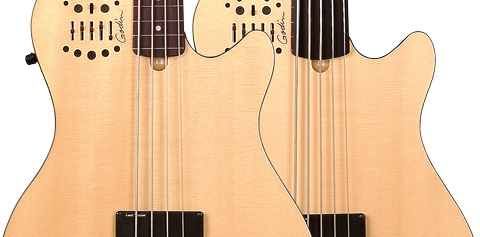
    The A Series line is Godin’s approach to an acoustic-style instrument that can withstand louder volumes. The latest offering are the A4 and A5 Ultra SA basses, four- and five-string semi-acoustics constructed with a two-chambered silver-leaf maple body and solid spruce top. They use 34″-scale bolt-on maple necks with either rosewood (on the fretted models) or ebony fingerboards (on the optional fretless). Both have a 16″ radius for a comfortable feel without an abundance of chunk. There’s a slight flatness to the neck that gives it an almost asymmetrical feel and adds to its playability. Standard chrome tuners and a nice, semi-gloss finish help complete its look.

    The “ultra” part of the Ultra SA boils down to electronics. There are a total of three output options; magnetic pickup, string transducers, and Godin’s secret weapon – a 13-pin synth output. The Ultras sport individual string transducers for acoustic-like tone. This enables a more-refined approach to capturing string vibration over traditional piezos. The bridge-mounted magnetic pickup is a specially designed Lace Sensor in the optimum position for capturing the midrange bite bassists look for, especially on fretless models (think classic Jaco tone!). For ultimate tone shaping, the Lace Sensor and transducers can be sent to individual output jacks. The 13-pin synth output can route signal to guitar synthesizers like the Roland GR series, AKAI, or anything with a 13-pin connection, giving it the ability to go pretty much anywhere in the sonic universe.

    Godin also installs custom preamps that complement the string transducers and pickup. The five sliders on the body act like a traditional graphic EQ; the slider closest to the outside of the bass is the master volume for the transducers or, as mentioned, a blend control when used in mono. From there, you have individual bass, mid, and treble sliders with an additional slider above the mid control for different midrange tone shaping. The fifth slider is a master volume for the synth pickup. Finally, there are two small pushbuttons on either side of the mid-shape switch, for scrolling through whatever synth module you’re accessing. Simple, right? Well, perhaps not at first, but it is amazing how quickly it makes sense.

    Our testers, a fretted A4 Ultra SA and fretless A5 Ultra SA, had flawless finishes and were set up extremely well. The four-string, in particular, felt more like a traditional electric bass and played like butter. The cutaway is a welcome touch, as some acoustic-inspired basses tend can be difficult to play in higher registers. The fretless five-string played just as well, and its flatwounds gave it a hip, upright-meets-Jaco vibe that cut through the mix.

    With either, it’s important to familiarize yourself with just how much tone is in them. Live and in the studio, both Ultra SAs impress with their flexibility, especially the fretless. On live jazz gigs, the upright-ish tone accessible via the transducers gave a traditional spirit to the music, such as when the band was swinging or while soloing and blending in the magnetic pickup. With some acoustic-inspired instruments, the lack of a magnetic pickup often causes the bass to get lost in a mix. The Lace Sensor was a wonderful option for curing this problem, thanks to its not-overbearing-yet-articulate voice.

    More than the vast majority of instruments on the market, Godin Ultra SA can inspire a player to create new sounds. And isn’t that one of the reasons we get into music in the first place?


    This article originally appeared in VG October 2011 issue. All copyrights are by the author and Vintage Guitar magazine. Unauthorized replication or use is strictly prohibited.

  • Dickerson Standard Lap Steel

    Dickerson Standard Lap Steel

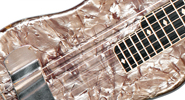
    Circa-1946 Dickerson Standard lap steel.
    Circa-1946 Dickerson Standard lap steel.

    Though today they are viewed as little more than curious relics of a lost era, during the Great Depression, “mother of toilet seat” Hawaiian lap steels were one of the most popular types of guitar. You could argue that these little electrics blazed the trail for the later popularity of electric Spanish guitars. There were almost unlimited choices – a cheap lap isn’t that hard to make – and a whole infrastructure was built up to market guitars like the Dickerson Standard.

    The Dickerson family was involved with the Los Angeles music scene during the Depression, if not before. The Dickersons also owned a factory known as Dickerson Brothers, and Delbert J. Dickerson began producing Hawaiian lap steels and small tube amplifiers branded with the family name in 1937 or ’38 and sold through the American Hawaiian Teachers Association (AHT) in Los Angeles (and likely elsewhere). Dickerson also contract-manufactured guitars and amps for Varsity, The Southern California Music Company, The Oahu Publishing Company, Bronson Publishing Corp., studio and store owner Roland Ball (father of Ernie Ball, who began performing on steel in the ’30s), and Gourley, plus others, carrying the purchaser’s own brand. Almost all, if not all, of these were covered in mottled sheet celluloid, or pearloid, which Dickerson called “Lumarith.”

    The infrastructure that supported the Hawaiian music scene was a fairly sophisticated nexus of music publishers, instrument manufacturers, and music education conducted either by teachers or through the mail. The publishers were numerous; some thrived on the music, but others were heavily involved in pedagogy, including National Institute of Music & Arts (L.A.), Oahu (Cleveland), Bronson (Detroit), and Eddie Alkire (Easton, Pennsylvania). All offered instruments – primarily through the mail – made for them by manufacturers including Supro, Kay, and Dickerson. Much of the music published by these firms was clearly pedagogical – that is, often consisting of songs in the public domain arranged in simple, beginner-level melodies. This music might be part of a mail-order course or used by a music teacher.

    In L.A. and other larger cities, teachers often joined a larger organization such as the AHT, which would send salespeople door-to-door to recruit children for Hawaiian guitar lessons. They might also offer instruments that the family could either rent or buy. The hawker got a fee and the organization no doubt got a cut of the teacher’s pay. A second crew would circle by to pick up the kids and transport them to the AHT for lessons. This is the kind of infrastructure that fed Dickerson, or vice versa!

    Dickerson appears to have offered three Hawaiian guitars and four amps, sold in sets. Hawaiian guitar wizard Sol Hoopii, who was teaching Dickerson’s daughter, Belva, reportedly consulted on the design of these guitars – the Student, the Standard, and the De Luxe – all of which had a single-coil pickup mounted underneath their top in a design he patented (filed 1938, awarded 1940). The Student was pear-/paddle-shaped and had a handrest with a Volume control mounted on it. The Standard sported top-mounted controls and added a Tone. Pre-war Dickersons had a relatively heavy cast tailpiece, whereas post-war models used the metal rod combined with the through-body grommets. Both had decal fingerboards and were covered in a silver-grey pearloid; they are the most commonly seen. The De Luxe guitar is much rarer. It was dressed in “pearl Lumarith” (a tan-colored pearloid) and sported “tinsel” (sparkle plastic) fingerboard inlays and trim. All had a headstock that was sort of like a simplified mini-Gibson design, with a center peak at the top.

    The guitars were typically sold in combination with a matching amplifier. The Student Model came with the Student guitar and a small amp with a 6″ speaker ($49.50). The Standard Model had the Standard guitar with an amp featuring an 8″ speaker ($59.50). The Semi De Luxe Model came with the De Luxe guitar and an amp with a 10″ speaker ($89.50). The De Luxe Professional outfit featured the De Luxe guitar and an amp with a 12″ speaker ($129.50). Cases were extra. A $90 and $130 pricetag during the Depression probably explains why almost no De Luxe guitars ever show up!

    Despite their apparent simplicity, these little Dickerson lap steels are pretty sweet, if this example is representative. It has a full, round tone that’s redolent of the Islands. The Tone control takes a bit too much off when you dial it down to zero, but the drop off is rapid, so if you just back down a quarter-turn, you get a good bass tone.

    Dickerson went on to patent an amp-in-case design (filed 1939, awarded 1940), and one of his employees, Art Duhamell, developed an early push-button Hawaiian guitar tuning changer called the Dickerson Multi-Matic.

    There are conflicting accounts about what happened next, but Dickerson apparently tired of making instruments. In ’44 or right after war’s end, he seems to have sold the company to former AHT crew chief Gaston Fator. That probably explains the post-war design changes like the rounded head and wire-and-grommet tail. Fator seems to have continued making Dickersons, but in 1947, he sold the company (possibly by then called Fator Manufacturing) to Art Duhamell and it became Magna Electronics, which would go on produce some very cool guitars (including designs by Paul Bigsby and Paul Barth) and some of the greatest amps (with True Vibrato) ever. The move meant the Dickerson brand disappeared, replaced by Magnatone.

    So, while Tiki bars are on the comeback, this pearloid Dickerson Standard remains a curious token of a lost time – and yes, they actually did make toilet seats out of the same celluloid back in the day!


    This article originally appeared in VG September 2013 issue. All copyrights are by the author and Vintage Guitar magazine. Unauthorized replication or use is strictly prohibited.


  • Martin Elegant, a.k.a. “Lula”

    Martin Elegant, a.k.a. “Lula”

    02_ELEGANT

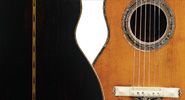
    It’s an extraordinarily rare event to find a high-grade, historically significant mid-1800s guitar in a pawn shop, but that is indeed where this Martin was discovered.

    When found in Nashville in the mid 1970s, it was recognized as an exceptional instrument with ornamentation far in excess of any typical Martin of that time, but only recently has documentation surfaced to provide detail about it – and its depth is seldom encountered on any instrument of this age.

    There are three remarkable letters in the Martin archive related to this instrument. A letter from Peters & Sons, a music-instrument retailer, dated October 12, 1852, makes the following query:
    “N.B. Please write us at Cin(cinnati) the cost, or supposed cost, of a Guitar of the following description: A Guitar of the very finest make (same shape as the fine one we have on con(signment)) with rosewood inside case. The Patent Head to be of Plated Gold and end of screws etc to be pearl tiped (sic). Frets to be Gold (18 carat) and the fingerboard to be covered with pearl, instead of ebony. The man is not particular about the price but wants the best in the country.”

    Another letter, dated November 8, 1852, continues; “The gentleman who wants the elegant guitar is at our elbow. He wants as good a guitar as you can make for $100 wholesale. The head to be patent head – the metal part of the head to be galvanized with gold. The fret to be 14 carat gold – worth 50 cts per pennyweight. The spaces between the frets to be made of pearl.

    01_ELEGANT

    “There must be an extra case, of rosewood, such as the one we have of yours. Also, the shape of the instrument to be the same as the one we have. Above all, the gentleman wants to know soon he can have the instrument, as it for a lady who is about to be married.”

    The final letter, dated November 24, 1852 fixed the specifications:
    “Make the fine Guitar, with a black neck veneered with ebony. Make the sounding board or top – pale yellow.

    “Make the Guitar, same size as the one we have on con(signment)

    “Make the neck a little narrower.

    “It must not cost us more than $110 dollars, but the frets must be gold as we last wrote you.

    “You must cheapen it a little on the Rosewood case and above all, don’t forget to send it away within three weeks from the receipt of our letter.”

    In the mid 1980s, an article [co-authored by George Gruhn and Suzy Newton] on this guitar in Guitar Player identified an interesting feature not mentioned in the letter in the Martin archive: on top of the rosewood case, the name “Lula” is inlaid in script letters. Likely the name of the lady who received the guitar as a wedding gift. The article suggests the material for the inlay was brass, but it is more likely that leftover gold fret wire was used for the inlaid letters.

    03_ELEGANT

    The pictures reveal a very unusual headstock, one not seen on any other Martin guitar of the period. The type of tuning machines used resulted in very narrow peghead slots. Martin selected these peculiar machines because the dealer specified “the Patent head to be of plated gold.” The external mounting plates of these unusual machines would have been much easier to plate than those Martin normally used.

    This guitar has what is commonly known as the “renaissance” shape. Until the connection could be made between this guitar and the archival material, it was a matter of conjecture as to when these guitars were made. C.F. Martin did not record this different shape in the day book, but we know from correspondence that W. C. Peters & Sons had at least one more in stock with the same “renaissance” shape. This guitar is one of the few “milepost” instruments from the period because it can be accurately dated. We now know that the “renaissance” shaped guitars were made from about 1843 to 1860.

    Martin’s Ledger 1852-’57 records this guitar as being shipped on December 27, 1852. For some reason, it is not recorded in the day book, so we do not have the full description Martin usually noted during this period. Since Martin couldn’t have received the last letter (dated November 24) before November 25 or 26 at the earliest, it is incredible that he was able to make such a stunning instrument in only one month!

    This instrument exhibits an extraordinary level of craftsmanship combined with great historical significance and collector’s appeal. At the time, it was one of Martin’s costliest creations. While today $110 wholesale cost will barely buy a good student-model guitar, in 1852, a $20 gold piece, weighed almost 1 ounce and of course represented vastly more buying power than $20 in today’s money. The wholesale price of this guitar was equivalent to 5 1/2 ounces of pure 24-karat gold. While it is difficult to make precise comparisons of the buying power of a dollar in 1852 versus today (since many products available today were simply then unavailable at any price), 5 1/2 ounces of gold today would have a market value $7,150. The cost of musical instruments and other commodities available then and today indicates that would be a very conservative inflation-adjusted price to build a replica today.


    This article originally appeared in VG January 2014 issue. All copyrights are by the author and Vintage Guitar magazine. Unauthorized replication or use is strictly prohibited.


  • Dobro Model 27

    Dobro Model 27

    Pete “Bashful Brother  Oswald” Kirby and Oswald‘s Dobro, Serial #7233.
    Pete “Bashful Brother Oswald” Kirby and Oswald‘s Dobro, Serial #7233.

    The melodic, evocative warbling of a resonator guitar has for decades been a fixture in country music, and knowledgeable fans will tell you there’s one primary individual to thank for it – Pete “Bashful Brother Oswald” Kirby.

    Kirby was born in Sevierville, Tennessee, in 1911. His introduction to the resonator occurred circa 1929, thanks to a Hawaiian musician named Rudy Waikiki. Kirby joined Acuff’s Smoky Mountain Boys in 1939, where his dobro work and tenor harmony helped define country music in its formative years. His stage character was known as Bashful Brother Oswald, and he usually dressed in overalls and an orange hillbilly-type hat, typifying the “country comedian” in such bands of the time.

    Dobro took its name from the Dopyera brothers, who started their own company shortly after playing a key role in the development of resonator guitars with National. In the early days of both companies, there were fundamental differences in each brand’s construction, but both used hubcap-like resonator plates to amplify the sound of an acoustic guitar. Today, the word “Dobro” is widely used as a general descriptor of resonator guitars.

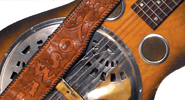
    The Dobro that Kirby counted on for many years is either a model 27G that was made in California by the Dobro company, or a model 27 made in Chicago by the Regal company which began producing Dobro instruments under license in 1933. Either way, it’s a wood-bodied, two-tone sunburst with a single resonator plate and a round neck (as opposed to a Hawaiian-style square neck) with 12 frets clear of the body. One key to its identity is the lack of three small holes in the top, near the neck joint. Many Dobros had them, but the model 27s (from either manufacturer) did not.

    And while a hand-written letter from Kirby (belonging to Nashville musician Mike Webb, the instrument’s current owner) says the instrument was made in 1929, its serial number indicates it was made in 1934-’36. Many Regal-made instruments didn’t have serial numbers, which would give a nod to it being California-made. The resonator plate has patent #1896484 and is embossed with “Other Pat. Pend.,” which also dates the guitar to the mid/late 1930s.

    Kirby reportedly acquired the instrument from fellow legend Shot Jackson in 1949, who repaired it and replaced parts after Kirby acquired it. It was always tuned in open A, and Kirby averred that whenever he played his Dobro, he simply stuck with the melody to accompany Acuff’s singing. He also recorded numerous solo albums and appeared on other Nashville sessions.

    Acuff died in 1992. Kirby published his autobiography in ’94 and became an official member of the Grand Ole Opry a year later. He passed away in 2002.

    In Webb’s letter, Kirby notes, “…an instrument it (sic) no good if it isn’t played and he plays more like me than any one (sic) I know.”

    And that says a lot about Kirby as a musician, as he wanted his instruments to continue to be played rather than end up on display in a museum.


    This article originally appeared in VG October 2004 issue. All copyrights are by the author and Vintage Guitar magazine. Unauthorized replication or use is strictly prohibited.