Tag: features

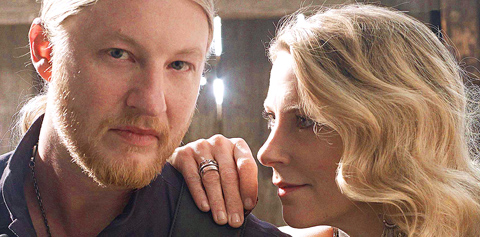
  • Susan Tedeschi and Derek Trucks

    Susan Tedeschi and Derek Trucks

    Derek Trucks/Susan Tedeschi: Mark Seliger.
    Derek Trucks/Susan Tedeschi: Mark Seliger.

    Collaborations have rendered some of the greatest tunes in the history of music. Whittle the subject to “just” guitarists, and the truth remains – two are often better than one. The axiom is holding true for Susan Tedeschi and Derek Trucks.

    Each a top-tier star in their own right, the two, now married for more than a decade, built careers on slow-but-sure arcs, along the way honing their chops and creating some of the best music to roll out of the blues and (in Trucks’ case) “other” genres.

    Three years ago, both set aside their accomplished bands to form a musical alliance that more closely mirrors their personal lives. Despite the potential to alienate their respective fans, they liked the idea of starting fresh, and especially the chance to spend more time together and with their two children.

    The Tedeschi Trucks Band will release its sophomore studio album, Made Up Mind, August 20.

    Susan Tedeschi

    Susan Tedeschi’s solo career has been marked by consistently strong material that established her as a force vocally and thanks to the Telecaster she so ably wields. She readily acknowledges the risk she and Trucks have undertaken in shedding their previous bands to form the TTB.

    “When you make a change like that, not everybody is going to be happy. But we had been on the road for a good 10 years while being married to – but not seeing – each other.

    “People understand that artists re-create themselves all the time; if you don’t, things get stale,” she added. “We want to keep learning and growing, working on new material, writing more, and learning more about each other,” she added. “Plus, we have so much in common, musically – we both love soulful R&B, blues, gospel, American roots music, and obviously, we share a love of jazz.

    “In a lot of ways, I feel really blessed that Derek wanted to be in a band with me,” she added. “I think he’s an extraordinary guitar player; I can’t name a better one alive, really. And I’m not just saying that because I’m married to him (laughs)!”

    Who most influenced your decision to play guitar?
    I started playing guitar because my dad did. He taught me some folky blues chords on acoustic, but then I picked electric because I heard Magic Sam, John Lee Hooker, B.B. King, Freddie King, Otis Rush, T-Bone Walker, and Johnny “Guitar” Watson. They made me go, “Wait a minute…” So I bought a bunch of records and started to get obsessed. I kept discovering artists – Charlie Christian, Jimmy Rogers, Muddy Waters – Elmore James was a huge influence on Derek and me both. He could sing so beautifully and had this amazing tone on guitar.

    Did you have a decent guitar right away?
    I was playing a Strat with a rosewood neck – American Standard, teal green/blue. It was my boyfriend’s at the time and he let me play it for about a year, then I bought my teal bluish-green Tele. I learned on those and I had a blond dot-neck reissue 335.

    Not a bad crop…
    No, and I actually started playing on my dad’s old Martin when I was 13 or 14. I switched to electric when I was 22.

    Did you have a good amp right away – something to adequately complement the three electrics?
    I had some weird little cheapy at first – a Peavey Bandit or something (laughs)! In 1993 or ’94 I bought a ’64 Deluxe Reverb and to this day it’s my favorite. We have tons of amps sent to us, and we both love that one. When I got it, it had original filter caps and everything. I played it for years then upgraded to a Super when I got into bigger clubs.

    How did you and Derek decide who, from your band, would be brought aboard TTB?
    Well, I suggested Falcon, who some people know as Tyler Greenwell (laughs), the drummer I’ve been playing with, because he’s wonderful – versatile – and I love the way he plays behind a singer, he’s sensitive to that and very easy to work with. He’s one of those people everybody loves and wants on their team. Derek had a couple of drummers in mind, too, so we gave them a shot. When J.J. Johnson came to the house, Tyler was playing and we had another drum kit next to him. J.J. sat down and they met right there, on the drums, in our studio, and instantly had a chemistry. J.J.’s a phenomenal drummer – one of the best studio players out there and has toured with Boz Scaggs, Doyle Bramhall, II, Gary Clark, Jr., John Mayer – you name ’em. When the two connected, that was really the start of the new group; it was Derek and I, the two drummers and the Burbridge brothers (Oteil and Kofi) – all these little pairings happening. There’s just a lot of chemistry amongst these musicians. They’re all so talented and can go in 100 different directions, so it’s never boring. And, everybody’s a lot of fun!

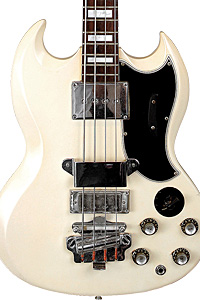
    The Gibson Derek Trucks signature SG has a mahogany body with nitrocellulose finish, mahogany neck with slim “true D” profile, rosewood fingerboard with figured acrylic inlays, ’57 Classic humbucking pickups (with Alnico II magnets) and the Lyre vibrato cover with the mechanism itself removed – a Trucks mod – with a stopbar tailpiece in its place. Also per Trucks, it has the early style “no wire” ABR-1 Tune-o-matic tailpiece , as well as Vintage-style machine heads with pearloid buttons and 14:1 tuning ratio.
    The Gibson Derek Trucks signature SG has a mahogany body with nitrocellulose finish, mahogany neck with slim “true D” profile, rosewood fingerboard with figured acrylic inlays, ’57 Classic humbucking pickups (with Alnico II magnets) and the Lyre vibrato cover with the mechanism itself removed – a Trucks mod – with a stopbar tailpiece in its place. Also per Trucks, it has the early style “no wire” ABR-1 Tune-o-matic tailpiece , as well as Vintage-style machine heads with pearloid buttons and 14:1 tuning ratio.

    Was there much adjustment for you in the transition from solo act?
    Yeah, I had to get comfortable with my position, you know? When you’re in a band this big – at first it was nine pieces, now it’s 11 – you’re playing for the songs, playing for the music, instead of playing to show off. It is a very tricky thing! When you’re a band leader, you’re in charge and you can choose whichever songs you want to do and twist it up. But with this band, I had to compromise – with my husband of all people! But, he’s on the money when it comes to music and I have a lot of faith in him and his decisions. If I don’t agree with something, we talk about it. I don’t play as much lead guitar now, obviously, because he’s in the band, and you go with your strengths.

    So it’s been a learning experience, but it’s been amazing and really good for me. I still feel like I’m in the front – I perform like I would in a solo band, but a lot of the pressure is off. I don’t have to concentrate on guitar so much, so I can focus more on singing, which is a good thing. I play guitar most of the night and I get to solo on a lot of the blues stuff.

    I feel really lucky to be involved with an improvisational, soulful, rockin’ band that’s always pushing and moving and growing.

    How do you describe the new album?
    It’s a bunch of great songs – very diverse. There are blues/rock songs like “The Storm,” where Derek gets a Hendrix feel at the end. There are anthemy, beautiful ballads… There’s just a mix of blues, jazz, and funk. “Made Up Mind” has an upbeat gospel attitude with a badass groove and a crunchy, fat guitar riff. “Do I Look Worried” starts out sounding like a Screamin’ Jay Hawkins tune but ends up being quite different. “Idle Wind” we wrote with Gary Louris, of the Jayhawks, and once the band played it, it became a different song. At first, it sounded folk-rock, then we put flute on the beginning, gave it a badass solo, and it became this whole other thing none of us could describe.

    There’s a lot of dynamics on this record, and mixed genres creating sounds.

    Is there one closer to something you might have done solo?
    There is, and it’s funny because it’s one of the only ones I didn’t help write (laughs); my friends Sonja Kitchell and Eric Krasno wrote it and it’s called “It’s So Heavy.” The chords are sort of like something from The Band – folky, cool, simple, where it’s really easy to tell a story. And it’s dramatic, which I like, and it reflects the times we live in. It’s about how there’s a lot of changes going on. So, that kind of song is something I would play regularly.

    A lot of the tunes I would do in my band, but I don’t know if I could have pulled it off the same way (laughs)! Some of them may be a little bit different, stylistically, but it comes from the same place – blues, rock.

    Do you have a favorite track or two?
    We released “Part of Me” as a single, and it’s a great tune. Doyle wrote it with us and came up with the melody, drums, bass, everything. We just had to write lyrics. It’s a really cool tune; it just feels like an old Motown song or something – upbeat and positive. People love that, plus it’s real danceable and fun. I also love “It’s So Heavy,” I love “Made Up Mind.” “Calling Out To You” is a really beautiful ballad. Eric has written for both records, and he started to write that song during the first record but there weren’t words until he got together with a friend. They’re beautiful and I love the story and the way it sounds.

    What gear are you taking on the road?
    I take my turquoise Tele. A couple of years ago, Derek asked me, “If you could have any guitar…?” I said, “Well, there’s two; a blond dot-neck 335, 1960. I’ve always had the reissue, and it’s awesome, but… And then, my birth-year Strat, 1970, and they’re sometimes hard to find and can be expensive. But Derek bought both; he’s insane! I’ve been playing the Strat every day. It’s sunburst, rosewood neck, and I love it, it’s gorgeous, sounds so warm and beautiful, really comfortable.

    Those are on the road with you?
    Not the 335 – I keep that at home. There were only 88 of those made. But I do take the Strat everywhere.

    Which amps are you playing live?
    I still play through a Super, and right now I have a ’65 that George Alessandro got working really well and hot-rodded a little. It sounds amazing. For backup, I use a reissue that works pretty well, too. It’s not as warm and the reverb doesn’t sound the same, but I just have to dial it up a little different.

    How about pedals?
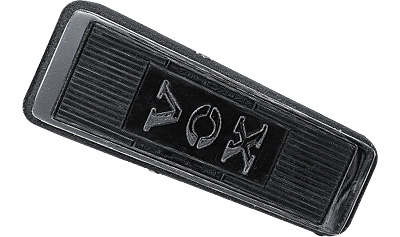
    I use a Vox wah and a Moollon overdrive, made by a guy who gave some to Doyle and Derek when they were out with Clapton. I love it. I use it to boost solos.

    What do you think of Derek’s playing?
    Well, I love Clapton, I love Hendrix, I love Duane Allman, but, technically, Derek hits fewer bad notes than all three of them (laughs)! I find his playing inspiring, and to be in a band with him is amazing. TTB is our dream band – people who inspire us to keep pushing harder. If you set yourself with a lot of people smarter than you, whether in a class or a band, you do better things.

    Derek Trucks

    Derek Trucks has been hitting the stage with a guitar since he was nine years old, progressing from a Jay (not Kay!) acoustic to a Gibson SG. He briefly studied guitar with a family friend, but mostly learned by playing along with Eat a Peach, Fillmore East, Layla, and Elmore James records.

    The nephew of Allman Brothers Band founding member/drummer Butch Trucks, he was barely a teen when he began taking the stage as a guest of the ABB. Though his proclivity for playing slide had him being hailed as the “second coming of Duane Allman,” he established a musical identity all his own and in the mid ’90s emerged with the Derek Trucks Band, unveiling a world-music bent. In its later stages, the DTB adopted a stronger blues/soul feel.

    What was your first good guitar and amp?
    My parents got me a pawnshop Yamaha acoustic, which was definitely better than that garage-sale Jay. My first electric was similar to the Jay – pretty terrible (laughs)! The first guitar I was really excited about was the SG, which I got when was 11 or 12. The first electric was cool, but the SG was the pinnacle.

    Being so young, did you recognize the difference in the feel and quality of that guitar?
    Yeah. Some of it was psychological – a guitar you’ve wanted so bad – so it’s automatically the best guitar you’ve ever played!

    What amp were you playing through at the time?
    The first amp I gigged was a Fender Super 60, one of those with red knobs, late ’80s/early ’90s. But one of the things about growing up playing the blues scene in Jacksonville was all the musicians had good vintage gear, including a lot blackface Fenders.

    How old were you when you first first made a guest appearance with the Allman Brothers?
    I was 11 or 12. The first time I played with them, though, was in Miami. I was backing Ace Moreland, a blues musician from Oklahoma who was living in Jacksonville, and we were playing at this South Beach bar called Tropics International, and the Allman Brothers were there, recording their reunion record – ’89, maybe ’90, somewhere in there. Greg [Allman], Warren [Haynes], Allan Woody, and my uncle, Butch [Trucks] came out and sat in. That was the first time I met those guys. I was nine or 10 at that point.

    Which song did you do?
    It was kind of a blur (laughs)! Probably “One Way Out” or something, but I’m not sure. A year or two later, our paths crossed in Atlanta, and I sat in with the Allman Brothers Band the first time.

    Were you a little freaked out?
    Yeah, pretty nervous. I didn’t know them except for my uncle, and they were mythical creatures, in a way.

    But you eventually become a regular guest, then a member of the band…
    I got the call to join in 1999, and I’ve been full-time with them since.

    You met Susan when she was opening for ABB, right?
    Yeah, the first year I was in the band was her breakout year. She was opening a string of shows, starting in New Orleans, and we met on the road.

    Were you familiar with her music?
    Not really. I had seen her name. I remember how, after [a Derek Truck Band] set, me and my bass player, Todd Smallie, were trying to hang out with these girls, and they were trying to turn us on to Susan’s music (laughs)! We were like, “Yeah, that’s great, whatever.”

    Did you pay any attention to Susan’s set that night?
    No, we were focused on the girls, but it just wasn’t happening for us (laughs)! They were adamant about us knowing about Susan Tedeschi. I met her not long after that.

    03_TEDESCHITRUCKS_mindcd

    What do you recall about the first time you heard her playing and singing?
    I remember hearing about her before that tour, so Oteil Burbridge and I went out front one day during sound check, and I remember being shocked at her sincerity. I have a really low bulls**t threshold when it comes to music, and I was expecting it to be another, “Alright, that’s cute… Next!” (laughs) But she was entirely different, and you couldn’t deny what was there.

    The more I got to know her and the more I’d see her perform, I saw that she had that thing great artists have, which is the ability to tap into a musical energy source. I don’t think you can learn it, it’s either there or it’s not.

    What was the impetus behind the formation of Tedeschi Trucks Band?
    At the time, I was seriously considering taking a break from my band, and also trying to convince Susan, “Now is the time if we’re going to do something serious.”

    Herbie Hancock came to the house to have Oteil, Kofi, and [Derek Trucks Band vocalist] Mike Mattison play on a song he was doing. At that point, it hit me that we could take a stab at a larger band. I started thinking about how there were so many players I’d love to play with. And when you’re thinking about a band, you have to consider chemistry and who will make it fresh and different.

    What did you consider as you chose members?
    A lot of things. I’d been thinking about it for a long time, and we were going to start small, but then I was thinking about the Burbridge brothers – how there’d be something great about having siblings and a married couple in a band. So it was Oteil and Kofi, me and Susan, and we were talking to Charlie Drayton about drumming, but the scheduling didn’t work.

    I remember hanging out with Doyle Bramhall a lot on the Clapton tour we did together, and he recommended J.J. Johnson as a drummer. But I also knew Susan was really comfortable with Tyler, and I wanted a piece or two in the band Susan wouldn’t have to think about when we played, because it was going be so different. This was from scratch, and we were going to re-learn how to push the boulder uphill. So I thought having somebody she felt really comfortable with would be great because, standing up front and being the lead singer, she needed total confidence. When J.J. showed up, we were rehearsing and Tyler was on one of the drum sets, but J.J. sat behind the other and, before any introductions were even made, fell right into the fold. It was a pretty great moment, and there was total musical respect – two people who listened, no jockeying for position – and it has remained that way. Their chemistry said it all. That’s when I realized that we were onto something, and once you have that solid base, you can start thinking about other things. Mike [Mattison] always factored in for me, he’s such an amazing songwriter and presence. It’s hard to find great musicians who are sane (laughs) outside of music and I’ve always appreciated the way Mike’s mind works – his organizational skills, the way he thinks about tunes… the big picture. So, I’ve always loved the idea of having Mike being a part of this. More than just singing but kind of behind the scenes a little bit more. He was a big help along the way – a great sounding board.

    In any band, it’s difficult and you have to make sure it stays on the right path, but this is a bigger task than anything I ever been a part of.

    Speaking of staying on track, Oteil quit the band last year. Were you surprised?
    It wasn’t a shock. When you’re the one dealing with everything the whole way through, you see and feel things coming. For a lot of the band, it was a surprise, but one of the jobs as a bandleader is dealing with that stuff. And while it’s not always the case, with most major changes I’ve dealt with, it’s for the better. If things aren’t right – if somebody’s torn and they want to be home and not on the road… well, with a band this big, you’ve got to either be in or out.

    Focused.
    Yeah, it’s the only way. And I understand the pull to be home as much as anybody; I have kids, and I’ve been doing this since I was nine years old. But to truly make something go, you’ve got to give a part of who you are and what you do. Everybody’s in a different stage of their life. Stepping away has worked out well for Oteil, I know he’s in a better place not having to wear multiple hats. And for the band, it’s been a blessing. The new record happened in the middle of it all, and I think it’s the strongest thing anybody in this band has been a part of. It wouldn’t have happened the same way if that change wasn’t going on.

    You filled his spot on the album with some great players…
    Yeah, Pino Palladino, Bakithi, George Reiff, Dave Monsey – it’s been an amazing experience to have some of the greatest bass players on Earth contribute. It shows what makes a band special when you’re playing with different people. And that’s not to say it hasn’t been challenging, but I think that’s what separates a “real” band (laughs) is dealing with stuff like that. When it went down, I thought about the Allman Brothers. I was like, “Wait… They lost Duane and Berry. We can deal with this.”

    Going in, my thinking was, “Let’s play with a bunch of different people.” After a relationship, you rebound with a bunch of hot chicks (laughs)! We’re gonna do that with bass players. So, we called some of my favorites.

    Are any of them looking for a permanent gig?
    As a band, we’re going to have a heart-to-heart. It’s a pretty exciting prospect, diving all the way in, and we’ve had an amazing run of players on the road. It’s a good position to be in, for sure.

    Made Up Mind has a nice mix of soul, blues, R&B, and some roots-rock. In your mind, what kind of music it?
    It’s been a while since I thought of our music in stylistic terms. It’s all the music we’ve digested up to this point, all the music we’ve played. It’s influenced by my group, by Susan’s bands, years on the road with the Allman Brothers, the things J.J. has done, my time with Eric Clapton. There has been some maturation. In a way, it feels like the first definitive statement this band has put on tape. Revelator was us finding our way around in the studio, and the live record was us starting to realize the potential. But this is the first time we went into a project with full confidence, thinking “The songs are good, this is just gonna happen.” When I talk about it, it’s more a general excitement I have that explains what it is.

    Did the band work the songs on the road, or did you come in pretty fresh.
    A few of them were played on the road, but I do love coming in with the band hitting it fresh – everybody sinking their teeth into the songs for the first time. Once we got comfortable with an arrangement and everybody had a feel for their part – which usually happened by take two or three, occasionally take one – we got a pretty good take quickly. I like the idea of the birth of a song being captured on tape.

    What are some its highlights for you, personally?
    There are quite a few. I think there’s some really amazing vocal moments – the sentiment behind “It’s So Heavy” and what was going on, personally, plus it has an amazing, heartfelt lyric, and the delivery is as honest as it gets. The way “Idle Wind” came together, the way it felt and sounded from start to finish, feels really good. Tracking “Sweet and Low” was one of the few times I’ve been in any situation where, when the last note finished ringing, everybody on either side of the glass knew that was the take. It was a pretty amazing moment.

    I’ve listened to it a lot, between mixing and mastering and putting it down, and little things poke out at different times – the horn section, Kofi’s amazing keyboard stuff. He’s kind of the unsung hero of this whole thing.

    Do you stay consistent with your gear?
    Yeah, but in the studio I take more liberties. At the beginning of each tune, I have a sound in mind. Me, Jim Scott, Bobby Tis, who’s engineering it with us, go into the room and play the riff or the theme of the song and try to get a sound. Sometimes, you plug into what’s tried and true – a blackface Deluxe – and you’re like, “Yeah, that’s good… Maybe a little boring. Okay, let’s try something else.” (laughs) And on quite a few songs we ended up playing through an old Ampeg B-12 or B-15, switching back and forth, totally pinning it. “Whiskey Leg” was a Firebird through the B-12, “Made Up Mind” was my SG through the B-12, and it’s an amazing sound. I had never used that rig before, but there’s something about being able to play low strings and getting everything you want out of them. Playing through a bass amp was a nice revelation because if I want to capture the low-end of the guitar, I usually have to record it somewhat quiet – you can’t push the amp too hard. But when you’re playing through an old bass rig, you can give it whatever you want and it will deal. That was fun.

    Which other guitars did you use?
    The 335 on a few of the tunes, like the solo stuff on “Part of Me” and “All I Need.” Doyle Bramhall (II) is playing the same 335 on the main rhythm of “Part of Me.” The acoustic stuff is a converted ’30s Martin 0-17H on “I’m Calling Out To You.”

    What’s the story with that guitar?
    A good friend, David Drake, is really into acoustic guitars, and he started bringing instruments for me to play. I was recording with John Leventhal, and he had a handful of magical-sounding acoustics – that was first time I really got excited about a vintage acoustic, and I mentioned to David the models and years, and he perked up and said “I know where to find those.” He’d go and find these amazing instruments, and when I go to New York for the Beacon Theater run with the Allmans every year, we go on an acoustic-guitar search (laughs) and try to find something we might need for the studio or the road. He has found some amazing instruments – old Gibson acoustics, that magic Martin 0-17H.

    Is the Firebird vintage?
    Yep. It’s a sunburst IV from ’65. It’s a great-sounding instrument.

    Do you use any vintage SGs?
    Yeah, I have a really nice ’61 that I love, and not too long ago I got Johnny Jenkins’ old SG, the one he played on Otis Redding’s “These Arms of Mine.” He broke its headstock at the Atlanta Pop Festival, and I think Capricorn Records bought the guitar from him, had it fixed, and it was in Savannah, Georgia, for years. It’s a pretty amazing guitar. He took a soldering iron and wrote his name in cursive on the front – really beautiful script. It’s part of the Allman Brothers/Capricorn/Duane/Otis Redding lore. It lives in the studio.

    And you and Gibson developed your signature SG…
    Yeah, and it’s what I use, for the most part. we’ve been working on an updated version. For a while, I was playing a ’63 reissue that I put a stoptail on, but left the big piece of metal (from the Maestro vibrato) on because it looked nice. I used it for a long time, so they did a version of that. They’re doing a new one.

    What about the 335 you use in the studio?
    It’s a Cherry Red ’65 I bought on the road early on when I was playing with the Allman Brothers.

    Is it set up standard or do you have to do any modifications to play slide on it?
    No, the track I used it on wasn’t with slide, but I was tuned to open E.


    This article originally appeared in VG October 2013 issue. All copyrights are by the author and Vintage Guitar magazine. Unauthorized replication or use is strictly prohibited.

  • 2015 Readers’ Choice

    2015 Readers’ Choice

    VG Readers’ Choice Awards 2015
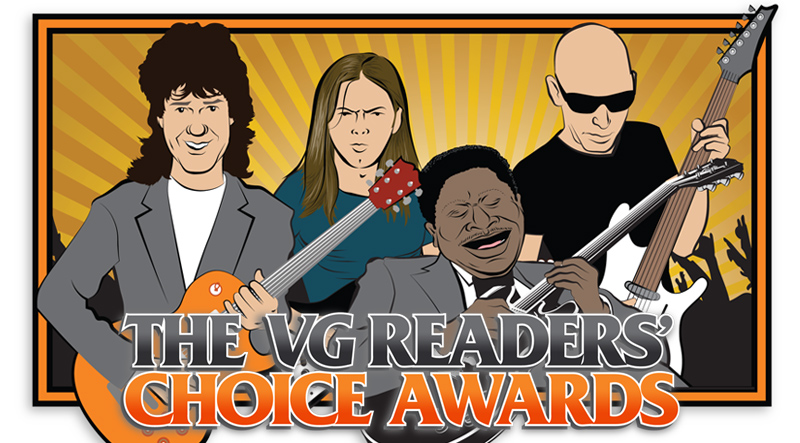
    Illustrations by Sean Thorenson.

    Each year, VG asks readers to select Readers’ Choice winners for Album of the Year, Artist of the Year, and Player of the Year in four musical categories, based on artists and recordings featured in the magazine between July 1, 2014, and June 30, 2015. Included in the annual vote are nominees for the VG Hall of Fame; each year, the magazine adds two players, an innovator, and an instrument. Hundreds of votes are tallied via the magazine’s traditional written ballot, while hundreds more participate at VintageGuitar.com. Here, we proudly present the 2015 inductees to the VG Hall of Fame.


    2015 HOF Players
    32.2% David Gilmour
    20.7% Gary Moore
    17.6% Michael Bloomfield
    17.6% Rory Gallagher
    2015 HOF Instruments
    34.8% Fender Champ
    33.9% Gibson ES-175
    18.3% Epiphone Casino
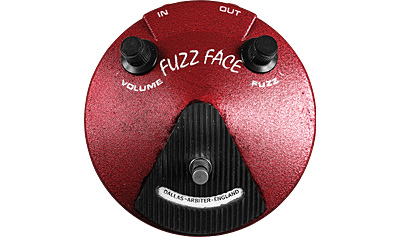
    13.0% Dallas Fuzzface
    2015 HOF Innovators
    33.2% George Beauchamp
    26.2% Susumu Tamura
    21.5% Ray Butts
    19.1% Antonio de Torres
    2015 Album of the Year
    32.6% Jeff Beck, Live+
    27.7% Joe Bonamassa, Different Shades of Blue
    16.1% Pink Floyd, The Endless River
    14.0% Sonny Landreth, Bound By the Blues
    9.6% Rusty Wright Band, Wonder Man
    2015 Featured Artist of the Year
    25.5% Joe Satriani
    21.8% Stanley Clarke
    19.3% Randy Bachman
    19.0% John 5
    14.4% Pat Travers
    2015 Rock Player of the Year
    28.8% Warren Haynes
    20.7% Eric Johnson
    20.5% Angus Young
    18.8% Joe Satriani
    11.2% Guthrie Govan
    2015 Jazz Player of the Year
    22.5% Al Di Meola
    22.4% Larry Carlton
    22.0% John Scofield
    19.7% Pat Metheny
    13.4% Mike Stern
    2015 Blues Player of the Year
    34.0% B.B. King
    29.4% Joe Bonamassa
    14.9% Derek Trucks
    13.9% Gary Clark, Jr.
    7.8% Sonny Landreth
    2015 Country Player of the Year
    29.6% Brad Paisley
    24.2% Vince Gill
    24.2% Albert Lee
    14.1% Keith Urban
    7.9% Brent Mason

    David Gilmour in concert in Munich, Germany. Photo courtesy of deep_schismic@flickr/Wikipedia. VG Readers’ Choice Awards 2015
    David Gilmour in concert in Munich, Germany. Photo courtesy of deep_schismic@flickr/Wikipedia.

    David Gilmour
    2015 HOF Player
    Pink Floyd holds few rivals. Propelled by insightful, pointed lyrics and deep-seated melodies, the band and its music are popular worldwide. Guitarist David Gilmour is one highly significant reason.

    Though Gilmour wasn’t around when the band was formed by four London art students in 1965, he was asked aboard in late ’67, after the release of its first album, the psychedelic masterpiece A Piper At the Gates of Dawn, and as the behavior of original guitarist Syd Barrett – spurred by deteriorating mental health – became increasingly unpredictable. Gilmour evolved into the band’s frontman and in some ways kept it afloat.

    In Gilmour, the band recruited a friend who was an able vocalist, but more importantly, devised licks as thoughtful and impassioned as the lyrics by bassist/co-vocalist Roger Waters. From 1968’s A Saucerful of Secrets through 1975’s Animals, the group released eight albums marked by bursts of unbridled creativity intertwined with infamous dry spells spurred by a mix of apathy and strained relationships. Still, the music has stood as testament to their skills as a unit – even the milestone 1980 album, The Wall, which was essentially a legal “settlement” between Waters and the rest.

    After the band split from Waters in the mid ’80s, a Gilmour-led lineup released A Momentary Lapse of Reason (1987) and The Division Bell (1994), both of which were huge sellers accompanied by equally huge tours.

    Consider Gilmour’s ability to consistently create guitar licks, leads, and riffs that beautifully intertwined with – and offered equal impact to Waters’ lyrics (which are some of the most-cited in rock): “We’re just two lost souls swimming in a fish bowl, year after year,” “I am just a new boy, stranger in this town…,” “The band is just fantastic, that is really what I think, and by the way, which one’s Pink?,” “Big man, pig man, ha ha, charade you are,” “You are only coming through in waves…,” “Can’t keep my eyes from the circling skies, tongue-tied and twisted just an earth-bound misfit, I…” and throughout mega-hits like “Money” and “Another Brick in the Wall.”

    Not only is each Floyd song propelled rhythmically by an equally memorable Gilmour guitar phrase, he often interjects key licks between each line of lyric. In the minds of musicians, guitarists especially, those guitar parts are critical. And who among us hasn’t taken a run at the lead break on “Comfortably Numb” or grabbed an acoustic just to strum “Mother” or “Wish You Were Here”?

    Through the height of his fame and popularity, Gilmour made heavy use of Fender Stratocasters, mostly with maple fretboards. The most prominent are an early-’70s model with a black pickguard and a red ’84 reissue with EMG pickups. He used a Telecaster to record A Saucerful of Secrets (1968) and for parts on other albums, and through the years has also tooled around on Les Pauls and a Gretsch Duo Jet, as well as an army of swirling, swishy, and echo-laced stompboxes.

    Stylistically, Gilmour is cited for his emphasis on composition, as well as his exquisite phrasing and note choices, VG’s Wolf Marshall noted in his “Fretprints” column (June ’03). He consistently maintains a strong note-to-chord relationship, whether plying leads or creating textures in rhythms. And, his lead-guitar approach and tone – replete with soulful bent notes and a singing vibrato – reflect his broad melodic pallet, which at any time exhibit bluesy pentatonic licks and folk-like melodies

    In 1978, Gilmour released a self-titled first solo album that charted in the U.K. and the U.S. His second, About Face, was released in 1984, and hit the U.K. Top 20. He has since released four more solo discs, including the 2015 effort, Rattle That Lock (in support of which he is touring the U.S. this year). In 1996, Pink Floyd was inducted in the Rock and Roll Hall of Fame; to date, the group has sold more than 250 million records. Gilmour has said its late-2014 effort, The Endless River, will be the band’s final album.

    “When guitarists uses stylistic euphemisms like soulful and tasty, the name David Gilmour usually isn’t far behind,” said VG contributor Pete Prown. “Like Peter Green, Mark Knopfler or Billy Gibbons, Gilmour is a ‘less is more’ guitarist, one who says a lot with just a few choice notes. Over the decades, that bluesy style fit perfectly into the dark, ethereal framework of Pink Floyd’s music. Better still, his solos tend to develop over the space of a few minutes. Like a concert soprano singing a Puccini aria, he gradually builds each solo until it explodes into a wild, passionate crescendo. That’s classic Gilmour right there.” – Ward Meeker


    Gary Moore courtesy of livepict/Wikipedia.VG Readers’ Choice Awards 2015
    Gary Moore courtesy of livepict/Wikipedia.

    Gary Moore
    2015 HOF Player
    In his May ’04 “Fretprints” study, VG contributor Wolf Marshall dubbed Gary Moore an “unsung hero,” citing his virtuosity, diversity, and an uncompromising body of work.

    Critics would argue (and fans insist) that Moore was (and is) truly underappreciated; while the names of contemporaries like Van Halen, Young, and Blackmore are part of rock-guitar lexicon, Moore’s name typically requires a deeper dig. Fully capable in the areas of blues-rock, power pop, heavy metal, and even jazz-rock fusion, he built a reputation on two strong solo albums, Grinding Stone and Back on the Streets, and a stint in fellow Irishman Phil Lynott’s band, Thin Lizzy, where his playing and writing were a highlight of the 1979 album, Black Rose.

    Marshall cited Moore’s blues base and rock feel, but said he was separated from the pack in his ability to “season his improvisations with exotic note choices, fluid, technically adept passagework, a variety of textures, and unusual melodic patterns.” While Moore was in his element as a flashy lead player – Marshall cited his “myriad pinch harmonics, relentless cascades of pull-off and hammer-on licks [along with] long, complex modal runs often spanning two octaves, palm-muted flurries, tremolo-picked sequences, ostinato figures, and mutated high-velocity blues licks” – he also noted that Moore was a powerful, supportive rhythm player.

    Moore “met” music thanks to his father, a concert promoter in Belfast who organized events at a local ballroom. As a child, he took in many performances there, then began teaching himself guitar after hearing Hank Marvin, the Beatles, Jeff Beck in the Yardbirds, Eric Clapton, and Peter Green.

    In the early ’70s, Moore’s band, Skid Row, opened a show for Frank Zappa at the Fillmore West in San Francisco; Zappa’s playing introduced the young rocker to jazzier styles that he immediately began to adapt. He would be similarly influenced by Chick Corea and Ollie Halsall. When he began to focus on blues, he reported taking to heed advice from blues master Albert King when they worked together on Still Got The Blues. In a 2008 interview with VG, Moore related to Lisa Sharken how King told him, “Gary, play every other lick.” The profound advice shaped Moore’s style, and taught him not only to leave that space, but focus on tone and expressiveness.

    Coinciding with his stylistic shifts, Moore pursued tones through a variety of guitars and amps, including a Shell Pink ’60 Strat in his early solo work, followed by the ’59 Les Paul Standard he borrowed from Peter Green in 1970; they soon after agreed to $300 in exchange, and it served as Moore’s go-to guitar for the next 25 years, appearing famously on trademark tracks like 1979’s “Parisienne Walkways” and his 1990 hit “Still Got the Blues” which is on a short list of tunes cited as the ultimate example of Les-Paul-through-Marshall tone.

    Other instruments included various custom Charvel, Hamer, and Ibanez models in the mid ’80s, then various vintage Gibsons, including a ’55 Les Paul Junior, an Explorer, Flying V, a ’55 ES-5, a ES-345, and a Melody Maker.

    With Skid Row and for his ’70s solo work, Moore plugged into Hi-Watt amplifiers. With Thin Lizzy, it was two 100-watt Marshall stacks and half-stacks, then in the ’80s, he developed a preference for Soldano SLO-100 heads.

    In 2008, critics lauded Bad For You Baby as his finest album in years. He died February 6, 2011, at the age of 58.

    “Gary combined feeling, technique, intelligence, control, and tone quality,” said Marshall. “He was an important transitional guitarist in the crucial years of the ’70s, when ’60s rock evolved and codified. He could shred with the best of them – Uli Roth, Michael Schenker, Ritchie Blackmore, Van Halen, or Yngwie – and come off as ultra-musical while reigniting the Blues-Breaker-inspired blues form and setting in motion the most significant modern blues reinterpretations since SRV. He was an absolute original and is sorely missed.” – Ward Meeker


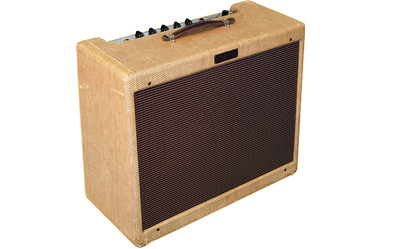
    (LEFT) Fender Champ 5E1 and a 5F1. Fender Champs courtesy of VG Archive. VG Readers’ Choice Awards 2015
    (LEFT) Fender Champ 5E1 and a 5F1. Fender Champs courtesy of VG Archive.

    Fender Champ
    2015 HOF Instrument
    Amid all the cute (yet potent) single-ended “student” amps to come out of the ’50s and early ’60s, Fender’s 5E1 and 5F1 models were, well, the Champs. About the size of the lunchbox your grandpa took along to work every morning, loaded with three tubes – a single preamp tube, single power tube, and single rectifier tube – and putting out a nominal four watts into the smallest speaker you’ll find in a guitar amp, this thing punched way above its weight, and made surprisingly easy and swift work of gaining its classic status. The diminutive looks alone are enough to make the Champ appealing. Awww, it’s a baby Fender! But stand back – this puppy has teeth, and it unveiled them time and again on legendary recordings by Eric Clapton, Joe Walsh, Joe Perry, Billy Gibbons, Jeff Beck and scads of others.

    Keep the Champ’s lone Volume control down below about five (on a scale that goes to 12 – take that, Nigel Tufnel) and it purrs, twangs and squawks the way a student model was intended to do. Roll it up past six, however, and it segues into a juicy, harmonically saturated roar that defines raunchy rock and roll. Part of the beauty of the circuit is its inherently, definitively Class-A operation. Since you are pushing just one output tube, a 6V6GT, this amp has no choice but to run in pure Class A, as defined by the tube amplifying the signal during the entire wave cycle, rather than sharing the effort with a push/pull partner. In front of that 6V6GT we get two stages from the amp’s single 12AX7 twin-triode preamp tube – one for the first gain stage, another for the output driver – and fewer than 10 solder joints in play from input jack to output transformer. The handful of resistors are all pulling other duties, and your signal passes through none of them after the obligatory 68k grid-stopper that follows each of two input jacks, running through just a pair of beautiful, big, yellow Astron.02µF coupling caps along its sonically edifying journey. No tone control, no bright switch, no nothin’. Even the on/off switch is on the back of the volume pot. You want to hear your electric guitar amplified purely and simply? This is it. It’s the sound tubes, a handful of components, and ultimately, graunchy multi-dimensional bliss.

    The Champ evolved some from the mid ’50s and into the ’60s, but less than many other Fender amps. The first of the seminal narrow-panel tweed Champs, the 5E1 of 1955, had a choke in its power-filtering stage and a 6” speaker in a cab that measured 11” x 12” x 7.5”. In late 1956, the 5F1 dropped the choke, gained an 8” speaker, and migrated to a slightly larger cab that added an inch and a half to its height and width, and half an inch to its depth.

    In addition to being extremely popular, the Champ was literally Fender’s last production tweed amp; it maintained this same circuit and it’s narrow-panel cab with upper-rear-mounted chassis until 1964, four years after the introduction of the front-mounted Tolex amps, although it too was covered in Tolex for its last year or two of production.

    In addition to its great sound and studio-friendly performance, the Champ’s appeal has remained consistent thanks in part to its relative affordability. As the smallest of the golden-era Fender amps, prices on the vintage market have remained more accessible for the workingman tweed lover. It has also been much copied by several boutique makers, Victoria probably most prominent among them, an easy tell of classic status, and has inspired countless other simple beginner-sized creations that hide pure Champ guts in more original cosmetic guises. Plug into any single-ended (i.e. single-output-tube) sub-10-watter today, and there’s a good chance it has at least a little tweed Champ DNA inside it. – Dave Hunter


    VG Readers’ Choice Awards 2015George Beauchamp
    2015 HOF Innovator
    George Beauchamp’s importance in guitar history is often overlooked – at least in part because his name never appeared on an instrument. Nonetheless he was a pioneer of amplification, perhaps the single most important contributor to the birth of the electric guitar. In the mid-1920’s Beauchamp, a vaudeville Hawaiian guitarist, commissioned the Dopyera brothers of Los Angeles to build a guitar with a resonating metal cone instead of a wooden soundboard. This collaborative project led to an entirely new family of Tri-Cone resonator string instruments under the “National” brand that were absolutely unique. The company set up to manufacture them had Beauchamp as manager and John Dopyera as designer, but the two soon fell out. Dopyera left in early 1929, leaving Beauchamp to launch National’s single-cone resonator guitars, extremely popular at the time and still a favorite of blues players today.

    Although National’s acoustic resonators were successful, Beauchamp became ever more convinced that the guitar’s future lay with electricity. Finding limited interest at National, he began working on the side to develop a pickup. He reasoned the strongest signal could be produced by using a coil to sense a string passing through a magnetic field; others including Stromberg-Voisinet and Lloyd Loar’s Vivi-Tone were attempting to amplify the vibrations of the bridge or soundboard. Beauchamp’s “horseshoe” magnet pickup, perfected by 1931, proved so superior to other contemporaries it became the de facto standard for nearly all subsequent electric guitars. He was able to convince Adolph Rickenbacher (National’s tool-and-die subcontractor) to back his experiments and they formed the Ro-Pat-In Corporation in late 1931. This company produced the first truly successful electric guitar, the 1932 aluminum-bodied Electro Hawaiian or “Frying Pan.” If Beauchamp’s name had been on the headstock, he would be far better remembered, but Adolph Rickenbacher put up the money and conveniently shared the well-known name of his cousin Eddie, America’s top World War I ace. Electro Guitars were marketed as “Rickenbacker” by 1934, but it was George Beauchamp who oversaw the company’s expanding all-electric line. This included amplifiers, electric guitars (including the still-beloved B-6 Bakelite Hawaiian, and revolutionary Electro Spanish), violins, mandolins and even an upright bass. Into the late ’30s, Rickenbacker remained the market leader in electric instruments, but Beauchamp showed less interest in running the operation once the period of innovation was over. In 1940, he left the company he founded and passed away soon after. Though his name remains relatively obscure, George Beauchamp ought to be better remembered; virtually all electric guitars are descended from his pioneering efforts. – Peter Stuart Kohman


    Jeff Beck, Live+. VG Readers’ Choice Awards 2015

    Jeff Beck, Live+. VG Readers’ Choice Awards 2015Jeff Beck, Live+
    2015 Album of the Year
    In his review (August ’15) of Jeff Beck’s latest recorded offering, VG’s Pete Prown cited the odd – but quite welcome – shift in the performer’s modus operandi.

    “After years of on and off seclusion, Beck miraculously morphed into a road warrior this past decade,” Prown remarked. “The preponderance of song-oriented material is noteworthy here – unusual for a guy who staked out his career as a fusion instrumentalist.”

    With Jimmy Hall providing vocals, Beck digs into “Morning Dew,” Stevie Wonder’s “Superstition,” and Sam Cooke’s “A Change Is Gonna Come.” Then, there is a fantastic instrumental versions of the Mahavishnu Orchestra’s “You Know You Know,” followed by a blend of rock with R&B on “Why Give It Away,” its solo heavy with Uni Vibe-like effects and nasty bends. The Beatles’ “A Day In The Life” is masterfully reinvented, as are the ballads “Where Were You” and “Danny Boy,” where Beck renders “breathtaking” pedal-steel effects, swells, and reverb.

    “As he proved more than 40 years ago, Jeff shines on this kind of slower material, and he just nails it to the wall with a fiercely melodic solo dripping with modulation effects and medium overdrive,” said Prown. “For a man whose guitar heroics began 50 years ago in the Yardbirds, the 71-year-old Beck continues to amaze,. Live+ is, essentially, a portrait of the artist as an older man – yet one that continues to blaze a path for all other guitarists to follow. – Ward Meeker


    VG Readers’ Choice Awards 2015
    Joe Satriani courtesy of Chapman Baehler.

    Joe Satriani
    2015 Featured Artist of the Year
    VG featured Joe Satriani as his latest album, Shockwave Supernova was beginning to hit eardrums around the world. A concept effort noted by interviewer Oscar Jordan for tunes that bridged the gap between traditional blues and the fiery compositions adored by Satch fans, it offered a host of new elements.

    Satriani emerged in the late ’80s playing a mix of classical and classic rock influenced by Hendrix and Page, onstage with the help of Ibanez signature models, in the studio often with vintage guitars and amps. In the three decades since releasing his debut, Not of This Earth, he has sold more than 10 million albums while garnering 15 Grammy nominations to go with his six gold and platinum discs (including gold for the debut album by the band Chickenfoot, which includes frontman Sammy Hagar, bassist Michael Anthony, and drummer Chad Smith).

    In discussing the new album, Satriani admitted the inherent risk in offering the thematic 15-song effort, which tells the tale of guitarist Shockwave Supernova, who relies on an alterego in order to perform.

    “You need some device to give you courage to go out there and do your best,” he said. “He confronts the alter ego and says, ‘It’s time for you to evolve and do something better.’ I used this like a creative device – almost like a personal concept… a concept album for me only. It’s the duality between the introverted guitarist and the theatrical performer.”

    Like so many things for so many guitarists, it was inspired, he noted, by one James Marshall Hendrix.

    “The day Jimi died, I remember sitting on my couch, reading about my hero. The journalist was talking about the troubles Hendrix had coming to grips with his performing persona. I remember thinking that he was the greatest musician I ever encountered, but I have to make sure I never fall into whatever he fell into. He got trapped into that rock-and-roll circus-clown feeling. He’d look out into the audience and think, ‘They just want me to roll on the ground and play with my teeth.’”

    Satriani developed the concept of Shockwave Supernova without any sort of direct narrative. Rather, he wanted to make creative decisions song by song, and explore moods as they related to the character – loose and free-form, but with an overall tone.

    In its recording, Satch eschwed the traditional use of amps, opting instead to develop tones via software plug-ins, then with help from John Cuniberti, he created demos running into a SansAmp and a Guitar Rig. Once he’d devised suitable guitar sounds, they ran them out of ProTools and back into Satriani’s Marshalls or Fender tweed combos.

    “The question was, ‘How do we blend these guitar sounds so they go together?’” he noted. “I’ve been blessed with being able to work with talented engineers as co-producers to guide me. This record had a larger offering of different guitar techniques than some of my other records, which were more straight-ahead flatpicking and legato.”

    This year, he is playing the retrospective “Surfing to Shockwave” Tour, which launches February 25 and makes 48 stops. He also continues to play guest spots on others’ recordings and performances. – Ward Meeker


    VG Readers’ Choice Awards 2015
    Brad Paisley courtesy of Craig O’Neal/Wikipedia.

    Brad Paisley
    2015 Country Player of the Year
    As far as anyone knows, the first country singer to use an amplified guitar and play his own leads was Texas honky tonk vocalist/songwriter Floyd Tillman. Some vocalists playing electric guitars became distinctive instrumental stylists; Merle Travis was one. Add to that Joe Maphis, Buck Owens, Don Rich, Roy Clark, Glen Campbell, Willie Nelson. In more recent decades, that elite group’s expanded to accommodate Steve Wariner, Albert Lee, Bill Kirchen, Vince Gill, Keith Urban – and Brad Paisley.

    Whether soloing amid a vocal performance or unleashing one of his explosive instrumentals, Paisley’s picking blends flash, dazzling virtuosity and velocity while remaining solid and musical. His style is an amalgam of his heroes: James Burton, Buck and Don, Roy Nichols, Ray Flacke, Albert Lee and Gill while revealing the influence of Clarence White and other B-bender players. Paisley, inspired by Diamond Rio guitarist Jimmy Olander, favors a G-bender.

    Born and raised in the Ohio River town of Glen Dale, West Virginia, Paisley seemed destined for a musical career. His maternal grandfather Warren Jarvis was a retired railroad worker and amateur but passionate country musician. Sensing the gift in his grandson, on Christmas Day, 1980 eight year old Paisley found a Silvertone 1448 amp-in-case model under the tree. Jarvis got him started, then sent him to local guitar great Hank Goddard, who introduced Paisley to the fingerstyle playing of Chet Atkins and the mainstream jazz playing of Johnny Smith and Tal Farlow.

    The teenaged Paisley didn’t live by country alone, however. He loved and absorbed the rock guitar titans known to his friends – Eddie Van Halen, Eric Clapton, Richie Sambora, Billy Gibbons, and Angus Young. Playing country at a local event landed him a guest spot on nearby Wheeling’s venerable Grand Ole Opry-like “Jamboree USA,” earning him a place on the show’s regular cast. Committed to a performing career by then, he earned a Music Business Administration Degree at Nashville’s Belmont University.

    Who Needs Pictures, his 1999 debut album, revealed a thoroughly modern singer/songwriter unashamed of his country roots. The explosive instrumental “The Nervous Breakdown” introduced the world to a level of virtuosity that equaled his formidable vocal skills. Part II, his 2001 followup album, boasted the dazzling “Munster Rag.” And so it went. He later told VG that on the early records, “I played a little more like a session player would.”

    Paisley’s solid string of best-selling singles and albums propelled him to the pinnacle of young country stars, and earned him Grand Ole Opry membership, where admirers spanned several generations of the show’s cast. He even featured several of the Opry’s most venerable legends as guests on his albums. As his stature as a vocalist increased, instrumentals remained part of the equation. On his third album, 2003’s Mud On The Tires, he explored his picking on “Spaghetti Western Swing” with Redd Volkaert and “Make A Mistake With Me.” In a 2005 VG interview, he said of Mud, “I focused a lot more on the guitar playing… than I had before.”

    Country-guitar albums were long passé when Paisley used the creative control that accompanies hit singles and albums to record the largely instrumental Play. He swapped licks with B.B. King on “Let The Good Times Roll” and sang “Start A Band” the album’s hit single, with Keith Urban. Wariner joined him for “More Than Just This Song,” honoring deceased mentors, Paisley paying tribute to Goddard and Wariner saluting Chet Atkins. On the Grammy-winning “Cluster Pluck,” Paisley swapped licks with his Telecaster heroes – Burton, Lee, Wariner, Brent Mason, Gill, Volkaert, and Jon Jorgenson. “Les Is More” revealed his jazz chops. His playing remains an integral part of his music onstage and on record, and in an era of Autotune, it’s clear he can handle himself as well with an acoustic guitar and a microphone as he can with a full band in a stadium.

    Eighteen years after his debut, Paisley remains a star of the first magnitude, achieving lasting fame and straddling the considerable divide between contemporary and traditional country – no small feat. His tours are events; he’s marketed and merchandised, yet beneath it all is an artist to whom music – always music – rules.

    In his book, Diary Of A Player, Paisley declares, “Everything I ever really needed to know about playing guitar I learned before I graduated high school.” Back then, it’s safe to say the last thing he ever expected was that he would become not only an A-list country singer whose stardom has endured for nearly 20 years, but a guitar hero in his own right. – Rich Kienzle


    VG Readers’ Choice Awards 2015
    Warren Haynes courtesy of Anna Weber.

    Warren Haynes
    2015 Rock Player of the Year
    Warren Haynes could hold a lot of titles, including “busiest man in rock and roll.” Most fans know him as a guitarist in two versions of the Allman Brothers Band, but his resumé is full of other gigs for which guitarists would be chomping at the bit. As fellow southern guitarist, Greg Martin, points out, Haynes has paid his dues.

    “I first met Warren in early 1982 at the Orpheum Theatre in Memphis,” said Martin. “I was playing with country artist Ronnie McDowell and he was with David Allan Coe. Both artists were riding high in the charts at the time. Warren and I must have sensed we were kindred spirits and hit it off immediately, probably due to our hair and me playing a Les Paul, which was unusual in country music those days. We played another show together in Jackson, Tennessee, the next night and I just sat in the bleachers at the Carl Perkins Coliseum and listened to Warren. I knew he was good, I also knew I would see him again. I took note when he joined Dickey Betts, around 1987. Fast forward to 1989, I was with The Kentucky HeadHunters, Warren was with The Allman Brothers. We had both found what we were looking for and doing what we were meant to do, musically.”

    At the time, the Allman Brothers were strong and vibrant after rebounding from a period where their music didn’t meet previously high standards. Haynes recalled that the original Allman Brothers were among his biggest influences, today, a new generation that included Scott Sharrard (now Gregg Allman’s guitarist and musical director) would find the Betts/Haynes combo inspirational.

    “The first time I saw the Allman Brothers, after having already seen the Stones, Little Feat, and some other incredible bands, they struck me as having this blend,” Sharrard said. “Even at that young age, it clicked. These guys combined everything I love into something cool! So, I knew I could do this.”

    After a long run, Haynes and the late bassist Allen Woody started Gov’t Mule, a band that recorded albums and concerts that included visits from various friends along the way. One of them was jazz great John Scofield. Early 2015 saw the release of a two-hour set recorded in the band’s early days, with Scofield sitting in. Called Sco-Mule, its initial release was set back with the August ’00 passing of Woody – and other things. The music is fun and intense and Scofield said a lot of that has to do with Haynes.

    “Warren is not only a great guitarist, but a complete musician who is fascinated by the construction of music. He’s a great band leader, composer, singer, and organizer as well as top-notch guitar strangler.”

    Haynes is also involved in various Grateful Dead reunion shows, has popped up at Dave Matthews Band concerts, recently helped the Allmans wrap up their career as a unit, and appeared on countless stages and in studios as a guest. 2015 also saw the release of his first solo album in four years, Ashes & Dust. Its quieter tone was in contrast to 2011’s Man in Motion, but it served to showcase his versatility and sometimes underutilized vocal abilities.

    As if he’s not busy enough, Haynes finds time every year to help his home town of Ashville, North Carolina, with his annual Christmas Jam. It started with local musicians getting together to raise money for various charities. Last year, they featured various major acts and raised money for Habitat For Humanity.

    “Warren is one of my favorite musicians and people, I can’t say enough about his musicality,” noted Martin. “As a guitarist, he resides in a place that feels good but is constantly searching and evolving. I’ve jammed with him and Gov’t Mule a couple times, and it’s more a musical conversation. I’ll never forget when we first met… God sure has a way of moving His sheep into different pastures at the right time.” – John Heidt


    VG Readers’ Choice Awards 2015
    Al Di Meola courtesy of gorupdebesanez/Wikipedia.

    Al Di Meola
    2015 Jazz Player of the Year
    Asked about his predilection for fast soloing, Al Di Meola replies frankly, “It’s a bunch of bulls**t every time a guitarist says, ‘One note says so much more than 100.’ I always laugh at idiots who make that claim. Tell that to a flamenco player or a classical player. It’s almost a defensive reaction – they take something they lack, attack it, and claim they never wanted it in the first place.”

    Never one to sugarcoat his views, Di Meola always speaks his truth. His opinions are supported by a successful 40-year career of adventurous music with more than 24 solo albums, group projects, guest appearances, and millions sold. Avoiding the bop phrasing born from American swing and blues as a veneer for soul, Di Meola favors the sensuality of Latin romanticism.

    A disciple of Tal Farlow, Kenny Burrell, and Larry Coryell, his big break came while a student at Boston’s Berklee College of Music. After seeing a live performance of Return To Forever with Earl Klugh filling in for Bill Connors on guitar, a 19-year-old Di Meola decided he had to be in that band. He joined Return To Forever in 1974 and recorded the iconic fusion albums Where Have I Known You Before, No Mystery, and Romantic Warrior before the group disbanded in ’76.

    Return To Forever’s break-up allowed Di Meola to pursue a solo career that remains a major influence on guitarists to this day. Retaining the melodicism of Chick Corea, his love of Latin music, and the knowledge that jazz doesn’t always have to swing, Di Meola positioned his guitar front and center. The albums Land Of The Midnight Sun, Elegant Gypsy, and Casino were a huge influence on rock, jazz, and fusion guitarists, and while they continue to receive high praise, it’s his later work that displays his true genius as a composer.

    It was “Flight Over Rio,” “Race With Devil On Spanish Highway,” and “Egyptian Danza,” that introduced a generation to Di Meola’s warp-speed alternate picking, immaculate articulation, and signature “Mutola” effect. His evocative cross-cultural lyricism meshed imaginatively with the percussive staccato of his guitar strings, harmonic sophistication, and chromatic crescendos. These recordings sent many guitarists to the woodshed. Among those fans is a who’s who of guitarists that arguably includes every shredder who began their careers in the 1980s.

    “When Al hit the scene it changed the face of rock guitar,” noted Steve Vai. “I’m grateful to be brought up in a period where I could study him, practice him, and have him in my life.”

    Unceasingly prolific, Di Meola eventually drifted away from electric fusion, due to tinnitus. The last of that era were the albums Splendido Hotel, Electric Rendezvous, and Scenario, with keyboardist Jan Hammer. This led to more compelling acoustic compositions that showcased the depth of his composing as heard on Cielo e Terra, Kiss My Axe, and Orange And Blue.

    Exploring tango, flamenco, the music of Brazil, and the Middle East, he soon replaced Larry Coryell in The Guitar Trio that featured John McLaughlin and Paco de Lucia. This culminated in the 1981 release of one of the most popular acoustic albums of all time, Friday Night In San Francisco. In ’95, he joined bassist Stanley Clarke and violinist Jean-Luc Ponty for The Rite of Strings, which was recorded after their world tour.

    Di Meola’s World Sinfonia pushed the boundaries of acoustic fusion by incorporating jazz harmony with South-American landscapes. His interest in Argentinian tango legend Astor Piazolla spawned the critically acclaimed tribute album Di Meola Plays Piazolla. The new millennium saw Di Meola continue his use of lush textures, cutting edge technology, complex syncopation, and spellbinding sense of clave. Flesh On Flesh, Consequence of Chaos, and Diabolic Inventions And Seduction For Solo Guitar, are but a few of the highlights.

    “I heard Al, and he was a master of picking fast with staccato and the harmonic minor. I thought ‘That’s amazing! I’ll never be able to do that.’” said Vinnie Moore. “But, I figured if I could just come close, it would be really cool.”

    In 2008, Return to Forever reunited and released the live album Returns, bringing Di Meola’s career full circle. Upon leaving the tour he followed with Pursuit of Radical Rhapsody, All Your Life (A Tribute To The Beatles), and his current album, Elysium. He’s revisited the music of Elegant Gypsy on tour, is an enduring poll-winner, and remains an international touring virtuoso and visionary composer. – By Oscar Jordan


    VG Readers’ Choice Awards 2015
    B.B. King courtesy of Heinrich Klaffs/Wikipedia.

    B.B. King
    2015 Blues Player of the Year
    When B.B. King passed in May of 2015, VG fielded an unprecedented volume of correspondence from guitarists of all ilks and points in the hierarchy. Their reverence was obvious and well-stated.

    Born Riley B. King on September 16, 1925, in Itta Bena, Mississippi, a teacher inspired him to seek a life beyond sharecropping and a preacher introduced him to the guitar. Following the path set by T-Bone Walker, he transitioned from radio entertainer to, by the late ’40s, building a reputation around the South as the Beale Street Blues Boy. He scored his first #1 hit, “Three O’Clock Blues,” in 1951 after recording it at Sun Studios.

    King was truly peerless. Beyond his ability to pull up an audience up via a single long, vibratoed note, he exhibited an incomparable charisma and style, and his influence carried far beyond the way he plucked a guitar. Anyone who shared even a moment with King tells of his generous nature, and those who witnessed a performance by the man in his prime can readily recall the drama and energy of the event.

    The list of players affected and influenced by King reads like the proverbial “who’s who,” and includes many modern guitar heres – Eric Clapton, Buddy Guy, Carlos Santana, George Benson, Larry Carlton, Mark Knopfler, and Otis Rush have all related his impact, borrowed his licks, or exhibited the obvious influence of his phrasing, as did late legends Mike Bloomfield, Jimi Hendrix, and Stevie Ray Vaughan.

    “I will remember B.B. as the string-bending, vibrato-shaking blues master leading my generation of guitarists to soulfulness,” Larry Coryell told VG, while Robben Ford added, “…his life was an utter triumph and his effect on the world so magnificent.”

    “It’s difficult to fathom a world without B.B. King,” said Billy Gibbons. “He’s been with me literally since the dawn of my musical consciousness [and] we were privileged to spend time in B.B.’s presence on numerous occasions. He was warm-hearted, generous, and giving… we hold him in absolutely the highest regard as both a transcendentally talented guitarist and entertainer, as well as a truly wonderful human being whose spirit will always be with us.”

    “The gifts B.B. gave us will be with us forever – a legacy of class, style, and a bagful of blue notes that will be played every day, but never quite as soulful as when he played them,” said Steve Lukather.

    “B.B. King will always be one of those giants inspiring in me the belief that it might be possible to spend a life in music, and that playing the guitar is a worthy endeavor,” recalled Bill Frisell. “It’s hard to imagine him gone. The first time I saw him live was in the mid ’70s at Paul’s Mall, in Boston. I was in the first row, inches from the stage. The band came out without him and sounded incredible. Then, he walked on, and with his first note – one note – stunned! He brought the level up about a thousand notches. I’ve never heard that kind of power. The beautiful kind. What a night. I’ll never forget it.

    “As soon as my daughter learned to walk, she found a cassette with B.B. King and Bobby Bland, and played it until the machine wore out,” Frisell added. “He touched everyone. How could I ever thank him? We are blessed.” – Ward Meeker


    Complete history of VG Readers’ Choice Awards:
    HoF Players
    HoF Instruments
    HoF Innovators
    Album of the Year
    Artist of the Year

  • Top 50 Guitar Songs of the ’60s

    Top 50 Guitar Songs of the ’60s

    Data and info compiled by Alan Greenwood and Ward Meeker

    Top Guitar Songs of the 1960sVintage Guitar marked 25 years of publication with a year full of cool features that relied on feedback from readers who visit VintageGuitar.com. This month, we kick things off with the results of a poll to determine what readers believe to be the 50 coolest guitar-driven songs of the 1960s (VG added a bonus 25 for the online edition). The online poll told them it, “…could be an instrumental, could be a blues classic, could be a pop tune with a killer riff or solo.”

    Here are the top 50 songs picked by readers.

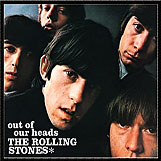
    1 “(I Can’t Get No) Satisfaction”
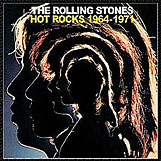
    The Rolling Stones, Out of Our Heads, 1965
    The three-note lick came to him in a dream, and composer Keith Richards’ thought he might have been subconsciously ripping off Martha and the Vandellas’ “Dancing in the Street,” but the end result was the Stones’ first #1 hit in the U.S. Defined primarily by Richards’ fuzz-enhanced tone (created with the help of a Gibson-made Maestro FZ-1 Fuzz Tone, listen closely and you can hear him switch it as he transitions from the lick to the rhythm part under the verse, and back – not always smoothly!), it also gained notoriety for its lyrical references to nonconformity and, especially, sex; when the band played it on Ed Sullivan, censors bleeped “…trying to make some girl..” The song reached #1 on both the U.K. and U.S. charts, and spent four weeks there stateside.

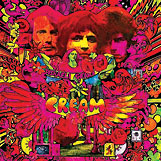
    2 “Sunshine Of Your Love”
    Cream, Disraeli Gears, 1967
    The rhythm was created by bassist Jack Bruce and the groove comes courtesy of Ginger Baker, who created it after Atlantic Records producer Tom Dowd suggested he use the downbeat as the driving element, a la the drumbeats of Native American music. Eric Clapton’s Gibson SG runs through a Marshall stack (or two) to create the tone, and his phrasing in the solo borrows a bit from “Blue Moon.” The sum total is a simple classic that instantly influenced the likes of Jimi Hendrix, who jammed on the song during his own shows the week it was released as a single. Cream’s biggest U.S. hit, it reached #5, and today it is still part of most (if not all) Clapton concerts – usually the encore!

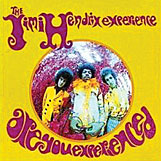
    3 “Purple Haze”
    Jimi Hendrix Experience, Are You Experienced?, 1967
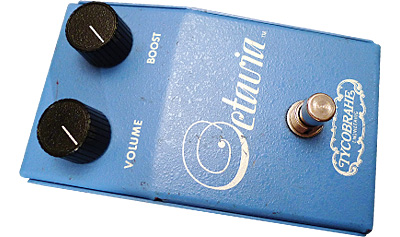
    Hendrix’s second single (following “Hey Joe”), its opening chord of two riffs followed by an interval of flattened fifth (D5 or “tritone,”) is now considered his trademark. A Roger-Mayer-built Octavia created the then-cutting-edge fuzztone with upper-octave harmonics.

    4 “Day Tripper”
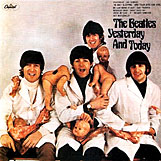
    The Beatles, Yesterday… and Today, 1965
    Debuting with “We Can Work It Out” as the record industry’s first “double A-side” single, the track is introduced and driven by a lick created and played by John Lennon (likely on his Rickenbacker 325), doubled by Paul McCartney’s bass. As rock songs go, it’s a counterculture classic, with lyrical references to sex, drugs, and phony hippies. Listen closely during the instrumental break/bridge (starting at 1:20) and you’ll hear a funky ascending-chord accompaniment dubbed under George Harrison’s solo, which was recorded using a Gibson ES-345. To say Lennon’s lick “inspired” Nazareth’s hit single “Hair of the Dog” would be something of an understatement!

    5 “Walk, Don’t Run”
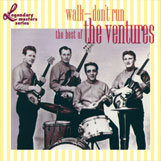
    The Ventures, Walk Don’t Run, 1960
    “Both the original and “Walk, Don’t Run ’64” made the Top 20 charts.

    6 “You Really Got Me”
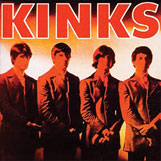
    The Kinks, The Kinks, 1964
    Giving the Kinks cred amongst the influx of British Invasion bands, some rock writers say this song “invented” heavy metal. Written by Ray Davies, guitarheads know the lore about how Ray’s brother, the 17-year-old Dave Davies (not Jimmy Page!) played the solo on a Harmony Meteor through an Elpico amp that he had “customized” by slicing the speakers with a razor blade to create a fuzz-like effect. The elder Davies says the goal was to write a big, crowd-pleasing/show-topper song. It worked so well, the band copied itself with its second single, “All Day and All of the Night,” and within a year, the Stones had recorded “(I Can’t Get No) Satisfaction” and the Who did “I Can’t Explain,” both with the same intent. Van Halen’s version – its first single – was recorded in 1977.

    7 “Whole Lotta Love”
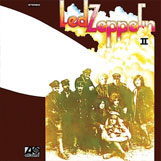
    Led Zeppelin, Led Zeppelin II, 1969
    The band’s first U.S. charting single led off with a monster lick by Jimmy Page (playing his ’58 Gibson Les Paul Standard) that segued into one very heavy rhythm-section groove. The song’s psychedelic midsection break sets up one of Page’s career-defining solos.

    8 “Crossroads”
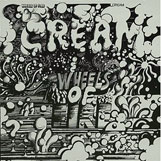
    Cream, Wheels of Fire, 1968

    9 “All Along The Watchtower”
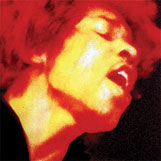
    The Jimi Hendrix Experience, Electric Ladyland, 1968

    10 “Voodoo Child (Slight Return)” /”Voodoo Chile”
    The Jimi Hendrix Experience, Electric Ladyland, 1968

    11 “While My Guitar Gently Weeps”
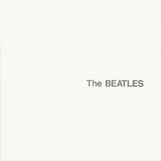
    The Beatles, White Album, 1968
    Harrison sings, Eric Clapton plays the lead break.

    12 “Oh, Pretty Woman”
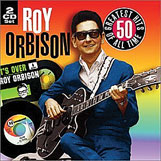
    Roy Orbison, 1964
    Released as a single, later on Orbisongs. Its lick was inspired by Orbison’s wife, who entered the room while he was writing. Van Halen scored a #1 hit with it in the early ’80s.

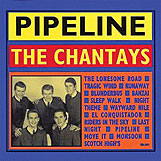
    13 “Pipeline”
    Chantays, Pipeline 1963
    The Ventures also scored a hit with this song, and it has been covered by everyone from Lawrence Welk’s band to Al Caiola to Anthrax to Stevie Ray Vaughan dueting with Dick Dale.

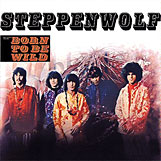
    14 “Born To Be Wild”
    Steppenwolf, 1968
    Written by Mars Bonfire (real name Dennis Edmonton, who though not a member of Steppenwolf, was the brother of the band’s drummer, Jerry Edmonton), he recorded the lick using a Fender Telecaster. The song started life as a spacey folk-pop song on a Bonfire album made up of demo recordings, but was dressed up by the band and producer Gabriel Mekler, then immortalized as the penultimate “biker song” after it was used on the soundtrack to the 1969 cult-classic film Easy Rider; its bombastic guitar-driven intro supplanted only by its lyrics, which included the first use of the term “heavy metal” in a musical context.

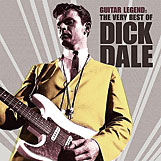
    15 “Misirlou”
    Dick Dale and his Del-Tones, 1962
    Exhibit A in the case for Dick Dale claiming the title of “King of the Surf Guitar”; he released five singles before grabbing this Greek tsifteteli dance and giving it the business with the help of his Fender Stratocaster, a ton of reverb, and the world’s first 100-watt Fender amps (with 15″ JBL speakers made especially for him). His unique style was the product of his playing guitar lefty without re-stringing it, and the fact he used very heavy strings.

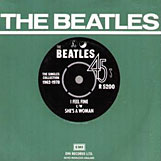
    16 “I Feel Fine”
    The Beatles, 1964

    17 “Little Wing”
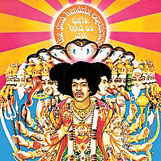
    The Jimi Hendrix Experience, Axis: Bold as Love, 1967

    18 “I’m Going Home”
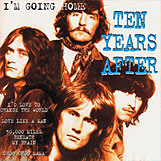
    Ten Years After, Undead, 1968
    For the real deal, check out the band doing this tune at Woodstock, where Alvin Lee tests the durability of his Gibson ES-335!

    19 “Honky Tonk Women”
    The Rolling Stones, 1969
    Released in a rock arrangement only as a single, it hit #1 in the U.S. and stayed there four weeks. Its original arrangement, “Country Honk,” appears on Let It Bleed.

    20 “Apache”
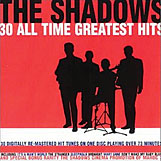
    The Shadows, 1960
    Our poll also received votes for versions by Jorgen Ingmann (’61) and the Ventures (’62).

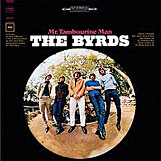
    21 “Mr. Tambourine Man”
    The Byrds, Mr. Tambourine Man, 1965
    For their first single, the Byrds nabbed Bob Dylan’s song and made it what would be the only #1 single in his career. Though Roger McGuinn laid down its signature lick on a 12-string Rick, members of the L.A. studio-musician collective knows the The Wrecking Crew did most of the playing.

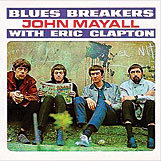
    22 “Hideaway”
    John Mayall with Eric Clapton, Bluesbreakers Featuring Eric Clapton, 1966
    A key track from the album E.C. himself says brought his playing to the attention of the masses. It’s also the first album where his unique tone emerges, courtesy of a Gibson Les Paul Standard and a Marshall combo.

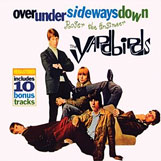
    23 “Over, Under, Sideways, Down”
    Yardbirds, Over Under Sideways Down (a.k.a. Roger the Engineer), 1966

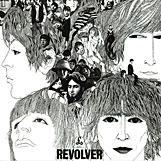
    24 “And Your Bird Can Sing”
    The Beatles, Yesterday…and Today (U.S.), Revolver (U.K.), 1965
    Renowned for its dual-guitar melody (recorded by George Harrison and Paul McCartney), the technique would later be used to great effect by many bands, including the Allman Brothers.

    25 “House of the Rising Sun”
    Animals, The Animals, 1964
    Spent three weeks at #1.

    26 A Hard Days Night
    Beatles, 1964

    27 Communication Breakdown
    Led Zeppelin, 1969

    28 Eight Miles High
    Byrds, 1966

    29 Wipeout
    The Surfaris, 1962

    30 White Room
    Cream, 1968

    31 My Generation
    The Who, 1965

    32 Hey Joe
    Jimi Hendrix Experience, 1966

    33 Good Times Bad Times
    Led Zeppelin, 1969

    34 Third Stone From The Sun
    Jimi Hendrix Experience, 1967

    35 The Thrill is Gone
    BB King, 1969

    36 Heartbreaker
    Led Zeppelin, 1969

    37 Paperback Writer
    Beatles, 1966

    38 Beck’s Bolero
    Jeff Beck, 1967

    39 Taxman
    Beatles, 1966

    40 Foxey Lady
    The Jimi Hendrix Experience, 1967

    41 Oh Well
    Fleetwood Mac, 1969

    42 Spirit in the Sky
    Norman Greenbaum, 1969

    43 Green Onions
    Booker T. & the M.G.s, 1962

    44 Suite: Judy Blue Eyes
    Crosby, Stills & Nash, 1969

    45 Summertime Blues
    Blue Cheer, 1968

    46 Revolution
    Beatles, 1968

    47 Fire
    The Jimi Hendrix Experince, 1967

    48 All Day and All of The Night
    Kinks, 1964

    49 Suzie Q
    Creedence Clearwater Revival, 1968

    50 Classical Gas
    Mason Williams, 1968


    This article originally appeared in VG March 2011 issue. All copyrights are by the author and Vintage Guitar magazine. Unauthorized replication or use is strictly prohibited.


  • Top 50 Guitar Songs of the ’70s

    Top 50 Guitar Songs of the ’70s

    By the Readers and Staff of Vintage Guitar

    TOP 50 Guitar SONGS of the 1970sVintage Guitar marked 25 years of publication with a year full of cool features that relied on feedback from readers who visit VintageGuitar.com. This month, we offer the results of a poll to determine what readers believe to be the 50 coolest guitar-driven songs of the 1970s. The online poll told them it, “…could be an instrumental, could be a blues classic, could be pop tune with a killer riff or solo.”

    Here are the top 50 songs picked by readers.

    1 “Stairway to Heaven”
    Led Zeppelin, Led Zeppelin IV, 1971
    At eight minutes and two seconds in length, the song was a very unlikely hit when it was released – to radio only, not as a 45-r.p.m. single. With music composed by Jimmy Page (over a period of months) and lyrics written by Robert Plant (on-the-spot during recording), the song is renowned for its mellow acoustic intro, played on a Harmony Sovereign H1260 acoustic and Fender XII (panned left and right in the mix, respectively), and the way its structure builds in intensity and speed until its climax, followed by the final refrain. Along they way, Page briefly throws the band into several time-signature changes just before rendering what is arguably his best-known guitar solo (with the help of his ’59 Telecaster and a Supro amp). For live versions, Page used a Gibson EDS-1275.Ultimately, Page came to view the piece as a “milestone” for Zeppelin.

    2 “Layla”
    Derek and the Dominos, Layla and Other Assorted Love Songs, 1970 
    Inspired by Eric Clapton’s then-unrequited love for another man’s wife, it may well be the greatest rock-and-roll love song – and there’s simply no debate that it contains one of the genre’s defining licks, purveyed initially by Duane Allman (who borrowed the melody from either Albert King’ or T-Bone Walker, depending on who you ask) then later in harmony with Clapton on his famed ’56 Stratocaster, “Brownie.” Derek and the Dominos were an offshoot of Delaney and Bonnie, and as the group recorded its first album, Allman appeared after being invited by Clapton to lend additional guitar parts. The song was conceived as a ballad, but after Allman played the lick, the band rolled with the vibe.

    3 “Smoke on the Water”
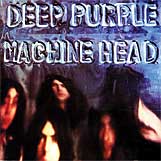
    Deep Purple, Machine Head, 1972
    Take a simple blues-based 12-note lick played on a Strat through a jacked Marshall stack, double with a Hammond organ also through a driven-hard Marshall, throw in lyrics written as you watch your would-be recording venue go up in the flames, and voila – you’ve got a classic! Of course, there’s a certain magic when that guitar lick is created by Ritchie Blackmore, but still, greatness often lies in simplicity.

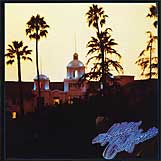
    4 “Hotel California”
    The Eagles, Hotel California, 1976

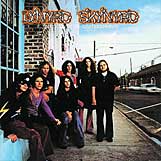
    5 “Free Bird”
    Lynyrd Skynyrd, Pronounced ‘Leh-’nérd ’Skin-’nérd, 1973
    Half ballad, half up-tempo guitar solo, the song was the band’s second hit. With a run time just over nine minutes (4:41 in single form), it begins with organist Billy Powell playing the lick that moved him from roadie to group member. The slide parts were worked by Gary Rossington, and in recording them he set aside his Les Paul and instead grabbed a Gibson SG he rigged for slide, and a glass Coricidin bottle in homage to Duane Allman. So ubiquitous is the track that on any given night, at any gig by any artist, you’re never surprised to hear someone in the audience yell, “Play ‘Free Bird,’ man!”

    6 “Sultans of Swing”
    Dire Straits, Dire Straits, 1978

    7 “More Than a Feelin’”
    Boston, Boston, 1976

    8 “Comfortably Numb”
    Pink Floyd, The Wall, 1979
    Its genesis reportedly came while guitarist David Gilmour was working on his first solo album (released in ’78), and it is arguably the band’s best song from what is inarguably its best-selling album. It also contains what many – including hardcore Floyd fans – believe to be Gilmour’s best guitar solo (or best two if you count the outro), played on his trademark ’79 Stratocaster (with a ’62 neck) and running through a HiWatt amp.

    9 “The Boys Are Back in Town”
    Thin Lizzy, Jailbreak, 1976

    10 “Reelin’ In the Years”
    Steely Dan, Can’t Buy a Thrill, 1972
    Guitarist Elliot Randall’s intro and solo are so good they kept the studio stalwart working for years afterward. Though never a “permanent” member of Steely Dan (he politely declined the invite), he played on three of the band’s albums. His parts were played on his ’63 Stratocaster with – of all things – a Gibson PAF humbucker in the neck position plugged straight into – of all things – an Ampeg SVT (bass) amp.

    11 “Sweet Home Alabama”
    Lynyrd Skynyrd, Second Helping, 1974

    12 “Brown Sugar”
    The Rolling Stones, Sticky Fingers, 1971
     A track about a host of taboo subjects, its lyrics were as controversial as its driving riff was prototypical ’70s Stones. Mick Jaggar has laid claim to writing the riff, but Richards recorded it using a Gibson SG through a cranked Fender Twin.

    13 “Highway Star”
    Deep Purple, Machine Head, 1972

    14 “(Don’t Fear) The Reaper”
    Blue Oyster Cult, Agents of Fortune, 1976

    15 “Rock & Roll, Hoochie Koo”
    Rick Derringer, All American Boy, 1974

    16 “Eruption”
    Van Halen, Van Halen, 1978
    This one-minute, 42-second salvo of scorching note runs, gonzo vibrato dives, and head-spinning two-hand tapping introduced the world to Edward Van Halen, the guy who would quickly become the biggest guitar hero since Hendrix. Played on a Strat-style parts guitar assembled by Van Halen, it was recorded using an MXR Phase 90, an Echoplex, and a Univox echo unit through his famed Marshall model 1959 Super Lead head. Its first few bars borrow from Cactus’ “Let Me Swim,” and the solo section cops a lick from a 19th-century etude by Rodolphe Kreutzer, but the song stands on its own as one of the most influential and pivotal guitar moments of the past 30 years.

    17 “La Grange”
    ZZ Top, Tres Hombres, 1973
    Based on one of the blues’ bluesiest licks (as rendered by John Lee Hooker), its phrasing is a ubiquitous statement anywhere 12-bar licks are served. Billy Gibbons, a guy more famous for playing his ’59 Les Paul Standard known as “Pearly Gates,” laid down what is arguably his best-known lick on a ’55 Stratocaster with a stop tailpiece plugged into a 100-watt Marshall Super Lead.  

    18 “Can’t You Hear Me Knockin’”
    The Rolling Stones, Sticky Fingers, 1971

    19 “Do You Feel Like We Do”
    Peter Frampton, Frampton Comes Alive!, 1976/Frampton’s Camel, 1973
    Though the studio version never got much attention, when Frampton did the song live with his three-pickup Les Paul Custom, dressed it up with extended multi-instrumental solos that teeter on jazz, added a talkbox-driven mid-song breakdown, then released it as a single (pared nearly in half versus the 14:15 album version), things changed. One of the longest singles to the hit the top 10 in the U.S., it was one of three from the double-album set that for more than 20 years held the title “best-selling live album.” Frampton still uses the song as a frequent show-closer.

    20 “Won’t Get Fooled Again”
    The Who, Who’s Next, 1971

    21 “Black Dog”
    Led Zeppelin, Led Zeppelin IV, 1971
     Cited by many a heavy-hitter guitarist as a “must learn” lick, it (“aided” by Robert Plant’s setup cry of “Hey, hey, Mama, said the way you move, gonna make you sweat, gonna make you groove…”) set the stage for what is arguably the best set of songs ever offered by Zeppelin. Ironically, composer John Paul Jones’ goal was to write a “rolling” bass lick that could not be grooved to! Guitarist Jimmy Page’s unique tone was the end result of running his ’59 Les Paul Standard direct into a mic channel on the studio’s mixing board, resulting in the distorted tone.

    22 “Funk #49”
    James Gang, Rides Again, 1970

    23 “25 or 6 to 4”
    Chicago, Chicago, 1970

    24 “All Right Now”
    Free, Fire and Water, 1970
    Though Free’s overall vibe was more about mellower blues and bluesy rock songs, their biggest hit is one of rock’s greatest anthems. Few would argue Paul Rodgers’ vocals are the star of the show, but even non-guitarheads know cool licks and tone when they hear it, and “All Right Now” serves up a ton of both! Guitarist Paul Kossoff was one of the best of his generation, and here, his ’59 Les Paul Standard (through a block-logo Marshall) serves up some of his oh-so-sweet trademark slow vibrato. The album version clocks in about a minute longer than the single, and the extra length is mostly guitar solo so cool it’s little wonder why Clapton once asked him, “Hey, can you show me how you do that?”

    25 “China Grove”
    Doobie Brothers, The Captain and Me, 1973

    26 Statsboro Blues
    The Allman Brothers, At Fillmore East, 1971

    27 Mississippi Queen
    Mountain, Climbing, 1970

    28 In Memory Of Elizabeth Reed
    The Allman Brothers, Idlewind South/At Fillmore East, 1970

    29 Iron Man
    Black Sabbath, Paranoid, 1970

    30 Stranglehold
    Ted Nugent, Ted Nugent, 1975

    31 Rocky Mountain Way
    Joe Walsh and Barnstorm, The Smoker You Drink, the Player You Get, 1973

    32 Cat Scratch Fever
    Ted Nugent, Cat Scratch Fever, 1977

    33 Green Grass and High Tides
    The Outlaws, Outlaws, 1975

    34 Jessica
    The Allman Brothers, Brothers and Sisters, 1973

    35 Money
    Pink Floyd, The Dark Side of the Moon, 1973

    36 Paranoid
    Black Sabbath, Paranoid, 1970

    37 Whipping Post
    The Allman Brothers, At Fillmore East, 1971

    38 Aqualung
    Jethro Tull, Aqualung, 1971

    39 Rock and Roll All Nite
    Kiss, Dressed to Kill/Alive, 1975

    40 Ramblin’ Man
    The Allman Brothers, Brothers and Sisters, 1973

    41 Tumbling Dice
    The Rolling Stones, Exile on Main Street, 1972

    42 Hocus Pocus
    Focus, Focus II, 1971

    43 Europa (Earth’s Cry Heaven’s Smile)
    Santana, Amigos/Moonflower, 1976

    44 Highway to Hell
    AC/DC, Highway to Hell, 1979

    45 Kid Charlemagne
    Steely Dan, The Royal Scam, 1976

    46 Rock and Roll
    Led Zeppelin, Led Zeppelin IV, 1971

    47 American Woman
    The Guess Who, American Woman, 1970

    48 Working Man
    Rush, Rush, 1974

    49 Barracuda
    Heart, Little Queen, 1977

    50 Walk This Way
    Aerosmith, Toys in the Attic, 1975


    This article originally appeared in VG May 2011 issue. All copyrights are by the author and Vintage Guitar magazine. Unauthorized replication or use is strictly prohibited.


  • Top 50 Guitar Songs of the ’80s

    Top 50 Guitar Songs of the ’80s


    By the Readers and Staff of Vintage Guitar


    Based on input from Vintage Guitar magazine staff and readers, this feature presents the results of a poll highlighting the 50 coolest guitar-driven songs of the 1980s, as chosen by our audience.

    Check out our YouTube Top 50 Guitar Songs of the ’80s video playlist.

    Check out our Spotify Top 50 Guitar Songs of the ’80s video playlist.

    1 “Back In Black”
    AC/DC, Back In Black, 1980
    Though assailed by the increasingly popular synthesizer in turn-of-the-decade pop music, real rock bands stuck with what worked – guitars, bass, and drums – and none purveyed the spirit better than AC/DC. Loud, “dirty,” and quite capable of raising parental ire, the band churned out successive hit albums, all with their trademark catchy lyrics and hooks. “Excess” claimed vocalist/lyricist Bon Scott in 1979, and in terms of mass popularity, AC/DC peaked with Back In Black; the album introduced new vocalist Brian Johnson, and the title track – a fitting ode to Scott – is kicked off with Angus Young’s SG/Marshall setup delivering his famous driven-but-not-too-distorted tone with three chords that form a riff every aspiring guitarist learns, first thing.

    2 “Crazy Train”
    Ozzy Osbourne, Blizzard of Ozz , 1981
    Determined to show his ex mates in Black Sabbath he’d be just fine without them, Ozzy snagged L.A. guitarist Randy Rhoads to lay down licks on his first solo album. Nice call, there, Prince of Darkness! The quiet type, Rhoads’ spoke loudly with his musical ability and stylistic curiosity, which melded to make him one of the greatest players of his generation, and for this track, he created a riff that to this day remains atop the “gotta learn it” list for every kid with his first guitar.

    3 “Sweet Child O’ Mine”
    Guns ’N Roses, Appetite For Destruction, 1987
    Case study in how a hooky little lick – in this case played as a joke – can serve as the perfect setup to a great set of lyrics, which in turn inspire an equally remarkable guitar solo (or in this case, three!). With Guns guitarist Slash, things were never fancy. His style is meat-and-potatoes, his tone the tried-and-true Les Paul (well, back then, a Les Paul copy) through a Marshall, occasionally spiced with wah. And here, they combine on the first hit from what many consider the decade’s best album, the song’s intro serves as trademark not only for the band, but for the era.

    4 “Money For Nothing”
    Dire Straits, Brothers In Arms, 1985
    Though glossier than previous Dire Straits hits, guitarist Mark Knopfler followed up this song’s synthy intro (and Sting’s haunting “I want my MTV” vocal line) with one hellaciously hooky riff that helped make the track the band’s best-selling single. Chasing a different tone, Knopfler eschewed his trademark Strat for this and instead used a Les Paul Junior through a Laney amp.

    5 “Start Me Up”
    The Rolling Stones, Tattoo You, 1981
    Perhaps the last great Stones lick – plied by Keef with his Tele strung just five-wide and tuned to open G – kicks off a song that was actually a cast-off from 1975’s Black and Blue album, where it began life as a reggae tune, and was bypassed again as a rock song when the band worked up 1977’s Some Girls and 1979’s Emotional Rescue.

    6 “Pride and Joy”
    Stevie Ray Vaughan, Texas Flood, 1983
    With lyrics inspired by his relationship with a woman (not the same one who inspired his trademark instrumental, “Lenny”!), the track is a simple blues shuffle, dressed up considerably front to back by SRV’s glorious Strat tone (at this point played through a Marshall Model 4140 Club & Country and a blackface Fender Vibroverb). The first of his singles to chart, it introduced SRV to the masses – and his unmistakable playing style, from the intro to one of his best solos to the Freddie-King-inspired conclusion.

    7 “Welcome to the Jungle”
    Guns ’N Roses, Appetite For Destruction, 1987

    8 “Hot For Teacher”
    Van Halen, 1984, 1984

    9 “Panama”
    Van Halen, 1984, 1984
    Van Halen at its artistic peak; the band’s final album with original vocalist David Lee Roth was arguably its best work. And these two tracks, especially, oozed the essence of that original lineup – whether in the form of Roth’s cocksure front-man style (in terms of both song lyrics and live performance) or the tightly syncopated interplay between brothers Alex and Eddie Van Halen.

    10 “Hell’s Bells”
    AC/DC, Back In Black, 1980
    The coolest riff on an album with a handful of the best ever played, the introductory blending of the sanctuary bell (does it toll for thee?) with Angus Young’s perfectly plied (and harmonically sinister) A minor, D/A, and C/A chords is sheer musical alchemy.

    11 “Rock You Like a Hurricane”
    Scorpions, Love at First Sting, 1984
    Germany’s entry to the heavy metal games were driven by two guitars, and most would say the combination that helped create this song – Rudolph Schenker and Matthias Jabs – were its best one-two punch. Schenker has long been a hardcore fan of the Gibson Flying V, while Jabs spent time on a Gibson Explorer or one of his modded Fender Stratocasters.

    12 “Beat It”
    Michael Jackson, Thriller, 1982
    In a stroke of marketing genius, Michael Jackson and producer Quincy Jones asked Eddie Van Halen – at the time, the undisputed king of rock guitar – to play a solo atop a viciously driving R&B rhythm. The end result became what every guitar geek knows is the best song on what happens to be the best-selling album of all time. Oh, and Steve Lukather’s rhythm-guitar groove ain’t bad, either!

    13 “Master of Puppets”
    Metallica, Master of Puppets, 1986

    14 “Sunday Bloody Sunday”
    U2, War, 1983
    A call for political peace in the band’s home country of Ireland, the song was a hit in the U.K. but didn’t catch on in the U.S. (beyond the college-radio crowd) until released as a video shot during a performance at Colorado’s Red Rocks Amphitheater. For most Americans, it served as an introduction to the Edge’s jangly, delay-fed guitar tone and melodic playing style.

    15 “Surfing with the Alien”
    Joe Satriani, Surfing with the Alien, 1987

    16 “Jump”
    Van Halen, 1984, 1984

    17 “I Love Rock and Roll”
    Joan Jett & The Blackhearts, I Love Rock and Roll, 1981
    A true rock-and-roll success story; the dark horse of the disbanded Runaways (Lita Ford and Michael Steele were supposed to emerge as the stars) covers a disregarded single by an all-but-forgotten British pop band to create one of rock’s greatest anthems. Gritty, in-your-face, and with an overt girl-takes-the-guy message viewed as empowering, it was number one on Billboard’s Hot 100 for seven weeks. Had Gibson been handing out signature models at the time, Jett’s Melody Maker might have been a best-seller.

    18 “Texas Flood”
    Stevie Ray Vaughan and Double Trouble, Texas Flood, 1983

    19 “Rock This Town”
    Stray Cats, Stray Cats, 1981
    The ’50s-inspired sounds of the Stray Cats certainly stood out in an age of ultra-modern synth-driven pop music. America’s first taste of the band (which released its first single in the U.K.) came via this track, with its fast-strumming intro setting up a sound and a song even your parents could dig! Guitarist/band leader Brian Setzer was – and remains – dedicated to the details; in the Cats, he used Gretsch guitars, usually a 6120, and usually with a (what else?) Gretsch vibrato that saw its share of work, along with a Fender Bassman or Princeton.

    20 “Tom Sawyer”
    Rush, Moving Pictures, 1981

    21 “Where the Streets Have No Name”
    U2, The Joshua Tree, 1987

    22 “The Trooper”
    Iron Maiden, Piece of Mind, 1983

    23 “You Shook Me All Night Long”
    AC/DC, Back In Black, 1980
    Yet another can’t-miss intro lick by Angus Young. Played anywhere even today, from basements to bars to arenas and by everyone from rockers to punks to country pickers, every person in the audience will know it – and start to groove in anticipation of the first rhythm chord.

    24 “Livin’ On a Prayer”
    Bon Jovi, Slippery When Wet, 1986
    Introducing the talk box to a generation of rock fans perhaps not familiar with the work of Peter Frampton or Joe Walsh, Richie Sambora used it to augment a killer riff that sets up one of the catchiest sing-along choruses of the era.

    25 “Couldn’t Stand the Weather”
    Stevie Ray Vaughan and Double Trouble, Couldn’t Stand the Weather, 1984

    26 “Legs”
    ZZ Top, Eliminator, 1983

    27 “Limelight”
    Rush, Moving Pictures, 1981

    28 “Always With Me, Always with You”
    Joe Satriani, Surfing with the Alien, 1987

    29 “Stray Cat Strut”
    Stray Cats, Stray Cats, 1981

    30 “Paradise City”
    Guns N’ Roses, Appetite for Destruction, 1987

    31 “Forever Man”
    Eric Clapton, Behind the Sun, 1985

    32 “Cold Shot”
    Stevie Ray Vaughan and Double Trouble, Couldn’t Stand the Weather, 1984

    33 “Ace of Spades”
    Motorhead, Ace of Spades, 1980

    34 “Rebel Yell”
    Billy Idol, Rebel Yell, 1984

    35 “She Sells Sanctuary”
    The Cult, Love, 1985

    36 “Photograph”
    Def Leppard, Pyromania, 1983

    37 “Purple Rain”
    Prince and the Revolution, Purple Rain, 1984

    38 “The Attitude Song”
    Steve Vai, Flex-Able, 1984

    39 “Another One Bites the Dust”
    Queen, The Game, 1980

    40 “Heat of the Moment”
    Asia, Asia, 1982

    41 “One”
    Metallica, …And Justice For All, 1988

    42 “Every Breath You Take”
    The Police, Synchronicity, 1983

    43 “How Soon Is Now?”
    The Smiths, Meat is Murder, 1985

    44 “Owner of a Lonely Heart”
    Yes, 90125, 1983

    45 “Don’t Tell Me You Love Me”
    Night Ranger, Dawn Patrol, 1982

    46 “867-5309/Jenny”
    Tommy Tutone, Tommy Tutone 2, 1981

    47 “Lenny”
    Stevie Ray Vaughan and Double Trouble, Texas Flood, 1983

    48 “Gimme All Your Lovin’”
    ZZ Top, Eliminator, 1983

    49 “Breaking the Law”
    Judas Priest, British Steel, 1980

    “50 Round and Round”
    Ratt, Out of the Cellar, 1984


    This article originally appeared in VG July 2011 issue. All copyrights are by the author and Vintage Guitar magazine. Unauthorized replication or use is strictly prohibited.


  • 25 Most Valuable Basses

    25 Most Valuable Basses

    Text by Peter Stuart Kohman. Data compiled by Alan Greenwood and Gil Hembree

    Vintage Guitar is marking 25 years of publication with a year full of features. This month, using data compiled for The Official Vintage Guitar Price Guide 2011, we continue the celebration with a list of the 25 most valuable basses.

    1. 1960-’62 Fender Jazz Bass
    ($25,000 to $38,000 in custom-color finish)
    The holiest of Fender Bass grails is a “stack knob” custom-color Jazz. The “J-Bass” proved the market could support fancy, pricier bass guitars; a solid duco-finish Jazz was a hot-rod four-string nonpareil. By the mid ’60s, they were ordered comparatively often – not so in 1960! Highly collectible since the ’70s, a custom-color Jazz Bass still tops the list today. Sunburst models from the period fetch $16,000 to $21,000.

    2. 1970s Zemaitis “Heart Hole” Bass
    ($24,000 to $29,000)

    England’s Tony Zemaitis hand-made his electric guitars for many years, but built very few basses, mostly for U.K. rock stars like Ronnie Lane and Greg Lake. With only four extant, this model would be the ultimate four-string in the Velvet Goldmine.

    3. 1963-’65 Gibson Thunderbird IV
    ($20,000 to $23,000 in custom-color finish)

    Arguably Gibson’s greatest bass, the two-pickup, “reverse-body” Thunderbird IV, with its neck-through design, combines style and function like few others. With a production run painfully short at less than two years, it could be ordered in any of 10 flashy colors and is the ultimate Gibson four-string (sunburst models from the same period go for $9,000 to $13,000).

    4. 1958-’60 Fender Precision Bass
    ($18,000 to 23,000, custom color)

    Originally offered in any color – as long as it was blond(!) – by the early ’60s, the Fender Precision could be had in a rainbow of finishes. The Precision ruled the ’50s, and a late-’50s (maple neck, anodized pickguard) model will rule many collector’s wallets, especially if not in the then-standard sunburst (which go for $8,000 to $11,000; ’51 to ’60 models sell for as much as $19,000). Any pre-CBS P-Bass will follow – the rarer the color, the higher the dollar!

    5. 1961-1964 Fender Bass VI
    ($10,500 to $14,500, custom color)

    Leo Fender’s answer to a cheap-but-practical Danelectro was this super-elaborate three-pickup/30″-scale twang machine – with vibrato! The $329 Fender VI was “bass-ically” an overgrown guitar, and was a hit with studio players, though few others could afford one. Jack Bruce started his career on a sunburst model; now, collectors crave flashy custom-color examples while sunburst models fetch $5,500 to $7,000.

    6. 1963-’65 Gibson Thunderbird II “reverse body”
    ($10,500 to $13,000, custom color)

    Gibson’s first long-scale competitor to the Fender Precision, the single-pickup Thunderbird II was built in larger numbers than the IV… but that’s not saying much. Anything other than brown sunburst (which go for $6,000 to $10,500) was a custom order, so few exist – even fewer without the common headstock fracture!

    7. 1970-’75 Rickenbacker Model 4005 L “Lightshow”
    ($11,000 to $12,000)

    With only a handful built, this psychedelically-minded hollow Rickenbacker with internal colored lights pulsing to the music qualifies as the company’s ultimate four-string rarity. One went to a girl group in Las Vegas, one went to John Entwistle. Find one, and Rick collectors will find you!

    8. 1965-’66 Gibson Thunderbird IV
    ($8,000 to $12,000, custom color)

    The second generation Thunderbird, launched in the summer of ’65, switched to a “non-reverse” body (with more-prominent upper horn) and abandoned the neck-through design. While not as favored by collectors, these T-birds are even less common than the first series – the two-pickup IV especially. Any finish other than sunburst (which sell for $4,000 to $5,000) is seriously rare.

    9. 1968-’69 Rickenbacker Model 4005
    ($8,000 to $10,000 8-string)

    In 1965, Rose-Morris inquired whether Rickenbacker might build a hollowbody bass. The company complied, but the awkward four-string 4005 never caught on. Just to drive collectors crazy, Rick also tried 6- and 8-string versions in barely more than prototype numbers. Rarely seen, even more rarely heard, but a major Rickenbacker collectible. The standard 4005 of that era goes for $5,000 to $6,500, while the 6-string version goes for $6,500 to $7,500.

    10. ’70s Alembic Custom Shop Dragon Doubleneck
    ($8,000 to $9,000)

    Nothing says ’70s badass like a doubleneck bass; being a hand-made Alembic is just icing on the cake! For sheer flash, nothing beats this imposing monster – and nothing could match its hi-fi sound possibilities, either.

    11. 1965-’66 Gibson Thunderbird II
    ($6,000 to $9,000, custom color)

    The “non-reverse” single-pickup Thunderbird II was produced in larger numbers than the IV, but is still rare (and has never been properly reissued). Add a custom color (sunburst models sell for $2,500 to $3,200) and a never-broken headstock, and you have a Gibson bass that’ll set hearts racing. Ask Glenn Cornick!

    12. 1958-’59 Rickenbacker Model 4000
    ($7,200 to $8,900)

    Rickenbacker’s first bass, and the earliest long-scale challenger to Fender’s Precision. With a neck-through design and a horseshoe pickup, the 4000 sounded great and the cresting-wave body was stylish and practical. It took Rickenbacker time to crack the bass market (making for low production), but the ubiquitous ’70s Rick 4001/4002/4003 models are this one’s children.

    13. 1962-’64 Gibson EB-6
    ($7,500 to $8,000)
    Gibson’s second attempt at a 6-string bass, it’s essentially an overgrown SG. With six big Kluson tuners and two P.A.F. pickups, this was one roaring monster of twang, but with only 66 shipped faded to obscurity very quickly. Also expensive like Fender’s VI, Gibson somehow omitted the whammy bar!

    14. 1968 Fender Telecaster Bass
    ($6,500 to $8,000 Blue Floral and Pink Paisley)

    The ’60s hit CBS/Fender in a big way in ’68, with the hippier-than-thou Telecasters with floral and paisley wallpaper applied to the slab bodies under a heavy clearcoat. The basses (especially the blue) are rarer than the guitars and is one of the few CBS-era four-strings with heavy collector appeal. For comparison, a blond version from ’68 brings $3,500 to $4,000.

    15. 1960-’61 Gibson EB-6
    ($6,500 to $7,000)

    Gibson’s first Danelectro-inspired “baritone guitar” was basically a single-pickup ES-335 fitted with a bass bridge. Much more expensive than Nathan Daniel’s $135 Masonite box, rather less versatile sounding, it died a quick death and thus is yet another very rare Gibson.

    16. 1961-’65 Rickenbacker Model 4001
    ($5,500 to $6,900)

    A deluxe development of the Model 4000, the flashy two-pickup 4001 would eventually become Rick’s signature bass. In the early ’60s, it was a very expensive obscurity until U.K. players like Paul McCartney, Pete Quaife, Roger Waters, and eventually, Chris Squire, made the export-model 4001S (with dot neck and unbound body) a bass icon, leading to mass acceptance.

    17. 1953-’58 Gibson Electric Bass (EB-1)
    ($5,300 to $6,400)

    With Gibson’s first electric bass, Ted McCarty’s disdain for Fender manifested itself in a wildly different design. With a solid mahogany violin-shaped body, big, boomy pickup, and even a stand-up end pin, these were intended to create the big, warm upright thump, but louder. In ’58, the model was renamed EB-1, and collectors often refer to the entire run by that name.

    18. 1965 Fender Bass V
    ($4,500 to $6,300, custom color)

    With a short neck, only 15 frets, a long body, and a pickup in a harmonically awkward spot, the Bass V was not Fender’s masterpiece. Five-string basses eventually prospered, but not in this form. Still, the magic of Fender’s custom colors and limited production make for another Fullerton collectible; sunburst versions from ’65 go for $2,900 to $3,500.

    19. 1971-’99 Alembic Series II
    ($5,000 to $6,000)

    In the early ’70s, San Francisco’s Alembic reinvented the electric bass, using low-impedance pickups, onboard preamps, and multi-laminate construction, they were like nothing before. The Series II, with the “omega” body cutout, typifies the company’s high-end approach.

    20. 1990-2000 Alembic Stanley Clarke Signature
    ($4,500 to $5,500)

    Many ’70s rock-star bassists embraced the Alembic, but it was jazz/fusion phenom Stanley Clarke who became most indelibly associated with them. Clarke’s personal basses included short-scale/vibrato-equipped models – even a “tenor bass” tuned up to guitar range!

    21. 1971-’79 Alembic Series I
    ($4,400 to $5,500)

    The original Alembic bass, with the “omega” pointed lower body designed to force the player to use a proper stand! Offered in three scale lengths and different wood combinations, this is still the classic ’70s Alembic of many player’s dreams.

    22. 1961-’63 Gibson EB-3
    ($4,600 to $5,300)

    Jack Bruce, come home! In 1961, the solidbody EB-3 replaced the semihollow EB-2; with two pickups and a rotary Tone selector it was Gibson’s most deluxe four-string. Later models are fairly common, but early-’60s EB-3s were produced in smaller numbers and today are hard to find.

    23. 1958 Gibson EB-2
    ($4,000 to $5,000)

    Gibson’s second bass, this mate to the ES-335 was initially judged a failure. Retired in ’61, an unexpected wave of popularity in the U.K. caused a revival by ’64 alongside its Epiphone cousin, the Rivoli. Still, the original banjo-tuner/black-pickup version is the collector’s choice – especially in the scarce blond finish.

    24. 1959-’60 Gibson EB-0
    ($4,000 to $5,000)

    Often referred to as the “Les Paul Junior Bass” (although it doesn’t carry Paul’s signature), the earliest EB-0s share the guitar’s Cherry-finish slab body. Gibson’s first entry-level bass, the EB-0 sold better than previous models, but by later standards is still a rare instrument.

    25. 1956-’63 Höfner 500/1
    ($3,300 to $4,800)

    Remembered now for its connection to the Beatles, the early violin-body Höfner 500/1 is also significant as the first European electric bass, original in its own right. Light and airy in feel and sound (unlike Gibson’s slab-o-mahogany EB) the Höfner is the progenitor of generations of 30″-scale hollowbody four-strings from all over the world. Lefty versions fetch top dollar.


    This article originally appeared in VG August 2011 issue. All copyrights are by the author and Vintage Guitar magazine. Unauthorized replication or use is strictly prohibited.


  • 25 Most Valuable Effects

    25 Most Valuable Effects

    Top 25 Effects

    Text by Dave Hunter
    Data compiled by Alan Greenwood and Gil Hembree

    Vintage Guitar is marking 25 years of publication with a year full of features. This month, using data compiled for The Official Vintage Guitar Price Guide 2011, we continue the celebration with a list of the 25 most valuable effects.

    1. 1966 Dallas Rangemaster Treble Booster
    ($2,000 to $2,500)
    Four capacitors, three resistors, one germanium transistor, plus a boost pot, two jacks, a switch, and a battery, and there you have it – the most vaunted and most valuable effects unit ever created! But as with so many collectibles, complexity isn’t necessarily an indicator of value ($825,000 for a 1918 “inverted Jenny” postage stamp anyone?), and the Rangemaster has several blue-chip factors in its camp. For one, original examples are very rare; two, Eric Clapton, Brian May, and Tony Iommi used one; three, this simple box of bits does something absolutely luscious to your tone. All that, a certain Zen-like simplicity, and quaint yesteryear design and graphics make this our magical #1.

    2. 1993-’99 Matchless RV-1 Tube Reverb Unit
    ($1,400 to $1,700)
    It’s exciting to see a “youngster” (in relative terms, at least) land this high in the charts, and the RV-1 achieves its place simply by embodying an outboard tube-driven spring reverb effect that’s as lush, deep, and multi-dimensional as any guitarist could hope to experience. From surf to subtly spacey ambience, it’s the crème de la crème of sproingggg.

    3. Late-’60s/early-’70s Univox Uni-Vibe
    ($1,300 to $1,500)
    If Hendrix touched it, you can bet it’s enshrined as effects legend. Originally intended mainly as a rotary speaker simulator for organ players, the ’Vibe – manufactured for Univox by the Shin-Ei corporation of Japan – was really a four-stage phaser with four pairs of light bulbs and cells for a liquid, juicy tone that hooks plenty of players from the first moment they hear it, and which caught fire big-time in the late ’60s. To hear the original, check out Hendrix’s “Voodoo Chile,” “The Wind Cries Mary,” or his performance of the “Star Spangled Banner” at Woodstock – and have your waterwings at the ready!

    4. 1971-’73 Maestro Rover Rotating Speaker RO-1
    ($1,150 to $1,450)
    Rather an odd duck of rotating-speaker design, the Rover RO-1 is nevertheless an extremely hip-sounding unit, and a rare acquisition besides. This circular unit measured 19″ in diameter, 9″ high (stand excluded), and produced its Doppler-inducing rotary-speaker effect by means of a 6″ speaker inside a plastic enclosure that spun within the corrugated drum. Groovy!

    5. 1976-’77 Tycobrahe Octavia
    ($1,100 to $1,300)
    The half-dozen or so original “Octavia” units were built one at a time by Roger Mayer for Jimi Hendrix and a few other formative artists, but since Mayer never copyrighted the name or released the pedal to the market, it was left to Tycobrahe to jump into the fray with this production model in the mid ’70s. For octave-up freakout and dissonant fuzz hijinks, this is your momma.

    6. 1976-’77 Tycobrahe Parapedal
    ($1,100 to $1,300)
    An original Tycobrahe design, the Parapedal was billed as a wah, but was far more complex. In addition to a somewhat traditional wah sound, the Parapedal added a second tone much like a sweeping phaser or even a tracking analog synth, with an emotively vocal dip in level and tone at the end of the pedal sweep.

    7. 1976-’77 Tycobrahe Pedalflanger
    ($1,100 to $1,300)
    The third in a tight grouping of Tycobrahe rarities, the Pedalflanger produced a manual or automatic flanging effect that could also imitate phasing, chorus, and vibe sounds, making it a nifty four-in-one.

    8. 1994-’99 Klon Centaur Professional Overdrive (gold case)
    ($1,050 to $1,300)
    The Klon Centaur is something of a modern classic, and more of a tone-thickening booster than a traditional overdrive pedal. Its beating heart lies within an ultra-secret circuit covered in epoxy to foil copyists, and is blessed by secret sprites that only appear on Tone Mountain once every third full moon to bestow unbridled sonic mojo. Word.

    9. ’70s Maestro Echoplex Groupmaster (solidstate)
    ($800 to $1,300)
    Intended as a studio rendition of the storied Echoplex, the rare Groupmaster included a four-channel mixer in front of its analog tape echo, with solidstate circuitry that gave your tone a juicy little sumpin’-sumpin’ besides.

    10. 1961-’66 Fender Reverb Unit (blond, brown, or black)
    ($750 to $1,275)
    Fender might have been surprisingly slow to introduce reverb to the lineup, but when it did – in the form of this outboard tube-driven spring reverb unit – it set the standard that launched a thousand surf tunes.

    11. 1974-’77 Mu-Tron Bi-Phase (with optical pedal)
    ($1,000 to $1,250)
    This variable-resistor-based phaser offered extensive control functions, and yielded a deep, lush tone. Whether used on automatic or controlled manually via an external optical pedal, its dual sections (A and B) could be set independently or blended to create a tone few phasers have approached since.

    12. ’77 Mu-Tron Flanger
    ($1,000 to $1,250)
    Another great, spacey effect from a company whose quality seemed a cut above so many pedal makers. And what happened to Mu-Tron? The company died a slow, agonizing death in its efforts to market the Gizmotron automated guitar “bowing” device, invented by Lol Creme and Kevin Godley of 10cc. I’m not in love…

    13. ’60s Maestro Echoplex (tube model)
    ($900 to $1,100)
    The king among tape-echo units, the tube-powered Maestro Echoplex EP-1 represented a revolution in slap-back and atmospheric echoes alike, while also adding a thickening boost to any guitar signal that was jacked through it. The first versions of the Echoplex were manufactured in the late ’50s by Market Electronics, of Cleveland, and were roughly based on the tape-echo circuitry built into Ray Butts’ EchoSonic amp, which he built for Scotty Moore, Chet Atkins, Carl Perkins, and others in the ’50s. The unit’s reputation (and availability) caught fire, though, when manufacture was moved to Harris-Teller, of Chicago, with marketing and distribution under the Maestro wing of the Gibson family.

    14. 1958-’59 EccoFonic echo unit
    ($900 to $1,100)
    Cruder and therefore destined to an earlier graveyard than the Echoplex that survived it, the EccoFonic – sold by Fender in 1958-’59 – was another interesting take on the tape-echo unit, and one that tapped the signal from amp to speaker to inject three user-selectable delay times.

    15. 1960s Binson EchoRec (tube unit)
    ($900 to $1,100)
    Getting a feeling echo was a big deal in the early ’60s? Binson was a major player in Europe’s move toward psychedelia, and helped early Pink Floyd to achieve the spacey delays heard on “Shine On You Crazy Diamond,” among other tracks. To produce their delayed signal, these quirky gizmos used a magnetic drum recorder instead of tape.

    16. Late-’60s Dallas-Arbiter Fuzz Face
    ($800 to $1,100)
    The Maestro Fuzz-Tone and Vox Tone-Bender might have preceded it, but the Fuzz Face made the biggest and longest-lasting impression on Fuzztown, and pumped countless star tones into the stratosphere besides, so it’s a deserving classic, no doubt. The Fuzz Face functions on an extremely simple circuit, with just a few more components than its stablemate Dallas Rangemaster, but with a crucial two germanium transistors coughing up the goodly hairballs. The first unit hit London’s Sound City music shop in 1966, where one young pretender to the guitar throne soon to be known as Jimi Hendrix had taken to hanging out. He wasn’t pretending for long.

    17. 1966-’67 Vox Clyde McCoy Wah-Wah Pedal
    ($700 to $1,100)
    Originally invented by design engineer Brad Plunkett in 1965 for Vox’s U.S. distribution partner, Thomas Organ, in a bid to electronically emulate the muting effect for which trumpeter Clyde McCoy was briefly famous, this seminal wah soon underwent several evolutions in production. A short run of Clyde McCoy units was purportedly made by Thomas Organ in California, before being jobbed out to Jen Electronics in Italy, while Vox U.K.’s rendition was briefly manufactured in Dartmouth, Kent, before heading off to Jen, as well. Known for its trenchant, vocal tone, the Clyde McCoy is still considered the most expressive of wahs, and certainly the rarest.

    18. ’70s Roland Space Echo (several models)
    ($500 to $1,100)
    As taken up by Japanese maker Roland, the tape delay evolved to offer continuously variable motor speeds, along with (arguably cheesy) reverb and (eminently lush) chorus on higher-end models. Another great road to analog echo-o-o-o.

    19. 1971-’74 Maestro Bass Brassmaster BB-1
    ($925 to $1,075)
    The rare and fabled Brass Assmaster, er, Bass Brassmaster was a fuzz pedal designed for the four-stringer, but taken up by six-stringers, too. More complex than the average two-knob fuzz, the BB-1 offered controls for fuzz and instrument sensitivity, and switches for tone (Brass 1/2) and Harmonic, along with a name that harks back to the fact the fuzz was initially an effort to emulate horn sounds with the guitar.

    20. ’60s Watkins/WEM Copicat Echo (tube unit)
    ($800 to $1,000)
    Providing, for a time, the chart-topping echo of guitarist Hank Marvin of The Shadows, along with that of several other British notables, the Copicat was Charlie Watkins’ clever, compact answer to the tape-echo.

    21. 1971-’75 Maestro Theremin TH-1
    ($825 to $975)
    Less “effect” than “instrument,” one might argue, the Maestro TH-1 is nevertheless a rarity as a major-brand-name theremin. Not ideally suited to the melodic playing some theremin enthusiasts pursue, it’s nevertheless a great tool for adventurous retro electronic avant-garde-iness. And sci-fi soundtracks.

    22. 1969 Jax Vibra Chorus (by Shine-Ei)
    ($775 to $950)
    Something like a combination of Uni-Vibe and tremolo effect (and manufactured by the parent of the former), the Vibra Chorus issues a sweet, seductively watery tone that can be extremely musical and appealing. Shame they aren’t more plentiful.

    23. ’80s Korg SDD 3000 Digital Delay
    ($775 to $925)
    An early, powerful, and much-loved rackmount unit, the Korg SDD 3000 Digital Delay was a standard in many studios, and one of the secret weapons behind The Edge’s guitar tone on several U2 recordings.

    24. ’70s Roland Analog Synth SPV (rackmount)
    ($750 to $900)
    This early, rack-mounted unit from the pioneer in guitar synths is the rare sibling to the more common GR floor units, and is still touted for its thick, pliant analog sound. Quirky, sure, but eminently playable, and deliciously analog.

    25. 1978-’82 Roland Vocoder VP-330 Plus
    ($750 to $900)
    Although configured much like a synth, with keyboard and myriad controls, the VP-330 Vocoder Plus took any input signal you could give it – voice was common, but certainly guitar, too – and used it to shape its envelope and filters, analog-synth style. Best known from the work of Tangerine Dream, Vangelis, and Laurie Anderson.


    This article originally appeared in VG December 2012 issue. All copyrights are by the author and Vintage Guitar magazine. Unauthorized replication or use is strictly prohibited.


  • 25 Most Valuable Guitars

    25 Most Valuable Guitars

    See VG’s 30 Most Valuable Guitars!

    25MOSTVALUABLEGUITARS_HEADER

    Data compiled by Alan Greenwood and Gil Hembree

    Vintage Guitar is marking 25 years of publication with a year full of cool giveaways and features. This month, we continue the celebration with a list of the 25 guitars that, thanks to certain players, songs, and the laws of supply and demand, have become exceedingly valuable.

    There are few collectibles in modern pop culture that are as cool as guitars. They’re functional, tactile art that inspires players and music fans alike. As a VG reader, you’re acutely aware of the guitar’s status as a pop-culture icon. But beyond fond memories of The Beatles on Ed Sullivan or Hendrix at Woodstock, for some, guitars also serve as investments. So, using data accumulated in the research for The Official Vintage Guitar Price Guide 2011, we offer this look at the 25 most valuable production-model (not celebrity-owned) guitars.

    04-GIBSON-EXPLORER-1958-IMG_740
    1. 1958-’59 Gibson Explorer
    ($250,000 to $310,000)

    Part of an attempt to market “modernistic” guitars in the burgeoning “space age,” when it hit stores, the Explorer got little attention from buyers. Orders were scarce, so production numbers stayed very low. Eric Clapton played one in the ’70s, and since then, collectors have become fond of the color and sound of its body, made of African limba – which Gibson re-named “Korina” for the sake of marketing.

    2. 1936-’42 Martin D-45
    ($250,000 to $400,000)

    Vintage Martin dreadnoughts are considered the pinnacle of steel-string acoustics, and those given the Style 45 dress – Brazilian-rosewood back and sides, ivory-bound body and neck, and fancy fretboard inlays – were priced beyond the reach of all but a few Depression-era players.

    02-GIBSON-LES-PAUL-1958-IMG_740
    3. 1958-’60 Gibson Les Paul Standard
    ($225,000 to $375,000)

    Though Gibson tried to make a splash in the market by giving its Les Paul model a fancy maple top and sunburst finish, the guitar failed to truly catch on. Its status changed dramatically, though, with the 1966 release of John Mayall’s Blues Breakers featuring Eric Clapton. Then Michael Bloomfield started playing one, which further influenced top-tier guitarists of the late ’60s; the list of players who picked up a “’Burst” afterward includes names like Page, Allman, Kossoff, Gibbons, and Beck. Today, it’s not only the preeminent collectible solidbody, but some would say the reason solidbodies are collectible, period.

    4. 1930-’33 Martin OM-45
    ($265,000 to $350,000)

    Another example of how rarity drives values into the realm of unobtanium, the OM-45 was made in very small numbers each year (think barely-into-double-digits at the most!). The first-year “Deluxe” version brings the highest dollar.

    5. 1958-’59 Gibson Flying V
    ($200,000 to $250,000)

    Another of Gibson’s “modernistic” Korina-bodied guitars, like the Explorer, it was offered for only two years. Its unusual V-shaped body was eye-catching, but again, not popular. So, only 98 were made. It was most famously used by blues legend Albert King. Reintroduced in the ’70s with a more traditional mahogany body, it then became popular amongst rock players.

    6. 1931-’36 Martin D-28
    ($140,000 to $170,000)

    Though not as fancy as the D-45, its $100 price tag still put it mostly out of reach in the midst of the Great Depression. Thus, production stayed low.

    7. 1928-’42 Martin 000-45
    ($93,000 to $160,000)

    One of the models that mark evolutionary changes at Martin, with the advent of bracing for steel strings in ’28, values jump. In ’34, Martin transitioned it to a 14-fret, creating the version preferred by collectors.

    08-GIBSON-SJ200-1942-IMG_740
    8. 1938-’42 Gibson Super Jumbo/SJ-200
    ($90,000 to $120,000)

    Gibson’s answer to Martin’s D line, it was larger, showier with its sunburst finish and “moustache” bridge, and wound up in the hands of many a big-screen singing cowboy.

    9. 57 Gibson Les Paul model
    ($86,000 to $106,000)

    Gibson’s original Les Paul, the “goldtop” was refined through the early/mid ’50s until it peaked in ’57, when it was used to launch the company’s new “humbucking” pickups.

    010-DAQUIATO-SOLO-1992-IMG_740
    10. D’Aquisto archtops
    ($75,000 to $100,000)

    Luthier James D’Aquisto (d. 1995) apprenticed under the famed John D’Angelico. D’Aquisto mostly built to order, and his rarest models bring a premium.

    11. 1929-’31 Martin OM-28
    ($68,000 to $95,000)

    Unlike other Martins, the first version today is most revered, with its “pyramid-end” bridge and banjo-style tuners.

    12-FENDER-BROADCASTER-1950-IMG_740
    12. 1950-’51 Fender Broadcaster
    ($49,500 to $86,000)

    Leo Fender’s first Spanish-style guitar was also the first to incorporate a “bolt-on” neck, which lent well to mass-production. Its single-cutaway design is simple, and its workingman’s appeal never waned. Known today as the Telecaster, it’s one of the “big three” collectible electrics, along with the Fender Stratocaster and Gibson Les Paul.

    13. 1957-’61 Gibson Les Paul Custom
    ($49,500 to $81,000)

    The fanciest version of the original Les Paul, it was given a black finish (Les’ original preference!), binding on its body, neck, and headstock, gold-colored hardware, and block inlays on its fretboard. The model came into its own, however, when Gibson added a third humbucker.

    “The Guide is the bottom line when comes to staying up to date with the ever-changing market. It’s the number one tool when researching an instrument’s realistic retail value.” Review by S.J. “Frog” Forgey, Elderly Instruments ›› Learn more

    14. 1918-’43 Martin 000-42
    ($40,000 to $80,000)

    15-GIBSON-ES-335-TD-1958-IMG_740
    15. 1958-’59 Gibson ES-335TD
    ($40,000 to $80,000)

    Gibson’s thinline concept crossed attributes of hollowbody and solidbody guitars and became one of the classics. The earliest ones – with dot inlays on the fretboard – are the most collectible.

    16. 1956-’64 Gretsch White Penguin
    ($40,000 to $78,000)

    A dressed-up solidbody showpiece first built for Jimmie Webster to play at trade shows, it was produced in small numbers.

    17. 1927-’38 Martin 00-45
    ($59,000 to $75,000)

    18. 1932-’36 Martin D-18
    ($55,000 to $75,000)

    19-FENDER-STRAT-1961-IMG_740
    19. 1959-’62 Fender Stratocaster
    ($40,000 to $75,000)

    The axe that led the way as guitar-driven pop music moved to the forefront. The “Strat” was cutting-edge, with a body that was thinner and lighter, and an evolutionary vibrato. High-profile rock-and-roll guitarists’ took to it. The fact it was available in various shades of automotive paint (which Fender called “Custom Color”) added to its luster – and collectibility!

    20. 1923-’30 Ditson Style 111
    ($57,000 to $70,000)

    Martin – built guitars for a music distributor, this one was the basis of Martin’s own dreadnoughts.

    21-FENDER-TELE-CSTM-1959-IMG_740
    21. 1959-’64 Fender Telecaster Custom
    ($23,000 to $70,000)

    Fancied up with binding on the front and back of its body, custom-color versions are the most collectible – the rarer the color, the more its worth.

    22. 1931-’33 Martin OM-28
    ($57,000 to $68,000)

    023-GIBSON-ADVANCED-JUMBO-1938-IMG_740
    23. 1936-’40 Gibson Advanced Jumbo
    ($55,000 to $65,000)

    The original – and just slightly smaller – version of the Super Jumbo.

    24. 1947-’64 D’Angelico New Yorker (cutaway)
    ($40,000 to $59,000)

    John D’Angelico started luthier training at the age of nine and studied violin making, which influenced his archtop designs. His are considered some of the finest instruments made.

    25-FENDER-TELE-1952-01-IMG_740
    25. 1952-’61 Fender Telecaster
    ($30,000 to $49,000)

    The final step in the early evolution of Leo Fender’s classic.


    This article originally appeared in VG April 2011 issue. All copyrights are by the author and Vintage Guitar magazine. Unauthorized replication or use is strictly prohibited.


  • 25 Most Valuable Amplifiers

    25 Most Valuable Amplifiers

    25MOSTVALUABLEAMPS_HEADER

    Text by Dave Hunter
    Data compiled by Alan Greenwood and Gil Hembree

    Vintage Guitar is marking 25 years of publication with a year full of features. Using data compiled for The Official Vintage Guitar Price Guide 2011, we continue the celebration with a list of the 25 most valuable amplifiers – those that helped create the tones made famous by virtually every genre of pop music.

    1. Dumble Overdrive Special
    ($28,000 to $35,000)
    The most valuable amp on the market today, the most revered tonally, and lately, perhaps the most copied design, the Overdrive Special (featured in the May ’11 issue of VG) drips with a creamy, thick voice that players, literally, can’t get enough of.

    2. Trainwreck
    ($18,000 to $22,000)
    Often cited in the same breath as Alexander Dumble’s creations, and just a tick behind him on the collectibility meter, the late Ken Fischer’s Trainwrecks are considered by many to be the “ultimate driving machine” of the guitar-amp world. Arguably assessed as the Ferrari to Dumble’s Mercedes-Benz, Trainwreck amps are hot, hairy, high-gain machines that reward guitarists who can handle them with an unprecedented playing experience – a certain “one-ness” between guitar, player, and amp that few others hint at. Heady stuff if you ever have the (rare, and unlikely) opportunity to strap into one.

    3. 1958-’59 Fender Twin
    ($11,500 to $14,000)
    Notable not only as one of the first high-powered amplifiers, Fender’s tweed Twin of 1958 is also a gutsy tone monster.

    4. 1958-’60 Fender Bassman
    ($9,000 to $11,000)
    The tweed Bassman (model 5F6-A) is the amp that brought many players back to the sonic glories of vintage, non-master-volume tube circuits. It remains one of the most emulated designs on the boutique scene, while, at the other end of the spectrum, is still a popular DIY kit for players looking to sniff a little solder for themselves. The Bassman consolidated several major design components for the world of production guitar amps – including the long-tailed-pair phase inverter, cathode-follower tone stack, and fixed-bias output stage – many of which remain mainstays of virtually all larger amps to this day, and sounded utterly glorious in the process.

    5. 1959-’60 Fender Bandmaster
    ($9,000 to $11,000)
    Often described as “a Bassman with only three ten-inch speakers,” the Bandmaster is actually a different beast in several ways, with a little less power, an earlier breakup, and an edgy-yet-snappy tone.

    6. 1962-’64 Marshall JTM45
    ($8,000 to $10,000)
    Despite being derived virtually point-by-point from Fender’s 5F6-A Bassman schematic, British components give the JTM45 a tone all its own.

    7. 1966-’67 Marshall JTM50 “Bluesbreaker” Combo
    ($8,300 to $10,000)
    Eric Clapton plugged into this combo – essentially a JTM45 with KT66s in a 2×12 cab – to coin one of the most seminal tones of recorded guitar history.

    8. 1965 Marshall Model 1973 “18 Watter” 2×12 Combo
    ($8,000 to $10,000)
    This small Marshall (in terms of output, at least) makes a big, crunchy sound, and has earned a major cult following in the process.

    9. 1966-’69 Marshall Super Lead
    ($7,000 to $8,900 custom color)
    Several models have contributed to the Marshall mystique, but the Super Lead was undeniably the big boy of them all – the amp that took genuine rock stars onto the big stage. Through the playing of Hendrix, Clapton, Page, and Kossoff – and that of countless others who plugged in through the ’70s and beyond to achieve that tone – the gut-punching thud, midrange grind, and crispy crackly high-end sizzle of the Super Lead’s beating EL34-fueled heart became the sound of rock for decades, virtually unrivalled in that arena until recent years.

    10. 1963 Fender Vibroverb
    ($6,900 to $8,300)
    Fender was slow to bring reverb to the table, but it arrived in grand style in 1963 in this short-lived 2×10 combo, one of several “holy grail” models of which the California builder can boast.

    11. 1966-’69 Marshall Model 1987 “plexi”
    ($6,400 to $8,000 custom color)
    A slightly quicker road to sizzling EL34 breakup than its 100-watt sibling, the 50-watt Model 1987 with plexiglass front panel is an undeniable classic.

    12. 1957-’60 Fender Super Amp
    ($6,500 to $7,500)
    Pumping around 30 watts from two 6L6s through a pair of 10″ Jensen Alnico speakers, the compact tweed 5F4 Super was purportedly Leo Fender’s personal favorite.

    13. 1966-’69 Marshall Model 1992 Super Bass
    ($6,000 to $7,500 custom color)
    A bass amp? In name and initial design concept, perhaps… But a plethora of players quickly discovered that the Model 1992 was just a click around the dial from the Super Lead, and therefore a total rock monster.

    14. 1965-’66 Kitchen-Marshall JTM45
    ($5,500 to $6,800)
    With an alternative look and badge, these creations by Marshall for the Kitchen Music chain in North London often included minor circuit twists, and were among earlier Marshalls to use EL34 output tubes.

    15. 1965 Marshall Model 1958 “18 Watter” 2×10 Combo
    ($5,400 to $6,700)
    Identical to the 1983 in a smaller cab with 10″ speakers, the Model 1958 offers another form of that juicy EL84 goodness.

    “The Guide is the only thing that provides dealers and collectors with updates distilled into one indispensable tool. You never know when you’ll find that rare treasure, so don’t be caught without The Guide nearby.” Review by Nate Westgor, Willie’s American Guitars ›› Learn more

    16. 1965-’66 Marshall Model 1974 “18 Watter” 1×12 Combo
    ($4,800 to $6,000)
    With its single 12″ Celestion speaker, this might be the amp that comes to mind most often when the hallowed “18 watter” name is dropped.

    17. 1964-’65 Vox AC100
    ($4,500 to $5,500)
    Developed to help The Beatles conquer the likes of Shea Stadium, the AC100 is a very different kind of Vox – clean, bold, and blisteringly loud.

    18. 1960-’63 Vox AC30 Twin
    ($4,600 to $5,400 custom color)
    Just ask The Beatles, The Shadows, Tom Petty & Mike Campbell, Peter Buck, Brian May… the hallowed AC30 is a seminal tone template for the ages.

    19. 1987-’89 Marshall Silver Jubilee 2555 Full Stack
    ($4,000 to $5,300)
    To celebrate its 25th anniversary in 1987, Marshall blended several elements of its vintage and contemporary amp designs and covered it all in silver, to make what many consider a modern classic.

    20. 1995-’99 Matchless DC30
    ($4,300 to $5,200 reverb, exotic wood)
    In achieving Matchless founder and designer Mark Sampson’s goal of being “…an AC30 that wouldn’t break down,” the DC30 also became one of the best-loved and most-used amps of hard-working players in the studio and on the touring circuit. These EL84-based class-A beauties are entirely hand-wired in the lauded point-to-point style, and deliver classic British chime, shimmer, and crunch, but with a certain modern clarity and fidelity and a bulletproof robustness relied on by countless pros. Bolted into one of Matchless’ rare exotic-wood cabs, they look awful sweet, too.

    21. 1960-’65 Vox AC15 Twin
    ($4,200 to $5,200 custom color)
    The Vox AC30 garnered more attention for years, but in this age of reduced stage volumes and project-studio recording practices, the smaller AC15 has become even more desirable in some players’ estimation. Dick Denney’s creation benefited from several design elements that were specifically intended to flatter the voice of the electric guitar, rather than merely amplify it, and these babies achieve that in spades. Plug into the stout EF86 pentode preamp channel for creamy, milkshake-thick tones or the ECC83 channel for more jangle and sparkle, and you quickly hear what all the fuss is about.

    22. 1962 Fender Dual Showman
    ($4,000 to $5,000)
    With help from the pummeling of Dick Dale’s Strat and a pair of hefty JBL speakers, Fender developed the ultimate surf-guitar amp.

    23. 1967-’69 Park 75
    ($4,000 to $5,000)
    A 50-watt “plexi” in disguise, this variation made by Marshall to get around distribution exclusions carried a few circuit tweaks that make it a favorite of some players.

    24. 1995-’99 Matchless SC30
    ($3,900 to $4,700 exotic wood)
    With just a single 12″ speaker in its exotic-wood cab, the SC30 is a more-compact performance tool than its more popular big brother, the DC30, yet is still a surprisingly heavy hump from van to stage, thanks to meaty transformers and tank-like build quality.

    25. 1965-’66 Marshall JTM50 Model 1963 PA Head
    ($3,800 to $4,600)
    Can’t get your hands on a 50-watt Lead amp? Turns out the Marshall PA head did much the same trick, for a little less cash – as many players quickly discovered.


    This article originally appeared in VG June 2011 issue. All copyrights are by the author and Vintage Guitar magazine. Unauthorized replication or use is strictly prohibited.


  • Alex Masi

    Alex Masi

    Alex MasiGrammy-nominated guitarist Alex Masi has been maneuvering his way through the shark-infested waters of the music industry since the 1980s. With an impressive catalog that includes everything from high-intensity instrumental rock to covering Bach, Mozart, and Beethoven, he keeps things fresh with diverse projects that push his artistry forward.
    His latest release, Danger Zone, bridges the gap between death-defying shred and electronica. Taking a page from the Jeff Beck playbook, he uses programmed beats and samples in an energetic effort with hairpin turns, outstanding production, and impressive playing.

    Danger Zone takes your playing to a whole new level.
    Thank you. For the past 15 years, I’ve been a huge fan of The Prodigy. I really love the way Liam Howlett puts together structures. To the average person it sounds like a pop/techno song, but if you listen closely there’s so much layering of different structures. It reminds me of the way classical composers work; Bach would build layers of harmonic content and then on top of it put the melody. But the melody was going in and out of the harmony, so it would become like a complete structure. In the 19th century, European classical melody and harmony tended to get separated a little bit. You had your right hand on the piano pretty much taking care of the melody. The left hand was doing the chords and arpeggios. Meanwhile Bach in the Baroque era was all about making it all a unit. Melody and harmony was co-existing on the same level.

    I try to approach music, whether it’s rock, jazz, fusion, or this thing that I’ve been doing lately, with that kind of mentality. It has to be a whole structure. It cannot be separated. It has to be a building. The roof has to be connected with something that’s going to end up with a foundation. It can’t just stand up there by itself.

    You recorded everything yourself.
    Yes. It was pretty much a labor of love. It took about six months because I kept taking off for the road. When I came back I had to restart the whole process all over again. Doing it all by yourself is a lot of fun, but its also time consuming.

    How do you gain perspective when you’re working alone?
    I go for a walk. I love jogging. I live close to the hills and I go running. It gives me amazing focus. I come back ready to go and I can do a billion things. I also listen to all kinds of music – I love everything from Indian music, to Pakistani music, Arab music, you name it. The only thing I’m not too crazy about is polka (laughs).

    What do you hope to achieve commercially with this stylistic shift?
    Records aren’t selling that well. I’m happy that it’s out there and it’s available for people to find online. I tell people to take a chance and listen to it. Rock fans tend to be suspicious when they start hearing about funkier rhythms. As soon as you mention the words “electronica” or “techno,” they immediately look at you like the antichrist. When they finally listen to it they realize that it’s pretty much rock. It just has a different arrangement and instrumentation. There’s still plenty of lead guitar.

    When I do guitar clinics, I tell people, “Don’t approach music from a safe standpoint.” The beauty of music is to be exposed to surprises and something that might shock you. You may not like everything you hear, but you have to be fair to yourself and give yourself a chance to be exposed to stuff that might open up a whole new avenue. It might blow your mind.
    What guitars are you playing now?
    I’m endorsed by Music Man, and I think I have the best Silhouette ever made. It’s got the best neck I’ve ever found on any Silhouette, and when I do guitar clinics around the world, they give me one they have in the store. The neck that I have is like a miracle. So, I’m using that and an Axis. That guitar makes me want to play Van Halen all the time (laughs). I go off playing “Hot For Teacher” and I can’t stop (laughs).
    And which amps do you use?
    I’m endorsed by DV Mark. They just sent me this thing called the Multiamp. It’s unbelievable. I’m playing it right now. It’s all solidstate, but this thing is unbelievable. It’s so small, it fits in a little bag when I go to Europe. It’s got effects and it’s all quality stuff. It’s 500 stereo watts of preamp power!

    What pedal do you use to save you from a crappy backline?
    The Tonebone Radial Classic (laughs)!


    This article originally appeared in VG September 2014 issue. All copyrights are by the author and Vintage Guitar magazine. Unauthorized replication or use is strictly prohibited.