Tag: features

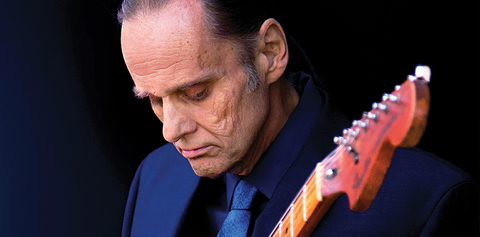
  • Walter Trout

    Walter Trout

    Walter Trout
    Walter Trout: Jeff Katz.

    In his decades of playing, Walter Trout has served as lead guitarist for John Mayall and Canned Heat, and forged a respectable solo career. But to say he’s been “living the blues” in recent times is putting it mildly.

    VG recently interviewed Trout, who just three months prior had undergone a liver transplant. He was straightforward about his travails, just as he was honest in the documentary DVD that accompanies his recent album, The Blues Came Callin’, released in June.

    “I had known for years that I had Hepatitis C,” he recounted. “But, the disease was dormant. In May or June of 2013, I started swelling up with fluid, and the doctors told me it was the liver becoming seriously ill.”

    Treatment with newer drug protocols enabled Trout to become free of the disease, “…but it was too late to save my liver,” he said. “By March of 2014, I was told I had a maximum of 90 days to live if I did not get a liver transplant.”

    His declining health isn’t evident in the music on The Blues Came Callin’, though his appearance on the DVD, filmed in early ’14, will startle those who recall Trout as a beefy, granite-faced growler with a shrieking hardtail 1970 Fender Stratocaster.

    “Eric Corne, my producer, worked tirelessly with me on getting the right circumstances for us to optimize my ability to play,’ Trout said. “I often only had two good hours of playing in me; it took me a lot longer to record that way. My stamina was way down, but I gave 100 percent to playing and singing. I do not half-ass it! I can’t.”

    Walter TroutFor most of the electric parts, Trout had to set aside his famed Strat in favor of a custom-made guitar.

    “The Strat is so heavy – heavier than a Les Paul,” he said. “The new guitar was made by a local builder who calls his instruments Mark V guitars. Mark, who runs the company, got hold of a 150-year-old ceiling beam and fashioned a Strat-shaped body out of it. Then he took measurements of my old Strat and carved a neck that is very close. Seymour Duncan custom-made pickups for me. So, I ended up with a guitar that is very light, and plays like a dream.”

    Trout also employed acoustic guitars on The Blues Came Callin’; on “The Bottom of the River,” one will hear a Collings in the left channel, and a metal-bodied Dobro in the right. Another resonator appears on the album cover, and while it wasn’t used on the recordings, it’s a personal icon to Trout, as it is owned by a former girlfriend, Delphene Langren.

    “It’s a National Duolian,” he said. “It had been in Delphene’s family for years. I used to go to her house in my youth, and sit in her living room and play that thing. One day she said, ‘You’re getting pretty good. Why don’t you take it home and practice?’ So, she loaned me that guitar. It’s the same one I learned to play on so many years ago. The neck is very warped now, and believe it or not, it still has the same set of strings that I put on it in 1965! It needs some work, but it seemed very fitting to put it on the cover.”

    Trout recalls the palpable uncertainty that surrounded the filming of the documentary.

    “I was aware that I could be dead by the time it was released,” he said, unabashedly. “It was a difficult time in my life – my family’s, too. When that footage was shot, there were a lot of ‘What if?’”

    Ultimately, Trout enrolled in a donor list in Nebraska, and a liver was transplanted on, ironically, for Trout, Memorial Day.

    “Talk about a Memorial Day hero; the donor whose organs saved many peoples’ lives, including mine,” he said.

    Trout remains in rehabilitative recuperation in Nebraska, and is optimistic about the future. He realizes there is a long, hard road ahead of him.

    “I lost the calluses on my fingers, and I lost 100 pounds in six months, mostly muscle,” he said. “But I fully intend to be back next year. I see the beauty of the world and of life in a whole new way. God willing, you’ll see me back out there in 2015.”


    This article originally appeared in VG‘s November 2014 issue. All copyrights are by the author and Vintage Guitar magazine. Unauthorized replication or use is strictly prohibited.


  • Robben Ford

    Robben Ford

    Photo: George B Wells.
    Photo: George B Wells.

    When it comes to blues, Robben Ford has always been inspired by the most profound practitioners of the form and gone his own way with the understanding that true blues is about honesty and individuality. His latest, Bringing It Back Home, joins his indelible style and touch with the compositional talents of Allen Toussaint, Earl King, and Big Joe Williams.

    What was running through your mind as you recorded Bringing It Back Home?
    Essentially, I wanted to do something that felt very organic, natural, and uncontrived. In particular, I wanted to make a record where I played in the particular style. A friend said, “T-Bone Walker.” I thought, “Yeah. That’s kind of the school.” I never really listened to T-Bone Walker, but the people I listened to who have influenced me in this way are B.B. King, certainly, and Lonnie Johnson, whose style is simple and straightforward. B.B. King was much more magnanimous and elegant in the way he played, but it’s still basically out of a very similar style – like a sophisticated form of Lightnin’ Hopkins.

    On the record, you channel his sense of economy.
    Deliberately so. That may be obvious, but just to be clear, it was a real artistic choice and took some nerve. I can’t believe how well it turned out. I really do feel this record was sort of blessed. Bassist David Piltch and I had never met or played together before – I went with him completely on the recommendation of Larry Goldings (who plays organ). There just aren’t a lot of upright players in Southern California who really understand blues and R&B; upright is pretty much relegated to the jazz world. That was in itself a bit of a risk.

    I’ve known drummer Harvey Mason for many years. We’ve toured together and recorded together a few times, but always within a fusion situation. He was recommended by my tour manager, who is also my sound man and has toured, managed, and done sound for the band Fourplay, so he’s very well acquainted with Harvey. He said, “Man, you should hire Harvey,” and as soon as he said it, I knew intuitively, “That’s the guy.” Larry Goldings is just a genius and I knew he would be beautiful.

    You have a knack for finding great material to cover. Have you done “Trick Bag” by Earl King before?
    I did not know “Trick Bag,” and I didn’t know “Fair Child.” I did know “Everything I Do Gonna Be Funky.” Years ago, The Blue Line, with Roscoe Beck and Tom Brechtlein, talked about recording that song, but it never happened. The thought of doing that song has been in the background for me for quite a while. It was perfect for this record. It’s the first thing we cut in the studio and it wound up being the lead track.

    How about “Bird’s Nest Bound” by Big Joe Williams?
    I went looking for things that I had not heard before, and found it on a blues compilation that I’d never even listened to. The record was not fully conceived; it’s still relatively eclectic, but there’s a thread that runs through it that was the one element that I did have in mind. I wanted one band, one sound, each guy playing one instrument, and as little over dubbing of any kind to fill it out – I didn’t want to fill it out! I wanted all that space! Miles Davis’ Kind Of Blue was kind of in my mind (laughs)! That and the Lonnie Johnson style of playing – simply, funky, and that hollow, woody sound.

    Which explains your choice of a ’63 Epiphone Riviera using only the neck pickup for the entire record…
    It has that sound. One thing I did was call Alexander Dumble and talk to him about it, because I use the Dumble Overdrive Special with a 2×12 cabinet, but it doesn’t give me that sound – it’s very close. Because of the 2×12 instead of the single 12″ speaker, the sound is a little more spread out. I wanted that real focused sound. I said to him, “What do you think I should use to get that?” He said, “Try the Overdrive Special with a single 12″ cabinet.” I thought, “That makes sense.”

    I rented a Matchless open-back cabinet with a Celestion Vintage 30. That changed things. The whole notion was to bring my sound and just condense it, or distill it as much as possible. I never hit the overdrive – I never turned up. I kept the same volume all the time, and so everything that happens in a dynamic way is completely in the playing.

    Your approach to the overall sound really distinguishes itself from your back-catalog.
    In some ways it matches the Talk To Your Daughter record. That was pretty much one sound, one band, and everybody on one instrument. People are really getting the new record. It’s beautiful, and I’m just loving it.


    This article originally appeared in VG August 2013 issue. All copyrights are by the author and Vintage Guitar magazine. Unauthorized replication or use is strictly prohibited.


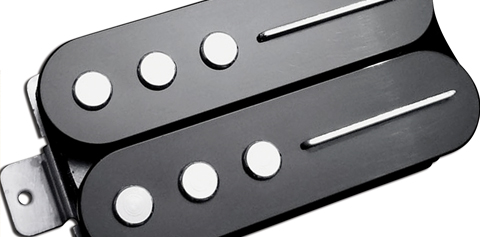
  • Railhammer Hyper Vintage Humbucker

    Railhammer Hyper Vintage Humbucker

    RAILHAMMER01

    Railhammer Hyper Vintage Humbucker
    Price: $139 list/ $89 direct
    Info: www.railhammer.com

    Developed by Joe Naylor of Reverend Guitars, Railhammers are passive humbuckers that use a combination of pole pieces on the treble side and rails on the bass side. It’s an interesting motif with an effective purpose.

    The Railhammers’s six oversize poles under the treble strings cover a wider area than standard poles, so they capture the full range of each string as it vibrates. This, Naylor says, helps increase sustain and keeps the strings from sounding thin. The rails below the bass strings sense only a narrow section of each thicker/wound string, which increase clarity and definition. To maintain consistent volume on the bass strings, the rails are height-tapered.

    Another useful feature is the Railhammers’ universal string spacing, which means they’ll fit most guitars.

    We tested Railhammer’s Hyper Vintage neck and bridge models, which use Alnico V magnets and are voiced to emulate a pair of vintage PAFs. Mounted in a Squier Strat with a three-way pickup selector and controls for Volume and Tone, we plugged it into a 100-watt Marshall with an added master volume.

    With the amp set for cleaner sounds, each string rang clearly – distinct and even. Chords were lucid and chimey. At dirtier and crunchier settings with more gain, notes sang with sustain and produced rich harmonics. Full chords and single bass notes sounded tight, while treble notes were smooth, with just enough bite and attack for playing lead and rhythm; this symmetry of tones would work very well for any genre or playing style. With the pickup selector set in the middle position and both pickups in full humbucking mode, the sound of all four coils was quite nice, particularly for cleaner chordal parts and picking. Often, when two humbuckers are used together, single notes become lost among the mids. But the Hyper Vintage pickups are a perfect match – well-balanced, articulate, and complementary of each other through the range of the guitar’s tones. And, they’re very quiet. Even when the amp was cranked, they produced no noise.

    When a guitar sounds good, it can inspire a player to be better, play longer, and be more creative. And who doesn’t want to be enthused by their guitar’s tone? Railhammers’ Hyper Vintage neck and bridge pickups deliver the goods.


    This article originally appeared in VG August 2012 issue. All copyrights are by the author and Vintage Guitar magazine. Unauthorized replication or use is strictly prohibited.
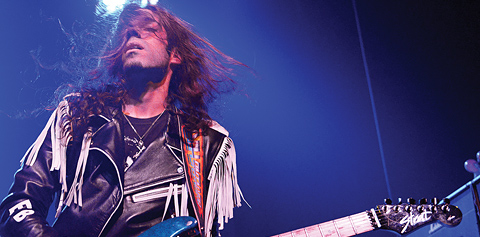

  • Ethan Brosh

    Ethan Brosh

    Ethan BroshIn case you were wondering, shred is not dead, and Ethan Brosh is determined to keep it that way. The Israeli-born Berklee grad is a young man with an old soul whose style harkens to the early musical fury of Tony MacAlpine and Vinnie Moore. His second album is called Live The Dream, and Brosh is living his with passion and fire.

    Live The Dream is very different from your first record.
    People ask me about the differences between the two, and I have to come up with an answer. I can see the differences, but someone else can probably hear the differences a lot better than I can. It was a conscious decision to keep the hard-rock instrumental format. It wasn’t like, “Oh, I’m going to go in a different direction.”

    I have a bunch of acoustic tunes and I could have made a record like that, but I felt this is what I needed to put out right now. Iron Maiden is my favorite band, and I like the fact that they stayed true to who they were. Every album had its own feel and different sound to it. They were produced differently, but the core idea was the same. It was hard rock music done in the best way possible.

    So, that was my idea. The people who know me know me for a certain thing. I wanted them to get more of that, and possibly in a better way. That was my thought behind Live The Dream, but I wanted to produce it in a much better way, which I did. I learned a lot from the mistakes I made with Out Of Oblivion.

    Did you approach the songwriting differently?
    A lot of the tunes on my first record were some of the very first I ever wrote. I was really young at the time, so you can hear that young passion, but they lack a certain maturity and songwriting knowledge. I’m not saying one is better than the other, it’s just from different periods of my life.

    My challenge is to keep instrumental music as interesting as possible; my personal take on instrumental music is that it’s the easiest style to make the listener bored out of their minds. One way of keeping it interesting is using different songwriting techniques, different sounds, and different moods.

    One can hear some hybrid picking on the record…
    I do that a lot. Sometimes I play fingerstyle with distortion. Sometimes I’m not holding the pick at all and I’m still doing all these crazy techniques. It has a different sound and enables you to do a lot of cool things you would never be able to do with a pick. The acoustic songs on the albums were done flamenco-style; I started on classical guitar, and because I have that technique in background, I try to incorporate it with distorted guitar. It sounds good, but you have to have many different techniques that are your own ideas, which give you your own voice.

    Do your songs change when you perform live?
    I played a lot of material from Live The Dream on the last Yngwie Malmsteen tour; I kept the compositions pretty much the same because I put so much thought into the tunes. “Clean Slate” is a tune I’ve actually had for a few years that did evolve onstage. I used to play that by myself, but now it starts with guitar, then the band kicks in. The audience really didn’t expect it, and I could tell that people really dug it.

    Are you still playing a Fender HM Strat?
    I love that guitar. I want a white one with a maple neck. I’ve been drooling over that guitar for a long time. I’m also using amps by ISP Technologies. The guy who started ISP was the owner of Rocktron. He’s a genius engineer who makes the best guitar stuff out there.

    The Decimator pedal is also by ISP. It’s in everyone’s rig all over the world – very popular. He also makes an amplifier called the Theta, in a few different versions – head, rackmount, combo, and now they’ve made a pedal out of it. It’s the greatest distortion pedal ever made.

    You’re going to be playing with Carmine and Vinnie Appice…
    We’re doing this thing called Drum Wars. It’s a cool concept where they have two drum sets, and they go at each other playing all the cool songs from their careers. We’re playing Black Sabbath, Dio, Ozzy, and I’m working on that material right now. It’s right up my alley.


    This article originally appeared in VG‘s November 2014 issue. All copyrights are by the author and Vintage Guitar magazine. Unauthorized replication or use is strictly prohibited.


  • Rickenbacher Model 200A

    Rickenbacher Model 200A

    • Preamp tubes: 6SF5, 6N7 • Output tubes: two 6L6G • Rectifier: 5Z3 • Controls: Volume • Output: 15 watts RMS +/- • Speaker: one 12" Lansing Model 212  Photos: Karl Irwin. Amp courtesy of Craig Randolph.
    • Preamp tubes: 6SF5, 6N7
    • Output tubes: two 6L6G
    • Rectifier: 5Z3
    • Controls: Volume
    • Output: 15 watts RMS +/-
    • Speaker: one 12″ Lansing Model 212
    Photos: Karl Irwin. Amp courtesy of Craig Randolph.

    Several vintage amplifiers that have graced these pages over the years have taken us back to the early days of guitar amplification – the early 1950s, maybe even late ’40s with some of the crustier subjects. This month, however, we travel way back, to the dawn of the electric guitar itself, to visit an amplifier born even before the instrument that would commonly be plugged into it had solidified from its nebulous conceptual state.

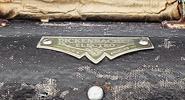
    This amplifier, the Rickenbacher Model 200A, was built to accompany a variation of what is widely recognized as the first commercially available solidbody electric guitar, the Rickenbacher Electro Spanish made by the Electro-String Company. But the particular guitar it partnered was itself one of the rarest “standard” models in early production, the legendary Rickenbacher Vibrola Spanish.

    Though all of these guitars look today like early Hawaiian – or “lap steel” – models, the name reminds us that they were actually built to be played in the upright, or Spanish, style. The stand on this rare example of the Model 200A, which is original equipment, also tells us that the Vibrola rendition was extremely heavy, weighing far too much for the performer to simply hold it on his or her lap or to hang it from a shoulder strap. While the standard Electro Spanish models were heavy enough, molded as they were from Bakelite (body and neck together, including molded Bakelite frets), the deeper-bodied Vibrola Spanish also carried a motor-and-pulley system that ran an onboard mechanical vibrato effect, designed by none other than Doc Kauffman himself, future partner (if only briefly) of Leo Fender. Of the relatively few people who have experienced a Vibrola Spanish guitar in person, though, far fewer have seen in the flesh a Model 200A amplifier with its stand. And a stirring experience it is; this old warhorse takes us back to an age when the guitar was just starting to bust out in all directions, seeking more volume in myriad bold and quirky designs. The National Resophonic guitars were one such venture, and less than a decade later two of the founders of that effort – George Beauchamp and Adolph Rickenbacker – along with a few other key players, had stepped the volume war into overdrive with the “electric” guitar, and the amplifiers that necessarily went with them. And while the badge on this one echoes the more familiar Rickenbacker name that was passed down when Adolph later sold the Electro-String Music Corporation to Francis Hall in 1953, its noteworthy “Rickenbacher” spelling was still an effort to cash in on the persistent fame of WWI flying ace Eddie Rickenbacher, a cousin of the guitar-making pioneer. The fact that this example came to its owner as a simple Craigslist “old tube amp” find makes its presence here seem all the more miraculous.

    A circa-1938 Rickenbacher Model 200A.
    A circa-1938 Rickenbacher Model 200A.

    This Rickenbacher Model 200A is owned by Craig Randolph, a professional drummer who has an abiding interest in vintage guitars and amplifiers. After acquiring the amp in “works, but needs service” condition – with neither buyer nor seller really knowing what they had in front of them – Randolph took it to amp tech Bob Dixon, who has maintained amps for the Rolling Stones, among others. The original 12″ Lansing Model 212 speaker, meanwhile, the cone of which “was basically crumbly powder,” was farmed out to Orange County Speaker for a re-cone. While this repair work was underway, Randolph sent photos around to try to ascertain what the thing was.

    The answer came back quickly, and pegged this as one of the few, possibly only, existing examples of one of the rarest and earliest production amplifiers in the history of the electric guitar. Randolph’s research indicates that fewer than 90 Model 200A amplifiers were ever made (it’s possible the actual number was far fewer), and he was unable to turn up another survivor all these 75-odd years later. While not what you’d call plentiful in and of themselves, the Vibrola Spanish guitars do seem to exist in greater numbers, and tend to pop up now and then in prominent collections or on the sales sheets of notable vintage-guitar dealers. Electro-String sales literature lists a price of $198.50 for the Model 200A in 1938, a pretty penny in the latter years of the Great Depression, but there’s little on which to base its vintage value today.

    Under the chassis, the Model 200A proves an archaic piece of work, as you’d expect, but it’s impressively neat and efficient, too. The circuit is a robust, if minimal, affair laid out across a combination of point-to-point and tag-strip connections, using minimum components to get signal from input to output. Octal 6SF5 and 6N7 preamp tubes take care of gain and phase inversion, with only a Volume control for user interface – no Tone – while a pair of 6L6 output tubes pump around 15 watts.

    From the look of it, you’re probably imagining certifiable old-fart tone, and that’s much what the Model 200A’s owner was expecting even post-service, but Randolph says the Rickenbacher has a few tricks up its sleeve.

    RICK_MODEL_200A_03

    “Bob [Dixon] told me he was very surprised with the sound of the amp, he wasn’t expecting much. He said it’s a really great-sounding amp. We pulled out a Les Paul and the amp was very warm and punchy with a nice overall tone. We hit it pretty hard to see what kind of drive it would have at higher volume… it had a nice warm, fuzzy gain sound that was very clear and precise.” Further explorations with a Strat-playing pal on the way back from the repair shop earned another two thumbs-up for the old Rickenbacher.

    While the backline-rental fixer in Randolph says he can see some use for this as a recording amp, he would rather find an interested collector or museum already in possession of a Vibrola Spanish guitar with which to reunite it as a full set, and it’s hard to disagree with those intentions. As cool as it is to hear a genuine museum piece like this in action, it is undoubtedly an amplifier worth preserving, given its near-originality. And if that plan doesn’t leave the rest of us much chance of ever hearing it in person, you can dig up an early Bing Crosby recording that featured Perry Botkin on Vibrola Spanish guitar, and groove to the emotive tone of a fully electro-mechanical vibrato tone through an original Rickenbacher Model 200A.


    This article originally appeared in VG December 2013 issue. All copyrights are by the author and Vintage Guitar magazine. Unauthorized replication or use is strictly prohibited.


  • Steve Cropper

    Steve Cropper

    All but forgotten today, with his low-slung guitar, stylish rhythm licks, and tasty leads, Lowman Pauling was one of the great guitar heroes of the ’50s. Guitarist for the R&B doo-wop band the 5 Royales, not only did Pauling pick melody lines and play leads, he also composed many of the band’s songs, sang in the five-piece group, and served as a sort of musical director.

    Pauling was one of Steve Cropper’s first guitar inspirations. “Bo Diddley had the rhythm and Lowman Pauling had the notes,” he said.

    Cropper is paying credit to Pauling and the band with Dedicated: A Salute to the 5 Royales, a new album with 15 5 Royales songs re-made with Cropper’s funky licks and vocals from special guests.

    Cropper remembers the night he and bandmate Donald “Duck” Dunn snuck into a 5 Royales show in the Beverly Ballroom near Memphis. Their band played downstairs at the Tropicana, but when a big act came to town, the club closed as the promoters knew everyone would be climbing the stairs for the main feature.

    “Duck and I were 18 or 19, and we’ve reminisced many times remembering that night and seeing those guys. He was influenced by the bass player and I was influenced by the guitar player.”

    They carried that inspiration with them into the Mar-Keys, and Booker T and the MGs.

    “Lowman Pauling looked great onstage,” Cropper explained. “He was the action guy. He had the moves, man. He could do that shuffle. He had this long strap that just blew me away – I’d never seen that before, you know. Straps only came in certain lengths – they still do. I couldn’t wait to get home and put belts together to make my own long strap for my Gibson Byrdland.”

    Cropper and Dunn later crossed paths with Pauling. In fact, the CD’s cover picture was taken at the Royal Peacock Lounge in Atlanta, with Cropper wearing his Byrdland slung low in emulation of Pauling.

    “The Mar-Keys had a record, ‘Last Night,’ which I think was number three in the nation, and I didn’t know the 5 Royales had played the Royal Peacock Lounge two or three weeks prior; our tour followed the 5 Royales and Ike and Tina Turner for about four weeks. I don’t know how we made it!”

    Cropper borrowed more from Pauling than just strap length; his melodic style was one of Cropper’s main inspirations. “In the Mar-Keys, we always played the 5 Royales’ ‘Think.’ That’s the one, as far as those stamp fills… I copped that from Lowman, and I’ve been using them forever on all the Stax stuff.”

    The idea of giving thanks to Pauling came from the album’s co-producer, John Tiven. After releasing three solo albums from 1969 through the early ’80s, Cropper he was in no rush to try again. “John called one day and said, ‘How would you enjoy doing an album with nothing but 5 Royales songs, as a tribute?’ I went, ‘Wow! Why didn’t I think of that!’”

    The duo listened to the 5 Royales’ catalog and selected songs. Cropper then was faced with the question of how faithful he should be to the originals.

    “I called John and said, ‘You know, it’s not impossible to copy Lowman’s licks, but how close do you want me to be to this?’ He said, ‘I don’t want you to be that close at all. I want you to play Steve Cropper.’

    “Lowman always played very melodically,” Cropper added. “So where he played definite lines, those are the lines I picked up on, like intros and that kind of stuff. The rest of it, I’m sort of just on my own. I did most of those important licks on a session, played rhythm, then went back later and overdubbed the solo stuff. So there’s a couple there where we have two or three tracks and left them in there – made one pass, made another pass. We just kind of put them together and said, ‘Hey, that sounds pretty good!’”

    Cropper was happy to play guitar, but preferred not doing vocals – especially on an album of doo-wop tunes. “I proved to myself long ago that I’m not really a singer – I never thought I was one anyway. If I had my preferences, I’ll just be a member of the band and have fun doing that; I love backing other people.”

    So Cropper and Tiven began calling friends; Sharon Jones added vocals to “Messin’ Up,” Brain May sang and played guitar on “I Do,” Lucinda Williams sang “When I Get Like This,” and there are more tracks featuring B.B. King, Steve Winwood, Buddy Miller, Delbert McClinton, Bettye LaVette, and others.

    Cropper played much of the rhythm parts using a vintage Fender Telecaster from his Stax days. He still has the tweed Fender Harvard he used to record “Green Onions,” but opted for the old Quad Reverb used on many later Stax tracks.

    For the lead lines, he used his stage workhorse Peavey. Some solos employed the Quad Reverb, and “…some were done at John Tiven’s house and we went direct.”

    What about effects pedals? “Naw, just straight into the amp,” Cropper said. In fact, he has never been a big user of effects. “I use an A/B box,” he laughed. “One side goes to the tuner, the other goes to the amp.”

    Perhaps the hottest track on the album is an instrumental version of “Think.” Cropper had long played the 5 Royales’ version with the Mar-Keys, but for Dedicated, Tiven suggested they cover the funkier James Brown arrangement. On the track, the band simply cooks. “Steve Jordan was there playing drums, and Lord have mercy, we didn’t ever want to stop playing it!” Cropper explained. “We got through, and he and I were laughing. I said, ‘Guys, that’s the way you make records!’ Just spontaneous.”


    This article originally appeared in VG October 2011 issue. All copyrights are by the author and Vintage Guitar magazine. Unauthorized replication or use is strictly prohibited.


  • Traynor’s Darkhorse DH15H

    Traynor’s Darkhorse DH15H

    Hugely popular in its native Canada, Traynor amps are a formidable force from north of the 49th parallel and its line includes a variety of quality tube amps. The company’s latest “lunchbox” amp is the Dark Horse DH15H, little brother to the company’s Iron Horse model.

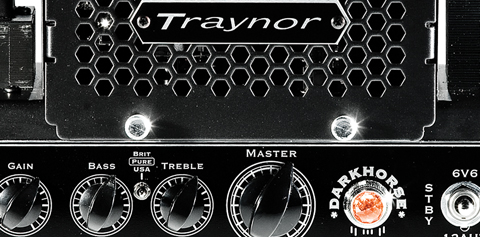
    The Darkhorse has a cool, old-school public-address-amp vibe, with a matte-gray-finished steel chassis, exposed transformers, perforated tube cage, and vintage Bakelite-style knobs. The DH15H has a small footprint – 111/2″ x 5″ x 6″  – and weighs 11 pounds. Its tube complement includes a pair of JJ Electronics 6V6s (producing 15 watts in high-power mode), a single Electro-Harmonix 12AU7 power tube (producing two watts in low-power mode), and two Sovtek 12AX7 preamp tubes.

    The front-panel layout is straightforward; there’s a 1/4″ input jack, controls for Gain, Bass, and Treble, a three-way Mode switch, Master Volume, jewel light, Standby/6V6/12AU7 switch, and a Power switch. The three-way tone switch has a Brit setting that positions the tone stack after the second tube stage and before the phase splitter, with a midrange boost. The USA setting positions the tone stack between the first and second tube stages and, lastly, the Pure setting bypasses the tone stack entirely. The rear panel has a standard power socket, a single 1/4″ 16-ohm jack and a pair of 1/4″ 8-ohm jacks. Also notable is the easy-access tube cage – just remove four thumb screws and remove the cage for access to all five tubes.

    We tested the Darkhorse with a Fender Custom Shop 1960 reissue Strat with the stock pickups and a Gibson Les Paul Standard Plus with Burstbuckers. We also used a variety of speaker cabinets, among them, a open-back 2×12″ loaded with a pair of Celestion Vintage 30s, an open-back 1×10″ loaded with a Celestion G10 Vintage 10 and a Randall 4×12″ closed-back cab loaded with Celestion greenbacks.

    With the Mode switch set to USA and the Strat plugged in, the Darkhorse hit the Fender mark nicely when using either of the two open-back cabinets. The amp delivered a clean, punchy tone with a round low-end and the mids slightly pulled back. The two-band EQ is voiced well and offers just enough depth to quickly dial in tone without having to noodle too much. Even with the Gain control dimed and the Master pulled back to about 12 o’clock (still in the USA mode), the amp presented clean, thicker overtones with just a hint of overdrive. Cranking the Master volume along with the Gain control and pushing the power tube, however, results in a thick, smooth overdrive at a fairly loud volume; this little amp has more horsepower than one would expect.

    The overdrive gets boosted when you switch into the Pure Mode (completely bypassing the tone controls) and, thanks to Burstbucker humbuckers in the Les Paul, the Darkhorse produced a classic crunchy distortion with a respectable amount of sustain. We wouldn’t, however, classify the DH15H as a high-gain amp, since the preamp section is on the tamer side and needs the power section to be driven hard for higher-octane distortion. Since the amp relies on its power tubes for a good portion of the overdrive, the Darkhorse has a more natural, open overdrive sound with none of that thin, buzzy top-end you can get from too much preamp clipping. The only downside is the overall volume may be a bit loud for some situations, while the low-power setting with the single 12AU7 – which brings the volume down to a nice apartment/practice level – does suck out a bit of that punchy 6V6 sound. But pairing the DH15H with the 4×12″ closed-back cabinet helps it get a thicker, trashier sound with a bit of thump to the low-end in both the USA and Pure Modes. Clearly, there are a lot of tonal possibilities with this amp.

    The Traynor DH15H Darkhorse is a compact, lightweight head with a surprisingly big punch and a range that covers a fair amount of territory from the U.S. to British tube tones. And of course, there are plenty of fat, toasty Canadian tones, too.


    Traynor’s Darkhorse DH15H
    Price: $649
    Contact: traynoramps.com


    This article originally appeared in VG October 2011 issue. All copyrights are by the author and Vintage Guitar magazine. Unauthorized replication or use is strictly prohibited.


  • Harmonic Design’s VP-90

    Harmonic Design’s VP-90

    Harmonic Design’s VP-90Harmonic Design’s VP-90
    Price: $100
    Contact: www.harmonicdesign.net

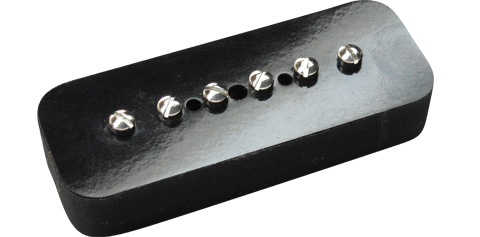
    Harmonic Design must be doing something right. Specializing in replacement pickups, they boast a roster of satisfied customers that includes folks like Redd Volkaert, Otis Rush, Bill Frisell, Robben Ford, and Neal Schon. One of their latest offerings, the Harmonic Design VP-90 (for Vintage Plus) is intended as a replacement for vintage soapbar and dog-ear P-90s.

    But P-90 aficionados can be a picky lot, so to test the veracity of Harmonic Design’s list of high-octane testimonials, two of their California-made VP-90s were loaded into a late-model Les Paul Deluxe and A/B’d with the stock P-90s in a pair of vintage guitars: a 1955 Gibson Les Paul TV Special and a 1963 Gibson ES-330. The results were pleasantly surprising.

    The first noticeable difference was that the “thunk” which normally occurs when switching from the bridge to the neck pickup was absent on the test guitar. Gibson used the same pickup in both positions, which results in a louder, boomier, and sometimes muddier tone for the neck pickup and a nasally bridge pickup. Vintage P-90s sound great by themselves, but on two-pickup guitars they quite simply just don’t match very well when played through the same amp settings. Switching pickups on the Harmonic Design-equipped Les Paul was more transparent than on the Special and ES-330, and it was very evident that both pickups, made with Bakelite bobbins, were perfectly matched from an output perspective. The neck position pickup, while remaining warm, actually produced more articulate note definition than the vintage pickups, with greater clarity and individual string separation. The bridge pickup retained the same level of volume as the neck pickup, but had more bass response than the vintage P-90s while retaining the right level of bite. Rolling the volume back slightly in the middle position gave the same clear bluesy tone that one would hope for from a vintage dual-P-90 guitar.

    The other big improvement that the Harmonic Design-equipped guitar displayed over the vintage test guitars was a substantial reduction in noisiness. This was noticeable both when each individual pickup was used, and, because VP-90s are hum-canceling in the middle position, when both were engaged.

    Fans of vintage P-90 pickups who aren’t wild about some of their limitations – or who maybe are even unaware of their limitations – really need to check out a balanced pair of Harmonic Design VP-90s. They just might open their eyes to the way their guitars were meant to sound.


    This article originally appeared in VG November 2014 issue. All copyrights are by the author and Vintage Guitar magazine. Unauthorized replication or use is strictly prohibited.


  • Steve Morse

    Steve Morse

    Steve Morse
    Photo Credit: Jim Arbogast.
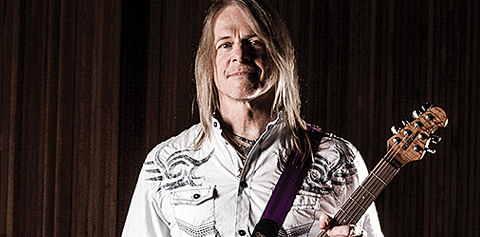
    Already busy touring and recording with Deep Purple, axe virtuoso Steve Morse has added another dish to the menu – Flying Colors. Featuring well-known aces like drummer Mike Portnoy and keyboardist/singer Neal Morse (no relation), this quintet straddles the line between rock, prog, and pop with extraordinarily melodic songs. With the release of its second album, Second Nature, Morse says the band is ready to rock… more.

    What’s the attraction of working in yet another band?
    The reasons I got into music in the first place – the thrill of creating something that didn’t exist before and being part of a group that’s bigger than the parts separately.

    The new album seems to lean more on the prog-rock sound. As a teen, were you into Yes, Gentle Giant, Jethro Tull and King Crimson?
    Yes, big time. Back then, music like “21st Century Schizoid Man,” Yes’ Fragile, and Tull’s albums were all favorites of mine, though nothing was classified as “prog rock.” It was expected that every band should be different in the early ’70s – and they were.

    A lot of the solos on the new record sound like you’re using the neck pickup, and relying less on blues licks than stately melodic phrases.
    The album is very melody driven, so the solos had to be, as well. Tone-wise, I’ve always used the neck pickup turned up high, and switched to the bridge pickup once I get to a lower register, in order to get more clarity.

    What’s in your Flying Colors live rig?
    I’m putting together the pedalboard right now. It has four TC pedals, including the tuner, plus a Keeley compressor. All are true-bypass, but the two delays are 100 percent wet and controlled by Ernie Ball volume pedals, which are summed to a separate “wet” amp only.

    Any new tweaks to the latest version of your Music Man signature guitar?
    The newest versions have a whammy bar and it really sounds good. They’re also doing some beautiful finishes on them – I’m almost embarrassed to have such nice-looking instruments. I’ve also started playing my ancient number one Music Man guitar again, since it has a new bridge. We just installed a brand new “roasted” (i.e., kiln-dried wood) neck on that guitar, too. I had too many fret jobs done on the original and literally wore out the fretboard. Lastly, I have a new four-pickup Music Man SM guitar with all the moisture roasted out of the body and neck, and it has a very lively, screaming tone.

    What makes your signature DiMarzio pickups or Engl Special 100 head unique, tone-wise?
    The spacing of the pickups, for one thing. My neck pickup sounds rounder because it’s mounted about where the 24th fret would be, closer to the center of the vibrating string. For my amp, the Engl has flawless clean and gradual distortion if you want it, as well as clarity in the saturation with a clear high-end.

    What’s your opinion on how acoustic/electric preamps and pickups have evolved for live work?
    It just keeps getting better. Back in the day, you would actually have a cheap microphone in a tin box sitting in the sound hole. Now, my classical guitars have a Fishman EQ preamp that sounds fantastic. There’s no excuse for not playing great music now.

    Where is your old Tele from the Dixie Dregs era?
    I gave it to a dear friend, Michelle Morgenstein, before she died after a long battle with cancer. She was with [Dregs drummer] Rod Morgenstein back in our University of Miami days, and that was the guitar I played in those days, so she associated it with all the good times we had back then. Michelle asked if I would will it to her when I died, but I thought it would make more sense for her to have it before she passed rather than to leave it in storage.

    How are you a different guitarist today compared to when you first played with the Dregs in 1981?
    I have better phrasing and definitely better equipment. My improvisations and phrasing are the biggest improvements, but then again, I’ve played a lot of gigs since then!

    In your mind, what is the Dixie Dregs’ lasting legacy?
    Our legacy would be as an instrumental rock band. I don’t think there were many other all-instrumental bands during our time, and for good reason, such as lack of commercial appeal. Certainly, there were instrumental jazz-rock bands, but we were different in that we blended the usual rock and roll, classical, and jazz with Celtic and bluegrass influences. And we always tried to have a sense of humor.


    This article originally appeared in VG February 2015 issue. All copyrights are by the author and Vintage Guitar magazine. Unauthorized replication or use is strictly prohibited.


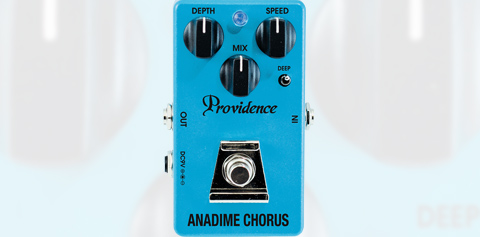
  • Providence Anadime Chorus ADC-4

    Providence Anadime Chorus ADC-4

    Providence Anadime Chorus ADC-4Providence Anadime Chorus ADC-4
    Price: $249 (list)
    Contact: www.providence-ltd.com

    The chorus pedal holds the distinction of once having been extremely popular, becoming dated and undesirable, then enjoying a resurgence of popularity. This classic stompbox chorus reached its peak in the mid ’80s, with bands like The Fixx and The Police before fizzling again by the ’90s.

    The chorus has steadily crept back onto pedalboards, and with this rebirth have come fresh and useful ways to add fullness to a guitar rig without sounding passé. Providence Effects’ newest offering, the Anadime ADC-4, is an analog chorus with old-school warmth and new-school flexibility. Three knobs let the user control Depth, Mix, and Speed, while a single mini-toggle switch gives the option of three Deep settings. It’s a mono pedal that uses a bucket-brigade delay device and a multifunctional LED for visual battery-power monitoring and rate status.

    The Anadime’s S.C.T circuit (single-contact true bypass) allows the signal to pass through one switch contact when bypassed to preserve signal quality, while the double contact grounding (DCG) circuit ensures that the sleeve of the plug inserted into the output jack is grounded at two contact points. This minimizes intermittent contact and preserves tonal integrity. The pedal is lightweight, uses a 9-volt battery or adapter, and takes up very little real estate on a pedalboard.

    With the Deep mini-toggle set to the down position and control knobs set to 12 o’clock, dark, King’s-X-style shimmer can be heard with the help of a clean amp and a dirty bridge humbucker. The cool blue LED pulsates in time with the rate, and when the mini-toggle is set to the upper positions, the effect’s dimension, thickness, and speed increase exponentially. Sounds become more intense. Each mode of the mini-toggle is a different chorus unto itself; each click upward adds thicker waves of malleable speed, chime, and wetness.

    Experimenting with single-coil pickups and cleaner amp settings offers a range of complex chorusing and flanging opportunities, but the ADC-4 lives on the dark side. It lacks brightness, but its darker personality accentuates its rich, full-bodied depth and warmth. It’s extremely flexible and adds thickness to dirty chord work and makes arpeggios cascade, yet delivers all the over-the-top rotary sounds anyone could want.

    The Anadime ADC-4 inspires creativity and could surely prove useful to chorus-loving guitarists past and present.


    This article originally appeared in VG March 2015 issue. All copyrights are by the author and Vintage Guitar magazine. Unauthorized replication or use is strictly prohibited.