Tag: features

  • The Winfield Dust Devil

    The Winfield Dust Devil

    Price: $1,795 (street)
    Info: www.winfieldamps.com

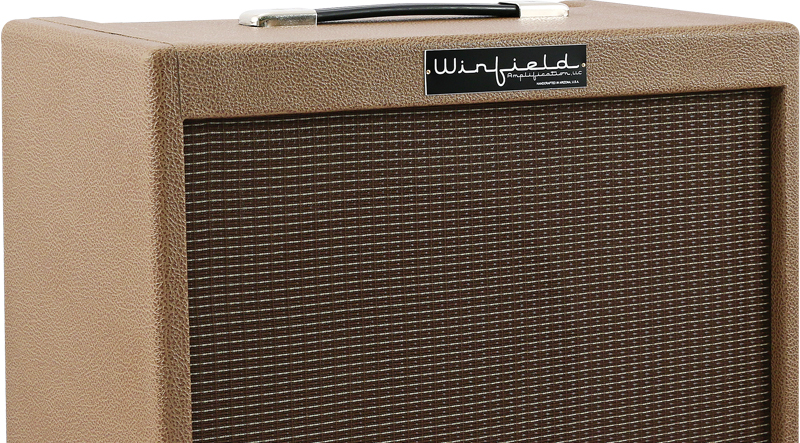
    Unlike most amp builders who take up the challenge to create amplifiers that replicate the sounds of the 1960s, Winfield Thomas was actually wielding those sounds as a musician in the mid-’60s. Over the years since then, his amp designs have impressed. He’s created a line of hand-wired beauties utilizing circuit boards, Teflon wire, and modern components. Still, his amps harken back to his youth – simple, straightforward, and oozing complex tones, Winfield amps exhibit the aural template and old-school workmanship of a bygone era.

    Winfield’s Dust Devil 15-watt combo is one such model, and it’s a rock-solid tone monster. The master volume-controlled two-channel Dust Devil has just enough modern bells and whistles to be dangerous. It also provides a powerful base tone for pedals and simply rages as a plug-in-and-go blues beast. Voiced with American attitude and EQ flexibility, Channel One features 12AX7 preamp tubes controlled by Loudness One (volume), Treble, and Bass chicken knobs. This channel is advertised as the classic ’60s clean, blackface side of the amp spectrum.

    Channel Two, or the Cyclone Channel, is Winfield’s interpretation of the UK amplifiers of the same era. (He offers a standalone version of this amp as well.) This channel uses EF86 preamp tubes and features independent Loudness Two (volume) and Tone knobs. Combined with a 5AR4 rectifier tube, two EL84s, and one 12AX7 (phase inverter) in the power section, the Dust Devil covers a lot of ground in the low-wattage realm. A Cut control, a push/pull knob to engage the Master Volume, and an External Speaker input complete the appointments. Oh, yeah – it’s also lightweight and handsome without any prissy affectations, and its single 12″ Celestion Alnico Blue speaker perfectly complements each channel.

    At 34 pounds, the Dust Devil combines a rugged British personality with American sonic colors. With the help of an A-B-Y box you can engage either channel, or both for some wicked tones. It’s a loud 15 watts that will work well with a full band but get a good workout against a loud drummer. More importantly it makes the perfect recording amp where the nuances of timbre and texture are under a microscope.

    Voiced dark and crispy in the best possible way, Channel One excels in fat, lustrous clean tones for rock and blues. Thicker-sounding, more substantive, and more consistent than an elderly Deluxe Reverb, the Dust Devil is the perfect example of what rich-sounding boutique rigs are about. It’ll fatten the dinkiest Telecaster and offer Strats bark and growl. Though it’s not suited for pristine funk or jazz, reining the Devil in with your guitar’s Volume control will get you close. Cranking the Loudness control elicits beautiful harmonic overtones, and the EQ, while not overly dramatic, gets the job done.

    Plugging into Channel Two the differences are subtle. The British side offers more percussive attack. The Tone knob helps quell or enhances this attribute, while the Cut knob works great for fine-tuning EQ. With the preamp section cranked and the pulled Master Volume lowered to room temperature, all manner of woolly mayhem will ensue from either channel. Channel One gets the win in the truculence department, but Channel Two has more clarity.

    Winfield’s Dust Devil is a nice piece of craftsmanship that does what it was designed to do. It lacks crystal-clean headroom, but that’s for another kind of amp.


    This article originally appeared in VG June 2017 issue. All copyrights are by the author and Vintage Guitar magazine. Unauthorized replication or use is strictly prohibited.
  • Epiphone’s 75th Anniversary Electar “1939” Century

    Epiphone’s 75th Anniversary Electar “1939” Century

    Price: $399 (list)
    Info: www.epiphone.com

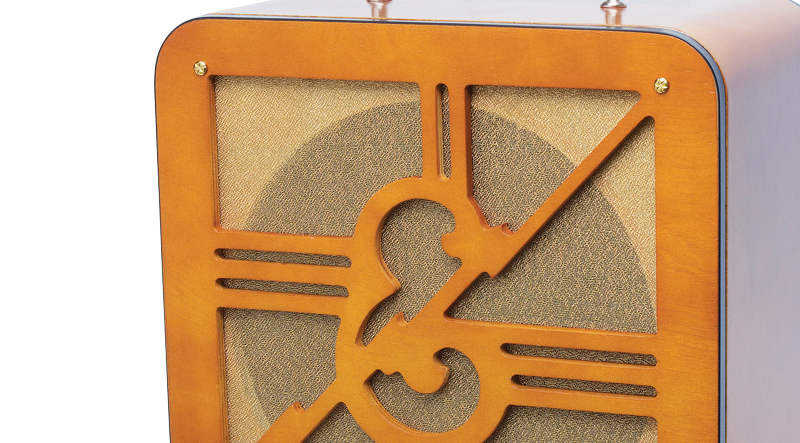
    Many vintage amp connoisseurs have a special place in their hearts for the early Epiphone Electar amplifiers. David Bromberg is one such fan; as he raved to VG recently about his 1938 Electar, “I’ve never had such a good amp. I’m just completely wild about it.” The art deco styling and the low-powered, warm-souled voice add up to a classic.

    Epiphone is wise to this. In launching its limited-edition 75th Anniversary Electar “1939” Century, Epi offers an amp that’s both a reissue and an update in smart ways. Call it the best of both the vintage and modern worlds.

    The amp’s looks will catch your eye first. The Electar faithfully reproduces the classic 1930s styling with its sleek wood cabinet highlighted by the “E” cutout over the vintage-styled grille cloth. The all-metal handle crowns it.

    But beauty’s more than skin deep. Inside, the Electar features newly designed, all-tube electronics. The small amp’s 18 watts of power sound louder than you might expect, singing out through the single 12″ speaker. The design is Class A/B, featuring pairs of both 6V6 and 12AX7 tubes.

    Controls include a master Tone knob and an oh-so-modern master Volume with a push/pull Boost.

    Interestingly, the Electar includes three uniquely voiced inputs: Bright, Normal, and Dark. Each live up to their name, but with judicious use of the Tone control, you can edge into the other voices’ territories nicely. There’s also an internal bias adjustment for further tone control.

    What better guitar to assess the amp’s old-meets-new character than a ’52 Gibson ES-5? Not surprisingly, the ES-5 and Electar fit each other well – both stylistically and sonically.

    The amp instantly offered warm, jazzy tones with depth and rich sustain. This is what it was designed for back in the 1930s, after all. And yet for such a small, lower-powered amp, the “1939” boasts plenty of head room.

    Dialing up the natural volume, the Electar readily moves into an overdriven grind that sounds ideal for lowdown vintage blues. Working the master Volume, either with or without the Boost control, provides even more drive.

    The Electar “1939” Century is equally happy playing old or new music – which should come as no surprise considering its intelligent mix of old styling and modern electronics. Whether you’re blowing out a bebop jazz line, blasting the blues, or even picking some primal rock and roll, this little beauty is a heartthrob.


    This article originally appeared in VG June 2017 issue. All copyrights are by the author and Vintage Guitar magazine. Unauthorized replication or use is strictly prohibited.

  • Gretsch’s G6128T-CLFG Cliff Gallup Signature Duo Jet

    Gretsch’s G6128T-CLFG Cliff Gallup Signature Duo Jet

    Price: $3,849 (list)
    Info: www.gretschguitars.com

    Hot dog! Gretsch has long dreamed of issuing a Cliff Gallup signature guitar, but the stars never quite aligned – until now.

    Gallup, of course, was the fleet-fingered guitar man who hot-rodded Vincent’s first two LPs. He added stunning intros, dazzling riffs, and virtuosic solos to cuts like “Race With The Devil,” “Crazy Legs,” and “Be-Bop-A-Lula.” And then he was gone, retired from the Blue Caps to avoid the slog of the road and to stay close to home. His reign was short, but rock-and-roll guitar was never the same.

    All of which makes this signature edition that much more exciting. Gallup was one of the most famous and influential guitarists to ever play a Duo Jet, inspiring many players – including one George Harrison – to pick up the model.

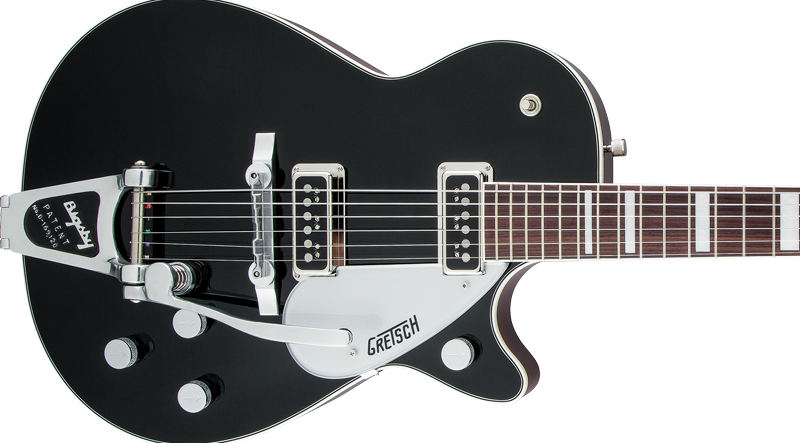
    Gallup’s guitar was as stock as they come, so this signature isn’t a modded or sticker-coated replica with every scratch and paint chip perfectly reproduced. Instead, it’s a glorious, painstaking replica of a ’54 Duo-Jet from Gretsch’s top-line Professional Collection. And it proudly bears Gallup’s signature on the truss cover.

    Many have speculated that Gallup played a ’55 or ’56 Duo-Jet, but Gretsch did its homework and got an A+ – Gallup’s was indeed a ’54. They tracked down the original receipt, then doublechecked the guitar’s serial number and details against ’53 models to come up dead-certain on the vintage.

    If you’ve never played a 6128, you owe it to yourself to pick one up. The Gallup guitar has a chambered mahogany body with a maple top finished in gloss nitrocellulose lacquer. This combines to give it a unique sound, somewhere between a Les Paul and an ES-335, but all its own.

    The neck is a standard vintage U-shape with a 12″ radius, capped by a rosewood fingerboard and big-block pearloid inlays. With 22 frets, it’s a well-balanced, highly playable instrument.

    Pickups are DeArmond’s lauded DynaSonic single-coils, controlled by a three-position toggle. The bridge is compensated aluminum; examining Gallup family photos, his 6128 did not have the Melita bridge (as often believed) of the standard-tailpiece model because it came with an optional Bigsby B3, as here.

    It’s long been speculated that Gallup recorded the classic Vincent sides through Grady Martin’s Standel amp but played a tweed Fender live. So what better amp to try out the Signature 6128 than a ’59 tweed Deluxe (with a tube-powered Echoplex EP-2 for good measure)?

    The first strum of the Gallup’s flat-wound .011-.050 strings transport you back to May 4, 1956, and Gene’s first session, which yielded “Race With The Devil.” That tone, that timbre, that twang – it’s all here. The guitar is a six-stringed time machine.

    Pick some Travis-style licks and the 6128 rings like a bell, providing stunning clarity to each string and note. Dig in hard with some doublestops – as Jeff Beck did when introducing the guitar at a tribute showcase during NAMM – and the 6128 responds with fiery tone. This guitar simply loves to be played.

    You might be thinking ahead about replacing that early fixed arm on the Bigsby – even Chet Atkins and Duane Eddy never cottoned to it. Try it, though, and you’ll likely find that it’s perfectly placed for everything but power-chord windmills. Mr. Beck seemed to have no issues with it. Or with the guitar as a whole!


    This article originally appeared in VG June 2017 issue. All copyrights are by the author and Vintage Guitar magazine. Unauthorized replication or use is strictly prohibited.
  • Epiphone Joe Bonamassa “Treasure” Firebird I

    Epiphone Joe Bonamassa “Treasure” Firebird I

    Price: $799 (street)
    Info: www.epiphone.com

    One thing fans like most about Joe Bonamassa is that, in addition to his bluesy chops, he’s a guitar nut like us. His collection is renowned, and within his hoard a 1963 Gibson Firebird is a particular favorite. Now Joe has teamed with Epiphone for his fourth signature model, the Limited Edition “Treasure” Firebird-I, based on that vaunted ’63.

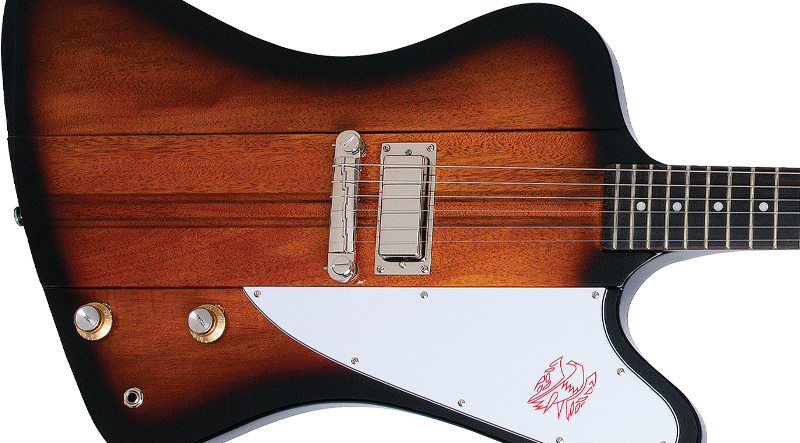
    A recreation of the Firebird’s timeless neck-through design, the Treasure comes in two finishes: Tobacco Sunburst and a yummy Polymist Gold. There’s one ProBucker FB720 pickup and a wrap “lightning bar” tailpiece/bridge, along with gold top-hat Volume and Tone knobs. The guitar has Kluson banjo/guitar tuners and an ivory PVC nut. Look for the classic pickguard with red Firebird logo and an included custom gig bag.

    The Treasure’s reverse body is a nine-piece laminate of a mahogany raised center block and two wings (four walnut stripes running from end to end). The neck features a rosewood fingerboard with dots, 14″ radius, and Gibson’s standard 24.75″ scale. According to Epi, the neck carve is a based on Bonamassa’s original Firebird and features a large C profile – it’s sizable, but not uncomfortable. The headstock is traditional Firebird, with the six-on-a-side tuning scheme (Kalamazoo’s none-too-subtle Fender homage). A dual-action truss rod is among the fresh innovations.

    Warmed up, the Joe Bonamassa Firebird proves plenty hot enough. Again, its neck is beefy, but fast and comfy, ready for your best Johnny Winter, Allen Collins, or JB licks. True to form, its single mini-humbucker was brighter and twangier than a full-sized ’bucker, but still butt-kicking with the overdrive ladled on. As with most single-pickup guitars, the Tone knob becomes an important tool for cooling off the treble and adding some Clapton-esque “woman tone” to the proceedings.

    There aren’t many debits with the Treasure, but the Firebird design entails a certain amount of neck dive, and that’s just part of its vibe. If you haven’t spanked a Firebird before, it will take you a few minutes to get used to the banjo-style tuners, but they’re well-crafted and hold their tuning like champs.

    With a street price well under a grand, this limited edition Firebird is a keeper, with both historic looks and a sweet, killer tone.


    This article originally appeared in VG June 2017 issue. All copyrights are by the author and Vintage Guitar magazine. Unauthorized replication or use is strictly prohibited.

  • Tech 21’s Fly Rig Brit and Cali

    Tech 21’s Fly Rig Brit and Cali

    Price: $249 (list)
    Info: www.tech21nyc.com

    In this age of shrinking guitar rigs, Tech 21’s Fly Rig pedals show just how guitar-related technology is getting smaller but more powerful. Fly Rigs measure a mere 11.5 x 2.5″ and fit easily into a gig bag, yet are packed with useful effects for shows, recording, or practice.

    The Brit and Cali represent the latest evolution in this hip series. Each is extremely straightforward and voiced to replicate their respective tubular sounds – warm, classic rock (the Brit… think Zep and GnR) and high-voltage, boutique crunch (the Cali… Metallica and Mastodon). Each contains a few critical effects and features: digital delay and reverb, and Tech 21’s renowned analog SansAmp circuitry.

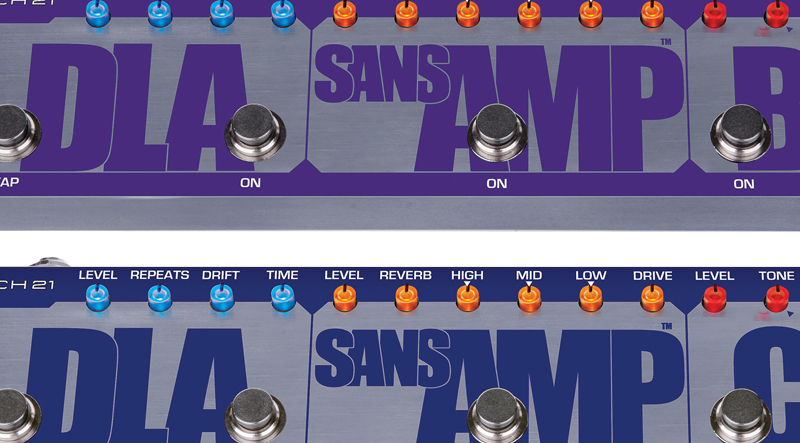
    The Brit and Cali have their overdrive/distortion section on the right, near the input jack. These are guitar effects and not emulations, and have typical stompbox controls: Level, Tone, Drive, and Boost (21 clean db). The middle of each pedal – the SansAmp circuit – is like the familiar control panel on your guitar amp, with Level, Drive, Reverb, and three-band EQ. The Drive control is much like the overdrive sound of a master-volume tube amp, and wholly different from the crunchy Drive in the effect section on the right. Set up the SansAmp as a rockin’ rhythm channel, then kick in the Brit or Cali effect as heavier overdrive for power chords and leads. That makes these pedals work like a three-channel tube amp.

    On the far left, the delay section (DLA) has controls for Level, Repeats, Drift, and Time, plus a Tap tempo footswitch to sync the echoes to the beat in real-time. Drift is a hip modulation tweak that makes the repeats deliver weird, wonky pitch-shifts. Turn it down for traditional echo, or turn it clockwise for more unusual sounds. At full blast, it even works as something of a light chorus effect. The delay sections on both the Brit and Cali are superb – fat and clean with glorious high-fidelity.

    One of the coolest things about these units is that they can accommodate any type of input and output impedance and adjust automatically, so you don’t have to worry about the technical back-end. The Fly Rigs even create a strong “buffered” signal to fix problems caused by long cable runs. Just plug in your guitar and send the output to a regular guitar amp, acoustic amp, mixer, PA system, or direct-recording interface. The box will do the rest.

    On the job, both more than deliver the goods. Each sound great plugged into the front of a standard guitar amp, but you’ll be surprised when plugging into a full-range PA or acoustic ams and engaging the SansAmp circuit. Tech 21’s famed tube-amplifier emulations take over to make it sound like you have a high-end head and cabinet. Each pedal also has an excellent user’s manual filled with sample tone setups.

    It’s hard to believe that boxes this small can deliver so much firepower, but the Fly Rigs do so with style and ease. Sure, it’s fun to have big pedalboards loaded with stompboxes, but sometimes you want to travel light. And the Brit and Cali are pint-sized dynamos of tone and power.


    This article originally appeared in VG June 2017 issue. All copyrights are by the author and Vintage Guitar magazine. Unauthorized replication or use is strictly prohibited.
  • Andrew Hendryx – Lesson: “Into The Mystic” on a mandolin

    Andrew Hendryx – Lesson: “Into The Mystic” on a mandolin

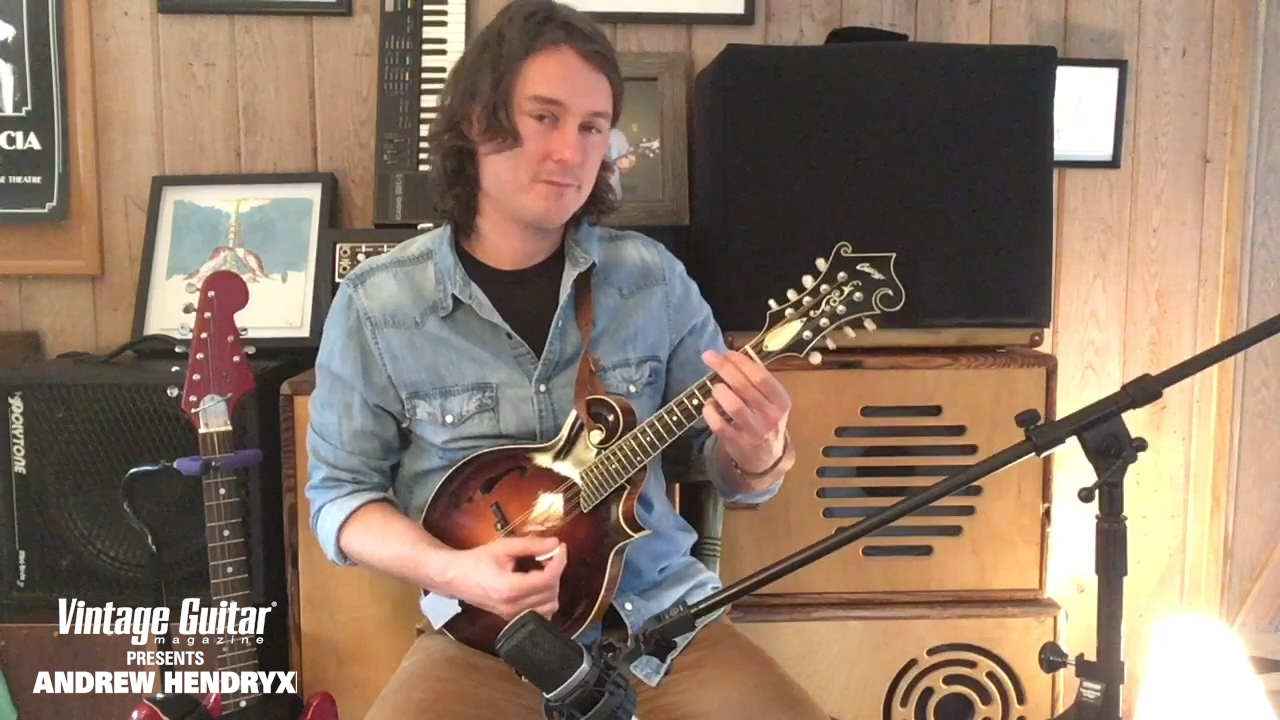
    Andrew Hendryx lesson of Van Morrison’s “Into The Mystic” on Mandolin
    Andrew Hendryx uses his Collings MF5 (with D’Addario strings) to show you how to play his arrangement of the Van Morrison masterpiece “Into The Mystic,” from his upcoming album, “Deep River.” You can catch Andrew on tour this spring with Dangermuffin and Yonder Mountain String Band. Keep up with Andrew HERE!


    See more lessons, VG adds new lessons monthly!

  • Alex Haddad and Kyle Lewis

    Alex Haddad and Kyle Lewis

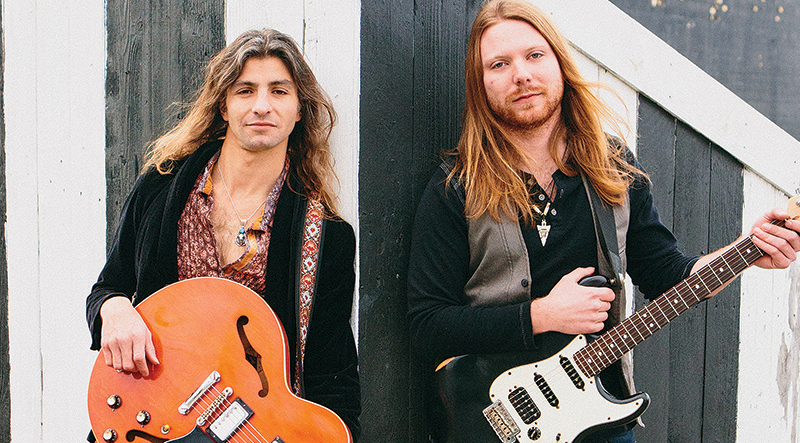
    Alex Haddad and Kyle Lewis: Rebecca Adler.

    Nashville’s Them Vibes hearken to the two-guitar teams of yesterday. Established by the songwriting duo of front man Brother Love and guitarist Alex Haddad, the band added second guitarist Kyle Lewis after the release of its debut album, Shine On. With the new Electric Fever, Haddad and Lewis display classic twin-guitar sensibilities.

    “We have always loved two-guitar bands,” Haddad says. “When you have two guitar players that weave together, it becomes something bigger. Each of our parts is lending to the whole.

    “I may come up with a verse, chorus, and main riff, and at that point it’s an open canvas for Kyle. On ‘Who Do You Love,’ Kyle and I finished the harmony riff together, and it becomes the hook. It’s the undisputable thing about having two guitar players.”

    “All the harmonies you can do together; you hear that lick and it’s great, and then with the harmonies, all of a sudden it’s a whole new thing,” Lewis added.

    “There’s something so glorious about that. You can get very orchestral and musical with it. We push each other and test each other in every scenario,” says Haddad.

    Electric Fever was recorded close to home.

    “We did a lot of the recording at Dave Kalmusky and Jonathan Cain’s Addiction Studios here in Nashville,” Haddad said. “They have an amazing place, with treasures everywhere. We had things like Sommatone amps and a reissue Tele with that classic chime you only get from that guitar.”

    “I was all over the Tele,” says Lewis. “That through an Analog Outfitters Sarge with EL84 tubes. There was also a Gretsch Duo-Jet with a Bigsby I was using quite a bit and that was really hot and fat-sounding.”

    “For the longest time, I had a stock Tele,” said Haddad. “Then I found a ’71 ES-335 that is just the sound of rock and roll. It ended up on a multitude of tracks. I also got my hands on a ’59 Les Paul they had at the studio.

    “For amps, we used their old Silvertone, Fender Champ, and a ’56 Bassman 2×12 that was amazing. Dave Kalmusky’s dad got it new and there were only 100 made. You turn it up to get the tubes to break-up, then turn up the Bass, and it’s this bellowing noise that’s so warm and powerful. We also had a ’56 Gibson GA-40 brought down by the father of our drummer, Sarah Tomek. You turn that thing up and it’s the growl of the devil.”

    Electric Fever also has some great acoustic moments.

    “They had a beautiful old Gibson Hummingbird hanging in the studio,” said Lewis. “Alex and I both played it and though Hummingbirds always sound great, they can be hit or miss under a microphone. With this one, though, they struck gold.”

    “It was very reminiscent of Beggars Banquet,” added Haddad. “It’s funny with a Gibson; sometimes you put it on your lap and it feels great while you play it, it sounds really good… then you put it on a microphone and you hear its dynamics and all the subtleties from the classic records.

    “We also used an old Kay 12-string a friend got at a yard sale. It’s just magic when you mic it up.”

    Lewis’ stage workhorse is a ’70s reissue Strat.

    “It’s got a humbucker in the bridge, so it gets a really fat tone when needed, and I have an old Epiphone Les Paul set up for slide,” he said. “My rig is a Fender Deluxe on the dry channel, a Rat Overdrive, Boss delay, and a wah.”

    Haddad’s live rig is built on a Fender Prosonic from the early ’90s. “I just love the thing. I bring that, my 335, and my Tele,” he said. “As for pedals, both of us keep it minimal because it’s about letting your hands, your amp, and guitar do the talking.

    “Rock and roll is guttural music; it’s hand-to-instrument,” he added. “From Exile to Physical Graffiti and all of Angus Young’s tone, it’s just turned up, not overdriven or pushed by pedals – it’s actually kind of crisp and clean. The Beatles’ white album is one of the greatest guitar records ever made, and it’s just gnarly guitars and gnarly amps.”


    This article originally appeared in VG June 2017 issue. All copyrights are by the author and Vintage Guitar magazine. Unauthorized replication or use is strictly prohibited.

  • Scott Gorham

    Scott Gorham

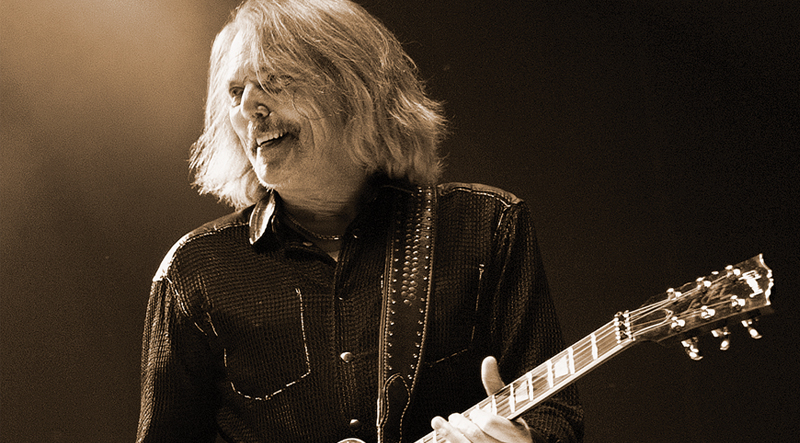
    Scott Gorham: Mark Hylands.

    It’s hard out there for a ’70s guitar hero. With the struggles of keeping older fans happy verses the challenge of presenting new material, it can be an arduous battle between art and business. Former Thin Lizzy guitarist Scott Gorham has faced this challenge and stands victorious with Black Star Riders. The band’s third album, Heavy Fire, captures the essence of Lizzy while bringing something fresh and powerful to the stage. It’s a catchy musical recipe.

    Black Star Riders’ personality crystallizes with each new recording.

    After the first album, you kind of wonder how something is going to be received and how well the band will write together. We all thought that came out pretty good. On the second one, we’re all used to each other. The second one was a bit better than the first one, and now, into the third one, everybody’s comfortable with the writing style. We know what people can do, what they can’t, what they want to do, and what they don’t want to do. It’s become a better place to be.

    There’s a stylistic familiarity that echoes your work with Thin Lizzy, but it’s different enough to stand on its own.

    We’re finding our feet. There’s not so much reliance on the Thin Lizzy thing. Departing from Lizzy has freed us. Now we can comfortably take these different musical paths when we want to and not adhere to a certain sound. We can ratchet it up over here, or go left over there. 

    Even in the Thin Lizzy days, you’d put an album out and you’d say, “What’s going to happen? Are people going to like this?” Each album becomes a personal thing. As soon as you hear criticism, it hurts. You can have a 100 great reviews but it’s always that bad one that you remember (laughs).

    Is there a particular song you’re most proud of on Heavy Fire?

    I’m proud of all of them, so it’s tough to choose one. A question I get is, “What is your favorite song to play onstage?” When I get to that song, it’s kind of a letdown for me after that. So I don’t have a favorite live song, and it’s the same way with the album. I find it pretty easy to go from track one all to track 10 and not really skip over anything.

    Which guitars did you use on it?

    My two main guitars are Les Paul Axcess models, one red, one black. I love them. I have a bit of a bad back from carrying heavy Les Pauls all those years, and the Axcess is chambered. They’ve also carved the top edge, so you don’t have that rib damage we all went through with regular Les Pauls.

    Isn’t there a noticeable difference in tone compared to the Les Paul you played in Thin Lizzy?

    I can hear it compared to my ’57, which I’m still in love with. Unfortunately, it doesn’t get much playing time because I don’t bring it out of storage. The Axcess is pretty close, and the big difference is in the pedals we’re using now. In the Thin Lizzy days, there wasn’t any… nothing any good, anyway.

    I get a lot of people who say, “Man, how did you get that sound!?” I tell them, “Les Paul, Marshall stack, and an MXR Phase 90. That’s it. You don’t want to really go for that. Get something else (laughs).”

    What are you playing through now?

    I’m using a Marshall DSL 100 with two 4×12 Celestion Greenbacks. You can throw it down a flight of steps, get onstage, and it’ll play great. I like a smoother tone, but when it comes to putting a sting on there, it’s changed over the years. I like a high-end that’s more in your face. I use the Dunlop Jerry Cantrell Wah, a Boo Instruments Boost, a Strymon El Capistan Delay, and a Retro-Sonic Chorus.

    Is performing still fun?

    The stage time has never diminished. It’s the traveling that kicks your ass. And it’s not because of the age thing – traveling has always kicked my ass. You don’t get paid for playing the guitar. You get paid for getting there.

    What’s next?

    We’ll be touring Europe, then coming back to America and jumping on a tour. We’ll play festivals until the end of the year, ending in Japan. We’ll get lots of air miles (laughs).


    This article originally appeared in VG June 2017 issue. All copyrights are by the author and Vintage Guitar magazine. Unauthorized replication or use is strictly prohibited.
  • Ronnie Baker Brooks

    Ronnie Baker Brooks

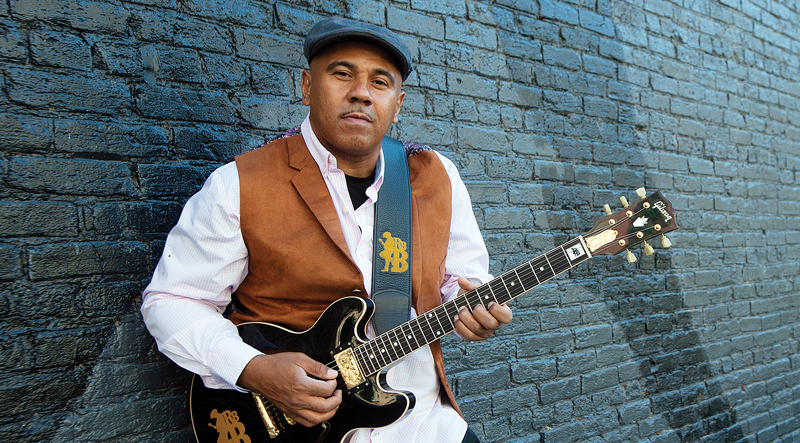
    Ronnie Baker Brooks: Paul Natkin.

    Ronnie Baker Brooks’ new album, Times Have Changed, is a Memphis soul fest blended with the unmistakable guitar sounds of the Windy City. The son of veteran bluesman Lonnie Brooks, Ronnie takes his musical journey to Memphis and Nashville, bringing together the legendary Hi Rhythm Section, Steve Cropper, Bobby Blue Bland, and producer extraordinaire Steve Jordan. It’s his first record in 10 years.

    How did you get together with Steve Jordan?

    I first met Steve back when he was in The World’s Most Dangerous Band – he did some shows with my dad in the early ’80s. We talked a little at the first Obama inaugural, where actor Jeffrey Wright, who played Muddy Waters in the Cadillac Records movie, put on a Chicago-themed show, but we really reconnected when Steve worked on a Big Head Todd and the Monsters record. I’m cool with those guys, and they asked me to play on a track. I told him, “I’m looking to do another record. Would you mind helping me?” That’s when it happened.

    The album has a rich Stax quality.

    Steve had that in his mind. He knew I’d recorded in Memphis before, and he loves it down there. The first thing he said once we decided on the songs was, “Put your pedalboard back on the bus. We’re going straight into the amp (laughs).” He’s a walking encyclopedia of gear and music. Once we established the direction, I just jumped in and rode. He has all these great musicians, and they know his work ethic and style. It was a great atmosphere to learn from. He said, “We got your back, just do yo’ thang.” I’m a better musician from the whole experience.

    The late Bobby Blue Bland sings on “Old Love.”

    We started recording in January of 2013, and Bobby passed away six months later. I was told this was the last thing he recorded. He and my dad were friends for over 50 years; I used to listen with a radio under my pillow when my mom was asleep. On WVON, they would play blues and R&B. I’d hear Bobby Blue Bland, B.B. King, Johnny Taylor, and Bobby Rush. I never knew I would get the chance to work with them.

    When we were in the studio, Bobby came in and started talking to us. It was like school. Even Steve was quiet. It was surreal, and took me back to listening to the radio under my pillow. Right after that, he passed away, and it broke my heart.

    What gear did you use?

    I have a blond Gibson 335, a Les Paul Studio, a Les Paul Custom, and my first guitar – a ’67 SG my dad bought me when I was seven. My custom 336 is my main axe and I use an ’88 Strat Plus as a backup. I play through a Deluxe Reverb reissue. 

    When I played in a power trio, I had a big pedalboard, but, I’ve cut it down to an Ibanez Tube Screamer, a Vox wah, a Fulltone OCD, and a Fulltone Fat Boost. When I want overdrive, I put on the Tube Screamer. When I want balls to the wall, I put on the OCD. With the blues, you gotta have dynamics. That’s what makes Buddy Guy the greatest of all time. He can go from a whisper to blasting, and he keeps your attention.

    You invited rapper Al Kapone on the record. Are you concerned with blues purists?

    I can’t sing about plowing behind a mule or picking cotton. I didn’t experience that. I grew up in Chicago, on the South Side, and was raised between Hyde Park and the Projects. I can’t talk about the things my father and Muddy Waters experienced. What I always wanted to do was be a bridge where that generation could feel what I’m doing, and relate it to young people, as well. That’s where Al Kapone and what he’s doing come in. I grew up when hip-hop started, and I still feel it. Al Kapone is deep, and he’s a musician. 

    What I try to do is have an authentic feel, but current. It’s always been my philosophy from my first record. Be a bridge. If Muddy Waters had never plugged into a wall, the music wouldn’t have grown. My father always told me and my brother, “Write your own songs and create your own style.” We can always do “Got My Mojo Working” and “Sweet Home Chicago,” but we have to create our own songs, and that’s been my philosophy.


    This article originally appeared in VG June 2017 issue. All copyrights are by the author and Vintage Guitar magazine. Unauthorized replication or use is strictly prohibited.

  • Tommy Allsup

    Tommy Allsup

    Tommy Allsup:Steve Pope/EPA.

    No article on the late Tommy Allsup would be complete without the story of an unsuccessful coin flip saving his life – and that goes for this one, too. But the well-known story of Buddy Holly chartering a plane in 1959, and bandmate Allsup giving his seat to Ritchie Valens, avoiding the fatal crash, overshadows Allsup’s excellent guitar playing and impressive resume as session musician and producer.

    In Tom Wheeler’s tome, The Stratocaster Chronicles, Richard Thompson cites the “nifty bits” Tommy Allsup played on Buddy Holly records. Actually, Allsup played on relatively few Holly songs – “Lonesome Tears,” “It’s So Easy,” “Heartbeat,” “Love’s Made A Fool Of You,” and “Wishing,” cut in the Spring of ’58 – but, as Thompson adds, “Great tone, great player.”

    Allsup was 85 when he died January 11. In addition to Holly, his career ranged from playing guitar and bass on sessions with Johnny Cash and George Jones to producing “In The Year 2525” by Zager & Evans. In between, he did session work with the Everly Brothers, Kenny Rogers, Bobby Vee, Marty Robbins, Charlie Rich, Del Shannon, Earl Scruggs, Johnny Burnette, Don McLean, Doug Kershaw, Jerry Lee Lewis, Gene Watson, Dwight Yoakam, Leon Russell, Herb Ellis, Johnny Paycheck, Melba Montgomery, Charlie McCoy, Ernest Tubb, Ferlin Husky, and many others. And behind the console, he produced Willie Nelson, Warren Smith, Tex Williams, Johnny Bush, Slim Whitman, Hank Thompson, and four of Asleep At The Wheel’s first five albums.

    The Wheel’s leader, Ray Benson, recalls, “Buddy Spicher, the fiddler, recommended Tommy as producer, and we were very lucky that he made the right call. Allsup was great because he let us do what we wanted, and just helped us do it.”

    Asleep At The Wheel’s original pianist, Floyd Domino, says, “Tommy was like this genial host of a big party, and he brought us along for the ride. He opened so many doors to so many people – a giant circle of people that he knew and helped. He was completely laid back, and he had this kind of perpetual smile – calm and positive. When we did the first album, I played a solo on ‘Take Me Back To Tulsa’ – one of those mistakes, and I recovered from it – and he was just laughing, thinking it was great. He called it ‘falling down the stairs.’”

    The band’s singer and rhythm guitar for many years was Chris O’Connell. “Tommy was one of the first to encourage me to play rhythm guitar, and he impressed upon me the necessity of steadiness and conformity in the string attack,” she says. “Tommy played the Eldon-Shamblin-style rhythm guitar with ease. I don’t think I ever heard anyone but Eldon and Tommy do that. Aside from Count Basie’s rhythm section, I’ve never heard such exquisite, unruffled time – tight enough to lend structure, but loose enough to swing.” 

    Benson agrees. “He took Eldon [with Bob Wills] and added Tommy Allsup to that. When rock and roll came around, he adjusted very easily. He told me, ‘All I did was turn up the treble.’”

    Allsup and the Wheel won a Grammy for the group’s 1999 album, Ride With Bob. But perhaps Allsup’s crowning achievement was producing 1973’s For The Last Time, by Wills and a cast of former Texas Playboys. Lead vocalist was Leon Rausch, who joined the Playboys in ’58. “Tommy never had much to say, but whatever he produced, his work came out in the result,” he said. “His heart was in it.”

    In a 2009, the Rock and Roll Hall of Fame conducted an interview with Dion Demucci, who was also on tour with the 1959 Winter Dance Party, with Holly, Valens, and the Big Bopper. He disputed Allsup’s account, saying that Holly chartered the plane for “the headliners,” rather than bandmates Allsup and bassist Waylon Jennings, and that he, not Allsup, gave up his seat to Valens. Besides the fact the Dion waited more than 50 years to “set the record straight” (previously writing an autobiography that made no mention), his version is simply illogical. Holly’s drummer was in the hospital after the heater-less bus resulted in frostbite on his toes. Holly wanted to get himself and bandmates to the next town, to avoid the long, cold bus ride. The Big Bopper had the flu, so Jennings let him have his seat. And Allsup and Valens flipped a coin.

    Allsup wrote an open letter, shooting numerous holes in Dion’s story and challenging the singer to take a polygraph test alongside himself. It’s unfortunate that in his later years, an event that had haunted him for decades was questioned. As Allsup told author Darryl Hicks in 2008, “It still bothers me. Just the fact that Ritchie lost his life and I didn’t, you kind of blame yourself in a way. It’s something you think about without wanting to. A lot.”


    This article originally appeared in VG June 2017 issue. All copyrights are by the author and Vintage Guitar magazine. Unauthorized replication or use is strictly prohibited.