Tag: features

  • Jimi Bell

    Jimi Bell

    Jimi Bell: Gail Corrow.

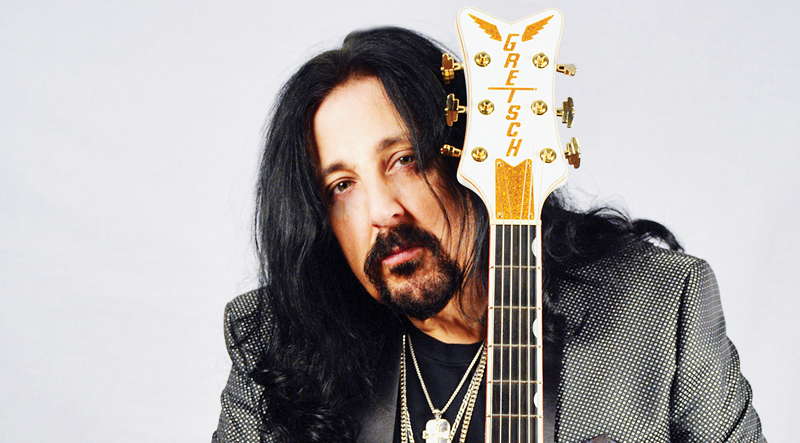
    Recognized worldwide as a master technician, southpaw shredder Jimi Bell first received widespread notoriety for his role sharing a nightclub stage with Joan Jett in the 1986 film Light of Day, which starred Michael J. Fox. His lightning-fast picking then got him an invitation to audition for Ozzy Osbourne, where he was edged out by Zakk Wylde. Swinging to another branch of the Black Sabbath family tree, he joined bassist Geezer Butler’s solo band. For that project that he wrote “Master of Insanity,” which was used on Sabbath’s 1992 album, Dehumanizer.

    After several national and European tours, Bell joined the melodic hard-rock band House of Lords in 2005, put together by Gene Simmons, and subsequently has recorded six albums with them. The band is writing and recording a seventh, tentatively titled Saint of the Lost Souls.

    Going back, what initially drew you to music, and how old were you when you started playing guitar?

    After trying several instruments, I became a drummer from the age of 10 until I was 13, when I won a scholarship from the Hartford (Connecticut) Conservatory. While in junior high, I jammed with some high-school friends. The guitar player left his Guild Starfire, Heathkit amp, and his Big Muff at my house. I decided to try his guitar through the Big Muff. At that moment, I instantly fell in love with the guitar.

    Who were your big influences back then?

    Definitely Johnny Winter’s Live And album with Rick Derringer… it just blew my mind. I kept playing the song “It’s My Own Fault” over and over again. Johnny had so much fire and speed, I thought that was what it meant to be a good guitar player – you had to be fast. Of course, that changed later on for me. I also dug the Grand Funk live album. I then discovered Deep Purple and became a huge Ritchie Blackmore fan. After that, I started listening to a lot of guitar players. In the end, my guitar style was derived from Johnny Winter, Ritchie Blackmore, and Al DiMeola, whom I discovered later on.

    Do you remember your first good electric guitar and amp setup?

    I went to see Chuck Berry at the Bushnell Auditorium, and when I got home, my dad had brought a semi-hollow Ovation Eclipse and an Ovation Dude amplifier. Being a Blackmore fan, I decided that I needed a Strat, so on my first trip to 48th Street in New York, I bought one – a lefty ’70s sunburst. It was wired as a righty, so the pots worked opposite of how they should have. I got so used to this, and later ended up reversing the wires on other lefty instruments I got. At the time, I also got a 50-watt Marshall Mk II half-stack which I’d overdrive with a Hawk booster. Shortly after, I got my first Gibson SG, which ended up being my main instrument for the next 10 years.

    What are some of your favorite guitars in your arsenal?

    In the ’80s, I had a full Kramer endorsement, and also really got into Flying Vs, Explorers, SGs, and Les Pauls. Lately, I’ve been using custom-built guitars by Dale Roberts, of Jacksonville. I also own three beautiful great Gretsch guitars.

    What is your go-to guitar-and-amp rig these days for live work?

    When I’m on tour, I use the Dale Roberts guitars exclusively. Amp wise, I request a Marshall DSL100 or TSL100. I have three stompboxes on the floor… never rack gear.

    Tell us about the band and the new album. How did you go about putting the guitar parts together?

    In 2005, after years of inactivity, House of Lords singer James Christian approached me about putting the band back together and writing melodic rock music. Of course I said “yes,” even though I never had done so before. For every album, I first present 15 to 20 song ideas to (drummer) B.J. Zampa, and he helps with the arrangements. Then, the songs get sent to James, where he decides which ones are best for the band. James then develops the melody lines and lyrics, and depending on the song, I might add finishing touches.

    Where can folks see House of Lords live?

    The band tours Europe all the time and has done Loud Park, the biggest festival in Japan. But we do have plans to do more shows in the U.S.


    This article originally appeared in VG March 2017 issue. All copyrights are by the author and Vintage Guitar magazine. Unauthorized replication or use is strictly prohibited.
  • Dana Sutcliffe

    Dana Sutcliffe

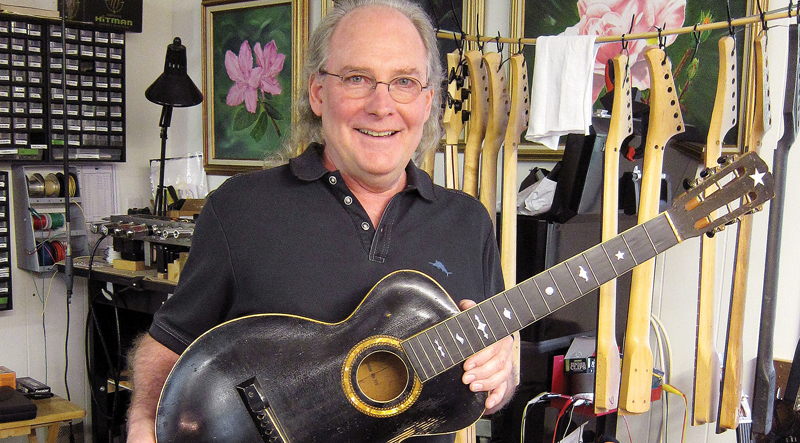
    Many know Dana Sutcliffe from his classic guitar design, the Alvarez Dana Scoop produced from the late 1980s through the early ’90s. But most are likely unaware that today he runs a top-notch repair/restoration shop, Dana Sound Research (DSR), just outside Wilmington, Delaware.
    Did playing or working on guitars come first?

    Playing the guitar. I was actually a piano player from age 5 and just transposed the piano over to guitar. I still see piano keys when I play the guitar. It’s nuts!

    When did you first start working with guitars?

    I bought a four-pickup Lafayette Radio guitar in 1967 – yes, four pickups! When I soon after got a Univox bass amp, I realized the pickups weren’t so great. I applied my experience rewinding HO-scale slot car armatures to rewinding the pickups. They were very powerful, but they were microphonic as hell. But, I didn’t care – I was 13!

    How did you get into guitar repair?

    My dad was building dreadnoughts in his garage and that gave me the bug. I eventually did some electronics work for John Marshall, who in ’78 hired me to work at Renaissance Guitars. There, I learned everything about guitar construction. John was a perfectionist and instilled that in me. After Renaissance, I did music-store repairs until I started Guitar Repair Company in ’83, which was very successful. That’s where the first Dana guitars were born, including the Detonator Pickup and DSR5 circuit. I started doing custom work for national acts including George Thorogood. We serviced, built, and rebuilt 14 white ES-125s and all of his amplifiers. George’s taught me how to work with the preferences of other artist techs.

    How did you join St. Louis Music (SLM)?

    In 1985-’86, we began teaching the sales rep for SLM, who was not a musician, how to set up Crate amps for his customers using Dana guitars. He’d write down the settings and go off to his store clients, but the amps never sounded the same. He’d actually get mad at me! So, we better explained pickups and electronics, and he brought our designs to the attention of Tom Presley, Westone’s product manager, and by ’87, several Westone Dana models were being produced. I started DSR, which owned Dana, as a trademark and the patent on the Scoop, both of which I licensed to SLM.

    How do you approach restoration?

    I do everything according to historic protocol. I approach each instrument or amplifier as it was built. Unless there’s a factory error, I restore the instrument to original condition. If finishes are destroyed and bare wood is exposed, I have an array of cosmetic epoxies, varnish mixes, and lacquers. I also have a huge amount of old-wood resources around the country in case something really catastrophic comes in.

    We keep everything extremely neat and tidy for a woodworking shop. It has a radiant humidity room, which is crucial for bringing dried instruments back to life. It’s always crowded. The buffing, sanding, sawing, and drilling are all done in a sealed, enclosed room with proprietary ventilation on all the machines. There’s also a sanding box to keep dust to minimum. Two of my building neighbors are a jewelry artisan and a cabinet maker, which is a blessing because I can do tricky metal restorations on 100-year-old tailpieces, and if we need anything unusual done to a piece of wood, the machine to do it is right next door!

    What is most satisfying about what you do?

    I love bringing instruments back from the dead so you can’t tell what condition they were in, originally. And, the art is never dull; no instrument or tube amp is identically the same.

    I also really enjoy making demanding clients happy by making all their instruments perform with the consistency they want. I’m very lucky to have found talented apprentices who are sacrificing a great deal to learn the art of musical instrument restoration and repair. 

    What’s the story on your Dana Scoop reissues?

    Right now, I have a monthly budget for buying original parts and whole instruments whenever possible. If the bodies don’t need re-painting, we wet-sand and buff them to be brighter than the original. We re-fret necks and apply the original Dana logo. If the electronics are original, I upgrade the pots and circuit, and I pot the pickups. If the electronics aren’t original, then I install USA pickups that are similar to the original Dana pickups, and I still have DSR5 mid-boost units available. Otherwise, I try and keep everything stock. Scoops are really increasing in value these days, so there’s plenty of demand for these resuscitated guitars.


    This article originally appeared in VG March 2017 issue. All copyrights are by the author and Vintage Guitar magazine. Unauthorized replication or use is strictly prohibited.

  • Jon Butcher

    Jon Butcher

    Jon Butcher: Michael Sparks Keegan.

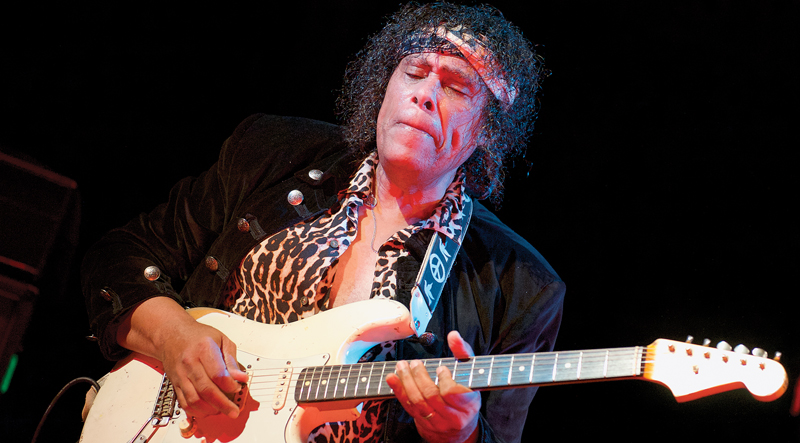
    One of the most-influential guitarists to emerge from Boston, Jon Butcher has just released his 14th album, 2Roads East. 

    We caught up with Butcher as he prepared to tour.

    2Roads East is perhaps the most reflective and soul-oriented thing you’ve done. It’s a “song” album with great guitar as opposed to a pure guitar album. The arrangements are well-conceived, with plenty of air to make it sonically pleasing. What inspired you to take this route?

    Initially, I thought I was going to make a different record, containing songs like “Brontosaurus” (the only instrumental on the album). My initial thought was, “I can blaze runs over some blues or whatever,” but then it hit me… I didn’t want to do that. I wrote five or six songs in that vibe, but it just wasn’t satisfying. So, I discarded them and started telling my own story, trying to find my own truth. And the truth is, songs matter. The lyrics on these songs are photographs from my life. I can’t explain why that happened, I was just trying to write something that I believed, that was at the least true for me. From that point on, it was a natural process.

    You’ve long been associated with the Fender Stratocaster. When did that fascination develop?

    It happened even before Jimi Hendrix, though Jimi reinvented the Stratocaster. I liked its shape and I like lightweight guitars because I think they resonate better. And, single-coil pickups provide more nuance than humbuckers, in my experience. You have to work a little harder on a Strat to coax sounds from it, but it’s worth it.

    Many musicians are trying to figure out how to make a living in this post-Napster world, yet you’ve thrived with your music company, Electric Factory X, which you started in 1991. How did that happen?

    I realized a number of years ago that being “Jon Butcher, guitar player” had a limited shelf life because unless you’re Eric Clapton or Jeff Beck, it’s incumbent upon you to expand your horizons and see yourself in broader terms. For most musicians these days, how to make a living in the present landscape with the lack of record sales is a great challenge. That dawned on me in the ’90s, so I started doing music production for TV and movies. I’ve spent the last 18 years building my company and doing productions for Showtime, HBO, and the TV networks, starting with the series “Ugly Betty.” I find the work really gratifying. The most important thing now is that my company becomes a platform which allows me to do things that are bigger than me, like producing new talent.

    The track “Madness” has what sounds like a resonator guitar. What is that?

    Yes, it’s a National round-neck that I borrowed from a friend, combined with a five-string banjo to give the song its retro voice. I don’t think any real banjo player has to fear for me (laughs), but I was able to coax something out of it.

    What were your go-to guitars and amps on the album?

    I used a ’63 Fender Stratocaster that weighs 6.5 pounds – a true beauty. But I also have an ’03 Bill Nash in Olympic White that I’ve taken around the world, it looks like a vintage guitar, though the wear is all mine! That’s my go-to.

    One of my all-time favorite amps is a tweed Fender Blues Junior modded years ago by my friend, Bob Dettorre – re-tubed with EL84s and a Celestion Vintage 30. He took an off-the-rack amp and made it into a powerhouse, a beast. I wouldn’t sell that for 10 times what I paid. I also used a ’62 Bassman and a ’65 Vibrolux. Live, I use a ’69 Marshall 100-watt Super Lead, a couple of Marshall ’59 Super Lead plexis, and a mix of 4×12 cabs.

    How about effects? There’s wah on “Power of Soul” and a few others, along with some delay and what sounds like an octaver on the title track…

    I used an old Vox wah modded by Kyle Chase, as well as a Boss DD-20 delay, a Fulltone Ultimate Octave , a Rimrock Mythical Overdrive which is terrific, a Landgraff MO-D distortion, and a Jim Klacik Unique-Vibe, which is a Uni-Vibe clone.

    There’s a beautiful Spanish-sounding acoustic trading licks with an electric on “Dust.” What were you playing on that?

    That’s an old nylon-string Ramirez. I’m trading licks with my buddy, Tomo Fujita, who was playing an ES-335 on that track.


    This article originally appeared in VG March 2017 issue. All copyrights are by the author and Vintage Guitar magazine. Unauthorized replication or use is strictly prohibited.

  • Andy Timmons

    Andy Timmons

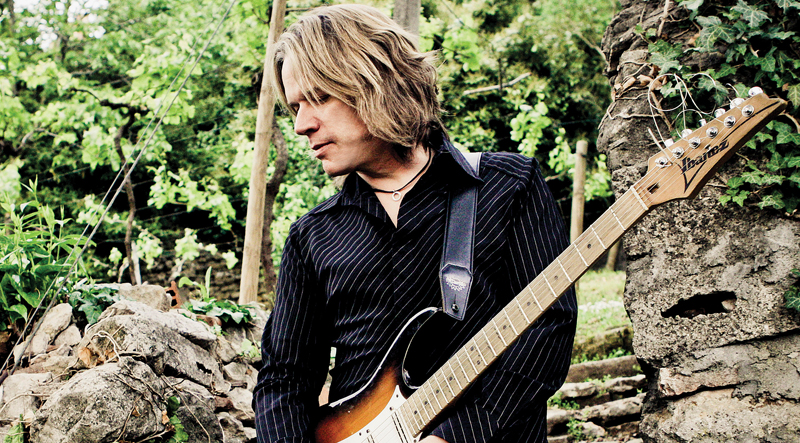
    Andy Timmons: Simone Cecchetti.

    After a decade pushing his craft to new creative realms, Dallas-based guitarist Andy Timmons is once again purveying original instrumental guitar rock. His 2006 album, Resolution, was his band’s last in that style, and the ensuing 10 years saw him record fusion albums with drummer Simon Phillips along with an acclaimed instrumental version of Sgt. Pepper’s Lonely Hearts Club Band. His new effort is Theme from a Perfect World.

    “It’s hard to believe it’s been 10 years,” Timmons recently told VG. “I’m never really out of the instrumental songwriting mode, it just took a while to get back to the studio.”

    Timmons used a plethora of vintage instruments on the album, and likened selecting them to trying different vocalists.

    “The main guitar is essentially singing the melody, and we had a great time auditioning ‘singers’ for each song. We tried different guitars until we found one that best suited each song,” he said. “A lot of the songs were written on my ’94 AT100 prototype from Ibanez, so that guitar is on several songs.”

    The lineup is impressive. Fenders included a ’65 Strat, a 1960 hardtail Strat, Teles from ’67 and ’68, and a ’68 Jaguar. Gibsons were a ’57 J-45, an ’85 Hummingbird, an early-’90s Les Paul, and a Pete Townshend signature SG. Other brands and models included a ’66 Rickenbacker 330/12, a ’66 Mosrite Ventures Model, and an early-’90s Martin D-28.

    Theme from a Perfect World doesn’t contain jamming or show-offy guitar races, but all have a complete feel, implying they were written “all the way through,” but with allowance for improvising.

    “There wasn’t a conscious move in that direction,” Timmons averred. “It just seems the songs were the focus, and if the arrangement didn’t require a solo then that’s the direction we went. Early in my career, I may have been more concerned about demonstrating my abilities on the instrument, but I’ve always been equally aware of the necessity of a good song first and foremost. Now, I’m most interested in presenting the song in the best way possible regardless of the guitar prowess utilized in the process.”

    While there are plenty of powerhouse riffs on the album, several tracks open with ethereal passages before cranking up. Of particular note is “Sanctuary,” which has an intro that almost sounds like a new-age piano.

    “That’s one of my favorite tones on the record!” said Timmons. “That’s my white AT100 signature guitar with the Wilkinson bridge set up to float slightly; I’m normally an “on the deck” guy, running through two Mesa Boogie Lone Star 1×12 combo amps split in stereo via a Strymon Timeline delay. I’m also hitting the front end of the amp with my signature Carl Martin compressor, mainly using it as a significant boost without much compression. There’s no reverb, just the lovely delay with a bit of modulation on the repeats.”

    The title track has several different guitar tones and tempo changes.

    “The main chordal theme of the song – I guess you could call it the chorus – is completely inspired by all things Todd Rundgren. His sense of chord work and melody has always intrigued and inspired me. I also imagined this chord sequence in the chorus as something like ‘Court Of The Crimson King’ and originally thought we might employ a Mellotron to beef-up the sound, as on the King Crimson classic, but a Hammond B3 ended up winning that role. The arrangement – and title – is very much inspired by ‘Utopia Theme’ from the first Utopia record. It’s like Mahavishnu goes pop! It took us a while to find the right tone for the song but it’s mainly a Gibson Pete Townsend SG Special with .012s, except for the second verse melody, which is the ’65 Strat.”

    Timmons was asked about the passage on the album in which he takes the most pride in having created.

    “That would have to be the solo and bridge of ‘Winterland’,” he said. “It has a nice energy, is very melodic and leads into the bridge, which has a great, emotional feel to it.”

    The guitarist also plans on continuing to write and record guitar music.

    “That’s something I really appreciate about instrumental music,” he reflected. “Listeners are free to attach their own meaning or feeling to it.”

    And it won’t be another decade before the Andy Timmons Band releases another instrumental album.

    “I am always documenting song ideas and filing them away for later,” Timmons said. “My intention is to massively trim down my outside musical projects and focus entirely on my own music.”


    This article originally appeared in VG March 2017 issue. All copyrights are by the author and Vintage Guitar magazine. Unauthorized replication or use is strictly prohibited.

  • Johnny Nicholas

    Johnny Nicholas

    Johnny Nicholas: Cybelle Codish.

    Considering the varied musicality of Austin, Texas, it’s no wonder singer/songwriter Johnny Nicholas makes his home in the Texas capitol.

    A native of Rhode Island, he listened to R&B in the late ’50s and later gravitated to more-traditional blues and folk. His first guitar was a Stella acoustic acquired in 1961 for “$15, with the case,” followed by a ’62 Guild Starfire IV, a ’49 Gibson J-50, ’49 Martin 00-21, National Style O, Gibson ES-295, ’64 single-pickup Melody Maker to which he added the pickup from a ’58 Tele, and a ’68 Les Paul goldtop.

    When he began playing, Nicholas was abetted by notable bandmates.

    “Duke Robillard and I grew up together in Westerly,” he said. “He and I used to get together after school and we played shows with his band, the Variations, and mine, the Vikings. In 1970, we formed a band called Black Cat with Steve Nardella, Fran Christina, and Larry Peduzzi. It lasted about nine months before Steve, Frannie, and I moved to Ann Arbor, Michigan, while Duke reactivated Roomful of Blues with a horn section.”

    Nicholas later relocated to San Francisco and Chicago.

    “My favorite blues genre would be Delta artists who transitioned to Chicago – Howlin’ Wolf, Johnny Shines, Eddie Taylor, Big Walter Horton, and Roosevelt Sykes come to mind,” he said. “I love B.B. King and all the great, more-modern guys, but not like I love country blues.”

    After playing with Asleep at the Wheel for several years, Nicholas settled into Austin with his family in the early ’80s. His most recent album, Fresh Air, includes unique instruments including an electric from the ’60s.

    “It’s an Axis Cypher,” he said. “Most people think they were a Teisco spinoff, but I believe it’s an Italian-Japanese collaboration; Intermark made the neck in Japan, the electronics are definitely Italian.”

    Nicholas and associates used a lot of classic instruments on the album.

    “Scrappy Jud Newcomb played my 1915 Style A Gibson mandolin, his little Harmony mando, and my 1914 Gibson mandocello. I used a Danelectro baritone in B natural but capo’ed on the first fret, so we were playing in C.”

    Resonator and steel-guitar parts are courtesy of Cindy Cashdollar, except the solos on “Backdoor Man,” and the original material involves a lot of personal reflection and memories; “Play Me Like You Play Your Guitar” and “How Do You Follow A Broken Heart” offer plaintive lyrics. “Backdoor Man” is one of two traditional blues songs, and the other – Sleepy John Estes’ “Kid Man Blues” – serves up a Bo Diddley/semi-funk/quasi-reggae beat with solos that involve steel guitar interplay with bass, guitar, and mandolin.

    “I heard Sleepy John do that at Newport when I was a kid, and always loved the song.” Nicholas recounted. “The bass part is my ’59 Dano Longhorn baritone.”

    Nicholas is “mostly satisfied” with Fresh Air, “Which is saying something because I’m critical of my own stuff. The band is stellar, production is stellar, and while I dig my tunes, I’m restless to get on to the next group of songs and stories. I also want to hone my stage skills and keep challenging people to think for themselves, open their hearts and minds.”


    This article originally appeared in VG March 2017 issue. All copyrights are by the author and Vintage Guitar magazine. Unauthorized replication or use is strictly prohibited.

  • Zemaitis’ CAG-200HS

    Zemaitis’ CAG-200HS

    Price: $2,000 (list)
    Info: www.zemaitisguitar.com

    The lutherie art of Tony Zemaitis resulted in some of the rarest, most admired, and most valuable of guitars. Among his creations, including the famed metal- and mother-of-pearl-fronted electrics, his acoustics are more precious than pearls. Slowhand played one. Jimi had a 12-string.

    After Zemaitis died at age 67 in August 2002, the Tokyo-based Zemaitis International division of KSC, with the blessing of Tony’s wife, Ann, and son, Tony, Jr., relaunched Zemaitis guitars. Electrics came first, but they are now joined by a range of acoustics. And they’re stunners.

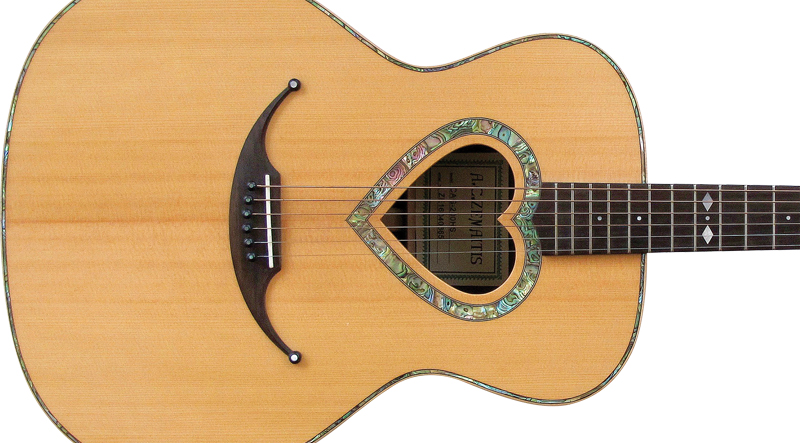
    The CAG-200HS is one of the top-of-the-line Zemaitis Custom Shop guitars. It has a grand auditorium-sized body with rosewood back and sides and a solid sitka spruce top bolstered by scalloped X-bracing. Heat and dry aging of the woods in a vacuum state remove excess water and minerals before assembly. Zemaitis International notes the guitar is “fairly resistant to climate and temperature extremes” as a result. The body is finished in a low-gloss urethane.

    The mahogany neck joins the body at the 14th fret, and features a rosewood fingerboard with a 16″ radius. The scale length is 25½" with 19 frets.

    Beyond the specs and construction, it’s style that makes this guitar shine.

    The headstock is crowned by that Zemaitis Z curve. The smiley bridge, heart-shaped soundhole, and mother-of-pearl inlays combine to make a guitar like no other. Which, of course, is the point.

    But how does it sound and play? Lovely. Warm, woody, and rich in tone, it’s a beauty of a guitar. Plus, the neck and fretboard are well-formed and comfortable. It’s easy to fingerpick, with a subtle, satiny voice. And yet, it can boom like a cannon when strummed hard.

    The result is a worthy tribute – with both heart and soul – to Tony Zemaitis’ enduring legacy.


    This article originally appeared in VG June 2017 issue. All copyrights are by the author and Vintage Guitar magazine. Unauthorized replication or use is strictly prohibited.

  • Mooer’s Slow Engine Volume Swell

    Mooer’s Slow Engine Volume Swell

    Price: $60-$69.99 (street)
    Info: www.mooeraudio.com

    Long out of production, the Boss Slow Gear was one of the coolest pedals of the ’80s, duplicating the sound of a volume swell without putting your pinky to work. Mooer has updated this effect with its new Slow Engine.

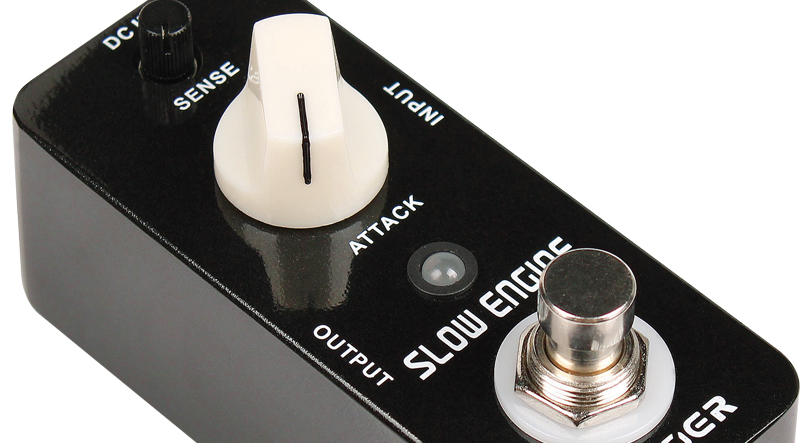
    The Slow Engine uses the popular micro-pedal format that takes about half the footprint of a traditional stompbox. Its only downside is that, with no room for batteries, these designs are DC-only, but the Slow Engine works with most any 9-volt adapter. It also sports true-bypass switching and a rugged metal chassis.

    The Slow Engine has just three controls – Attack, Sense, and the On/Off footswitch. Once you activate the effect, tweak the mini Sense knob to determine if you only want the swell on some notes or all of them. Turn the control down, and you will hear swells only on notes you pick the hardest; turn it all the way up and you will hear it on every note. Turn Attack down to hear the effect kick in quickly, while higher settings give a long, slow attack. Keyboardists have had this kind of synth control for decades, so it’s great to have it available to guitarists again.

    In use, the Slow Engine exhibits that cool, spacey sound great for proggy parts or violin-like melodies. It works brilliantly for lead lines, but also chords. Slide guitar sounds thrilling with its electronic swells – think of David Gilmour’s ethereal lap steel on Pink Floyd’s “High Hopes.” The Mooer box will work with bass, too, adding deep swells like a cello or bowed bass, or combine the Slow Engine with reverb to add more spatial dimension and chorus for even more fairy dust. Best of all, the pedal is affordably priced and absurdly addictive.


    This article originally appeared in VG June 2017 issue. All copyrights are by the author and Vintage Guitar magazine. Unauthorized replication or use is strictly prohibited.

  • Wampler’s Ego Mini Compressor and Faux Tape Echo v2

    Wampler’s Ego Mini Compressor and Faux Tape Echo v2

    Prices: $179.97 (Mini Compressor); $239.97 (Faux Tape Echo v2, both list)
    Info: www.wamplerpedals.com

    With an extensive line of nearly 30 devices, it’s no surprise Wampler Pedals has entries in both the traditional-size and a micro pedal markets – and pedals to cover both ends of your board.

    Placing a compressor toward the beginning of the signal chain is a typical strategy. And a compact version of the Wampler Ego Compressor, the Mini Ego Compressor, is Brian Wampler’s answer to the need to fit as many sonic options into as little real estate as possible.

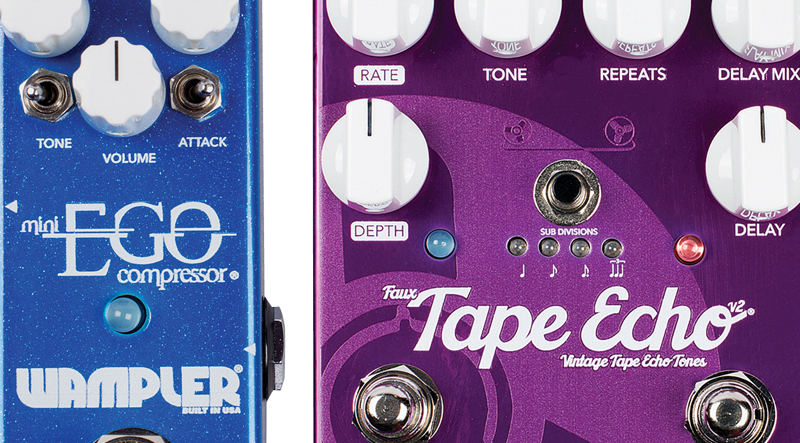
    The Mini Ego’s Blend, Volume, and Sustain controls are packed side-by-side, with Attack and Tone double-throw mini switches, a stomp switch, and an On/Off light also squeezed onto the top of this small box. The Attack switch offers two options for how quickly the original signal is impacted, and the Tone control adds the high end. Volume is, well, volume, while the Sustain control allows for increasing levels of signal impact.

    Plugged through a late-’50s Ampeg Jet with a repro 10″ Jensen speaker, subtle changes to the Mini Ego’s Blend knob allowed the natural guitar tone and player dynamics to combine with the controlled sound for a natural attack with enhanced sustain and transient spike control. Signal compression typically calms the trebly attack, but a flick of the Mini Ego’s Tone switch added some compensating high-end sparkle without the abrupt attack, making for clear rhythm chords.

    For the soloist who wants a clean, singing sustain without fuzz or overdrive, the Ego Mini offers plenty of extra gain, and a natural sound with all the benefits of the typical compressor and none of the squashed dynamics. The Ego Mini’s small size more than makes up for its tight switching arrangement.

    Delay and reverb are typically found at the other end of the pedalboard, as overdrive and distortion can uncontrollably magnify those effects. Turns out Wampler has you covered down there, too. The Faux Tape Echo v2 pedal offers digital control over the echoes with analog sound processing. It utilizes six knobs, two footswitches, and a Subdivision push switch for selecting the selected delay tempo.

    Despite the hefty array of controls, the Faux Tape Echo v2 is a low-noise device with no evidence of unmusical digital glitching. Bypass and Tap Tempo stomp switches start things up, with Rate controlling intensity, Depth adding a degree of modulation, and Repeats allowing everything from a single slapback to infinite echo. Delay Mix is similar the Ego’s Blend knob, adding the original analog sound to the mix.

    Through the same Ampeg at a small club, the Faux Tape Echo v2 offered classic early rock sounds and longer delays that were easy to dial in for soloing. Though it was easy to tap in the meter, the Subdivisions switch was difficult to access without bending over for manual adjustment. This feature offers quarter, eighth, dotted eighth, and triplet repeats. The dotted eighth setting was favorably musical in response especially for soloing. And thanks to the digital delay/analog blended sound, the Faux Tape Echo v2 was particularly effective on a solo jazz guitar gig where chord development in triplets was enhanced with clarity along with the warmth associated with an amplified jazzbox.

    The ability to blend natural guitar with processed sound gives both pedals an organic feel without excessive noise or digital sterility. And the oversized Faux Tape Echo v2 is more than offset by the diminutive Ego in the struggle for pedalboard space. Indeed, the Ego Mini and the Faux Tape Echo v2 would supply a fitting beginning and end, respectively, to any pedalboard – but as a general rule, put the wah before the Ego.


    This article originally appeared in VG June 2017 issue. All copyrights are by the author and Vintage Guitar magazine. Unauthorized replication or use is strictly prohibited.

  • The Hi-Tone HT30/JP 15

    The Hi-Tone HT30/JP 15

    Price: $1,999 (list)
    Info: www.hi-tone-amps.com

    While many have tried via transistor trickery to replicate the tone of Jimmy Page’s Hiwatt at Led Zeppelin’s legendary January ’70 Royal Albert Hall performance, the Hi-Tone HT30/JP 15 is the most authentic reproduction yet, with a few welcome updates.

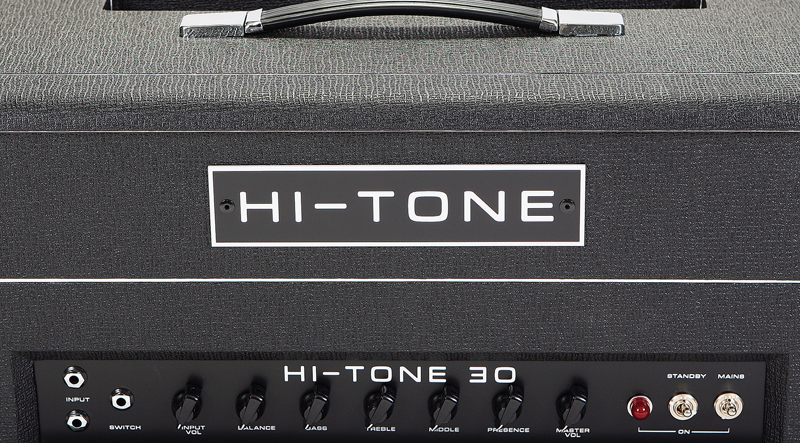
    Commonly referred to as the JP-30, this Hi-Tone is a 30-watt, all-tube head. The review model had a footswitch to reduce headroom and increase gain via the Balance control, as well as Variable Voltage Reduction that makes the amp easier to use in situations requiring less volume and more grit. The JP-30 was tested with Hi-Tone’s 2×12 cabinet with DR-F speakers.

    The JP-30 is not unlike other Hi-Tones in that it has more clean headroom than a good number of amps on the market. Clean, it offers that classic clang and a wide, clear midrange along with deep low-end and snappy, responsive highs that glue themselves to your dynamics.

    On the gainier side (with cranked Input Volume and Balance controls), it’s still classic, with a more AC30-ish high-end saturation. Low-end is massive, midrange still wide and clear, which creates a beautiful, huge distorted tone that makes even weaker single-coils sound girthy and wide.

    The character of the gain changes subtly with the guitar used. With a Strat or a Tele it focuses toward the high end; with a Les Paul, the midrange opens up and the tone becomes more buttery. With a P90-equipped semi-hollow, the gain was toppier, with more “air” in the mids.

    But this is not a “hide behind the gain” amp – it’s incredibly responsive and transparent, revealing every nuance of your playing. It also works seamlessly with boosters and overdrives, melding the characters of amp, guitar, and pedal into one gloriously loud formula.


    This article originally appeared in VG June 2017 issue. All copyrights are by the author and Vintage Guitar magazine. Unauthorized replication or use is strictly prohibited.

  • Henriksen’s The Bud

    Henriksen’s The Bud

    Price: $1,099 (list)
    Info: www.henriksenamplifiers.com

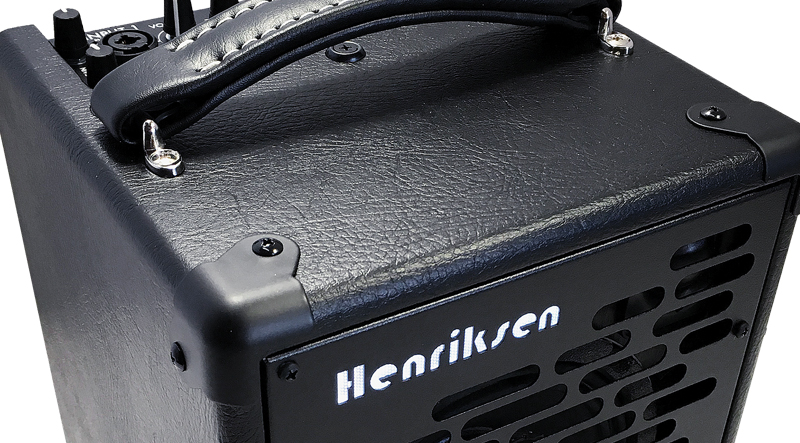
    In theory, a big guitar amp should sound larger than a smaller one. Then there’s Henriksen’s The Bud. Based on a cabinet created by company founder Bud Henriksen, it’s a small-but-powerful 120-watt box completely gig-ready for the acoustic or electric musician.

    The Bud measures a mere 9x9x9″, yet weighs 17 pounds, indicating there’s some serious mojo going on inside. The amp has two identical channels, each sporting combo 1/4″ and XLR jacks; input and output Gain controls; and a Bright switch and mini-plug Aux In. The EQ section has five bands (Low, Low-Mid, Hi-Mid, High, and Presence), and a digital reverb completes the signal path.

    Part of The Bud’s magic is a great pair of drivers – a 6.5″ Eminence Beta speaker and a special fluid-cooled tweeter to reproduce the upper frequencies of acoustic guitar without harshness. (Jazz cats will appreciate that the tweeter is “defeatable” – there’s an on/off switch for bop-fueled archtop work.) In the rear, working guitarists will dig the two effects loops, headphone jack, XLR line out, and external output. On the bottom, look for large rubber feet and a sound port that helps deliver the amp’s mondo bass dimension. The Bud is built like a small tank.

    Tested with Yamaha and Takamine acoustic-electrics, The Bud provided incredible volume output without any PA assistance. Its multiple EQ controls allowed for extremely precise tuning of the tone –very important to acoustic players. Despite the small main speaker, the tone was never small or muddy – you’ll easily find shimmering definition and personality. Dial in the digital reverb to sweeten the deal and it sounds terrific.

    In all, Henriksen’s The Bud is a small but ingeniously designed amp for guitarists and stringed-instrument musicians. Don’t let its size fool you – The Bud is a giant in its category.


    This article originally appeared in VG June 2017 issue. All copyrights are by the author and Vintage Guitar magazine. Unauthorized replication or use is strictly prohibited.