When hunting for a new acoustic, it’s useful to learn about tonewoods and construction, as both play a huge role in how an instrument sounds.
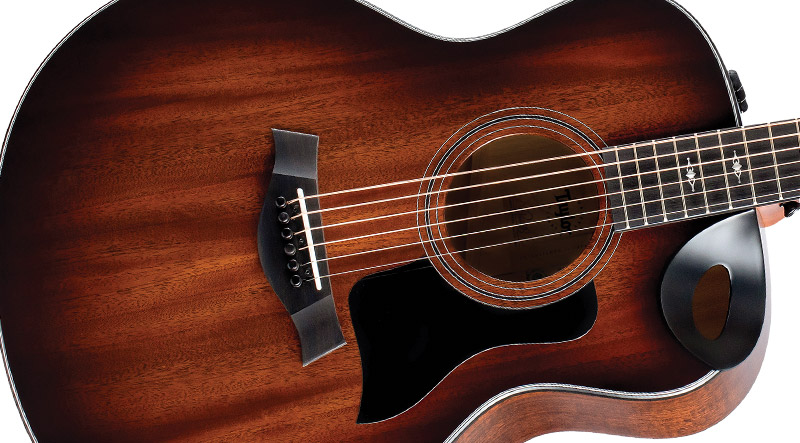
With Taylor’s Grand Symphony body shape, the 326ce Urban Ash departs from other flat-tops in several respects. Sides and back are made from a California species of ash tree (Fraxinus uhdei). The mahogany top is a hardwood, unlike the softer spruce on most acoustics. The combination of tropical ash and mahogany creates an extremely warm and focused tone, with a tight midrange perfect for fingerpicking, jazz, or any blues/roots jam. If you want a big, boomy dreadnought, other Taylors fit the bill. The 326ce is a subtler beast.
Visually, almost everyone will point to the unusual cutaway and ask, “What’s that?” It’s a newer feature called a Soundport cutaway, which allows upper-fret access without reducing the sound chamber as much as a standard cutaway; it also projects cavity sounds in a fresh direction. Taylor’s V-Class bracing system complements everything with even, stable dynamics.
In hand, the Urban Ash has an excellent neck and setup, thanks to that African ebony fingerboard and perfect fret dressing. The shallower D profile made grabbing chords a breeze and single-note runs like butter. It’s a first-class neck, all the more alluring with the shorter scale.
The 326ce Urban Ash is a good reminder of the importance of materials and construction. It has moderate acoustic output, but a sweet and surprisingly balanced tone with a warm top-end. For louder adventures, the Expression System 2 preamp is ready to be plugged into a PA or acoustic amp. Electrified or not, the 326ce offers a ton of aural possibilities. With its hybrid, beveled cutaway design and V-Class bracing, there’s even more to explore.
This article originally appeared in VG’s August 2021 issue. All copyrights are by the author and Vintage Guitar magazine. Unauthorized replication or use is strictly prohibited.
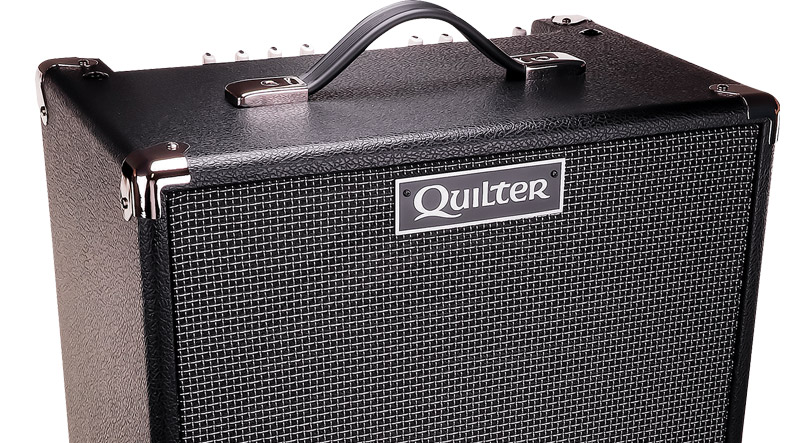
Quilter Labs has gained a rep for busting popular perceptions. They’ve attempted to step up their game with this single-channel combo voiced to deliver classic Fender tones – in a tubeless amp.
The Aviator Cub is an open-back cube, blissfully light at 21.5 pounds. It offers three distinct voices: Tweed (based on a 1960 Deluxe), Blonde (’62 Bandmaster), and Black (’65 Deluxe Reverb). Each is accessed through a dedicated input. The custom 12″ Eminence speaker has appropriate vintage character but also the capability to handle the Cub’s 50 watts.
The Cub manages overdrive with the interaction of Gain and Limiter controls. Using a Tele in the Tweed input, we dialed in a sandy drive with the Gain at 3 o’clock and the Limiter down all the way. To add more control, we brought the Limiter up a touch and found the grit responsive to guitar volume and attack.
On balance, the Cub was most convincing of vintage tones with less drive, though the Black’s high gain was full and plush. On the other end of the spectrum, the amp cleans up very nicely and can offer the round, burping tones with plenty of headroom that jazz players often seek in Class D amps such as this. It’s a wonderfully clean slate for pedals, too, whether through the front end or the effects loop. The versatile output section includes a cabinet-voiced line-out and a headphone jack that share a Level control independent of the speaker’s Volume control.
Low weight, low price, useful clean and driven tones, great speaker, quality build, no maintenance, and optimized for practice, recording, and live performance… Quilter hits a sweet spot. Plus, no pots-and-pans clatter from banging an amp with digital reverb. It’s difficult to imagine how modern solid-state technology could be more inviting.
This article originally appeared in VG’s August 2021 issue. All copyrights are by the author and Vintage Guitar magazine. Unauthorized replication or use is strictly prohibited.
Superlative Western balladry from songwriter/activist
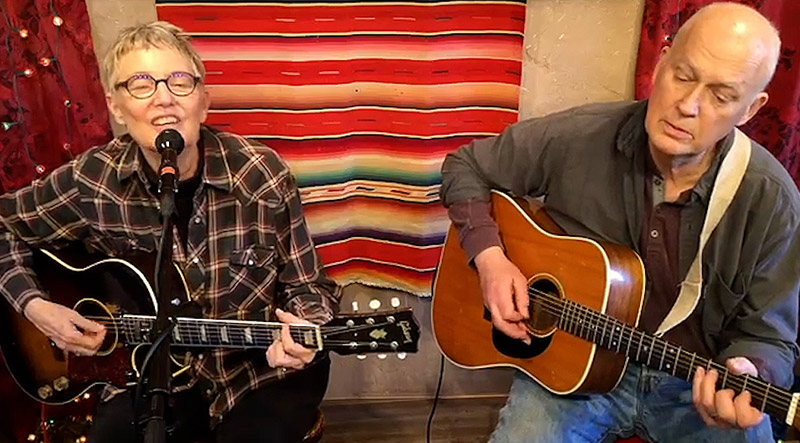
Songwriter/activist Eliza Gilkyson and multi-instrumentalist/producer Don Richmond sat for this exclusive (and exquisite) rendition of “At the Foot of the Mountain,” from her new album, “Songs From the River Wind.” Eliza deftly accompanies herself on her #1 guitar, a ’51 Gibson CF100e, while Don nicely flatpicks the 1970 Martin D-28 he bought new. A collection of guitar-driven cowboy/Western ballads, Eliza calls the album a “love letter to the Old West.” Read our review in the April issue! Read Now!
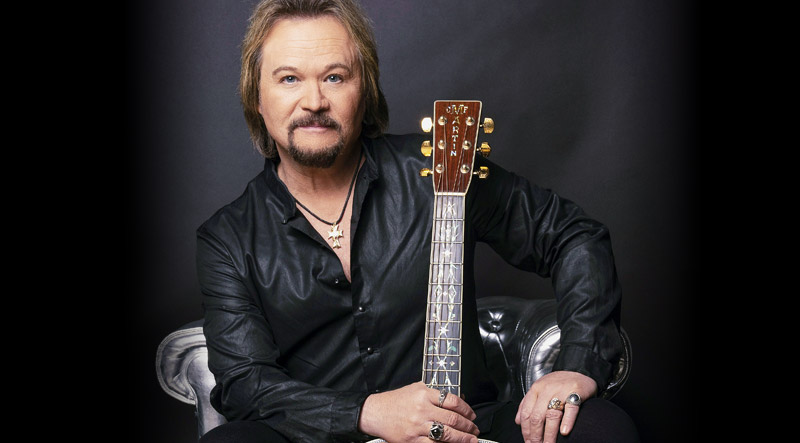
Tritt with his one-off custom Martin D-45 with abalone herringbone trim.
It’s not often a superstar performer willfully steps away from creating new music for a decade. For country singer/songwriter/guitarist Travis Tritt, though, it was a move with purpose.
“I decided 12 years ago to focus on my live shows,” he said. “I wanted to give the best performances I possibly could, and always had a hard time jumping from one phase of my work to another; every time I start on a new album I go into writing mode and I’m laser-focused. As soon as the writing is done, I go into recording mode, and I always had trouble transitioning, especially after an album was finished.”
It’s hard to argue against the methods of a guy who has seen seven of his 11 studio albums go platinum while selling 30 million units, joined with 20 Top 10 singles (five of which reached #1). He has also garnered two Grammys, four CMAs, and earned membership in the Grand Ole Opry. But, two years ago Tritt needed a change. So, he hired manager Mike “Cheez” Brown, who works with bands in an array of genres, including Sublime and The Dirty Heads.
“As soon as we started, he said, ‘You’ve had a tremendous career, but you also still have a lot of really good music left in you. Write that music – give your longtime fans something to appreciate, and draw new people.’
“The more I thought about it, the more it seemed like a good idea,” Tritt said. “And when the opportunity arose to work with Dave Cobb (Chris Stapleton, The Highwomen, Sturgill Simpson) as producer, it pushed me to go for it.”
The result is Set In Stone, his first album of entirely new material since 2007.
The way music is created has changed a lot since you recorded The Storm in 2007. How did that affect you?
That’s one thing I was really concerned about, and I had a talk with Dave Cobb before we agreed to work together. I told him about my concerns and he said, “Well, let me tell you how I’d do it… I’d go into the studio with some great musicians playing live in the room, and I’ll record live vocals as we’re laying down the tracks together because energy comes from that, and it can’t be replaced.”
That immediately set my mind at ease, because that’s the way I’ve done it going back to the late ’80s, when I started recording for a major label. The fact Dave stays as analog as possible made me even more comfortable; he records digitally, but dumps the mix down to tape just like we used to do in my early days. Once I knew that, it took all the uneasiness out of the equation.
Were the songs 10 years in the making, or were you focused for a shorter period?
More laser-focused, for sure. Early on, Dave suggested I work with a bunch of young songwriters he works with on everybody from Chris Stapleton and Jason Isbell to Brandi Carlile and Sturgill Simpson. I was amazed when these young writers came in and told me how much my music had influenced them. It was extremely flattering – and very humbling – to hear that.
I hadn’t done a lot of writing over the past decade, but it felt comfortable, natural, and easy with these people who’d written great things for so many people. It was just wonderful. We started writing in the fall of 2019 and finished in January of ’20. It’s a confidence builder when you get back in and realize, “Hey, I haven’t forgotten how to do this!”
Tritt’s favorite vintage piece is this 1950 “nocaster,” found for him by Marty Stuart. In ode to one of his heroes, Tritt sometimes plays this Waylon Jennings tribute Tele. Tritt’s ’63 Strat
The album bounces through a lot of moods and styles.
You know, when people found out I was going into the studio, a few asked, “What kind of music is it going to be? More traditional, more soulful, or Southern rock?” I’d tell them, “The only thing I can say is it’s going to be a Travis Tritt album. It’s going to incorporate all the things I’ve played on every album I’ve ever done.”
I always incorporate all the influences I had growing up. Traditional country has always been my core, my center, but I was just as influenced by Southern rock – Lynyrd Skynyrd, Allman Brothers, Marshall Tucker Band, Charlie Daniels. I was also heavily influenced by blues; I grew up listening to everybody from Muddy Waters to Ray Charles to Buddy Guy, B.B. King. Much later, Clapton and Stevie Ray Vaughan became huge influences. There was also bluegrass growing up, which I love. As a kid, I went to bluegrass festivals with my uncle, and I still go to them.
So, if you take all those genres and sprinkle a bit of Southern gospel over the top, that describes where I come from and who I am as an artist. I’ve always tried to show a little of all of it and I feel really good about the way we accomplished that on this album.
Who do we hear playing electric guitar and bass on Set In Stone?
This was the first time I had the opportunity to work with Leroy Powell. We met years ago, when he was playing lead guitar for Shooter Jennings and we did some touring together. I’ve always loved his playing, but I didn’t realize how great a player he was until we started working on this album. I also found out he’s a great pedal-steel player, a great harmonica player, and great Dobro player. It really was an absolute joy to work with him.
Working with Jimmy Fulbright on bass was incredible, as well. He’s the only guy I’ve ever met who never messes up. Most of the time, somebody wants to go back in and punch-in a fix on a section or note. As far as I know, Jimmy never had to do that. He was incredible.
Who else do we hear playing?
Dave Cobb is a tremendous musician; he and I did a lot of the acoustic stuff. He was playing a great-sounding Martin D-28 and I played my ’42 D-28, which was my go-to for the session; I used it on the intros and leads on “Better Off Dead” and “Leave This World.” I didn’t play any electric guitar this time.
What are your earliest musical memories?
My earliest memory of being moved by music is the gospel songs I heard in church when I was a kid in Georgia. It was the ’60s, and on Saturday nights, Dad would have us sit in our front yard and listen to the Grand Ole Opry live on WSM AM radio. Some of my earliest memories of falling in love with music came from those nights.
I couldn’t have been more than four or five when I heard Bobby Bare’s “500 Miles Away From Home.” There was something about the words and his delivery that grabbed hold of me. A few months later, Dad brought home an album by Jerry Reed and one of the songs was “500 Miles Away From Home,” but it was totally different. Jerry, being the great guitar player he was, started it off talking to other musicians in the studio. He says, “Okay, boys, don’t you all jump in right away, okay, ’cuz I’m just going to claw awhile.” He started playing that signature lick, and man, it just floored me as a kid.
Was that the beginning of your attraction to the guitar?
Well, it came from a lot of sources. Jerry’s stuff was too advanced, so I opted for musicians who music was easier, like John Denver and James Taylor, who was extremely influential to me when it comes to the guitar. I started playing when I was six years old, on a Harmony that Dad bought for me. When I turned 14, I asked for a real guitar – an Epiphone 12-string that I wanted because John Denver played a 12-string. Well, they bought one for me, and it was absolutely beautiful – sunburst and just so cool! And it opened a whole different world for me. When I’d hear a 12-string like Boston or some of the stuff from the Eagles, it blew me away – and motivated me to learn that much more. I absolutely loved that guitar.
Did it teach you about how more guitars can help you do more, musically?
Yes, it absolutely did. And I learned even more when I started playing clubs in the mid ’80s. I went into a little bar-restaurant one night where there was a guy on a riser in the corner, playing acoustic guitar and singing. He might have had a drum machine. I thought, “Man, I could do that.” So I did. The guy was Michael Bo Griner, and he’d let me sit in with him from time to time. Then, when he went to Nashville to pursue a career, I told the manager, “I want that job.” But I quickly found out that when you’re playing bars, you’re competing with a lot of stuff – alcohol, pool tables, pinball machines, dart boards…
Big-screen TVs…
Exactly! So I had to figure a way to get attention. I went to The Music Mart, in Smyrna, and bought my first Strat – a blond one – and a Twin Reverb, both brand new with a 100-foot guitar cord. All on a credit card. I was playing Monday through Friday, 8 p.m. to 2 a.m., and on Saturdays ’til 4 a.m. The first two sets were just me and an acoustic, being a human jukebox, doing everybody else’s stuff. Every now and then I might throw in something I’d written. But at midnight I’d pull that Strat out and do “Johnny B. Goode” or Credence Clearwater, and that 100-foot cord let me run out and jump on tables and kick empty beer bottles. Not only did it get attention, it made people want to come back. Maybe they were thinking, “I don’t know what this crazy guy is going to do next, but I wanna see it!” And over time there was a line out the door and around the building. That was my introduction to electric guitar.
After I started having some success with records and tours, I realized that in order to sound like my records, I needed to expand my guitar collection. That’s when I started getting Les Pauls, other Strats, and Telecasters because each song called for a different thing.
A reproduction of Merle Travis’ Bigsby guitar, made by Gretsch. A 1942 Martin D-28 herringbone and the Epiphone FT-160 Texan 12 that was Tritt’s first big step up from a beginner Harmony.
Were you buying new stuff or old?
Yeah, I didn’t have any vintage instruments until I met Marty Stuart. We did “The Whiskey Ain’t Workin’” together, which became a big hit, and Marty was at my house for several days while we prepared for our No Hats Tour in ’92. One day, he said, “You need to add some vintage instruments to your collection.” I said, “Well, what do you suggest?” And he said, “There’s two staples – a good herringbone Martin D-28 and a darn-good old Telecaster.”
He took it on himself to help me find them, and a few months later he called, saying, “Man, I found a 1942 D-28 that’s exceptional. It’s a little beat up, but has been used by an old bluegrasser. It’s got that sound.” So I bought it. Then a few months later, Marty called from California, saying, “I found a 1950 nocaster. You need this guitar, I’m telling ya’!” I said, “What’s a nocaster?”
He told me the whole story and said this one still had the cover on the bridge and its original pickups. He said, “It’s absolutely fantastic.” So I ended up buying it. The A&R guy at Warner Brothers who discovered me found a ’59 Bassman for me, and when I plugged that nocaster into that Bassman, it made the sound Leo Fender intended – just incredible.
All thanks to Marty Stuart, guitar pusher!
Absolutely. One thing I’ve always said about Marty is he’s real good at spending my money (laughs).
But he was getting you into vintage instruments before prices went too nuts.
Exactly, and educated me on a lot of instruments. Of course, Marty owns a ton of them.
I did stray away from Marty’s advice on a couple of occasions. In the early ’90s, Fender made a limited number of chrome-covered Harley-Davidson Strats. I’m a Harley rider and have several, so when that guitar came out, of course I wanted one. I called Marty and said, “I’m looking for one of these,” and he said, “Don’t buy one of those! It’s never going to hold its value!” Well, thank God I didn’t listen to him; I bought one and within a year its market price went through the roof. Marty called later and said, “That was a smart move on your part.”
Throughout your career, you’ve worked with some stellar studio lead guitarists – Richard Bennett, Reggie Young, Billy Joe Walker, Jr…
… Marty Stuart on numerous occasions. Yeah, every one of them brings an element that makes a song come to life. If I don’t have a signature lick or something that makes a song recognizable, all of those guys are so good at creating them. “Anymore” comes to mind; when we play live, I play the first few notes on acoustic and people know what it is. That’s because of the great guitar players I’ve had the privilege of working with over the years.
Whose acoustic lick starts that song?
That was a Billy Joe Walker, Jr. lick.
How about the lead?
That was Reggie Young, who influenced me so much, not only with his playing, but his tone. I remember one time in the studio in the ’90s; he was playing through a Matchless amp that he had never used before. He told me it was essentially a Vox, updated. He was just getting such a great tone, and as a result of watching and hearing him play that day, I bought a Matchless just like it. I’ve picked up a lot of cool things like that from different players.
Do you have a handful of other personal favorite guitar breaks or leads in your songs?
I would say probably “Homesick,” “Put Some Drive in Your Country”… There’ve been so many great ones, golly! My cover of “Leave My Girl Alone” also one of my favorite guitar licks.
What’s the story behind your custom Martin?
In the late ’90s, I was on tour with Marty again and when we were in Pennsylvania, he called and said, “Martin is making a signature guitar for me and I’ve got to stop there tomorrow. Would you like to go?”
So, we get there and Dick Boak came in and said, “You guys have got to see what just came in.” In the warehouse, they had some spruce tops along with Brazilian rosewood backs and sides cut in the early ’40s that had belonged to a luthier somewhere in Appalachia who had passed away and left the wood in his stash. They had just enough to make six guitars, and whoever got one has what is essentially a pre-war Martin.
And two of them were quickly spoken for?
Immediately! Marty ordered a pretty standard one, and once again, Marty Stuart spends my money extremely well (laughs); he told me, “I’ve had this idea for years… Instead of doing the herringbone in ivory, you should have them do it in abalone. Do it on the front, back, and sides, all the way around, like on the old D-45s; sound hole and pickguard, too.”
Marty had an early-’40s D-28 that had belonged to Lester Flatt, and there was something about that neck that was different than any other Martin I’ve ever held; it fit my hand perfectly. Marty took that guitar to Martin so they could measure its neck and make one for the guitar I was having built. Dick had a very intricate vine inlay that had never been used, so we used that.
I waited months for that guitar, but it was absolutely gorgeous. I think I paid $18,000, and even brand new it sounded old. I’ve written many songs on it. In the early 2000s, Martin wanted to do a signature guitar with me and because that was my favorite guitar, I said, “Let’s see if we can incorporate some things from it.” We did a half-cutaway with some of that abalone herringbone around the sound hole and the outside. I took my original back to do the measurements and let them take a close look. Dick said, “Even if we could find the wood to make this guitar again – which we can’t – it would cost over $120,000 to build.”
Wow!
Yeah! So I felt very fortunate. Anywhere I am, that guitar is close to me. It’s the one I play on the bus, when I’m waiting before a show, and at every writing session I do.
Do you have a favorite Les Paul?
The one that I play onstage every night. It’s a ’92 Standard the Custom Shop made for me. I’ve had several Les Pauls, but that one just feels right. It’s me. I also have a Gary Rossington signature that I love because it’s a great-playing, great-feeling guitar. And a few years ago, Charlie Daniels gave me one of the Southern Rock Les Pauls he did with Gibson, and I love that guitar, too.
Are there oddballs in your collection? Something you bought as a curiosity, or were given?
I had a couple gifted to me. When we did Blues Brothers 2000, all these great musicians were on the set one day – Clapton was there, and all the guys from the original Blues Brothers Band – Steve Cropper and Duck Dunn. B.B. King was there, Bo Diddley; I’d never met Bo before, and I kept asking about his guitar. When we finished, he gave me the one he was playing. I thought it was the coolest thing in the world. It’s an oddball and I’ve messed with it in my studio, but never onstage.
Later, I was working with Gretsch when they did a reissue of Merle Travis’ Bigsby, and I got one as a curiosity piece. When Gibson introduced the Nighthawk, they gave me a couple to see how I liked them, and I really did.
Unique electronics, that angled bridge pickup, like a Fender.
Yes, and you can create some very, very cool sounds with it. I’ve always loved Marty’s tone on an old Gretsch, like a Country Gentleman. I love those, so I got one years ago. It’s not vintage, but man it’s got that vibe, you know? That thing! Around that same time, I also got a modern Silver Jet. There’s some really cool things I can create with that guitar that I can’t do with any other.
This article originally appeared in VG’s August 2021 issue. All copyrights are by the author and Vintage Guitar magazine. Unauthorized replication or use is strictly prohibited.
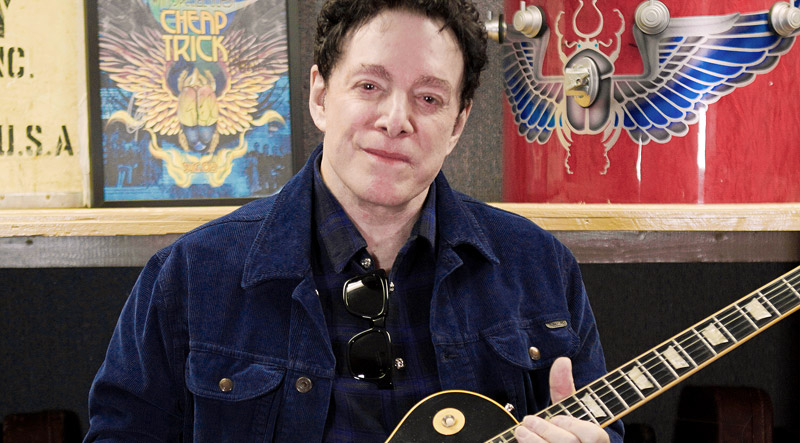
Eyebrows raise with news that a superstar guitar collector is preparing to sell iconic instruments. Alarms might trigger, even. But don’t dial 9-1-1 for Neal Schon.
Holder of 800 instruments “…and counting,” Schon, co-founder of one of rock’s all-time biggest acts, recently discovered that his 15,000-square-foot storage facility was bursting at the seams. But his motivations for selling 112 guitars via Heritage Auctions on July 31 go beyond simply having “too much.”
Son of a jazz musician and big-band arranger, Schon was given a Stella at age 10 and immediately took to it; within a few months he was proficient enough to earn a big step up…
How did you become enamored with great old guitars?
The first “vintage” guitar I owned was a beautiful ’63 ES-335 my father bought for me when he knew I was serious about playing. I was heartbroken when it was stolen from our apartment in San Mateo – it was a really nice one, man. We bought it used, but it was so clean and had a beautiful neck – very, very comfortable. And it sounded amazing; it’s one of the reasons I still love 335s and 355s.
I’ve listened to and learned from so many amazing guitarists, and the more I learned about different tones and textures, the more I wanted to experience them all, from big jazz boxes to Les Pauls to Teles and Strats. Then, working with Paul Reed Smith, I discovered many things about chambering and semi-hollow bodies; I wanted something that suited what I was looking for.
Schon is selling several late-’50s Les Pauls including (left) the “Grainger Burst,” formerly owned by Rod Stewart guitarist Gary Grainger, this all-original ’59 with nice flame, a very clean/all-original ’59 Custom, two goldtops with PAFs.
How did you manage to gather 800 guitars?
“Man, I’m a guitar fanatic – as bad or worse than Joe Bonamassa (laughs). For many years, I’ve invested in the finest I could find – those I admired and wanted play. But until Covid, I was always working, so I didn’t have time to go through and really experience them. Once I finally had time on my hands and got to set them up and actually play them, I was astounded by the pieces I’d found all over the world, going back to my beginnings in 1971 with Santana.
When and why did you decide to sell some?
I’ve been thinking about it for quite some time, but for years we’ve been touring for six or seven months out of the year, or we’re recording, so I never got around to sorting through things. Finally, when we had all this time off I managed to get to our warehouse with my guitar tech, Adam Day, who organized everything and filed it all, took pictures – the whole thing. I finally knew where everything was, so I could find it without going through 800 cases. It was quite a task.
At the time, I was working on another solo project with Narada Michael Walden, called Universe, where used a custom 24 NS-14 and a couple of custom Strats. I’m all about moving forward with different designs tailored to my needs.
A reare 1960 Gibson Les Paul Custom finished in red for the export market. Schon used this ’77 Les Paul Pro to write and record “Don’t Stop Believin.’” His go-to studio and stage guitar at the time, it was also seen on Journey world tours. Schon was 15 when he was asked to join Santana with this Les Paul goldtop. A survivor of the Schon experience, it has been re-fretted, refinished, re-bridged, and given different pickups. He also installed Grover tuners and for a time it had a Kahler vibrato that is being sold with the guitar.
As you were choosing pieces for the sale, how did you filter?
Well, they’re all amazing instruments, and I’ve had a lot of fun with them. I tried to round out what to sell, and really, I gave Heritage some of my finest pieces – stuff I would stick in a museum if I had time to run one. Some of it is so clean I won’t play them or mess with them, as I like to changing pickups, rewiring, and reworking things until I get what I want out of them so. For example, there’s an absolutely perfect Les Paul Standard and a perfect blackguard Tele.
Do you feel it’s just time for them to move on to their next “life”?
I’d just like somebody to experience them. The ’59 Les Paul Standards we’re selling are two of the cleanest I’ve ever seen. The Strats are off the hook. The blackguard Teles are off the hook. There are Broadcasters, a couple Teles, and two “nocasters.” I love them all, but I have a few Custom Shop ’63 Teles that I just love and do everything I want them to do.
I’ve been fortunate enough to make a really great living and to buy the guitars I’ve always wanted. I’ve experienced most everything I want to try, so now I want to hone my collection down to my top 15 or 20, where I know exactly what the guitars are going to do every time I pick them up. There a few I always bring to the studio because I know exactly what they’re about – they do what I want and sound the way I want them to sound. The necks are worn to my hand and their frets are the way I like them.
Schon is selling three blond ES-335s including this ’58 with nice birdseye and a bit of quilt in its maple top, and this ’60 with original PAFs and minimal fret wear. Also up for bid will be a ’60 in Cherry Red. The guitar Schon used to write “Wheel in the Sky” and “Patiently,” this ’74 Guild F-50R has rosewood back and sides. A true road dog, it shows the wear of many tours and has been re-fretted. Its “Journey”-stenciled flight case is part of the sale.
You’re selling a few keystone guitars from Journey’s heyday, including the black Les Paul Pro with the Floyd Rose you used on Escape and the legendary single “Don’t Stop Believin.’”
Yeah, that guitar has been on many, many famous records, songs, and tours – “Stone in Love,” “Who’s Crying Now,” and the Escape tour that was shown on MTV back then. The DVD of that concert was released in 2005 and the clip of “Don’t Stop Believin’” has 122 million views on Youtube.
What’s interesting about that guitar is the fretboard is ebony and the neck is maple, so it’s got some snap with the mahogany body – it speaks really well.
There’s also the late-’60s Les Paul goldtop you played in Santana.
I ended up experimenting with that one on later Journey albums and tours; I put humbuckers in it. Back then, I used it on Santana III, including “Everybody’s Everything,” and also on Caravanserai.
I got that guitar by trading a Gibson Barney Kessel. After the 335 was stolen, we used the insurance money to buy the Kessel because I thought I wanted to play a jazz box. But it was just too big for me, so I traded it in for the goldtop, which became my main axe for the longest time – I played it in every club up and down Broadway in San Francisco, jammed with Elvin Bishop a lot, and with B.B. King at the Fillmore. I loved that guitar and its amazing neck and sound.
An excellent-condition ’51 blackguard Tele and exceptionally clean ’51 “nocaster.” Schon worked with Jackson to build this Schon-branded superstrat in 1987. It has proprietary passive pickups and an ebony fretboard.
Another is your Guild F-50R, which offers a truly unique chance to own the guitar used to write and record “Wheel In the Sky”…
“Wheel In the Sky” and “Patiently,” which was the first song I ever wrote with Steve Perry. It’s basically on all the records I did when Steve first came to the band – Infinity, Evolution, Departure. All of the songs with acoustic guitars are that one and the Guild 12-string. I had an endorsement with Guild at the time, and that was my pre-show warm-up guitar for years before Steve came into the band.
What spurred your interest in playing acoustic?
I was a fan of Peter Townshend and the early Who; I learned a lot by listening to them. There was always really strong acoustic mixed with the electric, so we started doing that in Journey with producer Roy Thomas Baker.
Why not put it in a display case?
Well, I’ve moved on, you know? We’re in different places. It just sits, so I think somebody should enjoy it. And really, the songs are what have sentimental value to me; I don’t feel it’s the instrument that’s magical. The magic comes from within yourself and the people in the room. It doesn’t matter which guitar I used; the Guild just happens to be the one I used on the road for all those tours. It’s a great guitar, but it had its day with me. Somebody’s going to love it. I have so many great acoustics now. I’m evolving every day and I get inspired by new guitars.
You’re selling some very clean vintage ES-335s.
They’re some of the cleanest I’ve ever owned – there are three blonds – ’58, ’59, and ’60. There’s also a 355 in mint condition. Now, I use a beat up Custom Shop one made years back that I really like. So, someone can scoop up these gorgeous old ones.
Among a handful of pre-CBS Strats in the sale are this ’63 in Olympic White and ’64 in Candy Apple Red.
Are you still buying/adding to the collection?
Yes, I’ll always be buying when something catches my eye. I’ll get it and see where it takes me.
Which guitars are you using most these days?
I have several go-tos for recording. Right now I’m working on a new Journey record with Narada Michael Walden on drums and Randy Jackson on bass. I brought 20 of my favorites into the studio – some are Fenders from the Custom Shop, then there’s an old NS Les Paul signature that Les loved when he saw it – we were friends and I got to play with him quite a few times. That guitar was the first to have my Axcess neck and does a certain thing I’m looking for on certain songs.
I also used a ’63 Tele. I’d never played many Teles on a record, but I got really into them some time ago. I had to mess around with them, and when I found the right Fuzzface in front of a Tele, I was like, “Wow, that’s something else!” It just jumps, and you can get all the tones out of the bridge pickup. Just bring the Volume up and set the amp right and you get nice Strat fatness, but it’s really detailed and you hear every note. Pull it down and roll off a little bit of the Tone so it isn’t so bright. I’ve really gotten into working the Volume and the Tone on a nuts-and-bolts guitar.
There may not be a modern comparison to how big Journey was with Escape.
You’re saying “was,” but it’s not over, man (laughs)! We’ve been so fortunate, and we’re going back into stadiums now, selling out arenas. It goes to show that, more than any individual, the band has been about the songs we crafted. They’ve stood the test of time and they’re classics. We’ve been through a lot of changes, but we’re blessed to have so much great fan support. They’re one of the reasons I got on Instagram and Twitter and Facebook during the pandemic; I wanted to take people’s minds away from the hard times and create music on the spot, which everyone really seemed to enjoy and helped ease the downtime. I love my fans and like to stay in touch with them.
This article originally appeared in VG’s August 2021 issue. All copyrights are by the author and Vintage Guitar magazine. Unauthorized replication or use is strictly prohibited.
“Why are you all playin’ that modern music?”
Asleep at the Wheel guitarist Ray Benson fielded the question from Harry, a regular at the Sportsmen’s Club in rural Paw Paw, West Virginia, after singer Chris O’Connell fronted their jazzy rendition of the Bob Wills favorite “Right or Wrong” as part of the band’s earthy retro-country repertoire that charmed locals wary of hippies, but to Harry, the ’20s pop tune sounded weird with its jazzy melody and changes.
“To him, it wasn’t hillbilly music,” Benson laughs.
“I had pretty lofty goals as an 18-year-old. I did say we were going to change country music. Our generation rejected country because of the political side – Vietnam, hippies, rednecks, whatever. Our thing was, ‘How could you reject Merle Haggard’s music just because of ‘Okie from Muskogee’ and ‘Fightin’ Side of Me,’ which maybe we didn’t believe in at that time? It was the roots of country music. That’s what we were concerned about – it was slippin’ away. We wanted to do our own version – play this music, but make it our own.”
Benson and childhood friend Reuben Gosfield, a.k.a. Lucky Oceans, both left college at age 19 to form the band in 1970. Joined by mutual friend Gene “Leroy” Preston, they settled in a cabin near Paw Paw to hone their talents.
Half a century later, Benson, co-founder, leader, vocalist and songwriter, reflects on five decades of triumph, setbacks, honors, and endless personnel (and gear) changes that helped revive Western swing. The road to eight Grammys (and 27 nominations) began in a comfortable suburban household just outside Philadelphia.
Benson’s ’51 Epiphone Zephyr, ’48 Triumph, and late-’40s/early-’50s Deluxe Regent.
Ray Benson Siefert, born in 1951, was one of four children. His parents and siblings were all music-oriented. After playing recorder and taking piano lessons, at nine he discovered his sister’s tenor guitar; a year later, he joined her and two other kids in a folk quartet called the Four Gs (each played a Goya nylon-string) – “The standard for suburban folksingers,” he laughs.
At one Four Gs performance, Benson remembers, “This guy had an f-hole archtop. I’m thinking ‘Wow! What’s that?’ He was comping chords as opposed to ringing chords. I was intrigued.”
As the Four Gs scattered in 1965, Benson dug deeper into music with Lucky, whose parents were kind of suburban beatniks.
“They knew jazz and collected 78-rpm records,” Benson said. “Their collection spanned jazz, blues, and folk.
Benson’s guitar bevy includes these Buck Owens and Merle Haggard tribute Telecasters.
“The journey was to hear people you like, and play their stuff – rock and roll, jazz – I learned how to play ‘Misty.’ I could read music because I was studying bass and tuba. A lot of worlds opened up.”
A neighbor taught him to play Lonnie Mack’s “Memphis” and his jazz interest grew through older brother Mike, a musician wired into the robust local scene.
Benson still owns his first steel-string, a Regal resonator he calls “not a great guitar.” As rock exploded at home and overseas, the 16-year-old worked as a lifeguard in the summer of ’67 to afford gear, starting with a Harmony 335 he played through his dad’s tape recorder.
“I plugged it in and pressed ‘Record.’ That was my first amp. It had a 4″ speaker!”
A Fender Bandmaster soon filled the void before he bought a Telecaster Custom for $125.
“That’s where I learned to play electric guitar. It had flatwound strings and I couldn’t bend anything; nobody told me wound strings are a lot easier to bend.”
Lucky’s love of blues enabled them to explore B.B., Albert, and Freddie King, Muddy Waters, and R&B. Ray also gravitated to the jazz virtuosity of Barney Kessel and Herb Ellis. They were both part of short-lived units like the Red Eye Blues Band, followed by Orange Juice – “a bad psychedelic rock band.”
Benson took paying gigs on bass and began writing. He’d often join Lucky to haunt the pawn shops on Philly’s South Street, adding, “I bought some incredible guitars I wish I’d kept.”
The friends absorbed Buck Owens, Ernest Tubb, Johnny Cash, George Jones, Hank Thompson, and Merle Haggard; Lucky’s 78s introduced both to Wills.
As graduation approached, he bought a Guild Thunderbird.
His Collings SoCo 16 LC Deluxe is now the only semi-hollow he takes on the road.
“Muddy played one and Zal Yanovsky played one in the Lovin’ Spoonful, and mine was great but I pawned it in Oakland when I moved there in ’71.”
While studying filmmaking at Antioch College, he heard Commander Cody and his Lost Planet Airmen, with Bill Kirchen on Telecaster. Their madcap, twanging mix of country, Western swing, and rockabilly inspired his original concept.
Recruiting Lucky (who attended an Antioch campus in Maryland) and Preston, they settled in an unheated cabin near Paw Paw in March, 1970. Lucky, playing lap steel, coined the name Asleep at the Wheel. As musicians came and went, the Sportsmen’s Club remained a training ground.
“Four sets a night, you get to play everything – Ernest Tubb’s ‘Thanks A Lot’ and ‘Let’s Say Goodbye Like We Said Hello.’ Leroy and I sang Hank Williams and Merle Haggard. Our big numbers were Roy Acuff’s ‘Wreck on the Highway,’ Hank Williams’ ‘Settin’ the Woods on Fire’ and anything by Buck Owens, like ‘Cryin’ Time.’ We wrote songs in that form.”
“I turned to Lucky and said, ‘Man, I’m tired of just playin’ turnarounds. Let’s do some more Bob Wills stuff, where we can play all solos.’ For that, you had to practice, and we practiced every day.” They also landed a few gigs in Washington, D.C.
Late 1970 brought singers Chris O’Connell and Emily Paxton to Paw Paw, both from D.C. Emily soon returned home but O’Connell, able to handle swing, blues, and Loretta-Lynn-style country, remained.
“We took it seriously. We started out pretty raw and through hard work and playin’ all the time, got pretty good in a year and a half.”
Haggard’s 1970 album, A Tribute to the Best Damn Fiddle Player in the World (or, My Salute to Bob Wills), deepened their understanding of his music.
“It was a game changer,” Benson said. “Because of quality of the recording, we could actually hear the bass and other stuff we were missing on the 78s.”
Ray and Lucky also delved into the complex country-jazz instrumentals of Ernest Tubb’s band, Texas Troubadours. Starting with “Redskin Rag,” the pair emulated the incandescent team of guitarist Leon Rhodes and pedal-steel man Buddy Charleton.
Still in contact with the Berkeley-based Commander Cody, Asleep moved west in August, 1971. Settling in Oakland, they played local bars, briefly toured with country singer Stoney Edwards, and opened shows for Van Morrison. After he lauded Asleep in a 1972 Rolling Stone interview, major labels took notice and they signed with United Artists.
Benson onstage in ’77, testing the load limit of a blackface Pro Reverb.
Benson used some of the advance money to purchase a modified 1960/’61 Gibson ES-355 for $500. The seller claimed it was owned by Leon Rhodes, who favored Epiphone Sheratons (not Gibsons), but when Ray showed it to Rhodes, “Leon told me, ‘The frets are filed flat. I’d never do that.’”
Benson played it into the ’80s before selling it to the Hard Rock Café.
Comin’ Right at Ya, a 1973 country/swing effort produced in Nashville by ex-Bob Wills/Buddy Holly guitarist Tommy Allsup, earned praise, but poor sales led United to drop them.
The band met Doug Sahm and Willie Nelson in California, and both lauded Austin’s fast-growing music scene, adding that Asleep would fit in. After playing one gig in a year, they relocated and began touring nationally. A 1974 album mixing country, swing and vintage R&B also fizzled.
Writing an appreciation of Wills for Country Music Magazine, Nelson name-dropped Asleep, noting they “…do the old Bob Wills songs exactly.”
“We listened to the guys the Playboys were listenin’ to,” Benson says. “Who was (guitarist/arranger) Eldon Shamblin listening to? Charlie Christian. (Pianist) Al Stricklin was listenin’ to Fatha Hines. We went back to the source.”
A formidable, versatile singer, O’Connell also became a capable rhythm guitarist. “She was a solid chunker,” Benson says admiringly. “She had a bunch of guitars including a wonderful Gibson L-50.”
1975 brought a new label, Capitol – and success. Texas Gold was a seamless mélange that refined their blend of authoritative, confident Western swing, country, and R&B. The album and the barroom-weeper first single “The Letter that Johnny Walker Read” reached the country Top 10. A year later, they were showcased on the debut episode of Austin City Limits.
Benson got to know other Austin talents, the Vaughan brothers among them. “Stevie and I were just friends and we’d jam. Watching the progress of a musician going from good to great is amazing; Stevie was going from good to great to legendary. “
Meeting and working with former Texas Playboys bestowed even greater education. “I stole from Eldon, absolutely. Just watchin’ him, sittin’ next to him, that was quite an experience. He was amazing. We did sessions with him, (fiddler/electric mandolinists) Tiny Moore, and Johnny Gimble. Eldon would say, ‘You play this, you play this, you play this and you play that.’ That’s what he did on the Wills band.”
Did Willie’s Django-inspired picking influence Benson?
“Absolutely! And of course, his phrasing, which is the same as his vocal phrasing – behind the beat, ahead of the beat, over the beat, whatever. I learned so much from Willie. He’s not a technical player. And Willie don’t read nothin’ – he’s a total by-ear player, but so sophisticated and so original. “
Despite four albums, Grammy nominations, and a 1979 win for their roaring big-band Western swing version of Count Basie’s “One O’Clock Jump,” Capitol dropped them.
“The ’80s were very rough – from ’80 to ’86/’87,” he recalls. “We didn’t have a record deal. Willie would let me go to his studio and record, so we had a record, but nobody wanted it.”
1982 saw Lucky marry and move to Australia; O’Connell departed four years later. New members came and went.
“About ’82, I had to bill the band as Ray Benson and Asleep at the Wheel because people were wondering, ‘Who’s gonna show up?’ I said, ‘As long as I show up, they’ll accept that this is Asleep at the Wheel.’”
Their 1987 album, 10, launched a turnaround by reaching the country Top 20 and yielding a Top 20 single with the ’40s tune “House of Blue Lights.” Two instrumentals – “String of Pars” and Hank Garland’s “Sugarfoot Rag” – earned Grammys.
After selling his 355 to Hard Rock, Benson used an ES-347 he calls “a great guitar” and an ES Artist with its active electronics disabled. Visiting the Samick booth at an early-’90s NAMM show, a solid guitar body hanging on a wall caught his eye. The company had just bought Valley Arts.
“I said man, that is gorgeous! What is it?” He had them complete the instrument and for years it served as his primary. They later built more for him and in 2005 he traded one to the Hard Rock to reacquire his beloved 355.
Asleep’s resurgence brought a series of Wills tribute albums beginning with Tribute to the Music of Bob Wills and the Texas Playboys, joined by contributors ranging from Dolly Parton and Chet Atkins to Haggard and Huey Lewis. One instrumental, “Red Wing,” earned Grammy number four. The album spawned two follow-ups – Ride with Bob, which also became a stage presentation, and Still the King.
An institution by the early ’00s, they performed at the White House for President George W. Bush and for 2008 Presidential candidate Barack Obama, who joined them onstage to sing a bit of “Boogie Back to Texas.” A year later, they teamed with Nelson for Willie and the Wheel, an album-length excursion into Western swing favorites by Wills and others.
Benson has an Epiphone Zephyr Regent and matching amp he’s used on records since 1975.
“I use a reissue Fender Deluxe on the road. I leave my ’67 version at home. I also have this 1938 National amp; instead of grillecloth, it has a Dobro cover.” And, there’s a 1970 Fender Princeton; “I still use it but not on the road.”
He also leaves his archtops at home except for the Collings SoCo 16 LC Deluxe. “I’m big, and I need a bigger guitar to get a little lower-end sound,” he said. I just love it. Collings is one of the top two guitar manufacturers in America – they’re perfectionists.”
String choices are consistent, and mostly wound – .012, .014, .017, .036, .040, and .052. – though he has an old ES-5 with flatwounds.
His favorite players are diverse. For lead he says, “Jimmy Wyble is who I wanted to be… (and) T-Bone Walker.”
Freddie Green and Shamblin remain his rhythm heroes. “I’m a chunker, man (laughs). I’m an okay lead player, but I’m a real good rhythm player. I love the Nashville rhythm players, but I was introduced to Freddie when I was 15, and playing bass. And Eldon is the best.”
He’s also a fan of amazing players outside the genre.
“Tommy Emmanuel is just amazing, and there are so many out there in the jazz world – John Abercrombie, Bill Frisell, Wes and Django and Barney Kessel, Johnny Smith and Herb Ellis.”
Behind the scenes, Benson’s son, Sam Siefert, produces the records and manages the band as head of Bismeaux Productions.
While Benson was stricken with Covid-19 in 2020 as the pandemic curtailed tours and delayed recording projects, in early ’21 he toted his J-200 on small-venue tours as the Asleep at the Wheel String Band with the band’s two fiddlers and bassist.
“We got tired of sittin’ on our asses, and I figured, ‘Let’s go do what we can.’ We’ve all been vaccinated. We’re fine.”
Size notwithstanding, reflecting on the hundreds of musicians who’ve passed through over the past half-century, he concludes, “Anyone who plays the Wheel’s 100 to 150 shows a year gets better. It’s a muscle, man, you gotta use it!”
Asleep A-Listers
Past members reflect on their time in the band
Lucky Oceans
Lucky Oceans: lap and pedal steel 1970-1982
“It’s been a great ride with Ray, and getting to be a long one, too!” says Reuben Gosfield, a.k.a. Asleep at the Wheel steel guitarist Lucky Oceans, who gave the band its name. They “met” as children living in the Philly suburb of Wyndmoor.
With music-loving parents and their eclectic collection of 78s, Oceans delved into various styles, and the Byrds’ 1968 Sweetheart of the Rodeo album especially impressed him. Buying 78s introduced him to Bob Wills, and Leroy Preston further expanded his (and Ray’s) interest in country and vintage R&B.
His first live exposure to the instrument was lap-steel blues man Freddie Roulette with Charlie Musselwhite in a Philly club, and steel players on records became heroes, including various Texas Playboys along with Don Helms, Jerry Byrd, and L.A. Western-swing icon Earl “Joaquin” Murphey.
Oceans arrived in Paw Paw with a borrowed six-string lap steel tuned in E. He later traveled to Manny’s, in Manhattan, to buy a Sho-Bud pedal steel he tuned in E9. Sho-Bud co-founder Shot Jackson’s sons later gave him a doubleneck Professional model he still owns; Buddy Emmons became his pedal hero. He also acquired a Rickenbacker lap steel, tuned in C6.
The band’s name came to him by “mixing a trucker’s theme – ‘Don’t fall asleep at the wheel’ – with the idea humanity is hurtling forward with lots of momentum but not much thought-out direction.”
California and Austin were his turning points.
“With the addition of [bassist] Tony Garnier and pianist Floyd Domino in the Bay Area, and the assistance [in Austin] of Johnny Gimble and Tommy Allsup, the band was able to build on those rough-and-ready West Virginia beginnings.”
Texas Gold, he adds, was a bellwether that “solidified our eclectic approach and belief there was a unity of roots music,” especially between the hard-to-pigeonhole genres of Western swing and R&B. So far as his own great moments on record, he cites his C6 lap solo on “Take Me Back to Tulsa” from Comin’ and “Dead Man” from Asleep’s second album.
Oceans married and moved to Australia in 1982, where he remains, performing roots music with the bands Dude Ranch and Zydecats, while also hosting presentations and world music programs for Australian media. Distance, however, hasn’t eroded his ties to Asleep; he won a second Grammy for his work on their 1993 Bob Wills tribute album and appeared on their 25th Anniversary “Austin City Limits” reunion. A reunion album of the original band is in the offing.
“It was great fun and a privilege to learn as we grew up, and experience all those crazy times together. We were a team, but it was always Ray who had the vision and the dedication of how to keep the wheels rolling. And how amazing that it’s still going today, and we’re all still around!”
Chris O’ Connell
Chris O’ Connell: vocals, rhythm guitar 1970-’86
“Look,” Ray Benson counseled the unsure young woman who arrived unannounced at the band’s Paw Paw headquarters in the fall of 1970. “You either want to do this or you don’t. If you do, you need to get busy and learn songs.”
“A rhythm player was born,” Chris O’Connell warmly remembered.
She and her friend/singing partner, Emily Paxton, had seen Asleep open for California country-rockers Poco in Washington, D.C., on October 4, 1970. “We came out knowing the Wheel was infinitely cooler, way more captivating, and musically hipper.”
An Arlington native, her parents were jazz-minded; her father played alto sax in the ’20s and ’30s, her mother loved Ella Fitzgerald, Sinatra, the Mills Brothers, and Keely Smith.
O’Connell used Leroy Preston’s D-35 and Takamine acoustics until she bought a Gibson L-50 (nicknamed “Chester”) “…for a couple hundred bucks in Berkeley. I played it standing in front of a mic for years. I didn’t have to hear it. I could feel it, and came to love the driving power.
“I didn’t start deliberately listening to rhythm players until after I started in the band,” she admits, crediting Comin’ Right at Ya producer Tommy Allsup, himself a rhythm specialist, with guiding her through the 1972 sessions.
Ronnie Earl showed her chord progressions and patterns backstage at a Roomful of Blues show. “I’ll be forever grateful, not only for him sharing some cool stuff with me, but for embracing me as a fellow musician and not just ‘the girl.’”
Working with Johnny Gimble and other Texas Playboys was especially fulfilling. During the 1975 Texas Gold sessions, she says, “Gimble put a tenor banjo in my hands one minute before the tape rolled on ‘Fat Boy Rag,’ and said, ‘It’s only three chords! You can do it!’ And I did!”
“When I saw Freddie Green at an impromptu jam in New York City with a scaled-back version of the Basie band, I stood mere feet from him and watched his hands. I was transfixed.” Her Green-style comping is heard on the Grammy-winning “One O’Clock Jump.”
Now living in the Bay Area, she performed pre-pandemic with her band, The Smart Alecks, which includes former Asleep steel-guitarist Bobby Black. Her trusty ES-295 was stolen last summer, but she still uses her L-50.
“Only Ray has the secret to keeping the style going, with the revolving door of talent,” she reflects. “The Wheel is his baby, and his job is to protect it, nurture it, enable it to grow. I slept, played cards, drank, and chunked on my L-50. I never had to make a business call or arrangements to pull the bus out of a ditch.
“Asleep gave me a platform, and for the most part, free rein to sing whatever I wanted,” she said. “They gave me a space to feel authentic. It was music school, and I loved that part of it. As they say in Ft. Worth, ‘I wouldn’t trade.’”
Cindy Cashdollar
Cindy Cashdollar: steel 1992-2001
“I’ll give you six months,” Ray Benson told Cindy Cashdollar when he hired her to replace John Ely as Asleep at the Wheel’s steel guitarist. In nearly a decade of recording and touring, she earned five Grammys for her work on two of the band’s Bob Wills tribute albums.
Cashdollar took up steel very late in life and played around her native Woodstock with Levon Helm and Rick Danko before spending five years playing dobro with Leon Redbone. In Austin, she studied steel with Ely, Maurice Anderson (creator of MSA steel guitars) and former Texas Playboy Herb Remington. “Great teachers, all three of them,” she recalls warmly.
“Ray keeps the flame of Western swing, and in a way, he’s like Bob Wills. He’s bringing stuff to the public, but I think he’s in sync with what the public wants. He was the embodiment of Western swing – carried on where it left off and knew all about the horn-section sound, the fiddle, and the steel.”
Benson and other band members enlightened her as to the steel’s vital role.
“I had to think like a horn, and how a horn would attack, soften, or punch the note. The parts were set in stone. A lot of those arrangements would change. I didn’t read or write music. Still don’t.
“When I joined, I had a doubleneck, and realized I had to learn more tunings, so I got a triple-neck.”
She used a three-neck Fender Stringmaster, often with a Peavey amp through Asleep’s endorsement deal. Her tunings were E13, C6, and A6.
“Keeping one neck in reserve, I could try one riff out each night in a strange tuning until I got comfortable with it.”
Her horizons widened when she met former Texas Playboys Remington, guitarist Eldon Shamblin, and fiddler/mandolinist Johnny Gimble. All occasionally recorded and performed with Asleep.
“That was an eye-opener to watch Eldon and Herbie and Johnny in the studio – one take, usually. I remember Eldon came in one day, set up, walked over, and plugged his guitar in. I turned to him and said ‘What settings are you using?’ He said ‘Oh, hell, I didn’t even look!’”
Cashdollar departed amicably in 2001 and before covid, worked with them occasionally.
“I am so grateful to have had the opportunity to work for somebody such as Ray, who has such conviction. That band is his life. To work with such incredible instrumentalists with such history really was the opportunity of a lifetime.
“I was so happy for the opportunity to be in a band with an instrument slated for country music, getting to play jazz and swing, blues, covers, and everything under the sun that Ray had the good sense to do. I’ll always be eternally grateful to him for giving me a chance.”
This article originally appeared in VG’s August 2021 issue. All copyrights are by the author and Vintage Guitar magazine. Unauthorized replication or use is strictly prohibited.
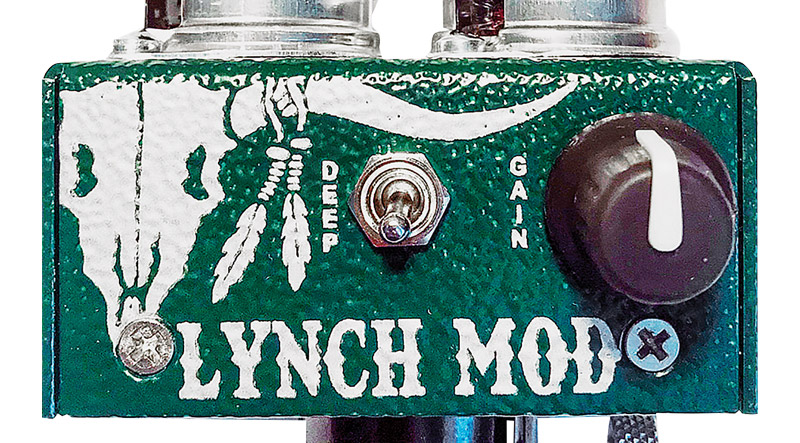
Designed for guitarist George Lynch, the Lynch Mod introduces an additional, non-permanent gain stage to the classic Marshall circuit.
The device uses two 12ax7 preamp tubes on a base that fits snugly into the V2 socket of classic Marshall amps, including JMP and JCM 800, as well as several reissues. It was Lynch’s idea to add the Gain knob, which goes from unity to scorching hot, and a Deep switch for a low-end bump.
Installed in a 1973 50-watt Model 1987 in under five minutes, the Lynch Mod proved easy to use. With a reissue Les Paul, the hot-rodded amp produced tones from juicy blues with great dynamics to full-on shred with a sweep of the gain. A flick of the Deep switch with a ’63 Strat rounded out the single-coils’ bass tones. Both guitars’ Volume knobs were very interactive with the Lynch Mod’s gain.
Unlike certain pedals, the Lynch Mod mostly avoided added noise. Another benefit was that it did not overcompress chords or notes, retaining the dynamics and articulation of the pick attack. According to the manufacturer, this is a result of layering the gain stage atop the cathode-follower tone stack.
At a cost comparable to high-end pedals, the Lynch Mod is an alternative for players looking for hotter tones from their Marshalls without making expensive and value-destroying mods.
This article originally appeared in VG’s August 2021 issue. All copyrights are by the author and Vintage Guitar magazine. Unauthorized replication or use is strictly prohibited.
On March 11, 2016, keyboardist Keith Emerson took his own life. He was 71 and left a legacy of groundbreaking music that brought together the worlds of rock and classical. In May of 2016, a tribute concert was organized by guitarist and bandmate Marc Bonilla, featuring Emerson’s music with guests Jeff “Skunk” Baxter, Jordan Rudess, Steve Lukather, and Vinnie Colaiuta. Bonilla not only spearheaded the event, but played the lion’s share of guitar.
The show is now available on CD/DVD as The Official Keith Emerson Tribute Concert, with all proceeds going to The Keith Emerson Memorial Fund at the Dystonia Research Foundation. Bonilla sat with VG to share how it came together.
What gave you the idea to do this?
When Keith passed, his girlfriend, Mari Kawaguchi, called me at 3:30 in the morning. She said, “Keith just shot himself. He’s dead.” I went numb. The family called about a week later and asked if I could put together a tribute. So, we asked Keith’s friends and people he worked with. I reached out to guys who I thought could really bring it. They all left their egos at the door and became servants of the music.
I asked, “What songs by Emerson, Lake, & Palmer would you like to play?” Surprisingly, they all chose different things. A lot of the setlist was dictated by the players. I salt-and-peppered the rest of it. Everybody came to pay tribute and all the money went to Focal Dystonia, the nerve disease Keith suffered from. It affects a lot of musicians, and they don’t even know what it is. There’s so little research. We wanted to bring awareness and help the musician community.
The level of musicianship on stage is staggering.
It was an adventure for everybody. When I asked the guys, they said, “Absolutely! Whatever you need!” Then they hung up the phone and said, “What the hell did I just commit to (laughs)?” Jordan Rudess, from Dream Theater, was pacing back and forth before going on because he was nervous, thinking maybe he bit off a little more than he could chew. But they all rose to the occasion. It also gave the musicians a chance to push themselves outside of their comfort zone, and that’s always a good place.
One of the highlights is you playing “Hoedown” with Jeff “Skunk” Baxter and Mike Wallace.
I said, “Let’s really roll this thing if we’re going to do it.” It was completely off the cuff. We were just going with the flow of it. It’s like Skunk said, “There’s nothing like a musician who listens.” The number one thing is to listen to what’s going on. You can tell how much fun we were having because Skunk got off his stool. Skunk never gets off his stool (laughs)!
Lukather fit in seamlessly.
Lukather is one of those players who knows how to listen and how to inject what a song needs. The solos he played on “A Place To Hide” and “Lucky Man” were beautiful, and so lyrical. He’s a master at technique, but he played these eloquent lines that flowed with the vocals and took it to a new level. He told me, “I’m here for whatever you need. I’m here to play or not to play.” I surrounded myself with all of this talent and got out of their way because they knew what to do.
The show has something for everybody.
There were so many styles being covered – jazz, rock, country, classical. Keith covered so many styles, and it shows the breadth of his influence. He introduced classical themes and melodies to the rock world, like “Pictures at an Exhibition,” “Fanfare for the Common Man,” and “Toccata.” You hear that and think, “Hey, that’s Emerson, Lake, & Palmer!” But it’s not. He made classical music hip and showed the possibilities between the two worlds. He always had a sense of humor. I don’t think his impact is fully recognized.
What was his biggest impact on you, personally?
He was so humble and self-effacing. It was a great experience, orchestrating with him and opening up ideas in areas where I wouldn’t have gone. He opened up a lot of doors for me and enabled a lot of people to see what was possible in their own ability – and to pursue those ideas without fear. He was a pioneer.
Any chance of taking this on the road?
It would depend on who’s available. When we did this thing, Mars and Jupiter lined up, but I’ve been told there’s an offer. I would love to do it.
This article originally appeared in VG’s August 2021 issue. All copyrights are by the author and Vintage Guitar magazine. Unauthorized replication or use is strictly prohibited.
Not even a pandemic can stop the Delvon Lamarr Organ Trio. After a successful European tour, they were lean, mean, and primed to jump back into the studio to create their special brand of hip-shaking retro soul funk.
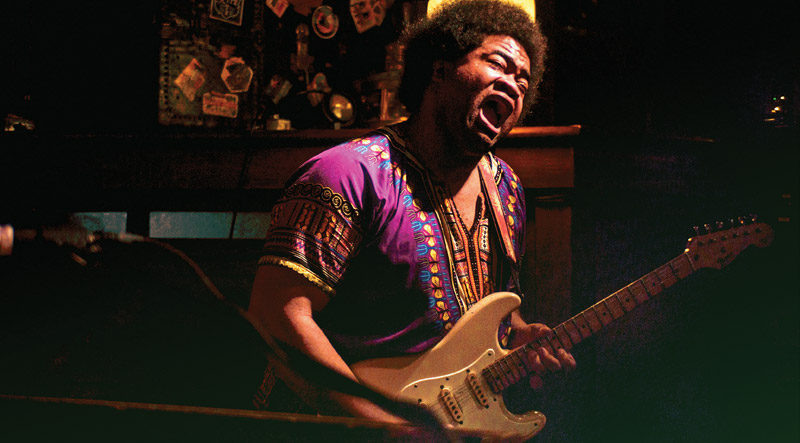
I Told You So is fresh, tight, dreamy, and features a new drummer. Oh, and R&B guitar maestro Jimmy James plays the bejesus out of a Silvertone.
How is the world treating you?
I’m trying to tough it out like everybody else these days. We’re just trying to keep up, doing live streams and social-distance shows. The thing I miss the most is being able to shake someone’s hand or give someone a hug. I’m just not the type of person who likes to stay away. Unfortunately, that’s how it goes.
I find myself playing slower tunes like The Delfonics, that Philly sound, or early tracks from Stax Records. I’ve always been a loner, so it’s not a stretch from what I’ve always been doing. I used to go out somewhat, but I’d rather stay home. Because there’s not that many shows, I can go to the studio a lot more than I was.
You have a new drummer and a new record.
It was a search to find the person who wants to be on those long tours and really want it. So, Dan Weiss is here. We had Grant Schroff from the Polyrhythmics fill in for the European dates and I Told You So. There are way more songs from that album that were done on those sessions and came together before the pandemic. We came freshly from Europe, took a break for two days while everything was piping hot, and just went into the studio and smashed it (laughs)! We had lots of ideas and there was a lot of material. “Hey man, I got this idea!” “Hey, let’s try this!” We have things that didn’t make the record.
Our manager, Amy Novo, said, “Ya’ll should do ‘Careless Whisper.’” I used to quote that song all the time, so we did it. When we played it in London people were like, “Woah!” I loved that song as a kid. I have memories of sitting in the car with my late older sister and hearing it on the radio. So it brought back those memories. We gave it a try and it ended up on the record. Amy was right. It’s a great song.
What was your main guitar for the sessions?
I used my Silvertone. That’s pretty much what I used on every song. My trusty Peavey Delta Blues 1×15 was having problems and at the end of the last song it crapped out. Fortunately, it made it through the session. I’m getting it fixed, but I can’t take it on the road because it’s sensitive. I just plug straight in. That’s how it began when I started playing guitar – didn’t know a thing about distortion pedals. I would just turn the amp up. I do have a fuzz, a wah, and other pedals that have been gifted to me, but I like the sound of the guitar. I use pedals rarely, but the majority of the time I just want to hear what the guitar sounds like straight through the amp, and that’s it. I choose to hear the guitar as it is.
“Aces” is so damn funky.
You can thank Grant Schroff for that one (laughs). He showed us that during a sound check in Europe. He said, “I got this tune!” So, we worked it out. It’s one of the few times I’m not using chords – it’s all single notes. In the late ’70s and early ’80s, they were doing a lot of single-string stuff instead of chordal stuff. It’s a fun piece, and it’s tough for drummers to swing like that for a long period of time.
Are there any guitarists you’d like to meet?
Steve Cropper. That would be great. I never got a chance to meet Eddie Willis from The Funk Brothers. I also would have loved to meet Jimmy Johnson, of The Swampers. I would love to sit in a room with Cropper and ask, “What were you thinking when you played on ‘Who’s Making Love’ by Johnnie Taylor?” Or “Candy” by The Astors, or “Down In The Valley,” which is a Solomon Burke tune he played with Otis Redding. Or Chris Thomas’ “Walking The Dog.” “(Sittin’ on) The Dock Of The Bay” is great, but I like Eddie Floyd’s “Knock On Wood.” It’s an interesting era they came up in, and I wonder what they thought about with all that. It’s mind-blowing. I could go on and on about that stuff.
This article originally appeared in VG’s August 2021 issue. All copyrights are by the author and Vintage Guitar magazine. Unauthorized replication or use is strictly prohibited.
Rusty Young, the versatile pedal-steel guitarist, guitarist, singer/songwriter, and original member of the pioneering country-rock band Poco, died at his home after suffering a heart attack on April 14. He was 75.
“Our friendship was 50-plus years,” Poco co-founder Richie Furay sadly reflected on social media. “Together, we helped create what became known as the Southern California ‘Country Rock’ sound.”
Born in Long Beach but raised in Colorado, Norman Russell Young began learning lap-steel and guitar at a Denver music store at age six. He first performed publicly in his family’s church in 1956 and bought his first pedal-steel, a Fender 1000 doubleneck, in ’60.
Two years later, at 16, he taught guitar and sold instruments at Don Edwards’ Guitar City, a focal point for Denver-area steel players like Donnie Buzzard, who enlightened him on the instrument’s true potential by showing Young how to create unconventional sounds.
Young was a guitarist with the rock band Böenzee Cryque in 1967, when a friend who’d joined Buffalo Springfield’s road crew, called. The legendary L.A. band made up of Neil Young, Stephen Stills, Richie Furay, Jim Messina, and Dewey Martin had recently dissolved. Wrapping up Springfield’s recording commitments, Messina and Furay felt the ballad “Kind Woman” needed pedal-steel. Young traveled west to add the part.
Country rock was in its primordial stages when Furay, Messina, and Young co-founded Poco (originally Pogo) in ’68, adding bassist (and future Eagle) Randy Meisner and Young’s friend, drummer George Grantham. From the start, Young added twang to the band’s gentle, relaxed country rock. Their debut, Pickin’ Up the Pieces, included his signature instrumental “Grand Junction,” featuring pedal-steel and resonator, which was also prominent on their ’71 recording “Hoe Down.”
“He was my hero,” said Nashville steel-guitarist Steve Fishell. “Rusty added a decidedly Western flair to his unique steel style. His technique was flawless; he brought an aching sadness to songs like Poco’s “Bad Weather” and Buffalo Springfield’s “Kind Woman.”
Unlike most pedal-steelers, Young was a showman. Lucky Oceans, Asleep at the Wheel’s original steeler, was still new to the instrument when they opened for Poco in Washington, D.C. in 1970.
“Rusty got up from the metal folding chair and played his steel with one of the legs!” he recalled. I was elated!”
Fishell had a similar introduction.
“I first saw Poco in October, 1971, in Santa Monica,” he said. “Without any gimmickry, Rusty blazed through a climactic Hendrix-style solo, tipping his steel sideways and windmilling like Pete Townshend. I was floored!”
Young contributed to the much-admired 1970 instrumental anthology Suite Steel: The Pedal Steel Guitar Album with Buddy Emmons, Sneaky Pete Kleinow, JayDee Maness, and Red Rhodes. His selections revealed a versatility and depth only hinted at by his work with Poco. He began the easy-listening hit “Everybody’s Talkin’” straight, then launched into pure bebop.
“I was shocked when he went from playing the sweet melody of ‘Everybody’s Talkin’’ into a modern jazz, altered-chord/skipping-triplet solo,” Oceans said. “Rusty was representing a cadre of steel players who woodshedded their jazz chops on the road, in practice rooms and little clubs all over America, but seldom recorded those wild skills.”
“Rusty was also a rock star,” Fishell adds. “He made it okay to run pedal-steel through Leslie speakers, distortion units, wah pedals – anything to break the instrument out of its country straitjacket.”
In Poco’s early years, Young’s instrument preferences moved from Fender to ZB, Sho-Bud and later, Carter. In those days, his tunings were E Chromatic and C6. As his stature grew in the ’70s, he wrote a monthly column for Guitar Player.
As personnel changed, he spent less time behind the steel as he audaciously moved out to front the band and became its main songwriter. “Rose of Cimarron” was a Young original, as was their biggest hit, 1979’s “Crazy Love.”
“Rusty’s transition to Poco’s songwriting front man was remarkable, something nearly impossible to do successfully,” said Fishell.
Inducted to the International Steel Guitar Hall of Fame in 2013, he dissolved Poco a year later but wasn’t ready for retirement. His 2017 solo album, Waitin’ For the Sun, featured contributions from Furay, Schmidt, Grantham, and Messina. And when Young reunited Poco for a 2018 50th Anniversary tour, he sang, played guitar, resonator, and pedal-steel. Asked by the U.K. publication The Beat whether his dreams came true, Young simply answered, “I’ve had a great life.”
This article originally appeared in VG’s August 2021 issue. All copyrights are by the author and Vintage Guitar magazine. Unauthorized replication or use is strictly prohibited.