Year: 2014

  • Zakk Wylde

    Zakk Wylde

    Zakk Wylde: Scott Uchida
    Zakk Wylde: Scott Uchida

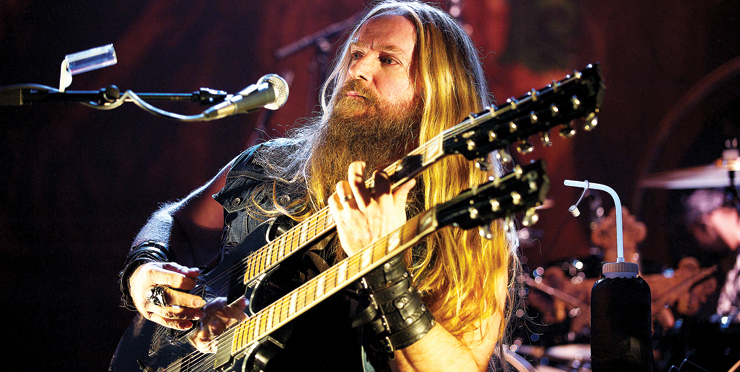
    When Zakk Wylde was asked to record a new DVD/CD package, he decided to give his Black Label Society fans something different – Unblackened, a live acoustic/electric performance featuring Wylde on guitar and piano, with BLS bandmates bassist John Deservio, guitarist Nick Catanese, drummer Chad Szeliga, keyboardist Derek Sherinian, and vocalist Greg Locascio. The package also includes some cool extras.

    How did Unblackened come together?
    I didn’t want to put out another heavy one with the same stuff we’ve already done. The Black Label Berzerker Nation was always asking if we were ever going to do any of the mellow tunes on the records that never see the light of day. It was the natural progression of the band to do something like this. And personally, as much as I love listening to heavy stuff, I love all the mellow stuff, like the Eagles, Neil Young, and Elton John. So it was great to do this.

    The show was recorded in March at Club Nokia in L.A. We rehearsed for 10 days and we were originally going to play with a string section, but once we started working with them, it didn’t go as planned. We figured we’d bring them in and we’ll rehearse with them for two days. These are union musicians, so it’s not like you’re hiring a bunch of guys who will be there for two days and rehearse for 10 hours a day. They rehearse for two hours, then they have to go. But they also need a break in-between to sit down and have coffee. I guess they’re used to playing weddings. When they started playing with us, it was such a train wreck of Hindenburg/Titanic-esque proportions! It was hysterical! They offered to stay an extra hour because they really wanted to do it. We could have rehearsed for the next two and a half months, and it was still going to sound like s**t! We called it a day. That’s when we looked over at Father Sherinian to cover all the string bits.

    We included six additional songs on the CD because we had recorded “Ain’t No Sunshine,” “Song For You,” and a bunch of others that turned out the way they’re supposed to be done with strings, so we put them on.

    Now, between our normal tours and doing the regular shows, we’re going to do an Unblackened run. We’ve toured three years straight doing the regular show and the Unblackened thing is completely different, so it’s gonna be awesome!

    Tell us about the assortment of gear you used for the show.
    I used my Gibson stuff – the EDS-1275, the Flying V, which has a Floyd Rose and a Steinberger kickstand so I can sit and play it like I’m playing a Les Paul, and I used my Pelham Blue Les Paul, the maple Vertigo Les Paul, and I broke out the Rebel. I haven’t retired her. I still record with her, but I don’t bring her on the road anymore. I also used the pinstripe ZV. For the acoustic stuff, I used a Chet Atkins steel and a Chet Atkins nylon-string.

    I’m playing through my signature Marshall JCM800s, which are [model] 2203 100-watt tops with 6550s. For the clean sounds, I’m using a Roland Jazz Chorus and just turning the Volume down on my guitar when I play through the JCM800s. That way, you just turn the guitar’s Volume up and you have distortion.

    For effects, I use all my signature Dunlop pedals. I run my guitar into the wah pedal, then into the Rotovibe, phase, distortion, then run the stereo chorus outputs to both amps.

    What inspires you as a player and as a songwriter?
    I still listen to the stuff I’ve loved since I was 14 and started playing. When I hear Randy Rhoads, I have great memories from when I first started learning that are attached to those records. Then, obviously, there’s Eddie Van Halen. But I really get inspired when I listen to Frank Marino. I’m just awestruck. Then John McLaughlin, Al DiMeola, Paco De Lucia, Allan Holdswoth, Joe Pass, and a lot of the country pickers, as well. I just listened to a mess of Albert Lee. It’s just mind-blowing stuff! Of course, Jimmy Page – not just for the guitar playing, but the writing and producing. Then Tony Iommi for his songwriting and guitar tone.

    What do you consider the standout tracks of your recorded work?
    For the Black Label stuff, I’d have to go with “Stillborn,” and from the last album, I really dig “Crazy Horse.” That one’s really cool. I thought “Darkest Days” came out really well as far as the production. With Ozzy, “Mama, I’m Comin’ Home” and “No More Tears.”


    This article originally appeared in VG December 2013 issue. All copyrights are by the author and Vintage Guitar magazine. Unauthorized replication or use is strictly prohibited.

  • Johnny Winter

    Johnny Winter

    In December, 1968, Mike Bloomfield asked Johnny Winter to perform at the Fillmore East in New York at a Super Session jam with Al Kooper.

    That night, Winter played B.B. King’s “It’s My Own Fault” and blew away the audience. Reps from Columbia were in attendance, and Winter was signed to the biggest advance in the history of the recording industry.

    His wicked slide playing and Texas sizzle influenced a generation of guitarists and made him arguably the best white blues guitarist of his generation. His devotion to the blues led him to produce his childhood idol Muddy Waters. The result was the best selling albums Hard Again, I’m Ready, and King Bee, the financial high point of Waters’ career.

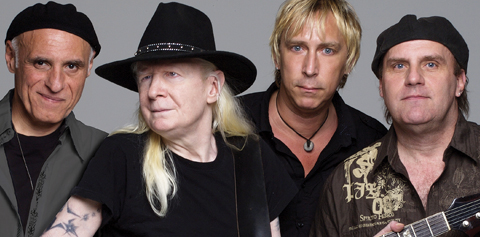
    Despite his success, Winter wrestled with drug and alcohol addiction and unscrupulous management. For years, he lived in a fog of drugs and deceit, and paid dearly for it. While working on his Grammy-nominated I’m A Bluesman album, he met guitarist Paul Nelson, who contributed material to the album and played guitar. Nelson then became Winter’s touring guitarist and, eventually, his manager. Nelson has recorded and performed with some of the biggest names in the music industry ,and brings a wealth of savvy to the table. He is responsible for redirecting Winter’s career, but more importantly, he was successful in helping Winter kick a 40-year dependence on methadone. We recently spoke with both of them.

    Johnny, how are you feeling?

    Johnny Winter: Good. I quit drinking, quit taking drugs.

    How hard was that?

    JW: It wasn’t hard at all because Paul didn’t tell me he was doing it (laughs!)

    Paul Nelson: I was shaving off his methadone. I knew it had to go.

    JW: I’d never done it if I’d known. I was terrified of stopping.

    PN: I saw it taking its toll and I knew how headstrong he was. I knew if his mind knew what was going on, he would refuse it.

    JW: I didn’t think I could stop. I didn’t think there was any possible way.

    PN: His addiction to music was stronger than any drug. The music got him out of it. He’s communicating again with people, which he wasn’t doing through the ’90s when he was on all that stuff. His addiction to music has made him the greatest guitar player, and made him see that if anything messes with his music, he’ll stop it.

    JW: He’s never made one mistake the whole time he’s been managing me.

    Do you have arguments?

    JW: All the time (laughs)!

    PN: Yeah, because you’re human, you have input, there’s emotion. Methadone turns you into cream corn. It wasn’t just me taking him off the methadone. He got off drinking and stopped smoking cigarettes.

    JW: I didn’t know how much it was hurting me until I got off of it.

    Tell us about the new record?

    JW: It’s called Roots. It’s all old stuff that I grew up loving that influenced me when I was first starting to play. We’re doing “Maybellene” by Chuck Berry, “Come Back Baby” by Ray Charles, “Further On Up The Road” by Bobby Blue Bland, “T-Bone Shuffle” by T-Bone Walker…

    Paul, what’s the biggest impact he’s had on your playing?

    PN: Having him tell me what to go back and listen to, to perfect my playing. Figuring out what made him tick made me tick; like the “Okie Dokie Stomp.” In his time, if you didn’t know that song, you were nothing.

    Johnny, who do you listen to, to stay on top of your game?

    JW: Muddy was a big influence – the best blues guy that’s ever been. He put so much emotion into it.

    What kind of gear are you using?

    JW: An old Music Man combo amp with four 10s, a ’64 Gibson Firebird for slide, my Lazer, and a Boss Chorus pedal. That amp is loud as hell! I’ve had it since the ’70s. When I was playing with Muddy, Bob Margolin had one. I tried his and loved it, so I got one. This is around ’77 or ’78. I set it up all treble, no middle, and no bass. I turn it all the way up.

    What kind of slide do you use?

    JW: My original was made out of a cymbal stand. Dunlop reproduced it and put out what they call The Texas Slider.

    You’ve been doing this a long time. What keeps you inspired and motivated?

    JW: I love playing for people. I like playing for people more than I do recording. I like getting that energy back from people. If you don’t get it, you don’t play as good. – Oscar Jordan


    This article originally appeared in VG September 2011 issue. All copyrights are by the author and Vintage Guitar magazine. Unauthorized replication or use is strictly prohibited.


  • Headway EDB-2 Equalizer Direct Blend Preamp

    Headway EDB-2 Equalizer Direct Blend Preamp

    Headway EDB-2 Equalizer Direct Blend Preamp

    Headway EDB-2 Equalizer Direct Blend Preamp
    Price: $475 (retail)/$320 (street)
    Info: www.headwaymusicaudio.com
    .

    Designed in England and manufactured in Korea, the Headway EDB-2 is a 5.75″ x 3.75″ x 1.5″ box with a feature set that makes it ideal for acoustic guitarists who need an ultra-low-distortion connection to a PA or sound-reinforcement amplifier.

    The EDB-2 has three inputs: Channel 1 supports a standard .25″ two-connector phone guitar cable, while Channel 2 supports a microphone (either powered or unpowered) and has both XLR and .25″ stereo phono inputs. The third input is a mini-stereo connection for an iPod or other music player. For outputs, the EDB-2 has a balanced mono XLR and a single-ended mono 1/4″ connection.

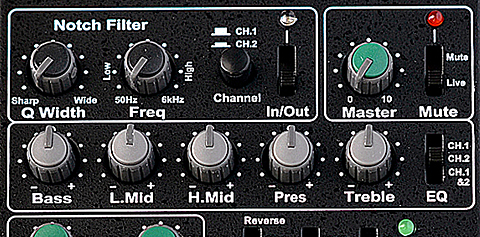
    The EDB-2 is powered by two 9-volt batteries for up to 150 hours of playtime with lithium (50 hours with standard alkali), or via an 18-volt AC wall wart (supplied with the unit). Controls include Gain knobs for each channel, a Master gain control, a Notch Filter section that can be set for either channel, five-channel EQ/tone controls for either or both channels, individual channel phase reversal, three impedance settings for both channels, a Range slide switch with three fixed frequency ranges that curtail low-frequency extension, selectable 18-volt phantom power for the microphone channel, a Mute switch, ground lift, and an On/Off switch. The EDB-2 also includes LEDs to designate whether the unit is on, as well as the status of the notch filter, mute, and phantom power.
    While the EDB-2’s features and control functions are impressive, what’s inside the EDB-2 is even more important – the unit uses field-effect transistors (FETs) and Class A input amplifiers, which are more commonly found in high-end audio components. If you need an extremely quiet and clean DI box, the Headway EDB-2 should be on your must-audition list.


    This article originally appeared in VG Acoustic no.001 e-newsletter. All copyrights are by the author and Vintage Guitar magazine. Unauthorized replication or use is strictly prohibited.

  • The Slambovian Circus of Dreams

    The Slambovian Circus of Dreams

    Slambovian circus of dreams
    Here is a “best of” album by a band that’s not exactly a household name, nor does it have any hit songs. But don’t let that dissuade you. They’re a tight ensemble that plays an arresting mix of rock, folk, and psychedelic music that can call to mind anyone from Tom Petty to Neil Diamond to the Beatles.

    Lead guitars are handled more than ably by Sharkey McEwen, who plays melodic solos, biting slide, and churning, loud electric rhythms. Joziah and Orien Longo supply the lead vocals, and each has a unique quality of voice; their beautiful vocal harmonies highlight several cuts on the record.

    Whether it’s a love song with power chords and great flourishes like the title cut or the melancholy of “Sunday In The Rain,” with haunting slide guitar over quiet acoustic, the band knows how to mix it up and get a unique and beautiful sound.
    Lyrically the band can be serious (“Lost Highway”), disarmingly funny (“A Very Unusual Head”), or anything in-between.
    This compilation serves as the perfect introduction to this fine band.

    This article originally appeared in VG‘s September ’14 issue. All copyrights are by the author and Vintage Guitar magazine. Unauthorized replication or use is strictly prohibited.

  • The Soul of John Black

    The Soul of John Black

    JOHN_BLACK_01

    I want to bring The Soul Of John Black a little bit closer to the root – me singing and playing acoustic guitar, and a couple of girls singing like the Staple Singers,” explains John Bigham. “I want to break it down and get to the joyful noise.”

    Bigham’s act, The Soul Of John Black, continues his soulful excursions mixing jazz, R&B, and gutbucket blues. A Sunshine State Of Mind is his current release, and its DIY philosophy continues to push his art forward as the Miles Davis alum channels iconic soul stylists, funk pioneers, and rock pastiches with inspiring results.

    What went into putting together A Sunshine State Of Mind?
    Since I was staying in L.A., I made the record about being in L.A. My wife talked me into writing happier songs, so that was part of the process (laughs)! So, the songs were obvious, like “Beautiful Day” and “Summertime Thang.” It just started building.

    You do a great job with early-’60s R&B and blending it with blues.
    When I end up doing songs about myself, I try to take it back to Lightnin’ Hopkins or John Lee Hooker. I want to be able to sit and play it by myself. I want that old blues sound, so I’m rough with it. I want the guitar to ring.

    When you sing, are you thinking about Al Green or Bobby Womack?
    It’s natural because that’s part of me. I’ve always gravitated toward that stuff. When I sing, I try to be like those guys. When you hear Bobby Womack, you hear his family’s church thing, Sam Cooke’s thing, almost getting shot, and the turmoil of his life. When you hear him sing, “La-de-da-de-da,” you hear his whole life in that sound. I have to sing with a lot more force than I want because I’m just not there yet.

    The album has great vocals.
    I’m working on it. I didn’t think I was ever going to sing. It was out of necessity when I was with Fishbone. One of the guys left and they needed somebody to sing background.

    You came to singing pretty late.
    I sang on a couple of my demos [but] I couldn’t do it well, and people told me I needed to get it together (laughs). I just started doing it until it got better. At first it was really hard.

    When Frank Sinatra passed away there was a lot of stuff about him. One of his musical directors was talking about his vocal range. He was like, “Sinatra never goes past middle C.” That opened up a new world for me. I didn’t know you could do that. I thought you just had to be able to sing (laughs)!

    I hear Ronald Isley of the Isley Brothers…
    Thank you. There’s some P-Funk in there too. I like that raw gritty sound. Another person I like is Larry Graham. I wanted to do the Larry Graham thing when he did Graham Central Station. I also love Eddie Kendricks and Philip Bailey. I do all the falsettos on the new record.

    Where do you come from as a guitarist?
    I come from Hendrix, Led Zeppelin, Sly Stone, The Rolling Stones, and a lot of weirdness in the jazz-fusion zone. I started with rock and when the fusion stuff came a long, I started listening to that. For me the R&B stuff was there in the house. From James Brown to Wilson Pickett to Nancy Wilson. Growing up in a black neighborhood, I’m hearing that all day. I didn’t feel like I needed to sit down and listen to that. If you’re a rock guy and you’re a teenager, everybody’s going to ask, “Can you play like Ernie Isley?” It was all right there. Sly Stone was ingrained in me already. I knew those songs by heart.

    What guitars are you playing these days?
    My number one guitar is a Fender ’62 reissue Telecaster, and I have a ’50s Stella for slide. I love that guitar – it sounds like a resonator, like it’s in a giant room. For amps, I have a Fender Deluxe Reverb reissue. I just got a Fender Champ that sounds great. I also have an Amp Eleven and a Gen 5 Echo by Love Pedal, and a Sparkle Drive that’s on almost all the time. I have a gold Dunlop 535Q wah that is cool as hell.

    What’s next?
    I’m trying to do something I never did before, which is take the time to go out by myself and play the music first, then play nine or 10 festivals with my band. I’m just trying to set my own path where I’m not gone forever. I want to see my daughter grow up.


    This article originally appeared in VG December 2013 issue. All copyrights are by the author and Vintage Guitar magazine. Unauthorized replication or use is strictly prohibited.


  • Peter Frampton – The One in 901 (Behind the Song)

    See guitarist Peter Frampton discuss the track “The One in 901,” from Hummingbird in a Box, a “mini-album” inspired by the Cincinnati Ballet. The music debuted in 2013 at Cincinnati’s Aronoff Center for the Arts, and two of the ballet’s spring-production segments were choreographed to existing Frampton music, with Frampton and his band performing live, while a third section featured the new composition by Frampton and co-writer/co-producer Gordon Kennedy. Frampton and Kennedy teamed up on all seven original guitar pieces for Hummingbird in a Box, and previously worked together on Fingerprints, which garnered them both a Grammy Award for Best Pop Instrumental Album.

    For more on the recording and Frampton’s ongoing tour, including select solo dates, a co-headlining run with The Doobie Brothers, and the return of Frampton’s Guitar Circus, go to http://www.frampton.com/.

    PETER FRAMPTON’S HUMMINGBIRD IN A BOX OUT NOW VIA RED DISTRIBUTION

    INCLUSIVE THREE-PART NATIONWIDE TOUR CONTINUES

    Hummingbird in a Box, the latest work from legendary musician Peter Frampton, is available now via RED Distribution. The mini-album, which was inspired by the Cincinnati Ballet, is receiving widespread critical acclaim from Huffington Post, Guitar World, with Music Radar hailing the new music as “exhilarating,” and Classic Rock Magazine praising the recording as “half-an-hour of style and substance from a guitar great.”

    Frampton composed all seven original guitar pieces in his virtuosic stylings, along with Gordon Kennedy, who also co-produced the recording. The two previously teamed up for Fingerprints, which garnered them both a Grammy Award for Best Pop Instrumental Album.

    The music debuted in April 2013 at Cincinnati’s Aronoff Center for the Arts. Two of the Cincinatti Ballet’s spring production’s segments were choreographed to existing Frampton music—with Frampton and his band performing live—while a third section featured the new composition by Frampton and Kennedy. Of the project Frampton notes, “Writing for dance was a wonderfully freeing experience. There were no boundaries. We were able to push the composing envelope,” and Kennedy furthers, “Songwriters and musicians create music to move people. This was beautiful, graceful, and instantly gratifying!” See full track listing below.

    Following a massive year of touring, including 2013’s inaugural Frampton’s Guitar Circus,  Frampton is back on the road this summer. This time he will set out on a three-part catch-all tour including select solo dates, a co-headlining run with Grammy-winning American rock legends The Doobie Brothers and the return of Frampton’s Guitar Circus. For details, please visit www.frampton.com and see below for routing.

    Peter Frampton is one of the most celebrated artists and guitarists in rock history. At 16, he was lead singer and guitarist for the British band the Herd. At 18, he co-founded one of the first super groups, seminal rock act Humble Pie. His session work includes collaborations with such legendary artists as George Harrison, Harry Nilsson, David Bowie, Jerry Lee Lewis, Ringo Starr, John Entwistle and many others. His fifth solo album, the electrifying  Frampton Comes Alive!, is one of the top-selling live records of all time.

    For more information please contact Cami OpereKrista Williams or Carla Sacks at Sacks & Co., 212.741.1000.

    Hummingbird in a Box Track Listing
    1. The Promenade’s Retreat
    2. Hummingbird In A Box
    3. The One in 901
    4. Friendly Fire
    5. Heart To My Chest
    6. Shadow Of My Mind
    7. Norman Wisdom

    PETER FRAMPTON TOUR DATES
    * co-headlining with The Doobie Brothers
    † Guitar Circus with Buddy Guy
    ‡ Guitar Circus with Robert Randolph
    § with Randy Bachman
    ∆ with David Hidalgo
    ** with Don Felder

    June 24 /// Upper Darby, PA /// The Tower Theater*
    June 25 /// Canandaigua, NY /// Constellation Brands Marvin Sands PAC*
    June 26 /// Holmdel, NJ /// PNC Bank Arts Center*
    June 28 /// Lincoln, RI /// Twin River Casino*
    June 29 /// Gilford, NH /// Meadowbrook*
    July 2-3 /// Moncton, NB /// Casino New Brunswick—The Centre
    July 5 /// Danbury, CT /// Ives Concert Park
    July 6 /// Atlantic City, NJ /// Harrah’s Atlantic City
    July 8 /// Washington, DC /// Lincoln Theater
    July 9 /// Greensburg, PA /// The Palace Theater
    July 11 /// Boston, MA /// Blue Hills Pavilion Bank*
    July 12 /// Bethel, NY /// Bethel Woods Center for the Arts*
    July 13 /// Wantagh, NY /// Jones Beach*
    July 15 /// Bethlehem, PA /// Sands Bethlehem Events Center*
    July 17 /// Alpharetta, GA /// Verizon Wireless Amphitheater*
    July 18 /// Tuscaloosa, AL /// Tuscaloosa Amphitheater*
    July 19 /// Orange Beach, AL /// The Wharf*
    July 20 /// New Orleans, LA /// Champions Square—Superdome
    July 30 /// Sterling Heights, MI /// Freedom Hill Amphitheatre
    August 1 /// Manistee, MI /// Little River Casino Resort
    August 2 /// Lennox, IL /// Community Center
    August 3 /// Carmel, IN /// Center for the Performing Arts
    August 6 /// West Allis, WI /// WI State Fair
    August 7 /// Benton Harbor, MI /// The Mendel Center
    August 8 /// Wisconsin Dell, WI /// Crystal Grad Music Theatre
    August 10 /// Littleton, CO /// The Hudson Gardens and Event Center
    August 11 /// Pueblo, CO /// Memorial Hall
    August 16 /// Laughlin, NV /// Edgewater Casino Resort
    August 17 /// Jackpot, NV /// Cactus Petes Casino
    August 19 /// Sandy, UT /// Sandy Amphitheater
    August 21 /// Jacksonville, OR /// Britt Pavilion†‡
    August 23 /// Goldendale, WA /// Maryhill Winery†
    August 24 /// Woodinville, WA /// Chateau Ste. Michelle Winery†
    August 26 /// Saratoga, CA /// The Mountain Winery†§
    August 27 /// Los Angeles, CA /// Hollywood Bowl†‡∆
    August 29 /// Visalia, CA /// Oval Park†§
    August 30 /// Valley Center, CA /// Harrah’s Rincon†**
    August 31 /// Tucson, AZ /// Ava Amphitheater†‡
    September 14 /// Telluride, CO /// Blues and Brews Festival
    September 19 /// Rancho Mirage, CA /// Aqua Calienta Casino
    September 20 /// Reno, NV /// Grand Sierra Resort & Casino
    September 21 /// Glen Allen, CA /// B.R. Cohn Winery
    September 23 /// El Paso, TX /// Plaza Theater
    September 30 /// Jacksonville, FL /// Florida Theater
    October 1 /// Sarasota, FL /// Van Wezel Performing Arts Hall
    October 3 /// Clearwater, FL /// Ruth Eckerd Hall
    October 5 /// Hollywood, FL /// Seminole Hard Rock Hotel & Casino

  • Jim Suhler

    Jim Suhler

    Jim Suhler
    Dallas native Jim Suhler has been splitting his time between leading his own group, Monkey Beat, and, since 1999, playing lead and rhythm guitar with George Thorogood and the Destroyers. His latest release, Panther Burn, finds Monkey Beat’s keyboardist Shawn Phares, bassist Carlton Powell, and drummer Beau Chadwell augmented by harpist Kim Wilson, keyboardist Tim Alexander, vocalists Carolyn Wonderland and Ray Benson, and others – probably the reason it’s under Suhler’s name alone.

    At 53, Suhler’s influences come largely from the British blues movement and after – the Stones, Zeppelin, Rory Gallagher, ZZ Top, the Vaughan brothers, Anson Funderburgh, and Bugs Henderson. The larger ensemble works to Suhler’s advantage, showcasing his electric and resonator playing as well as songwriting, although the CD’s highlight is his slide arrangement of the instrumental “Remember Mama,” from Elmer Bernstein’s score of To Kill A Mockingbird.

    This article originally appeared in VG‘s September ’14 issue. All copyrights are by the author and Vintage Guitar magazine. Unauthorized replication or use is strictly prohibited.

  • The Terry Hanck Band

    The Terry Hanck Band

    Terry Hanck bandMany know saxophonist Terry Hanck from his years with Elvin Bishop. But those fortunate to live in the San Francisco area in the ’70s and ’80s also know Hanck as a great singer and front man, specifically with Grayson Street and the house band at Larry Blake’s (better known as the Rat Band).

    Inevitably, this triple-threat (he’s also a fine songwriter) would form his own band. Gotta Bring It On Home To You, his seventh solo CD, carries the postscript “and friends.” One friend is co-producer Chris “Kid” Andersen, known for his work with Charlie Musselwhite and the Nightcats featuring Rick Estrin. Hanck discovered the guitar wiz in Norway and brought him to the States. Here, Andersen shares guitar duties with Hanck’s guitarist of 10 years, Johnny “Cat” Soubrand, along with cameos from Debbie Davies and Bob Welsh. Cat’s exaggerated vibrato on “Peace Of Mind” recalls Magic Sam.

    Hanck has a big tenor tone like greats ranging from Joe Houston to Junior Walker, sometimes shooting into its upper register with ease before reaching still higher. He specializes in old-school R&B, soul ballads, jumpin’ blues, and, to quote one of his originals, “good, good rockin’.”

    This article originally appeared in VG‘s September ’14 issue. All copyrights are by the author and Vintage Guitar magazine. Unauthorized replication or use is strictly prohibited.

  • Seymour Duncan Releases NYC Bass Pickups

    Seymour Duncan NYC bass pickupsSeymour Duncan’s NYC Bass pickups use a dual-coil J-type design with a double row of exposed Alnico II pole pieces. Their four-conductor cable allow for three wiring modes – parallel, series, and single-coil mode for a vintage -Jazz-Bass sound. It is available individually or in a calibrated neck-and-bridge set.  For more, visit www.seymourduncan.com/products/bass-pickups/.

  • Dunlop Introduces Primetone Picks

    Dunlop PrimeTone picksDunlop’s Primetone picks use a combination of material and edge sculpting intended to replicate the feel, playability, and sound of tortoise picks. Made of high-density ultem, they have a new grip design,  beveled playable edges, and are available in standard, semi-round, and triangle shapes in thicknesses ranging from .73mm to 1.5mm. Learn more at www.jimdunlop.com.