Year: 2014

  • Imelda May

    Imelda May

    Imelda May
    Irish chanteuse Imelda May proved she could sing on her first discs of retro rockabilly originals. Her new album shows she can also rock.

    May is backed as usual by her husband, guitarman Darrel Higham. And again as usual, his playing is twang perfect.

    This album stretches the band’s repertoire. From classic rockabilly and jazz, their original cuts here tend to more in-your-face rock and roll. But the sound is still exuberant, still vintage.

    The duo of May and Higham is high octane all the way. The opening, title track features a noir-ish guitar riff that could have come straight from a ’60s spy film. “Wild Woman” may be a May anthem, but Higham laces it with twanging riffs. “Little Pixie” is a ’50s-style ballad.

    Toting a Gretsch 6120 in emulation of his guitar hero, Eddie Cochran, Higham is one of the most exciting rockabilly fretmen extant. A walking, picking encyclopedia of classic music and licks, he knows his history and puts it to good use making modern music.

    This article originally appeared in VG‘s October’14 issue. All copyrights are by the author and Vintage Guitar magazine. Unauthorized replication or use is strictly prohibited.

  • Yes

    Yes

    Yes
    Yes fans have long been waiting for the legendary prog band to deliver a comeback album. Rest assured, this is not it.

    Even with platinum producer Roy Thomas Baker and a Jon Anderson knock-off on vocals, this soft-pop collection barely resembles Yes’ thundering progressive rock from 40 years ago.

    Heaven & Earth kicks off with “Believe Again,” a tune with sunny, major-key chord changes and a clean, scalar guitar solo from Steve Howe. “The Game” is a reasonably catchy piece of synth-pop with acoustic guitar arpeggios and more of Howe’s lead work, this time with more gain. It’s a pleasure to hear his soaring steel guitar on “Light Of The Ages.”

    What’s missing here are any of the thrilling stürm und drang theatrics, dense lyrics, and instrumental virtuosity of classic ’70s and early ’80s Yes. The music here is about as far away from “Roundabout,” “Siberian Khatru,” and “The Gates Of Delerium” as you can imagine.

    And if you’re looking for legendary guitar and bass performances, Howe’s guitar work is mellow at best while four-string ace Chris Squire barely shows up until the final track, “Subway Walls.”

    While Heaven & Earth might not be the last Yes album, in some ways, you might wish it was.

    This article originally appeared in VG‘s October ’14 issue. All copyrights are by the author and Vintage Guitar magazine. Unauthorized replication or use is strictly prohibited.

  • Seymour Duncan Offers New Pickup Booster

    Seymour Ducan Pedal BoosterThe Seymour Duncan Pickup Booster pedal uses a class A/low-noise circuit design to emphasize a guitar’s natural sound. Its Resonance Switch makes the pedal interact directly with the pickups, giving single-coils a vintage humbucker sound or high-output tones. Compared to the original Pickup Booster, its Gain control can be turned down to unity (0dB), and it has a discrete push/pull output stage that gives increased drive capability, so even with the Gain knob set to 0dB and a long cable, the signal chain will sound cleaner. Learn more at www.seymourduncan.com.

  • Brian Farmer, Longtime Tech/Stage Manager For Gov’t Mule, Passes

    Brian FarmerBrian Farmer, a longtime crew member for Gov’t Mule, passed away August 24, at his home near Nashville.  He was 53 and died in his sleep.

    Farmer began working for Gov’t Mule in 1998 after being introduced to the band by bassist Allen Woody. He had previously worked for Johnny Cash and started by teching Warren Haynes’ guitars and serving as the band’s equipment/stage manager. He also worked for Haynes on other gigs, including the Allman Brothers Band, Warren Haynes Band, Grateful Dead, Phil Lesh and Friends, and other acts.

    “Brian was a close friend, a devoted worker, and a lover of life,” said Haynes. “We traveled around the world together and shared many experiences – mostly while laughing. He will be missed by a huge circle of friends and family. He was one of a kind [and] knew a lot more about guitars and gear than I did, so I trusted him to keep things working so I could concentrate on the music.”

    “Brian was a very dedicated, very loyal, very skilled technician,” said Bert Holman, manager of the Allman Brothers Band. “He would help anybody and everybody do their job. If something of Derek Trucks’ or Gregg Allman’s blew up, he’d be the first guy to grab a flashlight and run across the stage. His standard line to any request was, ‘Just tell me what you need.’ He always had your back, was kind to fans, and gave them as much time as he could without taking his eyes off the ball.”

    “People like Brian are the backbone of all live music,” added Phil Lesh. “Without the hard work of folks like Farmer, we’d be lost.”

  • Forrest Lee, Jr. and Friends

    Forrest Lee, Jr. and Friends

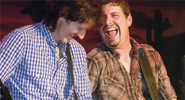
    (LEFT) John Pettifer and (RIGHT) Forrest Lee, Jr.
    (LEFT) John Pettifer and (RIGHT) Forrest Lee, Jr.

    Forrest Lee, Sr. was a country music legend most folks have likely never heard tell of. So why should they care about a tribute to the man and his gospel music? Because his son can play a guitar. And his son has some fine picking friends. All of which adds up to one stunner of an album.

    Lee, Sr. boasted a long, if not stellar, career in country music prior to his death in 2010. He toured in the ’50s with the Grand Ole Opry, and recorded both gospel and honky-tonk. Buck Owens played guitar on some of his early recordings, and his songs were covered by luminaries including Jim Reeves, Flatt and Scruggs, and more. Still, he never got that big break.

    Enter Lee, Jr. The son has cut several CDs of his own, builds Forrest Custom guitars, and can pick a mean Tele. He rounded up some pals and masterminded this homage to his father.

    Among Lee’s buddies on this album are guitarslingers Albert Lee, Johnny Hiland, Redd Volkaert, and John Pettifer – often all trading licks and solos on the same song.

    They’re swapping those leads with pedal-steel maestro Jay Dee Maness, who played with Gram Parsons and on the Byrds’ Sweetheart of the Rodeo with Ray Stevens, Vince Gill (as one of the Buckaroos), and with the Desert Rose Band. And pianists Bobby Teesdale and Joe Lamont also add in their two cents.

    The result is one of the hottest country guitar albums of the year.

    On Lee, Sr.’s “King Of Kings,” there’s so much twang going down, that Lee, Jr. provides a roadmap of the soloists. “John The Baptist” kicks things off righteously with wild piano and sizzling guitarwork. “Good Morning Lord” is rife with stylish chicken picking. Throughout, Lee, Jr., Albert Lee, and Pettifer all work “bender” guitars.

    Gospel music’s not your thing, you say? Fear not. The best songs on this album are chock full of great picking, rollicking riffs, and hot licks. Not every song’s a winner, but some are great.

    All of which makes us wonder: So if this is the gospel music, when do we get the sequel album of Lee, Sr.’s honky-tonk tunes?


    This article originally appeared in VG‘s September ’14 issue. All copyrights are by the author and Vintage Guitar magazine. Unauthorized replication or use is strictly prohibited.


  • Jack White

    Jack White

    JACK_WHITE

    Jack White was recently crowned the Willy Wonka of the rock and roll world by Rolling Stone, and a better description of the man, his music, and his Third Man Records enterprise would be tough to come by. White revels in weird; the unexpected, the unexplained, and the uncategorizable all seem to come naturally. Or at least, fashionably.

    The former professional upholsterer has become one of the moving forces in rock today. From the White Stripes to his production work, side-project bands to his solo career, John Anthony Gillis is a touchstone for pop rawk.

    Jack White

    Thus, the arrival of his second solo album is as big a deal as they come, with an overload of TV appearances, press, and tabloid reports. Lazaretto follows on the heels of White’s equally heralded Blunderbuss from 2012.

    Happily, this ain’t all just smoke and mirrors. Whether you’re a diehard fan or a standback admirer a tad bit tired of the hype, this is a fine album.

    The first hint we all had of the CD’s sound came from the teaser release of the sole instrumental, “High Ball Stepper.” And that may indeed be the coolest cut here.

    The tune is a sonic stew of styles. Through it all – the stops and starts, the bizarre and funky interruptions – there’s some killer heavy-guitar riffing. Call it gothic blues or call it punk funk, White makes full use of his guitar à la Hendrix, as well as a heady selection of effects. Great stuff.

    The title track is high-energy R&B with in-your-face vocals and guitar work. Some complain that White’s production work is heavy-handed, whether on his own albums or his work with folks from Wanda Jackson to Loretta Lynn. Whatever. Put it this way: the guy likes to explore the full spectrum of sound.

    “Entitlement” is an R&B ballad, soulful and lilting. “That Black Bat Licorice” is strutting and funky.

    And through it all, it’s obvious that White appreciates his guitars, amps, and effects. He toys with them, trying this and that, creating new sounds even if just for a quick moment, before moving on to something new.

    This is a true guitar album. It’s creative. It’s fresh. It’s idiosyncratic.


    This article originally appeared in VG‘s October ’14 issue. All copyrights are by the author and Vintage Guitar magazine. Unauthorized replication or use is strictly prohibited.


  • Joel Selvin

    Joel Selvin

    Joel Selvin

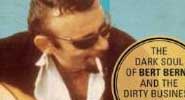
    Every garage band owes Bert Berns. Without him 1960s radio would have been almost as dull as it is today.

    Berns shepherded the early careers of Van Morrison and Neil Diamond, and his production of the Isley Brother’s hit on his (as “Bert Russell”) and Phil Medley’s “Twist And Shout,” spurred the development of Phil Spector’s Wall of Sound technique.

    A more than serviceable player, Berns was sometimes both author and executor of memorable guitar moments like the rolling chords framing Richie Valens’ rocking “La Bamba” and Jimmy Page’s bright solo on Morrison and Them’s version of his “Here Comes The Night.”

    Selvin has wrought a fascinating history of Berns’ musical world before and during his tragically short – yet marvelously productive – life.

    This article originally appeared in VG‘s October ’14 issue. All copyrights are by the author and Vintage Guitar magazine. Unauthorized replication or use is strictly prohibited.

  • PRS, Santana Benefit Kimmel Cancer Center

    PRS Santana One Cause posterPaul Reed Smith Guitars is set to host the 15th-anniversary One Night One Show One Cause Benefit Concert, this year featuring Carlos Santana and presented by The Baltimore Sun Media Group for the Johns Hopkins Kimmel Cancer Center.  The event will take place October 13 at the Modell Center for the Performing Arts, in Baltimore.

    Santana, who has won 10 Grammy Awards and three Latin Grammys, recently kicked off an 18-show U.S. tour with Rod Stewart along with stand-alone dates.

    Since 2000, PRS Guitars has raised more than $3 million for the Living with Cancer Resource Program at the Kimmel Cancer Center. The program offers supportive-care programming and education to cancer patients and families, free of charge. For more, visit www.hopkinscancer.org 

  • Billy Joe Shaver

    Billy Joe Shaver

    Billy Joe Shaver
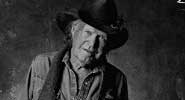
    Since he first emerged as a songwriter more than 40 years ago, Billy Joe Shaver has remained an authentic country rebel, a far cry from contemporary Nashville’s bogus, self-proclaimed young “outlaws” who use the term as a marketing hook.

    As a recording artist, Shaver found success in the ’90s with an outstanding series of rough-hewn albums. Turning 75 this year, he affirms that feisty independence on this collection of 10 new originals.

    The sound this time is a bit more nuanced. Shaver waxes tender on “I’ll Love You As Much As I Can” and “I’m In Love.” But the fearless, wry humor that’s long been his trademark remains intact. He confronts advancing age on “Long In The Tooth.”

    Willie Nelson joins him on “Hard To Be An Outlaw,” protesting changing musical times while “The Git Go” and “Checkers and Chess” offer broader social commentary.

    He recalls earlier, idyllic rural times with “The Sunbeam Special” and evokes a long-ago Nashville on “Music City USA.”
    Reliable session players Dan Dugmore and Jedd Hughes handle most of the guitar work, with Tony Joe White adding guitar and vocals to “Long In The Tooth.”

    This article originally appeared in VG‘s October ’14 issue. All copyrights are by the author and Vintage Guitar magazine. Unauthorized replication or use is strictly prohibited.

  • Washburn’s Warren Haynes Signature Acoustic

    Washburn’s Warren Haynes Signature Acoustic

    WASHBURN_Warren_Haynes

    Washburn’s Warren Haynes Signature Acoustic
    Price: $1,899 (Dream Solo 1 combo); $3,995 (Dream Solo 4 head); $699 (Switchback 112)
    Info: www.washburn.com

    Given the company’s long history, it’s surprising that Washburn hasn’t released more models based on original designs. US Music (Washburn’s corporate parent) has begun to take some steps to remedy this with the Warren Haynes Signature Acoustic, based on the company’s 1937 Solo Deluxe.

    The Warren Haynes WDS5249 is hand-built in Washburn’s Buffalo Grove, Illinois, facility. It uses Adirondack spruce for its top and bracing with solid rosewood sides and back. The body style and shape fit somewhere between a jumbo and a grand auditorium, with a body that measures 41/2″ at the front shoulder and 43/4″ near the back. The guitar sports a 1930s-style zipper herringbone inlay on the back and rosette, three-ply binding on the top, a hand-cut celluloid pickguard, a solid ebony bridge and fretboard, bone saddle and nut, Grover butterbean tuners, and a bookmatched two-piece back. With its lofty list price of $3,995, the Warren Haynes Signature Acoustic faces stiff competition from other offerings at the same level, including the Gibson True Vintage J-45 and the Martin 000-18 Golden Era 1937 Acoustic. How does the 1937 Solo Deluxe stand up to the competition?

    Upon first inspection, the finish was nearly perfect with only two small flaws on the body. The clear topcoat seemed a bit thick where it met the bound fretboard near the sound hole; instead of a crisp edge, the rounded seam was filled in with lacquer. The sunburst on the review sample was especially smooth, with a gentle transition between the lighter and darker portions, and was not too yellow, red, or brown, with a nice vintage aura. The headstock deserves a special mention, at nearly 0.625″ thick with a unique Washburn inlay at the top.

    In hand, the review guitar’s action at the nut was higher than ideal, and string height at the bridge was higher than needed to prevent buzzing. It could be that dealers perform setup on Washburn acoustics (ours, shipped direct, did not have that luxury). The neck’s slight V-shape increases in prominence while moving toward the body. It also has a chunkier, more-vintage profile. The frets, however, are anything but vintage. Larger than standard in width and height, they are very well finished, especially on the ends, where they seamlessly meet the five-ply fretboard binding.

    The Warren Haynes model is capable of producing wide dynamics, yet also sensitive to a light nuanced touch. Instead of compressing dynamics, it gets louder when played harder. Even a heavy pick stroked through the strings at maximum velocity produced a well-defined sound that was never mushy. It also responded well to light fingerstyle playing.

    The Warren Haynes model has excellent sustain that’s quite even across all the strings, while its harmonic balance with the factory-supplied strings was good with a bit more emphasis on the top three than bottom three strings. There was more than adequate bass extension, though the bass lacked the rich harmonic complexity of a Gibson J-45 TV. Given how newly made the review sample was (it still had a strong smell of curing finish) some of these additional harmonics could very well “play in” as the guitar ages.

    Defining the Warren Haynes Signature Acoustic isn’t easy. It does not sound like a Gibson, Martin, Collings, or Taylor. It has a very strong primary note projection with somewhat damped harmonics. Combined with its volume and projection, this primary tonality makes it hold up well in mixes and ensemble situations. Although it lacks the rumble of a vintage dreadnaught, the guitar has ample pop and power on its low E.

    Some guitars, like some guitarists, don’t follow the herd. The Washburn Warren Haynes Signature Acoustic is such an instrument. With a unique sound and feel, it could appeal to those who don’t want to play what everyone else is playing. Obviously, given its price, Washburn isn’t expecting to sell thousands of these guitars (they do offer an Asian-built version at $599), but for those who can ante up the coin, Washburn’s latest signature acoustic offers a distinctive new option in vintage reissue instruments.


    This article originally appeared in VG December 2013 issue. All copyrights are by the author and Vintage Guitar magazine. Unauthorized replication or use is strictly prohibited.