Month: November 2013

  • Gretsch G5191BK Tim Armstrong Electromatic

    Gretsch G5191BK Tim Armstrong Electromatic

    Gretsch G5191BK Tim Armstrong Electromatic
    Gretsch G5191BK Tim Armstrong Electromatic

    Few punk-rock guitarists have made their mark like Tim Armstrong. Through his work with renowned punkers Rancid, Armstrong has torn it up on stages worldwide, and key to his presence is the fact he prefers hollowbody guitars. He recently teamed with Gretsch to design and build a new signature model.

    The G5191BK is the latest addition to Gretsch’s Electromatic import line, a budget series that offers surprisingly high quality.

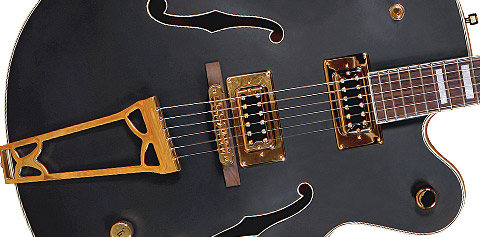
    The G5191BK has classic Gretsch styling with some of Armstrong’s particular requests well-represented. Aesthetically, it’s just plain cool – oozing a rock vibe reminiscent of a hip old hot rod, it looks retro in its flat-/matte-black finish and gold hardware. It has a simple appeal; no crazy wood combinations or gawdy flash.

    Fully hollow, it has a laminated maple body with a one-piece maple neck. Its 24.33″-scale neck has 22 jumbo frets with block acrylic inlays on a rosewood fingerboard and a graphite 111/16″ nut. The neck and headstock are triple-bound, the latter adorned with a pearloid Gretsch logo inlaid on its black overlay. The truss rod cover has an engraved signature and the headstock is rounded out by a set of gold Grover tuners. This is all attached to the four-ply bound maple body with single-ply bound f holes finished in an über-cool flat-black urethane.

    Underneath the 17″ top are parallel tone bars and a soundpost that helps the body resonate extremely well and project louder than most hollow instruments. Fine touches include a gold rosewood-based Adjusto-Matic bridge, gold harp tailpiece, and traditional Gretsch knurled strap retainers.

    To power the raucous riffs sure to be played on the G5191BK, it’s fueled by a pair of Black Top Filter’Tron pickups. The black/gold combination help round the basic, striking look of the guitar, and they’re controlled by a standard three-way switch with individual Volume and Tone controls for easy, effective tone tweaking. In typical Gretsch fashion, there’s a Master Volume on the cutaway so you can use the individual controls for tone shaping while having a quick, efficient way of cutting overall output volume. This feature is priceless once you get in the habit of using it.

    Plugged in, the G5191BK does not disappoint. Its tone bars and soundposts give an acoustic projection and help it really drive the Filter’Tron pickups. It has the classic jangle and resonance one would expect from a Gretsch, while all that projection is a godsend for styles not necessarily associated with the brand.

    In terms of build quality, this could be the best Electromatic to date. Playability is exceptional and overall tone rivals some instruments with considerably higher price tags. Detail work is clean, from the wiring down to the complete lack of finish or binding flaws.

    After pushing the G5191BK through a variety of tube amps, it’s apparent the mission here was to build an affordable rocker. But Gretsch fans needn’t worry that this is strictly a rock machine. In fact, the added output can make for a much cleaner sound, especially when it comes to recording. And the twang inherent in hollowbody guitars will keep country and surf players happy. The only drawback is the requisite tendency to feed back, but again, the design helps reduce that at least a little bit.

    Fans of classic Gretsch can be hard to impress. But for the money, there is very little to gripe about with the G5191BK. Its construction is solid and its sound is good for a number of musical styles. Purists may balk, but for the sheer fact this is a budget-level hollowbody with serious tone and character. Is it a classic ’60s Gretsch? Nope. Will it rock your socks off? Without fail.


    Gretsch G5191BK Tim Armstrong Electromatic
    Price: $1,650
    Contact: gretsch.com.


    This article originally appeared in VG August 2010 issue. All copyrights are by the author and Vintage Guitar magazine. Unauthorized replication or use is strictly prohibited.


  • Renowned Pickup Maker Bill Lawrence Passes

    Bill Lawrence passesRenowned pickup maker/guitarist/performer Bill Lawrence passed away November 2. He was 82. Born Willi Lorenz Stich in Germany, he began to play guitar as a teen inspired by the records of Oscar Moore, Barney Kessel, and Les Paul. He earned a reputation locally for his guitar playing, and in 1948 wound a pickup that would help him be heard above the horns and drums played by post-war jazz bands. Using the stage name Billy Lorento, his reputation grew as he performed on American military bases throughout Europe, where he shared stages wtih Roy Acuff, Hank Williams, Sam Cooke, Dinah Washington, and other noted stars of the era. By the early ’60s, his stage name had morphed to Bill Lawrence and he became a Fender endorser.
    In the mid ’60s, Lawrence co-founded Lawrence Electro Sounds, which marketed his Tru-Sound Pickups to German guitar makers. Within a few years after, he moved to New York City, where an electric piano he designed and built became popular. He also began designing pickups for MicroFrets and working with guitar builder Dan Armstrong. Lawrence’s work on pickups at the time was centered on aftermarket replacements for established brands and types. Among those under his tutelage at the time were Armstrong’s son, Kent, and a Larry DiMarzio, both of whom would go on to become noted pickup makers.

    In the ’70s, Lawrence was hired as a consultant to Gibson, where he designed pickups and lent his input to various models including the L-6S, renowned for its six-position pickup selector. By mid decade he had moved to Nashville, where he designed the FT-145 soundhole pickup for acoustic guitars, as well as the single-blade L-220 pickup for Fender guitars, the L-90 twin-blade humbucker, and other innovations. In the ’90s, as a consultant for Fender, he designed the L-280 Noisefree pickup for Stratocasters and Telecasters,

    In the ’90s he developed the L-280 noisefree replacement pickups for Strats and Teles, and most recently helped Fender develop its Samarium Cobalt Noiseless (SCN) pickups for the American Deluxe series. He also independently built pickups under the brand names of WildeUSA and Keystone, with the assistance of his wife, Becky.

  • Roland Micro Cube

    Roland Micro Cube

    ROLAND_MICROCUBE_01

    Roland Micro Cube
    Price: $130 (street)
    Info: www.rolandus.com.

    Every once in a while you have to pinch yourself and thank your lucky stars to be a guitarist in the 21st century. The Roland Micro Cube is a good illustration of this phenomenon; a dinky, portable amp that runs on AA batteries, it weighs just over seven pounds and measures less than 10″ x 10″ x 7″. But why such jubilation? Let’s find out.

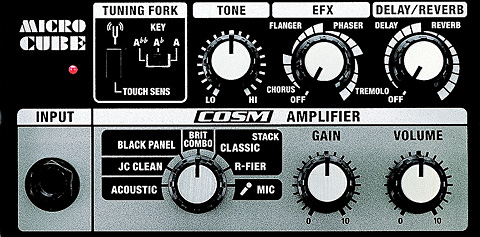
    We all remember the venerable Pignose from 40 years ago – a simple one-knob mini amp that virtually invented the portable-amp category. Today, Roland takes the concept of the portable amp and adds oodles of features that would have been unimaginable all those decades ago. For basic specs, the Micro Cube is a two-watt amp with a 5″ speaker that runs on six AA batteries (20-hour life span) or the supplied AC adapter. To make things interesting, the designers also put in DSP effects and a few of Roland’s noted COSM amp models. There’s also a digital tuning fork that provides an audible A, Ab or G note through the speaker for tuning, as well as line in/out jacks (including headphone outs), and a cute little carrying strap. The amp also has heavy-duty plastic corner guards and a metal grill, giving it something of a military vibe, but also plenty of toughness for bringing it outdoors to jam. The Micro Cube is available in black, red or white finishes, but again, given its Army-radio feel, an olive-green or camouflage finish might be a cool idea down the road (think “Combat!” or “Rat Patrol”).

    For amp models, Roland provides you with seven sonic choices, including Acoustic, JC Clean (for a Roland JC-120 sound), Black Panel, Brit Combo, Classic Stack, R-fier, and Mic. As you might guess, these presets go from clean-and-sweet to progressively dirtier degrees of overdrive and crunch. For effects, you’ll find an EFX knob offering your choice of chorus, flanger, phaser, and tremolo, while the Delay/Reverb knob lets you set the amount of each of those effects. The Micro Cube’s top panel is completed with Gain and Volume controls, letting you set the amount of grit you want.

    ROLAND-MICROCUBE-02

    The amp emulations, in particular, are a blast. An acoustic/electric guitar sounds really good through the Micro Cube – almost shockingly so, especially when you dial in some sweet chorus and reverb. On the other end of the spectrum, the R-fier heavy-metal crunch is too much fun in an amp of this size – you can easily do a full Metallica set while sitting on the beach and that’s not an overstatement. Or dial down to Brit Stack for a medley of Kiss or Zep favorites while camping or hiking. Then again, there’s a line-out jack, so if you’re playing a real gig, go ahead and send that output to the P.A. and you’ll be in business.

    At the end of the day, the Roland Micro Cube is a small miracle of 21st-century gear technology. With so many features in such a tiny package, the Micro Cube will make any guitarist glad to be a living, breathing picker.


    This article originally appeared in VG November 2012 issue. All copyrights are by the author and Vintage Guitar magazine. Unauthorized replication or use is strictly prohibited.


  • Fender Intros Pawn Shop Special Ramparte Amp

    Fender Pawn Shop Special RamparteFender’s Pawn Shop Special series Ramparte is a two-channel amp with class A circuit that produces nine watts output from a 6L6 power tube and a 12″ Special Design speaker. Its Cool channel is voiced for tones from warm and clean to moderately gritty, while Hot delivers overdriven tone. Each has a separate input jack and Volume control. Other features include an internal-speaker disconnect, chickenhead knobs, vintage-style leather strap handle, and a two-tone chocolate-and-copper fabric covering. For more, go to www.fender.com.

  • Electra Guitars Launches Omega Prime

    Electra Omega Prime Black
    Electra Omega Prime Black

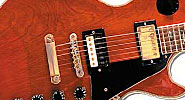
    Electra Guitars’ new Omega Prime is a single-cutaway solidbody based on its Omega model, it will be available in an assortment of woods, colors, and hardware combinations while retaining the company’s sculpted heel and a belly cut. Some variants will have a C-shaped neck with ebony fretboard and jumbo nickel/silver frets, mother-of-pearl block inlays, and a GraphTech Tusq nut. The flame-maple version will have has a maple fretboard with tortoiseshell blocks. All will have

    Electra Omega Prime flame maple
    Electra Omega Prime flame maple

    Kluson Deluxe tuning machines, TonePros locking bridges and stop tailpieces, and  Electra’s Magnaflux humbuckers with Alnico V magnets. See more at www.electraguitar.com.

  • Electra MPC

    Electra MPC

    1981 Electra MPC Standard X340
    1981 Electra MPC Standard X340

    One of the more successful Japanese-made guitar brands of the 1970s was Electra, the brand name used for electric guitars sold by St. Louis Music of St. Louis, Missouri.  If prices on eBay are any indicator, it’s clear that guitar aficionados have little appreciation about how good and innovative these guitars were. Let’s take this remarkable 1978 Electra MPC Standard X320 into evidence!

    St. Louis Music (SLM) is actually one of the oldest remaining music distributors left in the U.S., most of the venerable examples of this institution having disappeared by the ’70s. SLM was founded by a violinist named Bernard Kornblum in 1922 as an importer of European string instruments. The company met with success and continued to grow. Other instruments followed, including Magnatone amplifiers and a variety of guitars, including Kays. SLM eventually developed its own brand, made by Kay, called Custom Kraft. Kay-made Custom Krafts were really pretty interesting and made until Valco/Kay went out of business in 1968, and, indeed, a few might have been made for a bit thereafter.

    With the onslaught of European and then Japanese imports in the ’60s, SLM began exploring its options. Circa ’66, SLM began importing a line of Japanese-made electric guitars named Apollo. Following the Greek pattern, there were a few, apparently unadvertised models named Electra. The demise of Valco/Kay ironically coincided with a low-point for imported guitars. The 1968 NAMM show was the watershed. Japanese manufacturers had begun “copying” its European competition by the mid ’60s. This story is apocryphal, but Shiro Arai of Aria guitars visited NAMM, which was the show where the Gibson Les Paul Custom “Black Beauty” was reintroduced. “It’s a copy,” he thought, and relatively primitive copies of American designs followed shortly.

    Arguably, the “copy era” kicked into gear in 1970. In ’69, Ampeg hired Dan Armstrong to design a novel new design and, in keeping with their penchant for alternative materials, the result was the See-Through guitar. The following year, a slew of Japanese companies offered variants, including Aria, Ibanez, and SLM, with its The Electra guitar.

    Electra became the official brand name of SLM’s Japanese imports. The earliest Electras are most interesting because many were made by the Matsumoku Motto factory of Matsumoto City. There have been a lot of excellent Japanese manufacturers over the years, but Matsumoku is legendary for its quality and innovation. Even by the time of early Electras, it was making surprisingly good guitars.

    However, the breakthrough for Electra came in ’75, when SLM hired a budding designer named Tom Presley to take over its guitar department. Presley, a local, had gone to the coast only to find his dreams didn’t come true, and returned to St. Louis, where he landed the SLM gig. Sometimes things work out for the best after all!

    While Presley may have offered advice on the woodworking side, his primary contributions were to the electronics. First of all, Presley began making their Super-Magnaflux humbucking pickups – indeed the whole wiring assemblies – in the U.S. These proved to be so good a bunch of Nashville pros started using them in their better-known guitars. Next was the Tone Spectrum Circuitry. This basically was a five-way variation on Gibson’s Bill Lawrence-designed six-way Varitone switch found on its L-6S guitars. Tone Spectrum gave you in- and out-of-phase, series, parallel, and access to two more toggles wired to tone capacitors. This was introduced on the Electra Omega. Pretty groovy!

    Presley’s next project was the Modular Powered Circuit (MPC) series, introduced in ’76. By the mid ’70s there was enormous interest among guitarists for sound effects. Distortion, phase shifting, reverb, flanging, you name it. Gibson was just introducing its wonderful Maestro effects. Presley’s idea (well, with his engineers) was to miniaturize the various effects circuits and encase them in a cigarette-pack-sized block of epoxy (later a plastic case). They put two shielded cavities in the back of the guitar for two sound modules, plus a space for a 9-volt battery (and a spare!). The humbuckers were hooked up to the Tone Spectrum Circuitry. Replacing the dual tone toggles were two on/off toggles activating either or both sound modules. A master Volume and Tone control ruled the pickups, while each sound module was given its own Volume and Intensity control.

    It requires a bit of dexterity to juggle all this in the middle of a song, but once you get the hang of it you have a remarkable arsenal of sounds at your fingertips! Quite a number of pros endorsed the MPCs, including Peter Frampton, Rick Derringer, and Leslie West.

    The first MPCs were modeled after Gibson’s Les Paul and had a “copy” open book headstock. Following the 1977 Norlin vs. Elger (Ibanez) lawsuit, the more common wave head was used. Eventually, a variety of MPCs appeared, including an Explorer-style, the potato-shaped Outlaw, a Les Paul variant, and a thinline. By far the most common MPCs were based on the Les Paul design.

    The Les Paul-style MPCs came in a variety of grades, most with mahogany bodies, maple caps, and set-in necks. These ranged from opaque finishes on plain guitars to fancy curly maple tops to the X340 with a one-piece rosewood veneer top. Like most Japanese Les Paul-style guitars of the ’70s, these are “arched” (bent), not carved, tops. The guitar shown is an MPC Standard X320 with a one-piece mahogany top (possibly veneer) over a one-piece mahogany body. Everything is bound and the block inlays are a green-pink abalone. The tuners may be Grovers, but in any case they’re top-flight. The brass fittings were typical of the times. It’s not sure who made this model, but it may have been Matsumoku or possibly Kasuga. This guitar is just a joy to play. No serial number is evident, but it seems to be early. Prior to ’77 or ’78, Electras had “copy” headstock designs.

    The MPCs stopped being promoted around the time this guitar was made, though they could have lasted a bit longer. The MPC concept lived on beyond the guitars, of course, because their development led to the introduction of Crate amplifiers.

    Is this a rare a guitar? It’s difficult to say. The fancier Les Paul-style models are rarer, and the rosewood ones the rarest. The other shapes do not appear very often, but it’s doubtful any Electra MPC is truly a rare bird. The sound modules are a whole different matter and can set you back a pretty penny! But play one, and you’re likely to want one!


    This article originally appeared in VG Septenber 2009 issue. All copyrights are by the author and Vintage Guitar magazine. Unauthorized replication or use is strictly prohibited.

  • The Vox Bruno TB35C2

    The Vox Bruno TB35C2

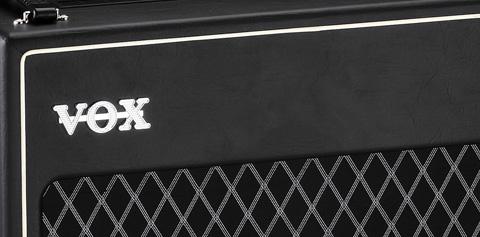
    When it comes iconic guitar tone – especially “British” tone – Vox and its flagship AC30 are at the top of most players’ list. After all, the Vox AC30 is one of the most widely recorded amps, used by countless artists in nearly every genre, on both sides of the pond. Vox recently partnered with American amp builder Tony Bruno to design an amp with a decidedly “American” signature – the TB35. Bruno is known as one of the leading boutique builders in the U.S., and has worked with Vox in the past on projects including the lunchbox-sized Night Train.

    The Vox Bruno does not sport the EL84 power tubes Vox uses in most of its amps. Rather, it employs tubes more at home in a Fender – 6V6s. More specifically, four of them that help the amp produce 35 watts of output. Aiding the effort are a trio of 12AX7 preamp tubes, a 12AT7 and a 12AX7 in the reverb circuit, custom-wound transformers, an Accutronics spring reverb. and a birch plywood cabinet. The Bruno has a modern look, with a smooth cover and a cleaner, more stealthy control panel. It retains classic Vox features including a top-mounted control panel with chickenhead knobs, dual handles, Vox’s diamond pattern grillecloth, white piping, and a Vox badge. The control layout for the Bruno’s single channel include High and Low 1/4″ input jacks, Volume, Treble, Midrange and Bass tone controls, a Macho (mode) switch, Bass boost, Reverb level, and a Master Volume with Bypass switch, along with the standard switches for Power and Standby.

    The Bruno is available in two cabinet/speaker configurations; the TB35C2 is fitted with a pair of 12″ Celestion G12-65s, while the TB35C1 has just one. Both have a set of 1/4″ jacks with an impedance selector for external speaker cabinets, a 1/4″ jack for their single-button footswitch, and a nylon dust cover.

    We checked out the Bruno 2×12″ with a Fender Custom Shop Stratocaster and a Gibson Les Paul Standard Plus, both with stock pickups. With the Bruno’s Master Volume, Bass Boost and the Macho circuit bypassed (leaving only the tone stack engaged), the Strat offered a lively clean tone with full round low-end response, crisp highs and even harmonically rich mids (even if they were more subtle). Dialing up the volume, the harmonics filled in even more, and a smooth lively, light overdrive took shape with excellent touch sensitivity. Once the overall volume got to be too loud, the Master Volume control reigned it in, with no major tonal degradation until we really dialed it back to “apartment” volume, where it was a bit washed out if the preamp Volume was set too high. We ran mostly with the Master Volume bypassed, and the amp sounded a bit more open and uninhibited.

    The Bruno’s tone stack interacted well with both the Strat and the Les Paul, allowing for quick dial-in with each instrument. Even though the amp has a Bass Boost circuit, the 2×12″ didn’t seem to need it; its low-end was plenty full, though at higher volumes, the Strat’s bridge pickup didn’t mind the help.

    With a quad of 6V6s and the two-speaker configuration, our test Bruno had plenty of headroom and muscle, keeping clean with either guitar when asked. The Macho circuit not only adds substantial gain and midrange (for a very usable solo boost), but adds a bit of classic in-your-face British midrange, giving the Bruno added versatility. The amp’s tube-driven reverb circuit also has an American texture to its sound, with a crisp, clean dwell and a long decay – anything from a deep, wet surf reverb to a subtle, ambient tone.

    The Vox Bruno produces an excellent, Yankee-inspired tone, and offers quality construction, useful features, and enough classic Vox personality to make it interesting, fun to play, and versatile.


    VOX BRUNO TB35

    Price: $1,399 (2×12″ street)/$1,199 (1×12″ street)

    Contact: www.voxamps.com


    This article originally appeared in VG July 2011 issue. All copyrights are by the author and Vintage Guitar magazine. Unauthorized replication or use is strictly prohibited.


  • Deke Dickerson

    Deke Dickerson

    Jonny LangWe’ve all dreamed the dream. Dozens, if not hundreds, of times. It generally revolves around trolling yard sales or pawn shops where you excitedly uncover a rare, dusty gem patiently waiting for a new owner. Or maybe it’s finding a mint vintage piece in the attic or closet of an older relative, untouched for 50 years, cleaner than a soldier’s spit-shined boots. In each case you’re giddy as you hand over a paltry sum for a piece of six-string history. You can’t wait to tell you guitarplaying buddies. You take it home and… poof! Dream over.

    Thanks to the Internet and its demystification of the process and commerce-driven lunacy, this dream rarely gets beyond the fantasy stage anymore. Yet, treasures are still out there for the dogged and
    determined guitar freak.
    Jonny_Lang_GeneralUse3_credit_Piper_Ferguson
    Deke Dickerson is living proof. Many know Dickerson as a talented guitarist, recording artist, concert curator, and lover of all things wacky, weird, and wild in the gear department. But as this thoroughly entertaining and informative book demonstrates, Dickerson can also be considered the Indiana Jones of the guitar world, as he recounts his sleuthing, fact-checking, and the kind of tenacious investigating that’d make any CSI crime show detective envious.

    “There isn’t one person I interviewed for this book who didn’t have a gleam in his or her eye when asked about a favorite ‘guitar archeology’ story,” Dickerson notes. “These stories are all united by a common love of these wonderful old instruments, the human beings behind them, and the stories they bring to the table.”

    Each of the 48 chapters here is dedicated to a specific instrument or amplifier discovery – or a treasure trove! Dickerson provides interesting back stories on dozens of vintage finds, from the discovery of a Gibson Futura protype in Texas, to the sunburst Stratocaster Bob Dylan played at the 1965 Newport Folk Festival, to a left-handed Coral Sitar that once belonged to Jimi Hendrix. And there’s more tales of finding Bigsby guitars, pre-Fender Vibro instruments, Hallmark SweptWings, and Deke’s special fantasy, doubleneck instruments.

    The book really springs to life when Dickerson recounts his own tales of guitar archaeology. His personal stories of zeroing in on historic pieces are a marvel of determination and ingenuity. They’re triumphs, nothing less.

    But even more appealing are his experiences with the old players he connects with, gets to know and many times befriends. And in some cases, his interest and reverence is rewarded when those old-timers pass down a special instrument to Deke himself – as the legendary Scotty Moore did when he sold Dickerson one of his famous EchoSonic amps for a reasonable price.

    To that end, you can’t help feeling like it’s a win for one of the good guys. And you can’t help but cheer the fact that these precious works have landed in the loving and respectful arms of Dickerson for safekeeping, to be spared a slow death from the sands of time, or a fast one from – gasp – mistreatment.

    As Dickerson writes, “They’re still out there. These guitars exist. There are plenty more tales waiting to be written. Guitarchaeologists, start collecting stories for the next volume of this book!” Indeed, there are likely more great discoveries out there waiting to be made. And hopefully they will be made, maybe by you, propelled by the same passion Dikerson displays. But until then, we can revel in this fabulous, important compendium of inspiring guitar archeology. Thank you, Deke!

    This article originally appeared in VG‘s December. ’13 issue. All copyrights are by the author and Vintage Guitar magazine. Unauthorized replication or use is strictly prohibited.