
 TSVG Pedals’ Dying Batt Fuzz is germanium-based and offers tonal combinations that, the builder says, “spit, sputter, and decay as you starve power to the circuit.” Features include; AC128 GE transistors, Mullard “Tropical Fish” capacitors, IRC resistors, independent Volume, Voltage Regulator, Gain, and Blend controls, Alpha pots, Switchcraft jacks, cloth-covered wire, and true-bypass switching. TSVG Pedals are built by hand in Philadelphia. Learn more at www.tsvgpedals.com.
Month: October 2013
-
TSVG Pedals Unveils New Dying Batt
-
Fargen Offers Amp-Mod Kits
 Fargen Amplification is expanding its Custom Shop to include an assortment of Hot Mods DIY amp kits and a line of guitar accessories. The amp mods include proprietary transformers developed with Mercury Magnetics as well as replacement parts for all critical board components in the signal path, using proprietary parts. The accessories line includes power cords, speaker cables, and instrument cables, all built with Evidence Audio cable and, where applicable, Nuetrik connectors. See more at www.fargenamps.com.
 -
Musician’s Institute, Norman’s Rare Guitars Host Event for The Midnight Mission
Musicians Institute (MI) and Norman’s Rare Guitars are set to host “From Hollywood with Love,” a concert to mark the 100th Anniversary of The Midnight Mission, a Los Angeles homeless charity.
 Set for January 11, the event, hosted by comedian Kevin Nealon, will happen at MI’s Concert Hall in Hollywood. Featured performers include an all-star cast of guitarists including Robben Ford, Joe Bonamassa, Jason Sinay, Jimmy Vivino, Tony Galla, Kirk Fletcher, Grant Geissman, Jimmy Earl, Del Casher, and more to be announced.
“We’re so lucky to have Musicians Institute as our partner on this event,” said Norman Harris, proprietor of Norman’s Rare Guitars. “There’s going to be great music, and better yet, we’re going to be serving a great cause.”
 “Using this opportunity to share a night of music together and try to help heal some pain is such a perfect idea,” said Georgia Berkovich, Community Relations Manager at The Midnight Mission. “We’re so grateful to have this opportunity. We also want to thank our longtime friend and supporter, Del Breckenfeld with Fender Guitars, who will be donating instruments for auction at this event.”
“From Hollywood with Love” will donate 100 percent of the event’s proceeds to The Midnight Mission, which is located on San Pedro Street. The shelter works to offer a path to self-sufficiency for men, women, and children who have lost everything and live on the streets of Los Angeles.
“Musicians Institute is dedicated to helping young people achieve their dreams, and our college is so inspired by The Midnight Mission’s dedication to those who are seeking a brighter future,” said Jessica
 Sullivan, Director of Marketing at Musicians Institute. “We’re honored that Norman’s Rare Guitars chose MI to be a part of this very special evening.”
To reserve tickets or make additional donations, visit http://FromHollywoodWithLove.charityhappenings.org.
-

Tommy Emmanuel and Martin Taylor
 Tommy Emmanuel and Martin Taylor The Colonel & The Governor Jazz has a long tradition of guitar duets, from the “Blue Guitars” of Eddie Lang and Lonnie Johnson to Dick McDonough and Carl Kress (as well as Kress and George Barnes), Billy Bean and John Pisano, Herb Ellis and Joe Pass, Ralph Towner and John Abercrombie, and Pat Metheny with Jim Hall. What makes the teaming of Martin Taylor and Tommy Emmanuel different is that both of their reputations are largely based on their work as solo guitarists.
 Taylor proved he could play well with others during an 11-year stint with legendary violinist Stéphane Grappelli, beginning when he was 23, and more recently with his Spirit of Django ensemble. But as Pat Metheny said, the Scotsman is “one of the most awesome solo guitar players in the history of the instrument.”
As for Australia’s Emmanuel, he was an in-demand sideman and studio musician before concentrating on the solo format that’s brought him international acclaim.
With such self-contained stylists, a collaboration could spell overkill, but the taste and musicality both possess save this from being a chops fest. The repertoire is mostly jazz standards (Hoagy Carmichael’s “The Nearness Of You,” Irving Berlin’s “Heat Wave”), offset by four Taylor originals – so it’s well within Taylor’s wheelhouse (check his steel-drum impersonation in the Caribbean-tinged “Down At Cocomo’s”). But while Emmanuel’s eclectic mix of country, blues, rock, and world styles makes him impossible to categorize, he’s more than familiar with the jazz/standards canon.
With Emmanuel’s instrument of choice an Australian flat-top Maton and Taylor employing his Martin Taylor Maestro archtop built by Peerless, the intimate sound here is the perfect balance of warmth and brightness. And the mood is spontaneous, as these master improvisers play off one another, seamlessly trading lead and rhythm chores or indulging in some dazzling single-note interplay, as in the swinging “Bernie’s Tune,” where Taylor’s humorous dissonance elicits a laugh of surprise from Emmanuel.
To over-generalize slightly, Emmanuel’s attack is sharper, Taylor’s lines more fluid. But there’s no “winner,” since this never feels like a cutting session. At 56 and 58 respectively, Taylor and Emmanuel have combined to spend a century with a guitar in their hands, so there’s no insecurity here; each is comfortable and confident in his own abilities. The result is a guitar fan’s dream, a master class and then some, and one of the great guitar duos in jazz history.
This article originally appeared in VG‘s December. ’13 issue. All copyrights are by the author and Vintage Guitar magazine. Unauthorized replication or use is strictly prohibited.
-
Moniker Guitars Adds Zuma Model
 Moniker Guitars’ Zuma shape was inspired by surf guitars of the ’60s, with modifications to the shape and hardware including a stop tailpiece on its alder body. Moniker uses Seymour Duncan pickups, low-VOC PPG Envirobase paints, and a unique online builder application that allows players to customize their guitars and turn them, it says, in about four weeks. Learn more at www.monikerguitars.com.
 -
Black Sabbath
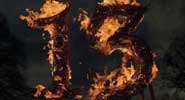
 Cynicism wouldn’t be out of place on your first listen to Sabbath’s first album with Ozzy Osbourne in 35 years. Before you even spin it, you can bet that the band won’t stray far from their classic sound and they don’t – even without the great Bill Ward on drums. This is thanks in part to producer Rick Rubin, who is known for employing a back-to-the-roots formula for everyone he has worked with, from Johnny Cash to Metallica and now, the Sab.
That said, 13 is surprisingly good. In fact, it’s very good, despite some problems with production. Rubin gives the CD a sound that evokes the heavy sonic textures of ’70s metal, but it’s overly compressed; unlike records that sound good at any volume level, you’ll have to crank this one to achieve proper butt-kickin’ results. Geezer Butler’s bass is sometimes lost in the mix and, frankly, the drums sound thin and wimpy.
Fortunately, Tony Iommi’s guitar holds things together well and his playing is spot-on, which is amazing for a guy who was battling cancer during the sessions. As usual, he has a bottomless well of heavy riffs, such as heard in the proggy eight-minute opener, “End Of The Beginning.” Ironically, the single “God Is Dead?” is the weakest song on 13, as much for its silly lyrics as for the bone-dry presentation of Ozzy’s voice.
Conversely, many of the better songs on this album are stuffed toward the end – and the absolute best material can be found on the second CD of bonus tracks. Maybe the rebooted Sabbath’s finest moment is on “Peace Of Mind,” a rocker where the whole band cooks in classic Sab style and Iommi leaves a trail of scored-earth guitar-manship in his wake.
“Pariah” is also another catchy stomper, while “Zeitgeist” and “Damaged Soul” evoke the cannabis-infused charms of “Planet Caravan” from 1970’s Paranoid. The latter is a slow, bluesy track, featuring not only grinding riff-work from Iommi and Butler, but also Ozzy’s long-missed harmonica playing. And for the guitar solo, Iommi lets his Hendrix-freak flag fly with no excuses.
So, while you may approach 13 with suspicion, give it a few spins to let it all soak in. Ward is certainly missed, but it’s hard to argue with the magic that happens when you get Iommi and Butler in the same room with Mr. Osbourne.All told, 13 is the heavy metal album of 2013, and if you count yourself a Black Sabbath fan, get it. Two caveats: avoid “God Is Dead?” and listen to the cool-ass bonus tracks first.
This article originally appeared in VG‘s October ’13 issue. All copyrights are by the author and Vintage Guitar magazine. Unauthorized replication or use is strictly prohibited.
-
The Pigtronix Envelope Phaser 2
 Pigtronix Envelope Phaser II
Price: $249 (street).
Contact: Phone (631) 331-7447; Pigtronix.com.Pigtronix effects are known not only for their tones, but their sophistication. So it’s no surpise that the Envelope Phaser II has a potentially daunting array of control knobs and switches, some with familiar names (Sensitivity, Depth, Speed), others less common (Resonance, Staccato, LFO Smooth)! But the good news is the clear and to-the-point user’s guide makes it easy to tweak the pedal’s functions to one’s precise liking.
Running between a Gibson Les Paul and a Fender Princeton, the EP2 offered nice phase tones without touching a single control. Flicking a couple switches dials up its envelope filter, wah, and Univibe sounds. Manipulating the Resonance and Sensitivity reveals its vintage-inspired phase tones, while more-radical sounds can be had via the Blend control, especially when used in conjunction with the envelope filter and the LFO. Various combinations take the sound from filtered lo-fi to analog synth to all-out mayhem. And the LFO switch helps the pedal sound like everything from Jerry-Garcia-styled Mutron tones to Hendrix-flavored Univibe. It’ll even cop the famous phase tone of U2’s “Mysterious Ways” without having to find a 20-year-old Korg A-series rack unit! And for as wild as this unit can get, it’s easy to reel in – even at its most extreme settings, it always sounds musical.
Adding to its flexibility, the EP2 can be triggered by an envelope follower, LFO, or anything you can plug into the EF trigger jack. Plug an audio feed from a click track, drummer, or drum machine into the trigger input, and your phase is locked in with the tempo. An expression pedal in the Sweep Pedal jack will control the modulation for a phase-wah effect.
The EP2 is capable of producing plenty of cutting-edge tones, and excels at vintage-styled effects in the vein of Mutron and Univibe. And it’ll reward quality time spent with unique sounds.
This article originally appeared in VG February 2011 issue. All copyrights are by the author and Vintage Guitar magazine. Unauthorized replication or use is strictly prohibited.
-
Andy Moseley, Co-Founder of Mosrite, Passes

Photo courtesy of NAMM. Mosrite guitar company co-founder Andy Moseley died October 19. He was 80. Born in Atoka, Oklahoma, on February 24, 1933, Moseley was less-known than his brother, Semie (1935-1992) in the saga of Mosrite instruments, but the older sibling was also a builder and innovator who was responsible for getting the Mosrite brand known in Nashville in the late ’50s. He also wrote and published a series of guitar method books in that decade.
Following the heyday of the Mosrite brand, Andy continued working in the Nashville area, running a recording studio and teaching guitar. In February of 2012, he was interviewed by the National Association of Music Merchants (NAMM) for that organization’s Oral History Program, and that conversation can be viewed at www.namm.org/library/oral-history/andy-moseley.
Moseley was preceded in death by his wife, Glena, and is survived by two sons, a daughter, and other relatives. Funeral services were scheduled for October 29 in Lebanon, Tennessee.
-
Dio
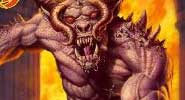
 Metal fans are pretty much in agreement that the late Ronnie James Dio was the greatest metal vocalist of his generation – or any other, for that matter. His majestic yet theatrically masculine vocal style conjured up dark imagery. And still he was ingenious in his ability to allow listeners to personalize a song’s meaning.
With the success of The Very Beast of Dio in 2000, Niji Entertainment has released this follow-up. Where volume one focused on Dio’s early solo career up to 1994’s Strange Highways, volume two takes up where it left off with selections in non-chronological order beginning with Angry Machines from 1996 and ending with 2004’s Master of the Moon. Also included is “Electra” from the Tournado boxset, “Metal Will Never Die” from David “Rock” Feinstein’s 2010 album Bitten by the Beast, and “The Prisoner Of Paradise” from the Japanese import of Master of the Moon.
This collection shows Dio was constantly evolving as a songwriter. We get the ferocious guitar talents of Doug Aldrich with four selections from Killing the Dragon, with the standout being “Better In The Dark.” Tracy G goes ballistic on the live version of “Hunter Of The Heart,” while pushing Dio’s songwriting forward on “Black” from Angry Machines.
Craig Goldy gets most of the spotlight with selections from Magica and Masters of the Moon. His playing is inspired throughout, but particularly on “As Long As It’s Not About Love” and “Lord Of The Last Day,” anchoring the band to their classic sound. This volume illustrates that there was more to Dio than “Rainbow In The Dark.” It’s a well-paced, entertaining overview of Dio’s later period, and makes an excellent retrospective.
This article originally appeared in VG‘s Feb. ’13 issue. All copyrights are by the author and Vintage Guitar magazine. Unauthorized replication or use is strictly prohibited.
-
Hussong to be Honored by Dayton Blues Society and WYSO

Dave Hussong The Dayton (Ohio) Blues Society and WYSO 91.3 radio will honor David Hussong, proprietor of Fretware Guitars and a longtime contributor to Vintage Guitar, during a ceremony October 25 to commemorate 30 years of broadcasting his “Shakin’ Dave Hussong’s Hall of Fame Blues” program. The event, at Gilly’s Jazz, 132 S. Jefferson Street, Dayton, will be hosted by Dayton Blues Society president Jeff Hill along with WYSO radio personality Dave Barber, and will include appearances by Niki Dakota, and Mike Luczak as well as performances by Hussong and other members of the Blues Society. Headlining the festivities will be Noah Wotherspoon and the New Low Rent Blues Allstars, who will take the stage with Hussong. For more information, go to wyso.org or daytonbluessociety.com/wp/.


